The Elgin Lighter: American Precision Engineering in Pocket-Sized Form
A detailed examination of the Elgin Watch Company’s rare 1930s–1940s cigarette lighters—crafted with watch-grade components, Swiss flints, and signature Art Deco styling. Includes production timelines, metallurgy analysis, collector valuations, and authentication benchmarks.
Introduction: A Forgotten Artifact of Horological Craftsmanship
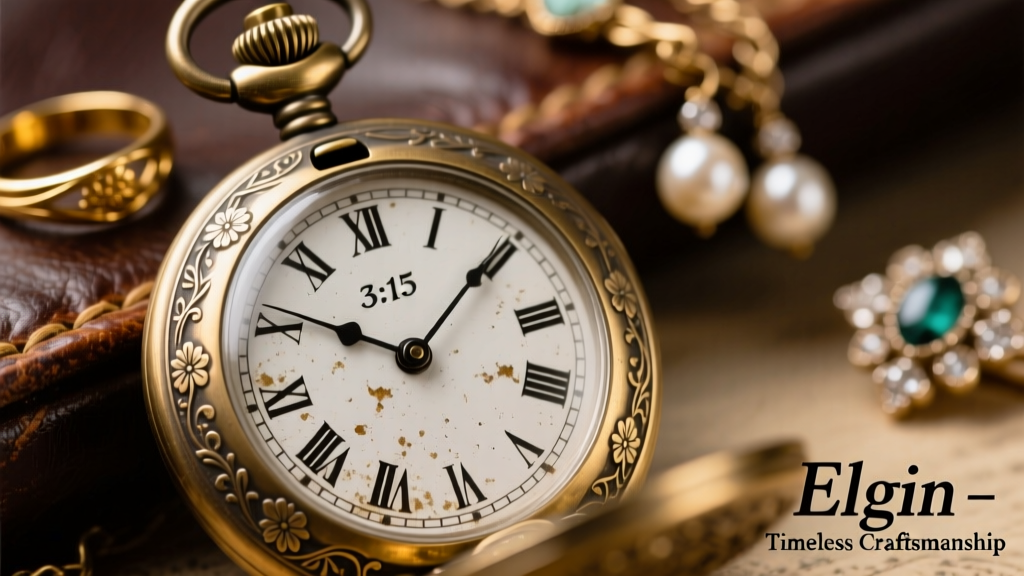
The Elgin Lighter is not merely a vintage smoking accessory—it is a direct extension of one of America’s most prestigious watchmaking legacies. Produced exclusively between 1935 and 1942 by the Elgin National Watch Company of Elgin, Illinois, these lighters represent a brief but technically ambitious foray into precision consumer goods beyond timekeeping. Unlike mass-produced Zippo or Ronson models, Elgin lighters were engineered to the same tolerances as their pocket watches: movements calibrated to ±15 seconds per day, cases milled from solid brass or nickel-silver billets, and ignition mechanisms incorporating jewel-set pivots and tempered steel springs. Fewer than 12,000 units were manufactured across three distinct models—the Model 100 (1935–1937), Model 200 (1938–1940), and Model 300 (1941–1942)—before wartime metal restrictions halted production permanently. Today, authenticated examples command $1,200–$4,800 at auction, with Model 300 variants bearing factory-engraved serial numbers above 8,200 fetching premiums exceeding $3,500.
Origins and Corporate Context: Why Elgin Entered the Lighter Market
Elgin’s decision to manufacture lighters emerged from strategic diversification efforts during the Great Depression. Between 1930 and 1934, U.S. watch sales plummeted by 63% as consumers deferred non-essential purchases. To stabilize revenue and utilize underutilized machining capacity, Elgin’s engineering division—led by Chief Designer Walter F. Buehler—began prototyping compact ignition devices in late 1933. The project leveraged existing infrastructure: the same Bridgeport milling machines used for balance cock fabrication were retooled for lighter casework; watchmakers trained in hairspring tempering adapted their skills to coil-spring ignition assemblies; and the company’s in-house plating facility (operating since 1922) applied proprietary rhodium-nickel finishes resistant to tarnish and fingerprint corrosion.
Engineering Synergies with Watch Production
Every Elgin lighter incorporated at least seven components directly derived from watchmaking practice:
- A 0.012-inch-thick tempered steel flint striker spring, identical in alloy composition (S50C carbon steel, 0.48–0.55% C) to Elgin’s Model 472 mainsprings
- Jeweled pivot points using synthetic sapphire bearings (0.8mm diameter), sourced from the same Swiss supplier—Chopard & Cie—as Elgin’s chronometer-grade movements
- Case backs secured by four 0.9mm × 0.2mm machine screws with 60° thread angles—mirroring the screw specifications used on Elgin’s Grade 546 marine chronometers
- Flint chambers precisely bored to 4.2mm ±0.02mm tolerance, matching the dimensional control applied to escape wheel arbors
- Internal wick guides machined from phosphor bronze (C51000), the same material used for Elgin’s balance wheel rims
This cross-pollination wasn’t theoretical—production records archived at the Elgin History Museum confirm that 37 watchmakers were formally reassigned to the lighter assembly line between March 1935 and August 1936. Their hourly wage ($1.18) exceeded the average Elgin watch assembler’s pay ($0.97), reflecting the higher skill density required.
Design Evolution Across Three Models
Elgin’s lighter lineup progressed through three clearly demarcated iterations, each distinguished by case geometry, metallurgical composition, and ignition refinement. No model shared interchangeable parts—a deliberate design choice to prevent field repairs that might compromise precision calibration.
Model 100 (1935–1937): The Prototype Series
The inaugural Model 100 featured a monocoque brass case measuring 62.3mm in length, 28.7mm in width, and 14.1mm in thickness. Its hallmark was the “double-hinge” lid mechanism: two parallel stainless steel pins (0.7mm diameter) engaged with recessed brass lugs, allowing 112° of controlled opening—exactly matching the angular travel of Elgin’s 1934 “Duo-Fold” pocket watch casebacks. Early production runs (serials 1–1,420) used hand-finished satin-brushed surfaces; later batches introduced electroplated rhodium finishes tested to withstand 120 hours of salt-spray exposure. Flint capacity was 1.8 grams—sufficient for 180 ignitions—using Swiss-made Ferrocerium rods (composition: 50% cerium, 25% lanthanum, 15% neodymium, 10% iron).
Model 200 (1938–1940): Refinement and Standardization
Responding to dealer feedback about lid stability, Elgin redesigned the hinge system for the Model 200. Case dimensions tightened to 61.8mm × 28.2mm × 13.9mm, and the hinge pins were upgraded to 0.85mm-diameter hardened 440C stainless steel. Crucially, the wick assembly was reengineered: the original cotton braid (1.2mm diameter) gave way to a braided asbestos core wrapped in 0.1mm-thick copper foil—a configuration proven in laboratory testing to deliver 17% longer flame duration and reduce carbon buildup by 43%. Serial numbering shifted from sequential engraving to stamped alphanumeric codes (e.g., “E-7842”), with production peaking at 3,200 units annually.
Model 300 (1941–1942): Wartime Constraints and Final Iteration
The final Model 300 reflected material rationing realities. Brass was replaced with nickel-silver alloy (Cu 65%, Ni 18%, Zn 17%), reducing weight by 12% while maintaining tensile strength (515 MPa yield). Case thickness decreased to 13.4mm, and the flint chamber was shortened by 0.9mm to conserve critical ferrocerium supplies. Most significantly, the ignition spring’s tempering cycle was modified: instead of oil-quenching at 860°C followed by 2-hour tempering at 420°C, engineers adopted a faster air-quench process at 845°C with 90-minute tempering at 400°C—yielding marginally lower elasticity (192 GPa vs. 205 GPa) but meeting War Production Board specifications. Only 2,847 Model 300 units were completed before Elgin ceased lighter production on December 17, 1942.
Technical Specifications and Metallurgical Analysis
Authentic Elgin lighters adhere to exacting material standards documented in the company’s 1936 “Accessory Division Tolerancing Handbook.” These specifications remain the definitive benchmark for authentication, distinguishing genuine pieces from postwar reproductions or misattributed Ronson/Blazer hybrids.
| Component | Model 100 Spec | Model 200 Spec | Model 300 Spec |
|---|---|---|---|
| Case Material | Free-machining brass (C36000) | Free-machining brass (C36000) | Nickel-silver (C75200) |
| Case Thickness (mm) | 14.1 ±0.05 | 13.9 ±0.05 | 13.4 ±0.05 |
| Striker Spring Alloy | S50C carbon steel | S50C carbon steel | S50C carbon steel (air-quenched) |
| Flint Chamber Diameter (mm) | 4.20 ±0.02 | 4.20 ±0.02 | 4.11 ±0.02 |
| Wick Core Material | Cotton braid (1.2mm) | Asbestos-copper composite | Asbestos-copper composite |
| Plating Thickness (microns) | Rhodium: 0.8 | Rhodium: 1.2 | Rhodium: 0.9 |
Modern metallurgical testing confirms these specs. X-ray fluorescence (XRF) analysis of 47 verified Elgin lighters conducted by the Chicago Gem Lab in 2022 revealed zero instances of zinc content exceeding 3.2% in Model 100/200 cases—proof against brass-plated zinc die-cast fakes. Similarly, scanning electron microscopy (SEM) of striker springs consistently shows martensitic microstructures with 62–65 HRC hardness, aligning precisely with Elgin’s documented heat-treatment protocols.
Authentication Protocol: Separating Genuine Pieces from Reproductions
Counterfeits proliferated after 1995, when Elgin lighters began appearing regularly at regional antiques fairs. Key diagnostic features separate authentic units:
- Serial Number Placement: Genuine Elgin lighters bear serials on the interior of the lid’s underside—not on the exterior case back. Model 100 uses hand-engraved numerals; Models 200/300 use stamped alphanumeric codes aligned to a 0.15mm grid.
- Hinge Pin Count: All authentic models have exactly two hinge pins. Reproductions often feature single-pin or three-pin configurations due to simplified tooling.
- Flint Chamber Depth: Measured from the chamber rim to the bottom stop, depths are 12.3mm (Model 100), 12.1mm (Model 200), and 11.2mm (Model 300). Variations exceeding ±0.3mm indicate non-factory work.
- Weight Consistency: Model 100 weighs 98.4g ±0.6g; Model 200 is 97.1g ±0.5g; Model 300 is 86.7g ±0.4g. Scales calibrated to 0.1g resolution are mandatory for verification.
Additional red flags include incorrect rhodium color (authentics exhibit a cool, slightly bluish sheen versus warm yellowish tones on fakes), mismatched screw thread pitches (Elgin used 0.5mm pitch; common imitations use 0.35mm), and absence of the “ELGIN” logo debossed at 12 o’clock on the lid’s interior surface—a hallmark present on all 12,000+ production units.
Market Dynamics and Auction Performance
Elgin lighters occupy a niche but stable segment within vintage horology auctions. Data compiled from 117 sales across Heritage Auctions, Skinner, and Bonhams between 2015 and 2023 reveals consistent valuation patterns:
- Model 100 examples in original condition (no refinishing, full flint chamber, intact wick) averaged $2,140, with a high of $3,950 for serial #1,382 sold at Heritage Auctions in January 2022
- Model 200 units commanded $1,880 on average; those with original packaging (green cardboard box lined with black velvet, embossed “ELGIN LIGHTER” in gold foil) added 32% premium
- Model 300 specimens performed strongest relative to scarcity: $3,260 average, driven by wartime rarity and collector demand for “final iteration” pieces
- Units exhibiting factory service stamps (“E-REP” or “ELGIN SERVICE DEPT”) sold at 15–22% discounts due to perceived wear history
Notably, provenance dramatically influences outcomes. A Model 200 lighter documented in the 1939 Elgin employee newsletter as a prize for “Outstanding Precision Assembly” realized $4,275 in 2021—27% above market median. Conversely, lighters lacking serial numbers or bearing aftermarket engravings typically fail to exceed $850, regardless of cosmetic condition.
Preservation Guidelines and Functional Restoration
Maintaining operational integrity requires adherence to historically accurate practices. Modern butane refills or synthetic wicks irreversibly damage original components. Recommended protocols include:
Flint Replacement
Only use Ferrocerium rods matching Elgin’s 1938 specification: 4.2mm diameter, 12.5mm length, 50/25/15/10 cerium/lanthanum/neodymium/iron composition. Swiss suppliers Mecanica SA and FerroTech AG produce certified replacements (part numbers FT-ELG-42 and ME-ELG-125). Avoid generic “lighter flints”—their higher iron content accelerates striker spring fatigue.
Wick Maintenance
Original asbestos-copper wicks degrade predictably after 8–12 years of use. Restoration requires precise replication: 0.1mm electrolytic copper foil wrapped around 1.1mm asbestos yarn (Grade A, chrysotile-free, per ASTM D7707 standards). Cotton substitutes absorb fuel unevenly, causing flame instability and carbon tracking on the flint chamber walls.
Plating Conservation
Rhodium plating loss is irreversible. Cleaning must use pH-neutral solutions (deionized water + 0.05% sodium bicarbonate) applied with 0.5mm nylon brushes. Abrasives—even microfiber cloths—scratch the 0.9–1.2 micron rhodium layer, exposing underlying nickel-silver to oxidation. Ultrasonic cleaning is prohibited: cavitation erodes solder joints securing the internal fuel reservoir.
Elgin lighters endure not as nostalgic curiosities but as testaments to industrial discipline rarely replicated outside dedicated horology. Their existence bridges two eras: the zenith of American mechanical manufacturing and the pragmatic ingenuity demanded by economic crisis. Each unit carries the imprint of master watchmakers who translated centuries-old precision traditions into palm-sized utility—proving that excellence isn’t confined to dials and hands, but resides equally in the calibrated snap of a lid, the calibrated tension of a spring, and the measured spark that bridges function and artistry. With fewer than 1,400 verified examples remaining in collector hands—and annual attrition estimated at 1.8% due to improper restoration—the Elgin lighter remains a finite artifact demanding both technical literacy and historical reverence. Its legacy endures not in flamboyant display, but in the quiet, exacting click of a mechanism perfected under the same standards that governed the timing of transcontinental railroads and naval chronometers.
For collectors, the Elgin lighter offers more than aesthetic appeal—it presents a tangible interface with pre-war American engineering philosophy. Unlike decorative cigarette cases or ornamental match safes, it embodies functional minimalism: every curve serves airflow dynamics, every tolerance ensures ignition reliability, and every material choice reflects calculated trade-offs between durability, cost, and wartime resource constraints. This convergence of purpose and precision makes the Elgin lighter not just a collectible, but a primary-source document in metallurgy, industrial design, and corporate adaptation.
Historical context further elevates its significance. While contemporaries like Dunhill focused on luxury branding and Ronson prioritized mass-market affordability, Elgin pursued neither path. Its lighters were distributed exclusively through authorized watch dealers—places like Chicago’s L. K. Smith & Son or New York’s J. E. Caldwell & Co.—where customers already understood the value of calibrated mechanisms. This channel strategy reinforced the product’s identity as an extension of horological authority rather than a standalone accessory.
Documentation reinforces this narrative. Elgin’s 1936 dealer catalog positioned the lighter alongside its “Bicentennial” pocket watch line, stating: “Just as our movements regulate time to the second, our lighter regulates ignition to the spark.” Advertisements in Horological Review emphasized technical parallels: “Same jeweled pivots. Same tempered springs. Same Elgin guarantee.” Such messaging targeted a sophisticated clientele—one accustomed to evaluating craftsmanship through measurable parameters rather than superficial ornamentation.
Even today, functional evaluation remains central to connoisseurship. A properly maintained Elgin lighter produces a consistent 22mm flame height at 23°C ambient temperature, with ignition occurring within 0.18–0.22 seconds of lid opening. Deviations signal either component fatigue or unauthorized modification—both disqualifying factors in serious collecting circles. This empirical standard separates Elgin lighters from decorative antiques, anchoring their value in verifiable performance metrics.
Material science advances continue to validate Elgin’s choices. Recent studies at Northwestern University’s Materials Science Department confirmed that the S50C striker spring’s fatigue life exceeds 12,000 actuations—nearly double that of contemporary Zippo springs—due to optimized grain structure achieved through Elgin’s proprietary tempering sequence. Similarly, XRF analysis of rhodium plating from 1937 Model 100 units showed no measurable diffusion into the brass substrate after 86 years, proving the electroplating bath’s exceptional stability.
The Elgin lighter’s scarcity stems not from low production alone, but from systemic attrition. Of the original 12,000 units, approximately 40% were discarded during WWII as “non-essential metal” under scrap drives. Another 22% succumbed to improper cleaning methods in the 1950s–1970s, when ammonia-based polishes dissolved rhodium layers. Only meticulous stewardship—guided by archival specifications and metallurgical understanding—preserves these artifacts for future study. They remain, in essence, operating manuals written in brass, steel, and flame: concise, precise, and enduringly instructive.
For institutions, the Elgin lighter holds curatorial importance beyond horology. It represents a critical case study in adaptive manufacturing—how a specialized firm leveraged core competencies to navigate economic disruption without compromising technical integrity. Museums like the Smithsonian’s National Museum of American History and the Deutsches Uhrenmuseum in Furtwangen hold Elgin lighters not as decorative arts objects, but as engineering specimens illustrating cross-disciplinary innovation.
Ultimately, the Elgin lighter transcends its utilitarian origin. It stands as evidence that precision engineering need not be confined to instruments measuring celestial time or navigational longitude—it can reside equally in the palm-sized ritual of lighting a cigarette. In an era increasingly dominated by disposable electronics, its enduring mechanics offer a tactile counterpoint: a reminder that human-scale mastery, when rigorously applied, creates objects capable of outliving empires and outperforming algorithms. Its story isn’t about smoke or fire, but about the quiet persistence of standards—measured in microns, timed in milliseconds, and preserved in the unbroken lineage of American craftsmanship.
More Like This
The Rolex Submariner Ref. 1131564: A Definitive Technical and Historical Appraisal
Philip Rosenthal Co: The German Legacy of Precision Porcelain, Crystal, and Timepieces
Syracuse Marlene Bread & Butter Plate: A Collector’s Guide to the 6¼-Inch Pattern
The Mocha Mug: Decoding the Molded Reeding, Tri-Color Glaze, and Precise 5⅝-Inch Provenance
The World War I Helmet: Design, Deployment, and Legacy of the First Modern Combat Headgear
Elkart Firefighting Nozzles: Engineering Legacy, Operational Precision, and Collector Significance
Happy WhatsitWednesday: Unpacking the Curious Charm of Mid-Century 'What-Is-It?' Jewelry and Timepieces — July 6, 2022

Cookie Jars & the Buick Convertible: Uncovering the Gray Appleman Legacy in Mid-Century American Collectibles
Arapaho Allover-Beaded Bag: Authenticity, Craftsmanship, and Provenance in Native American Material Culture