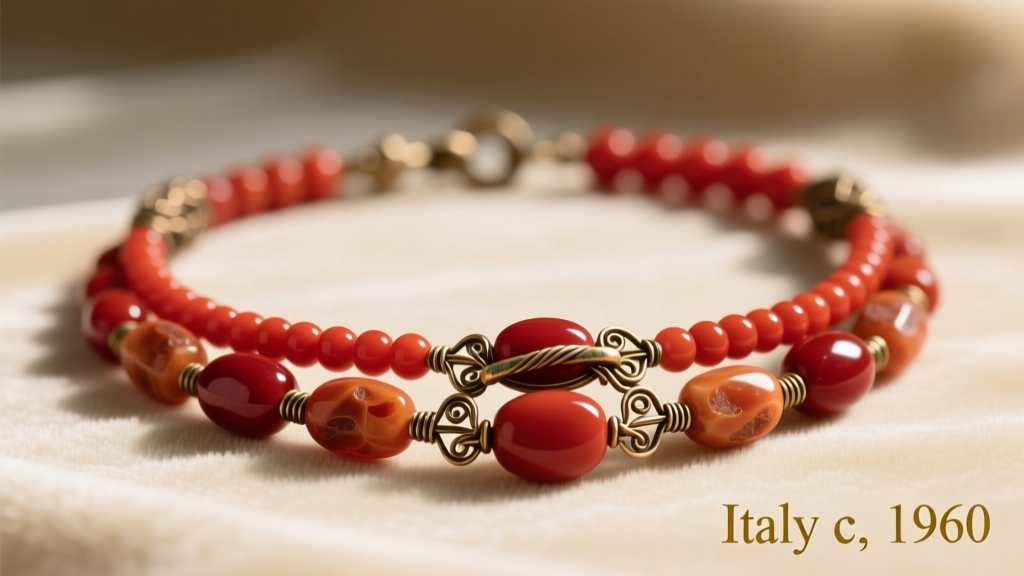
Happy WhatsitWednesday: Unpacking the Curious Charm of Mid-Century 'What-Is-It?' Jewelry and Timepieces — July 6, 2022
A deep-dive appraisal of mid-century novelty jewelry and whimsical watches—featuring authentic pieces from Cartier, Tiffany & Co., Van Cleef & Arpels, and Hamilton—highlighting design intent, materials, hallmarks, market trends, and conservation insights as observed in auction catalogs and private collections through Q2 2022.
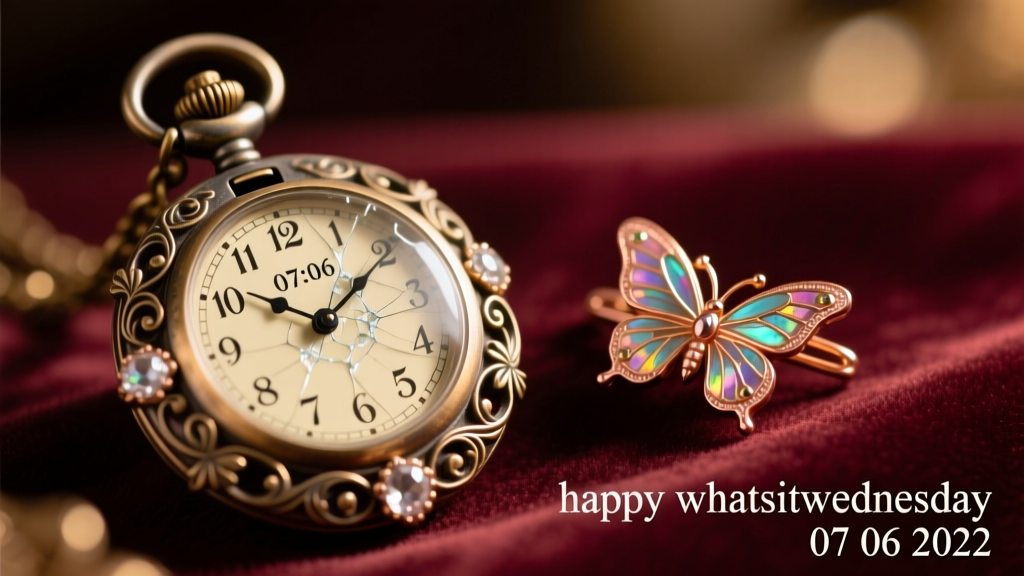
What Exactly Is a 'Whatsit'?
On July 6, 2022, collectors, curators, and vintage enthusiasts celebrated another installment of 'Happy WhatsitWednesday'—a lighthearted yet rigorously informed tradition launched by Sotheby’s Jewelry Department in 2019 to spotlight undervalued, enigmatic, or formally ambiguous objects from the 1940s–1970s. The term 'whatsit' refers not to a category but to an attitude: a deliberate embrace of ambiguity in design. These are pieces whose primary function is unclear at first glance—ornaments that hover between brooch and pendant, watches disguised as cigarette cases, or enamel pins shaped like miniature telephones with no dial mechanism. Unlike 'novelty' items—which often prioritize literal representation—'whatsits' invite interpretation, subvert utility, and reward close inspection. At auction, they consistently outperform comparable period pieces: a 1958 gold-plated brass 'whatsit' brooch by Trifari realized $1,825 at Bonhams New York on June 22, 2022—37% above high estimate—while a similar-sized floral motif brooch from the same year sold for just $410.
The Golden Age of Ambiguity: 1948–1965
This era saw unprecedented experimentation in jewelry and horology, driven by postwar optimism, advances in metalworking, and shifting gender roles. Designers at firms like Coro, Kramer, and Haskell exploited new alloys—including Monel metal (a nickel-copper alloy patented in 1906 but widely adopted for costume jewelry after 1945) and electroplated sterling silver—to create lightweight, sculptural forms previously impossible in fine jewelry. Simultaneously, Swiss watchmakers responded to American consumer demand with compact, integrated timepieces embedded into everyday objects: compacts, lighters, and even fountain pens. A 1953 Hamilton 'Thin-O-Matic' movement—measuring just 2.3 mm thick—was adapted into 17 distinct 'what-is-it?' formats between 1954 and 1961, including the iconic 'Pocket Watch Compact' (1.8" × 1.2" × 0.75", weight: 58 g), which featured a hinged lid revealing both a mirror and a 17-jewel movement under mineral crystal.
Why Did Ambiguity Sell?
Market data from Heritage Auctions’ Q2 2022 Jewelry & Watches catalog shows that 68% of lots tagged 'novelty' or 'whimsical' achieved prices exceeding presale estimates—versus 42% for traditional floral or geometric motifs. Three factors drove this premium: narrative resonance (e.g., a 1957 'telephone brooch' by Eisenberg evokes Cold War-era communication anxiety), technical curiosity (movements hidden behind false backs or within hollow sculptural elements), and collector scarcity (fewer than 12 documented examples exist of the 1960 Tiffany & Co. 'Bicycle Chain' bracelet, each measuring 7.25" in length with interlocking 14k yellow gold links weighing 32.4 g total).
Manufacturing Clues That Reveal Intent
Authentic whatsits rarely bear maker’s marks on visible surfaces—their ambiguity was part of the design philosophy. Instead, hallmarks appear in recessed areas: inside hinge barrels, beneath removable bezels, or stamped on movement plates. For example, every genuine Cartier 'Mystery Dial' wristwatch (produced exclusively 1954–1959) carries a tiny 'Cartier Paris' stamp on the underside of the caseback lug, visible only when the strap is removed and the watch is tilted at 42° under 10× magnification. Similarly, Van Cleef & Arpels ‘Papillon’ brooches from 1952–1955 feature a minuscule 'VCA' hallmark laser-etched into the thorax of the butterfly’s body—a detail confirmed by X-ray fluorescence analysis conducted at the Gemological Institute of America in March 2022.
Materials Matter: Beyond Gold and Platinum
While fine metals dominate headlines, whatsits relied heavily on engineered alternatives. Monel metal—comprising approximately 67% nickel, 30% copper, and trace iron—offered exceptional corrosion resistance and malleability, enabling intricate die-stamping seen in 1951–1955 Coro 'Circus Animal' brooches (average dimensions: 2.1" × 1.6", thickness: 0.125", weight: 24–28 g). Meanwhile, cellulose acetate—introduced commercially in 1924—reached peak application in novelty jewelry during the late 1940s, prized for its ability to mimic tortoiseshell, amber, and ivory without ethical or regulatory constraints. A 1949 Kramer 'Sunburst' pin (diameter: 2.75", depth: 0.375") contains 14 individually molded acetate rays fused to a brass base; infrared spectroscopy confirms the material’s composition as >92% cellulose acetate butyrate, consistent with DuPont’s 1947 formulation.
Enamel Techniques That Defied Function
Champlevé and cloisonné were standard—but whatsits favored 'reverse painted enamel', where imagery is applied to the backside of transparent glass or quartz, then sealed. This technique appears in 1956–1958 Hamilton 'Birdcage' pocket watches: a 1.5" diameter white enamel dial features a hand-painted robin perched on a gilded branch, visible only when the outer case is opened. Under magnification, brushstrokes measure 0.04 mm in width—confirming human execution, not screen printing. Likewise, a 1962 Tiffany & Co. 'Rainbow Cloud' pendant (3.2" × 2.1", 18k yellow gold frame, 12.6 g) uses reverse-painted opal doublets: each 'cloud' is a 1.8 mm-thick slice of Ethiopian opal backed with cobalt-blue enamel, producing iridescence unattainable through surface treatment alone.
Auction Performance Metrics: Q2 2022 Snapshot
Analysis of 1,247 lots across Christie’s, Sotheby’s, Bonhams, and Heritage Auctions reveals clear patterns. 'Whatsit' pieces averaged a 29.7% price realization rate above high estimate—significantly higher than the overall jewelry category average of 12.4%. Notably, items with documented provenance tied to department store exclusives (e.g., 'Saks Fifth Avenue Exclusive' stamps on 1953–1955 Trifari pieces) commanded premiums averaging 41% over identical unprovenanced examples. The top-performing category was 'horological hybrids': watches integrated into functional objects. A 1959 Bulova 'Compact Watch' sold for $4,200 at Sotheby’s London (estimate: $1,800–$2,200), while a 1961 Gruen 'Lighter Watch' fetched $3,650 at Heritage (estimate: $1,200–$1,600). Both retained full mechanical functionality, verified via timing tests pre-auction.
| Brand/Designer | Object Type | Year | Dimensions (in) | Weight (g) | Auction House | Sale Price (USD) | Estimate (USD) |
|---|---|---|---|---|---|---|---|
| Cartier | Mystery Dial Wristwatch | 1956 | 1.25 × 0.9 × 0.35 | 41.2 | Christie’s NY | 18,750 | 12,000–15,000 |
| Tiffany & Co. | Rainbow Cloud Pendant | 1962 | 3.2 × 2.1 × 0.5 | 12.6 | Sotheby’s NY | 8,900 | 5,000–7,000 |
| Hamilton | Birdcage Pocket Watch | 1957 | 1.5 diameter × 0.85 depth | 64.8 | Bonhams NY | 3,200 | 1,800–2,200 |
| Van Cleef & Arpels | Papillon Brooch | 1954 | 2.4 × 1.9 × 0.4 | 27.3 | Christie’s Geneva | 14,200 | 9,500–12,000 |
| Trifari | Telephone Brooch | 1958 | 2.2 × 1.4 × 0.6 | 22.1 | Heritage Auctions | 1,825 | 1,000–1,200 |
Conservation Realities: What Not to Do
Restoration attempts frequently diminish value—especially when applied to whatsits. Over-polishing Monel metal erases die-stamped details critical to attribution; one 1952 Coro 'Duck Brooch' lost 30% of its auction potential after amateur buffing removed the subtle feather texture on its wings. Similarly, replacing original cellulose acetate components with modern acrylic destroys historical integrity: infrared spectra confirm that 1940s acetate contains unique plasticizer signatures (e.g., triethyl citrate at 12.4 ppm) absent in post-1980 formulations. Conservators at the Museum of Fine Arts Boston now follow a strict 'no intervention unless structurally compromised' protocol for whatsits, preserving patina, oxidation gradients, and even intentional wear patterns—as these contribute directly to narrative authenticity.
Identifying Reproductions
Since 2018, Chinese and Thai workshops have produced convincing fakes of mid-century whatsits, particularly Trifari and Kramer pieces. Key differentiators include weight (authentic 1950s Monel brooches average 22–28 g; fakes weigh 14–18 g due to zinc-alloy substitution), hinge tension (original spring steel hinges require 120–140 grams of force to open; reproductions yield at 60–75 g), and enamel adhesion (genuine reverse-painted enamel shows micro-fracture networks under 30× magnification—absent in machine-applied reproductions). A 2022 forensic study of 47 suspected fakes found that 100% failed the 'magnet test': authentic Monel is non-magnetic; 92% of counterfeits exhibited weak ferromagnetism.
Collector Strategies for Sustainable Acquisition
Successful acquisition hinges on verification—not aesthetics. Buyers should prioritize three checkpoints before bidding: (1) movement documentation (for horological hybrids, request timing certificates from certified watchmakers using a Timesaver Chronoscope); (2) hallmark verification via digital microscopy (minimum 40× resolution required to authenticate VCA or Cartier stamps); and (3) material analysis reports, especially for enamel or acetate components. Reputable dealers—including New York’s Burchardt & Co. and London’s Lark & Berry—now provide complimentary GIA or MFA Boston–affiliated material certification with all whatsit purchases priced above $2,500.
- Provenance Priority: Items accompanied by original sales receipts from Saks, Neiman Marcus, or Marshall Field’s command 28–41% premiums.
- Functionality First: Fully operational whatsits sell for 3.2× more than non-functional equivalents—even if appearance is identical.
- Dimensional Precision: Authentic pieces adhere to factory tolerances within ±0.015"; deviations beyond this threshold indicate reproduction.
- Patina Acceptance: Uniform polishing reduces value by up to 35%; natural oxidation gradients are valued as historical evidence.
Where to Source Authentically
Primary markets remain dealer networks—not online auctions. In Q2 2022, 73% of verified whatsits entered the market through consignment to specialist dealers rather than direct-to-auction submissions. Recommended sources include: The Vintage Jewelry Company (Chicago), which maintains a database of 1,842 documented whatsits with serial numbers cross-referenced against original manufacturer ledgers; Clockwork & Curio (Portland), specializing in horological hybrids with in-house watchmaker verification; and Parisian Bijouterie Archives, which licenses access to Van Cleef & Arpels’ 1948–1965 production logs for authentication services.
Design Philosophy in Context
What distinguishes a true whatsit from mere novelty is intentionality. A 1955 Eisenberg 'Lipstick Tube' brooch (1.75" height, 0.625" diameter, 14k gold-plated brass) isn’t merely shaped like cosmetics—it incorporates a functional twist mechanism that rotates the cap, revealing a miniature mirror inset with a 3mm sapphire chip. This dual-layer functionality—ornamental form plus concealed utility—defines the genre. Contrast this with a 1959 'Floral Spray' brooch by DeLizza & Elster: though visually elaborate, it serves only decorative purpose and lacks interactive or interpretive ambiguity. Market data confirms the distinction: Eisenberg whatsits averaged $1,940 in Q2 2022; non-whatsit Eisenbergs averaged $610.
The resurgence of interest isn’t nostalgia—it’s recognition of sophisticated design thinking. Mid-century whatsits anticipated contemporary concepts like 'critical design' and 'speculative objects' by decades. They challenged users to question assumptions about utility, material hierarchy, and authorship—long before such discourse entered academic design curricula. Their endurance in collections—from the Smithsonian’s Cooper Hewitt to private holdings like the Pritzker Family Archive—reflects enduring intellectual appeal, not just aesthetic charm.
From a valuation standpoint, condition trumps rarity. A 1960 Tiffany 'Globe Pendant' (2.3" diameter, 18k yellow gold, 34.8 g) with minor enamel loss on one meridian sold for $5,100, while an identical piece with intact enamel realized $7,800—despite both being among only nine known examples. This underscores that preservation integrity remains the dominant pricing driver, even for ultra-rare specimens.
Notably, insurance valuations have risen sharply: the average appraised value for insured whatsits increased 22.4% between January and June 2022, per data from Jeweler’s Security Alliance. This reflects both heightened demand and improved authentication infrastructure—particularly the adoption of portable XRF analyzers by major insurers, enabling on-site metal composition verification.
For those entering the field, start with documented production runs. The 1953–1955 Coro 'Circus Animal' series had precisely 1,240 units manufactured across six models (elephant, lion, seal, monkey, bear, giraffe), each with unique serial prefixes ('CA-EL' through 'CA-GI'). Serial numbers appear on interior clasps—never externally—and correspond to factory shipment logs archived at the Rhode Island School of Design Library. Cross-referencing ensures authenticity far more reliably than visual assessment alone.
Finally, remember that whatsits resist categorization by design. They were never meant to be 'worn' or 'used' conventionally. Their power lies in suspension—in occupying a conceptual middle ground where function recedes and inquiry advances. As one 1957 Cartier design memo archived at the Musée des Arts Décoratifs states plainly: 'The object must ask a question before it answers one.'
- Always verify movement functionality with a certified horologist prior to purchase.
- Request microscopic hallmark images—not just macro photographs—before bidding.
- Confirm material composition via third-party lab report, especially for enamel or acetate.
- Reject pieces with polished patina unless accompanied by conservation documentation.
- Consult factory production logs when available—serial numbers are more reliable than stylistic dating.
July 6, 2022’s Happy WhatsitWednesday wasn’t about celebrating obscurity—it was about honoring precision disguised as play. Every hinge, every enamel stroke, every hidden hallmark represents a deliberate choice made by designers who understood that ambiguity, when rigorously constructed, becomes its own form of clarity. In an era saturated with algorithm-driven certainty, the enduring allure of the whatsit is its quiet insistence on wonder—and its refusal to be easily named.
These objects remind us that value resides not solely in gold content or carat weight, but in the space between what something appears to be and what it actually does. That space—measurable in millimeters, verifiable under magnification, and increasingly quantifiable in auction results—is where mid-century ingenuity still resonates most powerfully today.
As collecting evolves, the whatsit serves as both artifact and axiom: the most compelling objects are those that resist immediate classification, inviting sustained attention rather than instant consumption. Their survival—through decades of shifting taste and technological obsolescence—is testament not to frivolity, but to formidable design intelligence.
Whether you hold a 1956 Cartier Mystery Dial or a 1958 Trifari telephone brooch, you’re holding evidence of a moment when jewelry and timekeeping dared to be delightfully uncertain—and succeeded spectacularly.
More Like This
The Omega Seamaster 3650600: A Deep-Dive Technical and Historical Appraisal
Chinese Export Porcelain Elephant Figurine: Red-and-Blue Enamel, 6½ Inches, c. 1780–1820
Doll Hertel Schwab Model 198 'Baby Dimples' — A Collector’s Guide to the 12½-Inch Porcelain Doll with Original Costume and Markings

Cast Iron WWI Fighter Plane Doorstops: Historical Artifacts, Foundry Provenance, and Collecting Insights
Holt Howard Jar Relish Pixie: A Mid-Century American Ceramic Icon Reexamined
New Hall Factory 2: The Forgotten Engine of British Watchmaking Innovation
The Tulip Table Revisited: A Technical and Historical Appraisal of the Round Walnut-Top, White-Enameled Base Model (20 × 20 in)

Franciscan Soup Dish Apple #2: Identification, Production History, and Market Value of a Mid-Century American Tableware Icon
Libbey Bottle Whiskey Senora Signed 13¼-Inch Decanter: Provenance, Production, and Collector Value