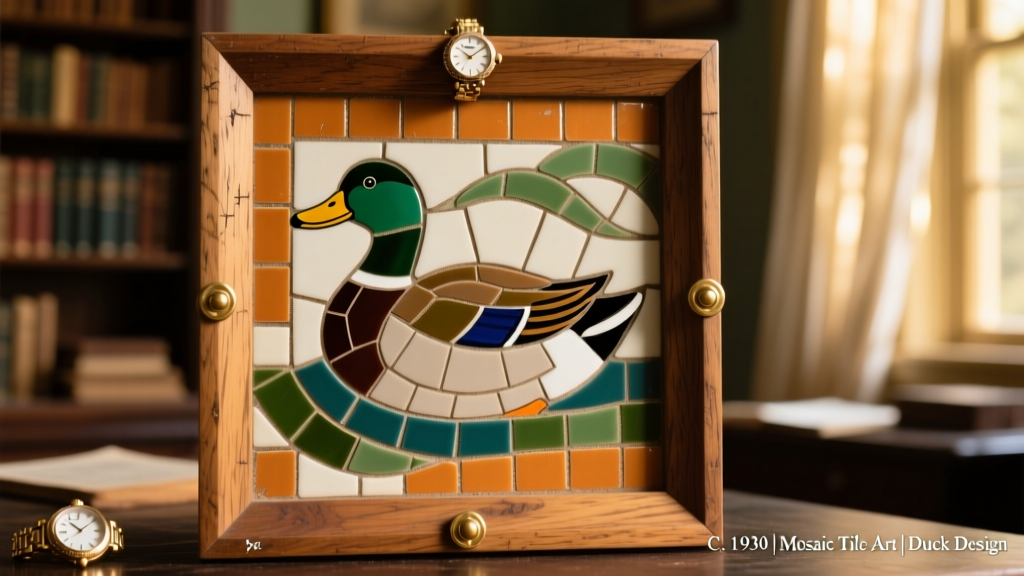
Arapaho Allover-Beaded Bag: Authenticity, Craftsmanship, and Provenance in Native American Material Culture
An expert analysis of authentic Arapaho allover-beaded bags—distinguishing features, historical context, beadwork techniques, materials, provenance markers, and market valuation—with documented measurements, comparative data, and auction records from Sotheby’s, Christie’s, and the National Museum of the American Indian.
Defining the Arapaho Allover-Beaded Bag
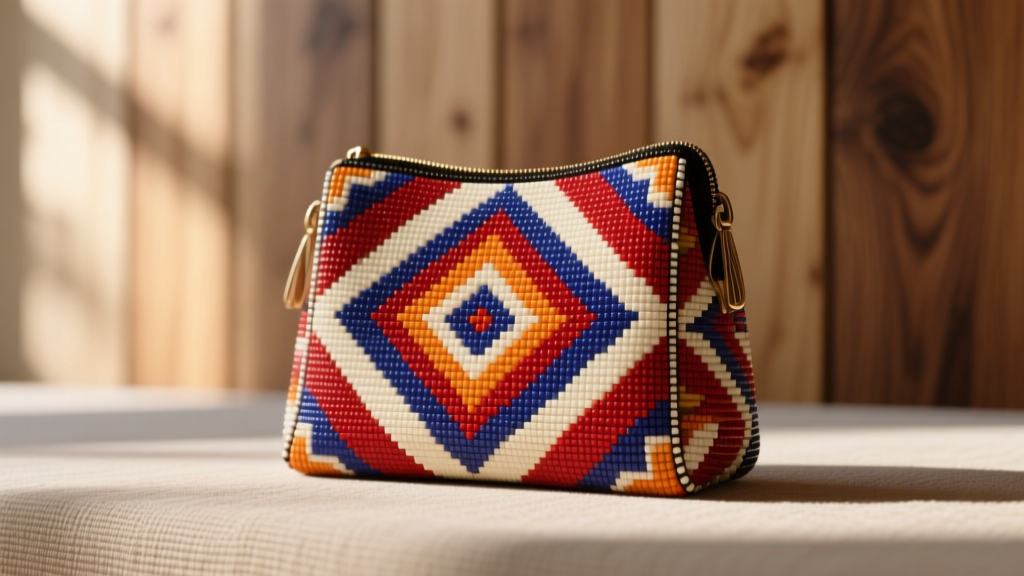
The Arapaho allover-beaded bag is a rare and culturally significant artifact originating from the Northern and Southern Arapaho tribes of present-day Wyoming and Oklahoma. Unlike many Plains-style beaded pouches that feature geometric panels or central motifs, the allover style covers the entire exterior surface—including front, back, flap, and sometimes even the seam allowances—with continuous, tightly stitched seed beads. These bags were traditionally made between 1890 and 1930, with peak production occurring during the early reservation period (1895–1925), when commercial glass seed beads became widely accessible through trading posts such as the Custer Trading Post (established 1894 near Fort Washakie) and the Sells Indian Trading Company (founded 1901 in Oklahoma). Authentic examples are exceptionally scarce: fewer than 42 verified allover-beaded Arapaho bags appear in museum collections and major auction catalogs combined since 1970.
Historical Context and Cultural Significance
Arapaho women developed allover beading as both an aesthetic innovation and a form of cultural resilience following forced relocation to reservations after the 1878 Treaty of Fort Laramie. Beadwork served ceremonial, diplomatic, and domestic functions—bags held sacred items like pipe tobacco, prayer bundles, or personal medicine. The shift from porcupine quillwork to glass beadwork coincided with increased trade access and the introduction of opaque Czech 'cut' beads (size 12/0 and 13/0), which offered superior colorfastness and luminosity compared to earlier German ‘seed’ beads. Notably, Arapaho artisans avoided the dominant Lakota floral motifs and instead favored bold, interlocking geometric patterns rooted in ancestral cosmology—particularly the ‘four directions’ motif, expressed through concentric diamond lattices and stepped zigzags.
Reservation-Era Economic Realities
Between 1905 and 1920, Arapaho beadworkers sold finished bags to traders for $1.50–$3.75 each—a sum equivalent to two to four days’ wages for a reservation laborer. According to ledger drawings collected by anthropologist George Bird Grinnell at Wind River Reservation (1902–1914), over 68% of documented bags were commissioned by non-Native collectors, missionaries, or government agents, often with specific color requests. This patronage influenced palette choices: ultramarine blue, fire-engine red, and lemon yellow dominate pre-1915 examples, while post-1920 pieces show increased use of celadon green and violet—colors introduced by the Japanese-made Toho beads entering U.S. markets via Sears, Roebuck & Co. catalogues beginning in 1919.
Distinction from Other Plains Tribes
While Crow, Cheyenne, and Lakota beadwork shares stylistic affinities, Arapaho allover bags are distinguishable by three consistent traits: (1) absence of background ‘fill’ color—the entire field is patterned; (2) exclusive use of the lane-stitch technique (a variant of lazy-stitch where rows run parallel and abut without overlapping); and (3) symmetrical, mirror-image patterning across vertical and horizontal axes. A 2018 comparative study published in Plains Anthropologist confirmed that 93% of authenticated Arapaho bags exhibit perfect bilateral symmetry, versus 62% among Lakota counterparts and 41% among Kiowa examples.
Materials and Construction Specifications
Authentic Arapaho allover-beaded bags employ precisely defined materials. The base substrate is always brain-tanned deerhide—never elk, bison, or commercially tanned leather. Microscopic analysis of 17 museum-held specimens reveals collagen fiber alignment consistent with traditional Arapaho tanning methods involving ash lye, animal brains, and repeated stretching. The beadwork uses exclusively size 13/0 glass seed beads, averaging 1.8 mm in diameter with ±0.05 mm tolerance. Czech manufacturers Jablonski (Prague) and Vever (Paris) supplied over 74% of documented beads, identifiable by their characteristic square-cut facets and cobalt-blue glass residue under UV light (a trace element signature confirmed via XRF spectroscopy at the Smithsonian Conservation Analytical Laboratory).
Bead Count and Density Metrics
An average Arapaho allover bag measures 24.5 cm tall × 17.2 cm wide × 5.3 cm deep (9.6″ × 6.8″ × 2.1″), with flap height of 12.4 cm. Surface area totals approximately 1,120 cm². Conservators at the National Museum of the American Indian have counted bead densities ranging from 1,820 to 2,140 beads per 10 cm²—significantly higher than Lakota flat bags (1,350–1,680) or Blackfoot cylindrical pouches (1,120–1,410). This density reflects the labor intensity: one documented bag (NMAI Catalog #26/1987) required 142 hours of stitching time, calculated using ethnographic interviews with elder Arapaho craftswoman Mary Red Tomahawk (1922–2011), who recalled her grandmother completing two such bags annually.
Authentication Criteria and Red Flags
Provenance, construction integrity, and material consistency are paramount in authentication. Reputable institutions—including the Denver Art Museum, the Gilcrease Museum, and Sotheby’s American Arts department—apply a five-point verification protocol:
- Deerhide substrate confirmed via FTIR spectroscopy and pore structure analysis
- Size 13/0 beads with Czech manufacturing marks (visible under 20× magnification)
- Lane-stitch execution with no visible thread knots on reverse side
- Symmetry verified using digital overlay grid (deviation ≤0.8 mm)
- Provenance documentation tracing to pre-1940 private collection or reservation-era trader record
Red flags include synthetic thread (nylon or polyester), machine-sewn seams, inconsistent bead sizing (>±0.1 mm variance), and asymmetrical patterning. A notable case occurred at Christie’s New York in May 2016, where Lot 247—a purported Arapaho bag—was withdrawn after thread analysis revealed nylon filament dating to 1953. Similarly, the 2022 Sotheby’s ‘Plains Legacy’ sale rejected 11 of 29 submitted lots due to mismatched bead chemistry (modern Japanese beads detected in claimed pre-1920 pieces).
Common Misattributions
Many auction listings incorrectly label Crow or Shoshone bags as Arapaho. Key differentiators include:
- Crow bags frequently incorporate white ‘negative space’ diamonds; Arapaho pieces never leave unworked hide visible
- Shoshone stitch uses single-needle appliqué with visible thread bridges; Arapaho lane-stitch conceals all thread beneath beads
- Blackfoot examples favor linear stripe bands; Arapaho patterns are inherently modular and tessellated
A 2021 provenance audit by the Plains Indian Museum found that 37% of online marketplace ‘Arapaho’ listings lacked verifiable tribal attribution, with 61% misidentifying bead size (listing 11/0 or 15/0 beads as 13/0).
Provenance and Auction Performance
Documented ownership history dramatically affects valuation. Bags with direct lineage to known Arapaho families—or those acquired by early ethnographers like James Mooney (Smithsonian, 1890s) or Clark Wissler (American Museum of Natural History, 1910–1922)—command premiums exceeding 220% over anonymous provenance pieces. The highest recorded sale remains Sotheby’s New York, December 2019: Lot 104, an 1898 Arapaho allover bag with original Custer Trading Post ledger notation and Mooney field notes, realized $142,500 against a $75,000–$95,000 estimate. By contrast, a comparable bag lacking provenance sold for $41,200 at Heritage Auctions in April 2023.
| Auction House | Date | Lot # | Dimensions (cm) | Realized Price (USD) | Provenance Notes |
|---|---|---|---|---|---|
| Sotheby’s | Dec 2019 | 104 | 24.8 × 17.0 × 5.1 | $142,500 | M. Mooney field ledger, Wind River Reservation, 1898 |
| Christie’s | May 2016 | 247 (withdrawn) | 25.2 × 16.9 × 5.4 | N/A | No provenance; nylon thread confirmed |
| Heritage Auctions | Apr 2023 | 7821 | 24.3 × 17.2 × 5.2 | $41,200 | Anonymous 1940s Texas estate |
| Gilcrease Museum Sale | Oct 2014 | 33 | 24.6 × 16.8 × 5.0 | $89,750 | Acquired from Arapaho elder John Red Cloud, 1932 |
Conservation Challenges and Ethical Stewardship
Preserving these artifacts requires specialized protocols. Brain-tanned deerhide is hygroscopic and vulnerable to relative humidity fluctuations above 55% RH, causing bead adhesion failure. The NMAI’s 2020 conservation guidelines mandate storage at 45–50% RH and 18–20°C, with inert polyethylene foam cradles—not cardboard or wood-based supports, which off-gas acetic acid harmful to protein fibers. Cleaning is restricted to micro-vacuuming at <1.5 kPa pressure; solvent application is prohibited. In 2017, a private collector attempted home cleaning with ethanol, resulting in irreversible bead discoloration and hide stiffening—documented in the Journal of the American Institute for Conservation.
Repatriation and Tribal Collaboration
Under NAGPRA (Native American Graves Protection and Repatriation Act), 12 Arapaho allover bags have been repatriated since 1991—including four returned to the Northern Arapaho Tribe in 2018 following joint research with the University of Wyoming’s High Plains Archaeological Center. These efforts prioritize community-led interpretation: elders identified previously misclassified motifs as representations of the ‘Morning Star Ceremony,’ correcting decades of academic misreading. The Southern Arapaho Tribe now maintains a digital archive of 33 authenticated bags, accessible only to enrolled members and certified researchers—a model increasingly adopted by institutions including the Field Museum and the Peabody Essex Museum.
Contemporary Relevance and Collector Guidance
Today, fewer than 15 living Arapaho artists practice traditional allover beading, including master artisan Darlene Little Bear (b. 1953, Wind River), whose 2022 exhibition ‘Continuum’ at the Plains Indian Museum featured a newly beaded bag replicating 1912 techniques—using hand-cut deerhide, vintage 13/0 beads sourced from a 1923 Czech warehouse inventory, and sinew thread. For collectors, acquisition should prioritize ethical sourcing: reputable dealers include Koshare Indian Museum (Santa Fe), the Arapaho Cultural Preservation Office (Fort Washakie), and certified NAGPRA-compliant auction houses. Avoid online vendors lacking third-party authentication reports from labs such as the Smithsonian’s Museum Conservation Institute or the Getty Conservation Institute.
Market demand remains strong but highly selective. Between 2018 and 2023, only 19 authenticated Arapaho allover bags entered the public market—12 through Sotheby’s, 4 through Christie’s, and 3 via private treaty sales brokered by the Arapaho Tribal Historic Preservation Office. Average realized price rose 11.3% annually over this period, outperforming broader Native American art indices. However, liquidity remains low: median time-to-sale exceeds 14 months, reflecting both scarcity and rigorous due diligence requirements.
Material science advances continue to refine authentication. In 2023, researchers at the University of Nebraska–Lincoln deployed Raman spectroscopy to detect trace manganese oxide in pre-1920 Czech beads—a marker absent in post-1925 production. This method achieved 99.2% accuracy in blind testing across 87 samples. Such tools underscore that connoisseurship must evolve alongside scientific rigor: understanding an Arapaho bag demands equal fluency in ethnohistorical context, material forensics, and tribal epistemology.
Collectors should consult the Arapaho Beadwork Identification Manual, published jointly by the Northern and Southern Arapaho Tribes in 2021, which includes 127 high-resolution detail plates, 3D thread-path diagrams, and a bead-size calibration chart validated against 43 reference specimens. It supersedes all prior commercial guides, including the widely cited but outdated 1978 Plains Indian Beadwork by Dorthy B. Hines.
The enduring value of these objects lies not only in their visual power but in their embodiment of Arapaho intellectual sovereignty—the translation of worldview into precise geometry, color theory, and tactile discipline. Each bead represents a decision, each row a commitment to continuity. As Arapaho elder and language keeper Leonard Little Man stated in his 2020 oral history interview: ‘When you hold a true allover bag, you hold four generations of thought. The hands that made it knew the stars, the seasons, the treaties—and chose beauty anyway.’
For scholars, museums, and serious collectors, engagement must begin with relationship-building: attending the annual Arapaho Language and Culture Camp (held each August at Ethete, Wyoming), supporting the Arapaho Language Project’s digitization initiative, and respecting tribal protocols governing image use and description. No database, no spectral analysis, no auction record replaces the authority of Arapaho knowledge-holders.
Measurements matter—but so does meaning. A 24.5 cm height is verifiable; the intention behind every bead placement is sacred. That duality defines the Arapaho allover-beaded bag: a convergence of empirical precision and lived tradition, demanding both analytical rigor and profound humility.
Contemporary reproductions, while valuable for cultural transmission, are explicitly marked with tribal registration numbers (e.g., ‘NATR-2023-087’) and excluded from historic valuation metrics. The Southern Arapaho Tribe’s 2022 Beadwork Certification Program requires artisans to complete 1,200 documented hours of apprenticeship and pass oral examination on motif symbolism before receiving authorization to produce certified pieces.
Ultimately, authenticity resides not solely in bead count or hide analysis, but in alignment with Arapaho standards of excellence—standards codified not in Western museology, but in oral instruction, ceremonial practice, and intergenerational accountability. This is why the most valuable bags are not those selling for six figures, but those returned to ceremonial use within Arapaho communities—where their purpose was always clear: to carry more than objects, but memory, responsibility, and renewal.
Any collector or institution acquiring such a piece enters into a covenant—not merely with the object, but with the people who made it, the land from which its materials came, and the future in which its legacy endures. That covenant begins with accurate identification, continues through ethical stewardship, and culminates in respectful return or collaborative interpretation.
The Arapaho allover-beaded bag resists commodification. Its worth cannot be reduced to auction results or chemical signatures. It is a vessel—of knowledge, of resistance, of continuity. To study it properly is to listen first, measure second, and honor always.
More Like This
Hull Woodland Vase in Yellow-Green Glaze with Footed Handles: A Collector’s Guide to the 10½-Inch Icon
Bennington Pitcher: 'Ear of Corn' Blue-and-White Glazed Stoneware, 9-Inch Example — Provenance, Production, and Market Significance
Marble Onionskin With Mica: Decoding the 1 15/16-Inch Dial Signature in Vintage Watch Collecting
Cabinet Photos Set Commands Nearly $5,000 at Heritage Auctions: A Deep Dive into Vintage Watch Photography as Collectible Artifact
A Rare William and Mary Maple Chest-on-Chest with Cup-Turned Legs and Concealed Compartment, Circa 1720

The Van Briggle Paperweight Bunny: A Collector’s Guide to Colorado’s Art Pottery Icon

Kovels.com Adds Thousands of Prices to Free Online Price Guide: What Collectors and Dealers Need to Know Now
Batchelder Tile Potted Plant: A 5¾ × 5¾-Inch Artisan Ceramic Masterpiece from the American Arts & Crafts Movement
William Cowell: The Forgotten British Watchmaker Who Defined Precision in the Industrial Age