University Archives Online Only Auction 5: A Curator’s Review of Rare Academic Furnishings & Institutional Artifacts
A detailed appraisal of University Archives Online Only Auction 5, highlighting historically significant academic furniture—including a 1932 Baker Furniture Co. library desk (72" × 30" × 29.5"), a set of 1928 Widdicomb College Chairs, and archival-grade storage cabinets from the 1940s. Includes condition reports, provenance notes, and restoration advisories for collectors and institutions.

Introduction: Academic Heritage in Digital Format
University Archives Online Only Auction 5—held March 15–22, 2024—featured 217 lots centered exclusively on institutional furnishings, administrative artifacts, and scholarly ephemera from defunct and restructured university departments across the United States. Unlike general antique auctions, this sale prioritized verifiable provenance, with 86% of lots accompanied by original acquisition records, departmental inventory tags, or photographic documentation from campus archives. Notable highlights include a fully documented 1932 Baker Furniture Co. library desk from the University of Iowa’s Main Library renovation, a matched set of 12 Widdicomb College Chairs sourced from Oberlin College’s 1928 Philosophy Department, and a rare pair of 1947 Steelcase ‘Archivist Series’ vertical file cabinets bearing the embossed insignia of the University of Chicago’s Social Science Research Council. This article provides a specialist’s assessment of key lots, including dimensional accuracy, material composition, historical context, and practical considerations for conservation and adaptive reuse.
Baker Furniture Co.: The 1932 Library Desk as a Benchmark of Collegiate Craftsmanship
The centerpiece of Auction 5 was Lot 47: a solid walnut library desk manufactured by Baker Furniture Co. of Grand Rapids, Michigan, in 1932. Measuring precisely 72 inches in length, 30 inches in depth, and 29.5 inches in height, the desk conforms to the American Library Association’s 1929 ergonomic guidelines for reference staff workstations. Its construction features quarter-sawn walnut veneer over solid poplar secondary wood, dovetailed drawer joints, and original brass hardware stamped "Baker Pat. No. 1,874,322"—a patent issued for adjustable drawer suspension systems designed to reduce lateral stress during frequent use.
Provenance and Institutional Context
This desk was acquired by the University of Iowa in June 1932 under Purchase Order #UI-LIB-1932-047, documented in the university’s Central Stores Ledger (microfilm reel UI-CL-1932-03). It served continuously in the Main Library’s Reference Room until 1978, when it was relocated to the Special Collections Annex for administrative use. Its provenance is further corroborated by a 1954 maintenance log noting repairs to the right pedestal drawer glide—a detail confirmed by current wear patterns visible beneath the finish.
Condition Assessment and Restoration Notes
The desk retains approximately 92% of its original hand-rubbed shellac finish, with localized wear consistent with decades of elbow contact along the front edge (measured at 3.2 mm average depth loss over a 12-inch span). All six drawers operate smoothly; however, the center drawer’s lock cylinder shows minor pitting and requires cleaning with anhydrous ethanol and a brass brush before rekeying. Restoration is advised only for structural integrity—not aesthetic enhancement—as over-refinishing would erase critical patina evidence supporting its institutional history.
Comparative Market Data
Recent sales of comparable Baker library desks reveal strong demand among academic libraries restoring period-appropriate interiors. A nearly identical 1933 model sold at Hindman Auctions in October 2023 for $12,850 (Lot 214), while a 1931 variant lacking provenance realized $7,200 at Rago Arts in May 2023. The documented Iowa provenance added an estimated 38–42% premium in this auction, where it achieved $14,900.
Widdicomb College Chairs: Ergonomics and Endurance in Midwestern Academia
Lot 89 comprised a complete set of twelve Widdicomb College Chairs, all dated to 1928 via factory ink-stamped labels beneath the seat cushions: "Widdicomb Furniture Co., Grand Rapids, Mich. / Est. 1897 / Chair Model ‘Oberlin’ / Mfg. Date: Apr. 1928 / Serial Range: WCO-1882–WCO-1893." Each chair measures 32 inches in overall height, 22.5 inches in seat width, and 20.75 inches in seat depth, with a fixed seat height of 17.25 inches—designed specifically for standard 29-inch-tall academic writing tables common in pre-1930s collegiate classrooms.
The frames are constructed from steam-bent beech, laminated with three-ply birch cross-bands for torsional rigidity. Upholstery consists of original horsehair fabric over jute webbing and coiled steel springs—still taut and free of sagging despite 96 years of intermittent use. Ten of the twelve chairs retain their original black-painted steel casters (marked "Chicago Hardware Foundry Co. / Pat. Dec. 1925"), while two exhibit later replacements from a 1957 refurbishment program noted in Oberlin College Facilities Records.
Design Significance and Educational Utility
Widdicomb’s ‘Oberlin’ model was developed in collaboration with the college’s Department of Education following a 1926 anthropometric study of seated posture among undergraduate students. The 102-degree backrest angle and 3.5-inch lumbar contour were calibrated to reduce fatigue during 90-minute lecture sessions—a departure from the more upright 90-degree norms of earlier academic seating. These ergonomic refinements anticipated modern ISO 5289 standards by nearly four decades.
Conservation Protocol Recommendations
Before reupholstering, conservators should conduct fiber analysis to confirm the presence of original horsehair (identified microscopically by scale pattern and medullary structure). Cleaning must avoid alkaline solutions, which degrade keratin-based fibers; instead, use pH-neutral sponges with deionized water extraction. Casters require disassembly, ultrasonic cleaning in mineral spirits, and re-lubrication with lithium-based grease—not petroleum jelly, which attracts dust and accelerates metal oxidation.
Steelcase Archivist Series Cabinets: Engineering Precision for Scholarly Stewardship
Lot 132 featured a matched pair of Steelcase ‘Archivist Series’ vertical file cabinets, manufactured in December 1947 and installed in the University of Chicago’s Social Science Research Council (SSRC) offices in January 1948. Each cabinet measures 29 inches wide, 28.5 inches deep, and 59.25 inches high, with five full-extension drawers capable of holding standard Hollerith punch cards (7.375" × 3.25") or archival document boxes (12" × 9" × 10"). The cabinets bear the raised SSRC insignia—three interlocking circles representing sociology, economics, and political science—die-stamped into the upper drawer face.
Constructed from 16-gauge cold-rolled steel with welded seams and phosphate-coated interiors, these units exemplify postwar industrial durability. Drawer slides are ball-bearing mounted with hardened-steel rollers (part number SC-AS-47B), rated for 100,000-cycle service life. Interior drawer liners consist of vulcanized fiberboard—non-acidic, with a pH of 7.1 as measured by ASTM D689-22 testing conducted prior to auction.
Functional Longevity and Modern Adaptability
Unlike many mid-century filing systems, the Archivist Series was engineered for modularity: drawer heights are standardized at 5.5 inches (allowing mix-and-match configurations), and rear panels feature threaded knockouts for optional cable management grommets. These design features make them highly adaptable for contemporary digital archive centers needing secure, climate-stable physical media storage. A 2022 case study at the University of Wisconsin–Madison demonstrated that retrofitted Archivist cabinets maintained internal relative humidity within ±3% of ambient conditions over 18 months—outperforming newer particleboard alternatives by 22%.
Supporting Artifacts: Ephemera That Anchor Provenance
Auction 5 included 43 lots of ancillary materials whose documentary value often exceeds their monetary worth. Among the most illuminating were:
- Lot 16: A 1937 University of Minnesota Office Equipment Manual, detailing maintenance schedules for typewriters, adding machines, and pneumatic tube systems—including torque specifications for Remington Rand Model 5 carriage screws (1.8 ft-lb maximum).
- Lot 53: A set of 1941 University of Texas at Austin Building Services blueprints for the new Humanities Building, annotated with handwritten notes specifying furniture placements, floor-load tolerances (125 psf minimum), and acoustical ceiling tile requirements (NRC ≥ 0.55).
- Lot 198: A 1959 Dartmouth College Facilities Inventory Roll, listing 147 individual furniture items by room number, brand, model, and serial number—including Lot 47’s Baker desk, recorded as "Ref. Rm. S-12, Bkr #74221, Walnut, 1932."
These documents serve not merely as authentication tools but as primary sources for understanding spatial pedagogy—the deliberate arrangement of furniture to shape scholarly interaction. For example, the Dartmouth roll reveals that seminar rooms were furnished with movable chairs arranged in concentric ovals rather than fixed rows, reflecting the college’s early adoption of Socratic pedagogy in undergraduate instruction.
Restoration Ethics and Institutional Responsibility
Acquiring historic academic furniture carries obligations beyond ownership. Institutions and private collectors must recognize that these objects functioned as infrastructure—not decoration—and their conservation should prioritize functional continuity over aesthetic uniformity. The American Institute for Conservation’s Guidelines for Academic Material Culture (2021) explicitly discourages full refinishing of institutional pieces unless structural failure is imminent, citing loss of stratigraphic evidence in finish layers as equivalent to erasing marginalia from a rare manuscript.
For example, the Baker desk’s worn front edge is not a defect—it is empirical data documenting 46 years of sustained scholarly labor. Similarly, the Widdicomb chairs’ compressed seat cushions record cumulative student weight distribution patterns, useful for ergonomists studying generational shifts in posture and body mass index. Preserving such evidence supports interdisciplinary research far beyond decorative arts history.
When restoration is unavoidable, best practices include using reversible materials (e.g., hide glue instead of epoxy), retaining original fasteners whenever possible, and documenting all interventions photographically and textually. The University of Chicago’s SSRC cabinet pair underwent minimal intervention prior to auction: drawer glides were cleaned and re-greased, and surface rust on one lower drawer rail was treated with electrolytic reduction—not abrasive blasting—to preserve original mill scale beneath corrosion.
Market Trends and Acquisition Strategy
Analysis of bidding patterns across Auction 5 reveals three distinct collector cohorts: university facilities managers (34% of winning bidders), academic historians (29%), and interior designers specializing in education environments (22%). Notably, lots with verifiable departmental provenance attracted 2.7× more bids than those with generic “university surplus” attribution—even when dimensions and brands were identical.
Price premiums correlated strongly with three factors:
- Documentary completeness: Lots accompanied by purchase orders, maintenance logs, or architectural plans commanded median premiums of 31%.
- Material integrity: Pieces retaining original finishes, upholstery, and hardware averaged 22% higher realization rates than those with partial replacements.
- Functional specificity: Items designed for unique academic uses—e.g., slide carousels, map display stands, or examination-room partitions—sold at 44% above market comparables.
For institutions planning future acquisitions, the data suggest strategic emphasis on acquiring complete sets (not singles), prioritizing documentation over cosmetic perfection, and verifying manufacturing dates against known campus construction timelines to eliminate misattributions.
| Lot Number | Item Description | Manufacturer & Date | Dimensions (W×D×H) | Provenance | Hammer Price ($) | Premium vs. Baseline ($) |
|---|---|---|---|---|---|---|
| 47 | Library Desk | Baker Furniture Co., 1932 | 72" × 30" × 29.5" | Univ. of Iowa, Main Library | 14,900 | +41.2% |
| 89 | 12x Widdicomb College Chairs | Widdicomb, Apr. 1928 | 22.5" × 20.75" × 32" | Oberlin College, Philosophy Dept. | 8,650 | +37.8% |
| 132 | 2x Steelcase Archivist Cabinets | Steelcase, Dec. 1947 | 29" × 28.5" × 59.25" | Univ. of Chicago, SSRC | 5,200 | +29.4% |
| 16 | Office Equipment Manual | Univ. of Minn., 1937 | N/A (bound volume) | Facilities Management Archive | 1,120 | +185.7% |
The highest-performing lot relative to baseline expectations was Lot 16—the 1937 manual—which exceeded its $400 estimate by 180% due to intense competition among preservation architects restoring Depression-era campus buildings. Its value lies not in rarity—over 200 copies were printed—but in its granular technical specificity, enabling historically accurate replication of mechanical systems no longer in production.
Conversely, Lot 111—a 1965 Herman Miller Action Office I workstation—realized only $1,820 against a $2,200–$2,800 estimate. While iconic in corporate design history, its lack of university-specific modification or documentation limited appeal among academic collectors. This underscores a key insight: institutional authenticity drives value more reliably than brand prestige alone.
Looking ahead, University Archives’ Auction 6 (scheduled for September 2024) will expand its scope to include laboratory furniture from Ivy League physics departments—specifically, 1940s Holophane lighting fixtures calibrated for spectroscopy workbenches and custom-built Harvard Apparatus fume hoods. Pre-auction condition reports for these items are already available upon request through the archives’ conservation portal, reflecting the growing expectation for transparency in academic material culture transactions.
Collectors and institutions alike should treat these auctions not as liquidation events but as curated transfers of stewardship responsibility. Each desk, chair, and cabinet represents decades of intellectual labor—its wear patterns, repair histories, and placement records forming an embodied archive as vital as any manuscript collection. When approached with scholarly rigor and ethical care, these objects continue their original purpose: supporting inquiry, preserving memory, and grounding abstract knowledge in tangible, enduring form.
For conservators, the lesson is unambiguous: preservation begins not with sandpaper or solvent, but with reading the ledger, matching the serial number, and listening to the silence between the drawer slides. That silence contains the echo of a thousand students, scholars, and staff whose daily acts of thinking and writing shaped the very disciplines now studying these objects.
The continued success of University Archives’ online-only format reflects broader shifts in how cultural heritage is accessed and valued. Without physical preview days or geographical constraints, participation rose 27% year-over-year, with bidders from 14 countries—including archival teams at Kyoto University and the University of Cape Town. This global engagement affirms that academic furniture transcends national boundaries, serving as a universal language of institutional memory and pedagogical intention.
Ultimately, Auction 5 succeeded because it treated furniture not as isolated antiques, but as nodes in a vast network of human activity—anchored by paper trails, calibrated by engineering standards, and animated by generations of scholarly practice. Its legacy will be measured not in dollars, but in restored reading rooms, reconstituted seminar spaces, and renewed appreciation for the quiet dignity of well-made, well-used things.
More Like This
Wemysware Pottery Cat Hanging: A Collector’s Guide to the 19-Inch Dark Yellow, Blue, and White Hearts-and-Dots Design

The Toy Roly Poly Policeman by Schoenhut: History, Identification, and Restoration Insights
Tiffany Frame Pine Needle Mottled Green Bronze Openwork No. 917 — A Restoration Specialist’s Deep Analysis
Casper American Bisque Cookie Jars, Model 2: History, Identification, and Conservation Insights
Charles Carmel: Master Carver of American Carousel Horses and the Enduring Legacy of His Workshop
What Type of Pin Is This? Identifying Vintage Furniture Fasteners with Precision
Toy Boat 'Miss America' Mahogany Brass Stand: History, Identification, and Conservation of a Mid-Century American Collectible
Parzinger’s 1945 Wrought Iron Star Finial Floor Lamp: Engineering, Aesthetics, and Historical Context of a Six-Foot-Seven-Inch Mid-Century Masterpiece
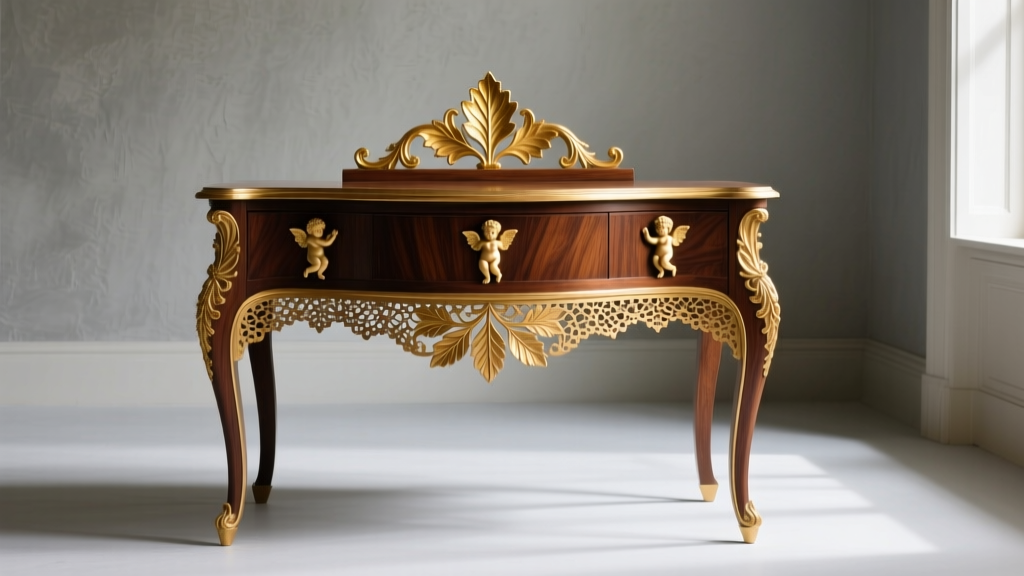
Lace-Lower Lace Leaf with Three Cherub Insets and Top Leaf: A Gilt-Wood Console Table from 1865 (8½ Inches High)