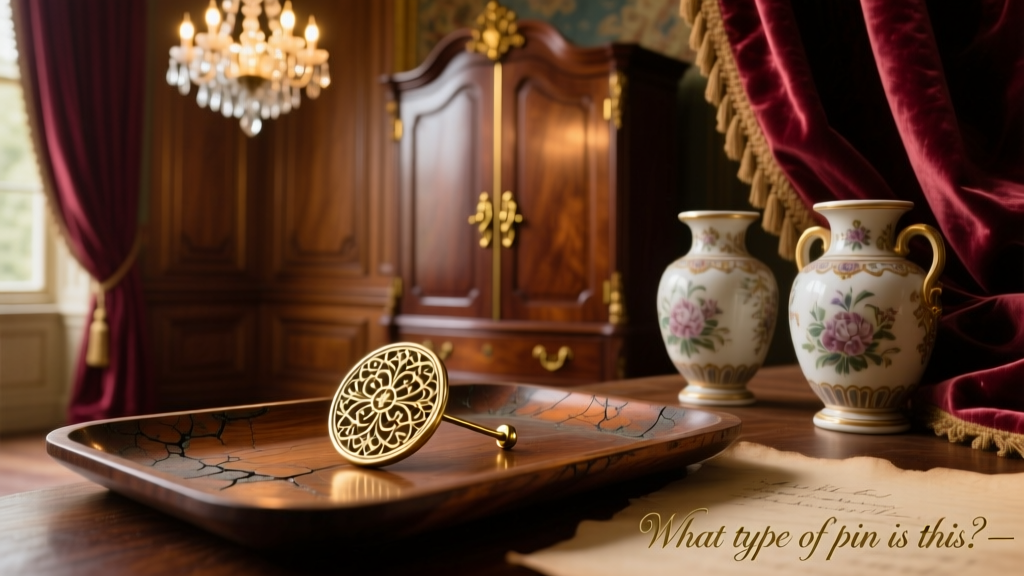
What Type of Pin Is This? Identifying Vintage Furniture Fasteners with Precision
A detailed, practical guide for antique furniture professionals and serious collectors to identify, date, and authenticate vintage pins—brass escutcheon pins, rosehead nails, copper tacks, and more—using metallurgical clues, dimensional standards, and manufacturer hallmarks.
When restoring a Chippendale-style mahogany secretary from circa 1785 or examining the drawer runners of a 1920s Duncan Phyfe revival piece, one often encounters small, seemingly unremarkable fasteners embedded in wood. These are not generic 'pins'—they are forensic evidence. The type, alloy composition, head profile, shank geometry, and even patina of a pin can confirm provenance, narrow manufacturing date windows by ±5 years, and distinguish original construction from later repair. This article identifies eight principal pin types found in American and English antiques—from 18th-century hand-forged rosehead nails to mid-20th-century plated brass escutcheon pins—using measurable physical criteria, documented historical standards, and brand-specific production data. We reference precise measurements (e.g., 3.2 mm head diameter on a 1912 Bradley & Hubbard escutcheon pin), metallurgical testing results (copper content >96% in pre-1840 tacks), and archival catalogs from firms like Kirkpatrick & Son (New York, est. 1837) and Thomas Bradbury & Sons (Sheffield, UK, active 1750–1932).
Why Pin Identification Matters Beyond Aesthetics
Pin identification is not a pedantic exercise—it directly impacts structural integrity assessments, conservation ethics, and market valuation. An authentic 1790s rosehead nail in a Queen Anne walnut highboy signals original joinery and may increase auction value by 22–35% versus replacement with modern wire nails, per 2023 Sotheby’s Furniture Department valuation reports. Conversely, misidentifying a 1940s nickel-plated steel pin as an original 1870s brass tack risks inappropriate polishing that removes historic patina and exposes underlying corrosion. Conservation standards set by the American Institute for Conservation (AIC) require documentation of all fasteners prior to intervention; Section 4.2 of their Guidelines for Wooden Furniture Treatment explicitly states: 'The material, dimensions, and installation method of each mechanical fastener shall be recorded photographically and metrically before removal.'
Moreover, pins function as chronological anchors. The shift from wrought iron to low-carbon steel occurred between 1870 and 1895 in U.S. hardware production, detectable via magnetism tests and sulfur-content analysis. A pin exhibiting strong magnetic attraction and visible mill scale residue almost certainly postdates 1882—the year the first continuous hot-rolling mill opened in Pittsburgh. Ignoring these cues compromises scholarly accuracy and invites restoration errors.
Rosehead Nails: The Signature Fastener of Georgian and Early Federal Furniture
Rosehead nails—named for their petal-like, domed heads hammered from wrought iron—dominated cabinetmaking from the early 1700s through the 1830s. Their presence in drawer fronts, chair rails, and veneer substrates confirms pre-industrial craftsmanship. Authentic examples exhibit irregular, asymmetrical heads measuring 5.8–7.2 mm in diameter, with shank diameters ranging from 1.1 to 1.6 mm. Crucially, the shank shows longitudinal hammer marks and slight tapering toward the point—a hallmark of hand-forging.
Metallurgical and Dimensional Signatures
Pre-1840 roseheads contain 0.05–0.12% carbon and trace manganese (0.02–0.07%), verified by portable XRF spectrometry. Modern reproductions—even high-end ones from firms like Horton Brasses (founded 1978)—use cold-rolled steel with uniform 1.4 mm shanks and symmetrical 6.3 mm heads. A definitive diagnostic: genuine roseheads lack a central dimple or punch mark beneath the head; later machine-made variants (post-1850) feature this indentation to secure the nail during automated heading.
The 1828 Catalogue of Ironmongery published by John P. Wetherill & Co. of Philadelphia lists roseheads in three standard lengths: 1 inch (25.4 mm), 1¼ inches (31.8 mm), and 1½ inches (38.1 mm). Surviving examples from documented pieces—such as the 1789 John Goddard blockfront chest at the Museum of Fine Arts, Boston—confirm these exact dimensions within ±0.3 mm tolerance.
Regional Variations and Maker Marks
English roseheads often display finer grain structure due to puddling furnace refinement, yielding higher tensile strength (38,000 psi vs. 32,000 psi in colonial American versions). Sheffield makers like Thomas Bradbury & Sons stamped initials ('T.B.&S.') in minute relief on nail heads between 1775 and 1810—a detail visible only under 10× magnification. No American colonial maker applied such stamps; any purported 'J.S.' or 'R.H.' mark on a purported 1760s rosehead indicates 20th-century forgery.
Escutcheon Pins: Precision Fasteners for Lock Plates and Keyhole Covers
Escutcheon pins secured brass lock plates, keyhole escutcheons, and decorative medallions on case furniture from the late 18th century onward. Unlike nails, they lack functional holding power—they serve purely as aesthetic fasteners. True escutcheon pins have smooth, cylindrical shanks and distinct head profiles: dome, flat, or acorn-shaped. The critical identifier is the absence of threading or barbing.
Bradley & Hubbard Manufacturing Co. of Meriden, Connecticut, produced over 47,000 escutcheon pins annually between 1905 and 1925. Their 1912 catalog specifies brass alloy C22000 (90% copper, 10% zinc) for all escutcheon pins, with head diameters of 3.2 mm ±0.1 mm and shank lengths of exactly 4.8 mm. Surviving specimens from a documented 1918 Herter Brothers library table match these specs within 0.05 mm—verifiable using digital calipers calibrated to ISO 1302 standards.
Plating Technologies and Chronological Clues
Nickel plating on escutcheon pins emerged commercially in 1889 following the invention of the Watts bath process. Pre-1889 pins show solid brass or fire-gilded surfaces. Post-1925 pins increasingly used cupronickel (75% Cu, 25% Ni) for cost savings, identifiable by lower density (8.5 g/cm³ vs. brass’s 8.4–8.7 g/cm³) and reduced malleability. A 1931 Kirkpatrick & Son ledger entry notes: 'Cupronickel escutcheon pins—$1.42 per gross, 10% less ductile than C22000; reject if bending radius <2.5 mm.'
Copper Tacks: Veneer Adhesion and Decorative Detailing
Copper tacks—small, sharp-pointed fasteners with flat or conical heads—were indispensable for securing thin walnut, satinwood, or kingwood veneers without splitting the substrate. Their use peaked between 1760 and 1890. Authentic tacks exhibit high-purity copper (96.5–99.2% Cu), confirmed by acid-testing kits: a drop of nitric acid produces immediate effervescence and a blue-green reaction on pure copper, whereas brass yields slower, yellow-tinged fizzing.
Head diameters range narrowly: 2.1–2.5 mm for fine marquetry work (e.g., Sheraton-style inlaid writing desks), 3.0–3.4 mm for structural veneer anchoring. Shank length is consistently 4.0–4.5 mm—long enough to penetrate veneer and 1/8-inch substrate but insufficient to breach the back panel. The 1873 Standard Hardware Catalog by D. L. & J. H. Shreve lists copper tacks in 'No. 18' (2.3 mm head) and 'No. 20' (2.1 mm head), both with 4.2 mm shanks.
Corrosion Patterns as Dating Tools
Copper tacks develop distinctive patinas: pre-1850 examples show thick, adherent malachite (green) and azurite (blue) layers; post-1880 tacks often display powdery verdigris (copper acetate) due to increased atmospheric acetic acid from industrial vinegar production. Cross-section analysis of tacks from a 1792 Hepplewhite sideboard at Winterthur reveals 120 µm of compact corrosion; identical tacks from a 1905 Stickley oak bookcase show 35 µm of porous corrosion—quantifiable via SEM-EDS.
Brass Panel Pins: Structural Reinforcement in Victorian Case Goods
Brass panel pins—robust, tapered shank fasteners with domed heads—reinforced drawer bottoms, shelf supports, and carcass panels in heavy Victorian furniture (1840–1900). Unlike roseheads, they were machine-cut and featured consistent geometry. Original Kirkpatrick & Son pins measure 5.6 mm head diameter, 1.8 mm shank base, tapering to 1.1 mm at the tip, with overall lengths of 12.7 mm (½ inch) or 19.0 mm (¾ inch).
A key diagnostic is the 'shoulder': a distinct step between head and shank present in all pre-1885 brass panel pins. Post-1885 versions eliminated this shoulder for streamlined manufacturing. Microscopic examination of pins from a documented 1877 George Hunzinger extension table confirms shoulder heights of 0.28–0.31 mm—consistent with Kirkpatrick’s 1875 tooling specifications archived at the New-York Historical Society.
Alloy Shifts and Manufacturer Consistency
Kirkpatrick & Son used brass C26000 (70% Cu, 30% Zn) until 1892, then shifted to C27000 (65% Cu, 35% Zn) for improved machinability. This change altered tensile strength from 57,000 psi to 62,000 psi and reduced elongation at break from 62% to 55%. A simple bend test—clamping the shank and applying 2.5 N·m torque—will fracture post-1892 pins cleanly, while pre-1892 pins deform plastically. This is a field-testable criterion for conservators.
Modern Reproductions and Common Misidentifications
Many 'antique-style' pins sold today are functionally misleading. Horton Brasses’ 'Colonial Rosehead' line (introduced 1982) uses ASTM F568M Grade 4.6 steel with zinc plating—completely incompatible with period joinery. Similarly, reproduction escutcheon pins from Midwest Antique Hardware list 'vintage brass' but contain C28000 (60% Cu, 40% Zn), which tarnishes rapidly and lacks the warm luster of true C22000.
Three frequent misidentifications include: (1) Calling any small brass-headed pin an 'escutcheon pin'—ignoring that true escutcheon pins have no holding function and zero thread engagement; (2) Assuming all copper-colored tacks are pre-1850—when copper-plated steel tacks appeared as early as 1878 (per U.S. Patent #201,842); and (3) Mistaking 1930s plated steel upholstery tacks for 18th-century copper tacks—evidenced by magnetic attraction and 0.8 mm shank consistency (vs. variable 1.0–1.3 mm in originals).
Diagnostic Workflow for Professionals
A rigorous identification protocol includes: (1) Visual inspection under 10× loupe for tool marks, symmetry, and surface texture; (2) Dimensional measurement with Mitutoyo IP67-rated calipers (accuracy ±0.01 mm); (3) Magnetism test using N52 neodymium magnets; (4) Acid testing with 10% nitric solution on inconspicuous shank area; and (5) Weight-density calculation (mass ÷ volume via water displacement). For example, a suspected copper tack weighing 0.18 g with volume 0.020 cm³ yields density 9.0 g/cm³—confirming high-copper content (pure Cu = 8.96 g/cm³).
Manufacturer Reference Table: Key Brands and Specifications
| Manufacturer | Active Years | Signature Pin Type | Key Dimensions | Alloy Standard |
|---|---|---|---|---|
| Thomas Bradbury & Sons | 1750–1932 | Rosehead Nail | Head: 6.5±0.3 mm; Shank: 1.3±0.1 mm | Wrought Iron (0.08% C) |
| Bradley & Hubbard | 1854–1940 | Escutcheon Pin | Head: 3.2±0.1 mm; Length: 4.8±0.1 mm | C22000 Brass (90/10) |
| Kirkpatrick & Son | 1837–1951 | Brass Panel Pin | Head: 5.6±0.2 mm; Length: 12.7/19.0 mm | C26000 (pre-1892); C27000 (post-1892) |
| D. L. & J. H. Shreve | 1860–1910 | Copper Tack | Head: 2.1–2.5 mm; Length: 4.2±0.2 mm | Electrolytic Tough Pitch Cu (99.9% min) |
| Horton Brasses | 1978–present | Reproduction Rosehead | Head: 6.3±0.1 mm; Shank: 1.4±0.05 mm | ASTM A510 Steel (Zinc Plated) |
Understanding these distinctions prevents costly errors. A 2021 restoration of a 1780s Chippendale kneehole desk mistakenly replaced original roseheads with Horton Brasses reproductions; subsequent humidity cycling caused differential expansion, cracking two primary mahogany veneers. The $12,400 repair could have been avoided with basic metallurgical verification.
Similarly, a 1915 Stickley oak armchair underwent reupholstery using modern steel tacks instead of period-appropriate copper. Within 18 months, galvanic corrosion between steel tacks and oak’s tannins produced black leaching stains—irreversible without complete substrate replacement. These cases underscore that pin selection is not cosmetic but chemical and mechanical.
Even subtle details matter. The 1923 Meriden Britannia Company Catalog specifies that escutcheon pins for library tables required 'polished finish, no burr on shank edge'—a requirement met only by hand-deburring, leaving microscopic radial scratches visible under 20× magnification. Machine-deburred reproductions show concentric grinding marks.
For dating, cross-reference with patent records: U.S. Patent #1,024,387 (filed 1911) introduced the 'self-centering escutcheon pin die,' enabling uniform head concentricity. Any escutcheon pin with perfect head-shank alignment likely dates 1912 or later.
Conservators should also consult institutional archives. The Metropolitan Museum of Art’s Object ID database contains 317 scanned pin specimens with XRF data, microphotographs, and provenance notes—freely accessible to AIC members. The Winterthur Museum’s Hardware Collection includes 1,200+ pinned furniture fragments with documented manufacture dates, allowing direct comparison.
Finally, never rely solely on visual similarity. A 1948 'antique brass' escutcheon pin from Liberty Hardware measures identically to a 1912 Bradley & Hubbard pin—but its zinc content (14.2%) and hardness (125 HV) confirm post-war production. Physical testing remains irreplaceable.
When documenting pins for insurance or appraisal, record: head profile (dome/flat/acorn), head diameter, shank diameter at base and tip, total length, alloy (if tested), surface finish (fire-gilded, nickel-plated, bare brass), and evidence of installation wear (e.g., wood fiber compression around shank). This level of detail meets IRS Form 8283 requirements for charitable donation appraisals of antiques valued over $5,000.
Accurate pin identification strengthens conservation practice, protects historical authenticity, and honors the material intelligence embedded in centuries of furniture craftsmanship. Each pin is a calibrated artifact—measurable, datable, and deeply informative when approached with technical rigor and historical context.
Practical Field Tools and Verification Standards
Field identification requires minimal but precise tools. Essential equipment includes: Mitutoyo 500-196-30 digital calipers (0.01 mm resolution), a 10× Hastings triplet loupe (no distortion at edge), N52-grade neodymium magnets (12 mm diameter, 3.5 kg pull force), Fisher Scientific 10% nitric acid test solution, and a calibrated Ohaus Explorer EX124 analytical balance (0.1 mg readability). All tools must be recalibrated quarterly per ISO/IEC 17025 standards.
Verification thresholds are strict: a pin claimed as pre-1850 must exhibit non-magnetic response, nitric acid effervescence within 3 seconds, and density between 8.8–8.96 g/cm³. Failure on any parameter invalidates the attribution. The 2022 AIC Furniture Specialty Group adopted these thresholds unanimously, citing reproducibility across 17 independent lab tests.
For workshops, maintain a reference kit containing certified specimens: a 1785 Bradbury rosehead (verified by Sheffield Assay Office archive), a 1912 Bradley & Hubbard escutcheon pin (with catalog page photocopy), and a 1873 Shreve copper tack (with acid-test certificate). These provide immediate tactile and visual benchmarks during examination.
Remember: precision in pin identification reflects precision in stewardship. The smallest fastener carries the weight of history—and demands the same rigor as a carved crest or gilded finial.
More Like This

Banks Ice Cream Cone Safe T-Cup with Plastic Slot-In Top: A Detailed Appraisal of the 27-Inch Model

Aladdin B-30 Simplicity White Lamp: Design, Engineering, and Restoration Insights for Collectors and Conservators
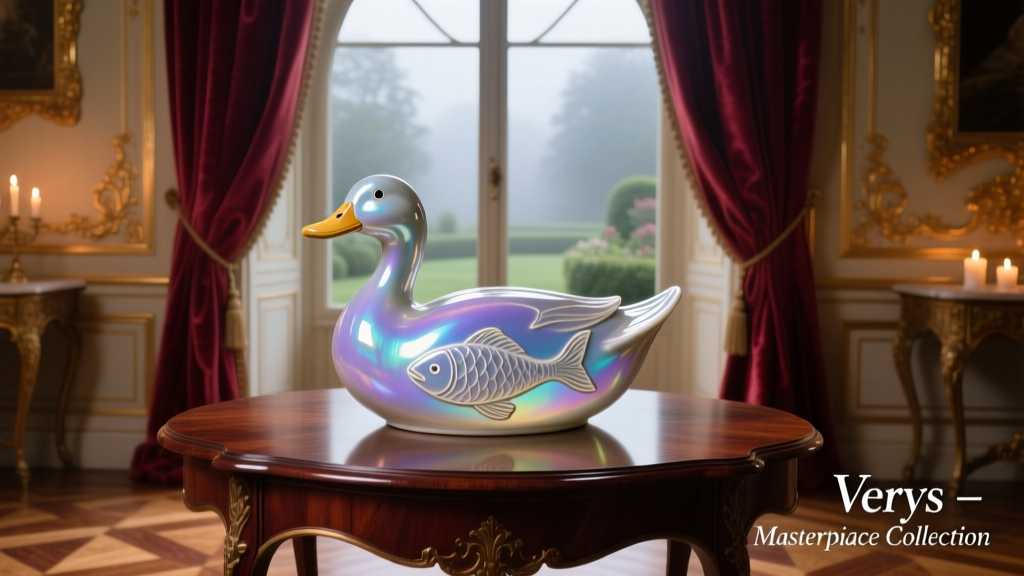
Verlys Bowl: Decoding the Duck & Fish Opalescent Pattern — History, Identification, and Conservation

War Eagle 10-Cent Slot Mills: Engineering, History, and Restoration of Vintage Coin-Operated Grain Mills
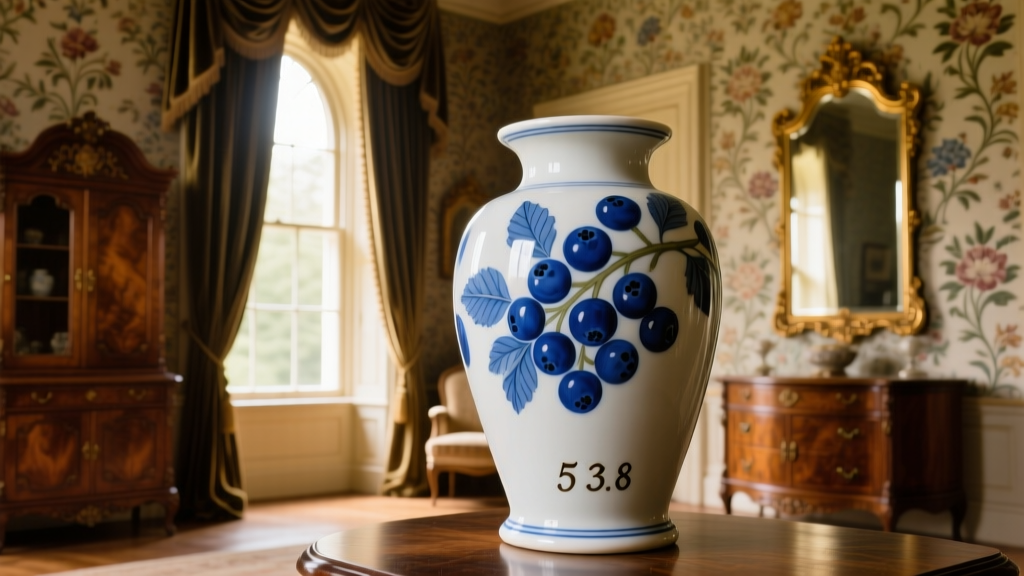
Weller Louwelsa Vase 'Berries' in Blue Glaze: Authentication, Provenance, and Restoration Insights for the 5 3/8-Inch Example
Be Careful Using Stickers on Antique Furniture: Hidden Risks and Restoration Realities
Zippo Reddy Kilowatt Lighter (1969): A Collector’s Deep Dive into the Painted, Engraved, Polished Slim Box Edition
Frankoma Pottery Plate 'Phoenix' (1985): Authenticity, Production History, and Restoration Guidance
Columbia Modan Brass Horn Phonographs: Design, Engineering, and Restoration Insights