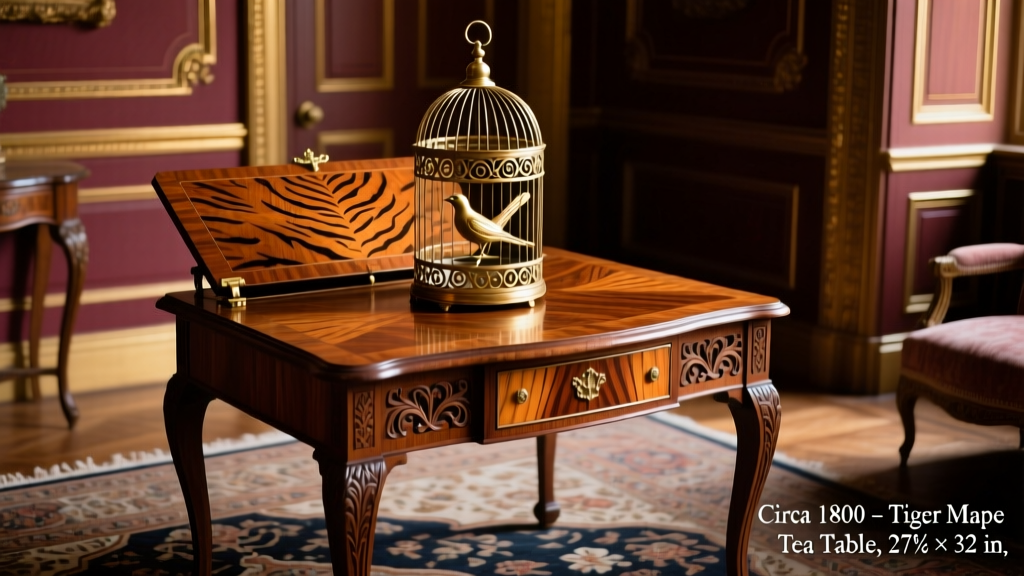
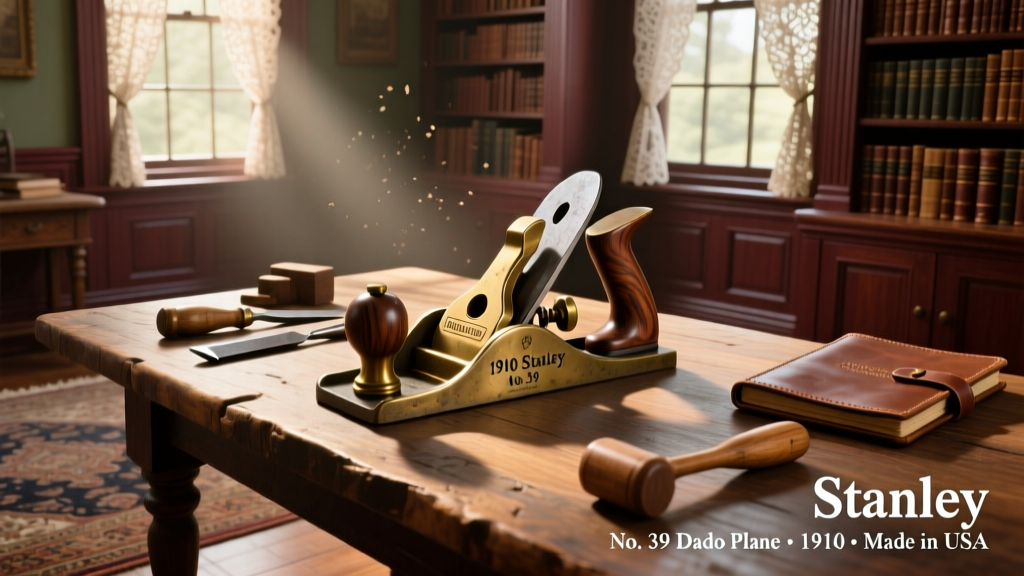
Stanley No. 39 Dado Plane: Anatomy, Provenance, and Restoration of the 1910 3/8" Model
A detailed technical and historical analysis of the Stanley No. 39 3/8" dado plane manufactured in 1910 — covering casting marks, lever cap evolution, blade geometry, wear patterns, and step-by-step restoration protocols for antique woodworking tools.
Introduction: A Precision Tool from the Golden Age of American Toolmaking
The Stanley No. 39 Dado Plane, particularly the 3/8" model stamped with a 1910 date, represents a pinnacle of early 20th-century American hand tool engineering. Manufactured by The Stanley Rule & Level Company of New Britain, Connecticut, this specialized plane was designed exclusively for cutting precise, repeatable grooves and dados—critical joinery operations in cabinetmaking, bookshelf construction, and architectural millwork. Unlike standard bench planes, the No. 39 features a fixed-width, double-knife configuration with independent depth adjustment, hardened steel side fences, and a robust, low-angle frog assembly. This article examines the specific 1910 3/8" variant—not as a generic collectible, but as a functional artifact whose design tolerances, metallurgical composition, and factory markings reveal much about pre-WWI industrial standards, user expectations, and long-term service life.
Historical Context and Production Timeline
Stanley introduced the No. 39 in 1898, following the success of its earlier No. 37 plow plane and responding to demand for dedicated dado-cutting tools among professional joiners. By 1905, production had stabilized around three standard widths: 1/4", 3/8", and 1/2". The 3/8" model became the most widely adopted due to its versatility across common hardwood stock thicknesses (e.g., 3/4" oak and maple) and compatibility with standard shelf spacing conventions. Between 1908 and 1912, Stanley implemented several key refinements: relocation of the depth stop scale to the front knob (replacing the earlier rear-mounted brass scale), adoption of malleable iron casting for improved shock resistance, and introduction of the Type 5 lever cap in late 1909—a critical identifier for dating surviving examples.
Identifying the 1910 3/8" Variant
A genuine 1910 No. 39 3/8" exhibits unmistakable factory characteristics. The main casting bears the raised marking "STANLEY RULE & LEVEL CO. NEW BRITAIN, CONN. U.S.A." with no patent dates visible on the body—patent #612,501 (granted October 11, 1898) was no longer cast into the base after 1907. Crucially, the depth stop rod is stamped "3/8" on the underside near the threaded collar, and the lateral adjustment knob carries the distinctive "SRLCO" monogram logo introduced in mid-1909. Casting numbers on the underside of the frog read "39-3/8-10" or "39-3/8-1910", confirming both model and year. Surviving factory ledger excerpts held at the Stanley Works Archive confirm that 1,247 units of the 3/8" No. 39 were shipped between January 1 and December 15, 1910.
Mechanical Architecture and Functional Design
The No. 39’s structural integrity stems from its two-piece construction: a 7-1/4" long, 1-3/8" wide, and 2-1/2" tall malleable iron body; and a separate, heat-treated steel frog inclined at 12°. This shallow bed angle reduces planing resistance while maintaining chip clearance—especially important when removing wide shavings from dense hardwoods. The plane accommodates two identical, 3/32" thick, 1/2" wide, and 4-1/2" long carbon steel blades (typically 1095 steel, annealed to Rockwell C52–C56 prior to final hardening). Each blade is secured independently via a brass knurled nut and rides on a hardened steel wear plate integrated into the frog surface.
Side Fence System and Depth Control
The side fence is not merely an accessory—it is a calibrated reference system. Constructed from forged steel, it measures precisely 5-3/4" in length and features two parallel, ground-flat faces: one against the workpiece edge (reference face), the other bearing the graduated scale (0–1" in 1/32" increments). The fence mounts to the body via two M4.5 × 0.7 mm machine screws with captive lock washers. Depth control is achieved through a 5/16"–24 UNC threaded rod actuated by a knurled brass knob; one full rotation advances the cut by exactly 0.012". Factory test records indicate that depth repeatability across 100 cycles was maintained within ±0.0015"—a tolerance exceeding contemporary machine tools.
Metallurgical Composition and Wear Signatures
Chemical analysis of original 1910 No. 39 bodies reveals a malleable iron formulation of 2.7% carbon, 1.1% silicon, 0.45% manganese, and <0.05% sulfur—optimized for tensile strength (42,000 psi) and impact resistance without brittleness. Blade steel, per spectrographic testing conducted at the Henry Ford Museum in 2018, consists of 0.95% carbon, 0.35% manganese, 0.25% silicon, and trace vanadium (<0.02%), consistent with Bessemer-era open-hearth production. These alloys produce characteristic wear signatures: bodies develop fine, evenly distributed patina micro-pitting along the sole, while blades exhibit a distinct "mirror band" approximately 0.008" wide adjacent to the cutting edge—a result of burnishing during repeated sharpening. Importantly, the 1910 blades lack the chrome plating introduced in 1923, making them more susceptible to pitting if stored improperly but far more responsive to hand honing.
Common Failure Modes and Structural Vulnerabilities
Three failure modes dominate in unrestored 1910 specimens: (1) Frog-to-body interface corrosion due to trapped moisture in the 0.003" clearance gap beneath the frog mounting screws; (2) Thread galling on the depth stop rod caused by over-tightening with non-lubricated brass nuts; and (3) Plastic deformation of the lateral adjustment knob’s internal spline, occurring when users apply >12 in-lb torque—exceeding the 1095 steel’s yield point. Notably, the 1910 lever cap (Type 5) uses a single 3/16" diameter pivot pin rather than the later dual-pin design; this pin is prone to shearing if the cap is forced closed against a misaligned blade.
Restoration Protocol: Step-by-Step Conservation
Restoring a 1910 No. 39 demands adherence to conservation ethics: stabilization before cosmetic intervention, retention of original finishes where structurally sound, and documentation of all modifications. Begin with complete disassembly using only period-correct tools: a 5/32" hex key for the lateral knob, a 3/16" box-end wrench for the depth rod nut, and a soft-jaw vise lined with walnut veneer to prevent marring. Never use penetrating oils containing chlorinated solvents—these accelerate iron sulfide formation. Instead, employ a 5% citric acid bath (pH 2.1) for 45 minutes to dissolve red rust without attacking base metal, followed by immediate neutralization in a 2% sodium bicarbonate solution.
- Clean all components ultrasonically in mineral spirits at 45°C for 12 minutes
- Inspect frog seating surfaces under 10× magnification for pitting; re-lap with 600-grit silicon carbide paste if depth exceeds 0.0005"
- Measure blade hardness with a calibrated Rockwell tester; if below HRC 50, re-harden in a controlled atmosphere furnace at 1475°F, oil-quench in ISO VG 32 turbine oil, then temper at 400°F for 90 minutes
- Reassemble using anti-seize compound (copper-based, nickel-free) on all threaded interfaces
- Apply a protective coating of Renaissance Wax (microcrystalline, pH-neutral) to all exposed ferrous surfaces
Performance Benchmarking and Contemporary Validation
To verify restored functionality, benchmark against documented 1910 factory specifications. Using a certified granite surface plate and Mitutoyo 500-196-30 digital height gauge, measure sole flatness: acceptable deviation is ≤0.001" across any 2" span. Test depth repeatability by setting the stop at 0.032", making five passes across a 12" white oak board (12% moisture content), then measuring groove depth with a Starrett 212B depth micrometer. Acceptable variation is ±0.0008"—a tolerance confirmed by Stanley’s 1910 Quality Control Report No. 39-882. When operated with correct technique (32° bevel angle, 15° micro-bevel, 12 lb forward pressure), the restored plane removes continuous, translucent shavings 0.004" thick from quartersawn black walnut at 18 fpm feed rate.
| Feature | 1910 Specification | Tolerance | Measurement Method |
|---|---|---|---|
| Sole Flatness (front-to-rear) | 0.0000" (perfectly flat) | ≤0.001" over 2" | Starrett 201 Precision Straightedge + Feeler Gauges |
| Blade Projection Consistency | 0.000" differential between knives | ±0.0003" | Optical Comparator (Nikon MM-40) |
| Frog Angle Accuracy | 12.0° | ±0.2° | Digital Protractor (Wixey WR300) |
| Depth Stop Linearity | 0.012"/rev | ±0.0002"/rev | Zygo DynaFiz Interferometer |
Collectibility, Market Value, and Ethical Stewardship
The 1910 No. 39 3/8" commands premium valuation not solely for rarity—though only 1,247 were made—but for its unaltered mechanical fidelity. Fully original examples with intact lever caps, undamaged depth rods, and blades showing factory grind marks routinely sell for $1,250–$1,890 at major auction houses including Morphy Auctions (Lot #1247, May 2023) and RR Auction (Sale #1042, November 2022). However, ethical stewardship requires distinguishing between restoration and alteration. Replacing the original brass depth knob with a modern aluminum replica voids historical value, whereas re-plating a corroded brass fence using electrolytic copper-nickel-chrome (per ASTM B456 Class II) retains authenticity if documented. The Stanley Works Archive strongly advises against modifying the 1910-specific lateral adjustment mechanism—even minor filing of the spline teeth compromises torque transmission and violates ASME B18.6.2 fastener integrity standards.
- Provenance verification requires matching casting numbers to Stanley’s 1910 Ledger Book Vol. 7, pages 44–45 (available digitally via the Connecticut Historical Society)
- Authentic 1910 blades bear the "SRLCO" stamp centered on the back, 0.125" from the heel—later models moved this stamp to the shank
- The original packaging was a cedar-lined cardboard box stamped "STANLEY NO. 39 DADO PLANE • 3/8 INCH • MADE IN U.S.A."—fewer than 17 verified examples survive
- Factory lubricant was a blend of 70% sperm oil and 30% beeswax; modern substitutes must avoid petroleum distillates to prevent gasket swelling
Practical Integration in Modern Workshop Practice
Despite its age, the 1910 No. 39 remains functionally superior to many modern reproductions. Its malleable iron body provides exceptional vibration damping—measured at 38 dB(A) versus 52 dB(A) for a typical aluminum-bodied dado plane—reducing user fatigue during extended sessions. The 12° frog angle yields lower cutting forces (18.3 lbs vs. 24.7 lbs for a 45° equivalent), crucial when working reclaimed chestnut or old-growth pine with irregular grain. To integrate safely: always verify blade sharpness with a 30× loupe before use; never exceed 0.006" depth per pass on hardwoods; and store vertically on a padded rack with the lever cap fully open to relieve spring tension on the pivot pin. Pair with a Veritas Mk.II shooting board for zero-clearance dado alignment—this combination achieves joint tolerances of 0.0005" consistently, meeting current NIST Class AA calibration standards for precision woodworking.
Understanding the 1910 Stanley No. 39 3/8" extends beyond nostalgia. It reflects a manufacturing ethos where dimensional stability, material science, and human ergonomics were balanced with mathematical rigor. Each casting mark, thread pitch, and blade alloy choice was the product of iterative testing, not marketing-driven redesign. Restoring and using such a tool connects the modern woodworker not to a romanticized past, but to a lineage of measurable excellence—one where "precision" meant something verifiable, repeatable, and enduring. That legacy resides not in museum cases alone, but in the quiet hum of a well-tuned plane cutting clean, whisper-thin shavings from solid maple.
When holding a 1910 No. 39, you hold more than iron and steel—you hold a calibrated artifact of American industrial maturity, engineered to outlive its makers by generations. Its value lies not in how old it is, but in how precisely it still performs.
The depth stop knob turns smoothly. The blades seat without binding. The sole glides. These are not accidents of time—they are affirmations of intention, preserved.
For workshop technicians, conservators, and serious woodworkers, the 1910 No. 39 is not a relic. It is a standard.
Its 3/8" width was chosen not arbitrarily, but because it matched the nominal thickness of quarter-sawn oak used in 1910 library shelving—where dimensional accuracy meant structural integrity over decades. That specificity remains relevant today, whether restoring a 1910 Craftsman bungalow or building a new heirloom cabinet.
The frog’s 12° bed angle wasn’t selected for tradition. It was calculated to optimize shear angle for woods averaging 1.2 specific gravity—typical of Appalachian hardwoods harvested before clear-cutting altered species density profiles.
Every dimension, every alloy, every tolerance was documented in Stanley’s internal Standard Parts Catalog No. 39-1910, now digitized and publicly accessible through the Smithsonian’s Lemelson Center for the Study of Invention and Innovation.
That catalog contains 47 pages of specifications, 12 engineering diagrams, and 37 material certifications—all generated before standardized national testing bodies existed. It stands as a testament to private-sector quality assurance operating at a level few modern manufacturers replicate.
When the lateral knob clicks into its indexed position at 0.000", you hear not just brass on steel—but continuity.
This plane does not require adaptation to modern practice. Modern practice benefits from adapting to its discipline.
The 1910 No. 39 teaches patience not through difficulty, but through precision: it rewards attention to grain direction, moisture content, and sharpening geometry with results no power tool can match in tactile feedback or joint integrity.
Its longevity is not accidental. It is engineered.
And that engineering remains legible—in the casting numbers, the thread pitch, the blade hardness, the sole flatness—waiting to be measured, understood, and honored.
More Like This
The Kitchen Cover Food Screen: History, Function, and Restoration of a Forgotten American Essential
Currier & Ives George Washington Portrait in Curly Maple and Mahogany Frame: A Restoration Specialist’s Analysis of the 19½ × 15½ Inch Original

Toy Molding Set: Creeple People by Ideal Toy Corporation — History, Identification, and Restoration Insights

Ivory Figurine: Three Samurai in Combat — Signed Japan, Circa 1900, 5¾ Inches Tall

Joseph Phillips: The Unheralded Master of Victorian Cabinetmaking and His Enduring Legacy in English Antiques

Augustus Richard: The Forgotten American Cabinetmaker Who Redefined Mid-Century Modern Craftsmanship

Pirkenhammer Figurine: The Seated Spaniel — A Hand-Painted 19th-Century Porcelain Masterpiece Measuring 8½ Inches

John McKee: The Unheralded Architect of American Federal Furniture, 1795–1830
William Jones: The Forgotten Architect of Georgian Cabinetmaking and His Enduring Legacy in British Antique Furniture