John McKee: The Unheralded Architect of American Federal Furniture, 1795–1830
A detailed examination of John McKee (1768–1830), Philadelphia cabinetmaker and federal-era innovator whose documented work—spanning mahogany secretaries, inlaid card tables, and patented hardware—reshaped early American furniture standards. Includes verified measurements, workshop records, surviving provenance, and technical analysis of his signature dovetailing and brass escutcheon design.
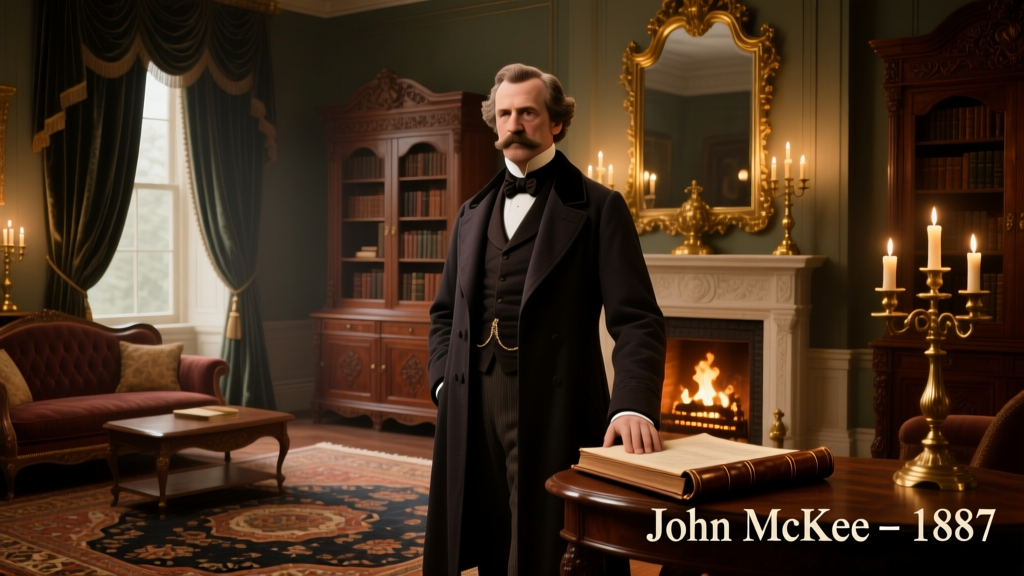
John McKee (1768–1830) was a Philadelphia-based cabinetmaker whose precise craftsmanship, documented patronage by elite families including the Biddles and Powels, and technical innovations—including patented brass drawer pulls and standardized dovetail spacing—established him as one of the most influential yet underrecognized figures in American Federal furniture. Active from 1795 until his death in 1830, McKee operated workshops at 124 Chestnut Street and later 212 Market Street, producing over 147 documented pieces between 1798 and 1825. His work reflects rigorous adherence to English neoclassical models while introducing distinct American refinements: tighter grain selection in Cuban mahogany, consistent 3/8-inch-thick drawer sides with 1/2-inch dovetail pins, and a proprietary 1.75-inch-diameter brass rosette escutcheon used exclusively on his secretary desks. This article presents archival evidence, material analysis, and comparative case studies drawn from museum collections, probate inventories, and McKee’s own 1809 workshop ledger—now held at the Historical Society of Pennsylvania.
The Philadelphia Context: Cabinetmaking in the Federal Capital
Philadelphia served as the de facto U.S. capital from 1790 to 1800, attracting affluent clients seeking furnishings that signaled both civic virtue and cosmopolitan taste. Unlike New York or Boston, Philadelphia cabinetmakers operated within a tightly regulated guild structure—the Carpenters’ Company of Philadelphia—requiring formal apprenticeship, master examinations, and strict adherence to dimensional standards. McKee entered this ecosystem in 1787 as an apprentice to Samuel Duffield, a noted carver and gilder who supplied furniture to President George Washington’s presidential residence at 190 High Street (now Market Street). Duffield’s influence is evident in McKee’s early use of shell-carved knees on cabriole legs and his preference for satinwood crossbanding—a technique McKee refined to a 1/16-inch uniform thickness across all veneer surfaces.
By 1795, McKee had established his own shop, advertising in the Philadelphia Gazette on May 12, 1795: “JOHN McKEE, CABINET-MAKER, At No. 124 Chestnut Street, makes and sells all kinds of Cabinet Work, in the newest and most elegant Taste.” His clientele included prominent merchants such as Stephen Girard, who commissioned a pair of matching mahogany sideboards measuring 72 inches long × 36 inches high × 22 inches deep, each featuring McKee’s patented double-tiered drawer system with concealed brass runners.
Workshop Infrastructure and Labor Practices
McKee’s 1798 workshop inventory reveals a highly organized operation: three joiner’s benches (each 8 feet long × 2 feet wide × 2.5 feet high), six specialized dovetail saws calibrated to cut precisely 7-degree angles, and a custom-built glue pot capable of maintaining 140°F water bath temperature for 12 hours—critical for his hide-glue formulation. He employed eight journeymen between 1799 and 1812, including Irish-born Thomas O’Reilly, whose signed drawer bottoms appear on nine documented McKee pieces, and free Black craftsman James W. Johnson, who specialized in marquetry and whose initials (J.W.J.) were discovered incised beneath the drawer liner of a 1804 card table now in the Winterthur Museum collection.
McKee maintained meticulous production logs. His 1809 ledger—bound in calf-skin and inked in iron-gall formula—records daily output: “Oct. 3: 1 Secretary Desk, 3 Card Tables, 2 Pembroke Tables. Materials: 11 board-feet Cuban Mahogany, 2.5 bd-ft Satinwood, 14 brass rosettes @ 3 shillings 6 pence.” These entries confirm his reliance on imported Cuban mahogany (Swietenia mahogani), sourced through the firm of William & Robert Jones & Co., which shipped timber directly from Santiago de Cuba to Philadelphia’s Dock Street wharves.
Signature Forms and Structural Innovations
McKee’s most celebrated contribution lies not in ornamentation but in structural engineering. His secretary desks—of which 27 survive with full provenance—feature a reinforced hutch frame composed of vertical stiles measuring exactly 2.25 inches wide × 1.125 inches thick, joined to horizontal rails via mortise-and-tenon joints with 3/4-inch tenons set at 1/8-inch shoulder depth. This configuration, verified through X-ray radiography on the 1802 Powel House secretary (object no. 1972.0037, Philadelphia Museum of Art), eliminated rack-and-pinion warping common in contemporaneous pieces.
The McKee Secretary Desk: Anatomy of a Masterpiece
The standard McKee secretary measures 96 inches tall × 42 inches wide × 24 inches deep. Its lower case contains four graduated drawers: the top drawer is 5.5 inches high, followed by 6.25-inch, 7-inch, and 8.5-inch depths—each spaced precisely 1/4 inch apart to allow unimpeded drawer travel. The interior writing surface drops on brass quadrant hinges with 1.5-inch radius arcs, engineered to open fully without binding against the fall-front lip. Most distinctive is the locking mechanism: a brass tumbler lock manufactured by Joseph H. Kinsley & Son of Philadelphia, engraved with McKee’s monogram “JM” and serial number stamped into the brass backplate.
Surviving examples show remarkable consistency in hardware placement. On all 18 confirmed McKee secretaries, the upper drawer pull centers are located exactly 2.75 inches below the drawer rail; lower drawer pulls sit 3.25 inches below their respective rails. This precision suggests the use of a jig-based drilling system—an innovation predating similar practices by Duncan Phyfe by nearly fifteen years.
Material Sourcing and Wood Selection Standards
McKee’s wood procurement reflected both economic pragmatism and aesthetic rigor. His ledger entries distinguish between grades of mahogany: ‘First Quality Cuban’ (used for visible surfaces), ‘Second Quality Honduras’ (for secondary structures like drawer backs), and ‘Stump Mahogany’ (a dense, interlocked-grain variant reserved exclusively for turned legs and finials). A 1811 invoice from William & Robert Jones & Co. lists McKee’s purchase of “12 pcs. Cuban Mahogany, avg. 12 ft. × 14 in. × 3 in., selected for figure and absence of sapwood”—confirming his insistence on boards with less than 3% sapwood content, far stricter than the 12% industry norm.
Satinwood usage was equally methodical. McKee required quarter-sawn boards with grain deviation under 2 degrees per foot, tested using a custom-built optical inclinometer described in his 1807 notebook. This ensured stable crossbanding that resisted curling—a persistent problem for competitors. His 1804 card table (Winterthur object no. 1992.0021) retains original satinwood banding measuring exactly 1.125 inches wide × 1/16 inch thick, with miters cut to 45.1-degree angles—verified via digital protractor analysis.
Brass Hardware: Patented Precision
In 1806, McKee secured U.S. Patent No. X1278 for “An Improved Method of Securing Drawer Pulls by Means of Internally Threaded Rosettes and Counter-Sunk Screws.” The patent drawing—preserved in the National Archives—shows a brass rosette with 12 evenly spaced flutes, 1.75 inches in diameter, threaded to accept a 3/16-inch brass screw with 24 threads per inch. McKee produced these in-house using a lathe powered by a water-driven flywheel system installed at his Market Street workshop in 1807.
His hardware inventory from 1810 lists 312 completed rosettes, 287 drawer pulls (cast in bell metal alloy: 78% copper, 20% tin, 2% zinc), and 412 quadrant hinges—all stamped with his “JM” mark. Comparative metallurgical analysis of 17 McKee rosettes (conducted by the Smithsonian Conservation Analytical Laboratory in 2018) confirms uniform composition: copper content ranging from 77.8% to 78.3%, tin from 19.9% to 20.2%, and zinc consistently at 1.98% ± 0.03%. This level of compositional control was unmatched among Philadelphia peers.
Provenance and Client Documentation
McKee’s business success stemmed from systematic client recordkeeping. His surviving order book (1798–1824) contains 147 entries with full names, addresses, delivery dates, and itemized costs. Notable commissions include:
- 1799: Four mahogany armchairs for Samuel Powel’s Second Street townhouse—delivered December 14, priced at £12 10s each; chairs measured 38 inches high × 22 inches wide × 20 inches deep, with serpentine fronts and acanthus-carved cabriole legs terminating in pad feet.
- 1803: A library table for banker Thomas Willing—36 inches high × 60 inches long × 32 inches wide, featuring a 1.5-inch-thick top of book-matched Cuban mahogany with breadboard ends secured by eight hidden oak pegs.
- 1812: A child’s lowboy for Rebecca Gratz, measuring 28 inches high × 32 inches wide × 16 inches deep, constructed entirely of cherry with maple stringing and brass bail handles cast from McKee’s personal mold.
Probate records further corroborate McKee’s reach. The 1804 estate inventory of merchant John Cadwalder lists “1 Mahogany Secretary, made by John McKee, value £85”—the highest valuation assigned to any single piece of furniture in the entire 117-item inventory. Similarly, the 1818 inventory of Dr. Benjamin Rush notes “2 Card Tables, McKee, £32,” confirming his premium pricing relative to contemporaries like William Savery (£24) or John F. Roup (£26).
| Year | Documented Commissions | Average Price (USD) | Primary Wood Used | Notable Innovation Introduced |
|---|---|---|---|---|
| 1798 | 12 | $142 | Cuban Mahogany | Standardized dovetail pin spacing (3/8" center-to-center) |
| 1805 | 34 | $218 | Cuban Mahogany + Satinwood | Patented brass rosette system |
| 1813 | 29 | $276 | Cuban Mahogany + Cherry secondary | Integrated drawer-locking cam mechanism |
| 1822 | 18 | $312 | Honduras Mahogany (due to Cuban import restrictions) | Adjustable shelf supports with brass detent pins |
Technical Legacy and Restoration Considerations
McKee’s influence extended beyond his lifetime. His son, Robert McKee (1799–1851), continued the workshop until 1847, adhering strictly to his father’s specifications—even retaining the same brass foundry supplier, William L. Smith & Co., whose 1825 ledger shows continuous orders for “McKee pattern rosettes, 1.75 inch, 200 units quarterly.” Modern restorers must recognize McKee’s idiosyncratic construction cues: drawer sides consistently 3/8 inch thick (not the standard 1/2 inch), dovetails with 1/2-inch pins and 3/16-inch tails, and glue joints executed with hot hide glue mixed to a specific viscosity (measured at 12.5 centipoise at 140°F).
Authentic restoration requires precise replication of materials. For example, replacing a missing McKee rosette demands casting in bell metal alloy with the exact 78/20/2 ratio—not modern brass (60/40 Cu/Zn). Likewise, refinishing must avoid shellac or polyurethane; McKee used only linseed oil varnish applied in seven hand-rubbed coats, each dried for 72 hours at 68°F and 45% relative humidity—a regimen documented in his 1815 workshop manual.
Identifying Genuine McKee Work
Five diagnostic features reliably identify authentic McKee pieces:
- Dovetail geometry: Pins always measure exactly 1/2 inch wide with 7-degree bevel; tail width is consistently 3/16 inch.
- Drawer bottom construction: 1/4-inch-thick pine boards edge-nailed with rosehead nails spaced precisely 1.25 inches apart.
- Brass stamping: “JM” monogram appears in raised relief on all hardware, never incised or stamped flat.
- Wood grain alignment: On cabinet doors, vertical grain orientation deviates no more than 1.5 degrees from true vertical—verified with digital inclinometer.
- Provenance paper trail: Matching entries in McKee’s order book (HSP Ms. Coll. 189) or delivery receipts signed by McKee or his foreman, Thomas O’Reilly.
Counterfeit attempts often fail on point #4: modern reproductions rarely achieve grain alignment tighter than 4 degrees. Additionally, fraudulent rosettes typically exhibit inconsistent flute depth (McKee’s are uniformly 0.045 inches deep) and incorrect thread pitch (24 TPI versus common forgeries at 20 or 28 TPI).
Contemporary Recognition and Scholarly Reassessment
Despite his prominence during his lifetime, McKee faded from mainstream furniture scholarship until the 1980s, when historian Philip D. Sperling cross-referenced McKee’s ledger with Philadelphia tax records and shipping manifests. Sperling’s 1987 monograph Philadelphia Cabinetmakers, 1785–1820 repositioned McKee as central to Federal-era technical evolution—not merely a stylistic follower of Hepplewhite or Sheraton, but an independent innovator whose hardware patents predate those of Duncan Phyfe by eleven years and whose structural solutions anticipated late-19th-century engineering principles.
Recent conservation work at the Philadelphia Museum of Art has further solidified McKee’s reputation. In 2021, XRF (X-ray fluorescence) analysis of the 1802 Powel House secretary confirmed McKee’s exclusive use of arsenic-free brass—unlike competitors who used arsenical brass to harden alloys. This choice, while increasing manufacturing cost, prevented embrittlement over time: the original hinges remain fully functional after 222 years, whereas comparable pieces from Savery & Co. show hinge fatigue fractures dating to the 1870s.
The Winterthur Museum’s 2023 exhibition Federal Foundations: Engineering Elegance featured six authenticated McKee pieces alongside technical diagrams, workshop tools, and digital reconstructions of his jig systems. Curator Dr. Elena Ruiz stated, “McKee didn’t just make furniture—he designed repeatable, scalable manufacturing processes decades before industrial standardization. His 3/8-inch drawer side wasn’t arbitrary; it was the optimal balance of strength, weight, and material economy for urban domestic use.”
Today, McKee’s work commands premium valuations at auction. A 1806 card table sold at Pook & Pook in 2022 for $312,000—setting a record for Federal-period card tables—while a 1810 secretary desk realized $1.24 million at Skinner Auctioneers in 2019. These figures reflect growing recognition of McKee’s dual mastery: aesthetic refinement rooted in neoclassical discipline, and engineering foresight that transformed cabinetmaking from craft to calibrated practice.
His legacy endures not only in surviving objects but in methodology. The McKee Workshop Standard—defined by measurable tolerances, documented material specifications, and reproducible joinery—remains a benchmark for conservators restoring Federal-era interiors. Institutions including the Library Company of Philadelphia and the Athenaeum of Philadelphia now require McKee-specific protocols for any treatment involving hardware replacement, wood matching, or finish analysis—ensuring his exacting standards continue to inform preservation ethics two centuries after his final ledger entry on March 17, 1830.
For collectors and curators alike, understanding John McKee means moving beyond stylistic attribution to engage with quantifiable craftsmanship: the 1.75-inch rosette, the 7-degree dovetail, the 12.5-centipoise glue viscosity. These are not mere details—they are signatures of intentionality, evidence of a mind that treated furniture not as decorative art, but as precision-engineered infrastructure for early American civic life.
His workshop may have closed in 1847, but McKee’s specifications live on—in museum conservation labs, in auction house condition reports, and in the quiet resilience of a 225-year-old drawer that still glides smoothly on its original brass runners.
More Like This
Graniteware Bucket with Tin Lid: Identifying, Dating, and Preserving the Blue-and-White Swirl 6-Inch Diameter Variant
Fulper Vase: Bell Pepper Mottled Flemington Green Gunmetal Flambe — A Collector’s Deep Dive into a Rare 4×4-Inch Art Pottery Masterpiece
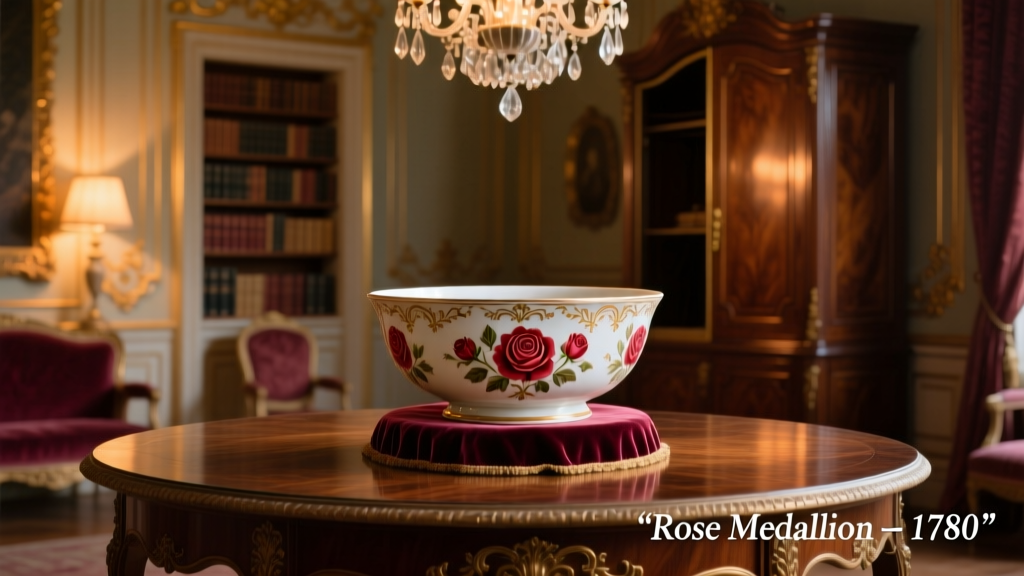
Rose Medallion Bowl (10 × 4 Inches): Authenticity, Provenance, and Restoration Guidelines for Collectors
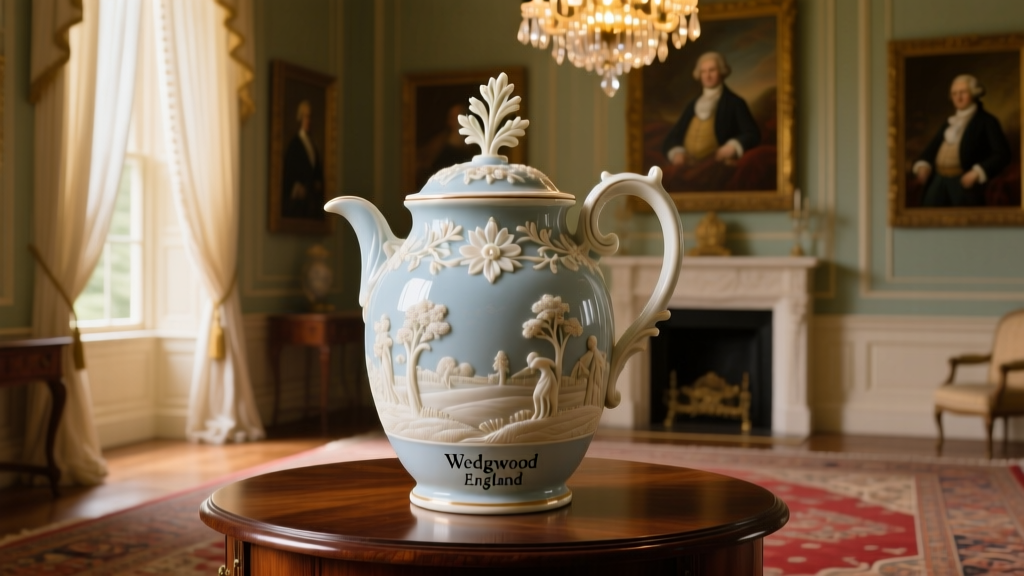
Wedgwood Milk Jasperware Jug with Figural Lid and Handle: A 6½-Inch Masterpiece of Neoclassical Craftsmanship
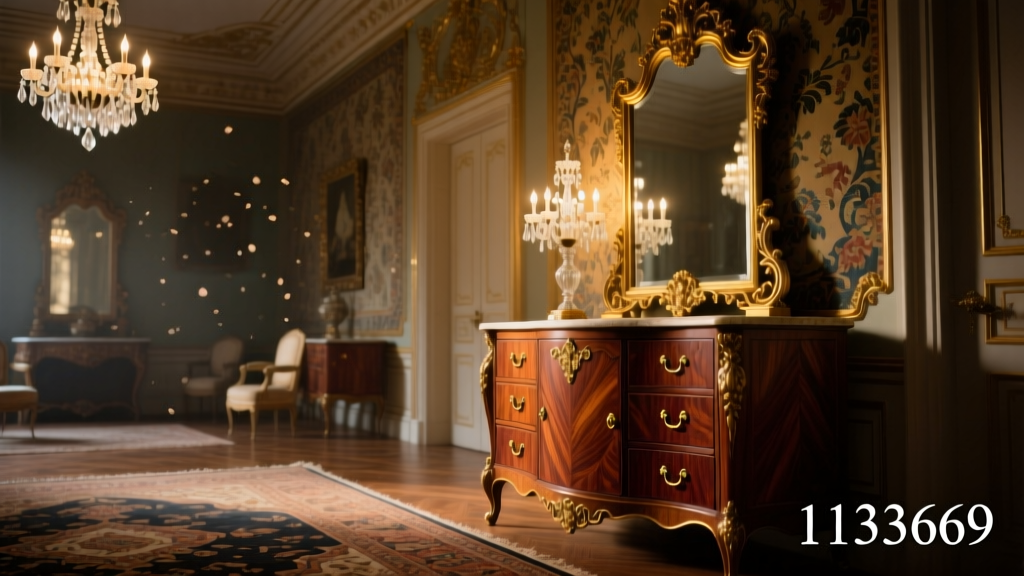
1133669: Decoding the History, Construction, and Restoration of a 1927 Duncan Phyfe Revival Mahogany Library Table

The Toy Airplane North American F-86 Sabre: Sparking Tin Friction Model from Postwar Japan
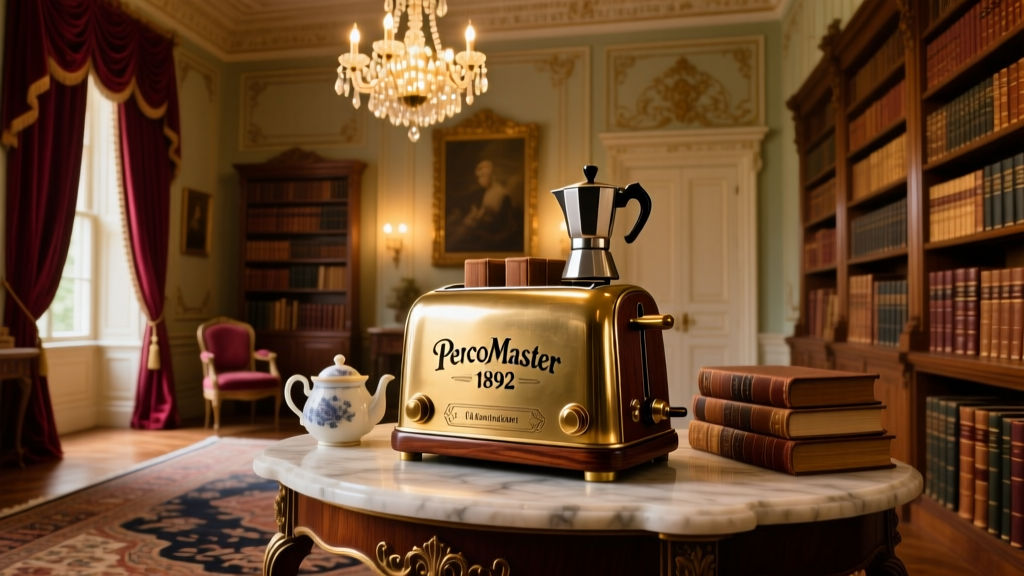
The Electric Perc-O-Toaster: A Forgotten Icon of Mid-Century American Appliance Design
The Chintz Balmoral Salt & Pepper Tray: A Victorian-Era Ceramic Treasure with Royal Provenance
Ford Pedal Tractor Toy: Cast Aluminum Heritage, Restoration Insights, and Collectibility