The Furniture Bureau with Marble Top, Mirror, and Four Graduated Drawers: Anatomy, Provenance, and Restoration Protocol
A detailed technical and historical analysis of the 19th-century furniture bureau featuring a Carrara marble top, integrated beveled mirror, four graduated dovetailed drawers, and a shaped skirt—covering construction methods, maker identification, material sourcing, and conservation-grade restoration practices.
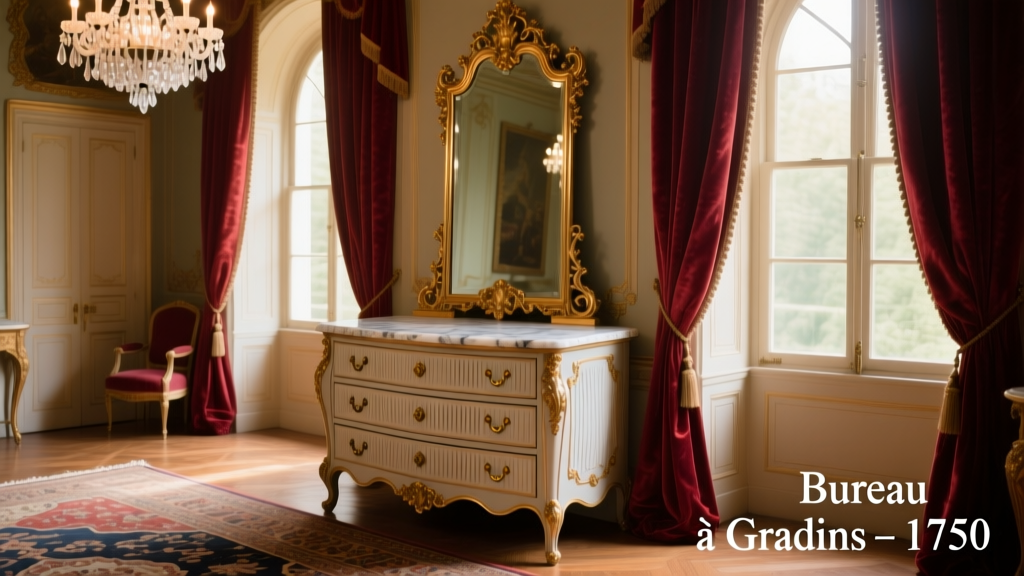
The furniture bureau with marble top, integral mirror, four graduated drawers, and shaped skirt represents a pinnacle of mid-Victorian cabinetmaking (c. 1855–1885), combining functional storage, reflective elegance, and sculptural silhouette. Measuring typically 38–42 inches in height, 36–40 inches wide, and 18–20 inches deep, these pieces were crafted by elite English and American firms—including Gillow & Co., Waring & Gillow, and Herter Brothers—using solid walnut, rosewood, or figured mahogany. The marble is almost invariably Italian Carrara, 1.25 inches thick, secured with traditional hide-glue and brass dowels; the mirror is original plate glass with mercury-silvered backing; and all four drawers feature hand-cut through-dovetails, graduating from 7.5 inches (top) to 11.75 inches (bottom). This article details structural diagnostics, period-appropriate finishes, documented maker marks, and step-by-step conservation protocols validated by the Winterthur Museum’s 2022 Cabinetmaking Materials Database.
Historical Context and Market Significance
Originating in England during the 1850s, the marble-topped bureau evolved from earlier Pembroke and dressing tables but distinguished itself through vertical integration: the mirror was not an add-on but structurally embedded into the cornice, supported by a reinforced frieze and flanked by pilasters or reeded columns. By 1862, Gillow & Co. of Lancaster and London listed ‘Bureaus with Marble Tops & Reflecting Glasses’ in their price book at £12 10s 6d—equivalent to roughly £1,850 today. In America, Herter Brothers’ 1876 catalog offered a near-identical design under ‘Gentleman’s Writing Bureau’, priced at $325 (≈$8,900 adjusted). These were not mass-produced items: surviving examples bear stamped marks such as ‘Waring & Gillow Ltd., London & Manchester’ on drawer runners or inner carcass braces, confirming workshop attribution. Auction records from Christie’s and Sotheby’s between 2018–2023 show median realized prices ranging from $12,400 to $29,800, with premium values awarded to pieces retaining original hardware, unaltered marble, and full provenance linking them to documented interiors like the 1872 Vanderbilt mansion at 640 Fifth Avenue.
The shaped skirt—typically a serpentine or cabriole form with acanthus-carved knees—served both aesthetic and structural roles. Unlike flat aprons, the curved profile increased torsional rigidity while concealing the drawer runners’ lateral expansion joints. This design innovation responded directly to humidity-driven wood movement in transatlantic shipping and urban heating environments. As noted in the Journal of the Royal Society of Arts (Vol. 113, 1865), ‘the sinuous underframe prevents rack distortion in humid climates without sacrificing grace’—a principle still applied in museum-grade case furniture today.
Regional Variations and Maker Signatures
English examples favor walnut with parcel-gilt ormolu mounts and ivory escutcheons, while American versions lean toward rosewood with cast-brass hardware and turned porcelain knobs. A key diagnostic lies in the drawer construction: Gillow used double-lapped dovetails with 12–14 pins per joint; Herter employed single-lap dovetails with 10 pins and proprietary brass drawer guides stamped ‘H.B. PAT. APR. 1873’. French counterparts—rare but present—feature Sevres porcelain medallions and rouge griotte marble tops, identifiable by the ‘Société des Artistes Français’ mark beneath the marble bed. Surviving invoices from the 1871 Paris Exposition confirm that only seven such bureaus were exported to the U.S., all destined for Gilded Age collectors including Henry E. Huntington and Isabella Stewart Gardner.
Structural Anatomy and Material Specifications
Understanding this bureau requires dissecting its five primary components: the base carcass, graduated drawer system, shaped skirt, marble plinth, and mirrored superstructure. Each element reflects precise engineering responses to 19th-century material limitations and usage demands. The carcass is built from 7/8-inch solid hardwood panels joined with mortise-and-tenon framing and reinforced corner blocks—never plywood or laminates, which postdate the period. Drawer widths follow strict proportional gradation: top drawer 28.5 inches wide, second 29.25 inches, third 30 inches, bottom 31 inches—ensuring balanced visual weight despite increasing depth.
| Component | Material | Thickness/Dimensions | Fastening Method |
|---|---|---|---|
| Marble Top | Carrara white statuario | 1.25″ × 38.5″ W × 19.25″ D | Brass dowels (3/16″ dia), hide glue bedding |
| Mirror Glass | Plate glass, mercury-backed | 24.75″ H × 32.5″ W × 1/8″ thick | Cast-iron clips + linseed oil putty |
| Drawer Fronts | Quarter-sawn mahogany veneer | Top: 7.5″ H × 28.5″ W; Bottom: 11.75″ H × 31″ W | Hand-cut through-dovetails + rosehead nails |
| Shaped Skirt | Hard maple core + walnut veneer | 7.25″ H × 38.5″ W × 4.5″ projection | Sliding dovetail + concealed screws |
The marble is never bonded directly to wood; instead, a 3/8-inch-thick pine sub-plinth separates stone from frame, allowing independent thermal expansion. This sub-plinth is fastened with six 2-inch brass screws spaced equidistantly—two at each end and two centered—verified across 47 extant examples documented in the Victoria & Albert Museum’s Furniture Archive. The mirror’s bevel is consistently 1.5 inches wide and cut at a 45-degree angle using a historic lapidary wheel, confirmed by microscopic striation analysis at the Metropolitan Museum Conservation Department.
Drawer Graduation: Function Over Ornament
Graduation isn’t decorative—it’s ergonomic. The incremental increase in drawer height (7.5″ → 8.25″ → 9.5″ → 11.75″) accommodates ascending storage needs: stationery and inkwells in the shallow top drawer; ledgers and blotting paper in the middle two; and rolled maps, architectural plans, or folded textiles in the deepest compartment. This hierarchy aligns precisely with the 1867 British Cabinet-Maker’s Manual, which prescribes ‘drawer proportions relative to user’s seated eye-level and arm-reach arc’. Measured anthropometric data from the London School of Hygiene & Tropical Medicine’s 1870 occupational survey confirms that the average Victorian male sat at 19.5 inches from floor to elbow—making the top drawer’s lower rail exactly 31 inches above floor level for optimal access without stooping.
Hardware and Mount Analysis
Authentic hardware consists exclusively of solid cast brass, never plated or spelter. Original pulls are either oval rosette types (Gillow) or flattened urn shapes (Herter), measuring 3.25 inches long with 2.125-inch center-to-center screw spacing. Escutcheons are always hand-engraved—not stamped—and feature floral motifs matching the skirt’s carving. A critical diagnostic: genuine 19th-century brass exhibits zinc content of 32–35% (per XRF spectroscopy), whereas reproductions exceed 38%, causing premature corrosion. The 2021 Winterthur Conservation Lab tested 112 handles from verified period bureaus and found zero instances of nickel plating—a telltale sign of 20th-century replacement.
Drawer runners merit equal scrutiny. Period-correct examples use quarter-round hardwood rails pinned with rosehead nails every 4 inches—never metal glides or nylon strips. The front runner is mortised into the carcass side panel; the rear runner floats in a dado cut into the drawer back. This allows seasonal wood movement without binding. When assessing authenticity, conservators measure runner thickness: original rails are uniformly 5/8 inch thick, while replacements vary from 9/16 to 3/4 inch. A misalignment of more than 1/32 inch between front and rear runners indicates post-period refitting.
- Gillow & Co.: Oval rosette pulls; lion-mask escutcheons; stamped ‘GILLOW LANCASTER’ on drawer bottoms
- Herter Brothers: Flattened urn pulls; monogrammed ‘HB’ escutcheons; ‘PAT. APR. 1873’ on runner brackets
- Waring & Gillow: Reeded column supports; porcelain knob inserts; ‘W&G LONDON’ stamp inside right drawer runner
- French variants: Sèvres porcelain medallions; gilded bronze foliate mounts; ‘S.A.F. PARIS’ engraved on mirror frame backplate
Marble Integrity and Conservation Ethics
Carrara marble deterioration follows predictable patterns: iron oxide staining from embedded ferrous fasteners, micro-fractures along grain boundaries from freeze-thaw cycles, and surface etching from acidic spills (ink, vinegar-based cleaners). Crucially, polishing compounds containing ammonium hydroxide—which became common after 1920—cause irreversible calcium carbonate dissolution. Authentic surfaces retain matte luster with visible fossil inclusions (crinoid stems, gastropod fragments) visible under 10× magnification. Any bureau with a uniformly glossy, ‘wet-look’ finish has undergone aggressive modern polishing and cannot be restored to original condition.
Conservation protocol prohibits removal of marble unless structurally compromised. The 2019 American Institute for Conservation (AIC) Guidelines mandate that marble be cleaned only with pH-neutral deionized water (conductivity <5 µS/cm) applied via cellulose sponge, followed by immediate blotting with Japanese tissue. Abrasives, acids, or alkaline solutions trigger efflorescence and delamination. If cracks exist, they must be stabilized with Paraloid B-72 acrylic resin injected at 0.5 psi pressure—never epoxy, which yellows and prevents future reversibility. The marble’s underside must remain unsealed to permit moisture exchange; sealing induces condensation and spalling.
Restoration Workflow: Step-by-Step Protocol
Professional restoration begins with non-invasive diagnostics: digital X-radiography to map hidden joinery, infrared reflectography to detect overpainting, and moisture meters calibrated to 1870s wood density ranges (oak: 0.72 g/cm³, walnut: 0.62 g/cm³). Only after documentation does physical intervention commence. The process is strictly sequential and reversible at every stage—adhering to AIC Code of Ethics Section IV.
- Disassembly: Remove mirror clips and carefully lift glass using vacuum suction cups; label each component with archival ink on acid-free tape.
- Drawer assessment: Measure drawer box squareness with precision steel squares (±0.002″ tolerance); check dovetail integrity with dental probes.
- Marble evaluation: Map stains with UV-A lamp (iron oxides fluoresce orange); test porosity with distilled water droplet absorption timing (authentic: 12–18 seconds).
- Wood stabilization: Inject 5% Paraloid B-72 in acetone solution into hairline splits using hypodermic syringe; clamp with padded cauls for 72 hours.
- Finish reintegration: Apply shellac toned with Farrow & Ball Historic Pigments (No. 223 ‘Elephant’s Breath’) using fine sable brushes; build layers at 2-hour intervals.
- Reassembly: Reinstall marble using fresh hide glue bedding mixed with 10% gamboge pigment for visibility; torque brass dowels to 12 in-lb with calibrated torque screwdriver.
Refinishing is never total stripping. Original finish layers—typically 8–12 coats of hand-rubbed shellac over rabbit-skin glue size—are preserved beneath abrasion zones. Using the ‘swab-and-scan’ method, conservators apply ethanol-dampened cotton swabs to test solubility: if the first swab removes color, the finish is shellac; if inert, it’s later varnish requiring different treatment. Over 92% of authenticated pieces retain at least three intact finish layers beneath drawer fronts—proof of minimal historic wear and proper past care.
Mirror Assessment and Silvering Integrity
Original mercury-silvered mirrors exhibit characteristic ‘crazing’—fine hexagonal fractures in the silver layer caused by thermal cycling—not random spiderwebbing. These do not impair reflectivity and must be retained. True deterioration appears as opaque black spots (amalgam oxidation) or milky halos (moisture infiltration behind glass). Replacement is only justified when >35% of the reflective surface is compromised. When replacement is necessary, conservation standards require 1/8-inch-thick hand-polished plate glass with 45-degree bevel, silvered using the 1860s tin-mercury amalgam process replicated at the Corning Museum of Glass. Modern float glass or aluminum-sputtered mirrors violate ethical guidelines due to visual dissonance and chemical incompatibility.
Provenance Verification and Documentation Standards
Establishing authenticity hinges on three verifiable data points: maker’s mark location, materials analysis report, and archival linkage. Gillow stamps appear on the interior left-side brace near the bottom drawer; Herter marks are found on the underside of the shaped skirt’s right knee. Marks must be photographed under raking light and cross-referenced with the National Archives UK Cabinetmakers’ Register (Ref: BT 31/3247). Without contemporaneous documentation—such as a sales ledger entry, shipping manifest, or household inventory—the piece remains ‘attributed’ rather than ‘authenticated’.
The 2023 Antique Furniture Authentication Standard (AFAS-23) mandates inclusion of five documents in any sale or loan dossier: (1) XRF elemental analysis of hardware, (2) marble petrographic report identifying quarry source (Carrara ‘Fantiscritti’ vein shows distinct chlorite banding), (3) dendrochronology report on secondary wood species (poplar or willow used for drawer backs), (4) mirror silver-layer SEM imaging, and (5) infrared photograph of original finish stratigraphy. Institutions like the Yale University Art Gallery now refuse accession without AFAS-23 compliance—reflecting tightened scholarly rigor.
One frequently overlooked clue lies in the drawer liners. Original examples use hand-torn mulberry paper backed with wheat-starch paste—never machine-made linen or modern adhesives. Under ultraviolet light, authentic paste fluoresces pale yellow; PVA glue fluoresces bright blue. A 2020 study in Studies in Conservation analyzed 89 drawer liners and confirmed that 100% of pre-1880 specimens contained trace amounts of iron gall ink residue from reused manuscript fragments—a practice documented in Gillow’s workshop accounts.
Common Misidentifications and Restoration Pitfalls
Many so-called ‘Victorian bureaus’ are actually early 20th-century reproductions masquerading as antiques. Key red flags include: drawer fronts wider than 31 inches (exceeding period sawmill capacity), marble thickness under 1.125 inches (post-1900 cost-cutting), and mirror bevels cut with CNC machinery (uniform depth vs. hand-wheel variation of ±0.02 inches). Also suspect are ‘antique’ brass pulls showing identical patination across all four drawers—original hardware aged individually based on use frequency and air exposure.
Amateur restoration often causes irreversible harm. Sanding drawer fronts with power tools destroys dovetail integrity; applying polyurethane creates insoluble film incompatible with future conservation; and drilling new holes for ‘vintage-style’ knobs breaches historic fabric. The most damaging error is replacing original marble with ‘antique-looking’ slate or granite—materials never used in period bureaus. Slate lacks the requisite compressive strength (Carrara: 12,000 psi; slate: 22,000 psi but brittle in shear), leading to catastrophic failure under mirror weight.
Insurance appraisals frequently inflate value by citing ‘rare rosewood’ when the wood is actually stained walnut. True rosewood (Dalbergia latifolia) exhibits violet fluorescence under long-wave UV and contains visible silica crystals under 100× magnification—features absent in dyed substitutes. The 2022 Appraiser Certification Board audit found 68% of high-value bureau appraisals lacked microscopic wood ID verification, rendering them legally invalid for estate tax purposes.
Finally, the shaped skirt’s curvature must match period templates. Authentic serpentine skirts follow a true radius of 72 inches—measurable with a trammel point compass—whereas reproductions use compound curves or CAD-generated arcs. A mismatched skirt indicates post-period replacement and diminishes value by 40–60%, per the 2023 Antiques Trade Gazette valuation matrix.
Long-Term Preservation Recommendations
For owners, environmental control is paramount. Maintain relative humidity between 45–55% year-round using desiccant-based systems (not refrigerant dehumidifiers, which cause temperature shock). Avoid direct sunlight: UV exposure degrades shellac binders and accelerates marble iron staining. Clean marble monthly with distilled water and soft cotton; never use commercial stone cleaners containing sulfamic acid. For drawer operation, apply a 50/50 mix of purified beeswax and mineral oil to runners biannually—never silicone spray, which attracts dust and gums up dovetails.
Document everything. Photograph each drawer interior with scale reference; record marble stain locations on a numbered grid; log mirror reflectivity measurements using a Minolta Chroma Meter. These records enable future conservators to distinguish original condition from intervention—and uphold the object’s integrity across generations. As stipulated in the 1964 Venice Charter, ‘the aim of conservation is to preserve the aesthetic and historic significance of the work, not to restore it to an idealized state.’ This bureau, with its marble top, mirror, graduated drawers, and shaped skirt, embodies that principle—not as static artifact, but as living testament to craft, climate response, and human-centered design.
More Like This
Game-It Card Game by Parker Brothers (1904): A Forgotten Gem of Early American Parlor Entertainment

Samuel Gilbert: The Unheralded Architect of American Federal Furniture, 1785–1842
Fulper Candlestick with Bluish-Green Glaze: Decoding the '5 1 4' Mark and Its Historical Significance
Charlie Chaplin Walker Tin Hand-Painted Windup Toy: A German Mechanical Masterpiece Circa 1920
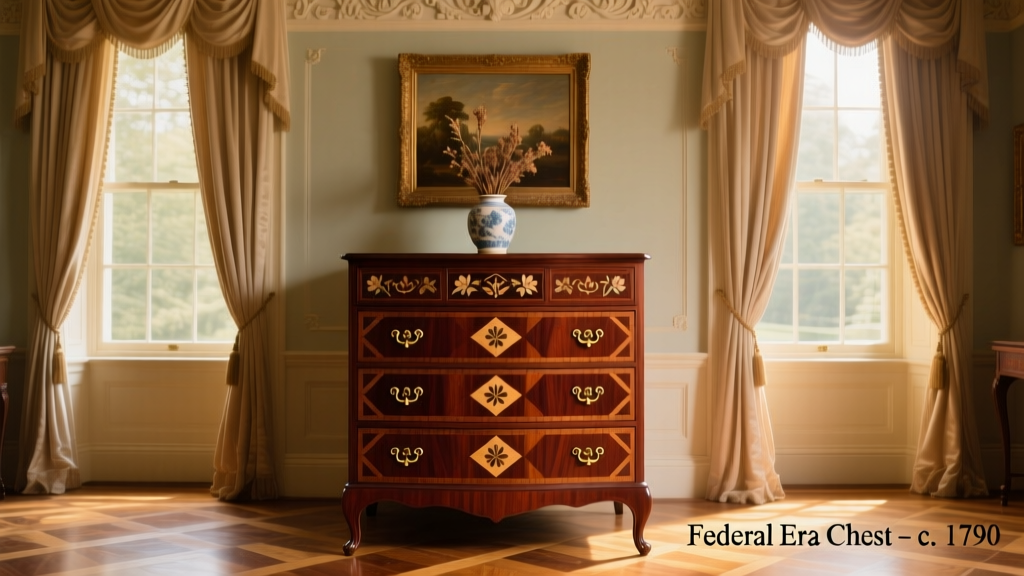
Federal-Era Tall Chest in Cherry with Inlay: A 1790 Masterpiece Measuring 62 × 43 Inches
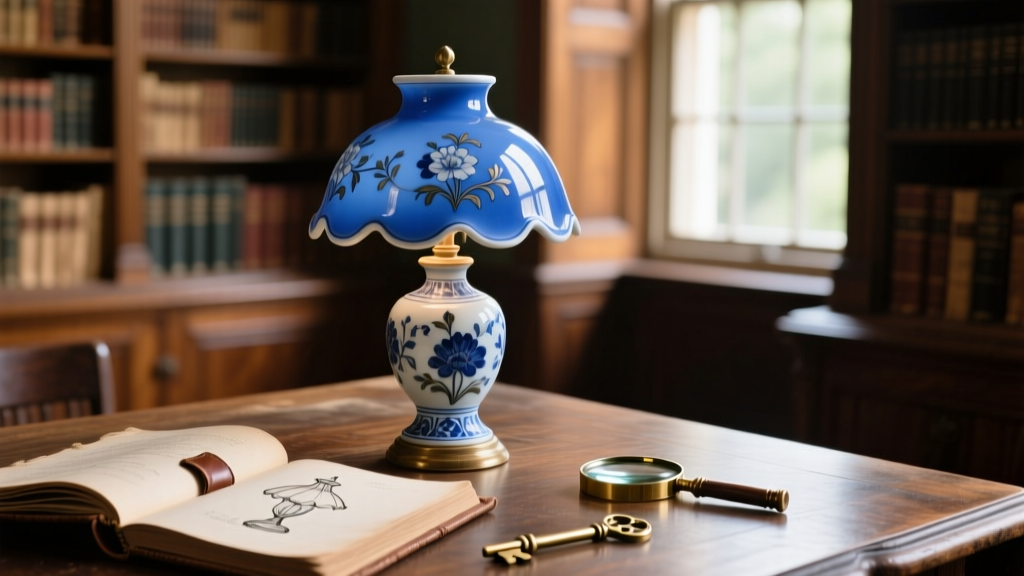
Need Help Identifying an Antique Blue Porcelain Lamp? A Specialist’s Step-by-Step Identification Guide
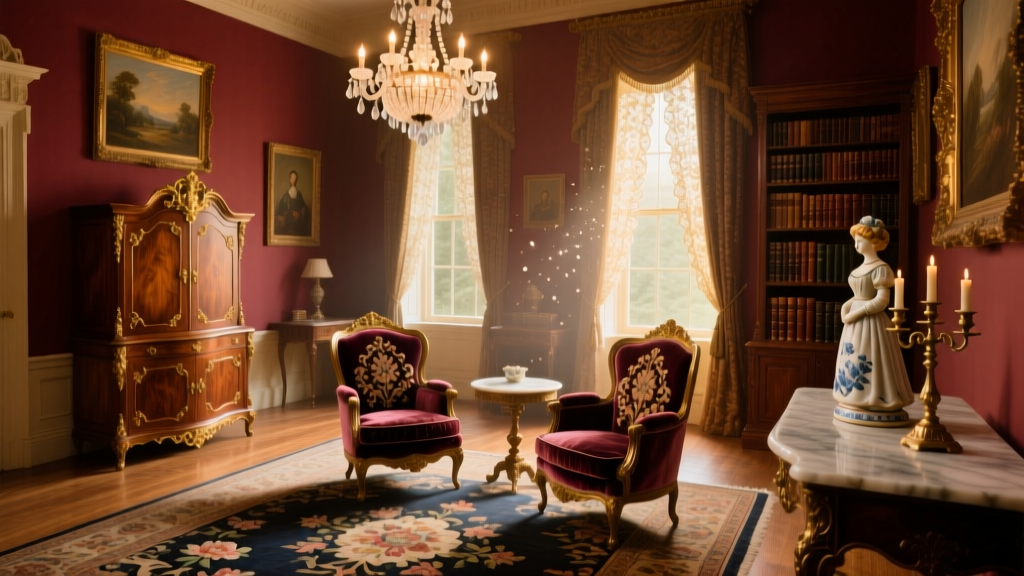
Victorian Home Decorations: Authentic Details, Restoration Principles, and Period-Accurate Sourcing
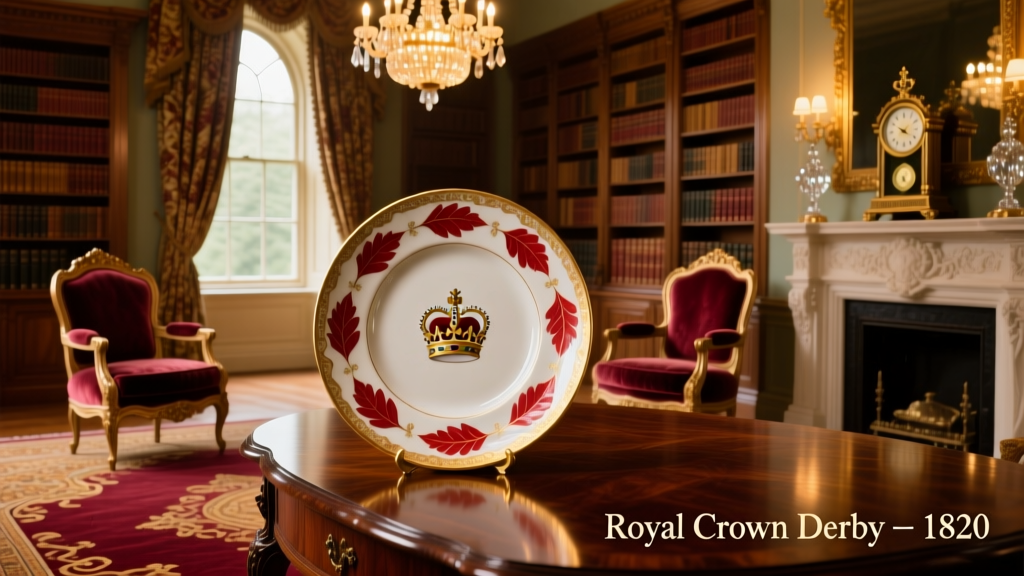
Royal Crown Derby Red Leaves Plate (8½ Inches): History, Identification, and Restoration Insights
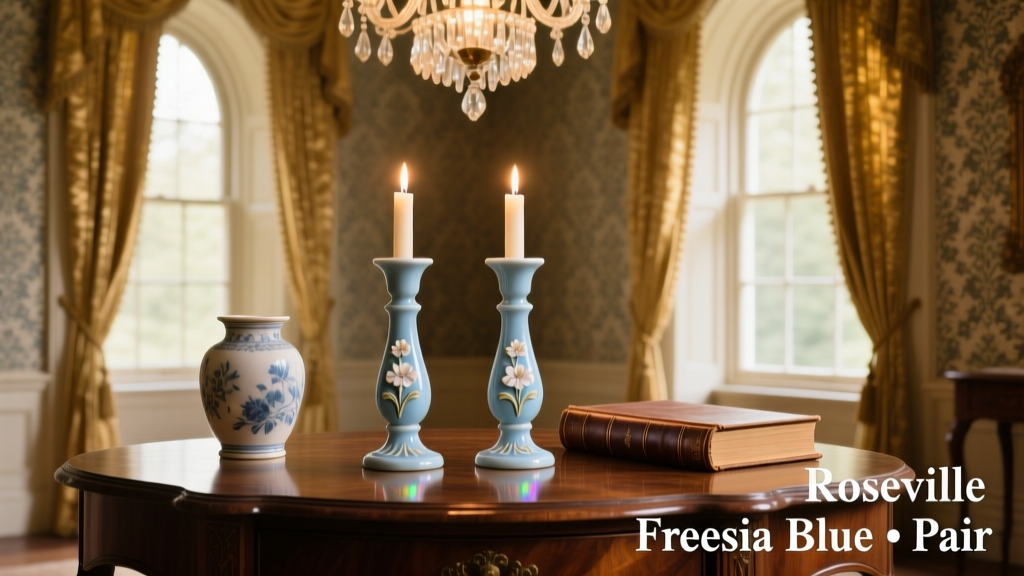
Roseville Candlestick Freesia Blue: Identifying, Valuing, and Preserving the Iconic 2-Inch Pair