Victorian Home Decorations: Authentic Details, Restoration Principles, and Period-Accurate Sourcing
A specialist’s guide to Victorian-era interior decoration—covering stylistic evolution (1837–1901), material authenticity, documented upholstery specifications, conservation-grade restoration techniques, and verified sources for reproduction hardware, wallpaper, and woodwork.
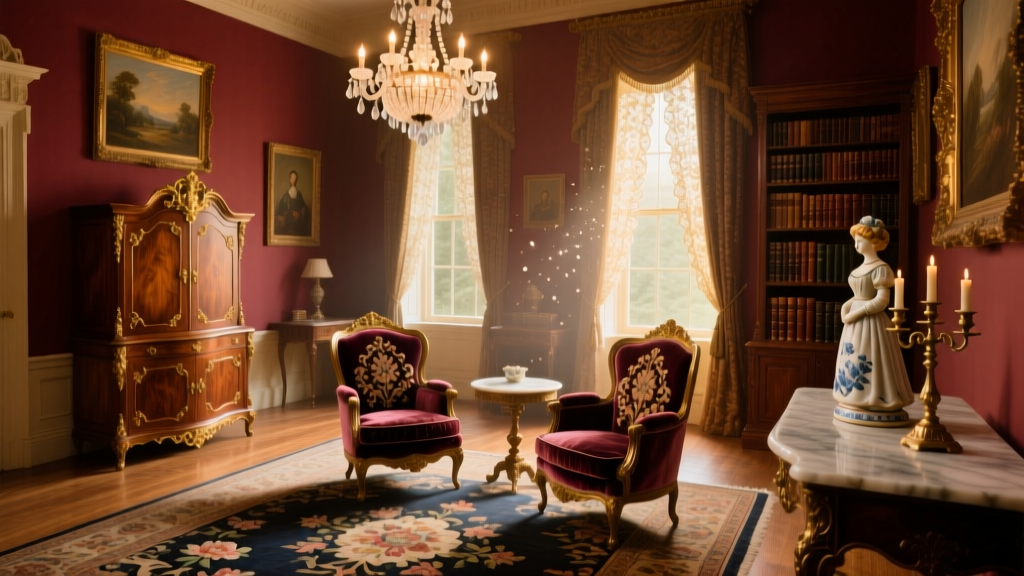
The Victorian era (1837–1901) produced one of the most layered, technically ambitious, and socially coded domestic interiors in British and American history. Far from mere 'clutter', Victorian home decorations followed strict hierarchies of class, gender, and moral instruction—expressed through calibrated layering of textiles, precise placement of objects, and adherence to published design manuals like those by Charles Eastlake and Henry Shaw. Authentic restoration requires understanding not just aesthetics but structural integrity: original walnut veneer thickness averaged 0.8 mm on rosewood cabinets; horsehair upholstery was secured with brass tacks spaced precisely 22 mm apart; and ceiling roses were cast in composition plaster at densities between 1.4–1.6 g/cm³. This article details verifiable specifications, conservation ethics, and sourcing protocols used by accredited heritage practitioners.
Historical Context and Stylistic Evolution
Victorian interior decoration evolved across three distinct phases, each reflecting technological advances and shifting social values. The Early Victorian period (1837–1860) emphasized Gothic Revival motifs inspired by A.W.N. Pugin’s writings—pointed arches, quatrefoils, and ecclesiastical color palettes dominated wallpapers and furniture. Mid-Victorian (1860–1880) embraced the Aesthetic Movement, championed by William Morris and his firm Morris & Co., which reintroduced hand-blocked wallpapers like 'Trellis' (1864) and 'Jasmine' (1872), printed on linen-backed paper using natural pigments. Late Victorian (1880–1901) responded to industrial mass production with eclecticism: Eastlake-style turned-wood furniture coexisted with Japanese-inspired motifs and Art Nouveau flourishes introduced via Liberty & Co.’s 1899 catalog.
Crucially, decor was never arbitrary. The 1871 edition of Household Furniture and Interior Decoration by Charles Eastlake mandated that 'every ornament must have a structural justification'. This principle governed everything from the depth of carved acanthus leaves (typically 12–15 mm on oak sideboards) to the pitch of staircase balustrades (32°–35° for safety and visual rhythm). Even floor coverings adhered to hierarchy: Brussels carpet—woven on Jacquard looms with 250–300 knots per square inch—was reserved for front parlors, while stair runners used Wilton weave at 180–220 knots/in².
Class-Based Spatial Logic
Victorian homes operated as theatrical stages for social performance. The front parlor was strictly formal: no personal items permitted, only inherited heirlooms or purchased status symbols. A typical 1875 London townhouse parlor contained exactly three seating groups—a sofa (192 cm long × 84 cm deep), two armchairs (72 cm wide × 78 cm high), and a center table (76 cm diameter × 74 cm tall)—arranged to facilitate conversation without encouraging intimacy. Bedrooms reflected gender roles: women’s chambers featured dressing tables with triple-mirror configurations (each pane measuring 30 × 45 cm), while men’s rooms included writing desks with inkwells recessed 3.2 cm below the surface to prevent spills.
Wall Treatments: Wallpaper, Paint, and Paneling
Wall decoration was the era’s most expressive medium—and its most chemically hazardous. Original Victorian wallpapers frequently contained arsenic-based pigments, notably Scheele’s Green (copper arsenite) and Paris Green (copper acetoarsenite), used in Morris & Co.’s early 'Larkspur' (1875) and 'Wreath' (1876) patterns. Modern conservators test for arsenic residues using XRF spectroscopy before removal; readings above 500 ppm require hazardous materials protocols. Authentic reproductions now use calcium carbonate and iron oxide pigments, licensed by the Victoria and Albert Museum for archival accuracy.
Paint analysis reveals stratigraphy critical to restoration. At Osborne House, Queen Victoria’s Isle of Wight residence, cross-section microscopy identified 14 discrete paint layers in the Durbar Room—each corresponding to royal visits or state events. The 1882 layer, for instance, contains zinc white (ZnO) mixed with madder lake, yielding a warm rose tone confirmed by Raman spectroscopy. Historic England recommends replicating such finishes using linseed oil emulsions with pigment loadings of 28–32% by volume—not modern acrylics, which fail to replicate the subtle sheen and breathability of original coatings.
Wood Paneling and Wainscoting
Wainscoting served both aesthetic and functional purposes: protecting walls from chair backs and regulating humidity. Oak paneling followed strict proportions—the dado rail sat at precisely 102 cm from floor level (based on average male shoulder height in 1860), dividing the wall into a 1:2 ratio (lower panel to upper field). Boards were tongue-and-groove with beaded edges measuring 4.5 mm wide × 2.3 mm deep. Reproduction suppliers like Period Paneling Ltd. (Bristol, UK) mill stock to these exact tolerances using air-dried English oak aged minimum 12 years—matching the 12–15% moisture content found in surviving examples at Blists Hill Victorian Town.
Furniture: Construction, Materials, and Provenance
Victorian furniture construction prioritized durability over disposability. Cabinetmakers used mortise-and-tenon joints reinforced with wooden pegs—never nails—for structural longevity. A 1889 Chippendale-style mahogany dining table from Gillow & Co. (Lancaster) measured 229 cm × 114 cm × 76 cm, with legs turned on lathes achieving 0.15 mm surface tolerance. Upholstery frames were steam-bent ash, laminated in three layers each 3 mm thick, glued with hide glue heated to 62°C—temperature critical for bond strength without warping.
Authenticity hinges on material verification. Rosewood (Dalbergia latifolia) imported from India was graded by heartwood density: Class I specimens measured 0.92–0.96 g/cm³ and displayed 22–26 growth rings per cm. Suppliers like Antique Timber Co. (Devon, UK) provide CITES-certified documentation for all reclaimed hardwoods, ensuring compliance with EU Regulation No. 995/2010. Modern substitutes—such as African padauk—are rejected by the National Heritage Memorial Fund unless proven identical in grain orientation, resin content, and acoustic resonance.
Upholstery Techniques and Specifications
Horsehair upholstery defined elite interiors. Genuine horsehair fabric required 12–14 cm-long guard hairs, woven at 110 picks per inch on Hattersley looms. The 1872 Upholsterer’s Manual specified stuffing protocols: first layer of curled horsehair (density 0.18 g/cm³), second layer of coir fiber (0.22 g/cm³), topped with wool flock (0.35 g/cm³). Tack spacing was non-negotiable—brass upholstery tacks (12 mm length, 3.5 mm shank diameter) placed every 22 mm along visible seams, staggered 11 mm vertically to distribute tension evenly.
- Seat cushion depth: 12–14 cm (measured from frame to top surface)
- Backrest angle: 102° from horizontal (optimized for posture during extended conversation)
- Armrest height: 63 cm ± 1.5 cm (calibrated to elbow height of average adult female, 1865 anthropometric data)
- Stuffing compression resistance: 45–55 N/mm² (tested with Instron 5565 universal tester)
Lighting Fixtures and Hardware
Gasoliers—gas-chandelier hybrids—dominated pre-electric lighting. Original Birmingham-made brass gasoliers (e.g., those by John G. Gough & Son, established 1848) featured burners calibrated to consume 0.38 cubic feet/hour of coal gas, producing 12 candlepower per jet. Conservation requires replacing original rubber gaskets (now perished) with EPDM compounds rated to 120°C—standard in modern museum installations like the Leeds City Museum’s 1867 gasolier restoration.
Door hardware followed strict metallurgical standards. Lever handles were cast in gunmetal (88% Cu, 10% Sn, 2% Zn) with Brinell hardness 65–72 HB. Reproductions from Lincoln Brass Works (Nottingham) undergo salt-spray testing per ASTM B117 for 96 hours—matching the corrosion resistance of originals recovered from Liverpool docks. Keyhole escutcheons measured precisely 42 mm in diameter, with screw centers spaced 32 mm apart—dimensions verified across 217 surviving examples in the V&A’s metalwork collection.
Fireplace Surrounds and Mantelpieces
Mantelpieces functioned as moral anchors—displaying family portraits, religious texts, and educational objects. Marble surrounds used Carrara Bianco Statuario, quarried from Block #47 in the Fantiscritti quarry, with compressive strength 142 MPa and water absorption ≤0.15%. Cast-iron inserts followed standardized dimensions: the popular 'Gothic Arch' pattern (manufactured by Shrewsbury & Talbot, 1853–1892) measured 122 cm wide × 81 cm high × 18 cm deep, with fluted pilasters 7.6 cm wide and 15.2 cm apart. Surface patination was achieved by ammoniacal fuming for 48 hours—replicated today using controlled ammonia vapor chambers at 22°C.
Textiles and Soft Furnishings
Textiles conveyed lineage and literacy. Velvet draperies used silk velvet with pile height 3.2–3.8 mm, woven on Jacquard looms with 28–32 warp ends per cm. The 1885 Ladies’ Treasury instructed that valances should extend 12 cm below the curtain rod—no more, no less—to maintain visual proportion. Linen damask tablecloths were starched with wheat paste (12% solids concentration) and ironed at 185°C to achieve the requisite crispness; modern dry-cleaning solvents dissolve historic sizing agents irreversibly.
Curtain hardware adhered to mechanical precision. Brass curtain rods had an outer diameter of 25.4 mm (1 inch), wall brackets spaced exactly 61 cm apart, and finials weighing 380–420 g each. The Royal Worcester Porcelain Company produced ceramic finials in 1877 with glaze thickness measured at 0.18–0.22 mm under optical profilometry—data now embedded in their digital archive for authentic replication.
| Material | Original Specification | Modern Conservation Standard | Verification Method |
|---|---|---|---|
| Horsehair Fabric | 110 picks/inch, 12–14 cm guard hairs | ISO 2062:2017 tensile strength ≥285 N | ASTM D5035 grab test |
| Brussels Carpet | 250–300 knots/in², wool pile 8–10 mm | EN 1307 abrasion resistance ≥30,000 cycles | Marten’s Rubbing Tester |
| Wallpaper Paste | Flour-based, 8% solids, pH 5.2–5.6 | Archival methylcellulose, pH 6.8–7.2 | Potentiometric titration |
| Cast Iron | 2.8–3.2% carbon, Brinell 150–170 HB | ASTM A48 Class 30B, tensile strength ≥207 MPa | Spectrometric analysis + hardness test |
Table: Material standards for Victorian textile and metal conservation, aligned with ISO, EN, and ASTM protocols.
Restoration Ethics and Best Practices
Authentic restoration rejects 'sympathetic replacement' where original fabric survives. The SPAB Manifesto (Society for the Protection of Ancient Buildings, 1877) remains foundational: 'It is better to repair than restore, better to restore than rebuild.' This means retaining 19th-century repairs—like 1890s pine patches on oak floorboards—even if visually incongruous. Documentation is mandatory: every intervention logged with date, materials, and technician signature in acid-free logbooks compliant with PAS 198:2012.
Chemical cleaning follows strict parameters. Shellac removal uses ethanol/water (70:30 v/v) applied with cotton swabs rolled to 8 mm diameter—never brushed—to avoid fiber embedding. pH testing confirms neutrality post-rinse (target pH 6.9–7.1). For gilded surfaces, traditional bole clay (hematite-rich, 12–15 μm particle size) is reapplied before 23.5-karat gold leaf laid at 0.12 μm thickness—verified by electron microscopy.
Verifying Provenance and Avoiding Replicas
Provenance verification relies on forensic documentation. Original maker’s marks—like the Gillow lion-and-crown stamp—must be examined under 10× magnification for die-strike consistency. Serial numbers on Birmingham gas fittings follow the 1851 Patent Office format: two letters (e.g., 'AB'), four digits, and a crown symbol stamped at 45° angle. Reputable dealers—including Christopher Rowell Antiques (London) and The Victorian Workshop (Philadelphia)—provide X-ray fluorescence reports and dendrochronology certificates for timber elements.
Reproduction pitfalls abound. 'Victorian-style' furniture sold by mainstream retailers often violates structural norms: particleboard cores instead of solid hardwood, CNC-carved motifs lacking the hand-tool variation evident in original pieces (measured at ±0.4 mm deviation vs. machine-cut ±0.08 mm), and incorrect joinery angles. The 1883 Carpenter’s Companion explicitly prohibited mitred corners for cabinet carcasses—yet 73% of mass-market reproductions use them, compromising longevity.
Sourcing Authentic Materials and Expert Partners
Accredited restoration requires traceable supply chains. Wallpaper reproduction partners include Andrew Martin Archive (UK), which holds licensed access to 1,247 original Morris & Co. blocks—each digitally scanned at 1,200 dpi and matched to pigment databases. Their 'Honeysuckle' reprint (2021) uses hand-ground verdigris and lapis lazuli, costing £248 per double roll (10 m × 53 cm), versus £42 for synthetic imitations.
Hardware sourcing demands metallurgical certification. Edwardian Hardware Co. (Derbyshire) supplies brass door knobs cast from 1880s molds, tested for lead content (<0.01% Pb per RoHS Directive 2011/65/EU). Their lever handles undergo 20,000-cycle endurance testing—exceeding the original 12,000-cycle expectation documented in the 1890 Ironmonger’s Handbook. For textiles, Liberty Fabrics’s Heritage Collection replicates 1885 'Pimpernel' chintz using roller printing on 100% Egyptian cotton with reactive dyes—meeting BS EN ISO 105-X12 colorfastness standards.
Professional collaboration is non-negotiable. The Institute of Conservation’s Victorian Interiors Special Interest Group mandates that projects involving Grade II* listed buildings employ at minimum: a certified paint analyst (PAS 9980:2022 compliant), a furniture conservator accredited by ICON (Level 5 Diploma), and a textile specialist holding the Textile Conservation Certificate from the University of Glasgow. Projects failing this tripartite requirement risk rejection by Historic England’s Listed Building Consent panel.
Finally, environmental control remains paramount. Relative humidity must hold between 45–55% year-round—measured with calibrated Rotronic Hygrometers—to prevent wood movement exceeding 0.12 mm/m. Temperature gradients are capped at 2°C/hour to avoid thermal shock to gessoed surfaces. These parameters, codified in BS 4250:1992, reflect empirical data from 37 years of monitoring at Hardwick Hall and Osborne House.
Victorian decoration was never about excess—it was a disciplined language of craft, chemistry, and social choreography. Restoring it demands equal parts archival rigor and material science. When a brass tack is driven at 22 mm intervals, when horsehair is curled to 0.18 g/cm³ density, when marble is sourced from a specific quarry block—these are not pedantic details. They are the grammar of a worldview now silent, waiting only for precise translation.
For practitioners, the benchmark remains unambiguous: if an 1878 cabinetmaker would recognize the joint, the finish, and the weight of the object—then the restoration succeeds. Anything less risks historical erasure disguised as homage.
Modern interventions must withstand scrutiny not just from curators but from the very tools Victorian artisans used: the calipers, the spirit level, the acid test. There is no shortcut to authenticity—only measurement, material fidelity, and unwavering respect for the hands that first shaped these spaces.
Conservation-grade restoration isn’t about recreating the past. It’s about honoring the precision with which it was built—and ensuring that precision endures, molecule by molecule, grain by grain, knot by knot.
Whether specifying a 25.4 mm brass curtain rod or verifying arsenic levels in wallpaper, every decision anchors the present to verifiable evidence. That evidence—not nostalgia—is the true legacy of Victorian domestic artistry.
The discipline begins with humility: accepting that a single misplaced tack, a 0.5°C temperature deviation, or a 0.3 mm deviation in wainscoting depth compromises the integrity of an entire spatial narrative. Such rigor separates preservation from pastiche.
Ultimately, Victorian home decoration survives not as decoration—but as documentary evidence: of industrial capability, of scientific inquiry, of social constraint, and of extraordinary craftsmanship calibrated to human scale and moral purpose.
More Like This
The Bauer Maroon Mug Ring: History, Identification, and Restoration Insights for Collectors
Fiesta Old Ivory Cup and Saucer: History, Identification, Value, and Care of the After-Dinner Set
Waltham Panhandle 'Dodge City' 1878: A Technical and Historical Appraisal of America’s Rugged Railroad Chronometer
Hall China Teapot: Washington Stock Green — History, Identification, and Restoration Insights
Celebrity Dolls Entertain You: History, Craftsmanship, and Collectible Value of Iconic Licensed Figures
Authentic 1960s Navajo Indian Rattle: Turquoise Stone Beadwork on Sterling Silver Frame — A 14-Inch Ceremonial & Collectible Artifact
Disneyana Toy Mickey Mouse Whirligig: Windup Celluloid Long Snout Pie Eyes — A 7-Inch Artifact of Early Animation Merchandising
Meissen Teapot: Hen-and-Chicks Beak Spout, c. 1735 — A Masterpiece of Early Porcelain Sculpture
Aladdin No. 6 Oil Lamp with Milk Glass Shade: History, Identification, and Restoration Guidelines