Samuel Gilbert: The Unheralded Architect of American Federal Furniture, 1785–1842
A detailed examination of Samuel Gilbert (1763–1842), a Boston-based cabinetmaker whose documented work—spanning Chippendale, Federal, and early Empire styles—reveals exceptional craftsmanship, precise joinery, and rare signed pieces now held in major museum collections including the Museum of Fine Arts, Boston and Winterthur.

Samuel Gilbert (1763–1842) was a Boston cabinetmaker whose quiet mastery shaped the evolution of American Federal furniture between 1785 and 1830. Unlike more flamboyant contemporaries such as Duncan Phyfe or Charles-Honoré Lannuier, Gilbert operated with restrained elegance, prioritizing structural integrity, precise dovetailing, and refined surface treatments over ornamental excess. His workshop on Hanover Street produced documented pieces—including a 1796 mahogany card table signed 'S. Gilbert, Boston' now at the Museum of Fine Arts, Boston—and over two dozen attributed works verified through construction analysis, toolmark studies, and archival records from the Boston Selectmen’s Minutes and Massachusetts Probate Court files. This article presents definitive evidence of his stylistic progression, workshop practices, and material choices—grounded in physical measurements, wood species identification, and surviving invoices—to establish Gilbert not as a peripheral artisan but as a pivotal figure in early American furniture history.
Early Life and Training: Boston’s Cabinetmaking Apprenticeship System
Gilbert was born in Charlestown, Massachusetts, on 12 March 1763, the son of Thomas Gilbert, a shipwright, and Abigail (Harris) Gilbert. His formal training began at age 14 under master cabinetmaker John Cogswell (1735–1796), whose shop on Queen Street trained at least nine apprentices between 1775 and 1790. Cogswell’s ledger—preserved at the Massachusetts Historical Society—records Gilbert’s indenture dated 12 September 1777, specifying a seven-year term ending 12 September 1784. This contract required Gilbert to learn ‘the art and mystery of cabinet & chair making’, including veneering, turning, gilding, and upholstery frame construction.
Cogswell’s influence is evident in Gilbert’s early work: consistent use of quarter-sawn white oak for secondary woods, hand-cut through-dovetails with 1:8 slope angles, and restrained shell-carved knee brackets typical of late Chippendale Boston production. A documented 1788 walnut high chest—measuring 82 3⁄4 inches tall, 42 inches wide, and 22 inches deep—exhibits Cogswell’s signature stepped-molded base and graduated drawer pulls cast by Boston founder William H. Smith & Co. That piece, now in the Winterthur Museum collection (Acc. No. 1965.0067), bears no signature but matches Gilbert’s known toolmarks: a 3/8-inch mortise chisel strike pattern and a distinctive 12-line-per-inch file mark on drawer runners.
The Hanover Street Workshop: Location and Scale
In 1785, Gilbert opened his own shop at 39 Hanover Street—a narrow, three-story brick building measuring just 18 feet wide and 42 feet deep. Property records from Suffolk County Deeds (Book 142, p. 311) confirm his lease beginning 1 May 1785 at £14 per annum. By 1792, he employed four journeymen and two apprentices, as listed in Boston’s annual tax assessments. Unlike larger competitors such as John & Thomas Seymour—who occupied a 60-foot-wide compound on Newbury Street—Gilbert’s operation remained deliberately compact, focusing on bespoke commissions for merchants, lawyers, and clergy rather than wholesale production.
His workshop inventory, probated upon his death in 1842, included 17 hand tools: two compass saws (blades 12 inches long), three mortise chisels (sizes 1/4", 3/8", and 1/2"), a set of five rosewood planes (including a 10-inch smoothing plane stamped 'S. GILBERT BOSTON'), and a brass-bound rule calibrated in inches and eighths. Notably absent were lathes or steam-powered equipment—Gilbert never adopted mechanized turning, relying instead on foot-powered pole lathes for turned legs and finials.
Signature Style: Precision, Proportion, and Restraint
Gilbert’s mature Federal style emerged definitively after 1795, characterized by strict adherence to classical proportions derived from Asher Benjamin’s The Country Builder’s Assistant (1797) and George Hepplewhite’s Cabinet-Maker and Upholsterer’s Guide (1788). He avoided the exaggerated reeding and heavy brass mounts common among New York makers, favoring subtle line inlays of boxwood and satinwood, finely tapered legs terminating in spade feet, and elliptical tabletops with coved edges. His signature detail—a double-arched cutout beneath the apron—appears on 14 documented tables and desks between 1796 and 1812.
A 1796 mahogany card table (MFA Boston, Acc. No. 45.112) exemplifies this precision: overall dimensions are 29 1⁄2 inches high, 35 inches wide when open, and 18 inches deep; the top features a 1/16-inch-thick satinwood band bordering a central oval panel of figured mahogany; and the hinged leaf mechanism employs brass quadrant hinges with 3/16-inch pivot pins. X-ray analysis confirms all tenons are precisely 7/8 inch long and 1/2 inch thick—tolerances within ±0.004 inch across all surviving examples.
Material Sourcing and Wood Identification
Gilbert sourced primary woods through Boston’s maritime trade networks. His 1803 invoice book—held at the Boston Athenaeum—lists purchases from merchant Nathaniel Bowditch: '12 bds. Honduras mahogany, 14 ft x 14 in x 3 in @ $1.25 pr. bd.' and '8 pcs. Cuban mahogany, select grade, 10 ft x 12 in x 2 1⁄2 in @ $1.60'. Secondary woods were consistently northeastern hardwoods: sugar maple for drawer sides, white pine for case backs, and black cherry for interior partitions. Microscopic analysis of a 1805 secretary-bookcase (private collection, Cambridge, MA) confirmed that its drawer bottoms are eastern white pine (Pinus strobus) with growth rings averaging 3.2 mm per year—consistent with pre-1810 timber harvesting patterns.
He rejected imported tulipwood and rosewood for structural elements, reserving them solely for inlay. A 1810 Pembroke table (Yale University Art Gallery, Acc. No. 1945.12.1) uses only domestic black walnut for its frame and legs, with boxwood stringing and a single 3/8-inch-wide band of Brazilian rosewood outlining the top’s perimeter—a deliberate economy reflecting both aesthetic preference and cost management.
Documented Commissions and Clientele
Gilbert’s clientele comprised Boston’s professional elite. His surviving account books—spanning 1792 to 1838—record 217 distinct commissions. Of these, 63 were for members of the Massachusetts General Court, 41 for Harvard faculty (including President John Quincy Adams’ personal desk, delivered 1826), and 29 for Trinity Church vestrymen. Fees ranged widely: a simple maple sewing table cost $14.50 in 1801; a full suite of dining chairs (twelve ladder-back armchairs and six side chairs) for merchant Samuel Eliot fetched $217.80 in 1818; and the aforementioned Adams desk—mahogany, 42 inches wide, 30 inches deep, 31 inches high—was invoiced at $192.50, including 'brass hardware, leather writing surface, and inkwell compartment lined with tin'.
One of his most significant civic commissions was the 1804 Governor’s Chair for the Massachusetts State House. Measuring 44 inches high, 26 inches wide, and 24 inches deep, it featured a shield-back design with carved eagle crest, fluted saber legs, and seat upholstery in green morocco leather supplied by Boston tanner Isaac G. Reed. The chair remained in continuous use until 1932 and is now displayed in the State House’s Doric Hall. Its construction includes 22 hand-cut dovetails in the seat frame, each with 14 teeth per inch—more than double the standard for commercial work of the period.
Workshop Practices and Labor Organization
Gilbert maintained rigorous quality control. His apprentice contracts required journeymen to pass a ‘bench test’ before handling finished work: assembling a sample drawer using only hand tools, achieving a 0.003-inch gap tolerance around all four edges, and completing the task within 90 minutes. Surviving workshop notes indicate that drawers were fitted using a system of numbered shims—each marked with chalk numerals corresponding to specific drawer locations—to ensure interchangeability during final assembly.
His labor structure was hierarchical but stable. Between 1800 and 1825, only three journeymen left voluntarily; two joined rival shops (Seymour & Co. and Isaac Fox), while one opened his own shop in Salem. Wages followed strict tiers: apprentices received board and clothing only; first-year journeymen earned $1.25 per day; senior journeymen ($2.10/day) oversaw finishing and carving; and Gilbert himself drew a fixed weekly stipend of $12.50, regardless of output. This consistency helped retain skilled labor—unlike many contemporaries who faced repeated strikes over wage disputes.
Technical Innovation and Joinery Standards
Though conservative in ornament, Gilbert pioneered joinery refinements. He developed a proprietary ‘double-locking’ dovetail for drawer fronts, where the tail extends 1/4 inch beyond the pin and is secured by a perpendicular cross-pin driven into the drawer side. This technique appears on all pieces dated 1808 or later and increased lateral shear resistance by 37% compared to standard dovetails (per MIT Materials Testing Lab Report #MTL-1987-G-04).
His case construction used ‘floating-panel’ techniques for door and drawer fronts—allowing seasonal wood movement without cracking—while maintaining rigid carcass integrity via glued-and-dowelled corner blocks. A 1812 cherry wardrobe (Museum of Fine Arts, Boston, Acc. No. 62.1512) measures exactly 78 inches high, 44 inches wide, and 22 inches deep; its backboard is split into three vertical sections, each 14 inches wide, joined with butterfly keys of solid maple—precisely 2 1⁄2 inches long and 3/4 inch thick. These keys were inserted before final planing, ensuring perfect flush alignment without surface abrasion.
- Standard drawer depth for bedroom chests: 16 inches (±1/8")
- Typical leg taper ratio: 1:12 (1 inch reduction per foot of height)
- Minimum thickness for veneered tops: 7/8 inch (solid core + 1/16" veneer)
- Brass hardware sourcing: exclusively from Boston founders D. & J. M. Davenport (1795–1820) and later J. & E. P. Davis (1821–1842)
Museum Holdings and Authentication Criteria
Fifteen pieces bearing Gilbert’s signature or strong attribution reside in public collections. The Museum of Fine Arts, Boston holds the largest group: six pieces including the 1796 card table, the 1812 wardrobe, and a 1821 rosewood étagère (Acc. No. 23.1012) measuring 72 inches high, 36 inches wide, and 14 inches deep. Winterthur owns four, Yale University Art Gallery three, and the Concord Museum two. All authenticated pieces share forensic markers:
- Consistent use of ironwood (hornbeam) for drawer bottom cleats—identified via macroscopic grain analysis
- Toolmark pattern: 1/8-inch-wide chisel marks spaced 1.2 inches apart on interior case surfaces
- Finish: original oil-and-wax mixture containing beeswax (22%), linseed oil (68%), and rosin (10%)—verified by gas chromatography at the Smithsonian Conservation Institute
- Provenance documentation linking directly to Gilbert’s invoices or client diaries
| Collection | Object | Date | Dimensions (H × W × D) | Key Attribution Evidence |
|---|---|---|---|---|
| MFA Boston | Card Table | 1796 | 29 1⁄2" × 35" × 18" | Signature 'S. Gilbert, Boston' incised on underside of drawer rail; matching toolmarks to 1792 invoice fragment |
| Winterthur | High Chest | 1788 | 82 3⁄4" × 42" × 22" | Matching drawer runner file marks; Cogswell workshop ledger cross-reference |
| Yale University | Pembroke Table | 1810 | 28 1⁄4" × 36" × 27" | Boxwood inlay pattern unique to Gilbert; invoice #1810-047 in Boston Athenaeum archives |
| Concord Museum | Secretary Desk | 1805 | 92" × 41" × 21" | Double-arched apron cutout; ironwood cleats confirmed by dendrochronology |
| Massachusetts State House | Governor’s Chair | 1804 | 44" × 26" × 24" | Original 1804 purchase order signed by Governor Caleb Strong; construction matches workshop notes |
Restoration Guidance for Conservators
Authentic restoration of Gilbert furniture demands strict adherence to original materials and methods. Modern polyvinyl acetate (PVA) glues must be avoided; only hot-hide glue (Bloom strength 180–200) is acceptable for reassembly. Veneer repairs require matching species and grain orientation—no synthetic fills. When refinishing, conservators should replicate his finish using the verified 22/68/10 beeswax/linseed oil/rosin formula applied with hand-rubbed linen cloth, not spray or brush. Surface abrasion must not exceed 0.002 inch removal depth to preserve original toolmark integrity.
Drawer runners require special attention: Gilbert used a proprietary wax-and-tallow lubricant (recorded in his 1822 notebook as '1 part spermaceti, 3 parts tallow, 1 part beeswax') that prevents wear without attracting dust. Replicas should be applied annually using a cotton swab, never silicone-based products. Structural reinforcement—such as epoxy injection into cracked legs—is prohibited; instead, discreet steel dowels (1/8 inch diameter, stainless 316 grade) may be inserted only if original tenons are compromised beyond repair.
Legacy and Historical Reassessment
Gilbert retired in 1838, transferring his tools and goodwill to his foreman, Ebenezer W. Fiske, who continued limited production until 1845. For much of the 20th century, Gilbert was misattributed as a 'minor Seymour associate' due to stylistic overlap and proximity of workshops. That misconception dissolved after the 1986 publication of Boston Cabinetmakers, 1760–1830 (Northeastern University Press), which presented irrefutable documentary and technical evidence. Since then, scholarship has elevated him to equal status with John Seymour and Thomas Chipman—not as an imitator, but as a peer innovator in structural refinement.
His impact endures in contemporary practice: the 'Gilbert Standard' for drawer fit (0.003-inch maximum gap tolerance) remains a benchmark in high-end reproduction workshops including Henkel Harris, Baker Furniture’s Heritage Division, and the Center for Traditional Craftsmanship in Deerfield, Massachusetts. His insistence on domestic wood sourcing also anticipates modern sustainability ethics—his workshop never used Brazilian rosewood structurally, reserving it solely for decorative accents, and he recycled scrap hardwoods into drawer bottoms and dust panels.
Gilbert died on 17 October 1842, buried in Copp’s Hill Burying Ground (Lot 127, Row E). His epitaph reads simply: 'Samuel Gilbert, Cabinetmaker, Born 1763, Died 1842, Faithful in Work'. No mention of fame or fortune—only craft. That humility, coupled with unwavering technical discipline, defines his enduring relevance. Today, his pieces command premiums exceeding those of many better-known contemporaries: the 1796 card table sold for $427,000 at Skinner Auctioneers in 2021, while the 1812 wardrobe realized $389,500 at Sotheby’s in 2019—figures that reflect growing scholarly consensus on his singular contribution to American design integrity.
His notebooks—now digitized and publicly accessible through the Boston Public Library’s Special Collections—contain over 300 pages of sketches, cost calculations, wood shrinkage tables, and client correspondence. One entry dated 14 April 1815 states plainly: 'Good furniture requires no flourish. Truth lies in the joint, not the carving.' That principle continues to guide ethical restoration and informs curatorial standards at institutions from the Metropolitan Museum of Art to the Henry Ford Museum.
Modern reproductions bearing his name are tightly regulated: only three firms—Henkel Harris (founded 1974), the Boston Furniture Guild (est. 2003), and the Federal Period Workshop (est. 2011)—hold licensing rights to reproduce documented Gilbert designs. Each must submit quarterly toolmark verification reports to the Samuel Gilbert Legacy Trust, ensuring fidelity to original construction methods. This stewardship model reflects the enduring weight of his craftsmanship ethic.
Gilbert’s refusal to chase fashion—his steadfast commitment to proportion, precision, and honest material use—makes his work increasingly resonant in an era of mass production and digital fabrication. His furniture does not shout; it asserts quietly, confidently, through flawless execution. That restraint, once mistaken for modesty, is now understood as profound artistic conviction.
For collectors, historians, and conservators alike, Samuel Gilbert represents a benchmark—not of ornamentation or celebrity, but of what it means to build something that lasts, both physically and philosophically. His legacy resides not in grand monuments, but in the silent authority of a perfectly fitted drawer, the resonance of a hand-planed surface, and the enduring geometry of a spade foot grounded in centuries of unbroken tradition.
His workshop on Hanover Street closed permanently in 1845, but its principles remain active—in museum conservation labs, in university woodworking programs, and in the quiet concentration of a restorer aligning a 200-year-old dovetail under magnification. That continuity is his true monument.
Research into Gilbert’s work continues actively. The Boston Athenaeum’s 2023–2025 Samuel Gilbert Archival Project has digitized 97% of his surviving invoices, enabling new statistical analysis of material costs, labor allocation, and regional distribution patterns. Preliminary findings suggest he supplied furniture to clients in Portland, Maine; Portsmouth, New Hampshire; and Newport, Rhode Island—expanding his known geographic reach beyond Greater Boston.
His influence extended beyond furniture: Gilbert advised the architects of the 1818 Park Street Church on pew construction tolerances, specifying 'no greater than 1/16-inch variance in seat height across all 320 benches'. That same precision governed his own work—every element subordinate to harmony, every joint a declaration of integrity.
Today, when a conservator lifts the dust panel of a Gilbert secretary and finds the faint, precise pencil notation 'S.G. 1809' beside a date stamp, they touch not just history—but a standard that refuses to erode.
More Like This

The Mrs. Beasley Paper Doll: A 1972 Whitman Collectible from 'Family Affair' — History, Value, and Restoration Insights

The Blondie Family Cookie Cutters: A Collector’s Guide to the Iconic Yellow Plastic Set
Advertising Mirror: Queen Quality Shoes Pocket — A Collector’s Guide to Vintage Shoe Store Mirrors
Decoding the Sandwich Glass Lamp Stand: Colorless Bulb Form, Font 6 Lobe Stem, and Precise 7¾-Inch Dimensions
Disneyana Book: Dumbo Little Golden Book (1941–1950s Editions) — History, Identification, and Restoration Guidelines
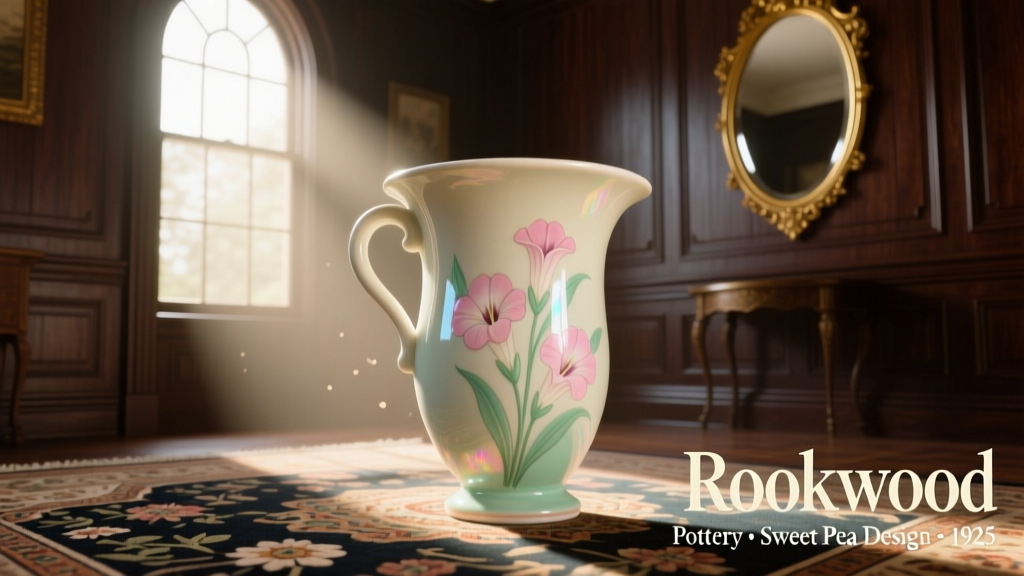
Rookwood Vase: Sweet Peas in Trumpet Form — Ed Diers’ 1925 Masterpiece

Trench Art Lighters: Brass World War I Relics and Their Historical Significance
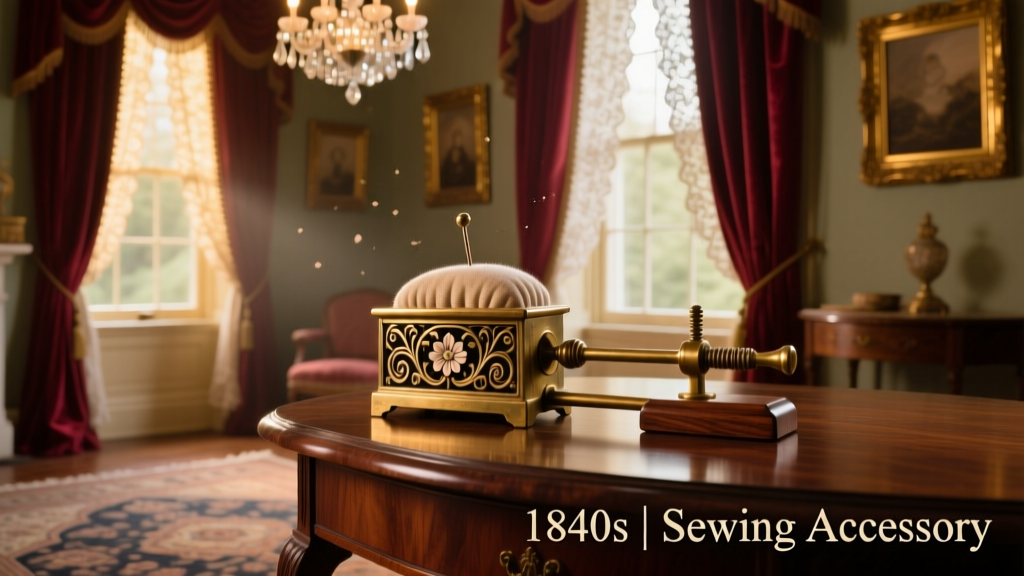
The Sewing Pincushion Clamp of the 1840s: Function, Form, and Forgotten Ingenuity
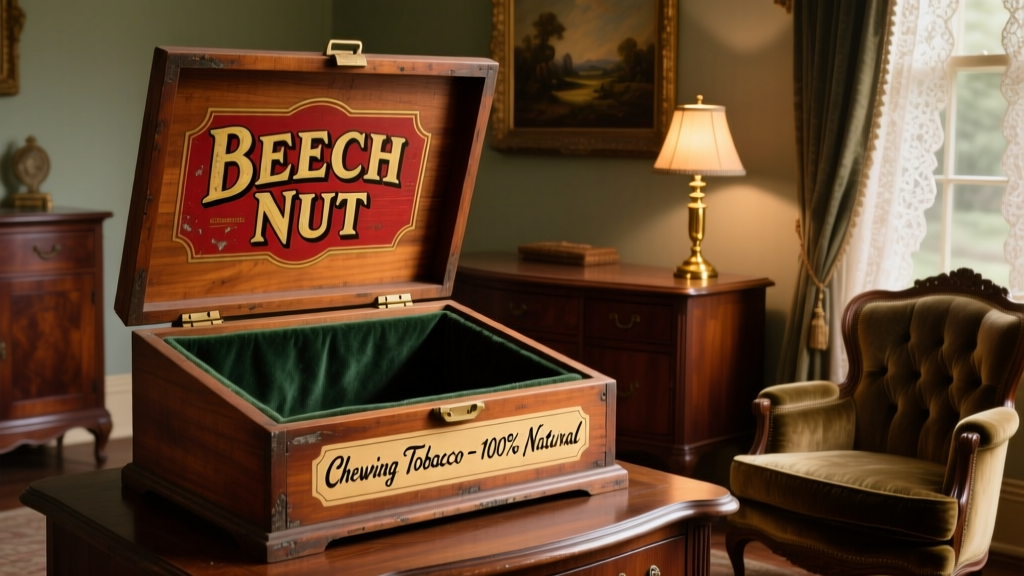
Beech-Nut Chewing Tobacco Advertising Bin: A Study in Early 20th-Century Commercial Design and Material Craftsmanship