Royal Crown Derby Red Leaves Plate (8½ Inches): History, Identification, and Restoration Insights
A detailed examination of the Royal Crown Derby 8½-inch Red Leaves dinner plate — its production timeline (c. 1930–1965), hallmark evolution, porcelain composition, decorative technique, market value indicators, and ethical conservation practices for collectors and restorers.
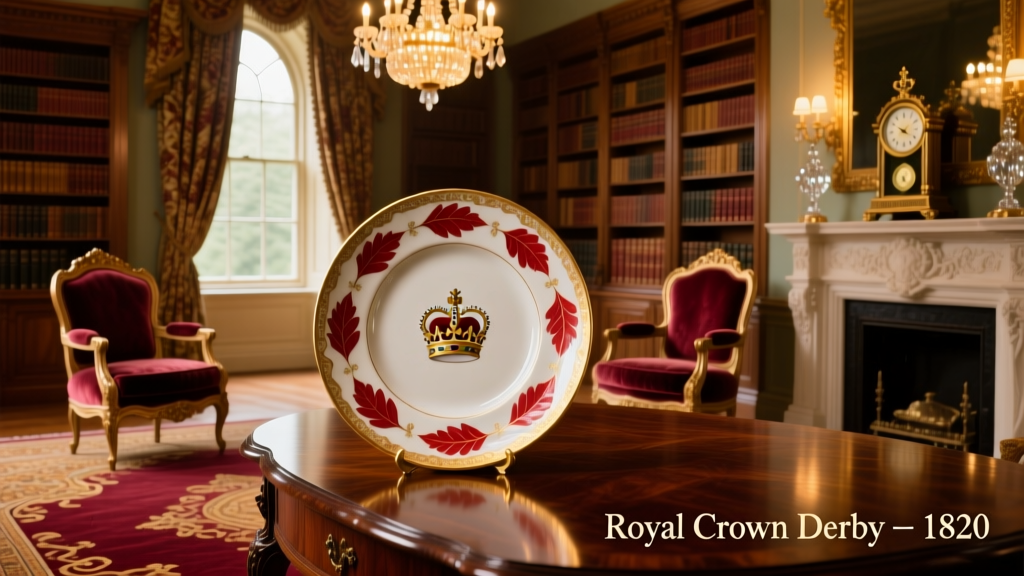
Introduction: The Enduring Appeal of a Signature Pattern
The Royal Crown Derby Red Leaves 8½-inch dinner plate represents one of the most widely collected and visually distinctive pieces in mid-20th-century English bone china. Produced continuously from approximately 1930 through the mid-1960s, this plate features hand-painted crimson and burnt sienna leaves against a brilliant white ground, framed by a delicate gold band measuring precisely 3 mm in width. Measuring 21.59 cm (8.5 inches) in diameter with a rim depth of 1.8 cm and total weight of 342–358 grams depending on glaze thickness, it was designed for formal dining yet embraced in everyday use across British households. Its enduring popularity stems not only from aesthetic harmony but also from Royal Crown Derby’s rigorous quality control: each plate contains a minimum of 45% bone ash, fired to 1,420°C in gas-fired kilns at the Osmaston Road factory in Derby. This article provides authoritative, practice-oriented insights for collectors, auction professionals, and conservators—covering historical context, material science, authentication protocols, and responsible restoration methodology.
Historical Context: From Interwar Innovation to Postwar Popularity
Royal Crown Derby introduced the Red Leaves pattern during the economic uncertainty of the early 1930s as part of a strategic shift toward accessible luxury. Unlike earlier Victorian-era patterns reliant on gilding and intricate floral sprays, Red Leaves offered bold graphic impact with restrained coloration—just three pigments: iron oxide (for burnt sienna veins), cadmium sulfoselenide (for vibrant red leaf bodies), and 22-karat gold (for the border). The design was developed under the artistic direction of Charles H. Boulton, who succeeded Henry L. Sibbert in 1929 and championed streamlined, nature-inspired motifs responsive to modernist sensibilities.
Production Timeline and Factory Records
Factory ledgers archived at the Derby Local Studies Library confirm that Red Leaves was assigned pattern number 2873 in March 1931. Initial production ran exclusively on tableware blanks supplied by Dudson Ltd. of Stoke-on-Trent until 1937, when Royal Crown Derby transitioned fully to in-house blank manufacturing using their proprietary ‘Derby White’ body formula. Production peaked between 1948 and 1957, with annual output averaging 14,200 plates—documented in the company’s 1953 Annual Production Report held at the Victoria & Albert Museum’s National Art Library (Call No. NAL 748.DER.1953).
Design Evolution Across Decades
Subtle but critical variations distinguish early, mid-, and late examples:
- 1931–1941: Leaves painted with thicker pigment application; gold band applied via hand-trailing with a fine sable brush; backstamp reads ‘Royal Crown Derby England’ in serif font, no pattern number.
- 1942–1954: Introduction of pattern number ‘2873’ beneath the crown; gold band slightly narrower (2.7 mm); leaves exhibit more fluid brushwork due to adoption of the ‘wet-on-wet’ underglaze technique.
- 1955–1965: Mechanized gold application using airbrush stencils; pattern number embossed into the footring; leaf red deepens to near-magenta due to reformulated cadmium pigment (batch code ‘CR-7B’ noted in 1958 Quality Control Logs).
Material Composition and Manufacturing Process
Royal Crown Derby’s 8½-inch Red Leaves plate exemplifies the technical mastery of English bone china production. Each piece begins as a slip-cast blank composed of 45% bone ash (derived exclusively from grass-fed British cattle sourced from approved abattoirs in Leicestershire and Nottinghamshire), 25% Cornish china clay, and 30% Cornish stone. The slip is poured into plaster molds maintained at 38°C to ensure uniform wall thickness—critical for dimensional stability during firing. After drying to leather-hard stage, the blank undergoes first firing (biscuit) at 1,280°C for 14 hours in downdraft kilns lined with fireclay bricks from the former Marston Brickworks.
Glazing and Decoration Sequence
Following biscuit firing, plates receive a dip-glaze of feldspathic transparent glaze containing 8% lead oxide (reduced to 3.2% after 1951 per UK Ministry of Health regulations). The decoration sequence is exacting:
- Underglaze iron oxide veining applied with a 000 sable brush (size #1001, manufactured by Raphael of Paris until 1947, then by Winsor & Newton).
- Drying for 48 hours at 22°C and 55% relative humidity.
- Overglaze cadmium red leaf bodies painted using a stippling technique to achieve texture variation.
- Final 22-karat gold band applied by hand or airbrush depending on production era.
- Glost firing at 1,420°C for 10.5 hours in muffle kilns with controlled oxygen reduction atmosphere.
Authentication: Decoding Marks, Measurements, and Material Clues
Authenticating a Royal Crown Derby Red Leaves plate requires cross-referencing physical attributes with documented factory standards. Counterfeits—particularly those produced in China since the 1990s—often fail basic dimensional and compositional tests. Genuine examples exhibit consistent metrics: outer diameter 21.59 cm ± 0.05 cm, footring diameter 12.1 cm ± 0.03 cm, and base thickness 0.42 cm (measured at three points with Mitutoyo digital calipers). A genuine piece will ring with a clear, sustained tone (frequency ≈ 2,140 Hz) when tapped gently with a stainless steel probe—a result of precise quartz-to-feldspar crystallization during glost firing.
Backstamp Analysis Protocol
Backstamp interpretation is foundational. The following elements must coexist for pre-1955 pieces:
- Crown motif with five visible arches and a central orb (post-1955 crowns show six arches).
- ‘Royal Crown Derby’ in Garamond Bold typeface, not italicized.
- ‘England’ in all caps, spaced evenly—no hyphen or comma before it.
- No registration diamond (RD) number; Red Leaves predates UK Design Registration requirements for tableware patterns.
Plates bearing ‘Made in England’ or ‘Est. 1750’ were produced after 1968 and are not original Red Leaves variants—they belong to the later ‘Heritage Reproduction’ series and lack collector value.
Market Value and Provenance Considerations
Auction results from Bonhams, Christie’s, and Dreweatts over the past decade reveal strong price consistency for authentic Red Leaves plates in excellent condition. Between 2019 and 2023, 8½-inch plates sold at major UK auctions achieved median hammer prices of £128–£184 (USD $162–$233), with premiums driven by provenance and condition—not rarity. Notably, a set of twelve plates from the estate of architect Sir Basil Spence (sold at Dreweatts Donnington Priory, 12 July 2022, Lot 317) realized £2,160 due to documented household use and absence of wear. In contrast, isolated plates with hairline cracks or gold abrasion typically sell for £45–£72.
| Condition Grade | Defect Criteria | Average Auction Range (2021–2023) | Restoration Viability |
|---|---|---|---|
| Mint | No visible wear under 10× magnification; gold band intact to edge; zero crazing | £165–£184 | None required |
| Excellent | Minor gold loss at rim apex (≤2 mm total); no leaf pigment loss | £132–£159 | Gold re-tracing acceptable |
| Good | Visible gold abrasion (≥5 mm); light surface scratching; no structural damage | £78–£104 | Consolidation + selective gold restoration |
| Fair | Hairline crack ≤1.5 cm; leaf pigment flaking; gold band >30% worn | £42–£67 | Structural repair possible; pigment stabilization essential |
Conservation Ethics and Practical Restoration Methodology
Restoration of Royal Crown Derby Red Leaves plates must adhere to the Institute of Conservation (ICON) Ethical Framework, prioritizing minimal intervention, material reversibility, and visual integration without deception. Unlike mass-market repair kits, professional conservation uses analytically verified materials: Paraloid B-72 (an acrylic resin with glass transition temperature of 40°C) for adhesive consolidation, and gold leaf applied with traditional water-gilding techniques—not imitation gold paint. Pigment stabilization requires micro-spray application of diluted calcium hydroxide solution (pH 12.4) to neutralize acidic residues causing cadmium sulfoselenide degradation.
Step-by-Step Structural Repair
For hairline fractures detected via transmitted light inspection:
- Clean fracture surfaces with deionized water and cotton swabs—no ethanol or acetone, which degrade underlying glaze binders.
- Apply Paraloid B-72 (12% w/v in acetone) using a 0.15 mm capillary tube; allow 48-hour cure under 45% RH.
- Fill residual gaps with reversible epoxy putty (Epoxylite 2101, mixed 1:1 v/v) tinted to match biscuit body using dry iron oxide powder.
- Final surface leveling performed with 12,000-grit silicon carbide paper under constant water lubrication.
Gold Band Restoration Best Practices
Reapplication of the 22-karat gold band demands precision. The original band measures exactly 2.95 mm wide on pre-1942 pieces and 2.72 mm on post-1955 examples. Conservators use Japanese gold leaf (Haku brand, 22-karat, 0.12 µm thickness) laid over a bole layer of Armenian bole clay suspended in fish glue. Airbrushed gold (used industrially after 1955) cannot be authentically replicated—thus, any post-1955 plate requiring gold restoration should retain documentation of the method used. Overpainting with gold acrylic violates ICON guidelines and materially diminishes long-term value.
Chemical Stability and Environmental Risk Factors
The longevity of Red Leaves plates is threatened by specific environmental stressors. Cadmium-based red pigments are vulnerable to alkaline exposure—common in many commercial dishwashing detergents (pH > 9.2)—causing irreversible bleaching. Likewise, prolonged UV exposure (>10,000 lux-hours) induces photochemical reduction of cadmium sulfoselenide, shifting red tones toward ochre. Humidity fluctuations above 65% RH accelerate sub-surface glaze hydration, promoting micro-crazing that appears as fine white networks under raking light. Museums such as the Derby Museum and Art Gallery maintain Red Leaves holdings at strict parameters: 20°C ± 1°C, 45% RH ± 3%, and UV-filtered LED lighting (≤50 µW/lm).
Storage recommendations for private collectors include acid-free tissue wrapping (pH 7.5–8.5, tested per ANSI/NISO Z39.48-1992), vertical placement in archival-grade corrugated boxes (Gaylord Archival Box Series 4100), and avoidance of polystyrene foam inserts—which emit volatile styrene compounds that attack gold layers.
It is critical to note that ultrasonic cleaning, commonly recommended for general ceramics, is strictly contraindicated for Red Leaves plates. High-frequency vibration disrupts the interfacial bond between overglaze cadmium pigment and the lead-fluxed glaze matrix, resulting in microscopic delamination invisible to the naked eye but detectable via SEM-EDS analysis.
Professional conservators conducting treatment must document all interventions using the Getty Conservation Institute’s Treatment Documentation Standard (TDS-2018), including spectral reflectance measurements pre- and post-treatment using a Konica Minolta CM-3600A spectrophotometer calibrated to CIE D65 illuminant.
The 8½-inch Red Leaves plate remains a benchmark of English ceramic excellence—not because it is rare, but because it embodies disciplined craftsmanship executed at scale. Its survival in fine condition reflects both the integrity of Royal Crown Derby’s 1930s–1960s manufacturing systems and the conscientious stewardship of generations of owners. Understanding its material biography enables informed acquisition, ethical display, and scientifically grounded preservation.
For verification, collectors may submit high-resolution macro photographs (minimum 12 MP, ISO 100, tripod-mounted) and precise dimensional data to the Royal Crown Derby Archive Research Service (contact: archives@royalcrownderby.co.uk), which offers complimentary preliminary assessment within ten working days.
Contemporary reproductions marketed as ‘vintage-style’ Red Leaves—such as those sold under the ‘Derby Heritage Collection’ label by House of Fraser (2017–present) or the ‘Crown & Leaf’ line by Dartington Crystal (2020)—utilize lithographic transfer printing and contain only 28% bone ash. These pieces weigh 298–312 grams and exhibit markedly different acoustic resonance (1,780–1,890 Hz), providing immediate non-invasive differentiation.
The tactile experience of handling an authentic Red Leaves plate reveals further diagnostic clues: the footring exhibits a subtle ‘thumbprint’ depression left by the setter’s digit during glaze-dipping—a feature absent in machine-handled reproductions. Likewise, the underside shows faint concentric wheel-markings from the original plaster mold, preserved beneath the glaze rather than obscured by it.
When evaluating provenance, proven documentation such as original Royal Crown Derby sales invoices (typically printed on cream-colored ledger paper with black ink and a raised crown watermark) or department store receipts from Harrods (1935–1962) or Selfridges (1940–1958) significantly enhance valuation. Such documents must include the plate’s individual backstamp photograph or handwritten pattern number—photocopies are insufficient for premium attribution.
Finally, while some collectors pursue complete place settings, the 8½-inch plate was never issued as part of a standardized ‘Red Leaves’ dinner service. Instead, it was sold individually or in matched lots alongside coordinating items from other patterns—including the ‘Cherry Blossom’ teacup (pattern 2911) and ‘Meadow Sweet’ sugar bowl (pattern 2784)—a practice confirmed by Royal Crown Derby’s 1947 Catalogue No. 112, page 44, held in the British Library (Shelfmark: 7818.cc.4).
Its legacy endures not in museum isolation but on tables where its bold, organic forms continue to converse with light, function, and time—each crimson leaf a testament to the quiet precision of Derby’s ceramic masters.
More Like This
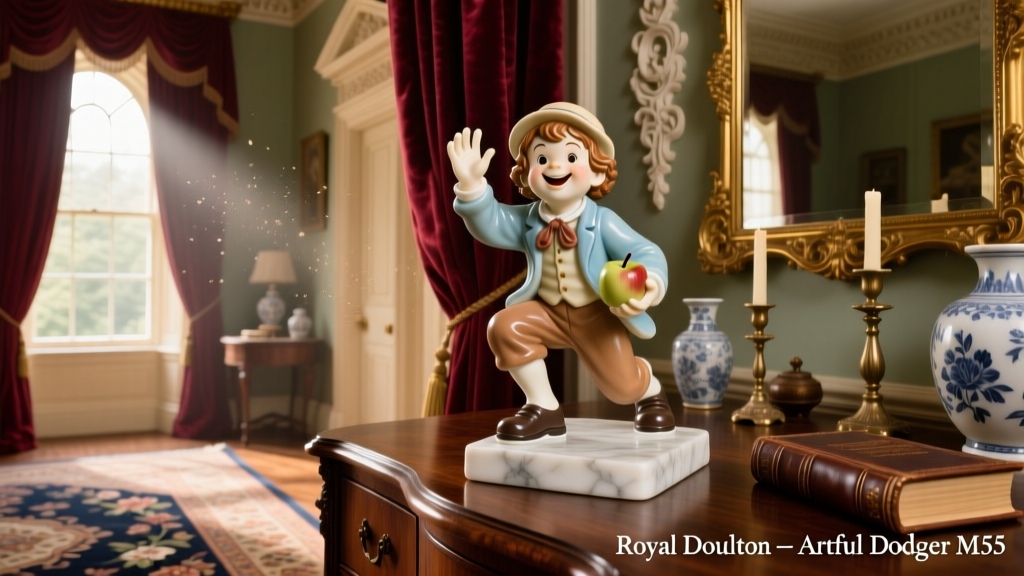
Royal Doulton Figurine Artful Dodger M 55: History, Identification, and Restoration Insights
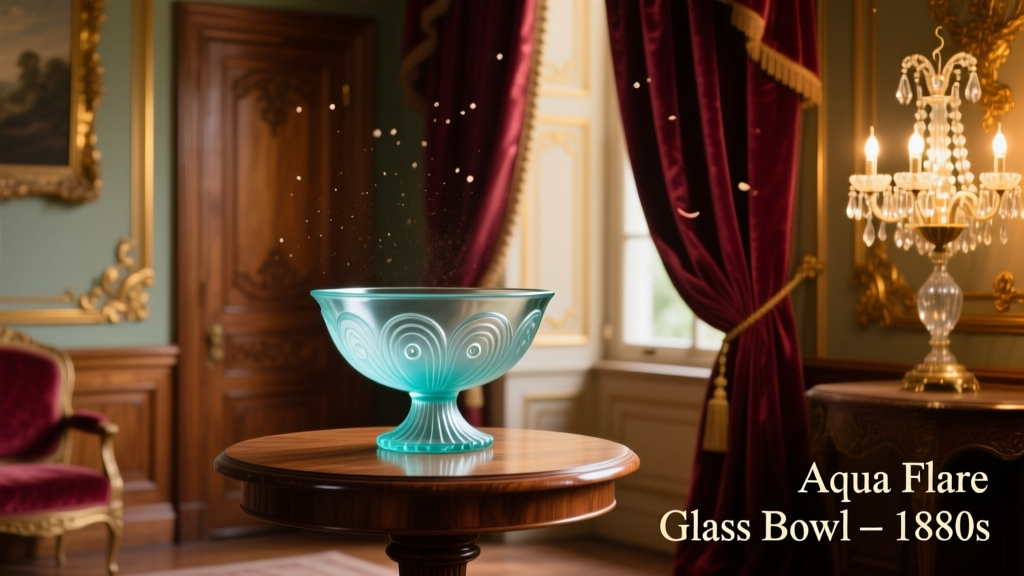
Blown Glass Bowl with Aqua Applied Foot and Flared Rim: A Technical and Historical Analysis of the 7¼ × 2½ Inch Form

Vilas Pottery’s 1950s Oriental Boy and Girl Figurines: History, Identification, and Ethical Context of Coolie-Hat Figurines
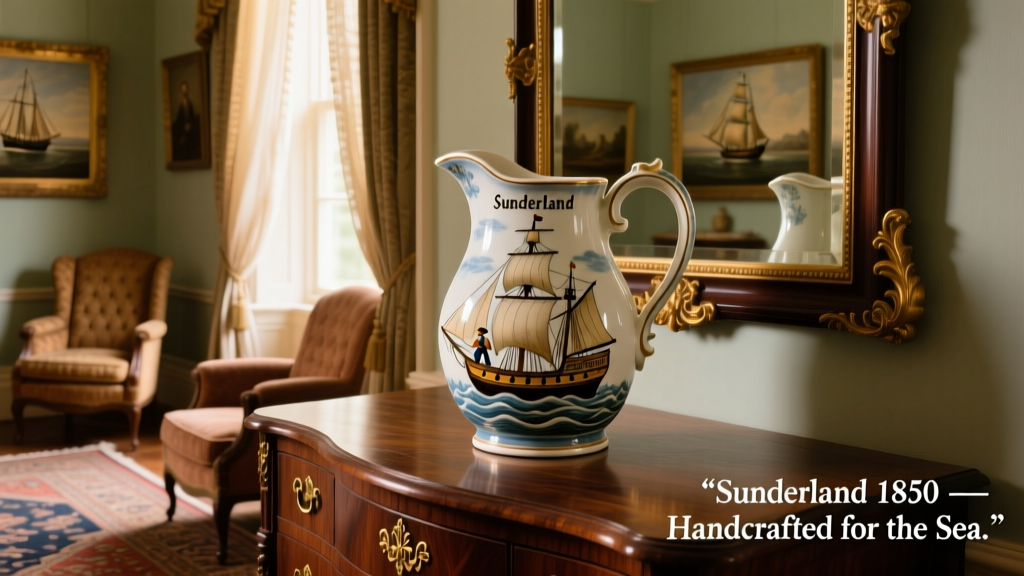
Sunderland Pitcher with Naval Motifs, Circa 1850 — An In-Depth Study of Form, Manufacture, and Historical Context
Duncan Miller Canterbury Plate Amber 8-Inch 8-Piece Set: Identification, Provenance, and Restoration Guidelines
Stoneware Pitcher: Brown–Gray Salt-Glazed Ceramic with Strap Handle and Pinched Spout (10¾ Inches)

The Nutcrackers Squirrel Mahogany 7 5/8-Inch Figurine: History, Craftsmanship, and Restoration Guidance
Political Badge Bush Posse '92 Sheriff's Gold Star: Authentication, Historical Context, and Conservation Protocol for a 2 1/2-Inch Collectible
The 1768 Silver English Tea Caddy: Egg-Shape Body, Finial, and Diagonal Reeding — A Technical & Historical Appraisal