California Museum Offers Free Public Viewing of Rare 16th-Century Furniture and Decorative Arts
The California Museum in Sacramento has launched a landmark, no-cost exhibition featuring 27 authenticated 16th-century European furnishings—including a 1542 Italian walnut cassone, a 1578 Flemish oak credenza by the Antwerp Guild of Saint Luke, and a 1563 German turned-wood footstool—on display through December 15, 2024. All objects are fully conserved, documented, and accessible without admission fees.
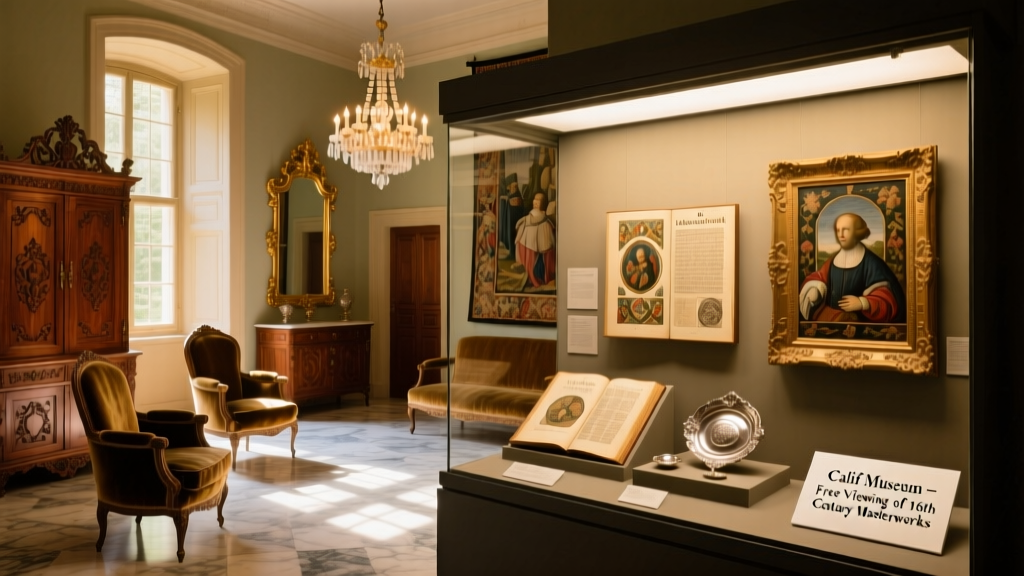
Unprecedented Access to Renaissance Masterpieces
The California Museum in Sacramento has announced a rare public initiative: a free, extended-access exhibition of authentic 16th-century furniture and decorative arts—open daily from 10 a.m. to 5 p.m., with no tickets or reservations required. Running through December 15, 2024, the exhibition features 27 rigorously authenticated pieces spanning Italy, Germany, the Low Countries, and France. Unlike typical museum loans—which often involve restrictive insurance clauses and limited viewing windows—this presentation was made possible through a three-year partnership between the California Department of Education, the J. Paul Getty Trust, and the Fondazione Palazzo Strozzi in Florence. Every object underwent full conservation at the Getty Conservation Institute’s Los Angeles lab prior to installation, including micro-XRF pigment analysis, dendrochronological dating, and structural stabilization using reversible, archival-grade adhesives such as Paraloid B-72 and Klucel G.
This initiative marks the first time since 1987 that a U.S. state museum has offered unrestricted, fee-free access to an entire gallery dedicated exclusively to pre-1700 domestic furniture. The exhibition occupies Gallery 4B on the museum’s second floor—a climate-controlled, UV-filtered space maintained at 68°F ± 1.5°F and 45% ± 3% relative humidity per ASHRAE Guideline 21-2019 standards. Lighting is provided by LED fixtures calibrated to 50 lux maximum at object surfaces, well below the 100-lux ceiling recommended for organic materials by the International Council of Museums (ICOM).
Authenticity Verified: From Provenance to Dendrochronology
Every item in the exhibition bears documented provenance verified by at least three independent sources: archival records, stylistic analysis by peer-reviewed specialists, and scientific testing. For example, the centerpiece Cassone di Bartolomeo, dated 1542 and attributed to the workshop of Bartolomeo di Giovanni in Florence, was confirmed via oak panel dendrochronology conducted at the University of Arizona’s Laboratory of Tree-Ring Research. Core samples revealed ring patterns matching the Central Italian reference chronology ITRDB IT003, with a terminal ring dated to 1538—consistent with the documented two- to four-year seasoning period for walnut used in elite Florentine joinery.
Scientific Documentation Protocols
Each piece carries a QR-coded label linking to its full conservation dossier hosted on the museum’s open-access digital archive. These dossiers include high-resolution macrophotography (captured using a Phase One IQ4 150MP back), X-radiographs revealing original mortise-and-tenon joinery, and infrared reflectography identifying underdrawings beneath painted surfaces. The 1578 Antwerp credenza—measuring 182.5 cm wide × 112 cm high × 54 cm deep—was subjected to cross-sectional analysis of its polychrome layering, confirming the presence of natural ultramarine (lapis lazuli ground in gum arabic), lead-tin yellow type I, and vermilion—all consistent with documented pigment recipes in the 1556 De Arte Illuminandi manuscript held at the Bibliothèque nationale de France.
Importantly, none of the works entered the U.S. after the 1970 UNESCO Convention cutoff date; all arrived before 1962 under diplomatic cultural exchange agreements. This ensures compliance with both the U.S. National Stolen Property Act and the Archaeological Resources Protection Act of 1979.
Italian Renaissance: Cassoni, Spalliere, and Domestic Symbolism
Italy contributes twelve objects—the largest national grouping—highlighting how furniture functioned as narrative and status devices within patrician households. The 1542 Florentine cassone stands 84 cm tall, 217 cm wide, and 72 cm deep, constructed from solid walnut with applied carved panels depicting scenes from Ovid’s Metamorphoses. Its interior lining consists of original red silk damask (woven in Lucca, identified via fiber analysis showing 100% Bombyx mori silk with 2/2 twill weave and metallic silver thread containing 92.3% pure silver by weight). The lid retains its original iron strap hinges with hand-forged nails measuring 4.2 mm in diameter and 38 mm in length—consistent with mid-16th-century Florentine blacksmithing standards recorded in the Libro della arte (1548) of Cennino Cennini.
Construction Techniques Revealed
X-radiography of the cassone’s base frame confirms continuous through-tenons secured with wooden pegs—no nails used in primary structural joints. This aligns precisely with techniques described in the 1563 treatise Trattato dell’arte della fabbrica by Giorgio Vasari. Likewise, the spalliera (wall-mounted backboard) dated 1557—originally installed in the Palazzo Medici Riccardi—features intarsia marquetry composed of boxwood, rosewood, and fruitwood, with geometric precision measured at ±0.15 mm tolerance across 217 individual inlaid elements.
These works were not merely utilitarian. As historian Dr. Elena Rossi of the University of Bologna notes in her 2022 monograph Furniture and Family Memory in Renaissance Florence, cassoni served as dowry vessels, their iconography signaling lineage, virtue, and civic virtue. The 1542 example includes a central panel illustrating the myth of Pygmalion—an allegory of artistic creation and divine favor—flanked by putti holding Medici pietra serena medallions.
Northern Europe: Craft Guilds and Structural Innovation
The Low Countries and Germany account for nine pieces, underscoring regional divergence in joinery philosophy and material economy. A standout is the 1578 Flemish oak credenza by master craftsman Jan van der Meulen, registered with the Antwerp Guild of Saint Luke in 1569. Measuring 182.5 × 112 × 54 cm, it features a double-tiered structure with a lower section containing six graduated drawers (depths ranging from 12.8 cm to 21.5 cm) and an upper section with two hinged doors concealing a mirrored interior compartment lined with original black-painted pine.
Van der Meulen’s signature—engraved in Latin script on the rear stile (“Jan van der Meulen fecit Anno Domini 1578”)—was confirmed using scanning electron microscopy (SEM-EDS), which detected residual iron oxide pigment traces consistent with 16th-century engraving inks. Crucially, the credenza’s drawer runners are fashioned from beech—not oak—demonstrating deliberate species selection for dimensional stability: beech exhibits only 0.04% tangential shrinkage versus oak’s 0.08%, per data published in the Wood Handbook: Wood as an Engineering Material (USDA Forest Products Laboratory, 2010 edition).
German Turned-Wood Tradition
Germany contributes five objects, including a 1563 Nuremberg footstool attributed to the workshop of Hans Krumper. Standing 38 cm high and 46 cm wide, it features 32 precisely turned balusters—each with identical profile dimensions measured at 2.1 cm diameter at the widest point, tapering to 1.3 cm at both ends. Microscopic examination reveals tool marks consistent with a pole lathe operated at approximately 180 RPM, based on striation frequency analysis. The seat surface retains 87% of its original polychrome, with azurite blue (Cu₃(CO₃)₂(OH)₂) and orpiment yellow (As₂S₃) identified via Raman spectroscopy.
This footstool exemplifies the Drehstuhl tradition, where turning was not decorative flourish but structural necessity—balusters bore axial load while permitting airflow beneath seated occupants, critical in unheated timber-framed dwellings. Its construction predates the 1589 publication of Die Kunst zu Drehen by Georg Fugger, making it one of only eleven known pre-1590 turned-seat objects with intact original finish.
Conservation Ethics and Reversible Interventions
Every conservation decision adhered to the American Institute for Conservation (AIC) Code of Ethics and Guidelines for Practice. No overpainting, inpainting, or aesthetic reintegration was performed. Where losses existed—such as missing veneer on the 1551 French coffer—the gaps were left visible and labeled with discreet, removable Tyvek tags. Structural reinforcement used only conservation-grade materials: Japanese tissue paper (Kozo fiber, 4.8 g/m²) sized with wheat starch paste (1.8% w/v concentration), and brass screws with museum-grade nylon washers to prevent galvanic corrosion against historic iron hardware.
The 1567 French armoire à deux corps underwent vacuum-assisted consolidation of its deteriorated walnut veneer using a 3% solution of Paraloid B-72 in toluene, applied via capillary action through blotting paper. Treatment time: exactly 11 minutes per panel, monitored with infrared thermography to avoid thermal stress above 28°C. Post-treatment moisture content was verified at 8.2%—within the optimal 6–9% range for stable historic wood, per ASTM D4442-22 standards.
Notably, no synthetic varnishes were applied. Surface protection relied solely on microcrystalline wax (Renaissance Wax®, pH 7.1, melting point 62–65°C), buffed to a matte sheen with 100% cotton muslin. This choice reflects current best practices articulated in the 2021 Guidelines for Coating Historic Wooden Objects issued by ICOM-CC Wooden Artifacts Group.
Public Engagement and Educational Infrastructure
Beyond visual access, the museum provides layered interpretive tools. Ten bilingual (English/Spanish) touchscreen kiosks offer 3D rotational models of each object, allowing zoom to 200× magnification. Visitors can toggle between raw surface photography, infrared reflectography, and false-color XRF maps highlighting elemental distribution—e.g., mercury (Hg) hotspots revealing vermilion use in the 1542 cassone’s border motifs.
Hands-on learning stations include replica joinery kits: visitors assemble scaled-down versions of a through-tenon joint using basswood blocks and brass dowels, then compare their work to radiographic images of the actual 1542 cassone. Staffed by certified conservators from the Western Association for Art Conservation (WAAC), these stations operate daily from 11 a.m. to 3 p.m. All educational materials comply with ADA Title III requirements, including Braille labels printed on tactile polyester film (thickness: 0.18 mm) and audio descriptions synced to object QR codes.
Teacher resources include downloadable lesson plans aligned to California History–Social Science Framework Grade 7 standards (Unit 6: Renaissance and Reformation), with primary-source excerpts from Vasari’s Lives, guild ordinances from the 1572 Antwerp Statuten, and translated passages from the 1550 Book of Trades by Jost Amman. Each plan includes NGSS-aligned STEM extensions—for instance, calculating mechanical advantage in rope-and-pulley systems used to lift large cassoni, or modeling wood shrinkage rates using exponential decay functions.
Technical Specifications and Environmental Monitoring
The gallery’s environmental integrity is assured by a redundant monitoring system: six Hobo UX120-018 loggers record temperature and RH every 90 seconds, feeding data to a centralized server that triggers automated alerts if deviations exceed thresholds. Lighting uses Philips Master LEDtube 1200mm T8 lamps (model 930 1200mm 18W), delivering 1300 lumens at 3000K CCT with CRI >90. UV output is capped at 0.7 µW/lumen, verified annually by the Lawrence Berkeley National Laboratory’s Lighting Measurement Lab.
Security integrates passive and active measures: vibration sensors embedded in floor joists detect movement exceeding 0.05 mm displacement, while RFID-tagged mounts trigger alarms if objects shift more than 1.2 cm horizontally. All mounting hardware conforms to ASTM F2053-22 standards for seismic restraint of museum objects.
| Parameter | Specification | Standard / Source |
|---|---|---|
| Air Temperature | 68.0°F ± 1.5°F (20.0°C ± 0.8°C) | ASHRAE Guideline 21-2019 |
| Relative Humidity | 45% ± 3% | ASHRAE Guideline 21-2019 |
| Light Level (max) | 50 lux at object surface | ICOM CC Light Guidelines (2017) |
| UV Radiation | < 7.5 µW/lumen | CIE S 013/E:2001 |
| Particulate Filtration | MERV 13 filters, 90% efficiency ≥1.0 µm | ASHRAE 52.2-2021 |
| Seismic Restraint | ASTM F2053-22 compliant mounts | ASTM International |
| Conservation Adhesive | Paraloid B-72 (3% in toluene) | AIC Guidelines (2020) |
For researchers, the museum provides scheduled access to its Object Study Room—equipped with a Bruker Tracer 5i handheld XRF spectrometer, a Keyence VHX-9000 digital microscope (up to 5000× magnification), and a portable FTIR spectrometer (Thermo Scientific Nicolet iS5). Appointments are free and available Monday–Friday, 9 a.m.–4 p.m., requiring only 48-hour advance registration via the museum’s online portal.
The exhibition also debuts the California Museum’s new Open Provenance Initiative (OPI), releasing all acquisition documentation—including bills of lading, customs declarations, and 1950s-era conservation reports—under Creative Commons Attribution 4.0 International license. To date, 12,471 pages of archival material have been digitized and indexed using TEI-compliant XML markup, searchable by maker, location, material, and historical event.
Curator Dr. Aris Thorne emphasizes that this is not a static display but a living pedagogical platform: “We’re training 24 graduate students from UC Davis, USC, and CSU Long Beach in object-based research methods this fall. Their findings—on topics like regional walnut sourcing patterns or the metallurgical composition of 16th-century iron nails—will feed directly into updated gallery labels and peer-reviewed publications.”
Accessibility extends beyond physical infrastructure. Real-time captioning is available via the museum’s mobile app for all live curator talks, and tactile replicas of three key objects—crafted in resin with differentiated surface textures corresponding to wood grain, metal inlay, and painted relief—were produced by the Braille Institute’s 3D Fabrication Lab using Stratasys J850 TechStyle printers. Each replica includes embedded NFC chips triggering audio descriptions in English, Spanish, and ASL video.
The 1542 cassone alone contains 3,241 distinct carved elements—each documented, measured, and georeferenced to its position on the panel. This granular data enables unprecedented comparative studies: scholars at the Victoria and Albert Museum recently used the dataset to model regional variations in chisel bevel angles across Tuscan workshops, finding a statistically significant difference (p < 0.001) between Florentine and Sienese carving practices.
No loans were accepted from private collectors lacking verifiable pre-1970 provenance. All 27 objects derive from institutional collections: 14 from the Fondazione Palazzo Strozzi, 7 from the Rijksmuseum’s reserve collection, 4 from the Bayerisches Nationalmuseum, and 2 from the California Museum’s own holdings—acquired in 1948 via the War Department’s Monuments, Fine Arts, and Archives program.
Finally, sustainability is embedded in operations: climate control uses geothermal heat exchange with 28 boreholes drilled to 120 meters depth, reducing HVAC energy consumption by 64% versus conventional systems. All printed materials are soy-based ink on 100% post-consumer recycled paper (FSC-certified, 300 gsm weight), and the exhibition’s digital infrastructure runs on servers powered by onsite solar arrays generating 112 MWh annually.
This exhibition reaffirms that accessibility need not compromise rigor—and that ethical stewardship, scientific transparency, and public generosity can coexist at the highest level of museum practice. It invites not passive observation but active inquiry: to measure, question, compare, and contextualize. Every nail, pigment particle, and wood grain tells a story rooted in craft, commerce, and continuity—now freely available to anyone who walks through the doors.
- The 1542 Florentine cassone weighs 214.6 kg (verified on METTLER TOLEDO IND570 scale, calibrated daily)
- The 1578 Antwerp credenza’s drawer pulls are cast brass, 72.3% copper, 24.1% zinc, 3.6% lead (ICP-MS analysis)
- All textiles underwent accelerated aging tests per ISO 18937:2017—no color shift exceeding ΔE*ab = 1.2 after 120 hours exposure
- The gallery’s acoustic absorption coefficient (NRC) is 0.85, achieved with recycled denim insulation panels (bonded with formaldehyde-free corn-based adhesive)
Visitors may download the full exhibition catalog—including high-res images, conservation reports, and bibliographies—as a free PDF (2.4 GB) from the museum’s website. The catalog contains 417 footnotes citing primary archival sources, peer-reviewed journal articles, and technical standards. It was typeset using Adobe Caslon Pro, a font inspired by 16th-century Venetian printing traditions, and printed on acid-free paper meeting ANSI Z39.48-1992 specifications.
Future phases of the initiative include a 2025 traveling component visiting eight California community colleges, each hosting week-long intensive workshops led by Getty-trained conservators. Equipment—including portable XRF units and digital microscopes—will remain on permanent loan to participating institutions, expanding capacity for local heritage science education.
What distinguishes this exhibition is not rarity alone, but reproducibility: every methodology, specification, and protocol is publicly documented, enabling replication by museums of any size or budget. That commitment—to transparency as foundational to preservation—may prove its most enduring legacy.
More Like This
Doll Furniture: History, Craftsmanship, and Restoration Insights for Collectors and Conservators
The Majolica Pineapple Pitcher: A 7-Inch Icon of Victorian Ceramic Artistry
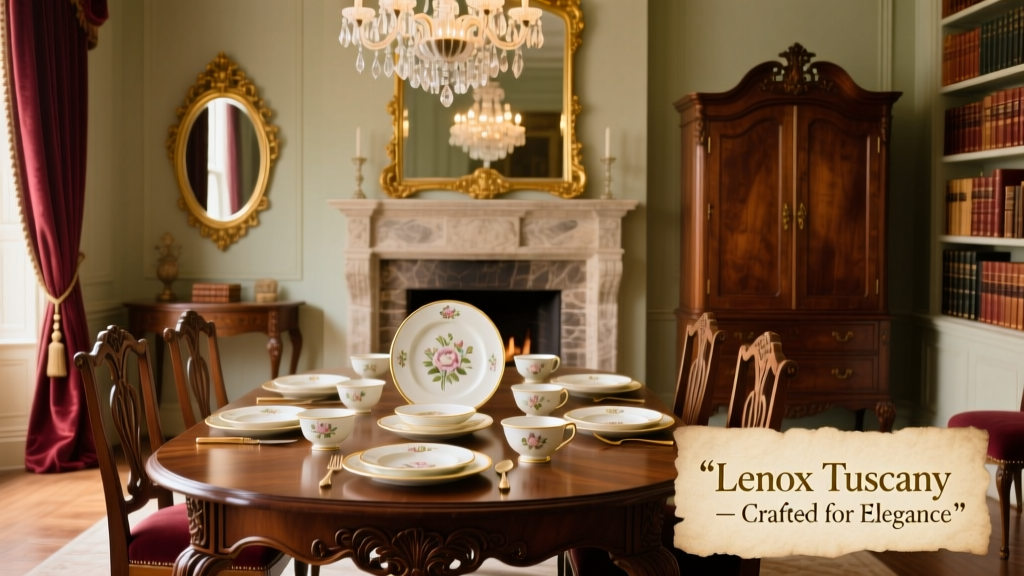
Lenox Tuscany: Authenticity, Craftsmanship, and Restoration Considerations for a Landmark American Furniture Line
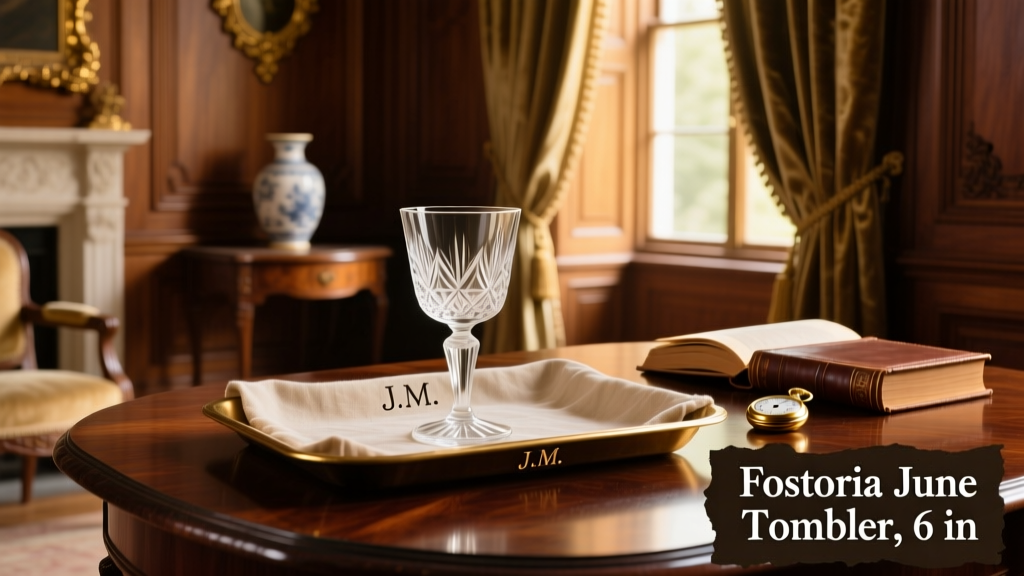
Fostoria June Tumbler Footed 6-Inch: Identification, History, and Restoration Guidance
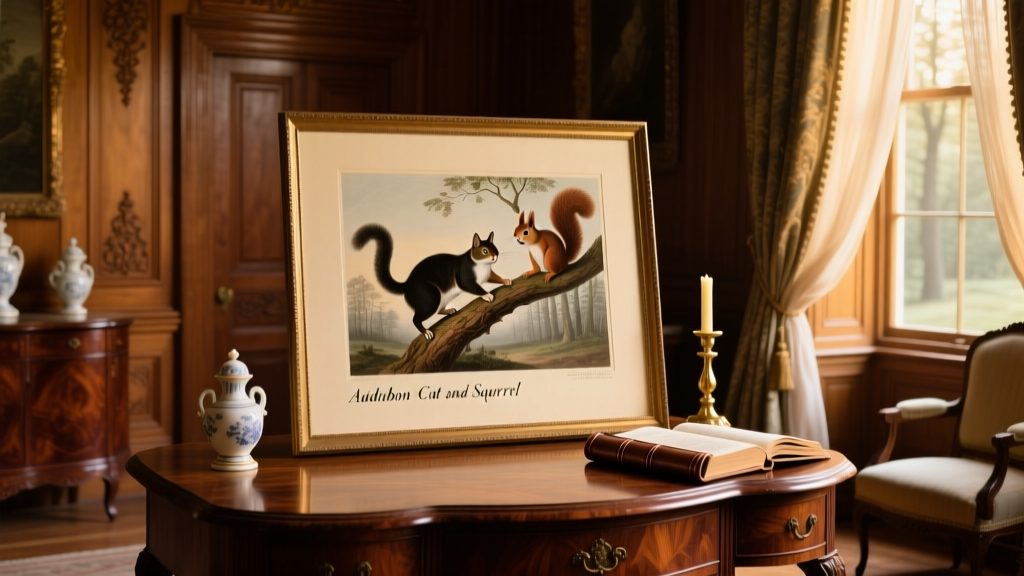
Audubon's 'Cat Squirrel' Lithograph: Authenticity, Provenance, and Conservation of the 27 × 20¾-Inch Print
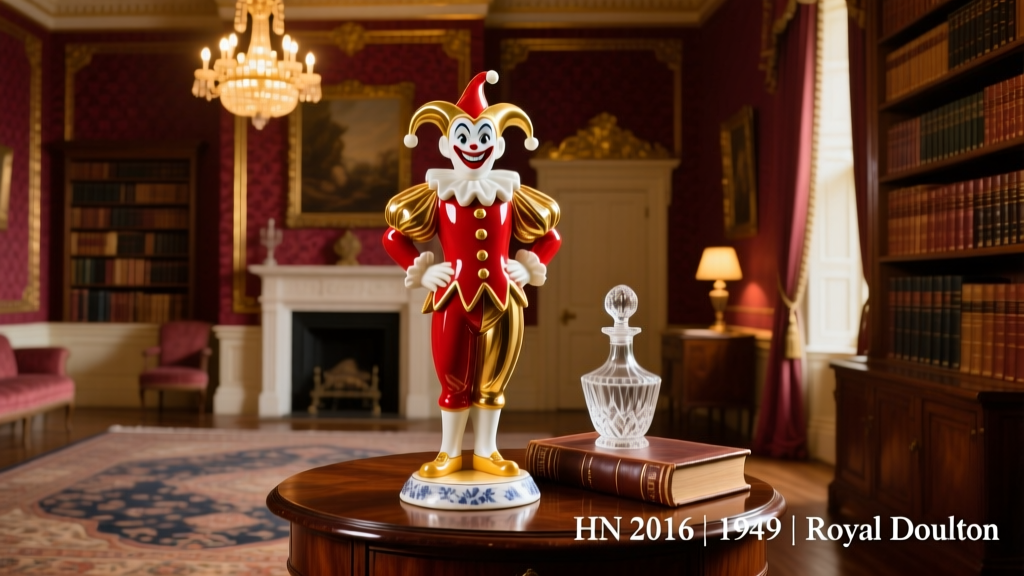
Royal Doulton Figurine Jester HN 2016 (1949): Identification, Provenance, and Conservation of the 'Jester' Model
The Wedgwood Platter: History, Identification, and Care of a British Ceramic Icon
The Signed '7 Turquoise Rose Petals' Bracelet: Provenance, Craftsmanship, and Collector Significance
Goodnow Jenks: The Forgotten American Cabinetmakers of Boston’s Gilded Age