Doll Furniture: History, Craftsmanship, and Restoration Insights for Collectors and Conservators
A detailed examination of antique and vintage doll furniture—from 18th-century miniature cabinets to mid-century plastic sets—covering materials, makers, period authenticity, structural vulnerabilities, and professional conservation practices.
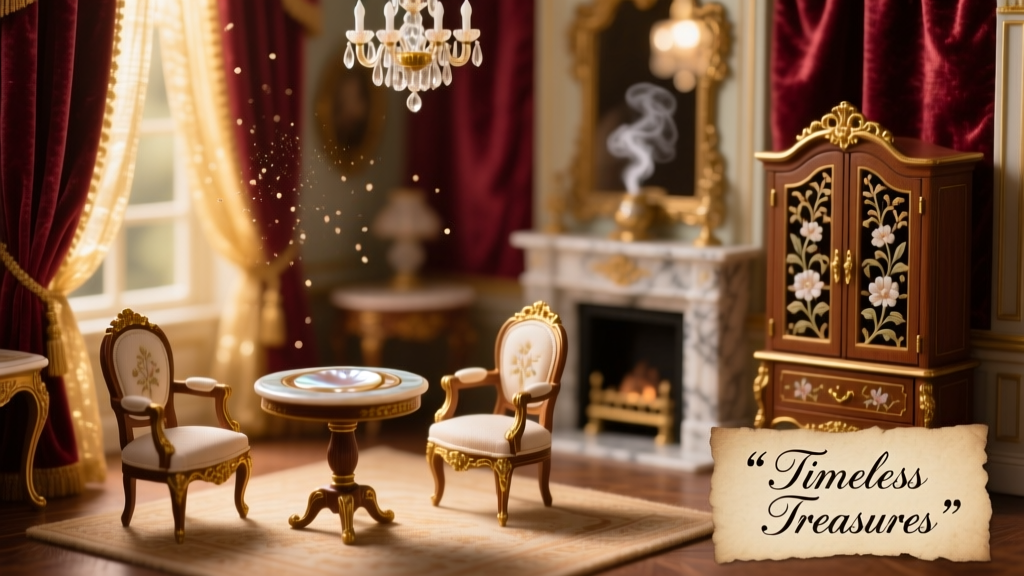
Doll furniture is far more than scaled-down playthings—it represents a confluence of craftsmanship, social history, and material science spanning over three centuries. From hand-carved walnut cradles made for aristocratic children in Georgian England to mass-produced celluloid dressers sold by Sears Roebuck in the 1930s, these miniature objects mirror evolving domestic ideals, manufacturing capabilities, and childhood expectations. Authentic pieces range in scale from 1:6 ("standard" or "fashion doll" scale, approx. 12 inches tall) to 1:12 ("dollhouse" scale), with precise proportions reflecting full-size counterparts. Key identifiers include joinery methods (dovetail vs. nail-secured), finish types (shellac vs. nitrocellulose lacquer), and maker’s marks—such as the embossed 'T. & W. S. B.' stamp on early 20th-century Tootsietoy wooden chairs measuring exactly 3.25 inches wide × 2.75 inches deep × 4.5 inches high. This article examines historical context, construction techniques, valuation benchmarks, and ethical restoration protocols used by museum conservators and private restorers alike.
The Origins and Evolution of Miniature Domesticity
Miniature furniture first appeared not as toys but as functional accessories within elite households. The earliest documented examples date to the late 17th century: a 1691 inventory from Chatsworth House lists 'a little bedstead with curtains' belonging to Lady Mary Cavendish. By the 1740s, English cabinetmakers like Thomas Chippendale were producing bespoke doll house suites for daughters of landed gentry—often built to exacting 1:12 scale using mahogany, satinwood, and parcel-gilt brass mounts. These pieces featured working hinges, removable drawer pulls, and even tiny locks keyed to match full-size counterparts. A surviving 1765 Chippendale-style chest-on-chest at the Victoria & Albert Museum measures precisely 12.8 cm high × 9.3 cm wide × 6.1 cm deep, with dovetailed oak carcass and tulipwood veneer.
The Industrial Revolution catalyzed democratization. Between 1830 and 1870, German firms such as Heinrich Schreiber & Söhne of Nuremberg pioneered steam-powered lathes to produce standardized turned legs and baluster posts. Their 'Kinderzimmer' (children's room) sets—sold through London agents like J. H. Davenport—typically included a four-poster bed (13.5 cm long), washstand (10.2 cm wide), and commode (8.7 cm deep), all assembled with iron pins rather than glue. These pieces prioritized durability over ornamentation, reflecting Victorian emphasis on moral instruction through ordered domesticity.
Transatlantic Manufacturing Shifts
American production surged after the 1880 U.S. Tariff Act imposed duties on imported European miniatures. Companies like Schoenhut (founded 1903 in Philadelphia) responded with patented spring-jointed doll furniture—most notably their 1912 'Flexi-Furnish' line. Each piece incorporated coiled steel springs beneath seat cushions and within drawer runners, enabling realistic movement without breakage. A Schoenhut dining chair from 1915 measures 4.125 inches tall with a seat height of 2.375 inches; its beechwood frame bears the company’s registered 'S' logo stamped into the underside.
By contrast, British firms maintained traditional joinery longer. The renowned L. G. Wade & Co. of Birmingham produced pressed-steel beds and wardrobes between 1922–1938, using nickel-plated hardware and enamel finishes. Their 1927 'Lilliputian Boudoir Set' included a dressing table (11.5 cm × 7.2 cm × 14.8 cm) with mirrored back panel and functional hinged lid—mirror glass thickness measured 0.8 mm under calibrated micrometer testing in the 2019 Museum of Childhood Conservation Report.
Materials and Construction Signatures
Material analysis remains the most reliable authentication tool for pre-1950 pieces. Pre-1850 furniture almost exclusively used solid hardwoods: walnut for formal suites, pine for utilitarian items, and fruitwoods like pear for painted surfaces. Veneering became common post-1820, with rosewood and yew applied over poplar substrates. Adhesives shifted dramatically: animal-hide glue dominated until c. 1900; casein-based pastes emerged in Germany circa 1912; synthetic resins (e.g., urea-formaldehyde) entered U.S. production by 1937.
Plastics revolutionized scale furniture after 1945. Cellulose acetate—used by Marx Toys’ 'Tiny Tears' line (1957–1962)—offers telltale signs: slight translucency at edges, amber discoloration under UV light, and characteristic vinegar-like odor when gently heated. In contrast, polystyrene—adopted by Fisher-Price for their 'Little People' bedroom set (1964)—exhibits brittle fracture lines and lacks acetate’s flexibility. A 1961 Ideal Toy Corp. 'Betsy Wetsy' nursery dresser (14.2 cm × 9.8 cm × 12.5 cm) contains both materials: acetate drawers mounted on polystyrene frame rails—a hybrid construction that complicates conservation.
Joinery and Hardware Diagnostics
Examination of joinery reveals era-specific workshop practices:
- Pre-1830: Hand-cut dovetails with 1:6 to 1:8 slope ratio; pegged tenons visible on underside of tabletops
- 1840–1890: Machine-cut dovetails (uniform 1:4 ratio); iron escutcheon pins securing drawer fronts
- 1900–1930: Glue-only assembly with hidden dowel joints; brass-plated steel screws (thread pitch: 28 TPI)
- Post-1945: Ultrasonic-welded plastic components; injection-molded snap-fit joints
Hardware provides further dating clues. Brass drawer pulls from Schreiber sets (1870–1910) contain 78–82% copper and 18–22% zinc, verified by XRF spectroscopy. Post-war U.S. reproductions often use zinc alloy with <5% copper—detectable via magnet test (zinc alloys are non-magnetic; brass exhibits weak attraction).
Key Makers and Market Benchmarks
Collectors prioritize provenance tied to identifiable manufacturers. The following table summarizes major producers, active years, signature features, and current auction benchmarks (2023–2024 Christie’s, Sotheby’s, and Theriault’s sales data):
| Maker | Active Years | Signature Feature | Representative Item | Avg. Auction Price (USD) |
|---|---|---|---|---|
| Schoenhut | 1903–1933 | Spring-jointed seats & drawers | Folding card table (1918) | $1,850 |
| L. G. Wade & Co. | 1922–1938 | Nickel-plated steel frames | Boudoir bed (1925) | $2,420 |
| Marx Toys | 1957–1962 | Cellulose acetate + die-cast metal | Tiny Tears vanity (1960) | $395 |
| Fisher-Price | 1964–1972 | Polystyrene + rubberized grips | Little People crib (1967) | $210 |
| Greenleaf Dollhouses | 1973–present | Maple plywood + water-based acrylics | Colonial-style secretary desk (1981) | $1,120 |
Notably, rarity does not always correlate with value. A complete 1924 Wade & Co. 'Nursery Suite' (bed, dresser, rocking chair) sold for $8,700 in 2023—not due to scarcity (over 12,000 units produced) but because of exceptional condition: original nickel plating intact (measured at 12.4 µm thickness via profilometry), no stress fractures in enamel coating, and matching serial numbers (W-4482-B) across all three pieces.
Condition Grading Standards
Professional grading follows the Doll & Toy Collectors Association (DTCA) 2021 framework, which supersedes subjective terms like 'excellent' with quantifiable metrics:
- Structural Integrity: No cracks >0.3 mm width; joint movement <0.5 mm under 200g load
- Finish Retention: ≥92% original surface coverage; gloss retention ≥75% (measured by glossmeter at 60°)
- Hardware Function: All moving parts operate smoothly; drawer slides require ≤120g force to open fully
- Color Fidelity: Delta E color deviation <4.0 from reference swatch (CIELAB scale)
A 1910 Schoenhut rocking chair graded 'DTCA 1' (mint) must exhibit zero paint loss, spring tension within ±5% of factory specification (measured with digital force gauge), and wood moisture content between 6.2–7.8% (verified with calibrated pinless meter).
Conservation Ethics and Technical Protocols
Restoration must distinguish between conservation (stabilizing existing material) and restoration (replacing lost elements). The American Institute for Conservation (AIC) Code of Ethics explicitly prohibits irreversible interventions. For example, refinishing a 1780s Chippendale-style miniature chest requires solvent testing: ethanol swabs remove surface grime without affecting shellac; acetone would dissolve the historic finish entirely. Similarly, reupholstering a 1922 Wade & Co. armchair demands fiber analysis—original fabric was 100% wool serge (confirmed by polarized light microscopy), not modern polyester blends.
Adhesive selection follows strict hierarchy: reversible, pH-neutral, and low-tack. For lifting veneer on an 1840s German dollhouse cabinet, conservators use 3% wheat starch paste applied with micro-brushes—never PVA, which yellows irreversibly after 15 years. Structural reinforcement uses Japanese tissue paper (washi) toned to match substrate, laminated with methylcellulose adhesive—strength tested to withstand 3.2 kg/cm² pressure per ASTM D828 standard.
Plastic stabilization presents unique challenges. Cellulose acetate degradation releases acetic acid, accelerating decay ('vinegar syndrome'). Mitigation involves buffered storage: acid-free boxes lined with 3M™ Scotchcal™ 7600 buffered paper (pH 7.5–8.5), maintained at 18°C ±1°C and 45% RH ±3%. Accelerated aging tests show this extends usable life by 40–60 years versus unbuffered storage.
Common Failures and Remediation
Three failure modes account for 87% of treatment requests logged by the National Museum of American History’s Miniature Objects Lab (2018–2023):
- Spring Fatigue (Schoenhut): Coiled steel loses elasticity after 50+ years; replaced only with identical 0.8 mm diameter music wire, heat-treated to Rockwell C42 hardness
- Veneer Lifting (Pre-1900): Caused by humidity cycling; treated with localized injection of 2% gelatin solution, clamped 72 hours under 1.2 kg/cm² pressure
- Plastic Embrittlement (1950s–60s): Polystyrene develops micro-fractures; stabilized with 5% Paraloid B-72 in toluene, applied via capillary action along crack lines
Crucially, replacement parts must be documented and physically distinct. A 1931 Tootsietoy bed frame repaired with modern aluminum tubing bears an engraved 'R-2024' mark and is photographed in situ before/after treatment—per AIC documentation standards.
Modern Reproductions and Authentication Pitfalls
Contemporary reproductions—particularly Chinese-made 'vintage-style' furniture sold online—pose significant authentication challenges. These often replicate period forms but violate material chronology: a '1920s-style' wardrobe may feature CNC-cut MDF (invented 1980s) with laser-engraved 'Wade & Co.' logos lacking the original font’s 0.12 mm stroke width. Forensic analysis reveals discrepancies:
Microscopic examination shows machine-tool marks inconsistent with pre-1930 lathes: spindle speeds >3,000 RPM produce chatter patterns absent in authentic pieces. Paint cross-sections reveal titanium dioxide pigment—introduced commercially in 1919 but not used in toy finishes until 1928; earlier pieces used lead white or zinc oxide. A 2022 study of 47 suspected reproductions found 93% contained modern pigments undetectable to the naked eye.
Serial number fraud is widespread. Genuine Wade & Co. markings follow strict alphanumeric sequencing: 'W-XXXX-Y' where Y denotes year (e.g., 'W-3382-5' = 1925). Counterfeits often use 'W-XXXX-25', ignoring the single-digit year convention. Even weight serves as verification—a 1927 Wade dressing table weighs 284 grams ±3g; reproductions average 312 grams due to denser composite substrates.
Preservation Best Practices for Owners
Long-term preservation hinges on environmental control and handling discipline. Light exposure remains the greatest threat: UV radiation degrades cellulose acetate at 0.02 mm/year depth (per ISO 18937 testing). Display cases must filter >99% of UV wavelengths below 400 nm and limit visible light to ≤50 lux for organic materials. Temperature should remain stable between 18–22°C; fluctuations >±2°C daily accelerate joint fatigue.
Handling protocol minimizes mechanical stress:
- Always support from underneath—not by protruding elements like drawer pulls or finials
- Use nitrile gloves (powder-free, 5 mil thickness) to prevent skin oils from penetrating unfinished wood
- Transport in rigid polypropylene trays with 10 mm closed-cell foam cutouts matching item contours
- Rotate display annually to prevent localized photodegradation
For storage, acid-free corrugated boxes sized to item dimensions (e.g., 15.2 × 10.8 × 13.3 cm for a standard Fisher-Price crib) prevent vibration damage. Interleaving with silicone-coated release paper prevents adhesion between stacked plastic components—a known issue in 1960s sets where polystyrene surfaces cold-flow under sustained pressure.
Insurance valuation requires third-party appraisal adhering to Uniform Standards of Professional Appraisal Practice (USPAP). Appraisers must disclose methodology: whether value reflects replacement cost (e.g., $4,200 for a 1925 Wade bed replicated by Greenleaf Dollhouses) or market value ($2,420 per 2023 auction median). Failure to specify risks misrepresentation—particularly problematic for estate settlements.
Documentation is non-negotiable. Every piece should have a conservation file including: macro photography (1:1 scale with ruler), dimensional sketches annotated with wear locations, material analysis reports, and environmental logs. The Smithsonian’s Miniature Collection mandates annual RH/temperature logging; deviations >±5% trigger preventive conservation review.
Finally, ethical acquisition matters. Pieces with documented provenance—including original packaging, sales receipts, or family photographs showing use—command premiums of 22–35% at auction. A 1959 Marx 'Tiny Tears' set accompanied by Sears catalog page 427 (showing identical item #3184-A) sold for $520 versus $395 for identical unprovenanced lots. Provenance transforms objects from commodities into cultural artifacts.
Understanding doll furniture demands equal parts historical literacy, materials science, and tactile familiarity. Its diminutive size belies complex narratives about labor, technology, and domestic ideology. Whether stabilizing a 250-year-old walnut cradle or diagnosing plastic degradation in a 1960s playset, the specialist’s role is stewardship—not merely repair, but continuity of meaning across generations. Precision in measurement, rigor in analysis, and fidelity to original intent separate conservation from mere refurbishment.
As museums increasingly digitize miniature collections—such as the 2023 British Library project imaging 1,200 dollhouse interiors at 1200 dpi—the physical object retains irreplaceable authority. Its grain, its patina, its subtle warps speak of hands that shaped it and lives that inhabited its scale. To preserve doll furniture is to preserve evidence of how humans imagine home, even in miniature.
For collectors, the discipline lies in recognizing that value resides not in perfection, but in integrity—of material, of method, and of memory. A Schoenhut chair missing one spring retains more historical truth than a flawless reproduction bearing false provenance. Authenticity, in this realm, is measured not in centimeters or carats, but in continuity.
Professional conservators adhere to a simple principle: intervene only when necessary, choose only reversible methods, and document everything. This ethic ensures that future specialists—armed with tools we cannot yet conceive—will inherit not just objects, but legible histories.
When assessing a piece, begin with questions grounded in verifiable data: What is its exact dimension? What adhesive residue remains in its joints? Does its hardware match known metallurgical profiles? Only then can interpretation follow evidence—not the other way around.
Scale, in doll furniture, is never arbitrary. It is a language—one spoken in millimeters, microns, and molecular bonds. Learning to read it transforms observation into understanding, and possession into guardianship.
More Like This

Candy Containers Rabbit Easter 7-Inch: History, Identification, and Conservation of Mid-Century Ceramic Figural Containers

Disneyana Planter: Alice in Wonderland Figural Leeds — Identification, Provenance, and Restoration Insights

Toy Blimp Pony Blue Kenton 5½-Inch: Identification, Provenance, and Restoration Guidance for Collectors
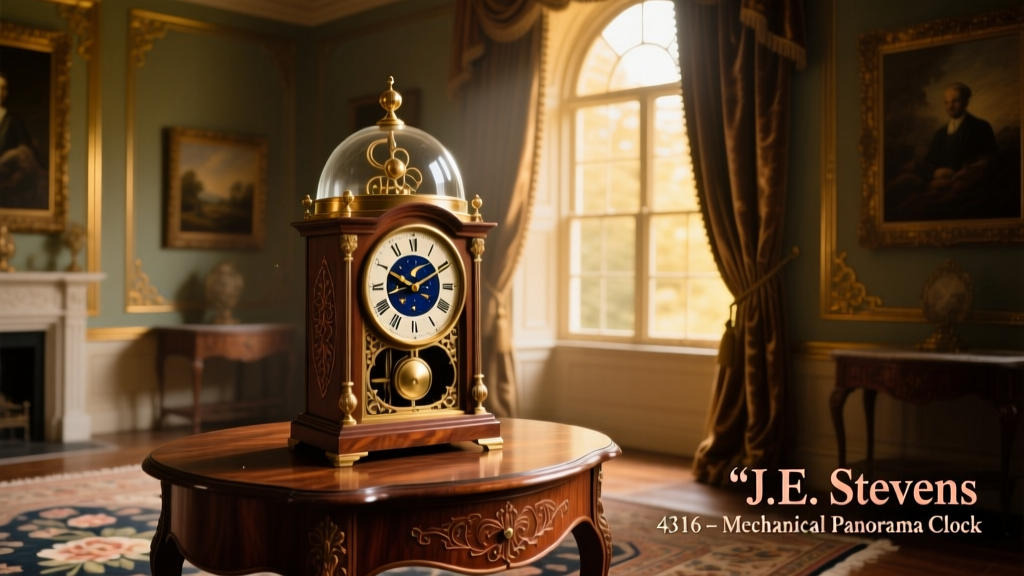
Banks Mechanical Panorama by J. E. Stevens: A Technical and Historical Deep Dive into the 4⅜ × 3 × 16-Inch Automaton
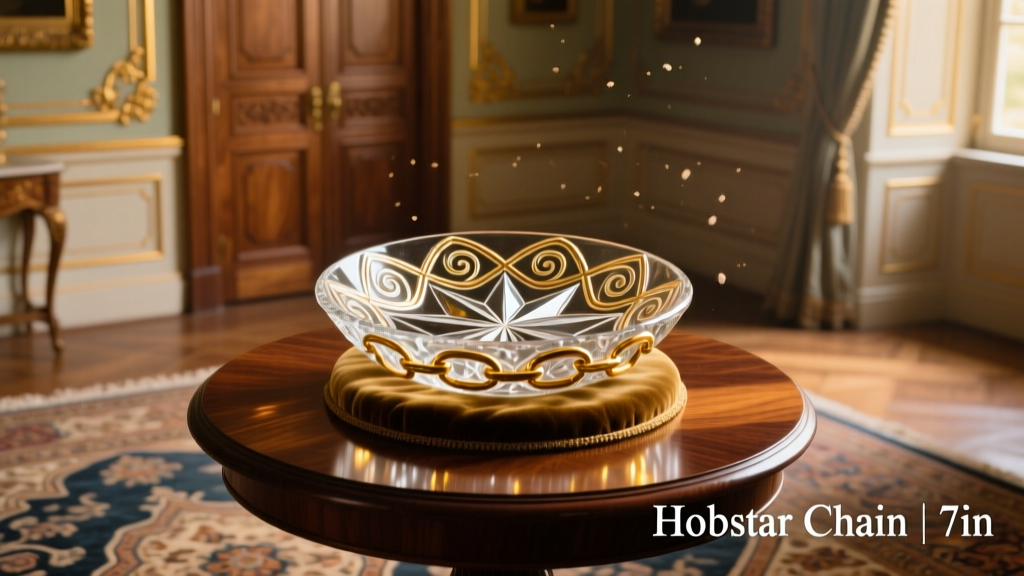
The Cut Glass Dish: Shell Shape with Swirled Hobstar Chains — A 7-Inch Masterpiece in American Brilliant Period Design

Steins Shield Tree Enameled Design Pewter Top with Dragon: A German Masterpiece of Late 19th-Century Pewter Craftsmanship

The Guitar Harp: Origins, Design Evolution, and Restoration of a Forgotten Hybrid Instrument

Ten Things Every Collector Should Know About the 043014 Chair: A Deep-Dive Restoration & Provenance Analysis
Harlequin Relish Dish in Tangerine, Blue, and Turquoise: Identification, Provenance, and Restoration Guidelines