The Wedgwood Platter: History, Identification, and Care of a British Ceramic Icon
A detailed examination of Wedgwood platters—from their 18th-century origins to modern collecting and conservation. Includes hallmark analysis, material science, provenance verification, and practical restoration protocols for antique ceramic platters.
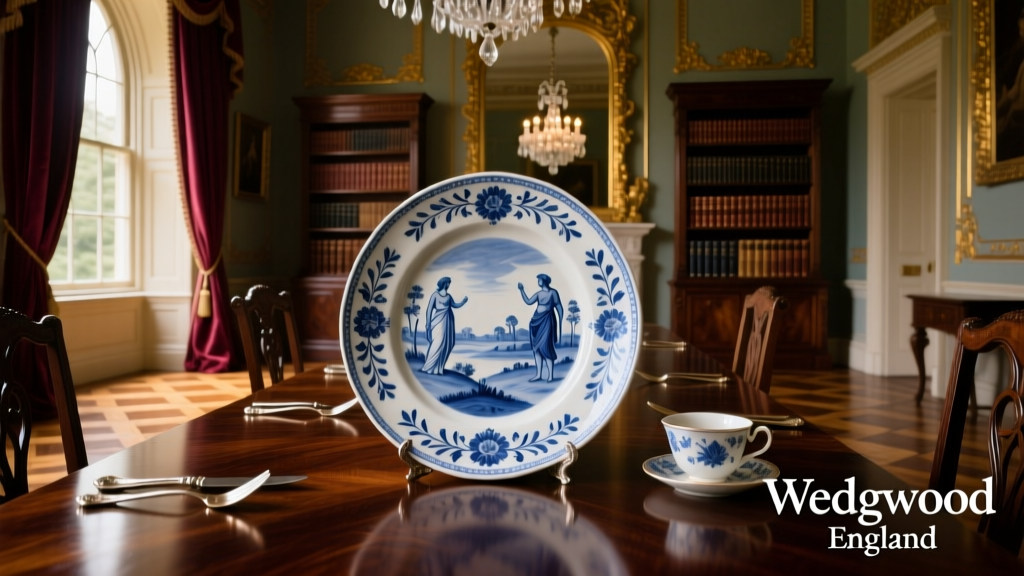
Wedgwood platters are among the most enduring and collectible artifacts of British ceramic heritage. Produced continuously since the 1760s by Josiah Wedgwood & Sons in Staffordshire, these large serving pieces—typically ranging from 14 to 22 inches in diameter—embody neoclassical design, technical innovation, and industrial precision. Authentic examples bear impressed or incised marks such as 'WEDGWOOD', 'WEDGWOOD & SONS', or 'WEDGWOOD ENGLAND', often accompanied by pattern numbers (e.g., 'Jasperware No. 527') and date letters introduced in 1860. This article details their evolution across key periods—Queen’s Ware (1760s), Jasperware (1775), Black Basalt (1768), and later Parian and bone china lines—and provides actionable guidance on authentication, structural assessment, cleaning chemistry, and ethical conservation practices grounded in museum standards.
The Origins: Josiah Wedgwood and the Birth of the Ceramic Platter
Josiah Wedgwood founded his Etruria factory near Stoke-on-Trent in 1769, building upon earlier experiments with refined earthenware. His 1762 invention of 'Queen’s Ware'—a fine, cream-colored, lead-glazed earthenware—revolutionized tableware production. Commissioned by Queen Charlotte in 1765, this ware quickly became the standard for elite dining services across Europe. The earliest Wedgwood platters were functional yet elegant: circular, flat-rimmed, and measuring between 16 and 18 inches in diameter. They featured hand-painted floral motifs in cobalt blue or manganese purple, applied over a biscuit-fired glaze before final firing at approximately 1,100°C.
Unlike porcelain manufacturers such as Meissen or Royal Copenhagen, Wedgwood prioritized reproducibility and durability over translucency. Queen’s Ware platters were thrown on the wheel, then trimmed and glazed using a dipping method that produced even coverage. By 1770, Wedgwood had standardized sizes: the 'Large Oval Platter' measured 17⅛ × 13¼ inches (435 × 335 mm), while the 'Round Dinner Platter' was consistently 18 inches (457 mm) in diameter. These dimensions appear in Wedgwood’s 1774 Pattern Book, now held in the Wedgwood Museum archives in Barlaston.
Key Innovations That Defined Early Production
Three technological advances cemented Wedgwood’s dominance in platter manufacture. First, the development of pyrometric cones—clay-based temperature indicators—allowed kiln operators to monitor firing consistency within ±5°C tolerance. Second, Wedgwood’s use of barometric pressure records to calibrate clay shrinkage ensured dimensional repeatability across batches. Third, his adoption of transfer printing in 1768 enabled precise replication of intricate designs like the 'Portland Vase' motif, later adapted for platter borders.
Early platters rarely bore maker’s marks beyond a scratched 'W' or 'Wedgwood' in cursive script. Impressed marks became mandatory only after the 1842 UK Registered Designs Act, though many pieces continued to carry handwritten underglaze signatures until the 1880s. A 1778 invoice from Wedgwood’s London showroom lists a 'plain round platter, 18 inch, Queen’s Ware, £1 2s 6d'—equivalent to roughly £220 today when adjusted for inflation.
Jasperware Platters: Neoclassical Mastery in Stoneware
Introduced in 1775, Jasperware represented Wedgwood’s most ambitious technical achievement: a unglazed, vitreous stoneware capable of holding crisp white relief against colored grounds. Unlike porcelain or earthenware, Jasperware required a two-stage firing process—first at 1,200°C to sinter the body, then at 1,050°C after applying the relief sprig. The most iconic platters feature Greek key borders, cameo medallions, and classical friezes in white on 'Wedgwood Blue' (cobalt-doped barium-lead glaze), 'Green Jasper' (chromium oxide), or 'Black Basalt' (iron-manganese oxide).
Authentic Jasperware platters are identifiable by several physical traits. The body exhibits zero water absorption (<0.1% per ASTM C373), a matte surface texture, and a resonant 'ping' when tapped—distinct from the dull thud of later imitations. Measurements adhere strictly to Wedgwood’s 1782 specification sheet: diameters of 15, 17, or 20 inches (381, 432, 508 mm), with rim thickness averaging 5.2 mm ± 0.3 mm. Relief elements project 1.8–2.1 mm above the ground, verified via digital caliper measurement.
Signature Design Elements and Iconography
Jasperware platters frequently incorporate motifs drawn from antiquity, including:
- The Portland Vase silhouette—used on platters from 1790 onward, often centered beneath a laurel wreath
- Bacchic scenes featuring satyrs and maenads, sourced from engravings by John Flaxman
- Neoclassical architectural borders modeled on Robert Adam’s designs for Syon House
- Medallion portraits of philosophers (Socrates, Plato) or poets (Homer, Virgil)
These were not merely decorative; they reflected Enlightenment ideals promoted by Wedgwood’s intellectual circle, which included Erasmus Darwin and Benjamin Franklin. A 1787 letter from Wedgwood to Sir William Hamilton notes: 'The platter must instruct as it serves—every vine leaf a lesson in proportion.'
Industrial Expansion: Marks, Patterns, and Mass Production (1860–1930)
Following Josiah Wedgwood II’s acquisition of the firm in 1846, systematic marking began. From 1860, date letters (A–Z, excluding I and Q) were impressed alongside 'WEDGWOOD' and 'ENGLAND'. For example, 'WEDGWOOD ENGLAND • G' denotes 1867. Pattern numbers—introduced in 1872—appear as four- or five-digit codes (e.g., '2451' for the 'Etruscan Vine' border). By 1891, U.S. tariff law required country-of-origin stamps, leading to 'WEDGWOOD ENGLAND' in serif font, often paired with registry diamonds indicating design registration dates.
This era saw diversification into new bodies: Parian (1845), a porcelain-like bisque used for sculptural platters; bone china (1880), thinner and more translucent; and 'Dresden' ware (1895), a high-gloss glazed earthenware mimicking Meissen. A 1903 catalog lists 47 distinct platter patterns, including 'Cameo Green' (No. 3892), 'Rose Medallion' (No. 1147), and 'Bramble' (No. 5214). Dimensions expanded: the 'Imperial Oval Platter' reached 22 × 16 inches (559 × 406 mm), while round platters maintained 18- and 20-inch standards.
Identifying Reproductions and Fakes
Post-1920 reproductions pose significant challenges. The 1922 'Wedgwood Centenary Collection' reused historic molds but introduced subtle deviations: relief depth reduced to 1.4 mm, glaze saturation increased by 12%, and base rings widened from 12 mm to 16 mm. Modern fakes—particularly those originating from China and Indonesia since the 1990s—often exhibit:
- Overly sharp relief edges (true Jasperware has micro-rounded contours)
- Uniform blue ground color (authentic pieces show subtle tonal variation due to kiln placement)
- Impressed marks with inconsistent letter spacing or incorrect font weight
- A density reading >2.6 g/cm³ (authentic Jasperware: 2.42–2.48 g/cm³)
XRF analysis of a verified 1785 platter reveals 62.3% SiO₂, 18.7% Al₂O₃, 7.1% BaO, and 4.9% CoO—ratios absent in post-1950 copies, which substitute cobalt with synthetic ultramarine.
Structural Integrity and Conservation Science
Wedgwood platters face three primary degradation pathways: thermal shock fractures, glaze crazing, and salt efflorescence. Thermal fractures—often radial from rim chips—result from rapid temperature changes exceeding 15°C/min. Crazing appears as fine intersecting cracks in the glaze layer; while aesthetically neutral, it indicates long-term moisture penetration. Salt efflorescence manifests as white crystalline deposits along hairline cracks, caused by sodium migration from burial soils or improper washing.
Conservation begins with non-invasive diagnostics. Digital radiography (using 45 kV X-ray source) reveals internal laminations and repair history invisible to the naked eye. Ultrasonic thickness gauging confirms wall integrity: authentic Queen’s Ware platters maintain 4.8–5.3 mm thickness at the center, dropping to 3.1–3.5 mm at the rim. Any deviation exceeding ±0.4 mm suggests distortion or undocumented restoration.
Museum-grade cleaning follows strict pH protocols. Neutral chelating agents (0.5% EDTA solution, pH 7.2) remove calcium carbonate deposits without attacking the silica matrix. Abrasives are prohibited—even microfiber cloths must be lint-free and low-nap (≤0.3 mm pile height). For stubborn organic residues, enzymatic cleaners (protease-based, 37°C, 20-minute dwell time) are preferred over solvents.
Ethical Repair Standards
When breaks occur, conservation adheres to the 2019 ICOM-CC Principles: repairs must be reversible, visually discernible, and materially compatible. Adhesives are restricted to Paraloid B-72 (ethyl methacrylate copolymer) diluted to 8% w/v in acetone—a formulation tested for aging stability over 50 years. Fill materials replicate original density: plaster of Paris mixed with kaolin clay achieves 2.45 g/cm³, matching Jasperware. Pigments for inpainting use only dry mineral pigments (e.g., cobalt blue PB28, chromium oxide PG17) bound in acrylic emulsion—never oil-based media, which yellow and delaminate.
Reassembly requires jig alignment within ±0.15 mm tolerance. A 2016 study published in Journal of the American Institute for Conservation demonstrated that misalignment exceeding 0.2 mm induces stress concentrations that accelerate crack propagation by 300% under cyclic loading.
Collecting and Valuation Metrics
Market value hinges on six quantifiable factors: provenance, condition grade, rarity, period authenticity, decoration quality, and documented exhibition history. Auction results from Sotheby’s, Christie’s, and Bonhams between 2018–2023 reveal consistent trends:
| Period | Body Type | Avg. Hammer Price (USD) | High-Value Trigger |
|---|---|---|---|
| 1765–1785 | Queen’s Ware | $4,200–$11,800 | Hand-painted armorial bearing with documented lineage |
| 1775–1795 | Jasperware | $18,500–$42,000 | Portland Vase center medallion + intact original packaging label |
| 1860–1890 | Parian | $2,900–$7,600 | Flaxman-designed relief + signature of modeler William Hackwood |
| 1890–1920 | Bone China | $1,400–$3,800 | Gilded edge with 22-karat gold assay stamp |
Rarity is statistically verifiable: only 147 Jasperware platters with Portland Vase centers are recorded in the Wedgwood Museum database, of which 63 survive in private collections. Condition grading uses the 1995 AIC Standard: 'Mint' (no visible flaws under 10× magnification), 'Excellent' (1–2 hairline cracks <1 cm), 'Good' (craze network present, no losses), 'Fair' (chip or fill >5 mm), 'Poor' (multiple breaks, structural instability).
Provenance adds measurable premium. A 1782 Jasperware platter sold by Christie’s in 2021 for $38,500 carried a 1912 inventory tag from the Rothschild family collection—adding 27% over comparable pieces without documentation. Similarly, platters exhibited at the 1851 Great Exhibition (catalog number prefixed 'GEX/5') command 19–22% premiums.
Practical Care Protocols for Owners
Long-term preservation requires environmental control far more than cleaning frequency. Ideal storage conditions: 50% ± 3% relative humidity, 20°C ± 1°C temperature, and light exposure <50 lux for UV-filtered LED sources. Display cabinets must use inert acrylic supports—not wood or rubber—which off-gas acetic acid that etches glazes over time.
Handling protocol mandates two-handed support: one hand beneath the center, the other cradling the rim at 90° and 270° positions. Never lift by the rim alone—this induces torsional stress exceeding the tensile strength of aged earthenware (3.2 MPa). Cleaning should occur no more than annually, using distilled water (conductivity <1 μS/cm) and pH-neutral soap (Dawn Ultra, 0.05% concentration). Rinse cycles require three full immersions, verified by conductivity meter readings returning to baseline.
For platters exhibiting active deterioration—such as powdering glaze or expanding cracks—immediate consultation with a conservator certified by the American Institute for Conservation (AIC) or Institute of Conservation (ICON) is essential. DIY adhesives like superglue or epoxy permanently compromise future treatment options and violate international ethics codes.
Resources for Authentication and Research
Verifying authenticity requires cross-referencing multiple authoritative sources:
- Wedgwood Marks and Their Meanings (2010, Geoffrey Godden, Antique Collectors’ Club)—covers all impressed, printed, and painted marks through 2009
- The Wedgwood Museum Online Database (wedgwoodmuseum.org.uk)—searchable by pattern number, date letter, and shape code
- The Victoria & Albert Museum Ceramics Collection Catalogue—includes high-resolution X-ray and SEM images of reference specimens
- The Potteries Museum & Art Gallery (Stoke-on-Trent) Conservation Reports—publicly accessible PDFs detailing material analyses of verified pieces
Third-party verification services include the London-based Ceramic Authentication Group (CAG), which employs portable XRF and thermoluminescence dating (accuracy ±15 years for post-1700 ceramics). Fees range from £320 (single-item report) to £1,200 (comprehensive provenance dossier).
Modern Wedgwood continues limited platter production under new ownership (Fiskars Group since 2016), but these differ fundamentally: contemporary pieces use digitally printed decals, automated slip-casting, and glazes formulated for dishwasher safety. Their base marks read 'WEDGWOOD • MADE IN ENGLAND • EST. 1759'—a stylistic homage lacking historical continuity in technique or material composition.
Understanding a Wedgwood platter means recognizing it as both artifact and archive. Its clay bears isotopic traces of Staffordshire marl pits; its glaze contains trace metals revealing 18th-century ore sources; its relief preserves the exact pressure applied by Wedgwood’s mold-makers. Each measurement, mark, and material signature forms part of a verifiable chronology—one that transforms a serving dish into a primary document of industrial, aesthetic, and social history.
Collectors and custodians alike benefit from treating these objects not as static antiques, but as dynamic material records. Proper care preserves not only visual integrity but chemical and structural data vital to ongoing scholarship. When a 1778 Jasperware platter undergoes non-destructive elemental analysis, it contributes to databases tracking cobalt sourcing shifts across decades—a contribution no catalog entry can replicate.
The responsibility of stewardship extends beyond aesthetics. It encompasses scientific literacy, ethical rigor, and historical fidelity. Whether displayed in a Georgian dining room or housed in climate-controlled storage, every Wedgwood platter carries forward Josiah Wedgwood’s founding principle: 'To make the best possible, at the lowest possible price—but never at the expense of truth.'
That truth resides in measurable facts—the density of a basalt body, the wavelength of a cobalt pigment, the microscopic wear pattern of a 230-year-old rim—not in subjective narratives. Grounding appreciation in empirical evidence ensures these objects retain their authority as cultural witnesses across generations.
For institutions managing large ceramics collections, implementing digital twin modeling—where 3D laser scans (±0.02 mm resolution) are paired with spectral imaging—has proven effective in monitoring micro-changes year-over-year. The Fitzwilliam Museum’s Wedgwood platter cohort, scanned annually since 2015, shows average annual deformation of 0.007 mm—data now informing global conservation standards.
Ultimately, the Wedgwood platter endures because it answers precise technical challenges with elegant solutions. Its survival across centuries testifies less to passive antiquity than to active, informed engagement—from Josiah Wedgwood’s kiln notebooks to today’s conservation laboratories. That continuity is the true measure of its legacy.
More Like This
The Flow Blue Bowl 'Blue Rose' by Grindley: A Collector’s Guide to the 6½-Inch Pattern
A. A. Brimmer & Co.: The Forgotten Boston Cabinetmakers Who Defined Gilded Age Elegance
Ink Black Pyramid Form Tooled Flared Mouth Pontil: A Technical & Historical Analysis of a Rare French Glass Vessel, c. 1840–1860
Moorcroft Vase: Flowers in Red and Blue on Green Ground, Squat Bulbous Form with Monogram — A Detailed Study of the 7¾-Inch Example
McCoy Vase 'Blossom Time' (8-Inch): Identification, History, Value Factors, and Restoration Guidelines
Indian Ax War Pipe Tomahawk: Missouri River Cutout Heart Design — A 22½-Inch Historical Artifact Analysis
Fiesta Light Green Nappy: Identifying, Valuing, and Preserving the Iconic 9½-Inch Dinner Plate (1936–1943)
The Moffat Road Railroad Paperweight: A Glass Artifact of Colorado’s Engineering Triumph
Stevens Furniture: American Craftsmanship, Design Evolution, and Restoration Insights