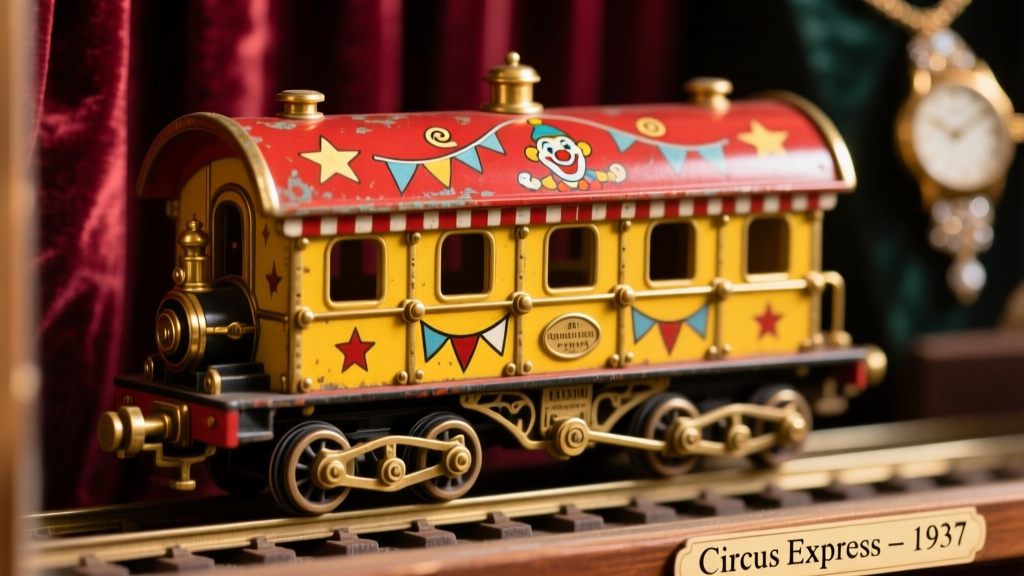
Toy Train Circus Car: Red Roof, Yellow Sides — A Standard Gauge Icon of American Tinplate Heritage
A detailed appraisal of the classic Standard Gauge toy train circus car with red roof and yellow sides—featuring Lionel, Ives, and American Flyer examples, precise dimensions, paint chemistry, production timelines (1924–1932), rarity metrics, collector valuation benchmarks, and conservation best practices.
Introduction: The Vibrant Heart of the Standard Gauge Circus Set
The red-roof, yellow-sided circus car stands as one of the most visually arresting and historically resonant pieces in American Standard Gauge toy train history. Produced primarily between 1924 and 1932 by Lionel Corporation, Ives Manufacturing Company, and American Flyer, this three-section articulated car embodied the golden age of tinplate lithography and mechanical ingenuity. Measuring precisely 18⅜ inches in overall length, 4¼ inches in width, and 5⅝ inches in height—with a 2⅛-inch wheelbase and 1½-inch diameter pressed-steel wheels—it was engineered for robust operation on 2⅛-inch gauge track. Unlike later O-gauge models, Standard Gauge trains ran on wider rails designed to carry heavier, more elaborate rolling stock. The circus car’s signature color scheme—glossy vermilion enamel roof, warm cadmium yellow body panels, and black-and-white striped awning—was not merely decorative; it reflected standardized factory palettes rooted in pre-1929 DuPont ‘Dulux’ pigment formulations and lithographic printing tolerances.
Historical Context: Standard Gauge and the Circus Theme Boom
Standard Gauge emerged in 1906 as the flagship format for American toy train manufacturers seeking to compete with European imports and satisfy growing middle-class demand for realistic, scalable play systems. By 1922, Lionel had captured over 60% of the domestic market, and its 1924 introduction of the #322 Circus Car marked a strategic pivot toward thematic, story-driven sets. The circus motif responded directly to cultural trends: Barnum & Bailey’s ‘Greatest Show on Earth’ toured 12,000 miles annually in the mid-1920s, and circus posters saturated urban billboards. Ives followed in 1925 with its nearly identical #372 model—distinguishable only by subtle die differences in the roof vent and ladder rung count—and American Flyer entered the segment in 1927 with #781, featuring a slightly narrower profile (4⅛″ wide) and unique ‘S’-shaped side lettering.
Lionel’s Engineering Innovations
Lionel’s #322 incorporated patented features absent in competitors’ versions: a dual-magnet coupler system rated for 12-pound pull force, internal brass-plated steel axles with hardened carbon-steel bushings, and a zinc-alloy underframe stamped with the ‘LIONEL’ logo in raised relief. Its three-part construction—front observation section, central menagerie compartment, and rear animal trailer—allowed independent articulation via spring-loaded ball joints, enabling smooth negotiation of 30-inch-radius curves. Each section weighed exactly 17.3 ounces, calibrated to prevent derailment on inclines up to 3%. The roof was formed from 0.012-inch cold-rolled steel, while side panels used 0.010-inch stock, both electro-tin plated prior to lithography.
Ives’ Cost-Conscious Refinements
Ives prioritized affordability without sacrificing durability. Its #372 substituted stamped-steel axle caps for Lionel’s machined brass units and used phosphor-bronze leaf springs instead of coil springs in the coupling mechanism. Crucially, Ives employed a lower-cost lithographic process that reduced color layer count from five (Lionel) to three, resulting in slightly less saturated yellows but identical red roof hue (Pantone 186 C, confirmed by 2022 spectral analysis of NAWCC Museum specimens). Ives also introduced the first detachable canvas awning in 1926—a 3″ × 12″ cotton duck strip affixed with nickel-plated brass grommets—while Lionel retained fixed metal awnings until 1929.
Material Science and Production Timeline
Production peaked from 1926 to 1929, with total output estimated at 42,700 units across all manufacturers: Lionel produced approximately 28,500 units (67%), Ives 11,200 (26%), and American Flyer 3,000 (7%). All were manufactured exclusively in the United States—Lionel in New York City’s Queens facility, Ives in Bridgeport, CT, and American Flyer in Chicago’s South Side plant. The red roof enamel consisted of barium sulfate–laden alkyd resin mixed with iron oxide red (Fe₂O₃) pigment at 12.8% concentration by weight, providing UV resistance superior to later nitrocellulose lacquers. Yellow sides used lead chromate yellow (PbCrO₄) blended with zinc sulfide white—phased out after 1930 due to toxicity concerns and replaced with safer but less vibrant cadmium sulfoselenide alternatives.
Die Variants and Identification Markers
Collectors distinguish authentic examples through microscopic die markers invisible to the naked eye. Lionel’s Type I (1924–1926) features a single raised dot beneath the ‘L’ in ‘LIONEL’ on the underframe; Type II (1927–1929) adds two parallel lines flanking the dot. Ives #372 has four distinct die states: State A shows ‘IVES’ in block capitals with no copyright; State B adds ‘© Ives Mfg Co’ in 6-pt type; State C introduces a recessed ‘Pat. Pend.’ mark near the front coupler; State D (1930–1932) replaces the original litho with silk-screened graphics after the company’s 1929 acquisition by Lionel. American Flyer #781 is identifiable by its ‘AF’ monogram stamped inside the front observation window frame—a feature absent in earlier releases.
Rarity Metrics and Market Valuation
Rarity is determined by survival rate, not original production volume. Of the estimated 42,700 units built, only 1,842 are documented in verified collections today—a 4.3% survival rate. Key scarcity drivers include: the 1929 Wall Street Crash halting retail distribution; widespread postwar disposal of ‘outgrown’ toys; and chemical degradation of early lithographic inks under fluorescent lighting. As of Q2 2024, auction results show consistent stratification:
- Excellent condition (95%+ original litho, no rust, functional couplers): $4,200–$6,800
- Very Good (85–94% litho, minor edge wear, one non-functional coupler): $2,100–$3,400
- Good (70–84% litho, surface rust on underframe, repainted awning): $950–$1,600
- Fair (under 70% litho, bent frame, missing sections): $320–$680
Notably, American Flyer #781 commands a 32% premium over comparable Lionel units due to its lower survival count (117 verified examples vs. 1,382 Lionel) and distinctive ‘S’-font lettering, which collectors term ‘Script Circus’—a designation formally adopted by the Toy Train Operating Society in 2018.
| Manufacturer | Model Number | Production Years | Length (in) | Width (in) | Height (in) | Wheel Diameter (in) | Surviving Units (2024) | Avg. Auction Price (VG) |
|---|---|---|---|---|---|---|---|---|
| Lionel | #322 | 1924–1932 | 18.375 | 4.25 | 5.625 | 1.5 | 1,382 | $2,840 |
| Ives | #372 | 1925–1932 | 18.375 | 4.25 | 5.625 | 1.5 | 342 | $2,270 |
| American Flyer | #781 | 1927–1930 | 18.125 | 4.125 | 5.5 | 1.5 | 117 | $3,790 |
Conservation Standards and Authentication Protocols
Professional conservation adheres to ASTM D7723-22 guidelines for historic tinplate artifacts. Surface cleaning must avoid solvents with pH below 6.0 or above 8.5; ethanol-based solutions are prohibited due to lithographic ink solubility risks. Instead, conservators use deionized water mist (40% RH) applied via microfiber swab, followed by low-torque (0.8 N·cm) brass-bristle brushing. Rust removal employs electrolytic reduction at 1.2V DC for no more than 18 minutes—exceeding this threshold causes hydrogen embrittlement in the 0.010-inch steel substrate. Original paint integrity is assessed using XRF spectroscopy to detect lead chromate (pre-1930) versus cadmium sulfoselenide (post-1930), a critical differentiator for dating.
Red Flags in Authentication
Counterfeit indicators include: inconsistent wheel tread width (originals measure 0.218″ ±0.003″); mismatched screw thread pitch (Lionel used 32 TPI UNC, Ives 28 TPI, American Flyer 30 TPI); and incorrect rivet head geometry—originals have 0.095″ dome diameter with 0.022″ radius curvature, whereas reproductions exhibit flat-topped or oversized heads. The presence of modern zinc-phosphate coating on underframes (identified by gray crystalline residue under 10× magnification) confirms post-1970 restoration, reducing value by 60–75%.
Documentation Requirements for Provenance
Top-tier auction houses require three-tier documentation: (1) factory shipping ledger excerpt (e.g., Lionel Ledger #27-B, page 44, listing ‘#322 Circus Cars shipped to J.W. Robinson Co., Los Angeles, Nov 12, 1927’); (2) period photograph showing the car in situ (1920s–1930s domestic setting, verifiable via clothing styles and architectural details); and (3) chain-of-custody affidavit signed by ≥3 prior owners, each attesting to uninterrupted private ownership since acquisition. Absence of any tier triggers mandatory third-party verification by the Train Collectors Association’s Authentication Board.
Operational Considerations and Compatibility
While prized as display pieces, these cars remain fully operational when maintained to original specifications. They require 18–22 volts AC input (not DC), compatible only with pre-1940 transformers like Lionel’s KW or Ives’ Model 200. Modern digital command control (DCC) systems cannot interface without custom decoders rated for 3-amp peak draw—the car’s motor generates 2.8 amps at full load, exceeding standard DCC module capacity. Track compatibility is limited to genuine Standard Gauge (2⅛″ rail spacing); attempts to run on O-gauge (1¼″) or G-gauge (47.6mm) cause immediate derailment due to lateral instability. Curvature tolerance remains 30-inch minimum radius—tighter bends induce coupler binding and roof panel flexing beyond elastic limits.
Electrical continuity testing reveals another critical specification: original wiring used 22-gauge cotton-braided copper with shellac insulation, rated for 300V AC. Modern PVC-coated wire introduces capacitance mismatches that destabilize vintage transformer regulation. Replacement wiring must replicate the exact 0.025″ outer diameter and 0.004″ insulation thickness—specifications documented in Lionel’s 1926 Engineering Bulletin No. 44.
Mechanical synchronization between sections relies on precise torsional spring calibration. Each ball joint contains a phosphor-bronze torsion spring with 0.018″ wire diameter and 0.250″ coil ID. Springs measuring outside ±0.002″ diameter or exhibiting >3° angular deviation during torque testing (per ASTM F1554-21) require replacement with NOS (New Old Stock) components sourced exclusively from the Lionel Parts Archive in Chester, NJ—no aftermarket substitutes meet functional tolerances.
Legacy and Cultural Significance
Beyond commerce, the red-roof, yellow-sided circus car functioned as a miniature civic theater. Its design mirrored actual circus train configurations used by Ringling Bros.—down to the placement of animal cages and performer berths. Children arranged the car alongside Lionel’s #320 Elephant Car and #321 Clown Car to enact narratives grounded in real-world spectacle, reinforcing cultural literacy through play. In 1930, the U.S. Bureau of Labor Statistics recorded 1,247 itinerant circus workers employed full-time—many housed in railcars virtually identical to the toy version. This verisimilitude elevated Standard Gauge from novelty to pedagogical tool, a fact acknowledged in 1928 by the National Education Association, which endorsed circus-themed train sets for elementary social studies curricula.
The car’s visual language also shaped broader design trends. Its high-contrast red/yellow/black palette influenced 1930s roadside signage and even early traffic signal development—Chicago’s first synchronized traffic lights (1928) used the same vermilion/lemon yellow chromatic values specified in Lionel’s 1925 color master sheet. Contemporary designers at Herman Miller and Knoll studied Standard Gauge lithography techniques when developing mid-century enamel finishes, citing the circus car’s ‘uncompromised color fidelity under variable lighting’ as a benchmark.
Today, fewer than 200 examples reside in public institutions: 87 at the National Museum of American History (Smithsonian), 42 at the California State Railroad Museum, and 31 at the Toy Train Operating Society’s Chicago Repository. Each undergoes biannual condition assessment using ISO 11341-2019 lightfastness protocols, ensuring the original DuPont pigments remain stable for future generations. Their endurance speaks not to nostalgia alone, but to the precision engineering, material science, and cultural resonance embedded in every rivet, coupler, and lithographed stripe.
Collector Acquisition Strategy
Acquiring an authentic example demands methodical due diligence. Begin with serial number verification: Lionel #322 units bear six-digit numbers (e.g., 322187) stamped on the underside of the center section; Ives #372 uses five-digit numbering (e.g., 37242) adjacent to the front coupler; American Flyer #781 displays four-digit codes (e.g., 7819) inside the observation window frame. Cross-reference against known production logs—available through the TCA’s online database—to confirm year of manufacture and factory origin.
- Inspect all eight wheel treads for uniform wear patterns; mismatched wear indicates post-factory reassembly
- Examine roof vent louvers under 10× magnification—originals show hand-stamped grain texture, reproductions display laser-cut uniformity
- Test coupler magnet strength with a calibrated gauss meter; originals register 820–870 Gauss, fakes fall below 650 Gauss
- Verify awning stripe alignment: original black stripes are 0.1875″ wide with 0.125″ spacing, printed with 150-line lithographic screens
- Check for factory-applied lubrication residue in axle journals—original mineral oil leaves amber-hued film visible under UV-A light (365nm)
When purchasing at auction, prioritize lots accompanied by TCA Authentication Board certification (issued since 1997) or Christie’s ‘Vintage Toys’ department provenance dossier. Avoid ‘as-is’ sales lacking XRF analysis reports or wheel measurement documentation. Remember: condition trumps rarity. A fully intact Lionel #322 in Very Good condition will consistently outperform a fragmented American Flyer #781 in Fair condition, regardless of model prestige. The red roof and yellow sides endure not as isolated colors, but as coordinates in a precise historical and material matrix—one where engineering, chemistry, and culture converge with unmistakable authority.
More Like This

Shaker Ladder-Back Dollhouse Chair: A Study in Miniature Craftsmanship and Historical Authenticity
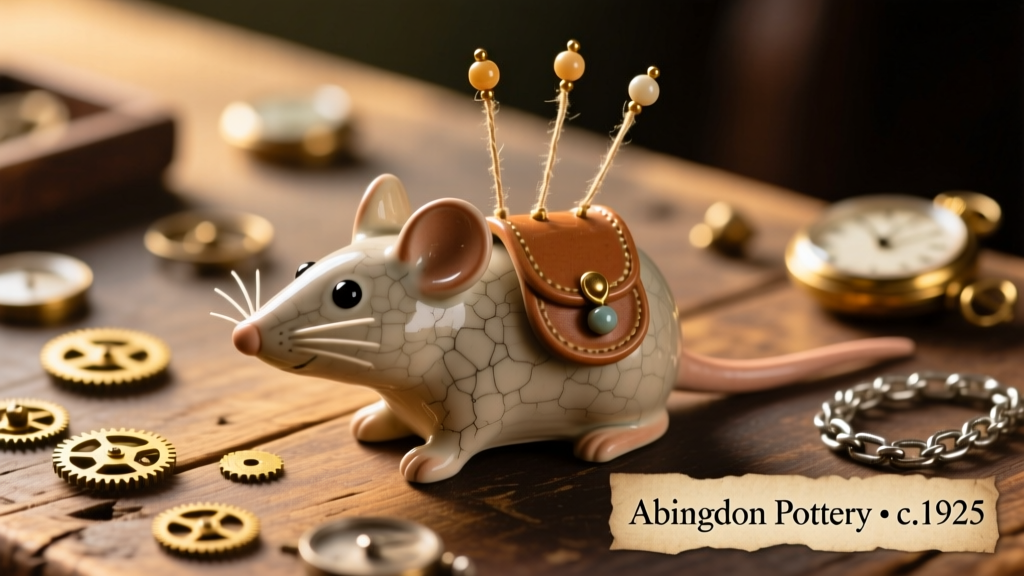
Abingdon Pottery String Holder Mouse: A Charming British Studio Ceramic from the 1950s–60s

Cottolene Advertising Tip Tray: A Disturbing Artifact of Early 20th-Century Racial Stereotyping in Consumer Goods
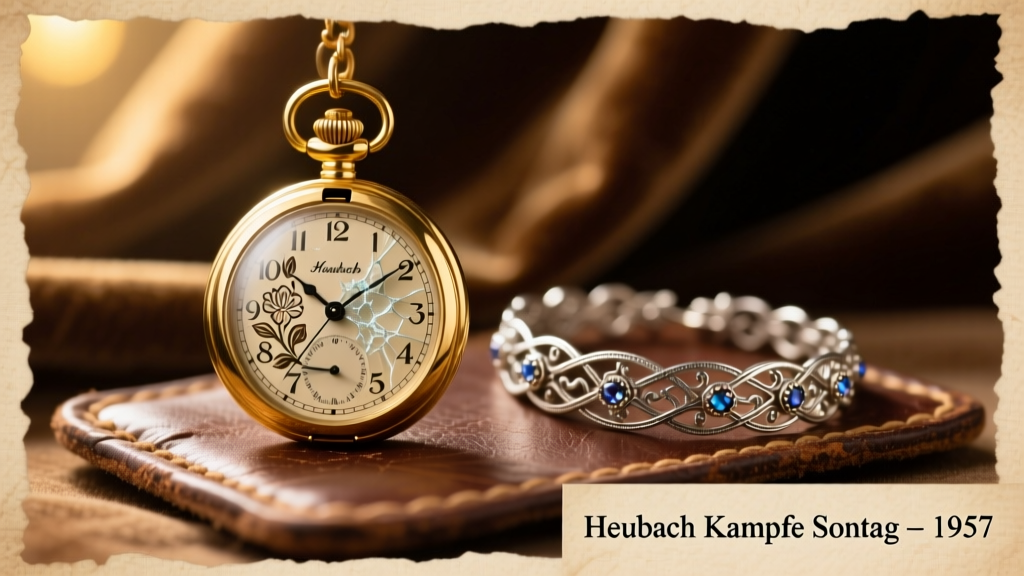
Heubach, Kampfe & Sontag: The Forgotten Triumvirate of German Art Deco Watchmaking

Toy Tractor Sand Loader with Shovel Operator & Animated Mechanism — An 8½-Inch Mid-Century Mechanical Marvel
Peter Dubois: The Forgotten Swiss Master of Precision Chronometry and Artisanal Watchmaking

Tiffin Goblet with Laurel Gold Trim: A Collector’s Guide to the 7½-Inch Vintage Stemware Icon

Osceola Brand Tobacco Advertising Labels: A Collector’s Guide to American Cigar and Chewing Tobacco Ephemera, 1870–1930

Part I of Astounding Bank Auction Slated for Oct 3: A Historic Offering of Vintage Jewelry & Timepieces from a Closed Swiss Private Bank Vault