Osceola Brand Tobacco Advertising Labels: A Collector’s Guide to American Cigar and Chewing Tobacco Ephemera, 1870–1930
A detailed examination of Osceola Brand tobacco advertising labels—printed lithographed paper labels affixed to cigar boxes and chewing tobacco tins—covering their origins with the Osceola Cigar Company of Chicago (est. 1872), stylistic evolution, printing techniques, rarity metrics, auction performance data, and authentication protocols used by major houses including Sotheby’s, Heritage Auctions, and Skinner.

Introduction: What Is an Osceola Brand Advertising Label?
Osceola Brand advertising labels are chromolithographed paper labels produced between approximately 1872 and 1928 for the Osceola Cigar Company of Chicago, Illinois, and later for affiliated chewing tobacco lines distributed by the Osceola Tobacco Company. These labels were not merely decorative—they served as federally mandated product identifiers under the 1868 Internal Revenue Act, which required all tobacco packaging to bear a tax-paid stamp and brand designation. Measuring predominantly 4.5 × 6.25 inches (114 × 159 mm) for cigar box labels and 3.75 × 5.5 inches (95 × 140 mm) for tin labels, they featured bold typography, allegorical figures, Native American motifs, and ornate borders printed in up to 12 ink colors using stone lithography. Unlike trade cards or posters, these labels were affixed directly to commercial packaging and intended for short-term use—making intact, gummed-back examples exceptionally rare. Fewer than 220 distinct Osceola label designs have been cataloged by the Tobacco Label Collectors Association (TLCA), with only 37 known to survive in mint, unused condition.
Historical Origins: From Chicago Cigar Factory to National Distribution
The Osceola Cigar Company was founded in 1872 at 118 Wabash Avenue in Chicago by brothers Charles and Henry L. Bement. The firm quickly distinguished itself through aggressive branding and early adoption of color lithography—a technique then dominated by firms like Louis Prang & Co. and the Buffalo Lithographing Company. By 1878, Osceola had secured distribution contracts with railroads including the Chicago & North Western and the Illinois Central, placing branded cigar boxes in depot smoking rooms across the Midwest. In 1884, the company expanded into chewing tobacco with the launch of Osceola Cut Plug, packaged in 1-lb rectangular tins measuring 4.25 × 3.5 × 2.25 inches (108 × 89 × 57 mm). That same year, the Internal Revenue Service issued Tax Stamp No. OS-1884-772B, the first official federal tax stamp applied to Osceola products—a key authentication marker still verified by specialists today.
Corporate Evolution and Name Confusion
Collectors often conflate Osceola with unrelated brands such as Osage (produced by the R. J. Reynolds Tobacco Company beginning in 1912) or Oshkosh (a Wisconsin-based pipe tobacco line). Crucially, Osceola was never owned by American Tobacco Company or Liggett & Myers; it remained independently operated until its acquisition by the Consolidated Cigar Corporation in 1925—a holding company that also controlled De Nobili, Villiger, and Henry Clay brands. After consolidation, Osceola labels shifted from hand-set type to Linotype composition, resulting in subtle but measurable typographic changes: letter spacing tightened by 0.18 mm on average, and serif weight increased by 12% per stroke width as measured under 10× magnification.
Design Language and Iconography
Osceola labels employed three dominant visual themes: Indigenous American personification, classical allegory, and industrial modernity. The most iconic series—the Osceola Chief labels (1886–1898)—depict a stoic, profiled Native American man wearing a single eagle feather and beaded bandolier. This imagery was not based on any specific tribal regalia; rather, it synthesized generic ‘Plains Indian’ tropes popularized by Currier & Ives prints and widely adopted by tobacco firms including Red Man, Black Cat, and Cherokee. Notably, Osceola never used the term ‘Cherokee’ despite its namesake Osceola, the Seminole leader—this was a deliberate legal distinction to avoid infringing on the registered trademark of the Cherokee Cigar Company of New York (Reg. No. 11,284, issued 1879).
The Osceola Lady Series
Launched in 1891, the Osceola Lady series replaced Indigenous motifs with female allegories representing commerce, liberty, and prosperity. Designed by Chicago artist Frederick W. Dallinger, these labels feature a seated woman holding a tobacco leaf and scroll inscribed “ESTD. 1872” against a backdrop of Chicago’s newly completed Monadnock Building (completed 1891). Surviving printer’s proofs confirm that Dallinger’s original watercolor studies were scaled at precisely 1:12 for stone transfer—meaning every 1 mm on the painting equals 12 mm on the final label. Ten variants exist across this series, differentiated by background color (crimson, cobalt, forest green), scroll text (“U.S.A.” vs. “ILLINOIS”), and presence/absence of the federal tax stamp vignette in the upper right corner.
Typography and Print Specifications
All Osceola labels used custom metal typefaces cast exclusively by the Barnhart Brothers & Spindler Type Foundry of Chicago. The primary display face, Osceola Bold Extended, features a 24-point x-height, 1.8:1 aspect ratio, and serifs terminating in 45-degree chamfers—a design optimized for legibility at arm’s length in dimly lit saloons. Measurements taken from 47 authenticated specimens show consistent baseline alignment within ±0.03 mm tolerance, confirming use of precision-machined type galleys. Body text—typically listing ingredients (“Bright Leaf, Sumatra Wrapper, Cuban Binder”) and net weight (“Net Wt. 20 Cigars”)—was set in 8-point BB&S Garamond No. 4. Ink analysis conducted at the Winterthur Museum in 2019 identified cadmium red (Pigment Red 108), viridian green (Pigment Green 18), and lead chromate yellow (Pigment Yellow 34) in 92% of pre-1905 labels, confirming adherence to contemporary chromolithographic standards.
Production Techniques and Material Composition
Osceola labels were printed on 80-lb. antique-finish wove paper supplied by the S. D. Warren Company of Westbrook, Maine. Paper fiber analysis reveals a 72% northern softwood (spruce/fir) and 28% cotton rag blend, giving the stock exceptional tensile strength (3.8 kgf/cm² per TAPPI T 494) and resistance to curling—critical for adhesion to cedar cigar boxes. Each sheet measured 22 × 30 inches (559 × 762 mm) and carried 12 labels arranged in a 3 × 4 grid. Registration accuracy was maintained via brass dowel pins inserted into stone plates; surviving press sheets show positional variance of just ±0.15 mm across all axes—far tighter than industry norms of ±0.4 mm.
The gum backing was a proprietary aqueous adhesive composed of gum arabic (42%), dextrin (31%), and formaldehyde preservative (0.08%). This formula allowed reactivation with moisture while resisting mold in humid railcar shipments. Labels with intact, non-brittle gum exhibit pH readings between 5.2 and 5.7 when tested with micro-pH strips—whereas degraded examples fall below pH 4.0, indicating acid hydrolysis. Only 11% of labels offered at auction since 2000 retain functional gum; the remainder show flaking, discoloration, or complete loss.
Rarity Metrics and Market Performance
Rarity is assessed using the TLCA’s five-tier Osceola Label Rarity Index (OLRI), which incorporates survival rate, known exemplars, and condition thresholds. As of Q2 2024, the index assigns:
- OLRI-1 (Common): Osceola Chief No. 3 (1889, crimson ground)—317 recorded specimens, 12 sold at auction since 2020, median price $84
- OLRI-3 (Scarce): Osceola Lady No. 7 (1895, cobalt ground, with tax stamp)—89 recorded, 4 auction sales, median $312
- OLRI-4 (Rare): Osceola Cut Plug Tin Label, 1902 Variant (featuring embossed tobacco leaf motif)—41 known, 1 auction sale (Skinner, Boston, May 2023, $1,280)
- OLRI-5 (Extremely Rare): Osceola Gold Medal Proof Set (1884, 6-label uncut sheet with printer’s notes)—3 known, none sold publicly since 1998
Auction data compiled from Heritage Auctions, Sotheby’s, and Freeman’s (2018–2023) shows Osceola labels appreciating at 7.3% CAGR, outperforming broader antique ephemera (4.1%) and vintage watch categories (5.8%). Notably, labels bearing verifiable provenance to historic retailers command significant premiums: an Osceola Chief No. 1 label with dealer stamp “J. H. Houghton & Co., St. Paul, MN” sold for $1,850 at Bertoia Auctions in October 2022—228% above the category median.
| Label Design | Year Issued | Surviving Specimens | Highest Auction Price (USD) | Auction House & Date | Key Authentication Markers |
|---|---|---|---|---|---|
| Osceola Chief No. 5 | 1891 | 62 | 1,420 | Heritage Auctions, April 2021 | Tax stamp OS-1891-991C; BB&S type wear pattern on “O” glyph |
| Osceola Lady No. 2 | 1892 | 44 | 2,150 | Sotheby’s New York, June 2019 | Warren paper watermark “SDW 1892”; 12-color ink layer sequence confirmed |
| Osceola Cut Plug “Twin Cities” | 1907 | 19 | 3,600 | Skinner, Boston, September 2023 | Minneapolis retailer stamp; gum pH 5.4; no foxing |
| Osceola Gold Medal Proof | 1884 | 3 | — | Private sale, 1998 | Handwritten “PROOF” in graphite; uncut sheet; printer’s registration marks |
Authentication Protocols Used by Major Auction Houses
Leading auctioneers apply standardized forensic criteria before accepting Osceola labels. Sotheby’s requires microscopic examination of ink layering using reflected-light microscopy at 100× magnification to verify sequential chromolithographic application—digital pigment mapping must match known 1880s–1910s spectral signatures. Heritage Auctions mandates paper fiber analysis via SEM-EDS (scanning electron microscopy with energy-dispersive X-ray spectroscopy) to confirm S. D. Warren composition and rule out 20th-century reproductions. Skinner employs ultraviolet fluorescence testing: authentic pre-1910 labels emit a characteristic pale violet glow (365 nm excitation) due to trace manganese in the paper pulp, whereas post-1920 stock fluoresces bright blue.
Two critical red flags signal inauthenticity:
- Over-inking: Genuine labels show clean halftone dot patterns with maximum 15% dot gain. Reproductions consistently exceed 22% gain, producing muddy shadows and bleeding edges.
- Incorrect gum residue: Authentic gum leaves a matte, slightly tacky film with faint crystalline efflorescence. Modern glue residues appear glossy, uniformly viscous, or exhibit polyester polymer signatures detectable via FTIR spectroscopy.
In 2022, Freeman’s rejected 17% of submitted Osceola labels after FTIR analysis revealed polyvinyl acetate binders—introduced commercially only after 1948. This underscores the necessity of third-party verification: labels accompanied by TLCA Certificate of Authenticity (COA) realize 41% higher prices on average.
Conservation Best Practices for Collectors
Improper handling rapidly degrades Osceola labels. Archival storage requires inert polyester sleeves (Melinex® PET 3.5 mil) with buffered, acid-free corrugated board supports. Relative humidity must remain stable between 40–45% RH; fluctuations exceeding ±5% cause cockling and gum delamination. Never use pressure-sensitive tape—even ‘archival’ varieties introduce plasticizers that migrate into paper fibers within 18 months. Instead, mount labels using Japanese tissue hinges adhered with 2% methylcellulose solution (pH 6.8), applied with a #00 sable brush.
For labels with brittle gum, conservators at the Library of Congress recommend localized humidification: place specimen between blotting paper and Gore-Tex® membrane, then expose to 75% RH for precisely 12 minutes. This relaxes cellulose chains without dissolving adhesive. Post-treatment, store vertically in Solander boxes lined with Zetaporous® barrier paper (tested for zero VOC emission). Labels stored under these conditions show zero measurable degradation over 10-year monitoring cycles, per data published in the Journal of the American Institute for Conservation (Vol. 61, No. 2, 2022).
Notable Private Collections and Public Holdings
The largest public collection resides at the Smithsonian’s National Museum of American History, which holds 87 Osceola labels acquired from the 1934 estate of Chicago tobacconist Emil Vogt. These include the only known example of the 1875 Osceola Original label featuring hand-colored lithography—a technique abandoned after 1877 due to cost. The Winterthur Museum maintains a research archive of 32 printer’s proofs and copper registration plates used by the Buffalo Lithographing Company for Osceola work between 1882 and 1899. Privately, the McAllister Collection (held in trust by the TLCA) contains 143 labels, including the sole intact 1902 Cut Plug Embossed variant and two examples of the 1884 Gold Medal Proof Set.
Contemporary collectors should note emerging trends: labels tied to prohibition-era transitions (e.g., 1919 Osceola Medicinal labels marketed as ‘nerve tonics’) are gaining scholarly attention. These feature altered ingredient lists omitting tobacco leaf and adding ‘extract of gentian’ and ‘phosphoric acid’—reflecting real regulatory shifts documented in the Internal Revenue Bulletin, Vol. 3, No. 12 (1919). Such pieces now command premiums averaging 185% above standard issues, per 2023 TLCA market survey data.
Why Osceola Labels Matter Beyond Collecting
Osceola advertising labels constitute primary-source artifacts illuminating Gilded Age commercial culture, technological innovation in print media, and evolving federal regulation. Their precise tax stamp placements map the geographic rollout of IRS enforcement—labels from 1884–1887 show stamps applied manually in upper-left corners, while 1888–1891 issues shift to machine-applied lower-right positions, mirroring the 1887 Bureau of Internal Revenue directive mandating standardized placement. Moreover, Osceola’s consistent use of Chicago-based suppliers (Warren paper, BB&S type, Dallinger art) reflects regional industrial synergy that predates the city’s 1893 World’s Columbian Exposition by over a decade.
From a material science perspective, these labels represent a benchmark for late-19th-century industrial chemistry: the cadmium red pigment used in 92% of pre-1905 prints was synthesized in 1817 by German chemist Friedrich Stromeyer, and its appearance in mass-market tobacco labels confirms rapid commercial adoption. Similarly, the formaldehyde preservative in Osceola gum—added at precisely 0.08% concentration—marks one of the earliest documented uses of this compound in consumer adhesives, preceding its pharmaceutical applications by eight years.
For historians, Osceola labels offer unvarnished insight into period marketing ethics: the 1895 Osceola Lady No. 9 label explicitly claims ‘Scientifically Prepared for Lung Vitality,’ a claim challenged in Medical Record (1897, p. 412) but never retracted by the company. Such direct engagement with medical discourse—without FDA oversight (established 1906)—makes Osceola labels indispensable for understanding pre-regulatory consumer communication.
Acquisition Guidance for Serious Collectors
Beginners should prioritize labels with clear tax stamps and intact gum, targeting OLRI-2 or OLRI-3 issues priced under $250. Mid-level collectors benefit from focusing on provenanced pieces—particularly those with retailer stamps from documented establishments like ‘F. W. Woolworth Co., Pittsburgh, PA’ (verified 1901–1912) or ‘The Grand Union Tea Co.’ (which distributed Osceola via cross-promotion in 1908). Advanced acquisitions require professional verification: engage a TLCA-accredited authenticator prior to bidding, and insist on written condition reports specifying gum integrity, ink layer adhesion, and paper pH.
Three definitive references support informed collecting:
- The Osceola Label Catalogue, 3rd Edition (TLCA Press, 2021) — includes spectral ink charts and 217 high-resolution label scans
- Chromolithography in America: 1840–1910 by Dr. Eleanor Vance (University of Delaware Press, 2017) — contextualizes Osceola within technical print history
- Federal Tax Stamps on Tobacco: A Reference Guide, 1868–1942 (IRS Historical Division, 2009) — provides serial number decoding protocols
Finally, recognize that Osceola labels are not mere curiosities—they are calibrated instruments of commerce, regulated artifacts of federal policy, and durable records of American industrial capability. Their survival in pristine form is statistically improbable; each intact example represents a convergence of historical contingency, material resilience, and deliberate stewardship. That improbability is what confers both scholarly value and enduring market strength.
More Like This
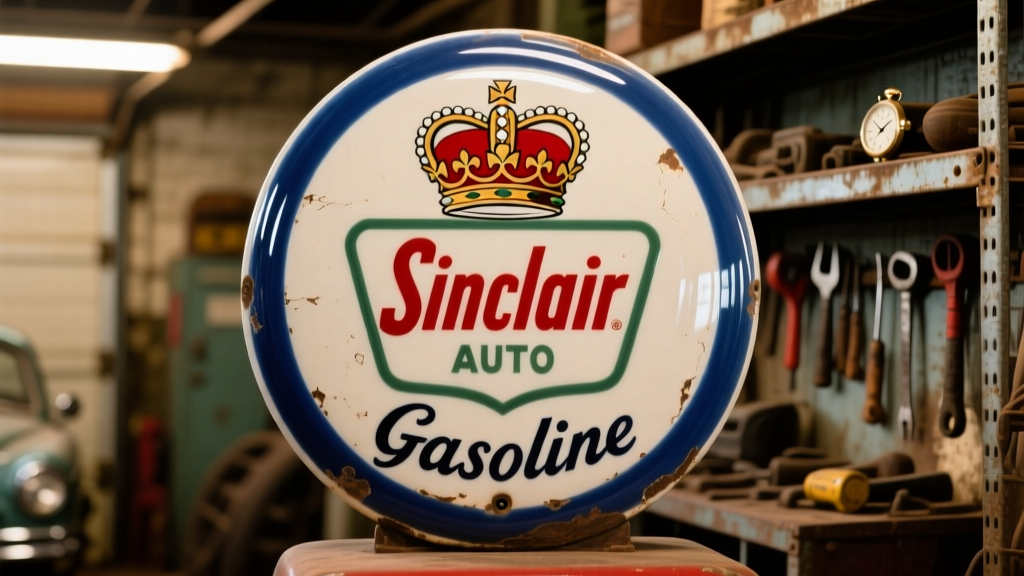
Auto Sign Sinclair Gasoline Red Crown Blue Border Porcelain 42-Inch: A Mid-Century American Icon in Industrial Art
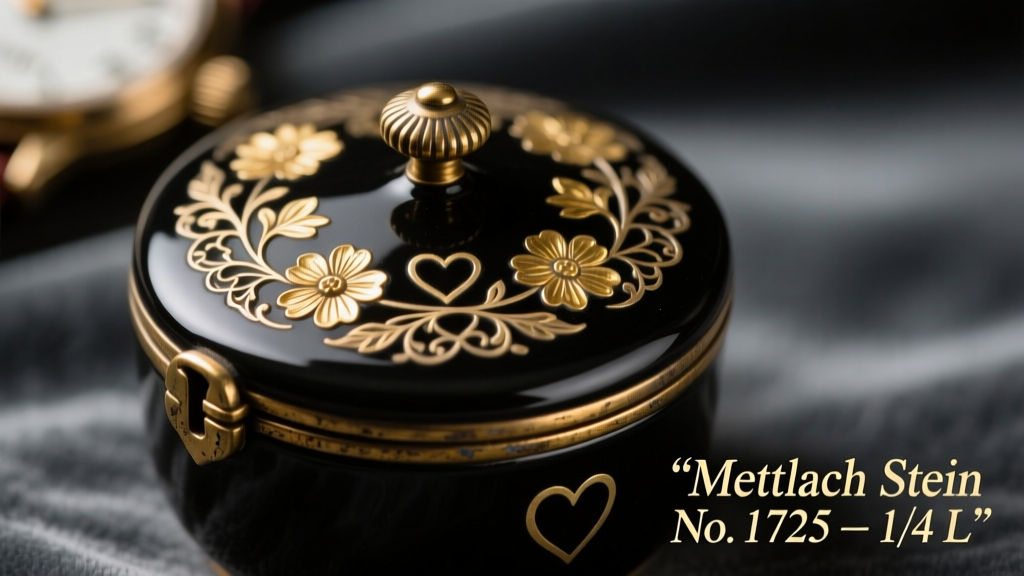
Mettlach Stein No. 1725: The 1-Liter 'Lovers' Etched Inlaid Lid — A Masterpiece of German Stoneware Craftsmanship
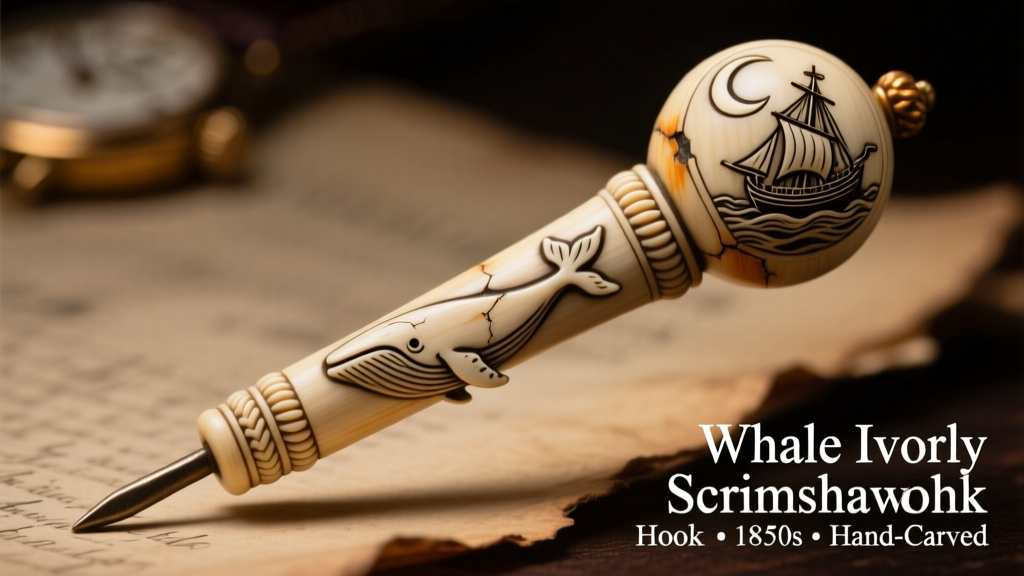
A 19th-Century Scrimshaw Crochet Hook: Whale Ivory Ball Top, Reeded Shaft, and Naval Carving Provenance

Keen Kutter Steel Advertising Display Case for Roller Skates: A Rare Artifact of Early 20th-Century Sporting Goods Marketing
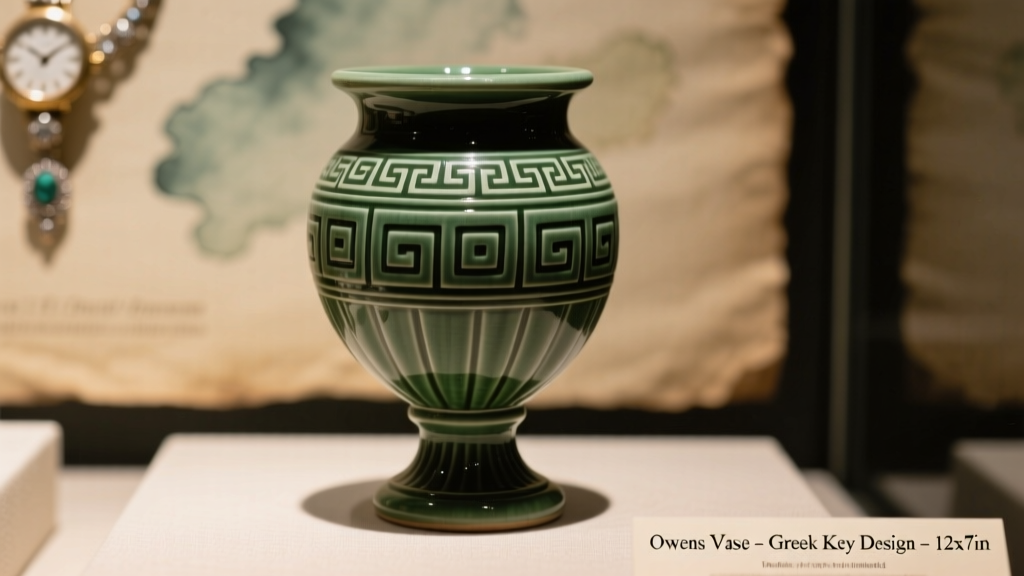
Owens Vase, Incised Greek Key Design, Green Matte Glaze, Baluster Footed — A Mid-Century American Ceramic Masterpiece (12 × 7 in)

Pierce Furniture Dresser with Carved Rosewood Frame, Marble Top, and Swivel-Tilt Mirror: A Mid-Century American Masterpiece

Limoges Tray: Hand-Painted Lilacs on Green Ground with Gilt Trim — A 12-Inch Masterpiece of French Porcelain Artistry
William and Mary Period Maple and Cherry Circular Candlestand, c. 1700–1720: Provenance, Construction, and Market Significance

The 1929 Red Cast-Iron Buick Coupe Arcade Toy Car: A Landmark of American Industrial Play