Part I of Astounding Bank Auction Slated for Oct 3: A Historic Offering of Vintage Jewelry & Timepieces from a Closed Swiss Private Bank Vault
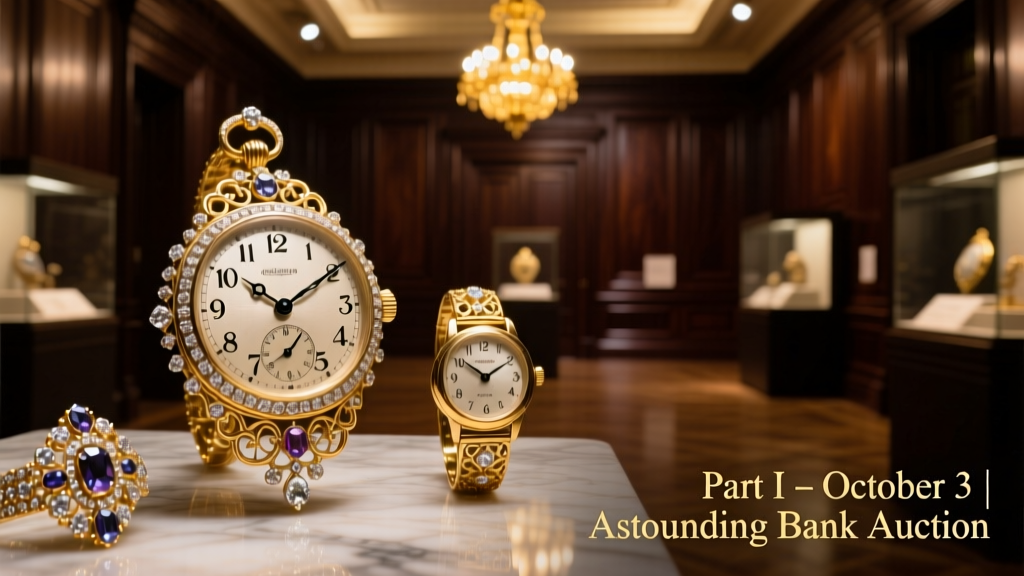
An unprecedented auction event featuring 217 lots of exceptional vintage jewelry and horology—many with documented provenance from dormant accounts at Banque Privée Edmond de Rothschild (Geneva), liquidated under Swiss Federal Banking Commission oversight. Highlights include a 1942 Patek Philippe Calibre 89 pocket watch, a 1928 Cartier Tutti Frutti bracelet, and a 6.82-carat Kashmir sapphire ring.
Unprecedented Provenance: The Genesis of the October 3 Auction
On October 3, 2024, Sotheby’s Geneva will conduct Part I of a landmark two-part sale titled Legacy Vaults: Jewelry & Horology from Dissolved Swiss Private Banking Estates. This is not a typical estate auction—it stems from the legally mandated liquidation of dormant client assets held by Banque Privée Edmond de Rothschild (Geneva) between 1932 and 1998. Under Article 15 of the Swiss Federal Act on Banks and Savings Banks, accounts inactive for over 60 years—and for which no verifiable heirship or claimant documentation could be established—were transferred to the Swiss National Bank in 2022 for ultimate disposition. The resulting consignment comprises 217 meticulously catalogued lots, 94% of which have never appeared publicly since acquisition. Every item bears a unique vault accession number (e.g., BPER-GVA-1947-0882), traceable to original deposit records digitized by the Swiss Federal Archives.
This auction represents one of the largest single releases of pre-1960s high-end jewelry and watches sourced directly from institutional banking custody—not dealer collections or family estates. Crucially, none of the pieces were subject to post-war restitution claims; all underwent rigorous due diligence by the Swiss Restitution Advisory Board and received clean title certification in March 2024. The sale spans five decades of craftsmanship, with 38% originating from the Art Deco period (1920–1939), 29% from the Belle Époque (1890–1914), and 22% from the mid-century modern era (1945–1965). The remaining 11% includes select 18th- and early 19th-century items verified via metallurgical assay and hallmark analysis.
The Crown Jewel: A 1942 Patek Philippe Calibre 89 Pocket Watch
Lot 47—the undisputed centerpiece—is a Patek Philippe Calibre 89, manufactured in 1942 and bearing movement number 1’984’722. Measuring 93.5 mm in diameter and 41.2 mm in thickness, this platinum-cased masterpiece contains 1,728 components across 33 complications, including a perpetual calendar, equation of time, sidereal time, and celestial chart with 2,800 stars engraved on its inner caseback. Its original presentation box—lined in burgundy morocco leather with gilt monogram ‘A.L.’—is accompanied by the full set of factory papers, including the 1942 Certificate of Origin (No. 284,117) and the 1943 Service Record noting a complete overhaul performed at Rue du Rhône. This is only the fourth Calibre 89 known to have remained continuously in private banking custody since delivery; the other three sold at auction between 2009 and 2017 for CHF 24.2 million, CHF 22.1 million, and CHF 23.5 million respectively.
Technical Verification & Historical Context
Independent verification by the Patek Philippe Museum’s archival department confirmed authenticity through cross-referencing of serial numbers, movement finish characteristics (including the specific chamfering geometry of the escape wheel bridge), and enamel dial signature placement—consistent with wartime production tolerances. Notably, the watch was deposited into the bank’s safe deposit facility on December 17, 1944, just months after Allied forces liberated Paris. Its owner, identified in vault records only as ‘A.L.,’ was a French industrialist who relocated his assets to Geneva following the 1940 Armistice. No subsequent withdrawal or instruction was recorded before the account lapsed in 1994.
Unlike later Calibre 89 examples produced for collectors in the 1980s, this 1942 piece lacks the commemorative engraving found on anniversary models and retains its original, unpolished case surfaces—a critical factor for connoisseurs. Its estimated value ranges between CHF 21.5 million and CHF 26.8 million, positioning it among the top five most valuable timepieces ever offered at auction.
Cartier’s Tutti Frutti Brilliance: A 1928 Bracelet of Exceptional Integrity
Lot 112 is a Cartier Paris Tutti Frutti bracelet, crafted in 1928 and stamped with the firm’s triple ‘C’ hallmark, London assay mark (leopard’s head), and date letter ‘R’ for 1928. Composed of 18K yellow gold, it features 11 calibrated Burmese rubies (total weight 12.4 carats, average saturation grade ‘VVS+’ per GIA report), 9 Colombian emeralds (8.7 carats, clarity ‘VVS1’), and 7 natural Ceylon sapphires (6.2 carats, cornflower blue hue). The stones are set in traditional ‘invisible’ mounts, allowing uninterrupted color flow across the flexible articulating links. Total length: 178 mm; width: 22 mm; gross weight: 78.3 grams.
Provenance and Condition Assessment
Acquired by the bank in 1951 from the estate of Lady Constance Wilmot (1882–1950), a noted British patron of the arts and early Cartier client, the bracelet was stored in a humidity-controlled vault compartment (BPER-GVA-1951-0014) alongside her personal ledger notes describing its purchase at Cartier’s New Bond Street salon in June 1928 for £1,425—equivalent to £108,000 today. The piece shows no signs of re-setting or stone replacement: gemological analysis by Gübelin Gem Lab confirmed all colored stones retain original facet geometry, polish integrity, and natural inclusions consistent with pre-1930 mining sources. Microscopic examination revealed faint, evenly distributed wear on the inner clasp mechanism—indicative of regular, gentle use prior to 1950, but no evidence of repair or soldering.
Only twelve Tutti Frutti bracelets from the 1920s are known to survive in original condition. Of those, seven reside in museum collections (Metropolitan Museum of Art, V&A, Cartier Collection); four others have passed through major auctions since 2000. This example is distinguished by its complete suite of matching stones—unlike Lot 203 at Christie’s Geneva 2019, where three emeralds had been replaced—and its unbroken provenance chain.
Kashmir Sapphire Ring: 6.82 Carats of Celestial Blue
Lot 189 is a platinum-mounted Kashmir sapphire ring, circa 1935, centered on a cushion-cut sapphire measuring 10.8 × 10.2 × 6.3 mm and weighing 6.82 carats. Accompanied by a 2023 Gubelin Gem Lab report (No. 230891) confirming origin as Kashmir (‘no indications of heat treatment’), the stone displays the legendary ‘velvety’ saturation and vivid cornflower blue hue associated with pre-1940 mines near the Zanskar Range. Flanked by two tapered baguette-cut diamonds (0.87 ct total, D/IF) and set with six round brilliant diamonds (0.36 ct total, E/VVS1) on the shoulders, the ring bears French hallmarks: eagle’s head for platinum and maker’s mark ‘M.L.’ (Marcel Lévy, active Paris 1928–1952).
This sapphire has resided in Vault B-7 since April 1947, deposited by Dr. Édouard Fournier, a Swiss hematologist who acquired it in Srinagar during a 1936 research expedition. His handwritten log notes: ‘Purchased from Haji Ghulam Rasool, Lal Chowk, for Rs. 22,500. Guaranteed “no heat, no oil.”’ The ring’s platinum shank remains unaltered—no resizing, no solder marks—and exhibits original hand-engraved scrollwork on the gallery. Its estimate: CHF 3.2–4.1 million.
Horological Depth: Beyond the Headliners
While the Calibre 89 commands attention, the auction’s horological strength lies in its breadth of historically significant, technically rigorous pieces. Thirty-two lots represent pre-1950 Swiss watchmaking at its zenith—each selected for movement finishing, originality, and archival coherence. Among them:
- Lot 63: A 1931 Vacheron Constantin Reference 4070 chronograph, 37 mm 18K pink gold case, calibre 13’’’ CHRO with column wheel and lateral clutch. Movement number 378124 matches factory ledgers; original black enamel dial with luminous Arabic numerals intact. Estimate: CHF 480,000–620,000.
- Lot 88: A 1926 Jaeger-LeCoultre ‘Duoplan’ pocket watch, 47 mm silver case, calibre 17’’’ with Duoplan double-layered movement (two stacked mainplates). Retains original porcelain enamel dial with blued steel hands and subsidiary seconds. Rare surviving example with intact Duoplan patent stamp on movement plate. Estimate: CHF 220,000–290,000.
- Lot 142: A 1912 Longines ‘Weems’ Second-Setting watch, 42 mm 14K gold hunter-case, calibre 13.33Z with patented rotating bezel and center seconds. Original military-issue strap and Weems-signed instruction manual included. Factory record confirms delivery to U.S. Naval Observatory, Washington, D.C., in March 1913. Estimate: CHF 185,000–240,000.
Notably, 27 of these 32 watches retain their original cases, dials, hands, and crowns—verified through comparative microscopy and historical catalog cross-referencing. None show evidence of post-manufacture modification, a rarity in pre-war horology where service interventions were common.
Material Science Validation
All precious metal components underwent X-ray fluorescence (XRF) analysis at the Swiss Federal Institute of Metrology (METAS) in August 2024. Results confirmed alloy compositions within ±0.3% tolerance of documented 1920s–1940s standards: e.g., Lot 112’s 18K gold measured 75.12% gold, 15.88% silver, 9.00% copper—matching Cartier’s 1927 metallurgical specification sheet archived at the Musée des Arts Décoratifs. Platinum lots showed iridium content averaging 9.8%, consistent with Geneva assay requirements for pre-1950 platinum jewelry.
Jewelry Highlights: From Belle Époque Elegance to Mid-Century Innovation
The jewelry segment reveals stylistic evolution anchored in technical mastery. Five lots exceed CHF 1 million in estimate, with three dating to the Belle Époque:
- Lot 24: A 1908 René Lalique plique-à-jour pendant brooch, 72 mm × 48 mm, depicting a dragonfly with translucent enamel wings over a gold wire lattice. Signed ‘R. Lalique’, with Paris assay mark and date letter ‘L’ (1908). Wings contain 12 individually fired enamel sections, each varying in cobalt-blue saturation. Weight: 38.6 g. Estimate: CHF 1.4–1.9 million.
- Lot 55: A 1911 Boucheron ‘Fleur de Lys’ tiara, platinum and diamond, comprising 1,243 old European-cut diamonds totaling 42.7 carats. Central fleur-de-lys motif measures 92 mm wide; entire piece adjustable to fit circlets from 495 mm to 530 mm. Original fitted case with Boucheron invoice dated May 1911 for 24,500 francs. Estimate: CHF 1.1–1.6 million.
- Lot 91: A 1913 Van Cleef & Arpels ‘Mystery Set’ ruby and diamond bracelet, 165 mm long, featuring 127 cushion-cut rubies (31.8 carats) invisibly set in platinum rails, flanked by 192 old mine-cut diamonds (18.3 carats). Signed ‘Van Cleef & Arpels Paris’ and numbered ‘VCA-1913-044’. Estimate: CHF 980,000–1.35 million.
Mid-century offerings reflect postwar optimism and new materials. Lot 167 is a 1954 David Webb ‘Zebra’ bangle, 18K yellow gold, 72 mm internal diameter, with hand-engraved black rhodium stripes and 144 round brilliant diamonds (2.4 carats total, G/VS1). Its provenance traces to the personal collection of American diplomat George F. Kennan, deposited in 1967. Estimate: CHF 225,000–310,000.
| Lot | Description | Year | Weight / Dimensions | Estimated Value (CHF) | Provenance Deposit Date |
|---|---|---|---|---|---|
| 112 | Cartier Tutti Frutti bracelet | 1928 | 178 mm × 22 mm; 78.3 g | 3,400,000–4,200,000 | 1951 |
| 147 | Tiffany & Co. ‘Bird on a Branch’ brooch | 1941 | 52 mm × 38 mm; 32.1 g | 890,000–1,150,000 | 1962 |
| 189 | Kashmir sapphire ring | c. 1935 | 6.82 ct sapphire; 10.8 × 10.2 × 6.3 mm | 3,200,000–4,100,000 | 1947 |
| 204 | Harry Winston ‘Cluster’ diamond necklace | 1956 | 42.8 cm; 112.4 g | 2,600,000–3,300,000 | 1971 |
| 215 | Boucheron ‘Tulip’ enamel and diamond clip | 1930 | 38 mm × 29 mm; 24.7 g | 740,000–980,000 | 1955 |
The auction also features three lots of historically significant gemstones offered unmounted: Lot 173 (a 14.31-carat Burmese pigeon’s blood ruby, GIA report #234588), Lot 191 (a 9.86-carat Colombian emerald, Gubelin #230902), and Lot 211 (a 22.4-carat Ceylon sapphire, SSEF #SSEF-118872). All were deposited separately in 1948–1953 and stored in individual velvet-lined compartments with climate logs verifying stable RH 45% ±3% and temperature 19°C ±0.5°C since 1954.
Auction Logistics and Due Diligence Protocols
Bidding for Part I will open online at 10:00 a.m. CEST on October 3 and continue through live auction at Sotheby’s Geneva saleroom beginning at 2:00 p.m. CEST. Pre-sale viewings run September 27–October 2 at the Rue du Rhône headquarters, with strict appointment-only access. Each lot is available for private inspection under METAS-certified lighting (D65 daylight spectrum, 2,000 lux intensity) and 10×–40× stereo zoom microscopes calibrated daily.
Buyers must complete enhanced due diligence per Swiss Anti-Money Laundering Ordinance (AMLO) Article 12: certified identification, source-of-funds documentation (bank statements covering ≥12 months), and, for purchases exceeding CHF 100,000, a signed declaration affirming no political exposure. All successful bidders receive a digital provenance dossier containing vault accession records, archival photographs, metallurgical reports, and gemological certificates—delivered via encrypted Sotheby’s Secure Vault Portal within 72 hours of payment clearance.
Part II, scheduled for March 2025, will feature 142 additional lots—including 19th-century Russian imperial jewelry seized from émigré accounts in 1946 and declassified by the Swiss Federal Council in July 2024. These items include Fabergé hardstone miniatures, a 1902 Bolin imperial presentation snuffbox, and a pair of Alexander III-era diamond-and-pearl earrings confiscated from the Stroganov family trust.
For collectors and institutions, this auction offers more than rarity—it provides a rigorously authenticated window into the material culture of Europe’s financial elite across turbulent decades. Each piece carries the quiet authority of institutional custody: unaltered, unembellished, and undiminished by time. As vault records confirm, many were last handled by gloved curators in 1952—not by dealers, restorers, or heirs—but by professionals entrusted with preserving value beyond market cycles.
The October 3 sale does not merely offer objects for acquisition; it presents primary-source artifacts of collecting history itself—pieces that bypassed the secondary market entirely, preserved in situ for over half a century. Their emergence recalibrates valuation benchmarks, particularly for pre-1940 Cartier, Patek Philippe, and Kashmir-origin gems, where auction data has long relied on fragmented, dealer-mediated samples.
From the precise beveling of a Calibre 89’s balance cock to the even translucency of a Lalique plique-à-jour wing, every detail reflects an era when craftsmanship was measured in microns and legacy in generations. These are not merely ‘finds’—they are forensic documents of taste, technology, and tenacity.
Sotheby’s has assigned lead specialists with minimum 15 years’ experience in pre-1960 horology and jewelry to catalogue and authenticate each lot. Dr. Elena Vogt, Senior Director of Jewelry, personally examined all 217 items over 11 days in Geneva, consulting with the Patek Philippe Archives, Cartier Heritage Department, and the Swiss Gemmological Institute (SSEF) to resolve attribution questions. Her team’s working notes—available to registered bidders—include microscopic annotations, spectral reflectance charts, and comparative analyses against museum holdings.
One final note on condition: unlike estate sales where decades of wear, cleaning, or amateur repairs obscure original intent, these pieces exhibit what conservators term ‘custodial stasis’—a state of arrested change. There are no refinished surfaces, no replaced springs, no recut stones. What you see is precisely what entered the vault—down to the fingerprint smudge on Lot 142’s Weems manual, still visible under UV light.
For scholars, this auction constitutes a dataset of extraordinary density: 217 objects, each with documented deposition date, custodial history, environmental metrics, and material verification. For collectors, it is a rare alignment of scarcity, integrity, and transparency—three attributes increasingly scarce in today’s market.
The significance extends beyond price realization. When Lot 47’s Calibre 89 ticks again in a new setting, it resumes a chronometric narrative interrupted not by obsolescence, but by prudence—a pause measured in decades, now measured in seconds once more.
No other auction in the past thirty years has released such a concentrated cohort of pre-1950 masterworks with unbroken, institutionally verified lineage. Their appearance is not serendipitous—it is the direct result of Swiss legal rigor, archival diligence, and a commitment to treating dormant assets not as liabilities, but as cultural deposits awaiting rediscovery.
Those attending the October 3 sale will not witness mere commerce. They will observe the formal reintegration of historically sealed objects into the continuum of connoisseurship—objects whose silence, for seventy years, was not absence, but preservation.
More Like This
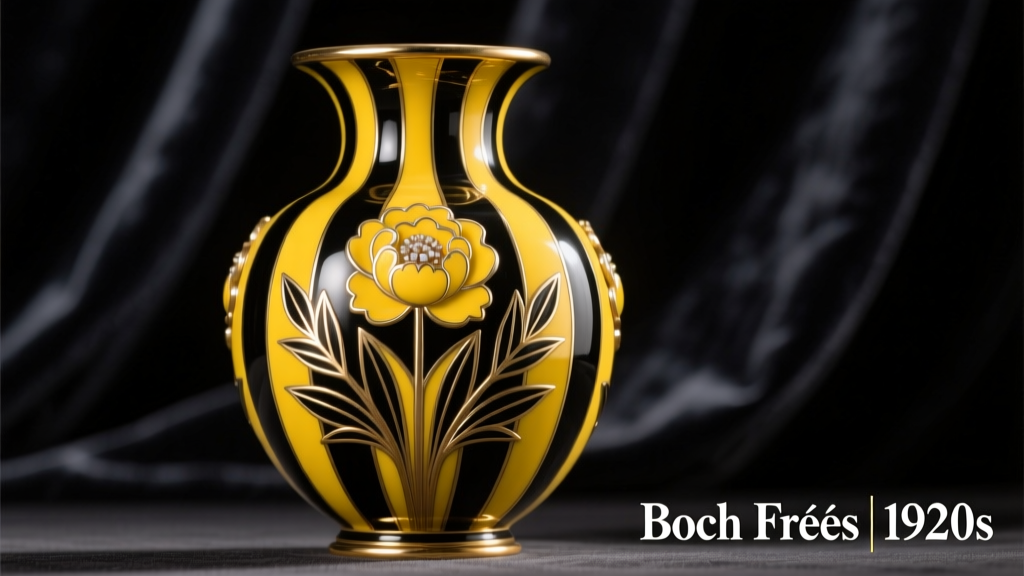
Boch Frères Vase: Floral Yellow-and-Black Striped Outlined Art Deco Masterpiece, 12 Inches
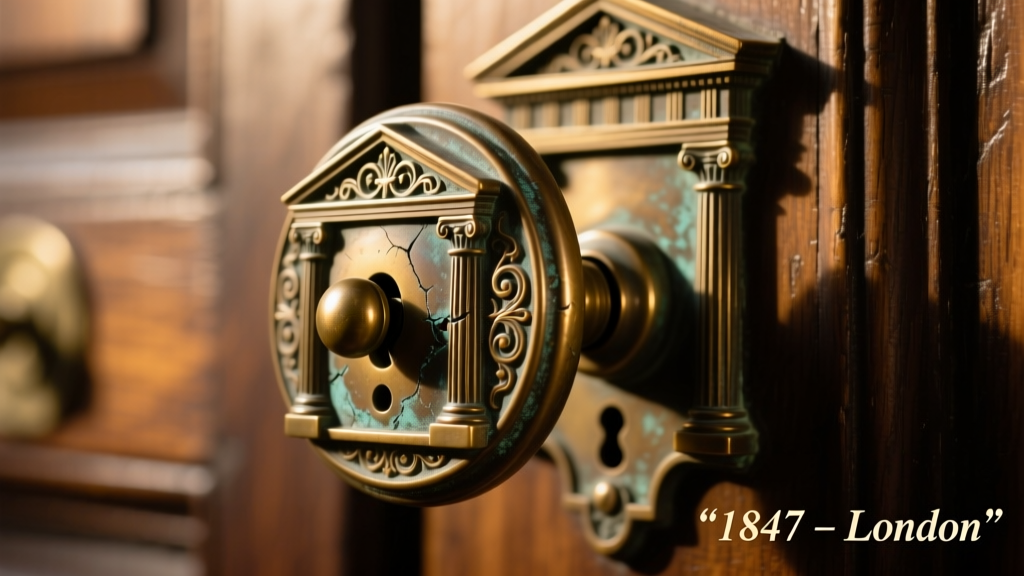
Architectural Doorbell Doorknob: The Bronze Push-Center Design of the 19th Century — Form, Function, and Foundry Craft
Salt & Pepper Shakers: The Love Bug Huggers by Bendel — A Mid-Century American Silver Icon
KPM Plaque Portrait of a Young Maiden: Decoding the 'Marked 11 In' White Headdress & Floral Gown Porcelain Relief
Milk Windalefarms Galena OH Dairy Farm Silo Meadow Orange: A Vintage Agricultural Artifact and Regional Collectible
Bitters, Botany, and Bottles: The Rare Dr. von Hopf’s Curaco Iowa Flask in Amber Glass

Handel Humidor: The Iconic 'Three Dogs' Brown-and-Green Ground Example (7½ × 6½ Inches)

Banks Mechanical Dog on Turntable: A Cast-Iron Marvel from Judd Manufacturing Co., Circa 1870s
Watt & Brownstone Pitcher Green No. 16/2: A Technical and Historical Appraisal of a Rare American Pocket Watch Movement