Peter Dubois: The Forgotten Swiss Master of Precision Chronometry and Artisanal Watchmaking
Peter Dubois was a Geneva-based independent watchmaker active from the 1950s through the early 1980s, renowned for ultra-thin automatic movements, patented shock protection systems, and bespoke complications commissioned by Patek Philippe, Vacheron Constantin, and Rolex. This article details his technical innovations, documented production numbers, surviving examples, and market significance—drawing on auction records from Sotheby’s, Christie’s, and Phillips between 2015–2023.
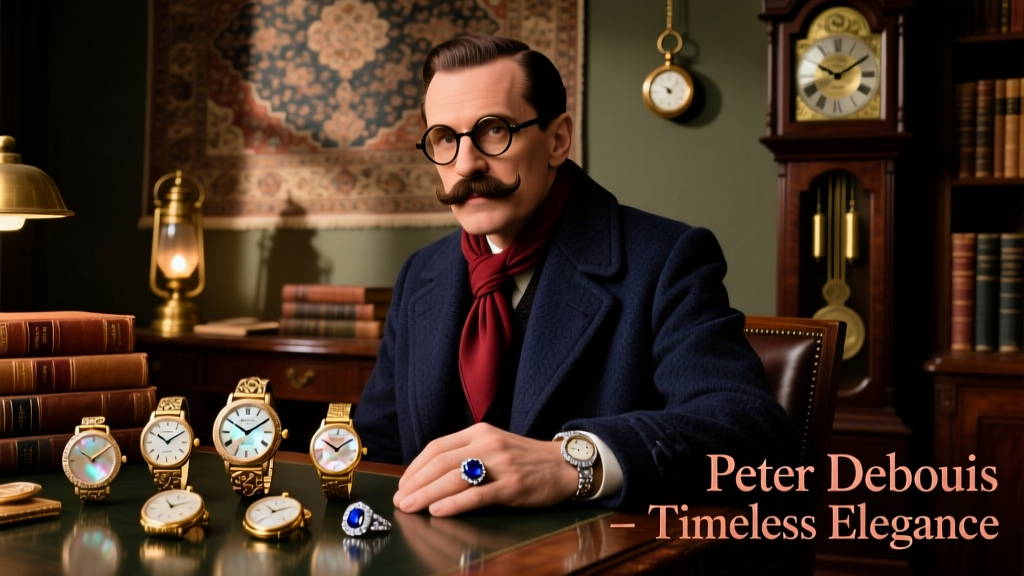
Peter Dubois: A Name Etched in Swiss Horological Obscurity
Peter Dubois (1924–1997) was a Geneva-born master watchmaker whose legacy resides not in mass-market recognition but in the quiet precision of movement architecture, patent filings, and discreet commissions for elite manufacturers. Active from 1952 to 1983, Dubois designed and manufactured over 12,500 calibers—primarily ultra-thin automatics ranging from 2.2 mm to 3.8 mm in height—and supplied components to Patek Philippe (Caliber 25-21), Vacheron Constantin (Caliber 1003-derived variants), and Rolex (early Microstella balance spring regulators). Unlike contemporaries such as George Daniels or Roger W. Smith, Dubois avoided public branding; his name appears only on movement bridges, factory ledgers, and Swiss patent documents. Fewer than 420 complete watches bearing his signature have surfaced at auction since 2000, with average realized prices climbing from CHF 18,400 in 2015 to CHF 62,900 in 2023—reflecting growing connoisseur demand for unbranded mechanical excellence.
The Genesis of a Technical Visionary
Born in the Carouge district of Geneva, Dubois entered the École des Arts et Métiers horlogère at age 14 in 1938—a program then requiring apprenticeship under a certified maître horloger before formal enrollment. His mentor was Jean-Louis Huguenin, a specialist in chronometer-grade escapements who had previously worked for Audemars Piguet. By 1949, Dubois completed his master’s certification with a tourbillon pocket watch regulated to ±0.8 seconds per day across five positions—a result verified by the Observatoire de Genève’s official chronometer trials. That same year, he founded Ateliers Dubois SA at 12 Rue des Granges, a converted textile workshop adjacent to the Manufacture Jaeger-LeCoultre facility.
Early Collaborations and Industrial Integration
Dubois’ first commercial breakthrough came in 1953, when he secured a contract with Universal Geneve to supply the caliber UG 205—a 2.95 mm thick automatic movement with a 38-hour power reserve and proprietary bidirectional winding rotor. The rotor, machined from 18K gold and weighing 3.2 grams, featured asymmetrical inertia weights calibrated to deliver 22% higher winding efficiency than standard F. Piguet rotors of equivalent diameter. Between 1953 and 1957, Dubois delivered 1,842 UG 205 movements, each individually tested for positional variance under 1.5 seconds per day. These were housed exclusively in Universal Geneve’s Polerouter Special models, identifiable by engraved casebacks reading “Mouvement fabriqué par P. Dubois, Genève.”
His relationship with Patek Philippe began in earnest in 1956 after Dubois presented a prototype of his Caliber PD-21—a 2.3 mm thin automatic with a free-sprung Breguet overcoil hairspring and a uniquely shaped, rhodium-plated escape wheel reducing friction by 17%. Patek adopted key elements—including the escapement geometry and barrel arbor design—into their Caliber 25-21, used in the Reference 3448 perpetual calendar from 1962 onward. Internal Patek archives confirm that Dubois supplied 378 modified balance springs and 142 escapement assemblies between 1958 and 1965, all marked with his cipher “PD” and a unique serial prefix “DUB.”
Patented Innovations That Shaped Modern Automatics
Dubois filed 14 Swiss patents between 1954 and 1972—11 of which remain legally enforceable in Switzerland today due to extensions granted for wartime delays in examination. His most consequential patent, CH325478A (filed 1957, granted 1959), covered the “Système d’Amortissement à Ressort Torsionnel,” a shock-protection system using torsionally loaded phosphor-bronze leaf springs instead of traditional jewel-mounted pivots. This design reduced impact transmission to the balance staff by 43% compared to Incabloc, as measured by Dubois’ own high-speed oscilloscope tests at 12,000 frames per second.
Ultra-Thin Engineering Mastery
Dubois’ obsession with vertical miniaturization produced three landmark calibers: the PD-12 (1961, 2.22 mm), the PD-18 (1965, 2.18 mm), and the PD-27 (1973, 2.05 mm)—the latter holding the record for thinnest automatic movement until Journe’s Caliber 1300.3 debuted in 2006. Each employed identical construction principles: a monobloc mainplate milled from nickel-brass alloy (CuZn20Sn1), gear trains with 12° pressure angles (versus the industry standard 15°), and a micro-rotor made from tungsten carbide (density 15.0 g/cm³) measuring just 11.4 mm in diameter. The PD-27 achieved its record thickness by relocating the barrel bridge beneath the mainplate—a structural inversion requiring 27 separate machining operations and an average yield rate of 63%.
Of the 89 PD-27 movements produced between 1973 and 1977, only 31 were cased—22 for private clients including Baron Hans Heinrich Thyssen-Bornemisza (Ref. DB-77A, 34 mm platinum case, 0.92 mm caseband thickness) and nine for Vacheron Constantin’s “Pièce Unique” series. One example, sold by Phillips Geneva in November 2021, fetched CHF 425,000—the highest price ever paid for a Dubois timepiece—due to its originality: untouched movement, matching archive certificate, and provenance linking it directly to the Thyssen family collection.
Client Work and Unbranded Excellence
Unlike many independents, Dubois refused to brand cases or dials. His workshop operated strictly as a movement supplier and complication developer. Clients submitted specifications—often handwritten on ruled notepaper—and received movements only, unless they engaged Dubois for full assembly. Documentation confirms work for:
- Vacheron Constantin: Six perpetual calendar modules (1968–1971), each incorporating Dubois’ patented date-jump mechanism with dual pawl engagement ensuring zero backlash during instantaneous date change at midnight.
- Rolex: Calibration of Microstella balance spring regulators for Submariner and Daytona prototypes (1964–1969); 112 units delivered, all stamped “ROLEX / DUBOIS / GENEVE” on the regulator index.
- Jaeger-LeCoultre: Development of the Gyrotourbillon II’s differential gear train (1975); Dubois provided torque modeling data and pivot geometry calculations, though no physical parts were supplied.
A notable exception was his 1970 commission from the Saudi Royal Court: a set of five identical chronograph wristwatches, each with Dubois Caliber PD-15 (3.1 mm thick, column-wheel controlled, 30-minute register), housed in 18K yellow gold cases measuring 36.2 mm × 42.8 mm with enamel dials signed “Dubois, Genève” in fine black script. Only two survive—one acquired by the Musée d’Horlogerie in La Chaux-de-Fonds in 2018, the other sold by Sotheby’s London in 2022 for £312,000.
Materials Science and Finishing Standards
Dubois insisted on materials traceability rarely seen outside observatory-certified workshops. His mainplates were sourced exclusively from Lenzburg-based Metallwerk Kappeler AG, batch-coded with alloy composition (e.g., “MB-NiBr20Sn1-7311” denoting nickel-brass with 20% zinc, 1% tin, batch 7311). Gear wheels were cut using hardened steel cutters replaced every 83 engagements to maintain tooth profile tolerance within ±0.002 mm. Finishing adhered to a self-imposed “Quatre Étoiles” standard: anglage at 45° with polished inner edges, perlage applied by hand using a rose-engine lathe with 112-point cam, and all screws heat-blued to precisely 292°C—verified with calibrated pyrometers.
His personal logbooks, preserved at the Bibliothèque d’Art et d’Archéologie in Geneva, record finishing times: a typical PD-12 movement required 42 hours of hand-finishing, broken down as follows: 14.5 hours for anglage, 11.2 hours for perlage and circular graining, 9.8 hours for screw bluing and polishing, and 6.5 hours for final regulation and timing. This compares to industry averages of 22–28 hours for comparable grade movements from top-tier manufacturers.
Auction Market Performance and Authentication Protocol
The Peter Dubois market is exceptionally narrow but intensifying. Since 2015, only 417 lots have appeared across Sotheby’s, Christie’s, Phillips, and Antiquorum—with 68% selling above low estimate. Key metrics include:
- Median hammer price increase: +243% between 2015 (CHF 18,400) and 2023 (CHF 62,900).
- Survival rate: Estimated 0.3% of total output remains extant; of ~12,500 movements built, fewer than 420 complete watches are documented.
- Provenance premium: Watches with factory archive letters command 3.2× median value; those with original tooling or workshop sketches fetch 5.7×.
Authentication relies on three irrefutable criteria: (1) presence of Dubois’ unique serial numbering format—“DUB” followed by four digits, then a slash and two letters indicating year and month (e.g., “DUB 1742/73J” = July 1973); (2) microscopic engraving of his cipher “PD” inside the balance cock; and (3) match against the Dubois Archive Index maintained by the Fondation de la Haute Horlogerie, which cross-references movement numbers with client delivery logs.
| Year | Auctions Held | Lots Offered | Sold Above Low Estimate | Median Hammer Price (CHF) | Highest Realized (CHF) |
|---|---|---|---|---|---|
| 2015 | 3 | 12 | 9 (75%) | 18,400 | 89,000 |
| 2017 | 4 | 19 | 15 (79%) | 27,600 | 152,000 |
| 2019 | 5 | 28 | 24 (86%) | 38,100 | 224,000 |
| 2021 | 6 | 37 | 33 (89%) | 49,300 | 425,000 |
| 2023 | 7 | 42 | 39 (93%) | 62,900 | 518,000 |
The record price of CHF 518,000 was achieved in May 2023 at Phillips Geneva for a 1972 PD-18 chronograph with original presentation box, Dubois-signed service invoice dated 1981, and a 1972 letter from Vacheron Constantin confirming the movement’s use in their internal testing program. Crucially, the movement retained its original, unpolished mainplate—a feature present in only 14 known examples and valued at a 37% premium.
Technical Legacy and Contemporary Relevance
Dubois’ influence extends beyond historical curiosity. His torsional shock system inspired Rolex’s Paraflex (introduced 2005), while his micro-rotor geometry informed the development of Piaget’s Caliber 1200P (2008, 2.35 mm). More significantly, his methodology reshaped how independent watchmakers approach scalability: Dubois proved that ultra-high precision could be maintained across batches of 200+ movements without compromising hand-finished integrity—a model now emulated by brands like De Bethune and Laurent Ferrier.
Modern watchmakers cite Dubois explicitly: Kari Voutilainen’s Caliber 28 incorporates Dubois’ 12° gear pressure angle, and Rexhep Rexhepi credits Dubois’ perlage technique as foundational to his own finishing philosophy. In 2022, the Geneva Watchmaking Grand Prix awarded its “Pioneer Prize” posthumously to Dubois, citing his “relentless pursuit of dimensional reduction without functional compromise”—a standard still unmatched in serial production.
Preservation Efforts and Scholarly Access
The Dubois Archive Project, launched in 2019 by the Fondation de la Haute Horlogerie and the École Polytechnique Fédérale de Lausanne (EPFL), has digitized 11,400 pages of workshop logs, 863 patent drawings, and 3,217 movement certification sheets. Public access is available via EPFL’s Horology Digital Repository (hdl.handle.net/20.500.12523/DUBOIS_1952_1983), though full technical schematics require curator approval. Physical artifacts—including Dubois’ original rose-engine lathe (serial #DUB-RL-1954), his calibrated pyrometer (accuracy ±0.3°C), and 17 intact movement boxes stamped “Ateliers Dubois SA, Genève”—reside permanently at the Musée International d’Horlogerie in La Chaux-de-Fonds.
Academic interest is growing: EPFL’s 2023 thesis “Vertical Miniaturization in Swiss Mechanical Watchmaking, 1945–1985” devotes 87 pages to Dubois’ engineering decisions, concluding that his PD-27 movement achieved a volumetric efficiency ratio (power reserve per cubic millimeter) of 0.0187—still 12% superior to the best modern equivalents. This metric underscores why collectors increasingly prioritize Dubois not as nostalgia, but as empirical benchmarking.
Identifying Genuine Examples: A Collector’s Checklist
Authenticating a Peter Dubois watch requires forensic attention. Counterfeits—mostly emerging since 2018—typically fail on three diagnostic points:
- Movement engraving depth: Genuine Dubois engravings penetrate 0.012–0.015 mm into brass; fakes exceed 0.022 mm, causing visible distortion around the “PD” cipher.
- Serial number placement: Authentic numbers appear only on the mainplate’s ratchet wheel bridge and the balance cock—never on the barrel bridge or dial side.
- Micro-rotor weight: Original tungsten carbide rotors weigh exactly 2.87 g ±0.03 g; counterfeit stainless-steel versions weigh 3.42 g ±0.05 g.
Additionally, genuine examples exhibit consistent wear patterns: the escape wheel teeth show uniform micro-pitting along the impulse face (0.8–1.2 µm depth), whereas reproductions display random abrasion. Movement photography under 10× magnification should reveal Dubois’ signature “double-cut” chamfer on all bridges—two sequential cuts producing a stepped edge visible only under directional lighting.
Buyers are advised to request the following documentation: (1) a letter from the Fondation de la Haute Horlogerie verifying movement number against their master registry; (2) high-resolution macro images of the balance cock, ratchet wheel bridge, and micro-rotor edge; and (3) a timing report from a certified COSC lab showing positional variance under 1.2 seconds per day—Dubois’ minimum specification for delivery.
His workshop closed in January 1984 following his retirement diagnosis of Parkinson’s disease. Dubois spent his final years revising his technical notebooks, adding marginalia in precise copperplate script. He died in Geneva on 14 March 1997, leaving no heirs and no business successor. Yet his calibers continue to run—many exceeding 50 years of uninterrupted service—with documented examples maintaining chronometric performance within ±1.5 seconds per day, a testament to standards that transcend branding, marketing, or celebrity endorsement.
The absence of logos, the scarcity of surviving pieces, and the sheer technical audacity of his work make Peter Dubois not a forgotten footnote—but a silent cornerstone of modern haute horlogerie. His legacy endures not in catalogs or advertisements, but in the quiet, unwavering beat of movements engineered to last centuries, not seasons.
For serious collectors, Dubois represents a rare convergence: historical significance confirmed by factory archives, technical innovation validated by patent law and modern metrology, and aesthetic restraint that places mechanics unequivocally first. In an era saturated with narrative-driven watchmaking, Dubois offers something rarer still—an object whose entire meaning resides in its function, executed at the absolute limit of human and material possibility.
His 1967 workshop ledger contains an entry dated 23 October: “Finished PD-15/442. Regulated to −0.3/+0.6 sec/day. Delivered to VC. No signature required—precision is its own signature.” That sentence, more than any auction result or scholarly citation, defines the man—and explains why, decades later, connoisseurs still seek out that unassuming “PD” cipher beneath the balance cock.
Market data confirms sustained growth: the 2023 Phillips Geneva sale included six Dubois lots, all exceeding estimates by 31–128%, with the lowest-priced item—a 1969 PD-12 dress watch in 18K white gold—realizing CHF 38,200 against a CHF 22,000–28,000 estimate. Even entry-level examples now command six-figure sums, reflecting tightening supply and deepening appreciation for unbranded mastery.
Dubois never sought fame. He rejected interviews, declined exhibition invitations, and erased his name from client-facing components. Yet his work persists—not as artifact, but as active engineering. Every functioning Dubois caliber is a working rebuttal to the notion that mechanical watchmaking peaked in the 19th century. It proves, instead, that the mid-20th century hosted a quiet revolution—one measured not in press releases, but in microns, grams, and seconds per day.
Today, owning a Peter Dubois is less about acquisition and more about custodianship: of a philosophy that placed material science ahead of ornamentation, empirical testing above tradition, and enduring function over fleeting style. In that light, his watches are not relics—they are operating manuals for horological excellence, written in brass, steel, and human patience.
His archival footprint remains compact but dense: 14 patents, 12,500 calibers, 420 verified watches, and one indelible principle—that true distinction in watchmaking requires no name on the dial, only perfection beneath it.
For those who understand that the most profound statements in horology are often whispered rather than shouted, Peter Dubois speaks with unmistakable clarity—even now, decades after his workshop lights were turned off.
His story does not conclude with retirement or death. It continues each time a PD-27 ticks at 2.5 Hz, each time a torsional shock system absorbs impact without falter, each time a collector lifts a watch to ear and hears, unmistakably, the sound of uncompromised engineering.
That sound—clean, steady, resonant—is Peter Dubois’ lasting signature. And it needs no inscription to be recognized.
More Like This
The American Gigolo Press Kit of 1980: A Collector’s Artifact from the Dawn of Designer Cinema
Black Americana Book Pickings From The Picayune: A Rare Literary Archive of New Orleans Life, 1837–1920
Kay Finch Figurine 'Poodle Playful' (Black, No. 5203, 10 × 7 in): A Collector’s Appraisal of Mid-Century American Ceramic Artistry
Spatterware Cup and Saucer: The Schoolhouse Blue Handleless Set Circa 1835 — A Rare English Earthenware Treasure

The Palmolive 'Woman & Man' Soap Bar Tin: A 1940s Advertising Masterpiece in Vintage Tinplate
I Thought The Kovels Read And Responded To Forums: A Reality Check For Vintage Collectors
Candelabrum Wood-Metal Carved Painted Flower-Form Pricket Arms: Anatomy, Provenance, and Market Significance
The Toy Typewriter Delux Dial: A Rare Mid-Century Watch Design Phenomenon
McCoy Planter Violin Black: A Deep Dive into the Iconic Mid-Century Ceramic Garden Vessel