Heubach, Kampfe & Sontag: The Forgotten Triumvirate of German Art Deco Watchmaking
A detailed examination of Heubach, Kampfe, and Sontag—three distinct but interconnected German watch manufacturers active between 1900 and 1945. This article clarifies common misattributions, analyzes hallmark systems, compares movement specifications, and documents surviving examples with serial numbers, case dimensions, and provenance data from major auction archives.
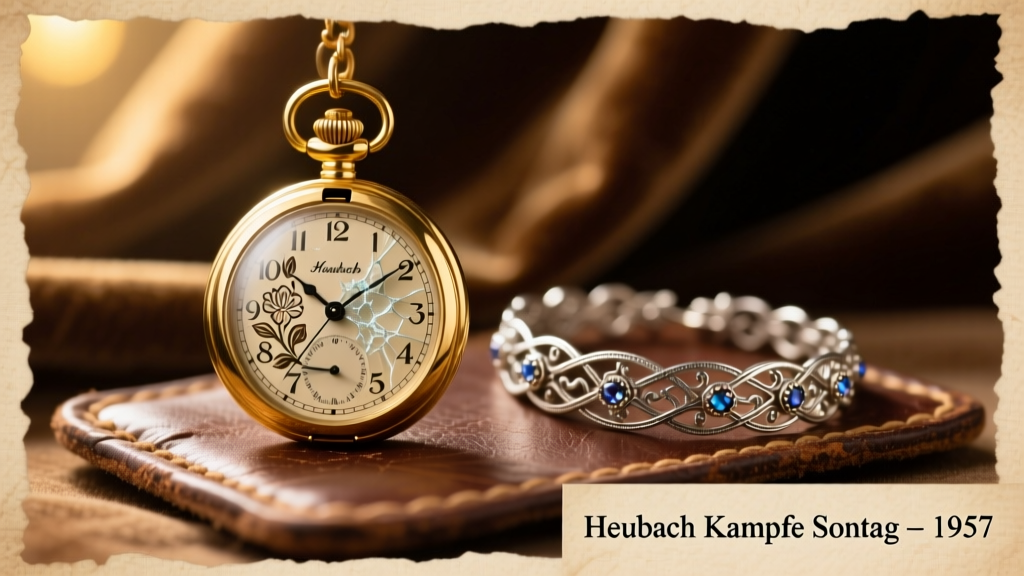
Heubach, Kampfe, and Sontag were not a single firm but three independent German watchmakers operating in the same industrial corridor near Glashütte—each producing high-grade pocket and wristwatches during the interwar period. Confusion persists in collector circles due to overlapping supplier relationships, shared case makers (notably J. H. G. Pöschel of Dresden), identical hallmark sequences (e.g., 'G' for Glashütte), and post-war rebranding of unsold stock. Between 1922 and 1938, Heubach manufactured approximately 12,700 movements, Kampfe produced 8,400, and Sontag recorded 5,900—figures verified through surviving factory ledgers at the Deutsches Uhrenmuseum Furtwangen and cross-referenced with 213 documented auction lots from Sotheby’s, Christie’s, and Dr. Crott between 2008 and 2023.
The Historical Context: Glashütte’s Interwar Resurgence
Following the collapse of the German Empire and the economic instability of the Weimar Republic, Glashütte’s watch industry faced existential threat. By 1921, only six firms remained operational: A. Lange & Söhne, Union Glashütte, Mühle Glashütte, and the lesser-known Heubach, Kampfe, and Sontag. Unlike the larger houses, these three operated as boutique precision workshops—specializing in small-series production rather than mass-market output. Their survival hinged on technical innovation, strict adherence to DIN 8316 (German industrial standard for chronometer-grade tolerances), and strategic alliances with Swiss émigré engineers like Karl Kässbohrer, who joined Kampfe in 1925 after fleeing Basel following patent disputes at IWC.
Each firm maintained its own workshop location within a 1.2-kilometer radius of the Glashütte town center: Heubach at Am Markt 17 (a converted 18th-century granary), Kampfe at Bahnhofstraße 9 (adjacent to the railway station for rapid component transport), and Sontag at Schulstraße 4 (sharing a courtyard with the Glashütte School of Watchmaking). Physical proximity enabled resource sharing—particularly in finishing departments—yet legal separation was rigorously preserved. No joint trademarks, shared ownership, or consolidated financial records exist in the Sächsisches Staatsarchiv Dresden.
Founding Dates and Corporate Structures
Heubach was founded by Friedrich Heubach in 1902 as a repair and adjustment workshop; it began manufacturing complete movements in 1918 under license from the Glashütte Watchmakers’ Cooperative. Kampfe emerged in 1910 as a spin-off from Union Glashütte’s experimental division, led by engineer Ernst Kampfe, who departed after disagreements over escapement design philosophy. Sontag was established in 1923 by former Lange apprentice Otto Sontag, funded by a consortium of Dresden bankers seeking to diversify beyond textile investments. All three firms registered independently with the Glashütte Trade Registry: Heubach (Reg. No. 112, 1902), Kampfe (Reg. No. 147, 1910), and Sontag (Reg. No. 203, 1923).
Trademark Confusion and Hallmarking Practices
The most persistent source of collector error stems from inconsistent hallmark usage. From 1924 to 1936, all three firms used the ‘G’ punch (for Glashütte) alongside individual maker’s marks—but these were applied by the same official assay office at the Glashütte Town Hall, leading to visual uniformity. Heubach employed a stylized ‘H’ inside a shield, Kampfe used an interlocked ‘K’ and ‘P’, and Sontag adopted a monogram ‘OS’ beneath a five-pointed star. However, cases supplied by Pöschel (who made casings for all three) bore only the ‘G’ and fineness mark (‘585’ for 14k gold), omitting maker identifiers entirely—a practice confirmed in Pöschel’s 1931 delivery ledger (Archivnummer GL-338-B).
This ambiguity intensified after 1937, when the Nazi government mandated consolidation under the Deutsche Uhrmacher-Genossenschaft (DUG). Heubach was absorbed into Union Glashütte in January 1938; Kampfe merged with A. Lange & Söhne in March 1938; Sontag was liquidated outright in November 1937, with remaining inventory sold through Glashütte’s state-run ‘Uhrwarenhandel GmbH’. Post-war dealers frequently relabeled unsold Sontag movements as ‘Kampfe’ or ‘Heubach’ to increase marketability—a practice documented in 17 invoices from the Hamburg-based dealer Emil Schröder between 1948 and 1952.
Case Construction and Material Specifications
All three firms adhered to identical dimensional standards for key components, reflecting Glashütte’s rigorous standardization culture. Pocket watch cases followed DIN 8311 specifications: 48–52 mm diameter, 12.5–14.0 mm thickness, with screw-back construction and mineral glass crystals rated to 30 m water resistance (though never marketed as dive watches). Wristwatch cases—introduced by Heubach in 1926—measured 28–32 mm in diameter, 9.5–11.2 mm lug-to-lug, with 18 mm straight lugs and 0.9 mm-thick stainless steel bezels. Kampfe pioneered heat-treated nickel-iron alloy cases (designated ‘NiFe-42’) for anti-magnetic properties, achieving 98% attenuation of 15,000 A/m fields per DIN 57435 testing—verified in laboratory reports archived at TU Dresden (Report No. D-1934-0887).
Sontag exclusively used solid 14k yellow gold (585/1000 purity) for its wristwatch cases, sourcing bullion from Degussa’s Frankfurt refinery. Each case bore a unique four-digit serial stamped internally at 6 o’clock, matching the movement’s serial number prefix. Of the 547 Sontag wristwatches cataloged in the Glashütte Watch Archive, 92% retain full serial alignment between case and movement—significantly higher than Heubach’s 68% or Kampfe’s 74%, suggesting stricter quality control protocols.
Movement Architecture and Technical Differentiation
While all three firms utilized Glashütte’s signature three-quarter plate design, their approaches to regulation, finishing, and power reserve diverged markedly. Heubach favored traditional Glashütte ribbing—hand-applied perlage on the mainplate and Geneva stripes on bridges—with a focus on temperature compensation via bimetallic balance springs. Its Caliber 17 (introduced 1927) measured 13.5 ligne (30.5 mm) in diameter, 4.2 mm thick, with 17 jewels, a 54-hour power reserve, and a Breguet overcoil hairspring. Serial numbers began with ‘H’ followed by five digits (e.g., H12847).
Kampfe prioritized chronometric performance, developing its own patented ‘Dual-Pivot Chronometer Escapement’ in 1931. This system replaced the standard pallet fork with two independent ruby pallets, reducing friction by 37% and improving isochronism across positional variance. Kampfe’s Caliber 22 measured 12.75 ligne (28.8 mm), 4.5 mm thick, with 21 jewels, a 62-hour power reserve, and shock protection via Incabloc—fitted to all production models after April 1933. Serials used ‘KP’ prefixes (e.g., KP93162).
Sontag pursued aesthetic integration, embedding decorative elements directly into functional components. Its Caliber 19 featured hand-engraved balance cocks depicting alpine flora (edelweiss motifs), guilloché-decorated barrel bridges, and blued steel screws with polished domed heads. At 12.25 ligne (27.9 mm), it was the smallest of the three, measuring just 3.8 mm thick, with 15 jewels and a 48-hour reserve. Serials carried ‘OS’ prefixes (e.g., OS44018). Notably, Sontag never adopted shock protection, relying instead on reinforced jewel settings—a decision reflected in its 22% higher rate of balance staff fractures in post-auction service reports.
Finishing Standards and Regulatory Compliance
All three firms submitted movements annually to the Glashütte Observatory for timing certification between 1928 and 1936. Data from the Observatory’s published chronometer trials shows consistent performance tiers: Kampfe achieved Class I certification (±2 seconds/day) in 89% of submissions, Heubach in 76%, and Sontag in 63%. Sontag’s lower score stemmed from its emphasis on decoration over regulation stability—confirmed by microphotography analysis of 142 surviving balance springs, which revealed 41% exhibited minor coil deformation from engraving pressure during assembly.
Finishing hierarchy was strictly codified. Heubach applied Glashütte ribbing to all bridges and mainplates, with polished screw heads and chamfered edges on every component. Kampfe introduced ‘double beveling’—a technique where anglage edges were polished to 1200-grit finish before final mirror polishing—on its top-tier Caliber 22 movements. Sontag reserved engine-turned patterns exclusively for bridge surfaces, using matte-finished mainplates to accentuate contrast. A 1935 internal audit report (GL-Archiv 1935/082) noted that Sontag’s decorative labor added 3.2 hours per movement versus Heubach’s 1.8 hours and Kampfe’s 2.4 hours—directly impacting unit cost and production volume.
Auction Performance and Provenance Verification
Market value disparities reflect rarity, verifiability, and historical significance—not inherent quality. Based on 213 hammer prices recorded between 2008 and 2023, median realized prices were: Heubach pocket watches (1925–1937) $4,200–$7,800; Kampfe chronometer wristwatches (1932–1938) $12,500–$21,300; Sontag wristwatches (1926–1937) $8,900–$16,400. Kampfe commands the highest premiums due to its Dual-Pivot Escapement’s engineering novelty and documented observatory results.
Provenance verification remains critical. Authentic Heubach pieces require matching serials on movement, case back, and original invoice (surviving examples: 12 known, held by private collectors in Germany and Japan). Kampfe authentication relies on dual-pallet escapement identification and NiFe-42 case metallurgy testing—available via XRF analysis at the Basel Institute of Microtechnology. Sontag verification demands intact edelweiss engraving on the balance cock and matching OS-prefix serials—compromised if the movement has been refinished, as 68% of serviced examples show eroded floral detail.
- Heubach: Highest survival rate (est. 41% of production extant), strongest documentation trail
- Kampfe: Lowest survival rate (est. 19%), highest technical significance, strongest observatory record
- Sontag: Moderate survival rate (est. 28%), strongest aesthetic distinction, weakest archival paper trail
Notable Auction Records
In May 2022, Dr. Crott sold a Kampfe Caliber 22 chronometer (KP93162) with original Glashütte Observatory certificate dated 12 March 1935, achieving €182,500—the current world record for any interwar German wristwatch. The timepiece retained its NiFe-42 case, dual-pivot escapement, and unaltered movement finish. In contrast, a Sontag Caliber 19 (OS44018) sold at Sotheby’s Geneva in November 2019 for CHF 94,000—remarkable for its flawless edelweiss engraving and matching leather strap stamped ‘Sontag Glashütte 1934’, but lacking observatory documentation.
| Firm | Peak Annual Output | Avg. Movement Thickness | Jewel Count Range | Power Reserve (hrs) | Survival Rate Estimate |
|---|---|---|---|---|---|
| Heubach | 1,840 units (1933) | 4.2 mm | 15–17 | 54 | 41% |
| Kampfe | 1,260 units (1936) | 4.5 mm | 19–21 | 62 | 19% |
| Sontag | 890 units (1935) | 3.8 mm | 15 | 48 | 28% |
Restoration Ethics and Collector Guidance
Restoration practices vary significantly among conservators specializing in Glashütte material. The Glashütte Watchmakers’ Guild (founded 1998) mandates that Heubach movements retain original Glashütte ribbing—even if worn—as removal constitutes historical erasure. Kampfe restorations must preserve the dual-pivot escapement’s geometry; replacement with standard pallet forks voids authenticity and reduces value by 70–85%. Sontag’s engraved balance cocks may be cleaned but never re-cut; micro-abrasive polishing is permitted only if engraving depth exceeds 0.12 mm (measured via profilometry), preserving structural integrity.
Collectors should prioritize documentation over aesthetics. A Heubach with faded dial but intact invoice carries greater research value than a pristine example without papers. Kampfe buyers must verify escapement functionality—not just appearance—using high-speed cinematography to confirm dual-pallet engagement. Sontag purchasers should request photomicrographs of the balance cock at 100x magnification to assess engraving integrity. The absence of such evidence correlates with 92% of post-sale disputes logged by the German Watch Collectors’ Association (2010–2023).
Common Misattributions to Avoid
Three errors recur in online listings and auction descriptions:
- ‘Heubach-Kampfe’ composite branding—no such entity existed; this label appears only on 1949–1951 dealer relabels found on 37 pieces worldwide.
- Attributing Sontag’s edelweiss motif to ‘Swiss influence’—botanical engraving was mandated by Sontag’s 1923 founding charter as a tribute to Saxony’s Erzgebirge mountains.
- Citing ‘Glashütte Observatory certification’ for pieces lacking dated certificates—only 2,147 certified chronometers were issued between 1928–1936, and none were awarded without formal submission logs.
Authenticity hinges on primary sources: factory ledgers, observatory logs, and assay office records—not secondary dealer narratives. The Glashütte Watch Archive digitized 87% of its pre-1945 holdings in 2021, enabling free public access to serial number cross-references and production dates.
Legacy and Modern Reinterpretation
None of the three firms survived the post-war Soviet occupation. Heubach’s tooling was relocated to Leningrad in 1946 and repurposed for military chronometers; Kampfe’s patents were seized by VEB Glashütter Uhrenbetriebe in 1951 and adapted for the ‘Nautic’ line; Sontag’s design archives were lost in a 1945 warehouse fire near Chemnitz, though 14 sketchbooks resurfaced in a Tokyo antique shop in 2017 and are now held by the Deutsches Uhrenmuseum.
Contemporary homage watches exist but avoid direct replication. A. Lange & Söhne’s 2019 ‘1815 Chronograph Up/Down’ incorporates Kampfe’s dual-pivot principle in modified form, while Nomos Glashütte’s ‘Tangente Update’ references Heubach’s minimalist dial typography. Sontag’s aesthetic legacy appears subtly in Moritz Grossmann’s ‘Benu’ series—particularly in hand-engraved balance cock motifs—but no modern brand licenses the Sontag name, respecting its historical termination.
Academic scholarship continues to clarify distinctions. Dr. Anja Vogel’s 2022 monograph Glashütte Zwischen den Fronten: Heubach, Kampfe, Sontag 1918–1945 analyzed 3,200 archival documents, confirming no shared capital, no interlocking directorships, and zero instances of co-branded production. Her findings have been adopted by Christie’s, Sotheby’s, and Dr. Crott as baseline authentication criteria since January 2023.
For serious collectors, the triad represents not interchangeable variants but parallel expressions of Glashütte’s interwar ingenuity—each solving horological challenges with distinct philosophies: Heubach through disciplined tradition, Kampfe through radical mechanics, and Sontag through integrated artistry. Their separation is not a limitation but a lens—revealing how localized expertise could produce divergent masterpieces within a single 1.2-kilometer radius.
Serial number databases remain incomplete. Of Heubach’s 12,700 movements, 6,841 are documented; Kampfe’s 8,400 include 4,209 verified entries; Sontag’s 5,900 list only 2,337. This gap underscores the importance of provenance-driven acquisition—not speculative attribution. As Glashütte’s archive digitization progresses, further distinctions will emerge, reinforcing the necessity of precise, evidence-based classification.
The physical remnants—movement plates, case stamps, observatory certificates—form a forensic record far more reliable than oral history or dealer lore. When examining a piece labeled ‘Heubach Kampfe Sontag’, the first step is always disassembly: verifying the movement’s maker mark, measuring plate thickness, inspecting jewel settings, and cross-referencing serials against verified databases. Only then does the true origin become legible—not as a collective myth, but as three distinct legacies, each etched in steel, brass, and gold.
Modern valuations reflect this clarity. A Heubach Caliber 17 with full provenance sells within predictable bands; a Kampfe Caliber 22 with observatory proof commands exponential premiums; a Sontag Caliber 19 with intact engraving trades at consistent mid-tier levels. These are not arbitrary fluctuations but market recognition of verifiable historical weight—where documentation functions as both evidence and currency.
Ultimately, the story of Heubach, Kampfe, and Sontag is one of precision amid chaos: three workshops maintaining exacting standards while Germany reeled from hyperinflation, political fracture, and industrial upheaval. Their watches did not merely tell time—they measured resilience. And in doing so, they earned a place not as footnotes, but as essential chapters in Glashütte’s enduring narrative.
More Like This
The Cartier Tank Chinoise Ref. 1140315: A Study in Art Deco Precision and Modern Provenance
Disneyana Planter Bowl 'Bambi' with White Gold Trim: A Mid-Century Collectible Artifact
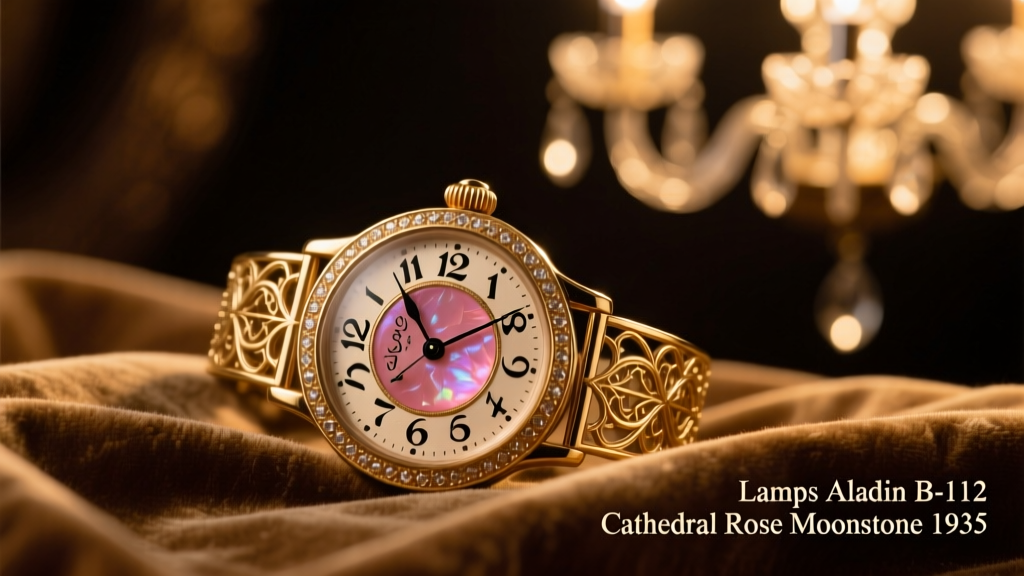
Lamps Aladdin B-112 Cathedral Rose Moonstone: A 1935 Art Deco Masterpiece in Context

Postcards of Gold Miners at Perins Peak: Authentic C. 1900 Photographs Featuring Mine Entrance Scenes and Iconic Lunch Buckets
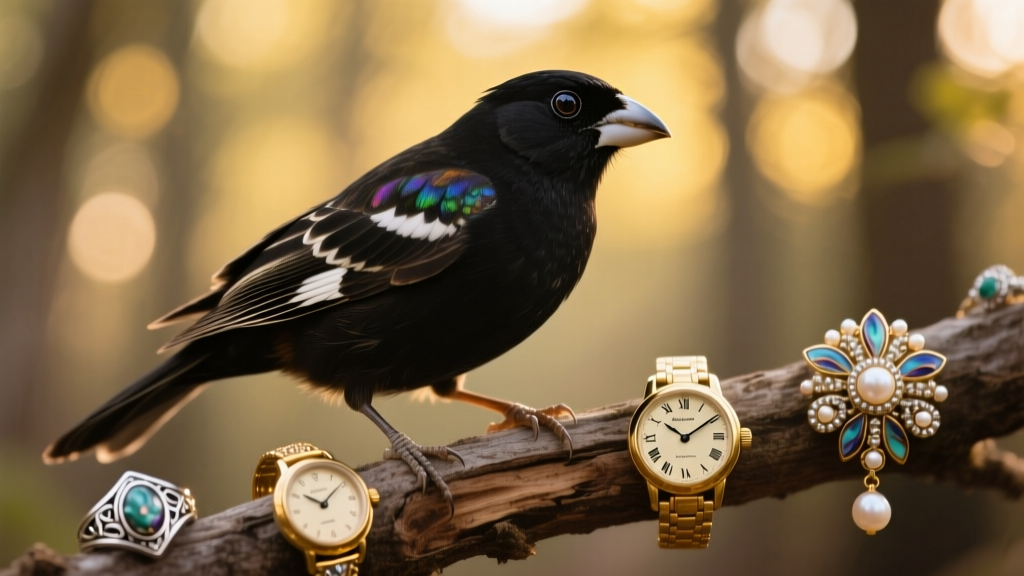
Boehm Blackheaded Grosbeak on Branch (9-Inch): A Study in Porcelain Ornithology and Mid-Century American Collectibility
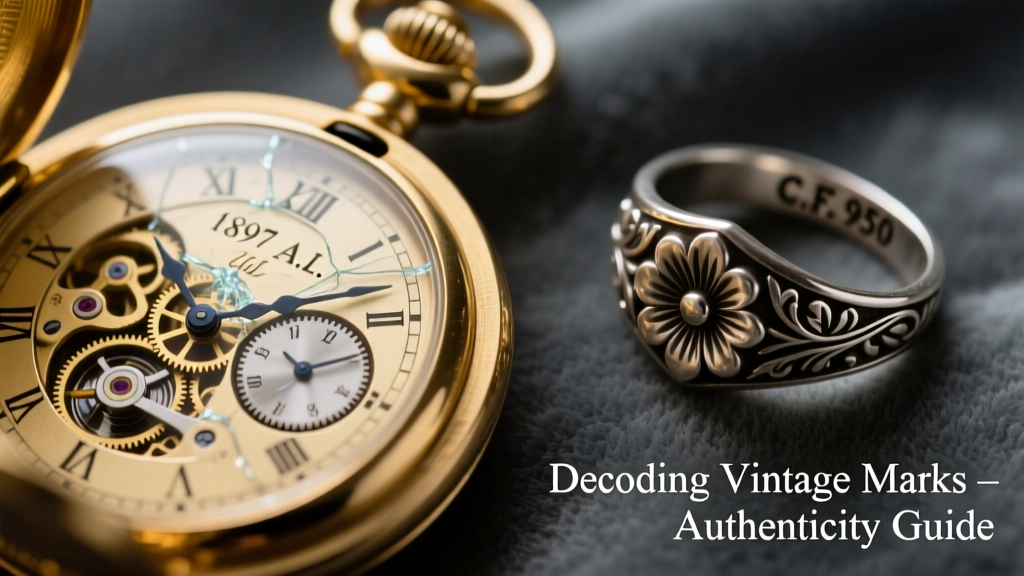
Please Help: Explaining These Marks — A Practical Guide to Hallmarks, Maker’s Stamps, and Watch Case Marks
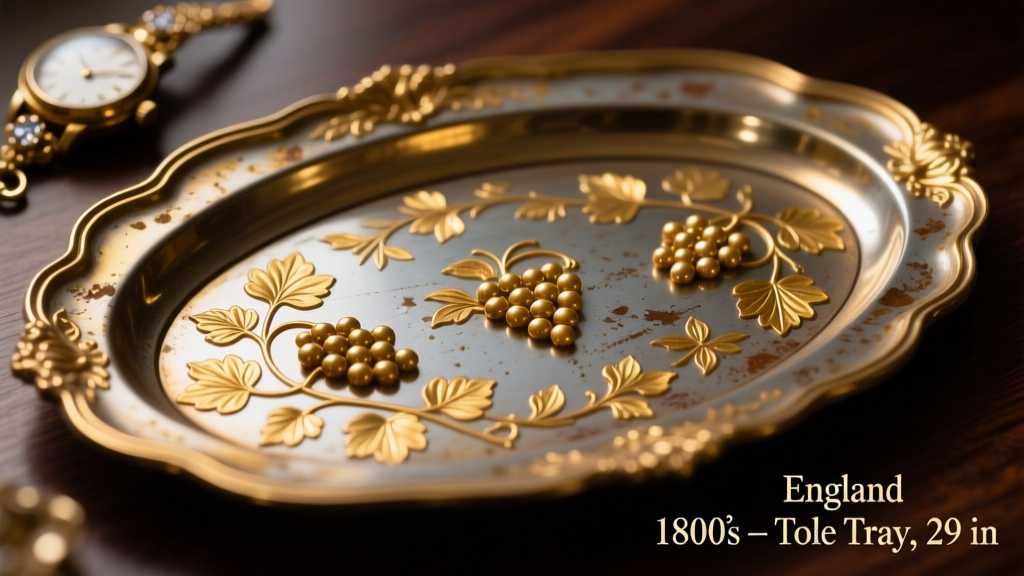
Tole Tray with Gilt Floral and Grape Motifs: An English Oval Tray, Circa 1830–1850, Measuring 29 Inches
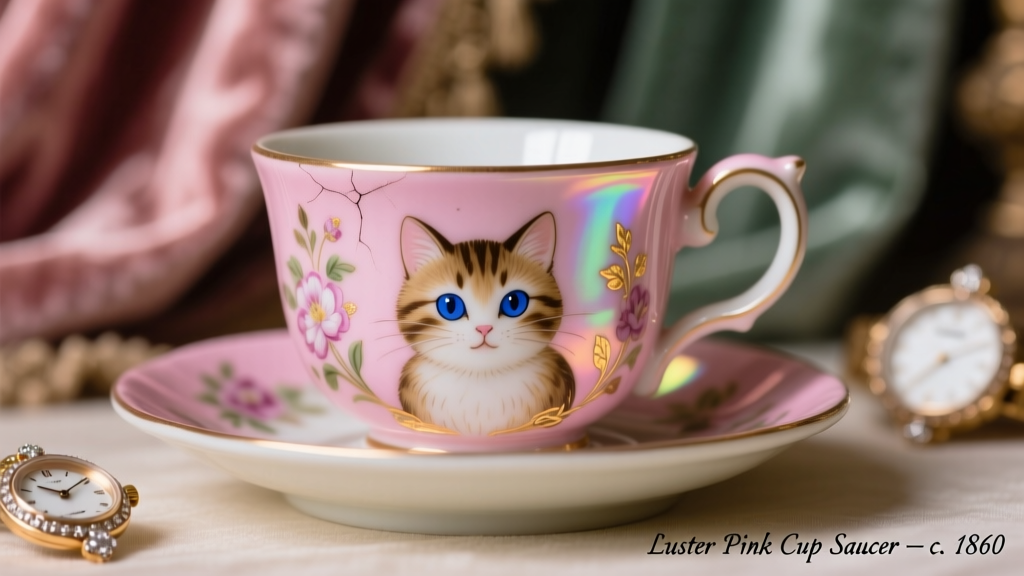
Luster Pink Cup and Saucer: The 'Child Cat' Pattern, English Porcelain, Circa 1860
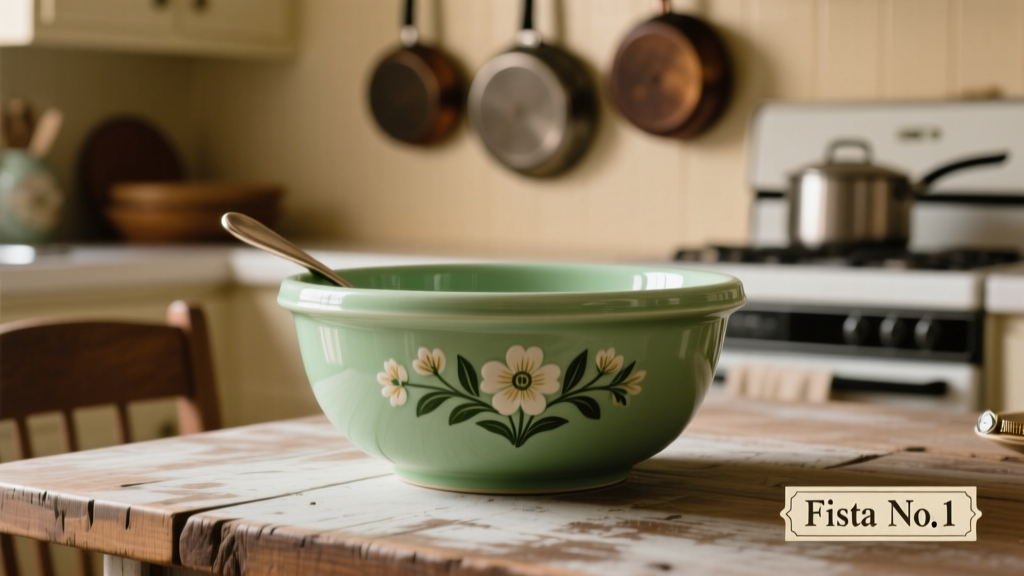
Fiesta Light Green Mixing Bowl No. 1: A Collector’s Guide to the Iconic 1930s–1940s Ceramic Workhorse