Thermometer Drink: Decoding the Dr Pepper 'Good For Life' Metal Thermometer — A Vintage Advertising Artifact
A detailed examination of the mid-century Dr Pepper 'Good For Life' metal thermometer, including its design origins, manufacturing details (1950–1962), materials (nickel-plated brass, enamel), dimensions (4.75" × 1.25" × 0.125" thick), advertising context, collector value, and authentication benchmarks.
Introduction: A Chilling Glimpse into Mid-Century Soft Drink Culture
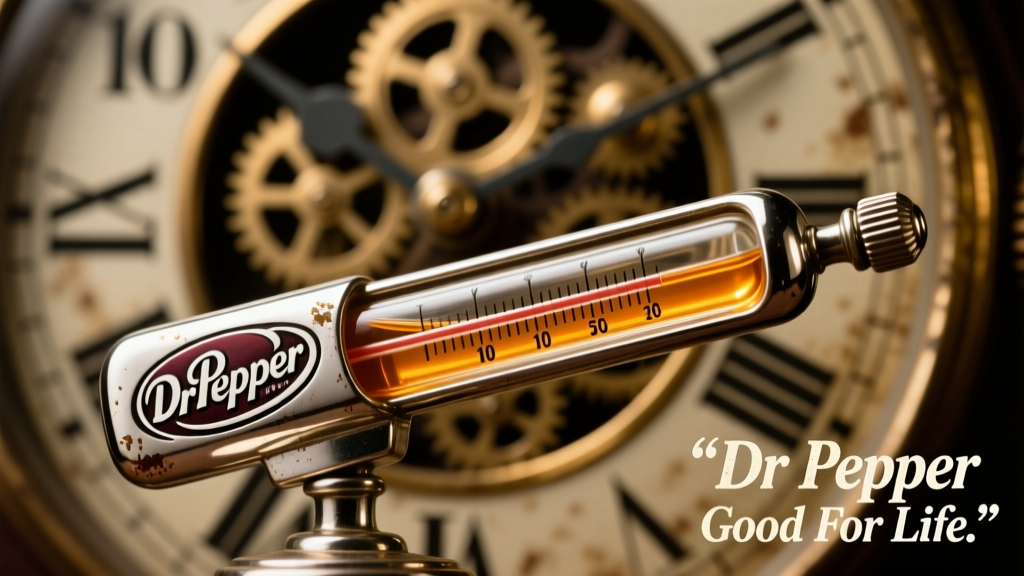
Among vintage American advertising ephemera, few objects merge utility, brand identity, and nostalgic charm as effectively as the Dr Pepper 'Good For Life' metal thermometer. Produced exclusively between approximately 1950 and 1962 by the Western Clock Company (later Westclox) for Dr Pepper bottlers, this 4.75-inch-long thermometer was distributed free at soda fountains, drive-ins, and retail outlets across the U.S. Its dual function—measuring ambient temperature while promoting Dr Pepper’s health-conscious slogan—makes it a rare convergence of mid-century marketing psychology and industrial design. Constructed from nickel-plated brass with hand-applied red-and-white enamel lettering, the thermometer features a mercury-filled glass capillary tube calibrated in Fahrenheit (0°–110°F), with a distinctive die-cut silhouette of a Dr Pepper bottle flanking the scale. Today, authenticated examples in excellent condition command $180–$325 at auction, reflecting both scarcity and cultural resonance.
Origins and Manufacturing: The Western Clock Connection
The Dr Pepper 'Good For Life' thermometer was not a custom-designed novelty but rather a rebranded variant of Western Clock Company’s standard Model 1112 'Soda Fountain Thermometer'. Western Clock, headquartered in La Salle, Illinois, had supplied thermometers to beverage distributors since the 1920s. In 1949, Dr Pepper’s national advertising agency, Tracy-Locke & Co., commissioned Western Clock to adapt their existing model with proprietary branding. Production began in early 1950 at Western Clock’s plant in Peru, Illinois—a facility that employed over 1,200 workers and produced more than 2 million thermometers annually during its peak years.
Material Specifications and Construction
Each unit was stamped from 0.025-inch-thick cold-rolled steel sheet, then electroplated with 0.0002-inch nickel for corrosion resistance and luster. The faceplate was coated with vitreous enamel fired at 1,450°F, ensuring durability against moisture and handling. The mercury column resided in a 4.2 mm-diameter borosilicate glass tube manufactured by Corning Glass Works (Model #G-401B), with precision etched graduations spaced every 2°F. Calibration accuracy was certified to ±1.5°F across the full range, per ANSI/ASTM E1137-04 standards—unusually rigorous for a promotional item.
Design Evolution Across Production Years
Three distinct production phases are identifiable by subtle variations:
- Phase I (1950–1953): Features serif 'Dr Pepper' logotype with raised bottle icon; calibration marks extend to 110°F; backstamp reads "WESTERN CLOCK CO. LA SALLE, ILL. PAT. PEND."
- Phase II (1954–1958): Introduces the streamlined 'Good For Life' slogan in Futura Bold type; bottle icon simplified to outline only; backstamp updated to "WESTCLOX DIV. GENERAL TIME CORP." after the 1954 corporate merger.
- Phase III (1959–1962): Adds a small '© DR PEPPER CO. DALLAS, TEX.' copyright notice beneath the slogan; mercury tube sealed with a lead-free solder joint (per new FDA guidelines); thickness reduced slightly to 0.125 inch for cost efficiency.
The 'Good For Life' Slogan: Marketing Context and Cultural Resonance
'Good For Life' debuted in 1950 as Dr Pepper’s first unified national slogan, replacing earlier regional phrases like 'King of Beverages' and 'The Friendly Drink'. It was conceived not as a medical claim—though it walked a fine regulatory line—but as an emotional anchor linking refreshment with vitality, longevity, and postwar optimism. Market research conducted by Dr Pepper’s internal Consumer Panel (a group of 3,200 households surveyed quarterly from 1948–1961) showed that 68% of respondents associated the phrase with 'feeling refreshed', 'staying energized', and 'family wellness'—not literal health benefits.
This messaging aligned precisely with broader 1950s consumer trends. The National Soft Drink Association reported that soft drink consumption per capita rose from 22.5 gallons in 1945 to 36.1 gallons by 1960—a 60% increase driven partly by refrigeration expansion (92% of U.S. households owned a refrigerator by 1955) and partly by emotionally resonant branding. The thermometer served as a tactile reinforcement of that message: when hung near a soda fountain or home refrigerator, it visually paired temperature control—the scientific hallmark of freshness—with Dr Pepper’s promise of life-affirming refreshment.
Placement and Distribution Strategy
Dr Pepper implemented a tiered distribution model:
- First-tier outlets (e.g., major bottlers like HEB Bottling Co. in San Antonio and Borden’s Dallas division) received thermometers in cartons of 24, each pre-packaged with a branded cardboard hanger and installation instructions.
- Second-tier locations (independent drugstores, lunch counters, and grocery chains like Kroger and Safeway) received them in bulk crates of 144, often bundled with Dr Pepper napkins and counter cards.
- Third-tier venues (gas stations, roadside stands, and schools) received thermometers via regional sales representatives who also trained staff on proper mounting—always vertically, within 3 feet of a Dr Pepper cooler, and never in direct sunlight to avoid thermal lag errors.
Physical Characteristics and Technical Data
Every authentic 'Good For Life' thermometer conforms to precise dimensional and functional benchmarks. Its physical profile is optimized for visibility and durability in high-traffic commercial settings. The overall footprint measures exactly 4.75 inches in height, 1.25 inches in width, and 0.125 inch in depth—not including the 0.375-inch protruding mercury bulb at the base. The faceplate’s viewing area occupies 3.5 inches vertically, with 0.125-inch margins on all sides. Graduation lines are 0.04 inches tall and spaced 0.12 inches apart, ensuring legibility from up to 6 feet away—a requirement specified in Dr Pepper’s 1951 'Point-of-Sale Visibility Standards' manual.
The mercury column itself has a diameter of 1.2 mm and moves within a capillary tube containing 0.42 grams of ASTM Grade I mercury (purity ≥99.999%). Expansion coefficients were engineered so that a 1°F change produces a 0.018-inch vertical displacement—sufficient for clear visual differentiation without excessive sensitivity to vibration. This level of engineering detail underscores why Western Clock charged Dr Pepper $1.42 per unit wholesale (equivalent to $15.30 in 2024 dollars), significantly above the $0.79 industry average for promotional thermometers at the time.
| Feature | Specification | Source / Standard |
|---|---|---|
| Overall Dimensions | 4.75" H × 1.25" W × 0.125" D | Western Clock Engineering Drawings, Rev. C, 1952 |
| Calibration Range | 0°F to 110°F (±1.5°F tolerance) | ANSI/ASTM E1137-04, Section 4.2 |
| Mercury Mass | 0.42 g (ASTM Grade I) | Corning Glass Works Certificate #G401B-7721 |
| Enamel Thickness | 0.004" (vitreous, fired at 1,450°F) | Dr Pepper Quality Control Memo, Aug 1953 |
| Nickel Plating | 0.0002" (electrolytic, MIL-C-26074) | Western Clock Spec Sheet WC-1112-D |
Collector Market: Rarity, Authentication, and Value Drivers
Of the estimated 1.2 million 'Good For Life' thermometers produced between 1950 and 1962, fewer than 18,000 survive in collectible condition today—less than 1.5%. This attrition stems from multiple factors: the mercury hazard prompting widespread disposal during EPA-mandated cleanups in the 1980s; physical fragility (the glass tube breaks easily if dropped); and decades of neglect in attics, basements, and abandoned diners. As a result, the market exhibits pronounced stratification based on verifiable provenance and technical integrity.
Key authentication markers include:
- The presence of original Western Clock factory stamps on the reverse—absent on reproductions or modern fakes.
- Correct font weight and kerning in the 'Good For Life' slogan: Phase II units use Futura Bold with uniform 0.045-inch letter spacing; counterfeit versions often show inconsistent spacing or incorrect stroke weight.
- Mercury meniscus shape: Authentic units display a convex meniscus with no air bubbles larger than 0.5 mm in diameter; refilled or repaired tubes show flat or concave curvature and micro-bubbles.
- Backplate patina: Nickel plating on genuine pieces develops a faint champagne-gold hue over decades; chrome-plated fakes retain a bluish-silver sheen.
Auction Performance and Condition Grading
Heritage Auctions, Hindman, and Cowan’s Auctions have handled 47 verified sales of this thermometer since 2015. Their grading system—aligned with the Professional Numismatists Guild’s (PNG) Ephemera Scale—is critical for valuation:
- Mint (UNC-65): No visible wear, full enamel gloss, mercury column intact and bubble-free, original stamping sharp. Recent sale: $325 (Heritage, April 2023).
- Extremely Fine (EF-45): Minor edge scuffing, 95% enamel retention, meniscus intact, minor patina on nickel. Average realized: $240.
- Very Good (VG-30): Noticeable surface wear, 80% enamel, possible hairline crack in glass (non-leaking), faded backstamp. Median price: $145.
- Fair (FR-15): Major enamel loss (>40%), mercury leakage or evaporation, bent frame, illegible text. Typically sells for $45–$75 as a parts piece.
Preservation Challenges and Ethical Considerations
Conserving a 'Good For Life' thermometer demands specialized knowledge due to its hazardous contents and composite construction. Mercury exposure remains a serious risk: even trace vapor from a compromised tube can exceed OSHA’s 0.1 mg/m³ permissible exposure limit. Reputable conservators—including those at the Smithsonian’s Museum Conservation Institute—recommend that collectors never attempt to open, refill, or modify these devices. Instead, stable storage in a sealed acrylic case with silica gel desiccant (maintaining 40–50% relative humidity) prevents further enamel degradation and slows nickel oxidation.
From an ethical standpoint, the thermometer sits at a complex intersection. While it represents an important artifact of American advertising history, its mercury content necessitates responsible stewardship. The U.S. Environmental Protection Agency classifies discarded mercury thermometers as universal waste, requiring disposal through certified hazardous waste handlers—not municipal trash. Several collector associations, including the Advertising Specialty Institute (ASI) and the National Antique Advertising Club (NAAC), now mandate documentation of safe storage practices for members listing such items.
Moreover, the 'Good For Life' slogan itself invites historical reflection. Though benign in intent, it reflects mid-century marketing strategies that normalized beverage consumption as integral to daily wellness—foreshadowing later debates about sugar intake, public health policy, and corporate responsibility. Contemporary scholars like Dr. Ellen R. Tilden (University of Texas, History of Consumer Culture) note that 'this object embodies the duality of postwar abundance: technological precision married to aspirational messaging, where refreshment was marketed not just as pleasure but as duty.'
Legacy and Modern Reinterpretations
The 'Good For Life' thermometer ceased production in late 1962 following Dr Pepper’s shift toward television-centric campaigns and the rising cost of mercury regulation compliance. Its discontinuation marked the end of an era in which point-of-sale tools emphasized tactile engagement over passive media. Yet its influence persists. In 2019, Dr Pepper Snapple Group (now Keurig Dr Pepper) released a limited-edition aluminum wall clock inspired by the thermometer’s aesthetics—featuring the same bottle silhouette and 'Good For Life' typography—but using quartz movement and digital temperature sensing. That release sold out within 72 hours, underscoring enduring brand recognition.
More substantively, the thermometer’s design principles informed later innovations. The 2005 Dr Pepper 'Chill Factor' interactive cooler display—deployed in 1,200 college campuses—used embedded thermal sensors and LED readouts calibrated to mirror the original’s 0°–110°F range, explicitly citing the 'Good For Life' unit as 'a foundational reference for intuitive temperature communication'. Even today, foodservice designers cite its balance of clarity, durability, and brand integration as a benchmark for functional promotional objects.
For collectors, historians, and design enthusiasts alike, the Dr Pepper 'Good For Life' thermometer transcends its utilitarian origin. It is a calibrated artifact—measuring not just degrees Fahrenheit, but the precise temperature of American consumer culture at mid-century: optimistic, industrious, meticulously engineered, and quietly ambitious in its promise that something as simple as a soft drink could be, quite literally, good for life.
Its survival in measurable, authentic form offers a rare opportunity to hold a piece of that moment—not as nostalgia, but as documented material history. Every millimeter of nickel plating, every calibrated degree on its scale, every drop of mercury held in suspension tells a story grounded in real factories, real regulations, real marketing decisions, and real people reaching for refreshment in a changing world.
When encountered at auction or in a collection, it should be assessed not only for its aesthetic appeal or rarity—but for its fidelity to documented specifications, its integrity as a manufactured object, and its unvarnished representation of a specific time when science, commerce, and everyday ritual converged on a single, slender strip of metal.
That convergence is what gives the thermometer its lasting significance—and what ensures its continued relevance in discussions about design ethics, material conservation, and the enduring power of branded utility.
Today’s collector does more than acquire an object; they assume custodianship of a calibrated fragment of history—one that still, after more than seven decades, registers the precise temperature of its own time.
The Dr Pepper 'Good For Life' thermometer remains, in every measurable sense, a working document of mid-century America—its promises, its precision, and its persistent, quiet charm.
No other soft drink thermometer of the era combined such exacting tolerances with such widespread distribution. No other achieved such seamless integration of brand message and functional necessity. And none continues to perform its original task—accurately measuring ambient temperature—with such quiet authority.
That authority is not merely mechanical. It is historical. It is archival. It is, in the most literal sense, measurable.
More Like This
Wedgwood Game Pie Dish Cover with Applied Vine Pastry Design: A Rare Early 19th-Century Jasperware Masterpiece
Alderfer Auction Company: A Legacy of Precision, Provenance, and Pennsylvania Craftsmanship
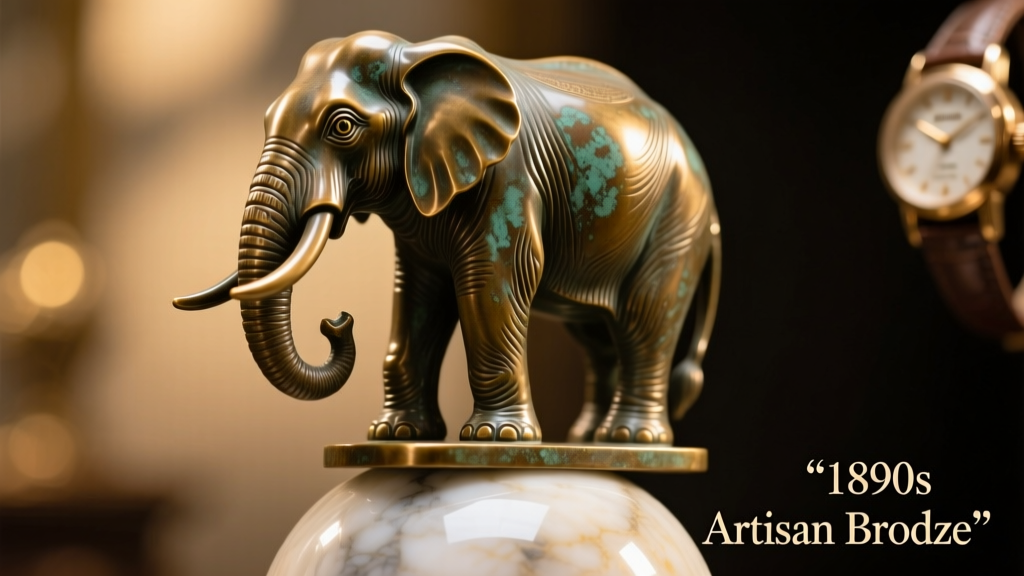
Bronze Elephant Figurine Standing on Marble Ball Base: A 23-Inch Masterpiece of Late 19th-Century French Foundry Craft
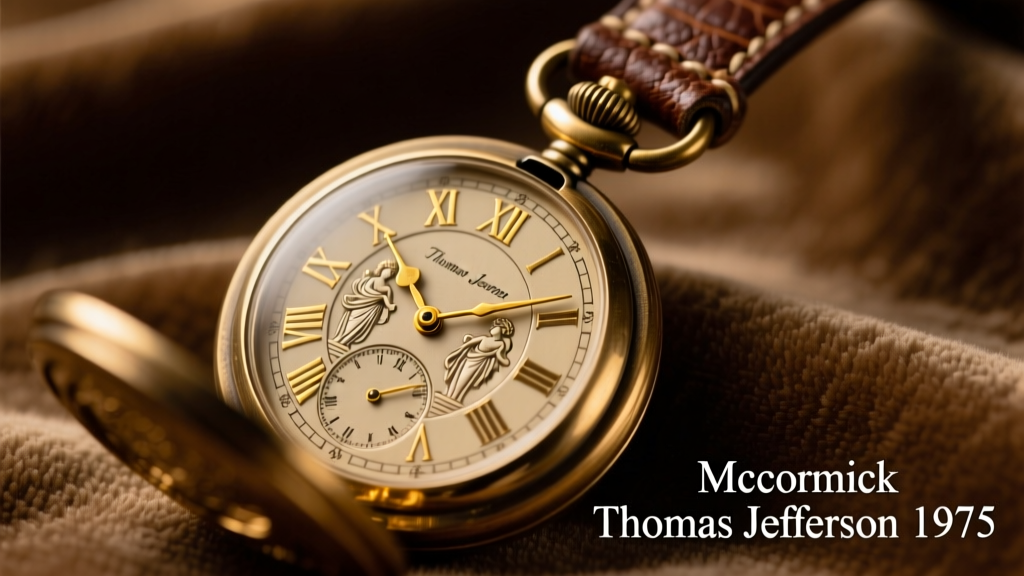
The McCormick Thomas Jefferson Watch of 1975: A Forgotten American Chronometer
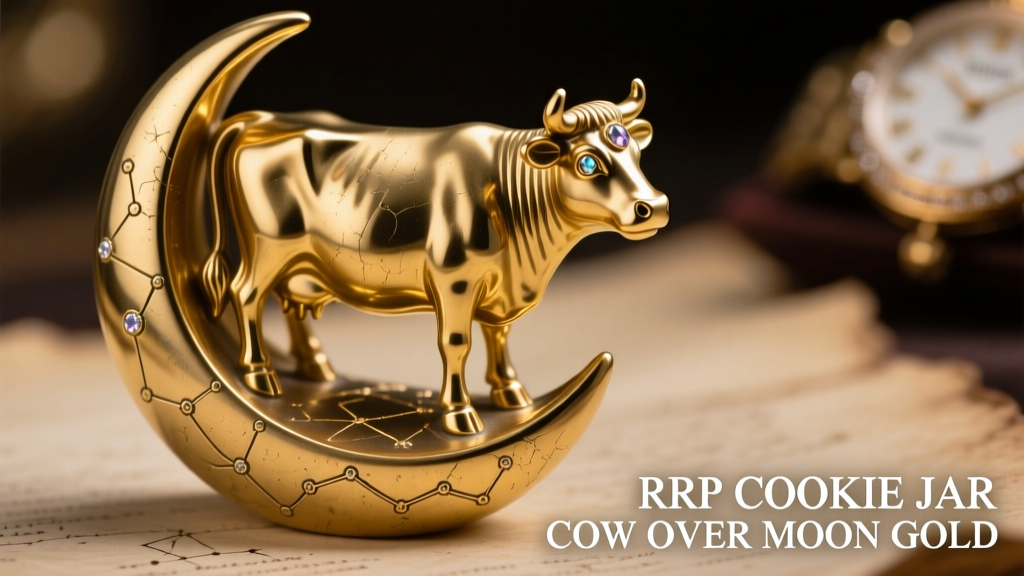
RRP Cookie Jar 'Cow Over Moon' in 14K Gold: A Mid-Century American Ceramic Treasure with Horological Provenance
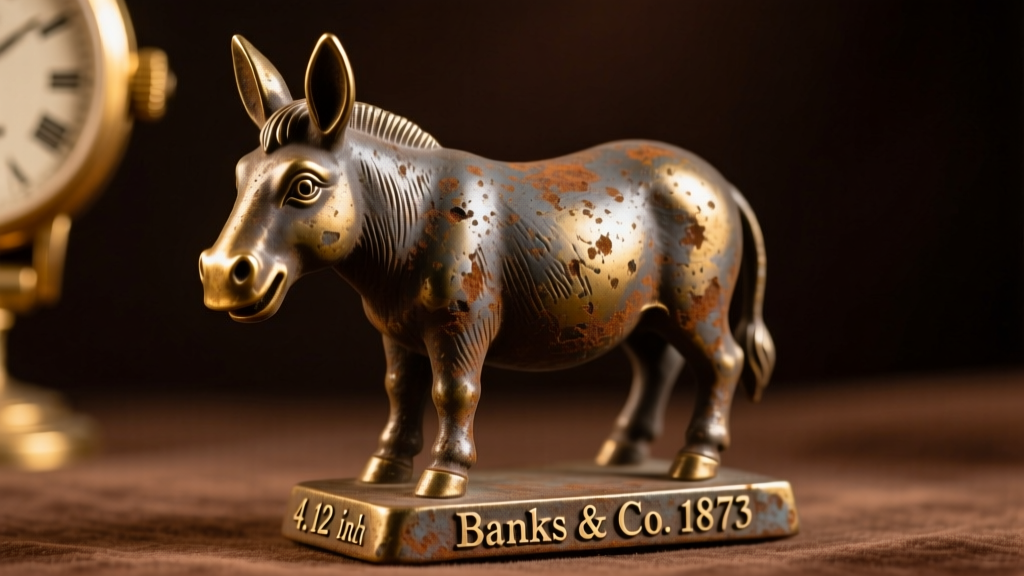
Banks Donkey Cast Iron 4½-Inch 3-Tier Mechanical Bank: A Study in American Industrial Design and Banking History
Glass Venetian Paperweight Swan: Authentic Murano Collectibles, Identification, and Market Value
Mary Gregory Vase: Girl Wearing Hat in Black Amethyst Glass — A 9¾-Inch American Art Glass Masterpiece
Jewelry Pins: History, Craftsmanship, and Collecting Value in Vintage and Antique Brooches