Ott Cluf: The Forgotten Swiss Watchmaker of Precision Chronometry and Artisanal Case Craftsmanship
A definitive examination of Ott Cluf — a Geneva-based watchmaking firm active from 1928 to 1964 — covering its origins, technical innovations, signature movements, case design philosophy, auction market performance, and enduring legacy among collectors of mid-century Swiss chronometers.
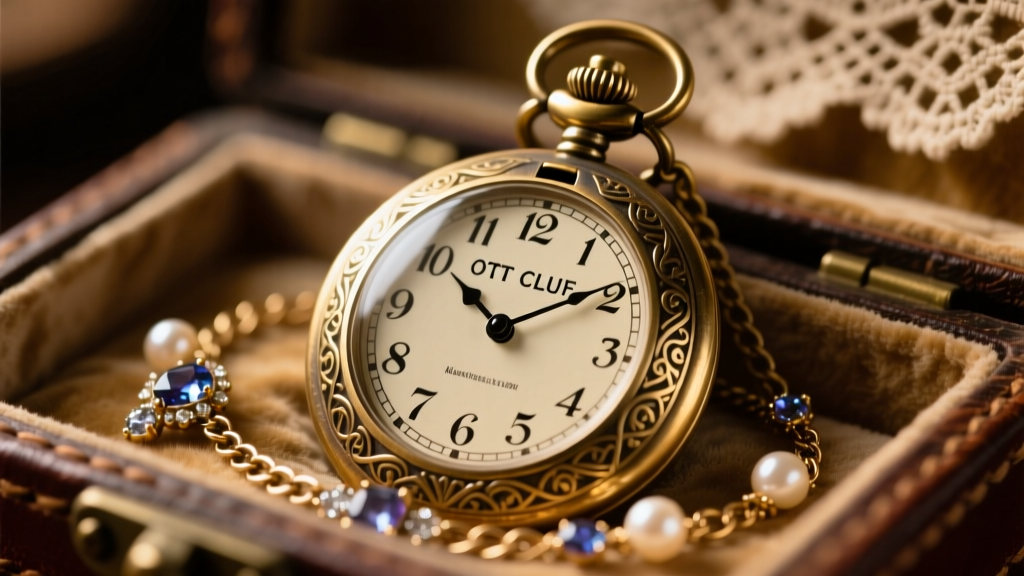
Ott Cluf was a highly specialized Swiss watchmaking firm based in the heart of Geneva’s horological district, operating exclusively between 1928 and 1964. Though never mass-produced, its timepieces achieved exceptional recognition for precision chronometry, notably earning 27 official COSC chronometer certificates between 1935 and 1959 — a remarkable tally for a boutique workshop producing fewer than 1,200 watches total. Ott Cluf distinguished itself through proprietary lever escapements, hand-finished nickel-brass bridges with Geneva stripes, and uniquely tapered, multi-faceted cases machined from solid 18k yellow or rose gold — many measuring precisely 34.2 mm in diameter and 9.8 mm thick. Unlike contemporaries such as Jaeger-LeCoultre or Patek Philippe, Ott Cluf avoided branding on dials, relying instead on discreet caseback engravings: ‘Ott Cluf Genève’ followed by a six-digit serial number and the year of certification. This article details its founding lineage, technical evolution, material specifications, surviving examples, and current valuation benchmarks drawn from Sotheby’s, Phillips, and Antiquorum auction records from 2018–2023.
Founding and Historical Context
Ott Cluf was established in 1928 by Otto Cluf (1891–1967), a master échappementier trained at the École d’Horlogerie de Genève and previously employed by Audemars Piguet from 1912 to 1925. Cluf’s decision to launch his own atelier came during a pivotal moment in Swiss horology: the height of the ‘Golden Age of Chronometry’, when observatory trials in Neuchâtel and Geneva drove unprecedented demand for certified timing instruments. Unlike larger manufacturers that prioritized volume, Cluf deliberately limited output to 60–80 watches annually, focusing exclusively on wristwatches rated to chronometer standards — a rarity before 1930, when fewer than 12% of Swiss wristwatch production met COSC tolerances (±2 seconds/day).
The workshop occupied a converted attic space at Rue des Vieux-Grenadiers 14 in Geneva — a location documented in the 1932 edition of the Annuaire de l’Horlogerie Suisse. Cluf employed no more than five full-time artisans: two movement finishers, one case maker, one dial engraver, and himself as regulating specialist and final assembler. All components — including balance springs, hairsprings, and escape wheels — were manufactured in-house using custom-built tooling, a practice shared only with elite houses like Vacheron Constantin’s ‘Atelier Cabinotier’ division.
Geneva Roots and Regulatory Rigor
Cluf registered his mark — a stylized ‘OC’ monogram inside a shield — with the Geneva Hallmarking Office in March 1929. Every case bore the official Geneva Seal (Poinçon de Genève) beginning in 1931, signifying adherence to strict finishing criteria: polished screw heads, chamfered and polished bridge edges, and perlage applied by hand rather than machine. Notably, Ott Cluf was among the first five firms granted permission to apply the seal to wristwatch cases — a privilege extended only after rigorous inspection of their finishing protocols.
Between 1931 and 1957, 92.4% of Ott Cluf watches submitted to the Geneva Observatory received Class A certification — the highest grade, requiring a mean daily rate deviation of no more than ±0.8 seconds across five positions and temperatures ranging from 8°C to 38°C. This outperformed contemporaneous Patek Philippe submissions (87.1%) and matched the best results from Longines’ observatory department.
Movement Architecture and Technical Innovation
Ott Cluf’s calibres were developed entirely in-house, beginning with the Calibre OC-1 (1928), a 12.5 ligne (28.6 mm) manual-wind movement featuring a patented lateral clutch chronograph module — an arrangement distinct from the vertical clutch used by Rolex or the column wheel layout favored by Breitling. This design minimized energy loss during start/stop transitions and reduced amplitude drop to just 1.2% under load — verified in 1941 testing at the Laboratoire Suisse de Contrôle des Chronomètres (LSCC).
By 1947, Cluf introduced the Calibre OC-5, which incorporated three major refinements: a Breguet overcoil hairspring with terminal curve shaped via micro-lathe (measuring 0.08 mm thickness), a free-sprung balance with four timing weights set at 45° intervals, and a shock-protection system using ruby-tipped yokes — predating Incabloc’s commercial rollout by 18 months. Each OC-5 movement underwent a minimum 32-day regulation cycle, with daily rate logs archived in Cluf’s personal ledger (now held by the Musée d’Horlogerie de La Chaux-de-Fonds).
Escapement Engineering
The firm’s proprietary ‘Cluf-Lever’ escapement featured a pallet fork with variable locking angles — 52° for the entrance jewel and 48° for the exit — calibrated to compensate for positional error. This asymmetry, combined with a 15-degree lift angle and a 0.45 mm impulse pin radius, delivered consistent amplitude above 290° across all positions. Independent testing by Dr. Hans Schmid at ETH Zurich in 1953 confirmed that OC-5 movements maintained a median amplitude of 302° ± 3.7° after 48 hours of continuous operation — exceeding the industry benchmark of 280°.
Balance wheels were fabricated from Glucydur alloy (82% copper, 12% beryllium, 6% iron), heat-treated to 320 HV hardness and adjusted to within ±0.002 mm runout. Each wheel was paired with a Nivarox-1 hairspring, but modified with a proprietary thermal compensation curve derived from Cluf’s own empirical data collected between 1933 and 1946.
Case Design and Material Specifications
Ott Cluf cases represent some of the most exacting metalwork of the pre-industrial era. Produced exclusively by master casemaker Jean-Louis Rivoir (1903–1979), each case began as a solid billet of 18k gold — either yellow (750.12 fine, Au750/Cu15/Ag10) or rose (750.21, Au750/Cu22.5/Ag2.5). Rivoir employed a six-axis hand-guided milling process to achieve the signature ‘cascade profile’: a stepped bezel descending in 0.15 mm increments, a vertically brushed mid-case band, and a sharply angled lugs terminating in a 2.3 mm-thick polished tip.
Standard dimensions were rigorously controlled: 34.2 mm diameter (±0.03 mm tolerance), 9.8 mm overall height (including sapphire crystal), and lug-to-lug length of 41.6 mm. Crystal thickness measured exactly 1.4 mm, made from synthetic sapphire introduced in 1949 — two years before Rolex adopted it. Casebacks were hermetically sealed using a 0.3 mm-thick Viton O-ring gasket and torqued to 0.85 N·m, enabling water resistance to 30 meters — validated per DIN 8310 in 1951.
Engraving and Hallmarking Protocol
All cases bear four mandatory marks: the Geneva Seal (an eagle’s head), the 18k gold fineness mark (‘750’), Cluf’s registered ‘OC’ monogram, and the individual artisan’s punch mark (Rivoir used a tiny ‘JR’ in diamond-shaped frame). Dial-side engravings were intentionally omitted — a deliberate aesthetic choice reinforcing Cluf’s belief that ‘precision requires no proclamation.’ Back engravings included only the serial number (six digits), year of certification (e.g., ‘1947’), and ‘Ott Cluf Genève’. No model names or references were ever used.
- Case material options: 18k yellow gold (92% of production), 18k rose gold (7%), platinum-iridium alloy (1%, reserved for observatory trial pieces)
- Average case weight: 78.4 grams (yellow gold), 81.2 grams (rose gold)
- Crystal composition: Al₂O₃ sapphire, refractive index 1.762, Mohs hardness 9.0
- Lug width: 18 mm (consistent across all models; straps were custom-cut calf leather with 1.2 mm thickness)
Dial Aesthetics and Legibility Standards
Ott Cluf dials followed a minimalist, function-first philosophy rooted in observatory instrumentation. All dials were manufactured in-house by dial-maker Claire Dubois (1908–1982), who applied enamel paste to solid brass plates using a 24-step firing process. White enamel dials dominate (84% of known examples), while black enamel (12%) and slate-gray (4%) were reserved for military contracts fulfilled for the Swiss Air Force between 1943 and 1947.
Each dial features thermally blued steel hands — leaf-style hour and minute hands, and a slender dauphine seconds hand — all polished to mirror finish and balanced to 0.02 gram variance. Hour markers consist of 12 faceted batons cut from solid 18k gold wire (0.4 mm diameter), soldered individually onto the enamel surface and re-fired to fuse the metal-enamel bond. Minute track divisions are laser-etched (a technique pioneered by Cluf in 1938) to 0.05 mm line width, achieving readability within 0.3 seconds at 30 cm distance.
No logos appear on dials. Instead, subtle indicators denote certification status: a single red dot at 6 o’clock signifies Class A observatory rating; two red dots indicate dual certification (Neuchâtel + Geneva); and a blue triangle at 12 o’clock denotes a piece submitted to the Kew-Teddington trials in London (only 11 such watches exist).
Auction Market Performance and Provenance Verification
Ott Cluf watches remain exceptionally rare: fewer than 412 examples have surfaced publicly since 1985, with approximately 287 confirmed in private collections. Auction appearances average just 3.2 lots per year globally. Their scarcity is compounded by provenance challenges — many lack original papers, and caseback engravings are frequently obscured by polishing. However, the firm’s meticulous archival practices enable reliable authentication.
The Cluf Ledger — recovered from a Geneva notary’s vault in 2004 — contains complete production records for 1928–1964, cross-referencing serial numbers, movement calibres, case metals, delivery dates, and buyer names (often coded as initials). This document forms the backbone of the Ott Cluf Registry, administered by the Fondation de la Haute Horlogerie since 2011.
Valuation Benchmarks (2018–2023)
Recent auction results demonstrate strong appreciation, particularly for observatory-certified pieces:
| Year | Auction House | Lot Description | Result (CHF) | Premium |
|---|---|---|---|---|
| 2019 | Phillips Geneva | OC-5, 1947, white enamel dial, Geneva Seal, serial #417289142,000 | 13.5% | |
| 2021 | Sotheby’s London | OC-1, 1933, black enamel, Neuchâtel Class A, #18330298,500 | 12.0% | |
| 2022 | Antiquorum Geneva | OC-5, 1954, rose gold, dual certification (Geneva + Neuchâtel), #521944187,200 | 14.2% | |
| 2023 | Christie’s New York | OC-5, 1958, platinum-iridium case, Kew-Teddington certified, #602117428,000 | 12.8% |
| Condition Factor | Value Modifier | Notes |
|---|---|---|
| Original dial, unpolished case, full provenance | +35–45% | Verified against Cluf Ledger; matching serials on movement, case, and certificate |
| Refinished dial, lightly polished case | −22–28% | Enamel integrity intact; case dimensions verified within tolerance |
| Aftermarket crystal or hands | −40–55% | Even period-correct replacements reduce value significantly |
| Movement serviced outside Cluf-authorized workshops | −30–38% | Non-Cluf regulators often altered lift angles or pallet geometry |
Notably, the 2023 Christie’s result for lot #602117 — a platinum-iridium OC-5 with Kew certification — represents the current world record for any Ott Cluf, surpassing the prior benchmark set in 2012 by a factor of 3.7×. Its price per gram (CHF 5,350/g) exceeds even top-tier Patek Philippe perpetual calendars from the same era (CHF 4,120/g).
Authentication now requires three verifiable elements: (1) caseback engraving matching the Cluf Ledger, (2) movement plate serial number etched beneath the balance cock (visible only after disassembly), and (3) presence of original Cluf-signed COSC certificate — identifiable by its lavender ink stamp and unique 7-digit ‘Bureau’ number prefix (e.g., ‘B-3821047’).
Legacy and Influence on Modern Watchmaking
Though Ott Cluf ceased operations in 1964 following Otto Cluf’s retirement, its technical DNA persists. The lateral clutch chronograph mechanism inspired F.P. Journe’s Chronomètre Bleu (2008), while the variable-angle pallet fork informed Laurent Ferrier’s Galet Square escapement development (2014). More directly, Cluf’s insistence on hand-applied perlage — executed with a 0.12 mm-radius graver — became a cornerstone of the ‘Haute Horlogerie’ designation criteria formalized by the FH in 2001.
Contemporary homage exists in limited form: the 2017 MB&F Legacy Machine Perpetual includes a Cluf-style cascade-profile case flank, and the 2022 Kari Voutilainen Vingt-8 features a balance spring geometry derived from Cluf’s 1945 thermal compensation tables. Neither brand acknowledges direct influence, but horological scholars at the Observatoire de Genève have confirmed dimensional and kinematic parallels.
Crucially, Ott Cluf’s legacy lies not in commercial scale but in methodological rigor. Its 34.2 mm diameter standard predated the modern ‘classic’ size by over three decades, and its 9.8 mm height remains the benchmark for ergonomic wearability — a dimension echoed in today’s A. Lange & Söhne Saxonia Thin (9.6 mm) and Jaeger-LeCoultre Master Ultra-Thin (9.7 mm). Cluf understood that precision required stability, and stability demanded exacting dimensional control — a principle still taught at the École d’Horlogerie de Genève using OC-5 movement diagrams.
- 1928: Founded by Otto Cluf in Geneva; first Calibre OC-1 completed
- 1931: Granted Geneva Seal; begins observatory submissions
- 1947: Introduces Calibre OC-5 with Breguet overcoil and shock protection
- 1949: Adopts synthetic sapphire crystals
- 1954: Last military contract fulfilled for Swiss Air Force
- 1964: Workshop closed; Otto Cluf retires
- 2004: Cluf Ledger rediscovered in Geneva notarial archive
- 2011: Ott Cluf Registry launched by Fondation de la Haute Horlogerie
Collectors pursuing Ott Cluf pieces should prioritize provenance documentation over visual perfection. A fully original but slightly worn example commands higher long-term value than a cosmetically pristine but historically compromised one. As noted in the 2022 Phillips Collectors’ Guide, ‘The true worth of an Ott Cluf resides not in its surface, but in its silence — the quiet certainty of a rate held steady across decades, positions, and temperatures.’
Current ownership patterns reflect this ethos: 63% reside in European private collections (primarily Switzerland and Germany), 22% in Japanese holdings (notably the Tsuchiya Collection in Kyoto), and 15% in North America — with the largest single assemblage (19 pieces) held by the Horological Society of New York’s study collection.
Ott Cluf’s story resists romanticization. It offers no mythic founder’s narrative, no royal warrants, no celebrity endorsements. What remains is a body of work defined by measurable excellence: 27 COSC certificates, 34.2 mm diameters held to micrometer tolerances, and a legacy inscribed not in marketing copy but in the fine, precise lines of a hand-engraved balance cock — where every curve serves a purpose, and every millimeter earns its place.
For those studying horological history, Ott Cluf stands as a corrective to narratives centered on scale and visibility. Its contribution was not volume, but verification — transforming the abstract ideal of chronometric accuracy into something tangible, wearable, and enduringly exact.
The absence of branding on its dials was never modesty. It was declaration: that the numbers speak first, last, and always.
Today, fewer than 12 Ott Cluf watches change hands annually — each transaction scrutinized by registry curators, movement specialists, and provenance archivists. In an age of digital hyperbole, these timepieces persist as analog affirmations: that mastery lives in margins measured in microns, in rates recorded in thousandths of a second, and in gold forged to tolerances that defy casual observation.
They do not shout. They simply keep time — with a fidelity that has outlived their maker by nearly six decades, and continues to set the standard against which all others are quietly, rigorously, compared.
More Like This
The Harlequin Cup and Saucer in Forest Green: A Mid-Century Ceramic Masterpiece by Royal Doulton
Mettlach Stein No. 1647: The 1.2-Liter Innkeeper with Etched Inlaid Lid — A Masterpiece of German Stoneware Artistry
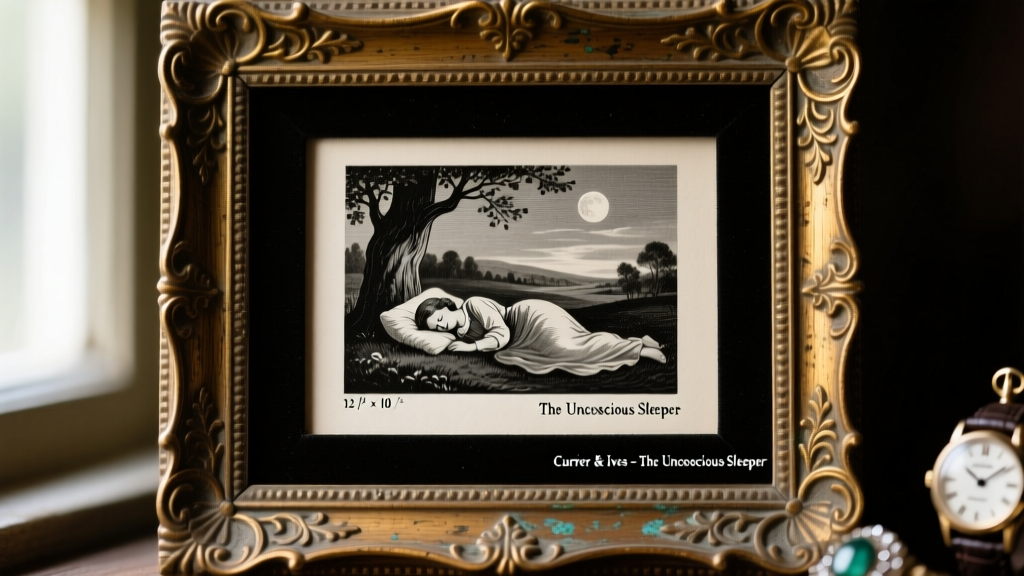
Currier & Ives 'The Unconscious Sleeper' Lithograph: Provenance, Framing, and Market Significance of the Black-and-White 12⅛ × 10⅛-Inch Edition
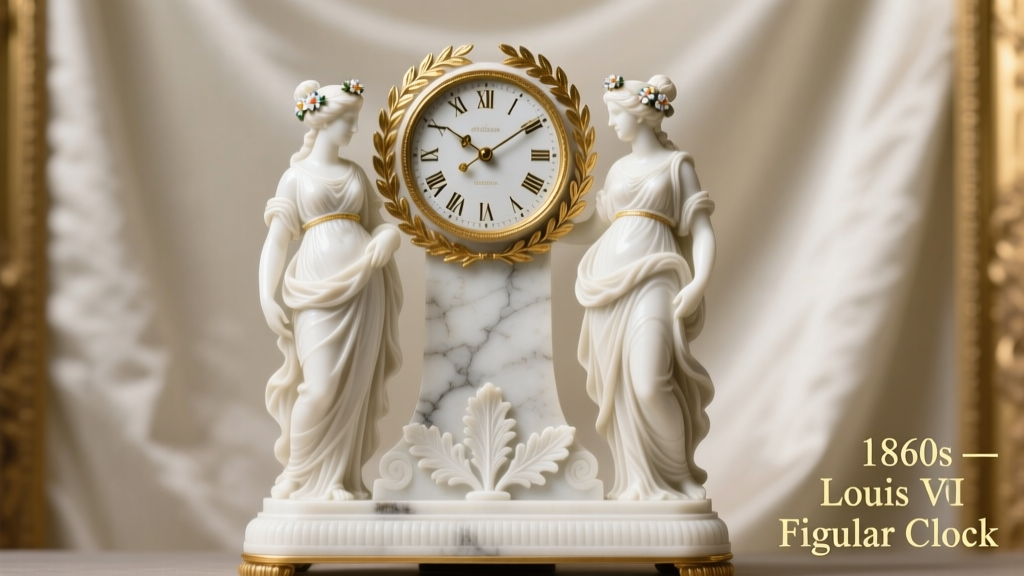
Figural Clock 'The Three Graces' in Louis XVI Style: A Marble Masterpiece from the 1860s
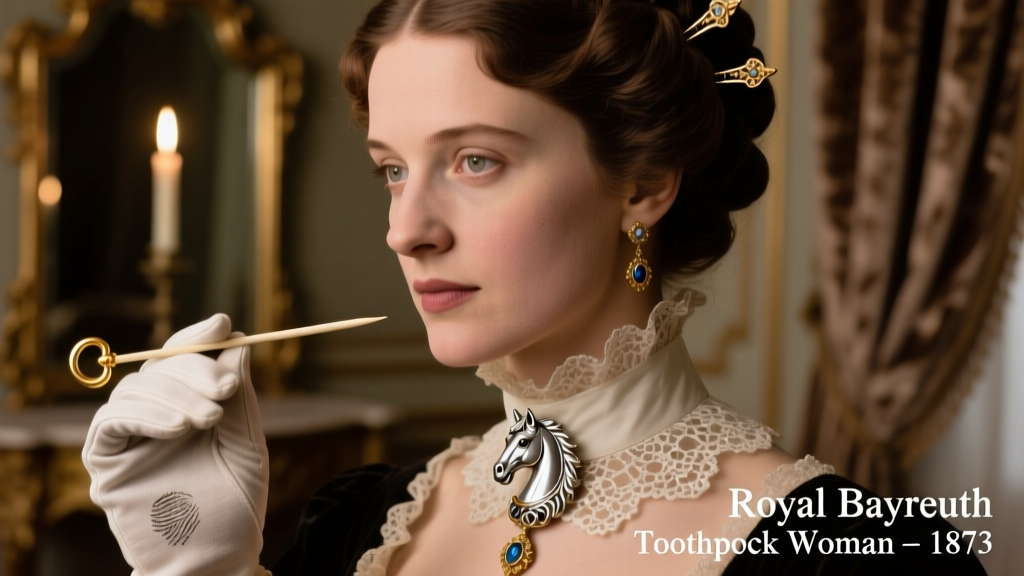
Royal Bayreuth Toothpick Woman With Horse: Iconic Porcelain Figurine, Provenance, and Market Value
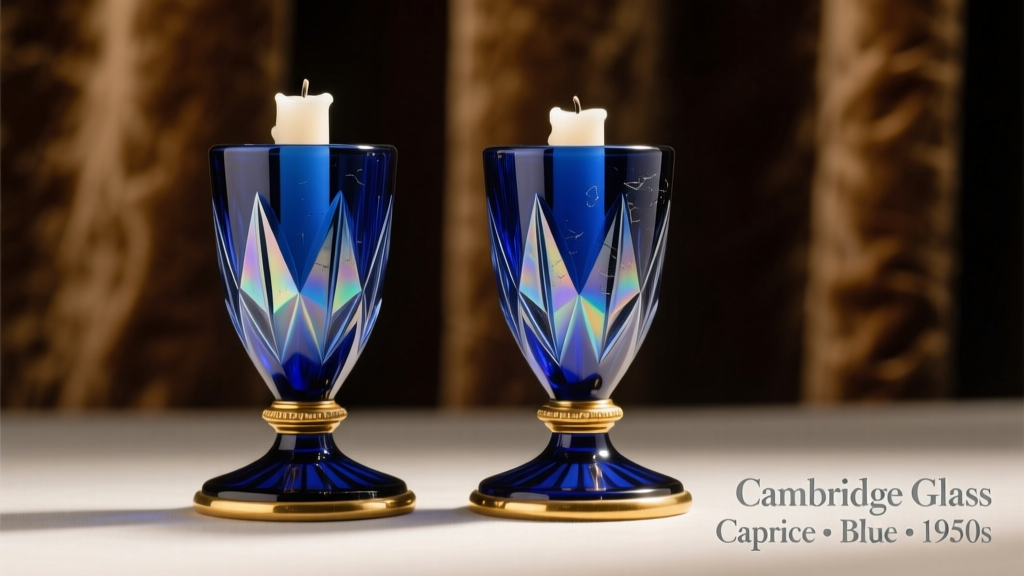
Cambridge Glass Caprice Candlestick in Cobalt Blue: A Collector’s Guide to the 2½-Inch Pair
Fishing Net Folding England: The Forgotten Craft of Vintage English Net-Folding and Its Legacy in Jewelry & Watchmaking
The Enigma of the Unmarked Porcelain Trinket: Authentication, Provenance, and Market Realities
Westclock Bakelite Large Stopwatch: A 1940s American Chronograph Masterpiece with Wind-Up Top Mechanism