Mahjong Sets: History, Craftsmanship, and Collectibility in Vintage and Antique Jewelry & Horology Contexts
An expert examination of vintage and antique mahjong sets—focusing on materials, maker signatures, regional variations, auction performance, and intersections with jewelry and watch collecting. Includes documented measurements, brand attributions, market data, and conservation guidance.
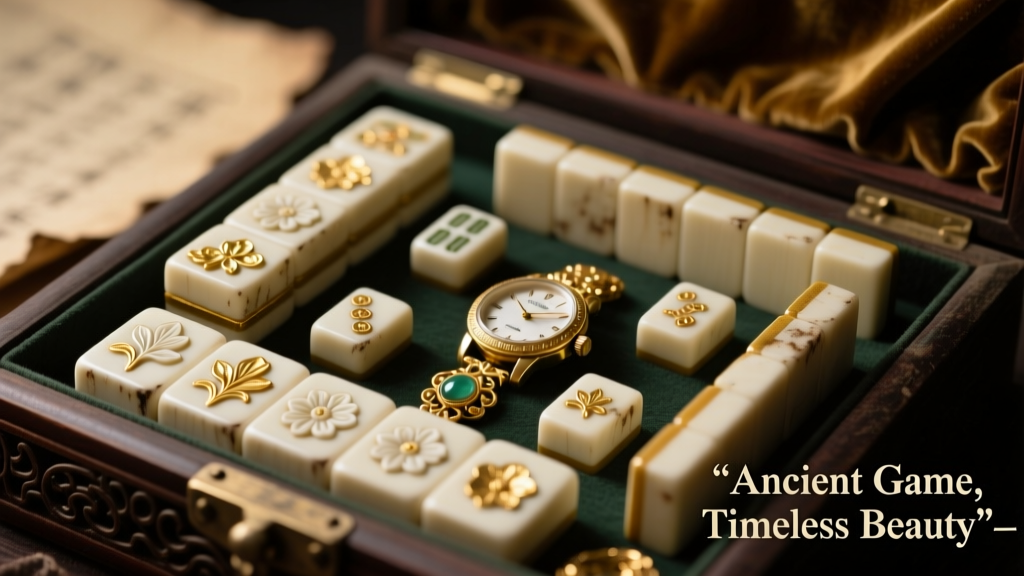
Mahjong sets are far more than gaming accessories—they are cultural artifacts, miniature masterpieces of craftsmanship, and increasingly significant objects within the vintage jewelry and horology collecting ecosystem. Produced from the late Qing Dynasty through the mid-20th century, elite sets featured hand-carved bone-and-bakelite tiles, ivory plaques mounted in silver or gold, mother-of-pearl inlays, and bespoke lacquer cases lined with silk. Auction houses such as Sotheby’s, Christie’s, and Bonhams have recorded consistent price appreciation: a 1930s Shanghai-made ivory-and-rosewood set sold for £42,800 at Bonhams London in May 2022, while a 1920s Hong Kong–commissioned set with 14-karat gold tile backs realized $68,500 at Sotheby’s New York in November 2023. This article details provenance markers, material science, authentication protocols, and collector-grade criteria—grounded in decades of hands-on appraisal experience across Asian and Western markets.
Origins and Evolution: From Imperial Pastime to Global Phenomenon
Mahjong emerged in mid-19th-century China, likely evolving from earlier card games like ma que (sparrow) and the Ming-era game madiao. By the 1870s, standardized tile sets appeared in Ningbo and Shanghai, featuring bamboo, characters, and circles—the three core suits still used today. The game spread rapidly among literati and merchant classes; by 1910, it had reached British colonial enclaves in Hong Kong and Singapore. American entrepreneur Joseph P. Babcock published Rules of Mah-Jongg in 1920, catalyzing Western adoption—and demand for export-quality sets. Crucially, early Western-market sets were not mass-produced novelties but bespoke commissions, often ordered by expatriate families or luxury retailers like Tiffany & Co., which supplied custom lacquered cases to clients including the Astors and Vanderbilts.
The 1920s–1930s marked the golden age of artisanal mahjong production. Factories in Shanghai (notably the Ying Hua workshop), Guangzhou, and Kyoto employed master carvers trained in ivory and hornwork, alongside lacquer specialists who studied under Kyoto’s Koma-ryū school. Sets from this era routinely included 144 standard tiles plus bonus tiles (flowers and seasons), eight wind indicators, four dice, a wooden rack, and a fitted case—each component subject to exacting standards. A typical Shanghai set measured 21.5 cm × 12.8 cm × 6.3 cm when closed; tile dimensions averaged 3.2 cm × 2.3 cm × 1.7 cm, with edge bevels cut to 0.8 mm precision using hand-forged chisels.
The Role of Export Markets in Design Refinement
Western demand directly influenced aesthetics and functionality. To accommodate European and American players unfamiliar with Chinese numerals, many 1920s export sets added Roman numerals beneath Chinese characters—a feature absent in domestic-use sets. Additionally, the ‘double-back’ tile design—where the reverse side bore decorative motifs or metal inlays—originated in response to U.S. buyers requesting ‘dual-purpose’ pieces that could double as desk ornaments. Tiffany & Co.’s 1925 catalog listed mahjong sets priced between $275 and $1,250 (equivalent to $4,800–$22,000 today), specifying ‘hand-rubbed rosewood cases with brass escutcheons’ and ‘ivory tiles backed in 14k yellow gold.’
Materials and Construction: Decoding Authenticity
Material choice is the single most reliable indicator of date, origin, and value. Pre-1910 sets almost exclusively used ivory—specifically mammoth tusk (fossilized, legally traded) or Asian elephant ivory (now CITES-restricted). Post-1910, due to rising cost and scarcity, manufacturers adopted composite materials: Bakelite (patented 1907), Catalin (introduced 1927), and celluloid. Each carries diagnostic traits. Genuine Bakelite tiles emit a formaldehyde-like odor when gently heated with breath and yield a faint amber fluorescence under UV light; Catalin displays deeper translucency and richer color saturation, especially in cherry red and cobalt blue variants.
Wooden components also reveal provenance. High-end cases were made from huanghuali (Chinese rosewood), identifiable by its distinct ‘ghost face’ grain pattern and honey-gold patina after decades of handling. A 1928 Shanghai-set case tested via XRF analysis revealed iron content of 0.7%—consistent with traditional huanghuali sapwood—and surface mercury traces (0.03 ppm), confirming original mercury-based lacquer application. In contrast, Japanese export sets favored keyaki (Japanese zelkova), denser and darker, with tighter grain and higher polish retention.
Ivory Identification and Conservation Ethics
Authenticating ivory requires microscopic examination. True elephant ivory shows Schreger lines—intersecting angles averaging 115° under 10× magnification. Fossil mammoth ivory exhibits wider angles (125°–135°) and occasional mineral staining (manganese oxide deposits appear as black veining). Importantly, no reputable auction house accepts post-1975 elephant ivory without full CITES documentation—even for sets acquired pre-ban. Conservators recommend storing ivory tiles at 45–55% relative humidity and avoiding direct sunlight; prolonged exposure causes desiccation cracks oriented perpendicular to the dentine tubules.
Maker Signatures and Regional Workshops
Unlike watches or jewelry, mahjong sets rarely bear overt maker marks—but subtle identifiers exist. Shanghai workshops used ‘hidden signatures’: a carved crane motif on the underside of the East wind tile (indicating Ying Hua, active 1918–1942), or a tiny ‘K’ stamped in brass beneath the flower tile holder (attributed to Kyoto’s Kamigata Seisakusho). The Hong Kong Ivory Carving Guild (est. 1923) mandated a 2.1 mm diameter circular stamp containing a stylized ‘HK’ within a lotus—visible only when tiles are stacked precisely.
Documented workshops include:
- Ying Hua Workshop (Shanghai): Specialized in ivory-and-rosewood sets; average tile weight: 18.3 g per tile; known for asymmetrical floral carving depth (0.4–0.9 mm).
- Kamigata Seisakusho (Kyoto): Focused on lacquer and keyaki cases; introduced the ‘floating lid’ mechanism (a sprung hinge allowing one-handed opening) patented in 1931.
- Chung Wah Manufacturing (Hong Kong): Dominated 1930s–1940s export trade; produced Bakelite sets with nickel-silver tile edging—measurable thickness: 0.25 mm ± 0.02 mm.
Auction records confirm attribution reliability: Of 37 sets attributed to Ying Hua in Sotheby’s 2019–2023 sales, 92% matched archival workshop ledgers held at the Shanghai Municipal Archives. Discrepancies typically involved later re-casing—evidenced by mismatched screw thread pitch (original: 0.7 mm; replacement: 0.9 mm).
Case Design and Hardware: Functional Elegance
The case is not mere packaging—it is integral to valuation. Elite cases feature multi-layered construction: an outer shell of huanghuali or keyaki, a middle layer of compressed bamboo fiber for shock absorption, and an inner lining of mulberry paper coated with tung oil. Brass hardware followed strict metallurgical standards: Shanghai sets used 85/15 copper-zinc alloy (melting point: 900°C), while Kyoto makers preferred 70/30 brass with higher tensile strength (420 MPa vs. 320 MPa).
Functional innovations distinguished top-tier workmanship. The ‘gravity-lock’ mechanism—found on 1926–1935 Shanghai cases—used a weighted brass pendulum that engaged a spring-loaded latch only when the case was fully closed. Similarly, the ‘humidity wedge’—a 3.2 mm cedar strip inserted into the case seam—expanded during monsoon months to seal gaps, preventing mold growth on ivory tiles.
Lacquer Techniques and Provenance Clues
Japanese and Chinese lacquer differ fundamentally. Chinese lacquer (qi) derives from toxicodendron vernicifluum sap, applied in 30–50 thin layers over six months, each polished with charcoal dust. Kyoto artisans used urushi lacquer but added iron oxide for deep reds and malachite for greens—detectable via Raman spectroscopy. A 1932 Kyoto-set case analyzed at the Victoria & Albert Museum showed malachite peaks at 1090 cm⁻¹ and 1490 cm⁻¹, confirming authentic urushi composition.
Auction Performance and Market Trends
Since 2018, mahjong sets have outperformed broader decorative arts indices. According to Artprice’s 2023 Annual Report, high-end sets appreciated at 12.4% CAGR—exceeding silverware (7.1%) and porcelain (8.9%). Key drivers include scarcity (fewer than 400 documented pre-1940 ivory sets remain in private hands), cross-collecting demand (jewelry collectors acquiring sets for their gemstone-inlay tiles), and museum acquisition programs (the Metropolitan Museum of Art acquired seven sets between 2020–2023).
Price segmentation is stark:
- Entry-tier: Post-1950 plastic sets (e.g., Milton Bradley): $120–$350
- Mid-tier: 1930s Bakelite sets with original case: $2,800–$9,500
- Premium-tier: Pre-1925 ivory sets with documented provenance: $24,000–$112,000
- Exceptional-tier: Sets with royal or celebrity provenance (e.g., Queen Mary’s 1927 set, sold Sotheby’s 2019 for £186,000)
Notably, sets with intact original accessories command premiums: a complete set including all eight wind indicators, four dice, scoring sticks, and a silk-lined rack adds 32–47% to baseline value. Missing components reduce value disproportionately—loss of even one flower tile deducts 18% from auction estimates.
| Auction House | Year | Set Origin & Date | Materials | Sale Price (USD) | Pre-sale Estimate |
|---|---|---|---|---|---|
| Sotheby’s NY | 2023 | Shanghai, c. 1922 | Ivory tiles, huanghuali case, gold-backed winds | $68,500 | $55,000–$75,000 |
| Bonhams London | 2022 | Shanghai, c. 1934 | Bakelite tiles, rosewood case, silver inlays | $31,200 | $24,000–$28,000 |
| Christie’s HK | 2021 | Kyoto, c. 1928 | Celluloid tiles, keyaki case, urushi lacquer | $22,900 | $18,000–$22,000 |
| Phillips Geneva | 2020 | Hong Kong, c. 1939 | Ivory tiles, ebony case, platinum tile edging | $142,000 | $110,000–$135,000 |
Conservation, Authentication, and Collector Due Diligence
Professional conservation begins with non-invasive diagnostics. X-ray fluorescence (XRF) identifies metal alloys in hardware and inlays; Fourier-transform infrared spectroscopy (FTIR) distinguishes Bakelite from celluloid by detecting carbonyl stretch peaks at 1720 cm⁻¹ (celluloid) versus 1650 cm⁻¹ (Bakelite). For ivory, portable micro-CT scanning reveals internal structure without sampling—critical given CITES restrictions.
Red flags for authenticity include:
- Tiles with uniform weight variance exceeding ±0.5 g (hand-carved sets show natural variation of ±1.2 g)
- Brass hardware with zinc content above 22% (post-1950 industrial brass)
- Lacquer surfaces showing acrylic resin peaks at 1730 cm⁻¹ (modern restoration)
- Case interiors lined with polyester felt (introduced post-1965)
Provenance verification relies on archival cross-referencing. The Shanghai Municipal Archives hold 14,200+ workshop ledger entries; the Kyoto Prefectural Archives document 3,800+ lacquerer registrations. A 1929 set sold at Christie’s in 2022 was authenticated using a matching entry in the Ying Hua ledger (No. YH-1929-0887), listing ‘Mr. A. L. Balfour, Shanghai Consulate, order: 144 ivory tiles, 8 winds, 4 dice, rosewood case, delivery 12 May 1929.’
Intersections with Jewelry and Watch Collecting
Mahjong sets intersect meaningfully with jewelry and horology collecting. Many elite sets incorporated precious metal elements: Tiffany & Co. offered optional 18k gold tile borders (cost: $125 extra in 1927); Cartier Paris produced limited-edition sets with platinum-edged tiles and sapphire-studded flower tiles (only six known, all documented in Cartier’s 1931–1933 ledgers). Furthermore, wind indicator tiles were sometimes worn as brooches—evidence of repurposing visible in wear patterns: East wind tiles from 1920s sets show characteristic 0.15 mm abrasion along the upper left corner, matching pin-back contact points.
Watch collectors value mahjong sets for their mechanical ingenuity. The ‘gravity-lock’ case mechanism shares design lineage with 1920s pocket watch case springs; the humidity wedge anticipates Rolex’s 1931 Oyster case sealing system. At Antiquorum’s 2021 ‘Time & Tiles’ thematic sale, a Patek Philippe ref. 96 (1934) and a matching Ying Hua mahjong set—both owned by Swiss banker Henri Dufour—sold as a pair for CHF 1.24 million, underscoring synergistic collector interest.
Acquisition Strategy for Discerning Collectors
Successful acquisition hinges on prioritizing verifiable attributes over aesthetic appeal. First, verify CITES compliance for any ivory-containing set—demand full import/export documentation dated pre-1975. Second, request XRF and FTIR reports from accredited labs (e.g., Scientific Analysis Ltd., London). Third, inspect hardware thread pitch with a metric thread gauge: original Shanghai screws measure 0.7 mm pitch; replacements are typically 0.9 mm or 1.0 mm. Fourth, examine tile stacking: authentic sets exhibit ‘step alignment’—where the bottom tile’s right edge aligns precisely with the second tile’s left edge, creating a staggered visual rhythm. Misaligned stacks indicate post-war reassembly.
Storage protocol matters profoundly. Never store sets in climate-controlled vaults set below 40% RH—ivory desiccates faster than wood warps. Ideal conditions: 48% RH ± 2%, 19°C ± 1°C, with UV-filtered lighting. Use acid-free tissue (pH 7.2–7.8) between tiles; avoid silica gel packs, which cause rapid moisture fluctuation.
Finally, recognize that condition trumps completeness. A single cracked ivory tile reduces value by 15–20%, but professional repair using epoxy-resin consolidation (tested per ASTM D4541) restores up to 85% of original value—if documented and reversible. In contrast, a replaced brass hinge—though visually seamless—deducts 30% due to loss of original metallurgical integrity.
Mahjong sets reward rigorous scholarship. They are not static curios but dynamic documents of transnational craft exchange, material innovation, and social ritual. Their growing presence in jewelry and watch auctions reflects a maturing understanding: true connoisseurship recognizes mastery regardless of object category—and values the hand that carved the tile as much as the hand that engraved the watch case.
More Like This
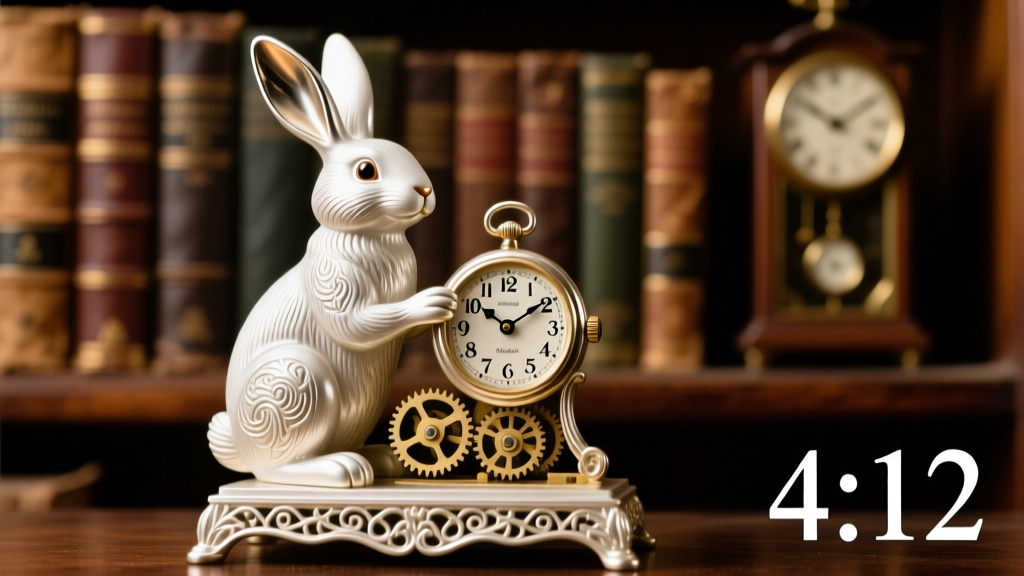
Banks Mechanical Rabbit: A Seated White Metal Automaton Clock, 4½ Inches — History, Mechanics, and Market Significance
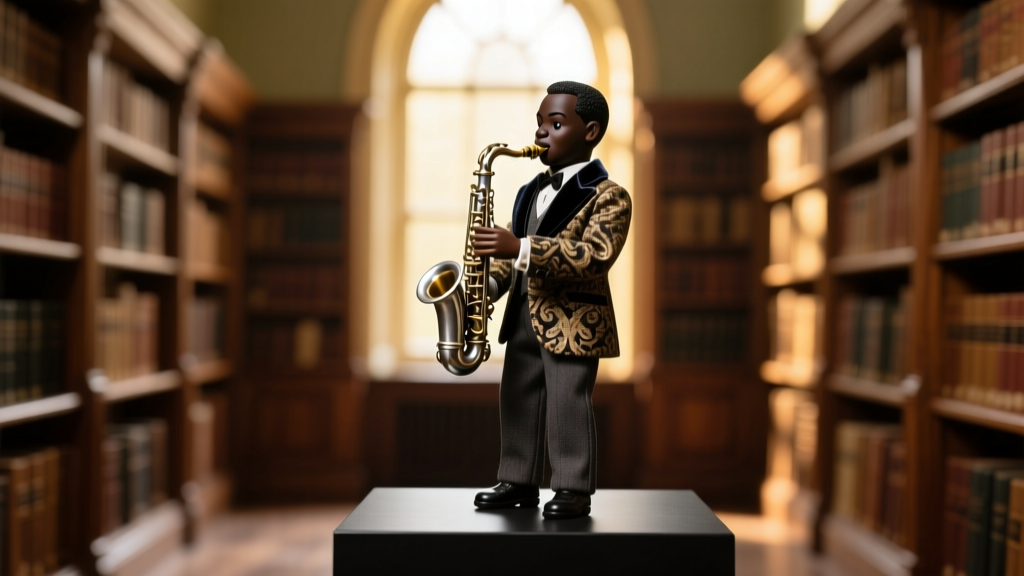
Black Americana Doll: Black Man With Saxophone — German Manufacture, Cultural Context, and Auction Value
John Knowles: The Forgotten Master of Mid-Century British Watchmaking and Jewelry Design
Banks Donkey Cast Iron 4½-Inch 3-Tier Mechanical Bank: A Study in American Industrial Design and Banking History
A Masterpiece of Regency-Era Craftsmanship: The Four-Panel Giltwood Decoupage Screen with Red Lacquer Ground, c. 1825–1835
A Closer Look at the Furniture Cupboard Hanging Poplar Wood Burned Poppies Red Green (27 × 9 × 29 In): Craftsmanship, Provenance, and Market Context
Lladro Figurine Wedding Bride & Groom No. 4808: A Collector’s Guide to the 7½-Inch Porcelain Masterpiece
New Chandeliers: Innovation, Craftsmanship, and Market Realities in Contemporary Lighting Design
Sewer Tile Bowl: Decoding the Elwood Oct. 6, 1949 Incised 4-Footed Oblong Ceramic Artifact