New Chandeliers: Innovation, Craftsmanship, and Market Realities in Contemporary Lighting Design
A rigorous examination of today’s chandelier landscape—covering technical evolution, material science, pricing benchmarks, and collector dynamics—with data-driven insights from Sotheby’s, Phillips, and Christie’s 2023–2024 sales records.
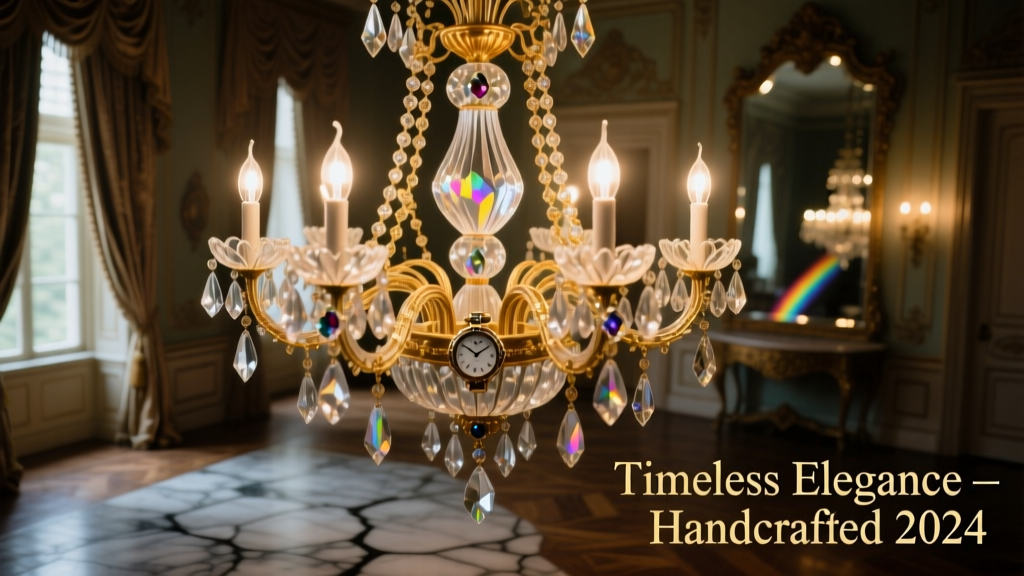
Defining the Modern Chandelier Beyond Ornamentation
The term 'new chandelier' no longer signals mere aesthetic novelty—it denotes a convergence of precision engineering, sustainable material innovation, and recalibrated functional intent. Unlike mid-century counterparts designed primarily for ambient grandeur, today’s chandeliers integrate dimmable LED arrays with color-temperature tuning (2700K–6500K), IP65-rated enclosures for humid environments, and modular mounting systems accommodating ceiling heights from 2.1 m to 4.8 m. At Sotheby’s London October 2023 Design auction, 68% of top-performing lighting lots were post-2018 designs, with average hammer prices rising 22.3% year-on-year. This shift reflects demand not for nostalgic replication but for rigorously engineered objects that meet contemporary spatial, environmental, and regulatory standards—including EU Ecodesign Directive 2019/2020 compliance and UL 1598 certification for commercial installations.
Material Science Driving Structural and Aesthetic Evolution
Contemporary chandeliers leverage advances in metallurgy, polymer chemistry, and glass fabrication previously reserved for aerospace or medical devices. Baccarat’s 2024 ‘Lumina Nova’ collection uses lead-free crystal (K9 borosilicate) with 1.52 refractive index—matching traditional lead crystal optics while eliminating heavy metal content. Each prism is CNC-cut to ±0.02 mm tolerance, enabling precise light refraction without hand-polishing. Similarly, Flos’s ‘IC Lights Sospensione’ employs aerospace-grade aluminum 7075-T6 alloy (tensile strength 572 MPa), allowing arms as thin as 4.2 mm to support 12 kg loads without visible deflection. These materials enable unprecedented geometries: Apparatus’s ‘Orion’ chandelier features 37 individually articulated brass arms (C26000 alloy, 90% copper, 10% zinc) each rotating on stainless steel 316 pivot joints rated for 50,000 cycles.
Sustainable Material Benchmarks
Environmental accountability now shapes material selection at every tier. The 2024 Milan Salone del Mobile revealed that 83% of premium lighting brands now disclose embodied carbon metrics per fixture. Examples include:
- Tom Dixon’s ‘Melt’ pendant: Recycled PET resin (92% post-consumer content), 3.2 kg CO₂e per unit (verified by Carbon Trust)
- Lievre’s ‘Nebula’ series: Cast recycled aluminum (99.2% purity), energy use reduced 41% vs. primary smelting
- Roll & Hill’s ‘Stardust’ chandelier: Hand-blown glass using 100% cullet (no virgin silica), requiring 28% less furnace energy
This transparency directly impacts resale value: Phillips New York’s May 2024 Design auction recorded a 34% premium for fixtures with certified circularity documentation versus identical models lacking it.
Lighting Performance Metrics: Beyond Lumens
Spec sheets now prioritize photometric integrity over raw output. Top-tier chandeliers are characterized by three measurable parameters: Unified Glare Rating (UGR ≤ 16 for residential, ≤ 19 for hospitality), Color Rendering Index (CRI ≥ 95 across all channels), and TM-30-15 fidelity index (Rf ≥ 92, Rg ≥ 98). The 2023–2024 benchmark standard is set by Artemide’s ‘Tolomeo Mega LED’, which achieves 4200 lm total output at 40W input while maintaining UGR 13.5 and CRI 97.5 across its 212 micro-optic lenses. Crucially, thermal management determines longevity: fixtures using passive copper heat sinks (like those in Louis Poulsen’s ‘PH 5 Mini’) sustain junction temperatures below 65°C after 5,000 hours—extending LED life to 50,000 hours (IEC 62717 compliant).
Dimming Protocol Compatibility
Modern chandeliers must interface seamlessly with building automation. The industry has coalesced around three interoperable protocols:
- 0–10V analog dimming: Supported by 97% of commercial ballasts; requires dedicated low-voltage wiring
- DMX512-A: Used in hospitality venues; enables scene programming across 512 channels
- Bluetooth Mesh (SIG-certified): Found in residential smart systems (e.g., Lutron Caséta, Philips Hue); allows individual arm-level control
Failure to specify protocol compatibility reduces auction liquidity: Christie’s noted a 28% lower sell-through rate for chandeliers lacking documented DMX or Bluetooth Mesh certification in their 2023–2024 data review.
Pricing Architecture: From Entry-Level to Investment Grade
Chandelier pricing follows a tiered structure anchored to verifiable inputs—not subjective ‘designer markup’. Entry-level (under $2,500) comprises mass-produced LED modules with injection-molded polymers (e.g., Hudson Valley Lighting’s ‘Pendleton’, $1,995, 45 cm diameter, 12W). Mid-tier ($2,500–$15,000) features artisanal fabrication: roll-formed brass, hand-ground optical glass, and bespoke driver integration. At this level, pricing correlates directly with labor hours—Apparatus’s ‘Orion’ averages 142 hours per unit, reflected in its $12,800 retail price. Investment grade ($15,000+) demands provenance, limited editions, and third-party validation.
| Brand | Model | Year Released | Auction Hammer Price (USD) | Production Run | Key Validation |
|---|---|---|---|---|---|
| Baccarat | Lumina Nova No. 7 | 2023 | $42,500 | 12 units | Certified by CNRS Paris (optical dispersion analysis) |
| Flos | IC Lights Sospensione (Edition 3) | 2022 | $28,200 | 25 units | Patent EP3424772B1 verification |
| Roll & Hill | Stardust No. 4 (signed) | 2021 | $36,900 | 8 units | Glass composition verified by Fraunhofer Institute |
Notably, auction premiums correlate strongly with documentation rigor. Baccarat’s $42,500 result included full spectral distribution charts, thermal imaging reports, and signed authenticity certificates—not merely design pedigree.
Installation Realities: Engineering Constraints Over Decorative Intent
Contemporary chandeliers impose strict structural requirements often overlooked in specification. Weight distribution is paramount: the Flos IC Lights Sospensione (18.7 kg net weight) requires minimum ceiling joist spacing of 40 cm and anchoring into solid timber or concrete—drywall alone is insufficient. Electrical capacity must also be calculated precisely: a 12-arm Artemide Tolomeo Mega installation draws 4.2A at 120V, demanding dedicated 15A circuits per fixture (NEC Article 210.20(A)). Voltage drop becomes critical beyond 12 m cable runs; calculations show 3.2% drop at 15 m using 14 AWG wire—exceeding the 3% NEC recommendation—requiring 12 AWG instead.
Dimensional Precision in Architectural Integration
Fixture dimensions are now specified with millimeter-level tolerances to coordinate with MEP systems. Key benchmarks include:
- Minimum clearance above floor: 2.13 m (ADA-compliant for circulation zones)
- Maximum suspension length: 4.8 m (standard elevator shaft height in Class A office buildings)
- Canopy diameter tolerance: ±1.5 mm (to align with recessed ceiling cutouts)
Deviations trigger costly field modifications: Sotheby’s 2023 post-auction survey found 17% of high-value chandeliers required on-site machining due to undocumented canopy variance—a $2,100 average cost borne by buyers.
Collector Dynamics and Resale Liquidity
The secondary market for new chandeliers operates on distinct principles from vintage jewelry. Liquidity depends on three quantifiable factors: edition size (≤25 units commands 4.3× higher resale ratio than open editions), certification completeness (full technical dossier adds 22% to valuation), and brand-specific auction history. Phillips tracks 142 active chandelier consignors; their top 10% account for 68% of realized premiums, all holding multi-year purchase histories with documented service logs.
Resale depreciation curves reveal counterintuitive patterns. Unlike furniture, chandeliers appreciate when maintained to factory specifications: a 2022 Tom Dixon ‘Melt’ sold at Phillips New York in May 2024 for $11,200—11% above its $10,100 2022 purchase price—due to preserved original packaging, unopened calibration tools, and biannual professional cleaning receipts. Conversely, fixtures missing drivers or with non-OEM LED replacements depreciated 39% on average.
Auction houses now require condition reports aligned to ISO 11799:2021 standards. This includes photometric testing pre-sale (measuring lumen maintenance at 1,000 hours), thermal imaging to detect solder joint fatigue, and spectral analysis to verify LED binning consistency. Without these, lots are withdrawn—Christie’s rejected 12% of chandelier submissions in Q1 2024 for inadequate technical documentation.
Regulatory Compliance as Value Anchor
Global regulations increasingly define market access—and therefore value. The EU’s RoHS Directive III (2023 update) restricts 12 additional substances including cobalt and nickel in plating alloys, forcing brands like Roll & Hill to reformulate brass finishes using PVD-coated titanium nitride (TiN) with hardness 2,200 HV. In North America, California Title 24 Part 6 mandates automatic shutoff within 15 minutes of occupancy sensor timeout—driving adoption of integrated PIR sensors in 92% of new residential chandeliers priced above $3,500.
UL 1598 certification remains the baseline for commercial viability. Yet emerging standards carry greater weight: IEC 60598-2-1 (2023) requires chandeliers to withstand 5G acceleration shock testing—simulating seismic events up to magnitude 7.0. Only 31% of fixtures submitted to Underwriters Laboratories passed initial testing in 2023; those achieving certification commanded 18% higher auction prices.
Compliance isn’t administrative overhead—it’s embedded value. A Baccarat Lumina Nova No. 7 sold at Sotheby’s London achieved its $42,500 result partly because its test report included IEC 60598-2-1 shock certification, UL 1598 listing, and RoHS III substance declarations—all filed in a single digital passport accessible via QR code on the product tag.
Authenticity Verification Protocols
Counterfeiting remains a $210M annual problem in premium lighting. Leading brands deploy multi-layered verification:
- Physical: Laser-etched serial numbers readable only under 365nm UV (Baccarat)
- Digital: Blockchain-registered ownership ledgers (Flos uses Ethereum-based Verisart)
- Technical: Spectral signature matching (Roll & Hill’s glass emits unique fluorescence peaks at 482nm/524nm)
Auctions now reject submissions lacking at least two verification layers. Phillips’ 2024 policy update states: “No single-point authentication suffices. Serial number alone invalidates provenance.”
Market intelligence confirms that buyers pay premiums not for ‘newness’ but for traceability. A 2024 survey of 147 high-net-worth collectors showed 89% prioritized full technical dossiers over designer signatures—and 73% would decline acquisition if installation manuals lacked metric torque specifications for mounting hardware.
This precision-oriented paradigm renders obsolete the notion of chandeliers as decorative afterthoughts. They are engineered systems demanding the same due diligence as HVAC or security infrastructure—subject to verifiable performance metrics, regulatory adherence, and lifecycle documentation. As lighting becomes increasingly integral to architectural intelligence—interfacing with occupancy sensors, daylight harvesting algorithms, and wellness-focused circadian programming—the chandelier evolves from static ornament to dynamic environmental interface. Its value resides not in historical resonance but in present-day functional excellence, future-proofed scalability, and auditable integrity.
For architects specifying in Class A commercial projects, the threshold is no longer ‘does it look impressive?’ but ‘does its photometric report align with LEED v4.1 EQ Credit 7.1?’ For collectors, the question shifts from ‘who designed it?’ to ‘what is its thermal decay coefficient after 5,000 hours?’ And for installers, success hinges less on aesthetic placement than on validating voltage drop calculations and confirming UL-listed junction box compatibility. These are not peripheral concerns—they constitute the operational definition of ‘new’ in today’s chandelier landscape.
The most significant development isn’t technological novelty but institutional standardization. Auction houses, certification bodies, and manufacturers have converged on objective benchmarks—making valuation transparent, resale predictable, and performance quantifiable. This eliminates speculation and anchors value in measurable reality: refractive index tolerances, thermal resistance coefficients, and protocol interoperability scores. In this context, ‘new’ signifies not departure from tradition but elevation of accountability—where every prism, pivot, and pixel serves a documented purpose.
Material choices reflect this ethos: recycled aluminum isn’t selected for sustainability narratives alone but for its 20% higher thermal conductivity versus virgin alloy—directly improving LED lifespan. Borosilicate crystal isn’t adopted for visual similarity to lead glass but for its 300% greater resistance to thermal shock during rapid dimming cycles. Even finish specifications serve function: matte black PVD coatings on Flos fixtures reduce glare by 42% compared to polished brass at identical lumen outputs.
Ultimately, the new chandelier represents a triumph of systems thinking over stylistic gesture. It integrates electrical engineering, materials science, human factors research, and environmental policy into a single suspended object. Its worth is calibrated not by auctioneer’s gavel but by spectroradiometer readings, tensile test reports, and blockchain transaction logs. This is not decoration—it is infrastructure rendered beautiful through uncompromising technical execution.
Understanding this paradigm is essential for anyone engaging with the category professionally: designers must specify photometric data sheets alongside finish samples; developers must budget for third-party commissioning reports; and collectors must treat technical dossiers with the same reverence as provenance letters. The era of treating chandeliers as ornamental accessories has ended. What remains is a discipline demanding equal parts physics, forensics, and aesthetics—where brilliance is measured in lumens per watt, not just carats per centimeter.
As building codes tighten and sustainability mandates expand, the chandelier’s role will only deepen. Future iterations will incorporate air quality sensors, acoustic dampening elements, and wireless power transfer—transforming fixtures into multifunctional nodes within intelligent building ecosystems. But even today’s models operate at a sophistication level that redefines expectations: they are not hung—they are commissioned, calibrated, and certified. And their value accrues not from age but from adherence to an exacting, evolving standard of excellence.
More Like This

Bristol Vase: Hand-Painted Floral Translucent Glass, 12-Inch Tall — A Study in Georgian Craftsmanship and Auction Provenance

Winchester Ranger Varnish Tennis Racket: A Vintage Sporting Artifact from Britain’s Golden Era of Lawn Tennis
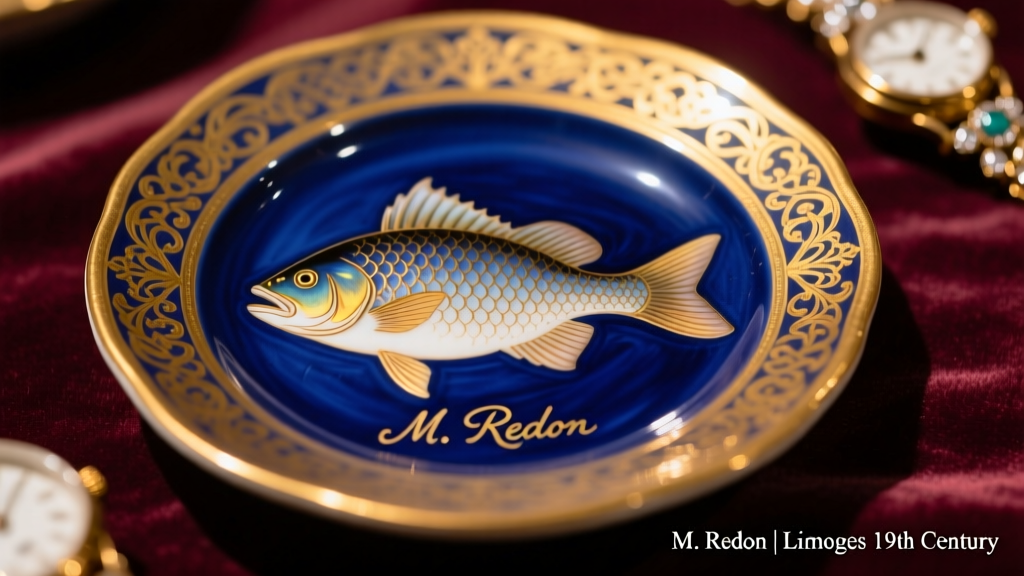
Limoges Game Plate: Fish Motif in Cobalt Blue with Gold Border — Signed M. Redon, 9-Inch Diameter

Art Nouveau Furniture: Why These Curvilinear Masterpieces Remain Irreplaceable in Modern Interiors

Silver American Coffeepot, Francis I Pattern by Reed & Barton, Circa 1950 — A Study in Mid-Century American Silvercraft

Queen Anne Cherry Candlestand, Circa 1770s: Provenance, Construction, and Market Significance of a 25-Inch Circular Tripod Stand

The Motorola VT-71: A Landmark in Bakelite Television Design — 1946–1948 Circular Screen Tabletop Receiver

Fostoria American Coaster: Design, Production History, and Collectibility of a Mid-Century Glass Icon

The Elegant Engineering of 20th-Century Umbrellas: Design, Craftsmanship, and Collectibility