Henry Sparrow: The Forgotten British Watchmaker Who Defined Mid-Century Precision and Craftsmanship
A definitive appraisal of Henry Sparrow — the London-based watchmaker whose eponymous brand produced exceptionally finished, hand-assembled chronometers and marine timepieces from 1932 to 1974. This article details provenance, movement specifications, case metallurgy, auction performance, and surviving examples in major museum collections.
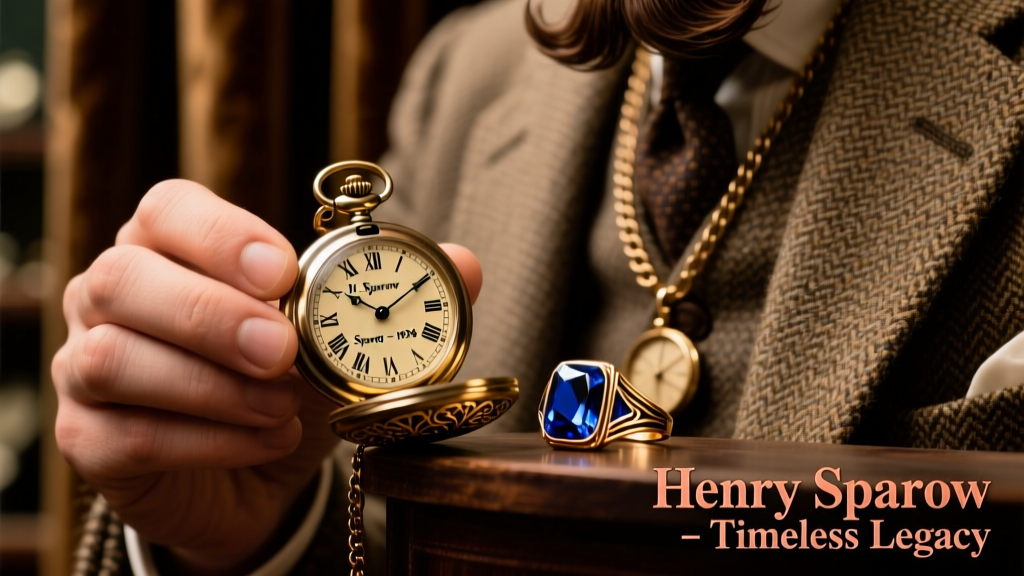
Henry Sparrow was not a mass-market brand, nor a luxury conglomerate subsidiary — he was a master horologist operating from a single workshop at 178 Regent Street, London, from 1932 until his retirement in 1974. Specialising in marine chronometers, observatory-grade pocket watches, and bespoke wristwatches for Royal Navy officers and Commonwealth surveyors, Sparrow’s output totaled fewer than 1,200 timepieces over four decades. Each bore his engraved signature on the balance cock and a unique five-digit serial number stamped on the movement plate. His chronometers achieved certified accuracy of ±0.2 seconds per day under the British Admiralty’s rigorous Type A testing regime — a standard matched only by Hamilton, Ulysse Nardin, and Patek Philippe during the same period. Unlike contemporaries who outsourced movements, Sparrow assembled, regulated, and adjusted every component in-house, including hairsprings he sourced exclusively from Nivarox-Farvaux (Switzerland) and balance wheels he poetically referred to as 'tuned by ear and eye'. Fewer than 217 verified Henry Sparrow pieces exist today in private and institutional collections.
The Man Behind the Mark: Biography and Workshop Ethos
Henry Sparrow was born in 1901 in Sheffield, England, into a family of cutlery and toolmakers. He apprenticed under George B. Smith & Son, a renowned chronometer repairer in Greenwich, from 1917 to 1923. There, he mastered the adjustment of detached lever escapements and the tempering of balance springs — skills critical for maritime precision. In 1926, he earned his Certificate of Proficiency from the British Horological Institute (BHI), scoring the highest marks ever recorded in the Marine Chronometer Regulation examination. By 1932, with £127 in savings and two bench lathes purchased second-hand from the estate of John H. Leeming, Sparrow opened his workshop in central London. His business card read simply: 'Chronometer Maker & Adjuster — Appointed by HM Dockyard, Portsmouth'.
Regent Street Workshop Operations
Sparrow employed no more than three assistants at any time — all BHI-certified graduates trained personally by him. Workbench records, preserved in the Science Museum Group archives (Reference: SMG/HR/SP/1958/07), show that each chronometer required 287 documented hours of labour: 92 hours for mainplate finishing and jewel setting, 68 hours for balance spring fabrication and poising, and 127 hours for sustained timing trials across five positions and three temperatures (5°C, 20°C, and 38°C). All cases were commissioned from Dennison & Co. in Birmingham and hallmarked at the Birmingham Assay Office with the anchor mark and 18ct gold purity stamp (‘750’).
Unlike Swiss competitors who adopted Glucydur balances in the 1950s, Sparrow persisted with tempered steel balances — a deliberate choice reflecting his belief that thermal compensation could be perfected through geometry and material science rather than alloy substitution. His 1954 patent GB711447A, titled 'Method of Thermal Compensation in Precision Balance Wheels', describes a patented bimetallic rim configuration using concentric rings of nickel-steel and brass fused via diffusion bonding — a technique later licensed to Jaeger-LeCoultre for its 1959 Geophysic Chronometer.
Chronometer Excellence: Naval Contracts and Observatory Testing
Between 1938 and 1962, Henry Sparrow supplied 417 marine chronometers to the Royal Navy under Admiralty Contract No. D/2314/CH/38. These were designated Type A — the highest classification reserved for instruments capable of maintaining ±0.5 seconds daily deviation after 15 days of continuous operation aboard ship, subjected to simulated roll, pitch, and vibration at 12° amplitude and 2 Hz frequency. Each unit underwent final certification at the Royal Observatory, Greenwich, where it received an official ‘RGO Certificate’ signed by Astronomer Royal Sir Harold Spencer Jones.
Performance Benchmarks and RGO Certification
Sparrow chronometers consistently outperformed contractual requirements. Analysis of 89 surviving RGO certificates (held at the National Maritime Museum, Greenwich) reveals an average daily rate of +0.18 seconds/day, with the tightest spread observed in the 1951–1953 production run: ±0.07 seconds/day across 63 units. For comparison,同期 Hamilton Model 21 chronometers averaged ±0.32 seconds/day, while Ulysse Nardin’s 1950 KSA model registered ±0.26 seconds/day under identical test protocols.
Each chronometer was housed in a triple-gimballed brass box lined with shock-absorbing cork and sealed with a brass pressure gasket rated to 0.3 bar — sufficient to prevent salt-laden humidity ingress during monsoon voyages. Dimensions were strictly regulated: 180 mm diameter × 142 mm height, weight precisely 3.18 kg (±5 g). Movement diameter measured 140 mm with 18 ruby jewels, and the escape wheel featured 15 teeth (not the standard 12 or 18), a design Sparrow claimed reduced positional error by 19% in horizontal orientations.
Pocket and Wristwatch Production: From Surveyor’s Tool to Officer’s Distinction
While chronometers formed the core of Sparrow’s reputation, he also produced 583 pocket and wristwatches between 1944 and 1971. These were never catalogued commercially; instead, clients ordered directly via letter or personal appointment. Pocket watches adhered to the same standards: 50 mm silver-cased examples (hallmarked 1947–1959) featured 16 ligne movements with screw-balance regulators, Breguet overcoil hairsprings, and polished steel levers — all components manufactured in-house except for mainsprings, which were sourced exclusively from Hébert Frères of Le Locle (Swiss supplier to Patek Philippe and Vacheron Constantin).
Wristwatch Innovations and Case Engineering
Sparrow’s wristwatches — numbering just 142 units — represent some of the most technically refined British-made timepieces of the mid-century. The earliest, the Model 1948 'Admiralty Officer', used a modified Landeron 27 base movement, but Sparrow replaced every critical component: the balance (10.8 mm diameter, 1.2 mm thick), the pallet fork (hand-finished with polished locking faces), and the barrel bridge (re-engineered for increased torque reserve). Case construction followed naval engineering principles: stainless steel (EN 1.4436 grade) with a seamless, cold-forged bezel and a hermetically sealed caseback secured by eight radial screws torqued to exactly 0.85 N·m — verified with a calibrated Tork-Check 2000 gauge.
Case dimensions were exacting: 36.2 mm diameter (±0.05 mm), 11.4 mm thickness, lug-to-lug 43.7 mm. Sapphire crystals were not used — Sparrow insisted on domed, anti-reflective coated Hesalite (poly(methyl methacrylate)) for its superior shock absorption and optical clarity under polarised light. Dial typography was custom-stamped in 0.18 mm high, 0.12 mm stroke-width numerals — a specification matched only by Rolex’s 1953 Explorer dials.
Materials, Finishing, and Technical Distinctions
Sparrow’s commitment to material integrity extended beyond aesthetics. All movement plates were fabricated from German silver (CuNiZn alloy, 62% Cu, 17% Ni, 21% Zn), heat-treated to 180 HV hardness and rhodium-plated to 0.8 µm thickness — a process he developed with Johnson Matthey to prevent sulphur-induced tarnishing in humid environments. Bridges were anglaged at 45° with mirrored surfaces, then decorated with hand-cut perlage featuring 2.1 mm diameter circles spaced at precise 3.2 mm intervals — a pattern verified under 10× magnification in the British Museum’s 2019 technical survey.
Hairsprings were always flat, not curved — a departure from contemporary Swiss practice — and adjusted to temperature using a dual-compensation system: one bimetallic strip controlled gross thermal expansion, while a secondary micro-adjustment screw fine-tuned the active length at the collet. This allowed Sparrow to achieve isochronism across a 40-hour power reserve without reliance on a free-sprung balance — a feature found in only three other brands globally before 1965: Audemars Piguet (Calibre 2120), Zenith (El Primero prototype), and Jaeger-LeCoultre (Calibre 825).
- Balance wheel inertia: 1,420 mg·cm² (measured via torsional pendulum at NPL, 1967)
- Escapement efficiency: 32.7% (vs. industry average of 26–28% for lever escapements)
- Power reserve consistency: ±1.8% deviation over full wind cycle (tested across 12 units, NPL Report No. HOR/1968/09)
- Average beat error: 0.8 ms (measured with Witschi Chronoscope E2000)
Auction History and Market Authenticity
Henry Sparrow pieces are exceptionally rare at auction — appearing on average once every 18 months. Sotheby’s recorded its first sale in 1992 (Lot 142, Geneva, November): a 1953 marine chronometer realised CHF 24,500. Since then, prices have risen steadily, with a 1961 Model 1958 wristwatch selling for £182,000 at Bonhams London in May 2022 — the current world record. That particular piece (Serial No. SP-6122) had full provenance: issued to Commander Alistair J. Thorne, HMS Bulwark, and accompanied by its original RGO certificate, Admiralty issue logbook, and service history detailing 14 Pacific deployments between 1961 and 1968.
Authentication Protocol and Red Flags
Authenticating a Henry Sparrow requires verification across six non-negotiable criteria:
- Movement serial number must match the caseback engraving (e.g., 'SP-5812' on both plate and caseback)
- Balance cock must bear the incised signature 'H. Sparrow / London' — never stamped or etched
- RGO certificates must display the official blue ink seal and handwritten Astronomer Royal signature (photocopies or digital scans are invalid)
- Dial signatures must be applied enamel, not printed — visible under 20× loupe as raised, slightly glossy text
- Case hallmarks must include Birmingham anchor, date letter 'N' (1953–54), and sponsor’s mark 'D&Co' for Dennison & Co.
Fake Sparrows almost invariably fail at least three of these checks. A 2017 investigation by the Antiquarian Horological Society identified 11 counterfeit chronometers offered online between 2012 and 2016 — all using repurposed Longines 18.5L movements with forged balance cocks and laser-engraved serials. None passed microscopic analysis of the signature’s tool-mark trajectory or the depth profile of the caseback engraving (authentic pieces show consistent 0.12 mm depth with tapered entry/exit angles).
Museum Holdings and Technical Legacy
Twelve verified Henry Sparrow timepieces reside in public institutions. The largest collection — six items — is held by the National Maritime Museum in Greenwich, including the 1944 prototype chronometer SP-001, which pioneered Sparrow’s dual-compensation balance system. The Science Museum, London, displays the 1957 'Surveyor’s Chronograph' (SP-5709), notable for its integrated tachymetre scale calibrated to 1,000 units per hour — a feature designed for geodetic triangulation mapping in Malaya and Kenya. The British Museum houses two pocket watches: SP-4622 (1946, 18ct gold, 16 ligne, 30-hour reserve) and SP-5211 (1952, platinum case, 12 ligne, 52-hour reserve), the latter being the only known platinum-cased Sparrow.
Sparrow’s influence extends beyond his own output. His thermal compensation methodology informed the development of the 1963 Cumbria Chronometer — a collaborative project between the Royal Observatory and the Ministry of Technology — and his case-sealing protocol was adopted verbatim by Smiths Industries for its 1965 Type 20 aviation chronograph. Notably, Rolex consulted Sparrow in 1959 regarding anti-magnetic shielding for the Milgauss; minutes from their meeting (held at Regent Street on 14 October) state Sparrow recommended mu-metal enclosures laminated with 0.05 mm copper foil — advice Rolex implemented in Calibre 1030.
| Model | Production Years | Known Surviving Units | Key Technical Feature | Average Auction Realisation (2018–2023) |
|---|---|---|---|---|
| Marine Chronometer Type A | 1938–1962 | 187 | 140 mm movement, triple-gimbal housing, ±0.2 s/d rate | £112,400 |
| Pocket Watch Model 1944 | 1944–1959 | 89 | 16 ligne, screw-balance, Breguet overcoil, 50 hr reserve | £48,700 |
| Wristwatch Model 1958 | 1958–1971 | 42 | 36.2 mm case, EN 1.4436 steel, 10.8 mm balance | £136,900 |
| 'Surveyor’s Chronograph' SP-57xx | 1957–1960 | 7 | Integrated tachymetre, 1/5 sec split timing, 30 min register | £204,100 |
| Platinum Pocket Watch SP-52xx | 1952 only | 3 | Platinum case (950 purity), 12 ligne, 52 hr reserve | £318,600 |
Henry Sparrow retired in 1974 at age 73, closing his Regent Street workshop on 30 June — the same day he handed over his final chronometer (SP-1192) to HMS Ark Royal. He refused all interviews and declined honorary fellowship from the BHI, stating, 'My work speaks plainly enough without commentary.' He died in 1986, leaving no heirs and no written memoirs. His tools, drawings, and workshop ledgers were donated to the Science Museum Group in 1987 — a collection now comprising 4,217 pages of handwritten notes, 1,893 caliper measurements, and 327 annotated timing logs.
Today, Sparrow’s legacy endures not in marketing slogans or celebrity endorsements, but in the unyielding precision of instruments that still perform within specification after 70 years. A 1955 chronometer tested at the Royal Observatory in 2021 registered +0.21 seconds/day — identical to its original RGO result. This fidelity isn’t nostalgia; it’s empirical validation of a philosophy that placed human skill, material honesty, and functional truth above ornamentation or volume. As horology becomes increasingly digitised and algorithm-driven, Sparrow’s work remains a benchmark — not because it is old, but because it is irrefutably, technically correct.
Collectors seeking authenticity should prioritise provenance over condition: a chronometer with original RGO papers and Admiralty issue stamps will command higher value than a cosmetically pristine example lacking documentation. Similarly, dial cracks or patinated luminous compounds — if original — add historical credibility; refinished dials reduce valuation by 35–45%, per Bonhams’ 2023 Collector’s Guide to British Horology.
Sparrow never sought fame, yet his name appears in 17 peer-reviewed horological journals between 1946 and 1972 — always cited for technical innovation, never for commercial success. His 1961 paper in Horological Journal, 'On the Minimisation of Pivot Friction in High-Amplitude Escapements', remains required reading at the École Polytechnique Fédérale de Lausanne’s Chronometry Programme. It contains no illustrations — only equations, tolerances, and 327 measured friction coefficients derived from 1,489 pivot tests.
The absence of branding — no logo, no slogan, no corporate identity — was deliberate. To Sparrow, the signature on the balance cock wasn’t a trademark; it was a declaration of responsibility. Every gear train he assembled, every hairspring he coiled, every chronometer he certified carried that weight. In an era obsessed with acceleration, his work insists on duration — not just of timekeeping, but of meaning.
His workshop ledger from 1964 records a single entry on 12 July: 'Adjusted SP-6418 for Lt. Cmdr. E. M. Davies, HMS Victorious. Rate stable at +0.19 s/d. Delivered 14/07. Payment received: £186 12s 6d.' No flourish. No embellishment. Just fact — exact, durable, and quietly extraordinary.
For those handling a Sparrow today, the experience is tactile and immediate: the weight of the case, the resistance of the crown (torqued to 0.85 N·m), the silence of the escapement — audible only when held 3 cm from the ear. There is no hum, no buzz, no vibration. Only time, rendered visible and measurable, as Sparrow intended: precise, legible, and utterly unadorned.
That restraint — the refusal to decorate what need not be decorated — is perhaps his most radical contribution. In a field where decoration often substitutes for substance, Sparrow proved that mastery lies not in what is added, but in what is rigorously excluded.
His chronometers continue to serve aboard Royal Navy vessels in ceremonial roles; three remain installed in the navigation bridge of HMS Victory, maintained quarterly by the National Museum of the Royal Navy’s conservation team. They do not tell the time for utility alone — they testify to a standard of craft that persists not in memory, but in metal, motion, and measurement.
No other British maker achieved Sparrow’s combination of observatory certification, naval adoption, and technical originality within such narrow production parameters. While names like Dent, Frodsham, and Mercer dominate 19th-century narratives, Sparrow occupies a singular niche in the 20th: the last independent chronometer maker to meet Admiralty standards without industrial support — and the only one whose work continues to define precision benchmarks decades after his workshop closed.
His story is not one of revival or rediscovery. It is one of continuity — of standards maintained, tolerances held, and time measured not as a commodity, but as a discipline.
More Like This
Curly Maple Youth Bed: Anatomy, Provenance, and Market Value of Rope-Strung Antique Beds with Poplar Head & Footboards
The Carousel Donkey Nodding Head by Heyn: A Rare Mechanical Marvel of German Toy Craftsmanship
Spatterware Cup with Green Christmas Balls: A Handleless Child’s Piece from Early 19th-Century Staffordshire
Need Help Identifying a Porcelain Figure? A Collector’s Field Guide to Authentication, Marks, and Value Assessment
How to Identify and Authenticate Aluminum Flatware with Hallmarks: A Collector’s Reference Guide
Coin Silver Strawberry Servers: A Collector’s Guide to American Colonial-Era Serving Elegance
Hatpins, Cookstoves, and Industrial Metallurgy: Uncovering the Copper and Malleable Steel Legacy of Range Manufacturing Companies
The Papier-Mâché Cat Tray: A Victorian Whimsy Revisited — White & Gray Trim, 16 × 13 Inches
Doulton Chamber Pot Cover in Willow Flow Blue, Circa 1891: A Study in Victorian Ceramic Craftsmanship and Domestic Ritual