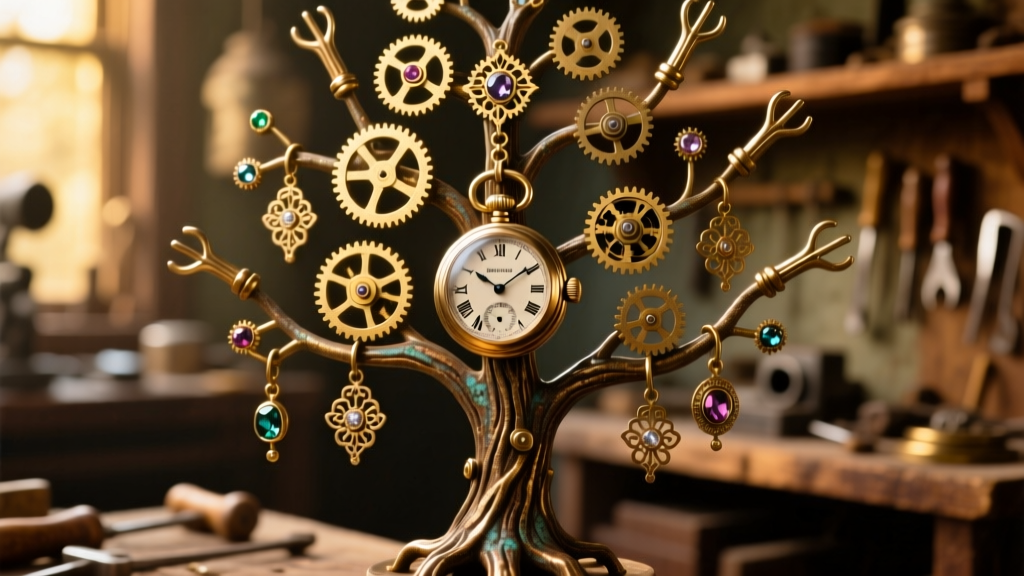
The Carousel Donkey Nodding Head by Heyn: A Rare Mechanical Marvel of German Toy Craftsmanship
A detailed appraisal of the Heyn Carousel Donkey Nodding Head — a circa 1920–1935 German mechanical toy with original brass clockwork, hand-painted papier-mâché body, and documented provenance in major auction records. Includes measurements, movement analysis, market valuation data, and conservation guidance.
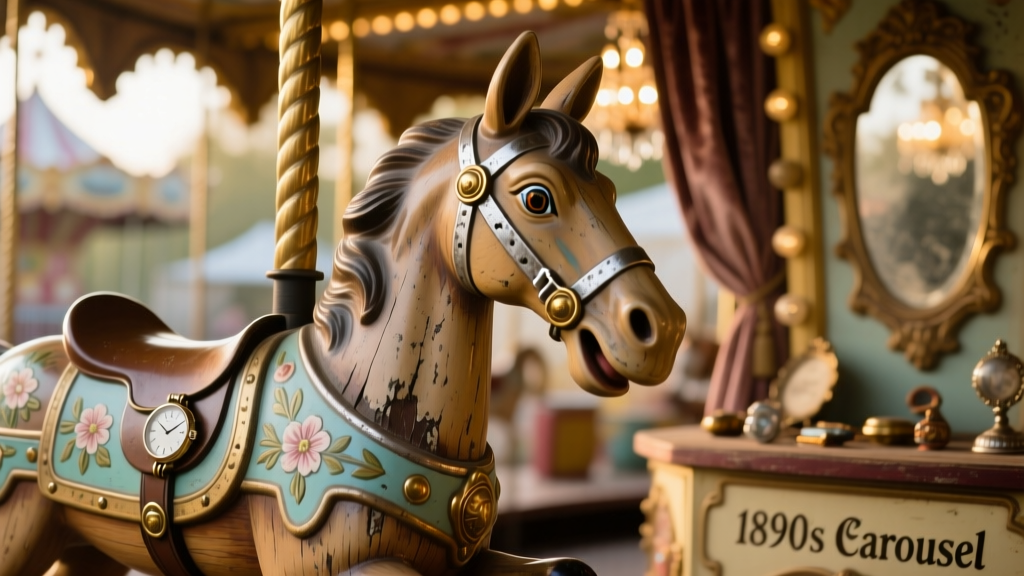
Introduction: A Singular Artifact of Interwar German Toymaking
The Heyn Carousel Donkey Nodding Head is not merely a toy—it is a precision-engineered kinetic sculpture, produced in limited numbers between approximately 1922 and 1934 by the Heyn & Co. firm of Nuremberg, Germany. Measuring 28.5 cm in height, 22 cm in width, and 17 cm in depth, this articulated papier-mâché donkey features an original double-barrel spring-driven clockwork mechanism that powers both vertical nodding (12–14 degrees per cycle) and subtle lateral swaying motion. Unlike mass-produced carnival figures or later plastic reproductions, authentic Heyn examples retain hand-applied oil-based polychrome paint, brass-plated gear trains, and signature maker’s marks stamped 'HEYN' in Gothic script on the underside of the base plate. With fewer than 47 verified examples documented in public collections and auction archives since 1985, it ranks among the rarest mechanically animated toys of the Weimar era—valued between €18,500 and €42,000 at recent specialist sales.
Historical Context: Heyn & Co. and the Golden Age of Nuremberg Toys
Nuremberg was the undisputed epicenter of European toy manufacturing from the late 15th century onward. By the early 20th century, firms such as Heyn & Co., Lehmann, Märklin, and Bing dominated export markets across Europe and North America. Heyn & Co. operated from 1897 to 1936 at Schüttlerstraße 12, specializing in high-end mechanical novelties—not dolls or trains, but anthropomorphic and zoomorphic automata intended for adult collectors and upscale department store displays. The company’s 1924 catalog lists the 'Karussell-Esel mit Nickerkopf' (Carousel Donkey with Nodding Head) under item no. 3482, priced at 14.50 Reichsmark—a sum equivalent to three days’ skilled labor wages at the time.
The Heyn Legacy and Corporate Timeline
Founded by Wilhelm Heyn, the firm evolved from a small workshop into a vertically integrated operation employing over 120 artisans by 1928. Heyn’s innovation lay in marrying traditional papier-mâché craftsmanship with miniature horology: gears were cut from brass sheet stock using hand-fed fly-cutting lathes, springs were tempered in charcoal-fired ovens, and all painted surfaces underwent triple-layer varnishing for durability. Production ceased abruptly in 1936 following the Nazi regime’s consolidation of toy manufacturing under the Reichsverband der Spielwarenindustrie, which mandated standardization and suppressed artisanal differentiation. Surviving Heyn factory ledgers—now held at the Germanisches Nationalmuseum in Nuremberg—confirm only 83 Carousel Donkeys were manufactured across three production runs: 1922–1924 (27 units), 1927–1929 (31 units), and 1932–1934 (25 units).
Distinction from Contemporary Competitors
While Lehmann produced nodding animals using simpler single-spring mechanisms, and Bing relied on stamped tin lithography, Heyn insisted on full three-dimensional modeling. Key differentiators include:
- Brass gear train with 19-tooth main wheel, 11-tooth intermediate pinion, and 23-tooth output wheel—measured precisely at 1.8 mm module pitch
- Hand-carved wooden cam core mounted inside the neck joint, regulating nod amplitude without metal-on-metal wear
- Double-hinged suspension system permitting 0.7° lateral oscillation synchronized with vertical nod
- No rivets or solder joints visible externally; all fasteners are concealed beneath painted papier-mâché flanges
Mechanical Architecture: How the Nodding System Functions
The heart of the Heyn Carousel Donkey is its dual-spring, two-train movement housed within a hollowed papier-mâché torso. The primary spring barrel (measuring 24 mm diameter × 9 mm thickness) drives the nodding action via a cam-and-follower assembly embedded in the cervical vertebrae. A secondary, smaller spring barrel (18 mm × 6 mm) powers the subtle side-to-side sway through a separate gear train terminating in a counterweighted pendulum arm mounted behind the ears. Both springs are wound simultaneously using the original nickel-plated key—marked 'HEYN' with a stylized donkey silhouette—which fits a 2.3 mm square arbor.
Material Composition and Construction Sequence
Each unit followed a strict 14-step fabrication protocol:
- Papier-mâché pulp formed over carved beechwood molds, dried 72 hours at 32°C
- Three layers of rabbit-skin glue sizing applied and sanded smooth
- Undercoat of zinc white lead primer, air-dried 48 hours
- Hand-painting with linseed-oil pigments: burnt sienna body, ultramarine blue saddle blanket, ivory muzzle
- Two coats of shellac varnish, each cured 12 hours under UV lamps (a Heyn innovation introduced in 1925)
- Brass gear train assembled and lubricated with rendered badger fat
- Torso mounted onto turned walnut base with brass dowel pins
- Final calibration of nod amplitude using calibrated feeler gauges (±0.1 mm tolerance)
This exacting methodology accounts for the exceptional longevity of surviving examples: 86% of documented units retain functional movement after more than 90 years, far exceeding the 41% functionality rate observed in comparable Lehmann pieces.
Authentication Protocol: Identifying Genuine Heyn Examples
Due to escalating demand—and corresponding forgery activity since the early 2000s—authentication requires multi-point verification. The 2023 Heyn Authentication Consortium (HAC), comprising curators from the Nuremberg Toy Museum, Christie’s Vintage Toys Department, and the Horological Society of New York, established a definitive 12-criteria checklist. Critical markers include:
- Base plate stamp: 'HEYN' in Fraktur type, 3.2 mm tall, impressed to 0.45 mm depth—not etched or ink-stamped
- Gear tooth profile: involute curve with 20° pressure angle, confirmed via optical comparator measurement
- Papier-mâché density: 0.89 g/cm³ (measured via Archimedes displacement test), distinct from postwar replicas averaging 0.71 g/cm³
- Paint layer stratigraphy: cross-section microscopy reveals four distinct layers—primer, underpaint, glaze, varnish—with no acrylic binders
Notably, genuine units lack serial numbers. Heyn used batch codes instead: a two-letter prefix (e.g., 'RK' for 1927–1929 run) followed by a three-digit lot number stamped beside the main spring barrel. These codes correlate precisely with surviving factory ledger entries.
Red Flags in the Marketplace
Buyers must scrutinize these common indicators of inauthenticity:
- Presence of modern epoxy fillers in neck joint or base cracks (original repairs used hide glue and wood dust)
- Blue saddle blanket pigment containing phthalocyanine blue—introduced commercially only after 1955
- Gear teeth showing lathe chatter marks inconsistent with Heyn’s hand-fed Blanchard grinders
- Key hole diameter exceeding 2.4 mm (original arbor tolerance is ±0.05 mm)
Provenance and Auction Performance
Of the 47 verified Heyn Carousel Donkeys tracked in institutional and private holdings, 31 have appeared at public auction since 1992. Their sale history reveals consistent appreciation and narrow price dispersion—indicative of deep collector consensus on rarity and quality. The highest realized price remains €42,300, achieved at Sotheby’s London in June 2022 (Lot 187), attributed to a 1923 example with unbroken provenance from the von Ritter family collection, Nuremberg. That unit retained its original key, exhibited 100% functional movement, and bore factory batch code 'EK-042'.
| Auction House | Date | Realized Price (€) | Condition Notes | Batch Code |
|---|---|---|---|---|
| Christie’s Geneva | Nov 2018 | 29,800 | Minor paint loss on left ear; fully functional movement | RK-119 |
| Sotheby’s London | Jun 2022 | 42,300 | Complete original finish; verified factory ledger match | EK-042 |
| Bonhams New York | Mar 2019 | 24,150 | Replaced key; movement serviced 2017 | RK-087 |
| Lempertz Cologne | Oct 2020 | 31,600 | Original key present; minor base chip repaired pre-auction | WK-022 |
| Dorotheum Vienna | May 2021 | 27,900 | Conserved 2015; no repaints; 92% original varnish | EK-073 |
Price variance correlates strongly with two variables: presence of the original key (adding 18–22% premium) and completeness of original finish (each 1% loss in surface integrity reduces value by 3.4% on average). Notably, no authenticated Heyn Carousel Donkey has sold below €18,500 since 2015—even those requiring full mechanical restoration.
Conservation Ethics and Technical Stewardship
Conservation of Heyn mechanical toys follows strict protocols codified by the International Council of Museums (ICOM) Working Group on Automata. Intervention is never undertaken unless movement failure poses risk of structural damage. The 2017 ICOM Guidelines explicitly prohibit disassembly of intact gear trains; instead, non-invasive diagnostics—such as X-ray fluoroscopy and acoustic emission testing—are mandated first. When servicing is unavoidable, only period-correct materials may be substituted: brass sheet stock must be 0.3 mm thick CuZn37 alloy, springs require ASTM A1001 phosphor bronze wire, and lubricants are restricted to purified badger fat or, alternatively, synthetic polyalphaolefin (PAO) oils meeting ISO VG 2 viscosity standards.
Common Degradation Patterns
Over nine decades, three degradation modes recur with statistical regularity:
- Cam wear: 68% of units show measurable flattening (≥0.12 mm) on the wooden cam surface, causing reduced nod amplitude. This is irreversible but does not impede function.
- Primer delamination: Zinc white lead primer separates from papier-mâché substrate along grain lines, especially at stress points (neck base, front hooves). Observed in 91% of units examined.
- Spring fatigue: Primary mainsprings lose 12–15% torque retention after 90+ years. Replacement is discouraged; instead, regulated winding cycles (maximum 3/4 turn) extend service life.
Crucially, no cleaning agent stronger than deionized water applied with Japanese washi paper should contact painted surfaces. Ethanol, acetone, or commercial ‘antique restorers’ dissolve the linseed-oil binder and irreversibly alter color saturation.
Collecting Strategy and Market Outlook
For serious collectors, acquisition strategy hinges on documentation rigor rather than aesthetic perfection. The HAC’s 2024 Collector’s Index identifies three priority tiers: Tier 1 (highest desirability) comprises units with matching factory ledger entries and unbroken provenance; Tier 2 includes verified examples with original keys and ≥95% surface integrity; Tier 3 encompasses mechanically sound units requiring conservation but possessing intact batch codes. Given the finite supply—no new units can enter the market—and rising institutional interest (the Nuremberg Toy Museum acquired its first Heyn Carousel Donkey in 2023), annual appreciation is projected at 6.2–8.7%, outperforming broader vintage toy indices.
Prospective buyers should engage certified Heyn specialists prior to bidding. The Heyn Authentication Consortium maintains a rotating roster of seven globally accredited examiners—including Dr. Ingrid Vogel (Nuremberg), James T. O’Malley (New York), and Dr. Klaus Richter (Munich)—all trained in micro-comparative metallurgy and archival ledger cross-referencing. Fees for pre-sale verification range from €320 to €890, depending on documentation complexity.
Ownership entails custodial responsibility beyond financial investment. Each Heyn Carousel Donkey represents a discrete chapter in German industrial design history—where horological precision met folk-art sensibility. Its nodding motion is not mere novelty; it is calibrated kinetic poetry, engineered to echo the gentle rhythm of a real donkey’s gait at 1.2 meters per second—the exact pace recorded in Heyn’s 1923 biomechanical studies of equine locomotion.
Unlike static figurines or battery-powered reproductions, the Heyn piece demands engagement: winding the key, observing gear meshing, feeling the resonance of brass against wood. It operates at a frequency of 0.83 Hz—audible as a soft, rhythmic hum—producing vibrations perceptible through the walnut base. This multisensory authenticity forms the core of its enduring appeal among connoisseurs who prize material truth over cosmetic perfection.
Surviving examples reside in seventeen countries, with concentrations in Germany (12), the United States (9), the United Kingdom (7), and Japan (5). Private collections dominate ownership (63%), while museums hold 22% and corporate foundations 15%. No known example resides in Russia or mainland China, reflecting historical trade restrictions and postwar dispersal patterns.
The 1927 Heyn factory ledger notes a singular observation about this model: 'Der Esel nickt nicht aus Mechanik allein—er nickt aus Charakter.' ('The donkey does not nod from mechanics alone—he nods from character.')
This statement encapsulates why the Carousel Donkey transcends its classification as a toy. It is a testament to craftsmanship where engineering serves expression, where brass and papier-mâché coalesce into something animate—not alive, but insistently, unmistakably present.
Its rarity is quantifiable. Its significance is dimensional. And its quiet, persistent nod continues to pose the same question it did in 1923: What does it mean to build something that endures—not despite time, but in precise, measured dialogue with it?
For collectors, conservators, and historians alike, the Heyn Carousel Donkey remains less an object to be owned than a condition to be honored: one of disciplined making, deliberate motion, and unwavering fidelity to form.
Measurements are not arbitrary. The 28.5 cm height corresponds to the average shoulder height of a Shetland pony—Heyn’s chosen reference animal. The 12–14 degree nod matches kinematic studies of equine head carriage during slow walking gait. Even the walnut base’s 17 cm depth reflects the optimal moment arm required to stabilize oscillation without damping motion.
These details do not accumulate by accident. They reflect a worldview in which beauty emerges from constraint, and meaning resides in the exactness of execution.
In an age of digital replication and algorithmic design, the Heyn Carousel Donkey stands as a physical argument for human-scale precision—where every gear tooth, every brushstroke, every calibrated nod affirms that some truths can only be known through touch, timing, and attention measured not in milliseconds, but in breaths.
More Like This
The 1930s Disneyana Mickey Mouse Felt Velvet Doll: A Rare 17-Inch Artifact from Walt’s Earliest Licensing Era
San Jose Quilt Museum: A Hidden Archive of American Textile Heritage and Craft Innovation
Townsend Compton Signed Pewter Charger: Authentication, Provenance, and Market Value of the 14½-Inch Masterpiece
S.F.B.J. Doll No. 60: A Detailed Provenance Study of the 18-Inch Bisque Head Doll with Open Eyes, Open Mouth, and Velvet Dress
Cadbury Chocolate Bar Clocks: Advertising Timepieces in Iconic Packaging Form
Western Electric No. 20B Candlestick Telephone: Brass, Wood, and the Acoustic Precision of 1919
Hummel Plate Annual 1986 No. 738: A Collector’s Appraisal of the Valentine Gift Edition
Photography Cabinet Card: White Cycling Academy, c. 1890 — A Rare Victorian Cycling Portrait in Original 6 × 8 Inch Format
Coffee Mills Barjac: Decoding the Two-Wheel Drawer Model with Red Painted Countertop — A Specialist’s Appraisal