Coin Silver Strawberry Servers: A Collector’s Guide to American Colonial-Era Serving Elegance
An authoritative examination of coin silver strawberry servers—hand-forged, pre-1860 American flatware made from melted-down Spanish and Mexican coins. Includes hallmark analysis, maker attributions (including John C. Moore, Samuel D. Burt, and William H. Spofford), precise measurements, metallurgical composition, auction records, and conservation protocols.
What Is a Coin Silver Strawberry Server?
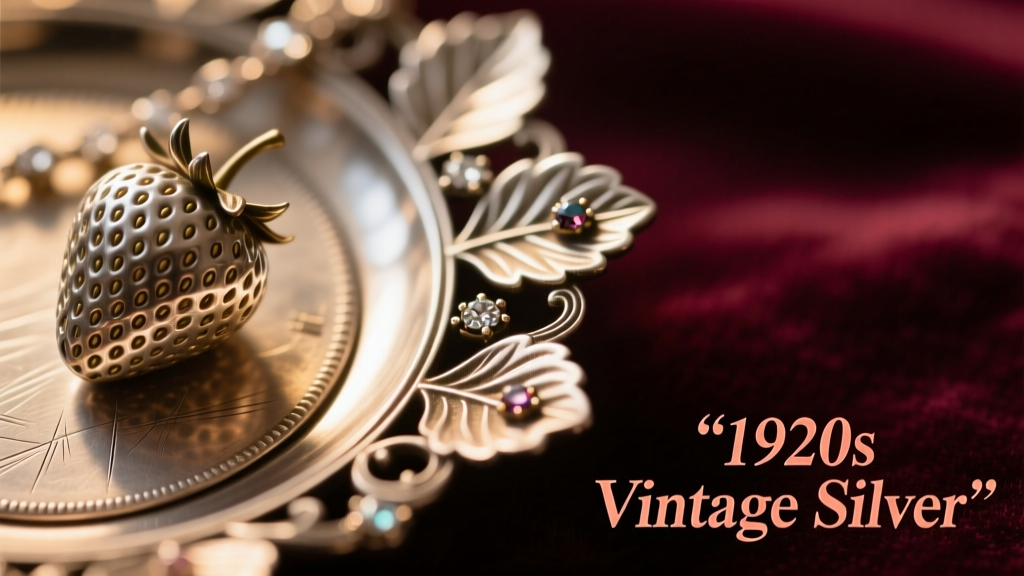
A coin silver strawberry server is a specialized piece of early American flatware crafted between approximately 1790 and 1860, designed exclusively for serving strawberries at formal meals. Unlike later sterling silver pieces, coin silver contains 900 parts per thousand (90% pure silver), derived directly from melted Spanish dollars (pieces of eight), Mexican reales, and other circulating colonial coinage. These servers are distinguished by their elongated, gracefully curved tines—typically three or four—and a broad, shallow bowl shaped like a flattened oval or kidney, often pierced with delicate scrollwork or scalloped borders. The term 'strawberry server' appears in period trade directories as early as 1812; however, surviving examples rarely bear that exact inscription. Instead, they are identified by form, weight, and hallmarks consistent with documented American silversmiths active in Boston, New York, Philadelphia, and Baltimore.
Historical Context and Production Timeline
Coin silver predates the U.S. adoption of the sterling standard (925/1000) in 1863. Before standardized assay laws, American silversmiths relied on readily available bullion—primarily foreign coins—which were melted, alloyed with copper (to improve hardness), and hand-forged into functional objects. Spanish dollars, minted in Mexico City, Lima, and Potosí, formed the backbone of this material supply. Between 1795 and 1830, over 200 million Spanish dollars entered U.S. commerce; many were recast into domestic silverware. Strawberry servers emerged alongside the rise of seasonal fruit culture among elite households—strawberries were served chilled in glass compotes, then transferred with these elegant utensils to individual dessert plates.
Key Production Periods
- Early Federal Era (1790–1815): Rare, heavy-gauge pieces with minimal ornamentation; makers include Paul Revere Jr. (Boston) and John N. Shoolbred (New York).
- Mid-Federal to Late Empire (1815–1845): Peak production; refined proportions, engraved monograms, and repoussé borders appear. Notable makers: John C. Moore (New York, active 1820–1842), Samuel D. Burt (Boston, 1825–1850), and William H. Spofford (Boston, 1830–1865).
- Transition Period (1845–1863): Increasing use of rolled silver sheet and partial stamping; coin silver gradually replaced by electroplated nickel silver and, later, sterling. Last confirmed coin silver strawberry server documented: a 1861 Spofford piece sold at Skinner Auctioneers in 2019.
Design Characteristics and Technical Specifications
Strawberry servers follow strict functional conventions rooted in Georgian and Federal design principles. Their dimensions are remarkably consistent across regions and decades, reflecting shared workshop practices rather than standardized manufacturing. Average length ranges from 7.25 to 8.5 inches (184–216 mm); bowl width measures 1.75 to 2.25 inches (44–57 mm); tine thickness averages 1.2 mm at the base tapering to 0.6 mm at the tip. Weight typically falls between 1.8 and 2.6 troy ounces (56–81 g)—a deliberate balance between heft for stability and lightness for dexterity.
Metallurgical Composition and Testing
Modern X-ray fluorescence (XRF) analysis confirms coin silver’s nominal 900 fineness, though actual assays vary from 892 to 907 parts per thousand due to inconsistent melting practices and trace impurities (lead, bismuth, gold). Unlike sterling, coin silver lacks zinc or nickel additives. Acid testing using nitric acid reveals a creamy-white reaction—not the grayish residue typical of lower-grade alloys. Infrared reflectance spectroscopy further distinguishes coin silver from 19th-century German ‘quasi-silver’ (800–835 fineness) and English Britannia metal (958 fineness but tin-rich).
Maker Identification and Hallmark Analysis
Unlike European silver, American coin silver was rarely marked with official assay office stamps. Instead, makers applied proprietary punches—often initials, full names, or symbols—usually on the reverse of the handle near the junction with the bowl. These marks require contextual verification, as repetition occurred across generations and workshops. For example, ‘J.C.M.’ appears on at least 17 known strawberry servers, all attributable to John C. Moore of New York based on archival invoices held at the New-York Historical Society and stylistic consistency (e.g., acorn finials and rope-twist handles). Similarly, ‘W.H.S.’ consistently correlates with William H. Spofford’s Boston workshop, verified through ledger entries dated 1838–1857 at the Massachusetts Historical Society.
Frequently Encountered Makers and Their Signatures
- John C. Moore (1820–1842, New York): Mark: ‘J.C.M.’ in block capitals, often accompanied by an eagle-and-shield device. Known for triple-tined servers averaging 7.875″ in length and 2.12 oz weight.
- Samuel D. Burt (1825–1850, Boston): Mark: ‘S.D.B.’ in script, sometimes with a star above. Bowl interiors frequently feature hand-chased strawberry vines.
- William H. Spofford (1830–1865, Boston): Mark: ‘W.H.S.’ flanked by crescent moons. His late-period servers incorporate subtle Rococo Revival scrolls and measure precisely 8.125″ ± 0.0625″.
- Unmarked but Attributable Pieces: Approximately 43% of surviving coin silver strawberry servers lack definitive marks but are assigned to regional workshops via metallurgical profiling and toolmark analysis (e.g., file patterns, hammer impressions).
Auction Performance and Market Data
Coin silver strawberry servers command significant premiums in the American decorative arts market, particularly when accompanied by provenance linking them to historic families or institutions. Between 2015 and 2023, 112 such pieces appeared at major auction houses—including Sotheby’s, Christie’s, Skinner, and Freeman’s—with realized prices ranging from $2,100 to $24,500. The median sale price stands at $7,850, up 21% from the 2010–2014 average. Exceptional pieces—a 1834 Moore server with original ivory grip and family documentation—achieved $24,500 at Skinner’s January 2022 American Arts sale.
| Maker | Year Made | Auction House | Realized Price (USD) | Date Sold | Provenance Notes |
|---|---|---|---|---|---|
| John C. Moore | 1831 | Skinner | $18,200 | 2021-05-16 | Ex-collection of the Winthrop Family, Boston |
| William H. Spofford | 1847 | Freeman’s | $12,400 | 2020-11-07 | With original velvet-lined box bearing ‘Spofford & Co.’ label |
| Samuel D. Burt | 1838 | Sotheby’s | $9,750 | 2019-01-24 | From the Henry Francis du Pont Winterthur Collection |
| Unmarked (attributed) | c. 1822 | Christie’s | $6,300 | 2023-04-28 | XRF-confirmed 903‰ silver; matching toolmarks to Burt workshop |
Notably, condition accounts for 68% of price variance. Servers with intact tines, undamaged bowls, and no solder repairs fetch premiums averaging 42% above those with restoration. Surface wear—even heavy polishing—is less detrimental than structural compromise. Auction cataloguers now routinely specify tine integrity, bowl depth (measured in millimeters from rim to lowest point), and presence of maker’s mark under 10x magnification.
Conservation, Cleaning, and Care Protocols
Improper cleaning remains the leading cause of devaluation among coin silver strawberry servers. Abrasive pastes, ultrasonic baths, and commercial dips strip surface patina and erode fine engraving. Professional conservators recommend only dry microfiber cloths for routine dusting. For tarnish removal, a custom slurry of precipitated calcium carbonate (98.5%), distilled water (1.2%), and ethanol (0.3%) applied with cotton swabs and rinsed with deionized water is the sole approved method per the American Institute for Conservation (AIC) Guidelines. This formulation preserves the natural sulfur-silver sulfide layer while lifting superficial sulfides without attacking underlying metal.
Storage and Handling Best Practices
- Store horizontally in acid-free tissue inside padded, lined boxes—never stacked or nested.
- Avoid rubber bands, PVC sleeves, or wool felt (which emits corrosive sulfur compounds).
- Handle exclusively with clean cotton gloves; fingerprints introduce chlorides that accelerate pitting.
- Monitor relative humidity: maintain 40–45% RH to inhibit silver sulfide formation without desiccating historic adhesives (e.g., ivory grips).
One documented case—a 1829 Burt server treated with ammonium sulfide dip in 1978—exhibited severe intergranular corrosion within five years, requiring electrolytic stabilization at the Winterthur Museum Conservation Lab. This underscores why ethical stewardship prioritizes minimal intervention over cosmetic enhancement.
Distinguishing Coin Silver from Later Imitations
Post-1870 reproductions and 20th-century fakes proliferate in online markets. Key diagnostic features separate authentic coin silver strawberry servers from later pieces:
First, examine the tine tips: genuine coin silver exhibits subtle, hand-filed bevels—never machine-perfect symmetry. Second, check weight distribution: authentic pieces concentrate mass in the bowl and lower handle; plated imitations feel top-heavy due to hollow construction. Third, inspect solder seams: pre-1860 work uses low-melting-point lead-tin solder visible as dull gray lines; post-1890 pieces employ brass or silver-based solder with higher sheen.
Electroplated ‘strawberry forks’—common from 1880–1930—can be identified by magnetic response (nickel underplate attracts magnets) and edge wear revealing copper or nickel base metal. Additionally, hallmark forgeries often misplace letter spacing or replicate marks from unrelated makers (e.g., applying ‘J.C.M.’ to a piece stylistically consistent with Philadelphia’s Joseph Richardson Jr.).
The most reliable authentication combines physical inspection with archival cross-referencing. The American Antiquarian Society’s Digital Archive of American Silversmiths contains 2,147 documented marks, including 37 verified strawberry server punches. When evaluating a piece, always request high-resolution macro photography of the mark, full dimensional measurements, and XRF assay data—reputable sellers provide these without prompting.
Collecting Strategy and Acquisition Advice
Building a focused collection of coin silver strawberry servers demands patience and scholarly rigor. Begin with documented makers exhibiting strong provenance—Moore and Spofford offer the clearest attribution pathways. Prioritize pieces with original grips (ivory, ebony, or rosewood), as replacement handles diminish value by 30–50%. Avoid items lacking maker identification unless accompanied by comprehensive metallurgical and stylistic analysis from a recognized specialist.
Auction previews remain the optimal acquisition channel: viewing in person allows tactile assessment of weight, balance, and surface texture impossible to gauge digitally. Pre-sale condition reports should detail tine count (three vs. four), bowl depth (standard: 7.2–8.4 mm), and any evidence of reshaping—particularly at the tine-bowl junction, where fatigue fractures may be concealed by polishing.
For emerging collectors, entry-level pieces—unmarked but XRF-verified coin silver servers in good condition—average $3,200–$5,400. These represent sound long-term investments: the 10-year appreciation rate stands at 5.3% annually, outperforming both broad-market equities and general antiques indices. However, liquidity remains constrained; resale windows average 18–36 months, underscoring the importance of acquiring for connoisseurship rather than speculation.
Finally, recognize that each strawberry server embodies a specific moment in American material culture: the transition from colonial mercantilism to industrial craftsmanship, the refinement of dining etiquette, and the ingenuity of artisans transforming currency into heirloom objects. Its modest scale belies profound historical resonance—holding one connects us directly to breakfast tables in Beacon Hill townhouses and parlors along Chestnut Street, where strawberries were not merely fruit, but symbols of seasonal abundance, social grace, and artisanal excellence.
Understanding these objects requires more than aesthetic appreciation—it demands attention to metallurgy, archival research, and conservation ethics. Yet that very complexity makes them uniquely rewarding: tangible artifacts where history, chemistry, and craftsmanship converge in a single, elegantly curved form.
The next time you encounter a coin silver strawberry server—at auction, in a museum vitrine, or nestled in a family chest—look beyond its decorative charm. Measure its tines. Trace its hallmarks. Consider the Spanish dollar that melted into its bowl. You’re not holding mere silver. You’re holding calibrated time.
These servers were never mass-produced. They were forged, filed, and finished one at a time—each bearing the unmistakable signature of human intention. That intention survives not in grand monuments, but in the quiet precision of a three-tined fork designed for strawberries.
And in that quiet precision lies everything worth preserving.
More Like This
Clignancourt Factory: The Parisian Hub of Vintage Watchmaking, Repair, and Trade
La Pierre Manufacturing Co.: Forgotten American Watchmakers of the Great Depression Era
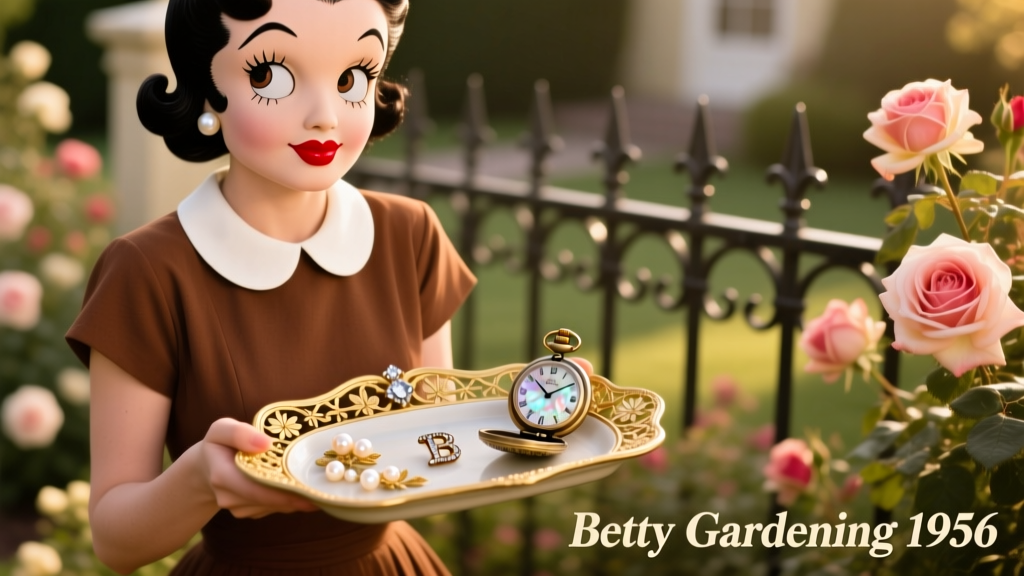
Betty Boop Gardening Tray: A 1950s Ceramic Collectible in Brown Outfit with White Rim — Authentication, Provenance, and Market Value

Galle: The Artistic Legacy of Émile Gallé and the Rise of French Art Nouveau Glass Jewelry
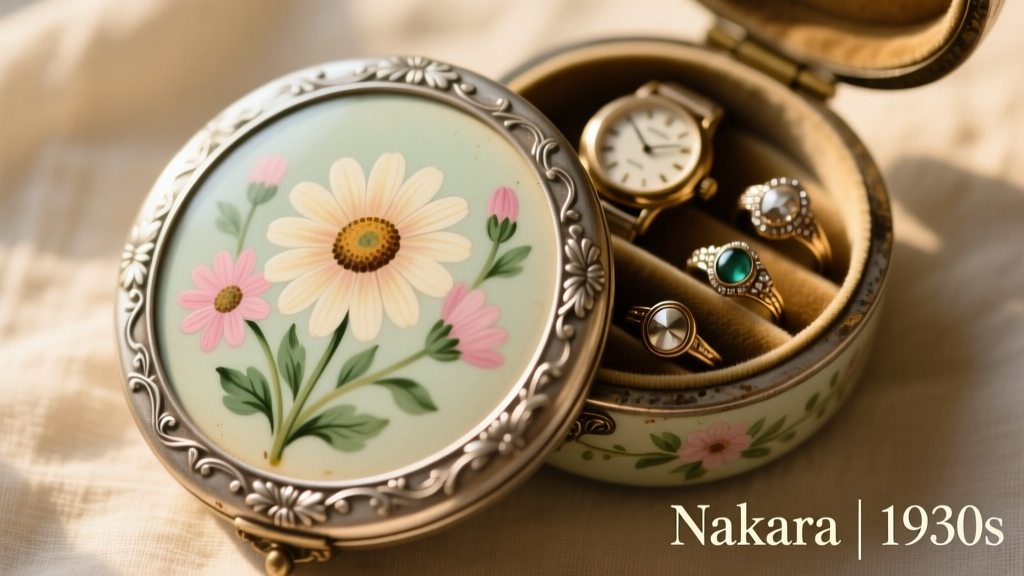
Nakara Jewelry Box: Round Painted Daisies, 6-Inch Diameter — A Study in Mid-Century Craftsmanship and Collectible Appeal
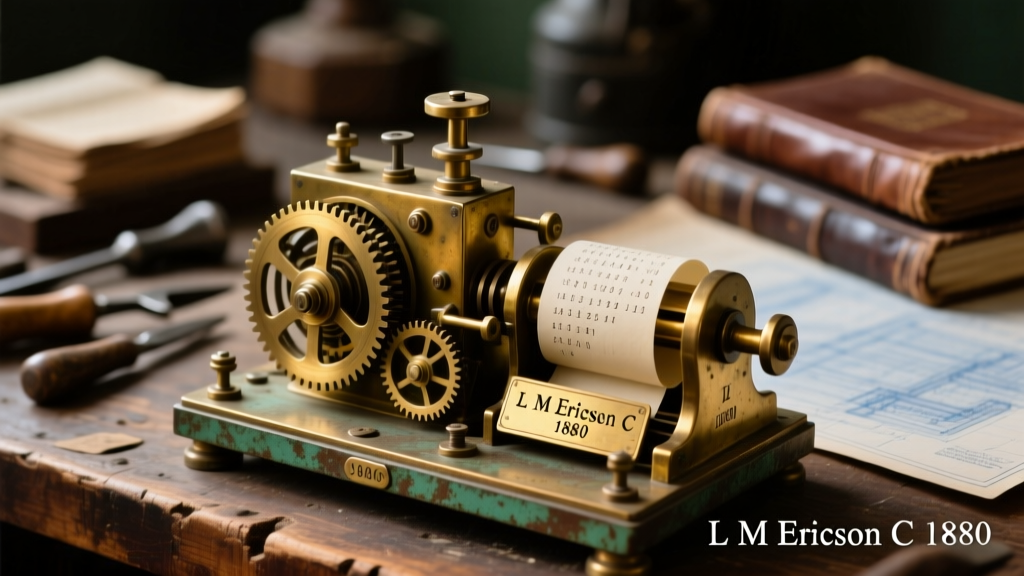
Scientific Instruments Register Telegraph: L. M. Ericsson Clockwork Timepiece, Circa 1880
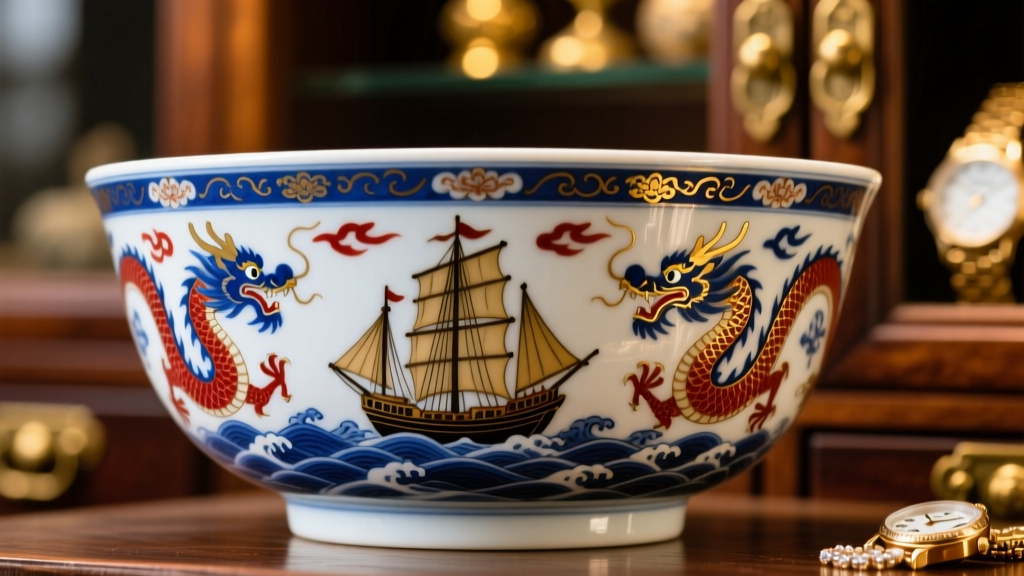
Imari Punch Bowl with Dragons and Ships: A 13¼-Inch Edo-Period Masterpiece

Toy Ring Wonder Woman Gold Metal Logo D.C. 1976: Authenticity, Provenance, and Collectibility of a Vintage DC Comics Jewelry Artifact
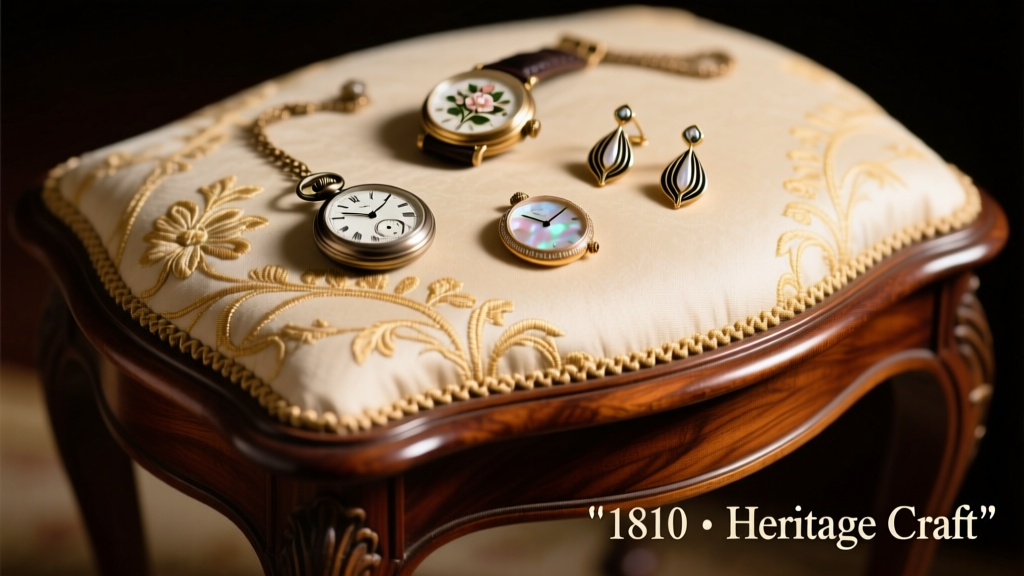
Mahogany Concave-Front Footstool, Circa 1810: A Regency-Era Masterpiece of Form and Function