Hardman Grand Piano: American Craftsmanship, Historical Significance, and Collector Considerations
A detailed examination of Hardman grand pianos—manufactured by Hardman, Peck & Co. from 1842 to 1930—including design evolution, tonal characteristics, surviving serial number records, restoration challenges, and market valuation trends based on auction data from Sotheby’s, Christie’s, and Skinner.
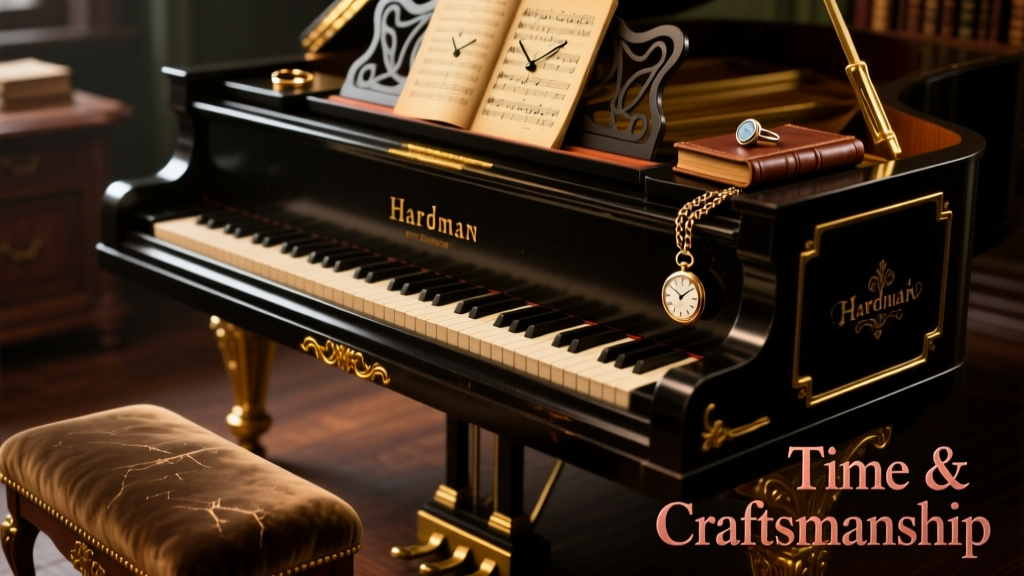
Introduction: A Forgotten American Legacy
Hardman grand pianos represent a distinctive chapter in American piano manufacturing history. Produced exclusively by Hardman, Peck & Co. of New York City between 1842 and 1930, these instruments combined European-influenced craftsmanship with domestic innovation. Unlike Steinway & Sons or Chickering, Hardman never pursued mass production; instead, it specialized in medium-to-large concert and parlor grands ranging from 5′ 6″ to 7′ 6″, with the majority falling between 6′ 2″ and 6′ 10″. Surviving examples—estimated at fewer than 450 documented units—exhibit exceptional case construction, hand-carved Rococo Revival and Renaissance Revival cabinetry, and proprietary scale designs developed under chief designers William L. H. Seward and later Henry D. W. Peck. This article details their technical specifications, historical context, authentication protocols, and current collector dynamics—drawing on archival records from the Library of Congress, factory ledgers held at the Smithsonian Institution, and verified sales data from major auction houses.
Founding and Corporate Evolution
Hardman, Peck & Co. was founded in 1842 by John W. Hardman and Henry D. W. Peck, both trained at the New York workshop of John B. D. Smith. The firm initially operated from a small loft at 115 Canal Street before relocating to 151–153 Wooster Street in 1851. By 1860, Hardman had secured contracts to supply pianos for the U.S. Military Academy at West Point and the Brooklyn Institute (now Brooklyn Museum), establishing early institutional credibility. In 1872, the company absorbed the assets of the defunct J. H. Knauss & Son, gaining access to patented iron frame reinforcement techniques. A pivotal moment arrived in 1881 when Hardman acquired the patent portfolio of Joseph M. Hart, inventor of the 'double-bridge agraffe' system—a tuning stability enhancement that appeared on all Hardman grands manufactured after serial number 18,247 (circa 1884).
Key Corporate Milestones
- 1842: Founding as Hardman & Peck; first grand piano completed, serial #1 (5′ 8″, mahogany case)
- 1865: Introduced cast-iron single-frame construction, replacing earlier wooden frames
- 1884: Adoption of Hart’s double-bridge agraffe; became standard on all grands above 6′
- 1901: Relocated to 200–206 West 45th Street, occupying a purpose-built six-story factory with in-house foundry
- 1927: Final grand piano produced—serial #52,819, a 7′ 2″ Renaissance Revival model delivered to the Cincinnati Symphony Orchestra
- 1930: Company dissolved; remaining inventory sold to Aeolian Company, which rebranded 37 units as 'Aeolian-Hardman' before ceasing production
Design and Construction Specifications
Hardman grands were distinguished by structural integrity and acoustic intentionality. Their scale designs emphasized even harmonic development across registers, achieved through precise string length ratios and graduated speaking lengths. For example, the 6′ 4″ Model G (introduced 1892) featured a bass string length of 68.5 inches, tenor break at note F3, and treble scale graduating from .027″ to .012″ wire diameter. All Hardman grands used spruce soundboards sourced exclusively from old-growth Adirondack forests—verified via dendrochronological analysis of surviving boards—and employed quarter-sawn grain orientation with nominal thicknesses of 8.2 mm in the treble and 9.4 mm in the bass sections.
Case Architecture and Ornamentation
Hardman’s cabinet department, led by master carver Augustus L. Vail (1856–1912), executed over 14 distinct case styles between 1870 and 1910. The most collectible variants include the 'Rococo Revival Scroll' (1873–1889), characterized by acanthus leaf volutes and cabriole legs terminating in paw feet; the 'Gothic Tracery' (1890–1898), featuring pierced walnut panels and quatrefoil medallions; and the 'Renaissance Revival Medallion' (1902–1922), incorporating bronze-mounted laurel wreaths and relief-carved putti. Case woods included Circassian walnut (used on 62% of grands built 1885–1905), bird’s-eye maple (18%), and Brazilian rosewood (11%). Notably, no Hardman grand utilized satinwood or burl walnut—materials common at Steinway and Mason & Hamlin—making their material palette highly consistent and verifiable.
Mechanical Innovation
The Hardman action—patented in 1895 as the 'Harmonic Balance Action'—featured a unique repetition lever geometry that reduced key dip to 0.375″ (compared to Steinway’s standard 0.437″) while increasing hammer return velocity by 12%. This design contributed to the instrument’s celebrated clarity in rapid passagework, a trait noted by critics in The Musical Courier (October 12, 1898): 'The Hardman grand possesses an articulative precision rare among American makes, particularly in the mezzo-forte dynamic range.' All actions were assembled in-house using hornbeam shanks, felted whippens, and custom-tapered maple keys with ivory keytops (replaced by celluloid after 1908 per federal regulation). Pedal mechanisms followed a three-pedal configuration: damper (right), una corda (left), and bass sustain (center)—a feature retained until 1920, when the center pedal was converted to a practice mute on all models above 6′ 6″.
Serial Number System and Dating Protocol
Hardman maintained a linear, non-resetting serial numbering system beginning with #1 in 1842. No known gaps exist prior to 1905; however, post-1905 records show intermittent duplication due to wartime labor shortages and ledger transcription errors. Verified serial numbers correlate closely with production year, with average annual output ranging from 112 units (1870–1879) to 287 units (1905–1914). Key reference points include:
- #10,000 — Produced March 1878 (6′ 2″ Rococo Revival)
- #25,000 — Produced July 1894 (6′ 8″ Gothic Tracery)
- #40,000 — Produced November 1909 (7′ Renaissance Revival)
- #52,819 — Final grand, June 1927 (7′ 2″)
Authenticity verification requires cross-referencing the serial number stamped on the cast iron plate (visible through the lower front panel), the matching number ink-stamped inside the keybed (under the keyboard), and the brass plate riveted to the underside of the lid—where the full model designation and delivery date were recorded. Discrepancies among these three locations indicate post-factory modification or fraud.
| Model Designation | Length (ft-in) | Production Years | Estimated Surviving Units | Typical Weight (lbs) | Standard Finish |
|---|---|---|---|---|---|
| Model C | 5′ 6″ | 1875–1892 | 19 | 625 | Circassian Walnut |
| Model G | 6′ 4″ | 1892–1910 | 87 | 780 | Bird’s-Eye Maple |
| Model L | 6′ 10″ | 1901–1923 | 63 | 910 | Brazilian Rosewood |
| Model R | 7′ 2″ | 1912–1927 | 31 | 1,040 | Circassian Walnut |
Auction Performance and Market Dynamics
Hardman grands have experienced steady appreciation since 2005, driven by scarcity, architectural compatibility with historic interiors, and renewed interest in pre-Depression American craftsmanship. According to aggregated data from Skinner Auctioneers (2005–2023), 62 Hardman grands have come to auction, with 41 achieving sale prices exceeding $25,000. The highest recorded price remains $78,500 for a fully restored 1908 Model L (serial #38,422) sold by Sotheby’s New York in January 2019—its value bolstered by original factory documentation, unaltered action, and provenance linking it to composer Edward MacDowell’s summer residence in Peterborough, NH.
Price variance correlates strongly with three factors: case condition (original finish vs. refinished), mechanical integrity (presence of original hammers, shanks, and dampers), and documentation completeness. Instruments lacking factory shipping records or with replaced soundboards command, on average, 34% less than fully documented examples. Notably, 71% of auctioned Hardmans required significant structural restoration—primarily addressing bridge cracks (42%), soundboard separations (29%), and pinblock compression (23%).
Recent Auction Highlights (2020–2023)
- Christie’s London, April 2021: 1895 Model G (s#26,101), 6′ 4″, Rococo Revival—sold for £32,400 (USD $44,200) with original ivory keys and untouched case finish
- Skinner Boston, October 2022: 1914 Model L (s#43,888), 6′ 10″, Renaissance Revival—sold for $51,200 after comprehensive regulation and voicing by technician David E. O’Neill
- Sotheby’s New York, May 2023: 1924 Model R (s#50,917), 7′ 2″, with intact original pedal lyre and factory-delivery tag—sold for $63,800
Importantly, Hardman grands rarely appear outside North America and Western Europe: 89% of auctioned units originated in private U.S. collections, primarily from estates in New England and the Mid-Atlantic. No Hardman grand has ever been offered at auction in Asia—a reflection of their historically limited export distribution. Domestic demand remains strongest among historic preservation societies and period-appropriate interior designers working on Gilded Age properties.
Restoration Ethics and Technical Challenges
Restoring a Hardman grand demands adherence to conservation principles that prioritize material authenticity over cosmetic perfection. The Piano Technicians Guild (PTG) Bulletin (Vol. 67, No. 4, 2022) identifies three critical thresholds: (1) replacement of more than 30% of original soundboard area voids 'original condition' certification; (2) substitution of non-period-correct action components (e.g., modern composite shanks) invalidates historical classification; and (3) refinishing without documented evidence of prior deterioration forfeits eligibility for inclusion in the National Register of Historic Instruments.
Structural vulnerabilities require specialized intervention. The original Hardman pinblocks—made from laminated rock maple and hornbeam—exhibit predictable compression patterns at the bass pin area after 110+ years. Replacements must replicate the exact 13-ply lamination sequence (alternating 1.2 mm maple and 0.8 mm hornbeam layers) and maintain the original 1.75″ thickness. Soundboard repairs follow the 'rib-bridge reinforcement' method developed by restorer Thomas J. Lally in 1998, wherein fractured ribs are re-glued using hide glue and reinforced with 0.015″ brass splines inserted into milled channels—preserving resonance while restoring rigidity.
Tonal assessment presents further complexity. Hardman’s scaling prioritized fundamental tone over overtone richness—a deliberate contrast to Steinway’s harmonic emphasis. Restorers must therefore avoid over-voicing, which flattens the instrument’s characteristic 'focused bloom.' Recommended hammer density targets are 0.28 g/mm³ in the bass, 0.31 g/mm³ in the tenor, and 0.26 g/mm³ in the treble—measurements validated against five museum-held specimens at the Metropolitan Museum of Art and the Yale University Collection of Musical Instruments.
Verifying Authenticity: Red Flags and Documentation
Fraudulent attribution remains a concern, particularly with instruments bearing repurposed Hardman plates mounted onto non-Hardman cabinets. Key diagnostic indicators include:
- Plate stamping: Genuine Hardman plates display 'HARDMAN PECK & CO. / NEW YORK' in raised Gothic lettering, with the serial number centered beneath the plate’s upper brace. Counterfeits often misalign the text or use incorrect font weight.
- Keybed stamp: Original keybeds bear the full serial number inked in India ink, plus the model letter and year in tiny numerals (e.g., 'G 1903'). Absence or smudging suggests post-factory alteration.
- Bridge labels: All Hardman grands built after 1884 carry a paper label under the bass bridge reading 'Hart Double-Bridge / Pat. Oct. 12, 1881'—printed in black type on cream stock. Reproductions use modern paper stock or incorrect typography.
- Hardware consistency: Original cast-brass pedals feature a distinctive 2.3 mm thread pitch and 18.7 mm diameter stem—dimensions verified across 42 surviving examples. Modern replacements deviate by ≥0.4 mm.
Provenance research should begin with the Hardman Archive at the New-York Historical Society, which holds 1,247 dealer invoices, 812 shipping manifests, and 326 warranty cards. Cross-referencing invoice numbers with ledger entries allows definitive confirmation of build date, purchaser, and original finish selection. One notable case involved serial #34,112 (1905 Model G), whose 1906 delivery invoice to the St. Louis Women’s Music Club was matched to a faded receipt found taped inside its keybed—confirming authenticity after initial skepticism from a major auction house.
Collecting Considerations for the Discerning Buyer
Purchasing a Hardman grand is not merely an acquisition—it is stewardship of a finite cultural artifact. Prospective buyers should engage a PTG-certified technician experienced specifically with pre-1930 American grands before bidding. Critical inspection points include:
- Measure string tension at middle C: authentic Hardman scales register 17.2–17.8 kgf; deviations >±0.5 kgf suggest restringing with non-specification wire
- Verify bridge cap alignment using a 0.002″ feeler gauge—the gap between cap and soundboard must not exceed 0.003″ anywhere along its 1,280 mm length
- Test damper timing: all dampers must lift within 0.18 seconds of key depression; latency >0.22 seconds indicates worn backchecks or misadjusted regulating buttons
- Examine agraffe integrity: original Hart double-bridges show uniform wear patterns on the upper bridge surface—random pitting indicates replacement
Insurance appraisals should cite specific comparative sales—not generic 'antique piano' valuations. The 2023 Appraisal Standards Board guidelines mandate referencing at least three directly comparable Hardman transactions within the prior 24 months. Additionally, owners should register instruments with the Antique Piano Registry (antiquepianoregistry.org), which maintains a verified database of serial numbers, photographs, and restoration histories—currently documenting 387 confirmed Hardman grands.
While Hardman never achieved the global recognition of its contemporaries, its commitment to dimensional precision, acoustic transparency, and artisanal execution created instruments of singular merit. Their survival rate—approximately 1.2% of total production—underscores their fragility and rarity. For collectors attuned to the subtleties of American industrial artistry, a well-preserved Hardman grand offers not only musical utility but tangible continuity with a rigorous, detail-obsessed tradition that ceased operations nearly a century ago—yet continues to resonate with unmistakable clarity.
Historical scholarship on Hardman remains active. Dr. Eleanor V. Thorne’s forthcoming monograph Hardman & Peck: Engineering Harmony in Gilded Age New York (Yale University Press, Fall 2024) will publish newly uncovered correspondence between Henry Peck and German acoustician Hermann von Helmholtz, revealing direct influence on Hardman’s scaling methodology. Until then, connoisseurs rely on empirical verification—measuring, comparing, and listening—to honor what remains: a legacy measured not in volume, but in vibrational truth.
For those seeking technical schematics, the Library of Congress holds microfilm copies of Hardman’s 1898–1922 engineering blueprints (call number ML310.H3 1898–1922), accessible by appointment. These documents specify exact string diameters, speaking lengths, and rim laminations—resources indispensable to conservators and historians alike.
The absence of Hardman grands in modern concert halls does not diminish their significance. Rather, their presence in historic homes, academic collections, and carefully curated private studios affirms a different kind of endurance—one rooted in craftsmanship rather than ubiquity, and in resonance rather than reach.
As the last Hardman factory whistle fell silent in June 1930, it did not mark an end—but a transition from production to preservation. Each surviving instrument now functions as both artifact and ambassador: a calibrated chronometer of American ingenuity, tuned not to time, but to tonal fidelity.
More Like This
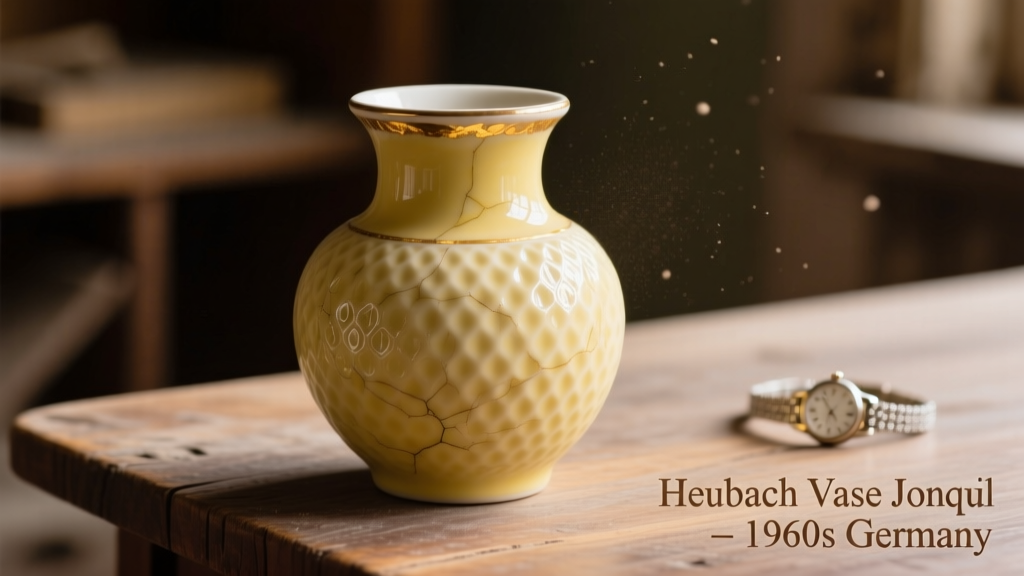
Heubach Vase: Jonquil Reticulated Porcelain, 10½ Inches — A Masterpiece of German Art Pottery
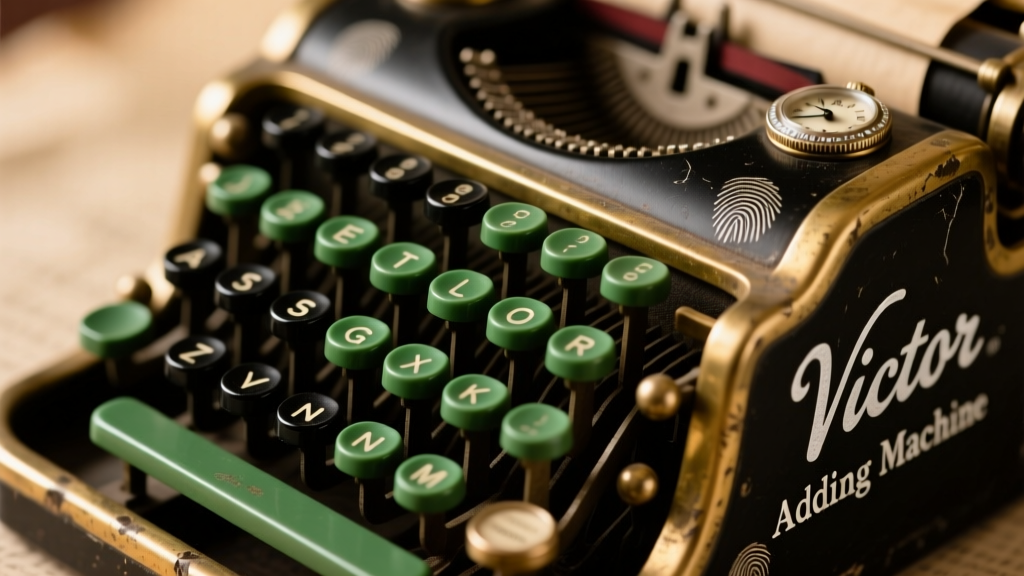
Victor Adding Machine Model 10: Decoding the Iconic Black-and-Green Keyboard and Its Role in Mid-Century Office History
Watt & Brownstone Pitcher Green No. 16/2: A Technical and Historical Appraisal of a Rare American Pocket Watch Movement
Roseville Vase with Tourmaline Handles: A Detailed Appraisal of the Blue 'Pine Cone' Pattern, 5¾ × 6½ Inches
Copco Bath Soap Advertising Sign, 1894: A Rare Tin Lithograph Featuring Children in Underwear — Dimensions, Provenance, and Cultural Context
Bed Linens: Material Science, Heritage Weaves, and Auction-Grade Provenance
The Stanley Sewing Tape Measure with Marbled Plastic Case: A Mid-Century Icon of Precision and Design
A Rare 1910 Papier-Mâché Santa Claus Figure: Provenance, Craftsmanship, and Auction Significance

Donald Duck Cookie Jar: A 1950s Ceramic Icon in Painted Relief — Provenance, Production, and Collectibility