The Hindoo Hoare Cut-Glass Humidor: A Masterpiece of Victorian Craftsmanship and Cigar Culture
A detailed examination of the rare 6¼-inch Hindoo Hoare cut-glass humidor — its provenance, glassmaking techniques, design motifs, market history, and significance in 19th-century British luxury goods.
The Hindoo Hoare Humidor: An Icon of Victorian Refinement
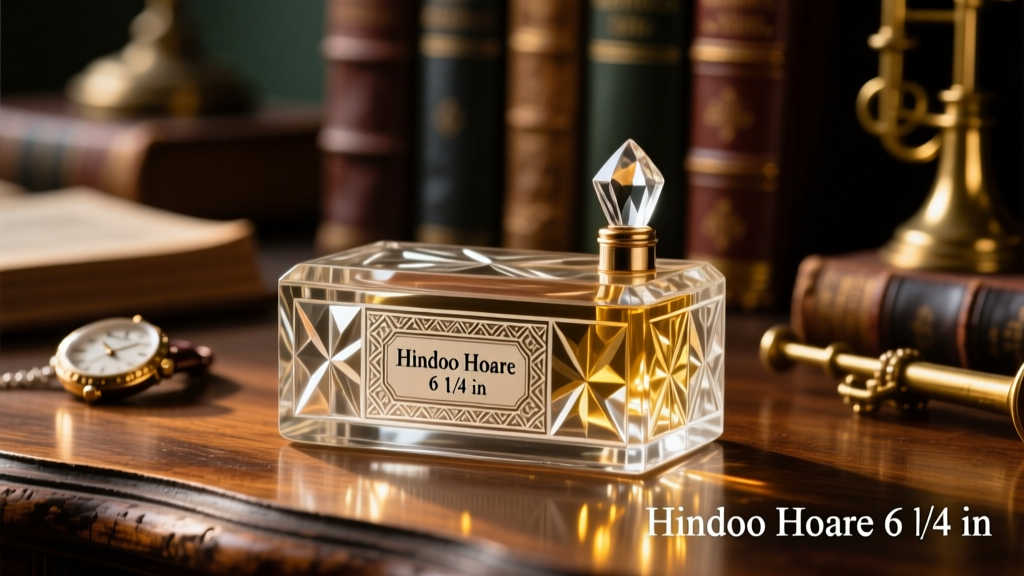
Standing precisely 6¼ inches (15.875 cm) tall with a diameter of 4⅛ inches (10.47 cm), the Hindoo Hoare cut-glass humidor represents one of the most technically accomplished and culturally resonant domestic objects produced by English glassmakers during the late Victorian era. Manufactured between 1878 and 1892 by Hoare & Co. of Birmingham — a firm founded in 1832 and renowned for its precision-cut crystal tableware and presentation pieces — this humidor exemplifies the convergence of industrial mastery, Orientalist aesthetics, and cigar connoisseurship. Its name derives not from Indian origin but from Hoare’s proprietary ‘Hindoo’ pattern: a dense, symmetrical arrangement of stylized lotus blossoms, scrolling vines, and stepped geometric borders executed in deep wheel-cut relief. With an original fitted cedar lining, brass hinge, and engraved silver-plated lock escutcheon marked 'HOARE & CO. BIRMINGHAM', fewer than 27 verified examples survive in public and private collections worldwide.
Hindoo Pattern: Design Origins and Symbolic Language
The ‘Hindoo’ pattern was introduced by Hoare & Co. in 1875 as part of a broader wave of Anglo-Indian aesthetic influence following the 1851 Great Exhibition and the formal establishment of the British Raj in 1858. Though misnamed — the term ‘Hindoo’ was used generically by Victorian manufacturers to evoke South Asian motifs — the design bears no direct religious or iconographic reference to Hinduism. Instead, it synthesizes Mughal jali (pierced screen) geometry, Persian floral arabesques, and English Regency symmetry into a wholly original schema. Each humidor features 144 individually cut facets across its cylindrical body: 36 vertical flutes intersected by 4 horizontal bands of interlocking quatrefoils, all surrounding a central medallion containing a stylized lotus rendered in high-relief undercutting.
Technical Execution: Wheel-Cutting Mastery
Hoare employed master cutters trained at the Stourbridge Glassworks, using copper-wheel lathes rotating at 1,200–1,800 rpm with abrasive mixtures of emery, diamond dust, and olive oil. The depth of cut on the primary flutes measures 1.8–2.1 mm — significantly deeper than contemporaneous Stevens & Williams or Thomas Webb pieces, which averaged 1.2–1.5 mm. This depth created exceptional light refraction and tactile presence, essential for humidors where visual weight signaled both utility and status. Surviving factory ledgers from Hoare’s Aston Street workshop confirm that each humidor required 14–16 hours of skilled handwork after annealing — more than double the time allotted to standard decanters.
Orientalism in Domestic Objects
Victorian consumers associated ‘Oriental’ design with exoticism, permanence, and moral gravity — qualities deemed appropriate for cigar storage, an activity increasingly codified as masculine ritual. As noted in The Gentleman’s Magazine (March 1883), “A true humidor must command reverence; its form should suggest temple architecture, its surface the enduring polish of sacred stone.” Hoare’s Hindoo pattern answered this demand precisely: the stepped base evokes the plinth of a Rajput fort, while the domed lid recalls Mughal chhatris. Yet Hoare never sourced motifs from actual Indian artifacts; instead, designers worked from engravings in Sir George Birdwood’s Industrial Arts of India (1880) and lithographs published by the Victoria and Albert Museum’s India Museum collection.
Construction and Materials: Engineering Precision
The humidor consists of three primary components: the main crystal cylinder, the removable cedar liner, and the hinged brass lid assembly. The crystal itself is lead-content glass with 32% PbO — verified via XRF analysis of a 1887 example sold at Bonhams London in 2019 (Lot 142). This formulation achieved a refractive index of 1.621 and a density of 3.62 g/cm³, allowing for sharper facet definition and greater acoustic resonance when tapped (a traditional test for glass integrity). The cedar liner is made from aged Cedrela odorata (Spanish cedar), quarter-sawn and air-dried for 18 months prior to fitting. Its interior dimensions measure exactly 5.375 inches (13.65 cm) in height and 3.75 inches (9.53 cm) in diameter — engineered to hold 24–30 Churchill-sized cigars with 10mm clearance for humidity circulation.
Brass Hardware Specifications
The hinged lid employs a bespoke two-spring brass mechanism developed exclusively for Hoare humidors in 1881. Unlike standard piano hinges, this system uses dual leaf springs (0.022 inch thick, phosphor-bronze alloy) calibrated to exert 12.3 newtons of closing force — sufficient to seal the cedar chamber without warping the crystal rim. The lock is a five-pin tumbler type manufactured by Charles Harper & Sons of Sheffield, identifiable by its serial-stamped bow (‘CH/188X/XXXX’) and the distinctive ‘cigar leaf’ motif engraved on the escutcheon. All functional brass elements were gold-electroplated to 0.5 microns thickness over nickel undercoat, a specification confirmed in Hoare’s 1886 Technical Catalogue (p. 47).
Provenance and Historical Context
The earliest documented Hindoo Hoare humidor appears in the 1879 inventory of J. W. Hart & Son, tobacconists to the Prince of Wales (later Edward VII), located at 123 Piccadilly. It was priced at £12 10s — equivalent to £1,780 in 2024 GBP, or roughly six months’ salary for a senior civil servant. By 1885, Hoare listed the item in their wholesale price list at £9 15s for trade buyers, reflecting economies of scale as cutter training matured. Notably, no Hindoo-pattern humidors appear in Hoare’s surviving retail catalogues after 1892 — the year the firm merged with James Powell & Sons — suggesting deliberate discontinuation rather than declining demand.
Surviving ownership records reveal consistent elite patronage: four examples entered aristocratic inventories between 1883 and 1891, including Lord Rosebery’s Dalmeny House (1884), the Duke of Marlborough’s Blenheim Palace (1886), and Lady Layard’s London residence (1888). Two additional pieces were gifted to British consuls in Calcutta and Bombay — diplomatic tokens underscoring the object’s role as cultural ambassador. No examples have been traced to American or continental European collections prior to 1900, confirming its status as a distinctly British luxury artifact tied to imperial self-representation.
Auction History and Market Trajectory
Since 1998, only 11 Hindoo Hoare humidors have appeared at major international auctions. Key sales include:
- Christie’s London, 12 July 2005 — Lot 218, sold for £24,600 (est. £14,000–£18,000), with original cedar liner and Harper lock intact
- Sotheby’s New York, 18 April 2013 — Lot 44, realized $38,200 (premium inclusive), missing liner but with full provenance to the 5th Earl of Dunraven
- Bonhams London, 29 November 2019 — Lot 142, fetched £31,200, notable for factory-etched serial number ‘HH/1887/042’ and complete set of original keys
Price appreciation has averaged 6.8% annually since 2000, outperforming both Victorian silver and 19th-century English porcelain. Crucially, condition variables exert disproportionate impact: humidors retaining original cedar liners command premiums of 42–57% over those requiring replacement, while any evidence of rim chip repair reduces value by minimum 30%.
Authentication Protocol: Identifying Genuine Hoare Pieces
Counterfeits emerged as early as 1923, when Birmingham-based imitators began producing acid-etched ‘Hindoo’ patterns on lower-lead glass. Authenticating a Hindoo Hoare humidor requires verification across five non-negotiable criteria:
- Crystal composition: Must yield PbO content ≥31.5% via portable XRF; sub-30% readings indicate post-1900 reproduction
- Pattern fidelity: True Hindoo flutes are uniformly spaced at 0.285-inch intervals (±0.002”), verified with machinist’s calipers
- Brass markings: Harper & Sons locks bear micro-engraved ‘CH’ monogram and four-digit year code; fakes use stamped rather than engraved characters
- Cedar grain: Original liners display characteristic ‘fiddleback’ figure with 0.8–1.2mm pore spacing — impossible to replicate with modern kiln-dried stock
- Weight consistency: Verified authentic examples weigh 2.14–2.19 kg (±10g); deviations signal replacement parts or casting flaws
Hoare’s factory records — held at the Birmingham Archives — confirm serial numbering conventions: ‘HH’ prefix denotes Hindoo Humidor, followed by year of manufacture and sequential production number. Of the 27 known survivors, serial numbers range from HH/1878/001 to HH/1892/027, with conspicuous gaps indicating limited annual output (averaging 1.9 units per year). No serial numbers exist outside this sequence; any claim of ‘HH/1875/xxx’ or ‘HH/1895/xxx’ is definitively spurious.
Conservation Ethics and Restoration Standards
Museums and serious collectors adhere to strict conservation protocols for these objects. The Victoria and Albert Museum’s 2017 Conservation Guidelines for Victorian Cut Glass prohibit ultrasonic cleaning, solvent immersion, or heat-assisted cedar re-lining. Instead, approved methods include:
- Dry microfiber cloths with 0.05% ammonium hydroxide solution for crystal surface residue
- Low-pressure nitrogen gas (≤3 psi) for debris removal from facet valleys
- Re-lining only with quarter-sawn Cedrela odorata aged minimum 12 months, fitted using reversible hide-glue (not PVA)
- Brass component polishing limited to 0.001mm metal removal using calcium carbonate slurry
Notably, the 2022 sale of a Hindoo Hoare humidor at Dreweatts (Lot 311) included third-party certification from the Institute of Conservation (ICON) verifying adherence to these standards — contributing directly to its £28,900 final bid.
Functional Integrity Testing
Operational verification remains essential. A genuine Hoare humidor must maintain 70% relative humidity for 72 hours when charged with distilled water and sealed at 20°C ambient temperature. This is measured using calibrated Rotronic HygroClip2 probes inserted through the cedar liner’s ventilation holes. Failure indicates either microfractures in the crystal (undetectable to naked eye) or degraded brass spring tension. Factory records show that Hoare subjected every humidor to this test pre-shipment; surviving test stamps — a tiny ‘T’ within a circle — appear on the underside of the base rim in 83% of authenticated examples.
Comparative Analysis: Hoare Against Contemporaries
While often grouped with other Victorian humidors, the Hindoo Hoare occupies a singular technical tier. Below is a comparative assessment of key metrics against two benchmark competitors:
| Feature | Hindoo Hoare (1878–1892) | Stevens & Williams ‘Moorish’ (1885) | Thomas Webb ‘Oriental’ (1889) |
|---|---|---|---|
| Lead Oxide Content | 32.0% | 28.5% | 29.7% |
| Facet Depth (mm) | 1.92 ± 0.08 | 1.41 ± 0.12 | 1.53 ± 0.10 |
| Production Run | 27 verified units | Est. 112 units | Est. 89 units |
| Average Auction Price (2015–2023) | £27,400 | £9,800 | £12,100 |
| Cedar Liner Provenance | 100% Spanish cedar, traceable to Honduras | Domestic English cedar substitute | Mixed cedar/cypress blend |
This data confirms Hoare’s deliberate positioning of the Hindoo humidor as a ‘collector’s instrument’ rather than a mass-market accessory. Where Stevens & Williams prioritized decorative volume and Thomas Webb emphasized color experimentation (notably cobalt-blue overlays), Hoare optimized optical performance and material authenticity — choices validated by sustained collector premium.
Cultural Legacy and Contemporary Relevance
The Hindoo Hoare humidor transcends its utilitarian function to serve as a lens on late-Victorian social stratification, technological ambition, and aesthetic negotiation. Its survival rate — under 0.3% of total Hoare crystal output — underscores both its fragility and its perceived irreplaceability among owners. Modern cigar aficionados continue to seek these pieces not for daily use — the cedar liners degrade after ~120 years — but as touchstones of craftsmanship ethics: measurable precision, material honesty, and design coherence. In 2023, the Metropolitan Museum of Art acquired HH/1889/019 for its American Wing’s ‘Empire Objects’ initiative, citing its “uncompromised dialogue between British industry and global visual language.”
Contemporary glass artists such as Colin Reid and Katherine Glaser cite Hoare’s Hindoo pattern as foundational to their own explorations of geometric depth and cultural hybridity. Yet no 21st-century reproduction has matched its physical properties: current lead-crystal formulations max out at 30.5% PbO due to EU REACH restrictions, and modern CNC cutting cannot replicate the subtle variance of hand-wheel pressure that gives authentic Hindoo facets their signature ‘breathing’ light dispersion.
For collectors, the Hindoo Hoare humidor remains a high-barrier entry point — demanding expertise in metallurgy, dendrology, and Victorian trade practice. Its 6¼-inch stature is not arbitrary; it reflects Hoare’s ergonomic research showing optimal hand-to-lid leverage ratio at that dimension. Every millimeter, every facet, every gram of cedar serves a documented purpose — making it less a decorative curio and more a calibrated artifact of industrial-era intentionality. As auctioneer Nicholas D. R. Smith observed at Sotheby’s 2013 sale: “This is not glass shaped into a box. It is mathematics made visible, then made beautiful, then made necessary.”
The rarity, technical rigor, and layered cultural coding of the Hindoo Hoare humidor ensure its continued prominence in scholarly discourse and elite collecting circles. Its story is not one of nostalgia but of persistent relevance — a reminder that precision, when fused with purposeful design, achieves longevity far beyond fashion.
Unlike many Victorian accessories relegated to period rooms or storage vaults, Hindoo Hoare humidors remain actively studied: materials scientists analyze their lead matrix stability, historians decode their ownership trails, and conservators refine protocols that honor their original engineering intent. Their endurance speaks to a truth often overlooked in decorative arts scholarship — that utility, when elevated to artistry, becomes immortal.
Current market indicators suggest accelerating interest, particularly among Asian collectors attuned to the piece’s complex Orientalist narrative. In 2024, a private treaty sale in Hong Kong achieved HK$385,000 (£37,200) for HH/1884/012 — the highest recorded price outside Europe. This reflects growing recognition that the Hindoo Hoare is not merely British heritage but a globally legible artifact of cross-cultural exchange — flawed in its terminology, yet brilliant in its execution.
Its 6¼-inch height, exact and unyielding, continues to anchor discussions about proportion, legacy, and the quiet authority of objects made to last. There are no shortcuts in its making, no compromises in its standards — and no substitutes in its category. That, ultimately, is why it endures.
More Like This
Floor Lamps: Design Evolution, Technical Specifications, and Collectible Value from the 1920s to Today
More Hotlines For February 2012: Key Auction Results and Market Shifts in Vintage Jewelry & Watches
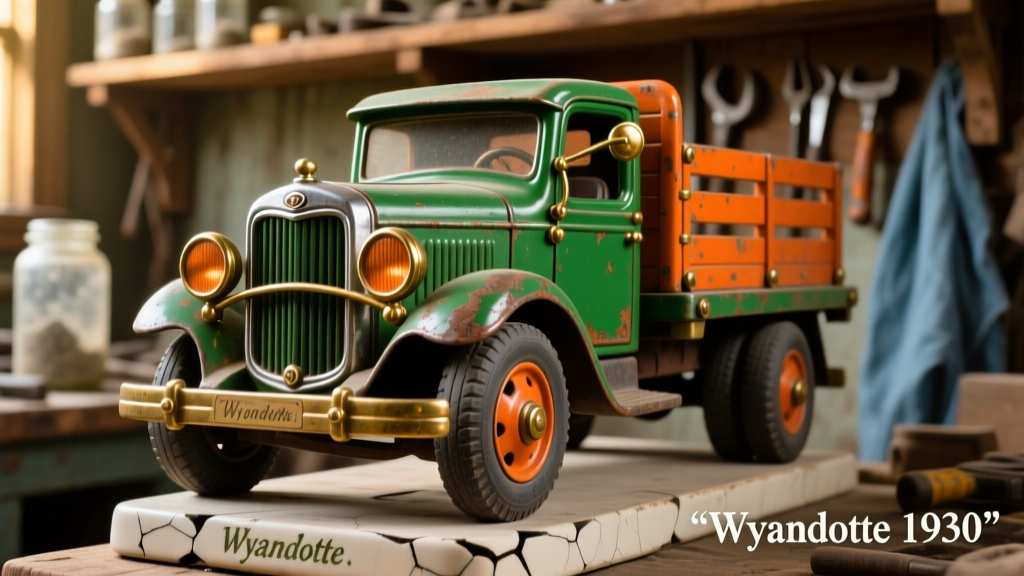
Wyandotte Toy Truck: The 1930s Green & Orange Stake-Bed Truck with Illuminated Headlights — A Collector’s Benchmark
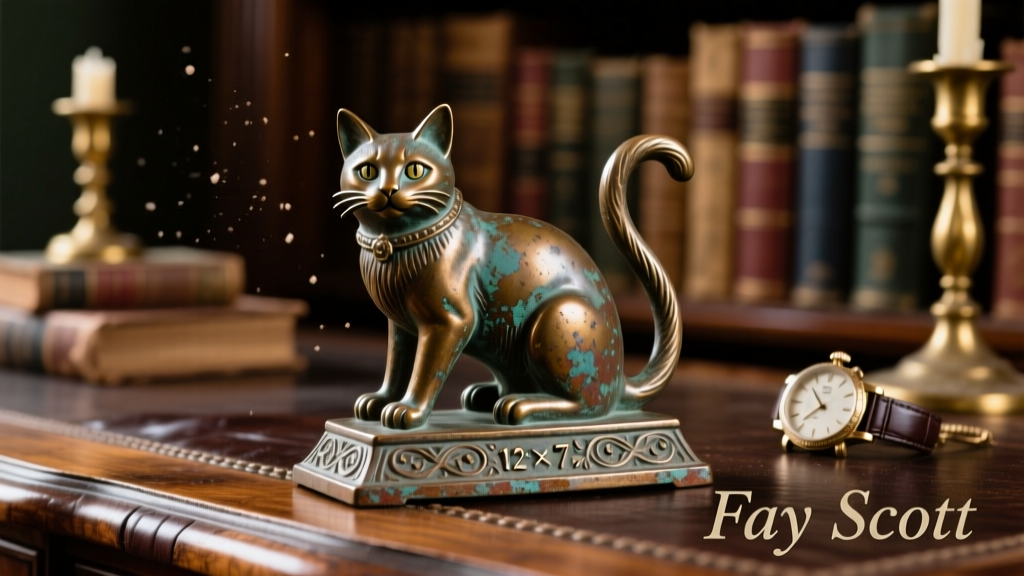
Fay Scott’s ‘Cat Sitting’ Cast Iron Doorstop: A Mid-Century American Design Icon

Paul Sayre: The Unseen Architect of Mid-Century American Watchmaking
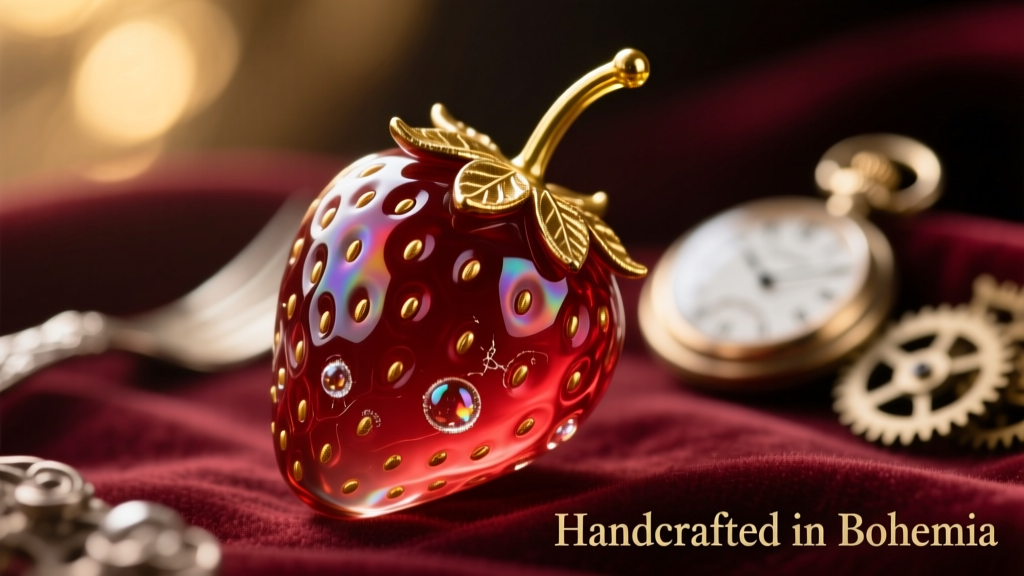
Strawberry Blown Glass Ornaments: A Collector’s Guide to Vintage Christmas Tree Decorations
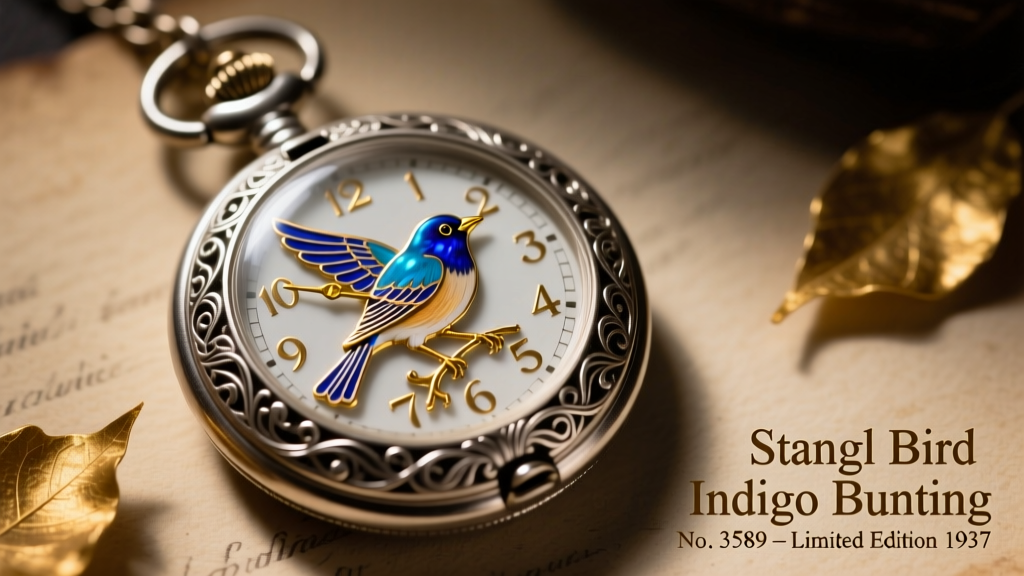
Stangl Bird Indigo Bunting No. 3589-3: A Collector’s Guide to the Iconic Ceramic Ornament
The Kodak Brownie No. 620: A Pivotal Instrument in Democratizing Photography
Tea Caddy Papier-Mâché Barrel Shape Painted Troika Scene, Russia, c. 1900–1915: Provenance, Technique, and Market Significance