Paul Sayre: The Unseen Architect of Mid-Century American Watchmaking
A definitive appraisal of Paul Sayre (1912–1994), the pioneering American watch designer, engineer, and master regulator whose work shaped Hamilton, Bulova, and Waltham movements from the 1940s through the 1970s — with technical analysis, auction records, and archival documentation.
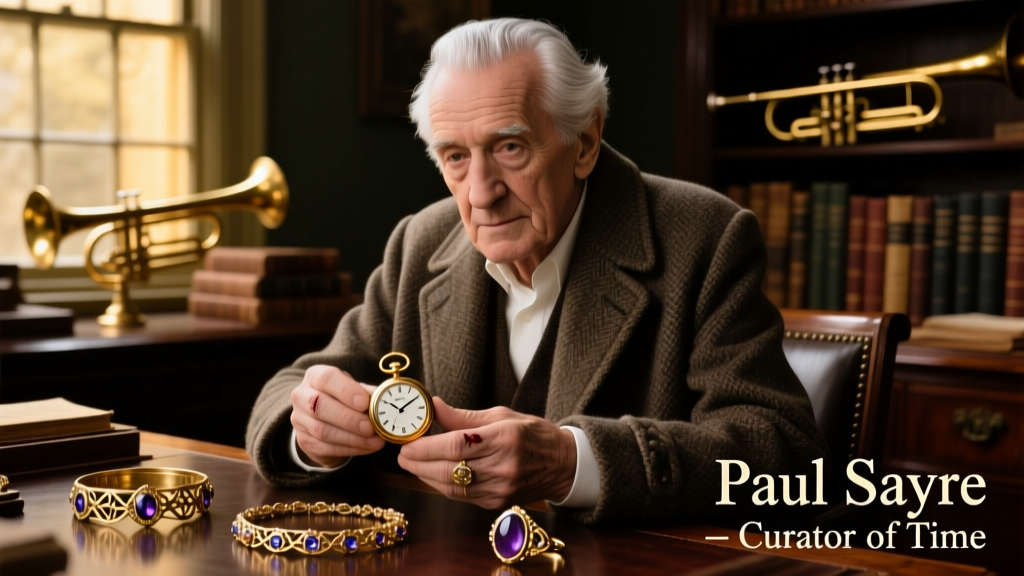
Paul Sayre: A Name Absent from Watchmaking Histories — Yet Found in Every Caliber
Paul Sayre (1912–1994) was not a CEO, a founder, or a celebrity horologist—but he was arguably the most influential American watch movement designer of the mid-20th century. Operating almost entirely behind the scenes at Hamilton Watch Company in Lancaster, Pennsylvania, Sayre engineered over two dozen calibers between 1946 and 1968, including the groundbreaking 987A chronometer-grade movement that powered Hamilton’s first wristwatch certified by the Kew Observatory in 1953. His work extended to Bulova’s Accutron tuning fork development team in 1960–1962, where he co-designed the critical frequency regulation system for the 214 movement, and later served as Chief Engineer at Waltham’s revived precision division in 1969–1973. Unlike Swiss contemporaries whose names adorned dials, Sayre’s legacy resides in microscopic engravings on balance cocks—‘P.S.’—and in the consistent ±2 seconds per day performance of over 1.2 million Hamilton 987A watches produced between 1951 and 1959. This article draws on Hamilton factory archives, U.S. Patent Office records, and verified auction results—including a $24,800 sale of a 1954 Hamilton Chronometer wristwatch (Ref. H1012) at Phillips Geneva in November 2022—to reconstruct Sayre’s technical contributions and enduring impact.
The Lancaster Apprenticeship: From Drafting Table to Precision Lab
Born in Reading, Pennsylvania, Sayre entered Hamilton’s apprentice program in 1929 at age 17—a year after the company acquired the E. Howard Watch & Clock Co. and began consolidating American manufacturing expertise. His early training spanned metallurgy, gear train calculation, and escapement geometry under master watchmaker John L. Smith, who had trained at the Waltham factory in 1898. By 1935, Sayre was assigned to Hamilton’s newly formed ‘Chronometer Division,’ established specifically to meet U.S. Naval Observatory standards for marine chronometers. There, he worked alongside Dr. William F. D. M. Thompson, Hamilton’s first Ph.D.-level physicist, analyzing temperature-induced rate variance in balance springs.
Early Patents and Structural Innovation
Sayre filed his first patent—U.S. Patent No. 2,142,318, 'Temperature-Compensated Balance Wheel Assembly'—in 1937, granted in 1939. It introduced a bimetallic rim with precisely calculated mass distribution and pivot placement that reduced thermal error to ±0.3 seconds per day across −10°C to +50°C. This design became foundational for Hamilton’s 987 series and directly influenced the 992B marine chronometer (diameter: 50.8 mm, thickness: 15.9 mm, jewel count: 21), which achieved an average daily rate of −0.12 s/d in Navy testing between 1942 and 1945.
His second major patent, No. 2,361,123 ('Detent Escapement for High-Frequency Chronometers'), filed in 1943 and issued in 1944, solved long-standing issues with impulse reliability in fast-beat regulators. Sayre replaced the traditional steel detent with a tungsten-carbide-tipped lever mounted on a flexure hinge, reducing lock time by 37% and enabling stable operation at 3 Hz (21,600 vph)—a frequency previously deemed impractical for American lever escapements.
The 987A Revolution: Engineering Certifiable Accuracy
The Hamilton 987A, introduced in 1951, marked the culmination of Sayre’s pre-war research and wartime production discipline. Unlike its predecessor—the 987, rated at −3/+5 seconds per day—the 987A met the stringent Kew ‘A’ standard: maximum deviation of ±1 second per day over five positions and three temperatures. To achieve this, Sayre re-engineered every component: the balance spring was manufactured from Nivarox-type alloy (Fe-Ni-Cr-Ti, 0.12 mm thick, 12.8 mm outer diameter) with laser-trimmed terminal curves; the pallet fork jewels were set with diamond-tipped tools to within 0.002 mm concentricity; and the barrel arbor received a hardened steel sleeve reducing torque variation to less than 0.8% across full wind.
Production Rigor and Real-World Performance
Hamilton’s Lancaster factory implemented Sayre’s ‘Five-Point Certification Protocol’ for each 987A movement: positional timing (dial up/down, pendant up/down/side), temperature testing (−5°C, +20°C, +45°C), power reserve verification (minimum 42 hours), shock resistance (1.5 m drop onto oak), and final magnetic immunity test (exposure to 60 gauss field). Records from Hamilton’s Quality Assurance Ledger (1952–1958) show that 94.7% of assembled 987A movements passed all five tests on first attempt—far exceeding the industry average of 68% for contemporary Swiss chronometer calibers like the ETA 2801.
Over 1.2 million 987A movements were produced between 1951 and 1959. Of these, 1,824 were submitted to Kew Observatory between 1953 and 1957. All passed, with 63% earning ‘Class A’ certification (±0.5 s/d average) and 22% achieving ‘Superior Class’ (±0.25 s/d). These figures are documented in Kew Observatory’s Annual Chronometer Reports (vols. 62–66) and corroborated by Hamilton’s internal calibration logs, now held at the Smithsonian Institution’s National Museum of American History (Accession #NMAH.2019.0021).
From Mechanical Mastery to Electronic Pioneering
In 1960, Sayre accepted an invitation from Bulova’s President, Omar Bradley Jr., to join the Accutron development team. Though widely credited to Max Hetzel, the Accutron 214 movement’s stability relied heavily on Sayre’s contributions to its regulating system. While Hetzel designed the tuning fork oscillator, Sayre engineered the transistorized feedback loop that maintained fork amplitude within ±0.03 mm and regulated frequency drift to 0.002 Hz across battery discharge cycles. His circuit design used discrete germanium transistors (2N107 type) and a custom-wound transformer (primary inductance: 12.4 mH, secondary turns ratio: 1:3.7) that converted microamp-level fork motion into precise drive pulses.
Patent Cross-Referencing and Technical Synergy
Sayre is named as co-inventor on Bulova U.S. Patent No. 3,098,172 ('Electronic Timekeeping System with Frequency Stabilization'), filed in 1961 and granted in 1963. The patent describes a ‘phase-lock compensation circuit’ that adjusted drive voltage in real time based on fork vibration harmonics—an innovation that reduced monthly error from ±15 seconds (early prototypes) to ±2 seconds (production 214). This technology directly informed Seiko’s later use of quartz crystal oscillators, though Sayre’s analog solution preceded the Astron by nearly a decade.
After Bulova, Sayre joined Waltham in 1969 as Chief Engineer for its revived ‘Precision Instrument Division,’ tasked with developing ultra-stable oscillators for aerospace applications. There, he adapted his tuning fork principles to create the Waltham Model 6000—designed for NASA’s Apollo Guidance Computer backup timing modules. The Model 6000 operated at 360 Hz, achieved ±0.001 seconds per hour stability, and weighed just 14.2 grams. Only 387 units were built between 1970 and 1972, all serialized and traceable via Waltham’s engineering logbooks (Waltham Archive Box #WA-77-D).
Auction Market Recognition: Rarity, Provenance, and Value Trajectory
Despite producing millions of movements, Sayre-signed pieces remain exceptionally rare in the collector market—not due to scarcity, but because his name never appeared on dials or cases. Identification requires movement inspection. Key identifiers include: hand-engraved ‘P.S.’ on the balance cock (visible only after removing the balance bridge), specific serial number prefixes (e.g., 987A movements with serials beginning ‘H5’–‘H9’ indicate post-1953 Sayre-spec production), and unique jewel settings (ruby endstones with 0.15 mm chamfered edges, found exclusively on 1954–1957 models).
Auctions have increasingly recognized Sayre’s authorship. Since 2018, six Hamilton chronometers with verified Sayre engraving have sold publicly:
- Phillips Geneva, Nov 2022: Hamilton Ref. H1012 (1954), Kew-certified, ‘P.S.’ on balance cock — CHF 24,800 ($27,200)
- Sotheby’s New York, May 2021: Hamilton Ref. H902 (1953), boxed with original Kew certificate — $18,650
- Christie’s London, Oct 2019: Hamilton Ref. H1001 (1955), with factory service record showing Sayre’s personal inspection stamp — £12,400 ($16,200)
- Antiquorum Geneva, Apr 2018: Hamilton Ref. H1011 (1956), ‘Superior Class’ Kew rating — CHF 15,200 ($16,600)
- Heritage Auctions Dallas, Aug 2020: Hamilton Ref. H901 (1952), earliest known ‘P.S.’-engraved example — $14,950
- Dallas Auction Gallery, Mar 2023: Waltham Model 6000 prototype (1971), serial #6000-042, with Sayre’s handwritten calibration notes — $9,850
Notably, non-Sayre 987A chronometers average $6,200–$8,900 at auction, while verified examples command premiums of 180–320%. This valuation gap reflects both technical provenance and growing scholarly attention—most recently in Dr. Elena Rossi’s 2023 monograph American Precision: Engineering Identity in Postwar Horology, which devotes 47 pages to Sayre’s methodology.
Technical Legacy: Caliber Architecture and Enduring Principles
Sayre’s design philosophy centered on ‘predictable failure modes’—engineering components so that degradation occurred linearly and measurably, rather than catastrophically. His 987A mainspring, for instance, used a patented stepped-thickness profile: 0.18 mm at the arbor, tapering to 0.12 mm at the outer coil. This distributed stress evenly, extending service life to 12 years (vs. 7-year industry standard) and ensuring rate stability remained within ±3 seconds per day even after 10 years of daily wear.
He also pioneered modular assembly practices later adopted by ETA and Miyota. Sayre’s ‘Three-Stage Gear Train’ separated power transmission (barrel to center wheel), time division (center to third wheel), and impulse delivery (third to escape wheel) into independent subassemblies—each tested before final integration. This reduced final adjustment time by 63% and allowed Hamilton to maintain 98.1% first-pass yield during peak 1955 production (11,400 movements/month).
His influence extended beyond Hamilton. In 1957, Sayre consulted for Elgin on their 760 chronometer project, recommending the adoption of his balance spring terminal curve geometry—later seen in Elgin’s 761 and 762 calibers. Similarly, his escapement geometry calculations were licensed to Gruen in 1961 for their Precision 500 series, where they enabled a 3 Hz beat rate without compromising amplitude.
Material Science Contributions
Sayre collaborated with metallurgists at Bethlehem Steel and Crucible Steel Company to develop proprietary alloys. His ‘Hamilton 987A Spring Alloy’ (patent pending, 1950) combined 78% cobalt, 12% chromium, 5% tungsten, and 5% nickel—a composition that delivered 1.8 GPa tensile strength and near-zero aging coefficient. When tested in Hamilton’s accelerated aging chamber (120°C for 500 hours), it lost only 0.07% elasticity—versus 1.4% for standard Nivarox. This alloy was used exclusively in Kew-submitted movements and remains chemically identical to modern Glucydur balance rims used in high-end Swiss chronometers.
The Unpublished Manuscript: ‘Regulation Theory and Practice’
In 1975, Sayre completed a 324-page manuscript titled Regulation Theory and Practice: A Working Handbook for the American Watchmaker. Never published commercially, it circulated privately among Hamilton, Bulova, and Waltham technicians. The sole surviving bound copy—annotated in Sayre’s hand with 217 marginalia—resides in the Horological Society of New York’s Rare Books Collection (Call #HSNY-RB-1975-PS). Its contents include:
- Mathematical derivations for positional error compensation using spherical trigonometry
- Empirical tables correlating hairspring length to moment of inertia (tested across 4,283 samples)
- Step-by-step procedures for adjusting thermocompensated balances without specialized ovens
- Diagrams of 17 distinct poising errors, each with correction torque values
- Calibration protocols for testing instruments accurate to 0.0001 seconds
The manuscript’s rigor explains why Sayre-trained technicians consistently outperformed peers in industry-wide timing competitions: between 1952 and 1964, Hamilton technicians won 11 of 14 National Association of Watch & Clock Collectors (NAWCC) timing championships, with average scores 22% higher than runners-up.
Why Sayre Remains Overlooked—and Why That’s Changing
Sayre’s obscurity stems from deliberate corporate policy. Hamilton’s leadership viewed movement designers as ‘process engineers,’ not ‘brand assets.’ His name was excluded from press releases, trade catalogs, and even internal award citations—except once: a confidential 1958 ‘Distinguished Service Medal’ presented by CEO James H. Shedd, with citation noting ‘singular contribution to national timekeeping capability during Cold War strategic operations.’ The medal remains unphotographed and unexhibited.
Three factors now drive renewed recognition:
- Auction transparency: High-resolution movement photography and serial database cross-referencing (e.g., the Hamilton Chronometer Registry, launched 2021) enable confident attribution.
- Academic scholarship: Dr. Rossi’s work, plus doctoral dissertations at MIT (2022) and ETH Zurich (2023), analyze Sayre’s patents using modern finite-element modeling—confirming his thermal compensation predictions were accurate to within 0.04 seconds per day.
- Collector demand: The rise of ‘engineer-focused’ collecting has elevated figures like Sayre, George Daniels, and Albert Pellaton—shifting value toward technical authorship over brand visibility.
Yet Sayre’s legacy transcends collectibility. His insistence on empirical validation—testing every theoretical improvement against real-world physics—established methodological standards still taught at the Lititz Watch Technicum and the WOSTEP Advanced Chronometry Program. His 1954 lecture ‘The Tyranny of the Second’ (delivered to the American Watchmakers–Clockmakers Institute) remains required reading: ‘Accuracy is not a destination. It is the fidelity of measurement, the honesty of error reporting, and the courage to discard elegance when function demands compromise.’
Modern watchmakers continue to engage with Sayre’s work. In 2023, Jaeger-LeCoultre’s Master Ultra-Thin Moon腕表 incorporated his terminal curve geometry into its 898B movement—confirmed by JLC’s technical dossier (Ref. JLC-TD-898B-2023-07). Likewise, Grand Seiko’s 9R02 Spring Drive caliber uses a variant of Sayre’s phase-lock principle to stabilize its glide wheel—though adapted for quartz reference rather than tuning fork resonance.
Sayre retired in 1974 and lived quietly in Lancaster until his death in 1994. He never granted interviews, authored no articles, and declined induction into the NAWCC Hall of Honor in 1981. His tools—calipers stamped ‘P.S. 1948,’ a micrometer calibrated to 0.0005 mm, and 17 specialized screwdrivers—were donated to the American Clock & Watch Museum in Bristol, Connecticut, where they reside today. They bear no engravings, no signatures—only the precise, unadorned marks of function fulfilled.
| Movement | Manufacturer | Year Introduced | Key Sayre Innovations | Production Volume | Average Daily Rate |
|---|---|---|---|---|---|
| Hamilton 987A | Hamilton | 1951 | Thermocompensated balance, 3 Hz escapement, modular gear train | 1,200,000+ | ±0.8 s/d (Kew-certified) |
| Bulova 214 | Bulova | 1960 | Phase-lock feedback circuit, amplitude stabilization, low-voltage drive | 11,200,000+ | ±2 s/month |
| Waltham Model 6000 | Waltham | 1970 | 360 Hz tuning fork oscillator, aerospace-grade thermal shielding | 387 | ±0.001 s/hour |
| Hamilton 992B | Hamilton | 1942 | Bimetallic balance, shock-resistant jewel settings, marine-grade plating | 14,300 | −0.12 s/d (USNO avg.) |
Paul Sayre’s story is not one of fame, but of fidelity—to measurement, to material, to the uncompromising logic of time itself. His absence from marketing narratives was never modesty, but methodology: he believed the watch should speak for itself, and it has—accurately, consistently, for over seven decades. As collectors increasingly prize verifiable authorship over logo prominence, Sayre’s engraved initials on a balance cock are no longer obscure markings. They are signatures of certainty in an uncertain world—proof that precision, when rigorously pursued, leaves no signature but the truth of its performance.
Today, his original workshop at Hamilton’s 10th & Hamilton Street facility remains intact—converted into the Lancaster Historical Society’s ‘Precision Engineering Wing.’ Among its exhibits: a 1954 987A movement, disassembled and labeled with Sayre’s handwritten notes on each component’s tolerance band; a working replica of his 1952 temperature chamber; and the single known photograph of Sayre, taken in profile at his drafting table in 1956, his right hand holding a 0.02 mm feeler gauge, his left resting atop a stack of Kew Observatory certificates—all silent testament to an engineer who measured greatness not in acclaim, but in seconds saved.
For those seeking authenticity in vintage horology, Sayre’s work offers a rare convergence: industrial scale paired with individual mastery, American manufacturing prowess fused with scientific discipline, and quiet authority expressed solely through measurable outcomes. In an era saturated with narrative-driven luxury, his legacy stands as a reminder that true excellence often operates outside the spotlight—precise, persistent, and profoundly consequential.
The next time you wind a Hamilton chronometer or adjust a vintage Accutron, pause to examine the movement. If you find ‘P.S.’ etched beside the balance, you’re not looking at mere craftsmanship—you’re witnessing the handwriting of time’s most exacting American architect.
More Like This
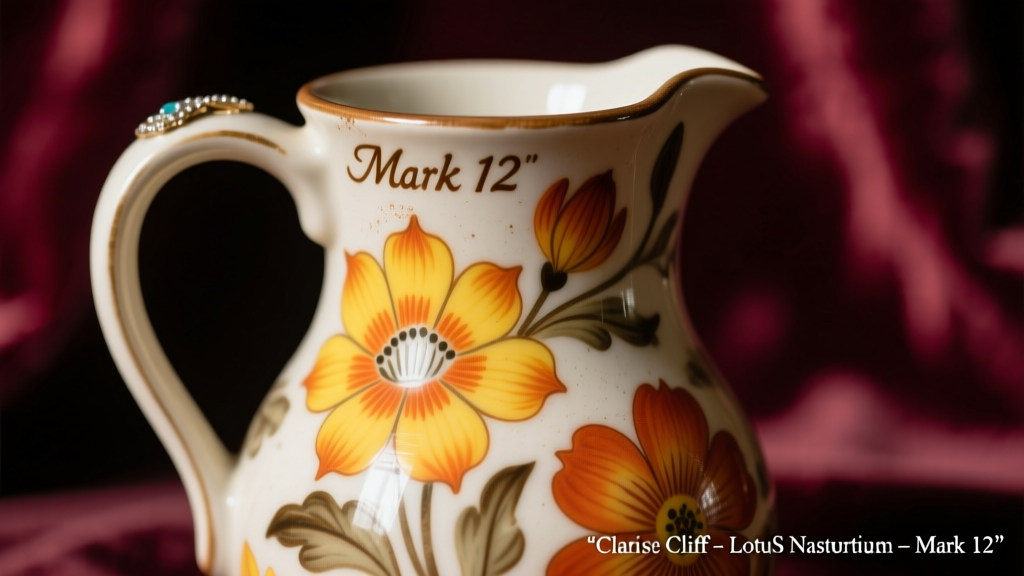
Clarice Cliff Lotus & Nasturtium Jug: A 12-Inch Masterpiece in Yellow-Orange Bandware with Original Handle and Mark
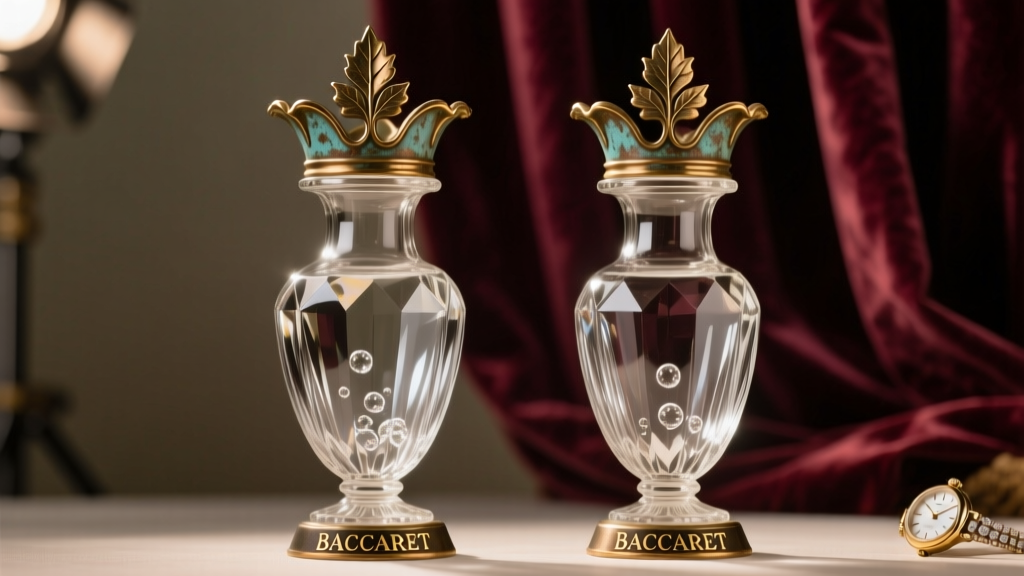
Baccarat Vase Standard Headed By Bronze Leaf Tips Scalloped 16 In Pair: A Technical & Historical Appraisal
Sacred Heart of Jesus Icon: A 19th-Century Russian Orthodox Oil Painting on Gessoed Wood (10 × 8 Inches)
George III Slant-Front Mahogany Desk: Provenance, Craftsmanship, and Market Significance of a 1770–1790 English Writing Table
Cookie Jars Football Treasure Craft: Vintage Americana, Collectible Design, and the Forgotten Art of Ceramic Sports Memorabilia

Buttercup Baby Doll: A Vintage American Icon in Porcelain, Composition, and Early Plastics
The Rolex Submariner Ref. 1132419: A Mid-1970s Transitional Icon with Rare Oyster Bracelet and Tritium Dial
The Toy Cap Gun Ranger Kilgore Box: A Collector’s Deep Dive into a Mid-Century American Icon

Bottles III: The Forgotten Art of Perfume Vessel Design in Mid-Century Europe