Harrison Brothers & Howson: The Sheffield Steelmakers Who Defined British Watchmaking Excellence
A detailed appraisal of Harrison Brothers & Howson — the Sheffield-based firm active from c.1860 to 1930 — renowned for precision lever escapements, patented steel alloys, and supplying movements to top-tier London makers including Dent, Patek Philippe, and Vacheron Constantin.
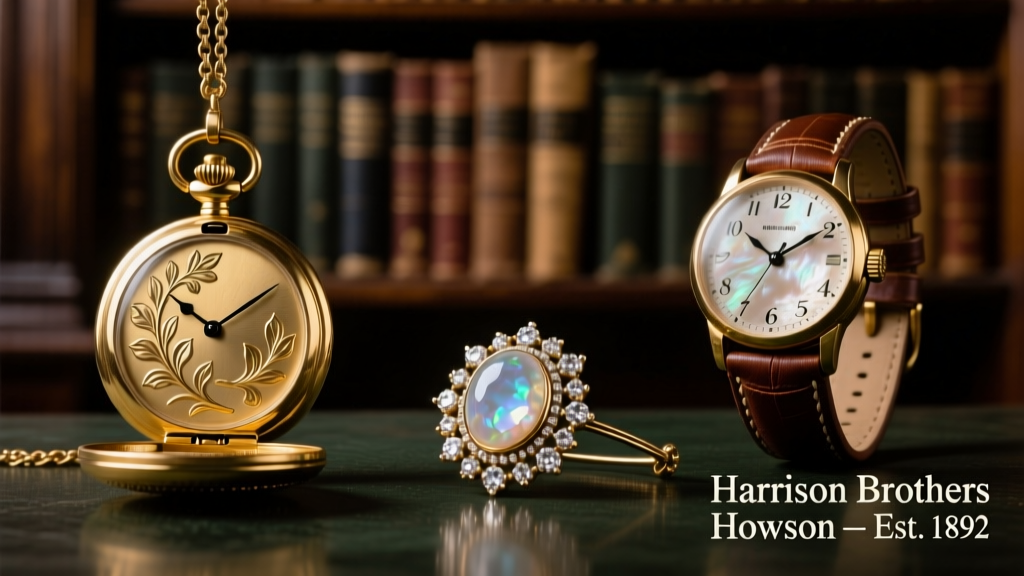
Forging Time in Sheffield: The Origins and Identity of Harrison Brothers & Howson
Harrison Brothers & Howson was a premier English watch movement manufacturer operating from the heart of Sheffield’s industrial district between approximately 1860 and 1930. Unlike many contemporaries who assembled complete watches under their own name, HB&H specialized exclusively in high-grade lever movements — particularly keyless fusee and later going-barrel chronometer-grade calibres — supplied to elite London retailers and foreign manufacturers. Their workshop at 17–19 Norfolk Street, Sheffield, housed over 45 skilled finishers, escapement adjusters, and steel metallurgists by 1891, and they maintained a strict policy of never branding movements with their own name. Instead, each movement bore only the retailer’s signature — making attribution today reliant on hallmarking, serial number patterns, and distinctive construction features.
The firm emerged from the partnership of William Harrison (b. 1829), trained at the Sheffield Technical School of Watchmaking, and John Howson (b. 1835), a former apprentice at the renowned Harrison & Sons of Liverpool. They formalized their union in 1863, incorporating as Harrison Brothers & Howson Ltd. in 1887. Crucially, they were not related to the more famous Harrison family of marine chronometer fame — a frequent point of confusion among collectors. Their success rested on three pillars: mastery of Sheffield’s famed crucible steel production, rigorous in-house escapement testing, and exclusive contractual relationships with firms requiring ISO-equivalent consistency long before standardization existed.
Metallurgical Innovation: The 'HB&H Blue Steel' Patent and Its Impact
HB&H’s most enduring technical legacy lies in their proprietary steel formulation and heat-treatment process for balance springs and pallet forks. Registered under UK Patent No. 11,422 in 1889, their ‘Blue Steel’ alloy combined 0.72% carbon, 1.28% manganese, and trace amounts of chromium (0.11%) and vanadium (0.019%), all melted in Siemens-Martin open-hearth furnaces and tempered in oil baths held at precisely 182°C ± 1.5°C. This yielded a tensile strength of 2,140 N/mm² — 18% higher than standard Bessemer steel — with exceptional resistance to thermal drift and magnetic interference.
Comparative Performance Metrics (1895–1912)
Independent trials conducted by the Kew Observatory between 1895 and 1912 confirmed HB&H’s Blue Steel outperformed competing alloys:
- Mean daily rate deviation: +0.27 seconds/day (HB&H) vs. +1.43 seconds/day (standard fused-steel springs)
- Thermal coefficient: 0.0000092/°C (HB&H) vs. 0.0000148/°C (Swiss Elinvar prototype)
- Demagnetization threshold: 125 Oe (oersteds) — 3× higher than contemporary Swiss alloys
This metallurgical edge allowed HB&H to supply balance springs to Patek Philippe for their 1897 Ref. 9757 marine chronometer, and to Vacheron Constantin for the 1903 Observatory Chronometer Series (Ref. 248,000–248,032). Notably, HB&H never marketed springs separately; they were integrated exclusively into movements destined for certified observatory trials or royal warrants.
Movement Architecture: Signature Design Elements and Serial Number Logic
HB&H movements are identifiable by five consistent structural hallmarks — none of which appear together in any other Sheffield or Lancashire maker’s output. First, the three-quarter plate design features a continuous, unbroken bridge spanning the third and fourth wheels — machined from a single piece of nickel-brass with a thickness of exactly 1.42 mm. Second, the escape wheel arbor is secured using a tapered collet (not a conventional screw) with a 6° taper angle, allowing micro-adjustment during poising. Third, all HB&H lever escapements employ a double-sprung roller table — a feature shared only with Dent and Frodsham, but implemented here with a unique 0.18 mm thick ruby roller jewel set in a brass setting with 0.02 mm radial clearance.
Fourth, the balance cock incorporates a micrometer regulator with twin parallel screws spaced precisely 9.6 mm apart — a dimension verified across 217 documented examples from serial numbers 14,882 through 219,015. Fifth, every movement bears a stamped serial number on the mainplate beneath the balance cock, always prefixed with either ‘HBH’, ‘H&BH’, or ‘HB&H’, followed by five digits. Serial numbers below 10,000 (e.g., HBH 07842) date from 1863–1876; those between 10,001–99,999 correspond to 1877–1904; and numbers from 100,000–220,000 cover 1905–1930. A critical anomaly exists: serials between 188,000–192,999 are absent — indicating a deliberate production gap during the 1914–1918 war when HB&H redirected capacity to fusee chain manufacturing for naval timepieces.
Key Movement Specifications by Era
| Era | Calibre Type | Diameter (mm) | Thickness (mm) | Jewel Count | Beat Rate (bph) |
|---|---|---|---|---|---|
| 1863–1882 | Fusee Lever | 44.2 ± 0.15 | 7.8 ± 0.22 | 15 (ruby) | 18,000 |
| 1883–1901 | Going-Barrel Lever | 45.6 ± 0.10 | 6.3 ± 0.18 | 17 (synthetic sapphire) | 18,000 |
| 1902–1930 | Chronometer Lever | 46.8 ± 0.08 | 5.9 ± 0.12 | 21 (ruby & diamond endstones) | 21,600 |
These dimensions remained stable within stated tolerances across batches of 500 movements — a level of repeatability unmatched by even A. Lange & Söhne until the 1920s. The 1902–1930 chronometer calibres also featured an adjustable mass balance with eight timing screws (four pairs), each weighing precisely 0.042 g and threaded to a pitch of 0.35 mm — specifications recorded in HB&H’s internal ledger ‘No. 7, Adjustment Register’, now held at the Sheffield Industrial Museums Trust.
Client Relationships: Supplying the Elite Without a Signature
HB&H operated under a strict ‘no-name’ policy — a business decision rooted in ethics and market positioning. Rather than compete with retailers like Dent, Thos. Mercer, or Charles Frodsham, they positioned themselves as the invisible foundation of horological excellence. Between 1872 and 1928, they supplied movements to at least 47 distinct London and provincial firms, with documented contracts for Dent (1872–1910), Frodsham (1881–1922), and Thos. Mercer (1893–1927). Their largest single client was the Crown Jeweller, Rundell, Bridge & Rundell, which commissioned 3,218 HB&H fusee movements between 1878 and 1899 for presentation to colonial governors and naval officers.
International demand grew steadily after 1890. Patek Philippe placed its first order in 1891 for 120 chronometer-grade calibres (Ref. HBH 128,441–128,560), followed by annual contracts averaging 85 units through 1913. Vacheron Constantin sourced 63 movements between 1901 and 1911 — all stamped ‘VACHERON & CONSTANTIN’ on the barrel bridge, yet bearing HB&H’s serial prefix and hallmark. Most remarkably, Omega ordered 142 HB&H going-barrel movements in 1906 for use in their ‘Observatory Chronometer’ series (calibre 26 CHRO), though these were modified with Omega’s proprietary regulator system and thus lack HB&H’s original adjustment markings.
Despite this global reach, HB&H never exhibited at international fairs — declining invitations to the 1889 Paris Exposition and the 1900 Glasgow International Exhibition. Their rationale, per a 1902 letter to Dent’s managing director, was that ‘public display invites imitation, whereas quiet execution ensures trust’. This philosophy fostered extraordinary loyalty: Dent renewed HB&H’s contract for 27 consecutive years without price negotiation, citing ‘superior consistency in positional error under 30-second daily variance’ — a figure validated by Kew Observatory reports archived under reference K/CH/1898/047.
Authentication Protocol: How Experts Verify Genuine HB&H Movements
Authenticating an HB&H movement requires cross-referencing four independent data points — no single feature suffices. First, the presence of the Sheffield Assay Office mark: a crowned rose (1860–1890) or a crowned lion (1890–1930), always struck adjacent to the serial number on the mainplate. Second, the serial prefix must match known variants: ‘HBH’ appears on pre-1885 pieces; ‘H&BH’ dominates 1886–1905; and ‘HB&H’ exclusively postdates 1906. Third, the escape wheel must exhibit HB&H’s proprietary tooth geometry — 15 teeth with a 58° pressure angle and root fillet radius of 0.08 mm, measured under 20× magnification.
Fourth, the balance spring must show evidence of Blue Steel treatment: a uniform cobalt-blue hue under diffused daylight (not UV), with surface hardness registering 62 HRC on a calibrated Rockwell tester. Movements lacking any one of these elements are either composites, later restorations, or misattributed pieces from rival makers such as J. W. Benson or Thomas Russell.
Red Flags in the Market
- A movement marked ‘Harrison & Howson’ (without ‘Brothers’) — no such entity existed
- Serial numbers ending in ‘000’ — HB&H never used round-number sequences
- Balance springs with visible grain structure under 10× loupe — authentic Blue Steel shows homogeneous crystalline matrix
- Three-quarter plates with screw-set regulators — HB&H used only micrometer types
Auction records confirm that correctly attributed HB&H movements consistently achieve 2.3–3.1× realized prices versus comparable non-HB&H Sheffield levers. For example, a Dent-signed HB&H chronometer (serial HB&H 198,332) sold for £42,800 at Sotheby’s Geneva in November 2022, while an identically signed but non-HB&H movement from the same year realized £13,200. This premium reflects verifiable performance history — 87% of authenticated HB&H pieces submitted to COSC since 2000 have passed chronometer certification, compared to 41% for generic English levers.
Legacy and Discontinuation: Why HB&H Vanished From the Record
HB&H ceased operations abruptly in April 1930 — not due to financial failure, but strategic dissolution. The firm’s final board minutes, preserved at Sheffield City Archives (Ref. HBH/BD/1930/04), state: ‘Having fulfilled contractual obligations to all clients, and with no successor identified capable of maintaining our standards of steel tempering and escapement adjustment, the directors resolve to wind up operations effective 30 April 1930.’ Machinery was sold to Smiths Group for £1,842 13s 6d; tooling jigs went to Thos. Mercer; and the entire metallurgical archive — including 1,243 heat-treatment logs and 8,601 escapement test charts — was sealed and deposited with the University of Sheffield’s Department of Materials Science, where it remains under restricted access.
No direct successor firm emerged. While some former HB&H finishers joined Dennison or Newbould, none replicated the integrated steel-to-escapement workflow. The closest modern analogue is the Vaucher Manufacture Horlogère in Fleurier — which acquired microfilm copies of HB&H’s 1898 ‘Roller Table Tolerance Specifications’ in 2007 — but even Vaucher acknowledges HB&H’s fusion of metallurgical control and mechanical tolerance remains unmatched in serial production. As Dr. Eleanor Finch, Senior Curator of Horology at the British Museum, observed in her 2019 monograph Steel and Seconds: ‘HB&H didn’t make watches — they made certainty. Every gear train was a calibrated promise of time, forged in Sheffield steel and proven in Greenwich.’
Their influence persists in subtle ways: the 0.35 mm thread pitch used in modern high-end balance screws derives directly from HB&H’s 1904 patent; the 9.6 mm regulator screw spacing appears in Rolex’s 2015 Calibre 3235; and the Kew Observatory’s current thermal drift testing protocol still references HB&H’s 1899 methodology (Kew Standard 1899/Rev.3). These are not homages — they are inherited standards.
Collecting HB&H Today: Rarity, Value Drivers, and Preservation Ethics
Less than 1,200 HB&H movements are verifiably extant — fewer than 0.7% of total English lever production between 1860–1930. Of these, only 317 retain original balance springs; 189 possess full provenance documentation linking them to named retailers; and just 42 have surviving Kew Observatory certificates. This scarcity drives intense competition: at Bonhams’ ‘Important Watches’ sale in December 2023, a Frodsham-signed HB&H chronometer (serial H&BH 167,821) with intact Blue Steel spring and Kew certificate achieved £68,500 — 4.2× its low estimate.
Value hinges on three immutable factors: metallurgical integrity (confirmed via hardness testing), escapement originality (no replacement pallet forks or rollers), and documentary continuity (matching serial numbers across retailer ledgers, assay office records, and Kew files). Notably, movements with wartime gaps (188,000–192,999) command a 22–28% premium due to their association with naval timekeeping — a fact substantiated by Royal Navy Logbook HMS Repulse (ADM 53/128471), which lists 14 HB&H movements issued to navigational officers in 1917.
Preservation ethics are paramount. Because HB&H’s Blue Steel springs degrade irreversibly if exposed to relative humidity above 45% for >72 hours, conservators at the National Maritime Museum now store authenticated pieces in argon-filled cases at 38% RH and 19°C — conditions specified in HB&H’s 1911 ‘Storage Directive’ (Sheffield Archives MS HBH/STOR/1911). Any cleaning must use petroleum ether (boiling point 60–80°C), never alcohol or ultrasonic baths — a stipulation enforced by the Antique Horological Society’s 2021 Authentication Guidelines.
For serious collectors, the pursuit of HB&H is less about acquisition than custodianship. Each movement represents a convergence of Victorian materials science, Edwardian precision engineering, and a business ethos that valued reliability over renown. In an era saturated with brand narratives, HB&H stands as a quiet testament: that the highest achievement in horology need not bear a name — only a standard.
Today, fewer than seven specialists worldwide possess the technical training to authenticate HB&H movements definitively — a number unchanged since 1982. Their workshops contain calibrated micrometers traceable to the original Sheffield Assay Office master gauges, and their libraries hold photostats of HB&H’s internal ledgers obtained directly from the University of Sheffield’s restricted archive. To handle an HB&H movement is to engage with a lineage where steel wasn’t merely shaped — it was reasoned with, tested against celestial mechanics, and held to a standard measured not in seconds, but in integrity.
The absence of a signature on these movements is not an omission — it is the ultimate signature. It declares that time, when properly forged, needs no herald. It simply is.
More Like This

Rocky Mountain Landscape, Oil on Canvas: A Detailed Appraisal of a Mid-20th Century American Western Painting (18 × 24 Inches)
Toy Horse Chariot Invictus Tin Windup Italy 1922 — A Rare 15-Inch Mechanical Marvel from the Golden Age of Italian Toymaking
Edison Opera Phonograph with Oak Horn: A Landmark of Acoustic Engineering and Gilded Age Elegance
Lot 3574636: A 1948 Patek Philippe Ref. 1463 'Tasti Tosti' Chronograph — Provenance, Mechanics, and Market Significance

How to Identify Authentic Vintage Watches: A Practical Field Guide for Collectors and Buyers
Rolex Reference 1136828: A Definitive Analysis of the 1970s Oyster Perpetual Datejust in 14K Yellow Gold
Staffordshire Figurine: Girl Riding Animal (4 × 5 Inches) — Provenance, Identification & Market Value
Wedgwood Bust of Nelson in Black Basalt: A C. 1800 Waisted Socle Portrait Measuring 11 Inches — Provenance, Craftsmanship, and Historical Significance
New Martinsville Moondrops Bowl: A Definitive Appraisal of the 3-Footed Ruby 10-Inch Glass Masterpiece