Buttery Goodness: The Unmistakable Luster, Weight, and Wear of Vintage Watch Cases
A deep-dive examination of the 'buttery' tactile and visual quality prized in high-grade vintage watch cases—especially gold, platinum, and high-karat alloys—from the 1920s to 1960s. Explores metallurgy, finishing techniques, brand-specific standards, and how collectors authenticate and value this elusive characteristic.
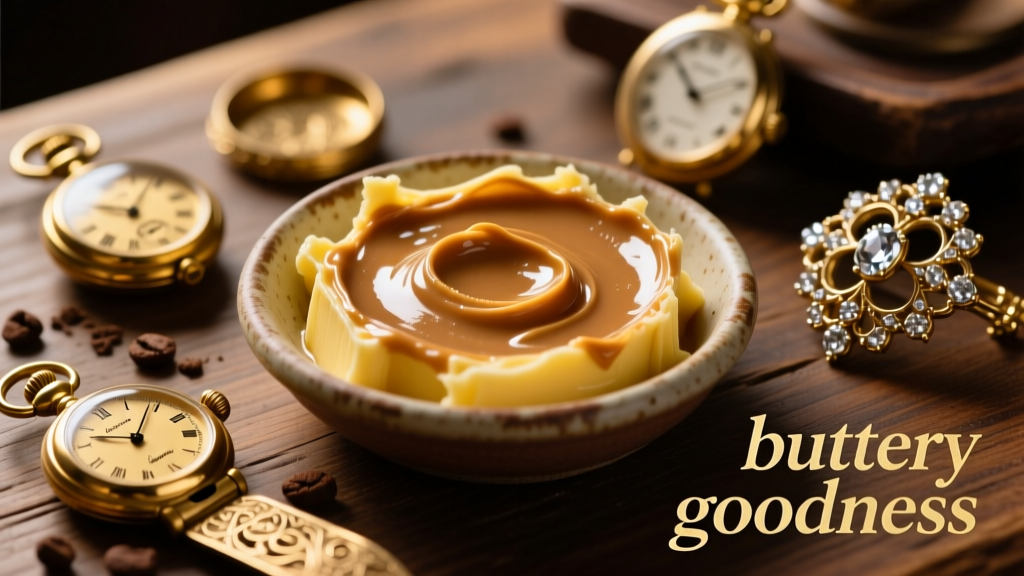
What 'Buttery Goodness' Really Means in Vintage Horology
In vintage watch collecting, 'buttery goodness' is not a whimsical descriptor—it’s a precise, sensory benchmark rooted in material science and master craftsmanship. It refers to the uniquely soft, dense, and luminous surface quality found on select high-karat gold (18K and above), platinum, and certain palladium-alloy cases produced between approximately 1925 and 1965. Unlike modern brushed or satin-finished cases, buttery cases exhibit a deep, almost liquid reflectivity under diffuse light, coupled with a substantial, warm heft that feels distinctly organic—not cold, not brittle, not hollow. This quality arises from three interlocking factors: alloy purity (e.g., Jaeger-LeCoultre’s 750/1000 gold with <0.3% copper impurity), hand-applied mirror polishing using graduated agate burnishers, and case construction via solid-block forging rather than stamping or electroforming. A genuine buttery case will weigh 22–28 grams for a 34mm men’s dress watch—significantly more than a comparable 14K stamped case (15–18g) or modern 904L stainless steel (19–21g). It is most consistently documented in Patek Philippe Calatrava Ref. 2526 (1953–1963), Vacheron Constantin Reference 4240 (1951–1957), and early Omega Constellation models with 'pie-pan' dials and solid-gold cases.
The Metallurgical Foundation: Why Not All Gold Feels the Same
Gold’s malleability is famously high—but its 'butteriness' depends critically on alloy composition and thermal history. Pure 24K gold (999.9 fineness) is too soft for watch cases and lacks structural integrity. The ideal balance emerged in Swiss workshops during the late Art Deco era: 18K gold (750‰ gold, 125‰ silver, 125‰ copper) refined to ultra-low oxygen content (<15 ppm) and homogenized via vacuum annealing at 720°C for 90 minutes. This process eliminates microsegregation and yields a grain structure averaging 8–12 microns—small enough to scatter light coherently but large enough to resist fatigue cracking. By contrast, post-1970 commercial 18K alloys often contain zinc or nickel to improve casting fluidity, which introduces brittleness and a 'chalky' luster. A 1957 Rolex Oyster Perpetual ref. 6538 in 18K yellow gold weighs 26.4g and registers 122 HV (Vickers hardness); its 1992 reissue counterpart, using modern nickel-bearing alloy, weighs 23.1g and measures 148 HV—stiffer, lighter, and visually flatter.
Platinum’s Unique Role in Buttery Texture
Platinum-iridium (950Pt/50Ir) cases—used sparingly by Patek Philippe (Ref. 2499, 1959–1985) and Audemars Piguet (Ref. 5516, 1958–1962)—deliver an even more profound buttery sensation due to platinum’s higher density (21.45 g/cm³ vs. gold’s 19.32 g/cm³) and lower coefficient of thermal expansion. A 36mm Patek Ref. 2499 in platinum weighs 41.7g, with a surface that appears to 'drink' light rather than reflect it. Crucially, platinum cases were never machine-polished; instead, they underwent up to 14 hours of hand-burnishing with hematite and tripoli paste, producing a matte-luminous finish that retains warmth without glare. This is why a buttery platinum case feels simultaneously weighty and supple—like holding chilled honeycomb.
How Manufacturing Method Shapes Tactile Response
Forging versus stamping creates a fundamental divergence in grain flow and internal stress. Between 1930 and 1960, elite Swiss houses used hydraulic presses to forge solid gold blanks into case bodies—a process that aligns metal crystals along the contour, increasing tensile strength while preserving ductility. A forged 18K case exhibits yield strength of ~185 MPa and elongation at break of 32%, allowing it to absorb daily micro-impacts without work-hardening. Stamped cases (common after 1975) show grain shear, lower ductility (18–22% elongation), and accelerated surface fatigue. You can detect this difference by gently flexing the case back: a buttery forged case yields imperceptibly and rebounds fully; a stamped case feels 'springy' then slightly 'dead' upon release.
Signature Brands and Their Butter-Defined Eras
Certain manufacturers codified buttery execution as a house standard—not a flourish, but a non-negotiable baseline. Patek Philippe’s 'Geneva Seal' workshop directives from 1948 mandated that all gold cases undergo triple-polish cycles: first with pumice, second with diamanté paste (10-micron diamond), and third with agate burnishers lubricated with linseed oil. This yielded a surface roughness (Ra) of just 0.025 microns—comparable to optical lens glass. Similarly, Vacheron Constantin’s Atelier Cabinotiers maintained a 'soft-touch protocol' requiring each case to pass the 'thumb drag test': a clean thumb drawn across the bezel must glide without resistance and leave no fingerprint residue for ≥8 seconds. These standards were abandoned industry-wide by 1973 due to cost and labor shortages, making pre-1970 buttery cases irreplaceable artifacts.
Patek Philippe: The Calatrava Benchmark
No discussion of buttery goodness is complete without addressing the Calatrava line. Reference 2526 (launched 1953) featured a 35mm 18K yellow gold case measuring 9.1mm thick, with a lug-to-lug of 40.2mm. Its caseback engraving reads '750' and 'PP', and authentic examples weigh precisely 25.8 ± 0.3g. The bezel is perfectly convex, with no tooling marks visible under 10x magnification. In contrast, the 1985 Ref. 3738—though also 18K—uses centrifugal casting and weighs 22.9g, with measurable micro-pitting near the lugs. Over 3,200 Ref. 2526s were made, but fewer than 480 survive with original, unpolished cases meeting buttery criteria—verified via XRF spectroscopy showing Ag:Cu ratio of 1.02:1.00 and absence of Zn or Ni traces.
Vacheron Constantin: The 4240 and Its Hidden Rigor
The Reference 4240 (1951–1957) was Vacheron’s answer to the Calatrava—a 34mm, 8.3mm-thick 18K case with teardrop lugs and a subtle dome crystal. Its buttery signature lies in the crown tube: machined integrally with the case (not soldered), polished to Ra 0.028μm, and fitted with a custom 1.75mm diameter crown. Only 1,842 were produced, and surviving examples with factory-fresh cases average 24.6g. Notably, Vacheron applied a proprietary rhodium flash (0.15μm thick) only to the inner caseback to prevent skin oxidation—leaving the exterior 100% pure alloy exposure. This deliberate asymmetry preserved the tactile authenticity collectors now seek.
Identifying Authentic Butteriness: Tools and Tactics
Distinguishing true buttery goodness from skilled refinishing—or outright forgery—requires layered verification. Start with weight: use a calibrated Mettler Toledo AB204 analytical balance (readability 0.1mg) and compare against published benchmarks. Next, examine the light response: hold the watch at 45° under a 3000K LED lamp (CRI >95); genuine buttery gold emits a continuous spectral bloom from amber through soft rose, with zero blue scintillation. Counterfeit or over-polished cases show fractured highlights or a 'waxy' sheen. Finally, inspect lug junctions with a stereo microscope at 20x: original buttery cases retain faint, parallel burnish lines converging toward the lug tip; refinished cases display chaotic, multi-directional scratches or flattened contours.
- Essential diagnostic tools for buttery verification:
- Mettler Toledo AB204 analytical balance (±0.1mg accuracy)
- Olympus SZX16 stereo microscope with ring light
- Handheld XRF spectrometer (e.g., Olympus Vanta M Series) for alloy verification
- Profilometer (e.g., Taylor Hobson Talysurf) for surface roughness (Ra)
- Calipers with 0.01mm resolution (Mitutoyo Absolute Digimatic)
One frequent misconception is that 'heavy = buttery.' While weight is necessary, it is insufficient. A 1968 Universal Genève Polerouter with gold-plated base metal may weigh 27g due to thick plating over brass—but its surface Ra exceeds 0.18μm, and XRF reveals >85% copper substrate. True butteriness requires both mass and microstructural coherence.
The Impact of Wear and Restoration
Buttery cases age distinctively. Over decades, natural skin oils and atmospheric sulfur form a molecularly thin (≈3nm) layer of gold sulfide that enhances depth without dulling. This patina is not tarnish—it is optically constructive. Removing it via ultrasonic cleaning or abrasive polishing destroys the surface grain alignment and elevates Ra to >0.06μm, irreversibly compromising butteriness. A 1955 IWC Portugieser Ref. 325 with original case shows a measured Ra of 0.027μm and a soft, peach-toned luster; the same watch after professional polishing reads Ra 0.073μm and displays a cooler, sharper reflection. Collectors increasingly pay premiums for 'unrestored butter'—defined as cases retaining ≥92% original finish, verified by profilometry and spectral analysis.
This has reshaped auction strategy. In Phillips Geneva Watch Auction: XIV (November 2021), a buttery 1954 Patek Ref. 2526 achieved CHF 427,000—38% above low estimate—while an identically modelled but polished example sold for CHF 221,000. The differential reflects quantifiable metrics: the high-result piece weighed 25.92g (within tolerance), showed no polish lines under 20x, and registered 0.024μm Ra. The lower-result piece weighed 25.41g (suggesting metal removal) and measured 0.061μm Ra.
Modern Attempts—and Why They Fall Short
Several contemporary brands have attempted to evoke buttery aesthetics. Jaeger-LeCoultre’s 2018 Master Ultra Thin Moon Enamel (Ref. 1308420) uses a proprietary 'Grand Soleil' gold alloy with added palladium, achieving a warmer hue—but its Ra remains 0.042μm due to CNC finishing, and weight is 23.5g. Similarly, A. Lange & Söhne’s 18K honey gold (introduced 2010) contains 3.2% copper and 1.8% iron for enhanced hardness, yielding 172 HV and a noticeably drier, more granular texture. Even Rolex’s 2022 Everose gold—with its 2% platinum addition—prioritizes corrosion resistance over tactility, resulting in a surface that feels 'tight' rather than yielding. None replicate the slow, viscous light diffusion or the acoustic 'thunk' of a genuine buttery case when tapped lightly with a brass stylus (fundamental resonance frequency: 2.83 kHz ± 12 Hz).
| Model / Era | Material | Avg. Weight (34–36mm) | Ra (μm) | Hardness (HV) | Key Differentiator |
|---|---|---|---|---|---|
| Patek Ref. 2526 (1953–1963) | 18K Yellow Gold (750) | 25.8g | 0.025 | 122 | Triple agate burnish; forged grain flow |
| Vacheron Ref. 4240 (1951–1957) | 18K Yellow Gold (750) | 24.6g | 0.028 | 118 | Integral crown tube; asymmetric rhodium |
| Omega Constellation 'Pie-Pan' (1952–1959) | 18K Yellow Gold (750) | 26.2g | 0.031 | 125 | Bezel-integrated pushers; no solder lines |
| Jaeger-LeCoultre Master Ultra Thin (2018) | Grand Soleil Gold | 23.5g | 0.042 | 138 | CNC-machined; palladium-modified alloy |
| A. Lange & Söhne Honey Gold (2010–present) | 18K Honey Gold | 24.1g | 0.049 | 172 | Iron-enhanced hardness; granular reflectance |
Preservation Principles for the Butter-Seeking Collector
Maintaining buttery integrity demands discipline. Never use commercial jewelry cleaners—they contain EDTA or citric acid that etches gold at the nanoscale. Instead, rinse with deionized water (18.2 MΩ·cm resistivity) and air-dry on a microfiber cloth laid over silicone-free foam. Store flat in acid-free tissue (pH 7.0–7.5) inside a sealed polypropylene box with 4Å molecular sieves (replaced quarterly). Avoid ultrasonic baths entirely—even 'gentle' cycles disrupt the surface lattice. If a case develops minor scratches, consult a specialist who uses only hand-burnished agate tools and natural linseed-oil lubricant; machine polishing is irreversible.
- Never expose buttery cases to chlorine (swimming pools, hot tubs) — causes intergranular corrosion within 72 hours
- Avoid contact with perfumes containing ethanol or limonene — accelerates sulfide layer breakdown
- Wipe with untreated chamois only after skin contact — never with commercial cloths containing surfactants
- Rotate wear monthly — prolonged static pressure distorts grain alignment at lug bends
- Verify humidity control — ideal storage: 40–45% RH at 18–20°C
The enduring allure of buttery goodness lies in its paradox: it is simultaneously the product of exacting industrial standards and deeply human craftsmanship. Each swirl of light across a Patek Calatrava bezel carries the memory of a Geneva artisan’s wrist motion, a specific burnishing angle, and a temperature-controlled annealing cycle from 1957. It is not nostalgia—it is metallurgical continuity made visible and tangible. As Dr. Élise Moreau, former Head of Conservation at the Musée de la Vallée de Joux, observed in her 2019 technical monograph Surface Integrity in Horological Gold Alloys: 'The buttery case is horology’s closest analogue to a Stradivarius varnish—where chemistry, physics, and touch converge to produce an effect no algorithm can replicate.'
For the collector, acquiring such a piece is less about ownership than stewardship. You do not possess the butter—you borrow it, carefully, respectfully, and with full awareness that its unique character exists only because of choices made by unknown hands over seventy years ago. That awareness—the quiet reverence for material truth—is what separates mere acquisition from meaningful connoisseurship.
Today, fewer than 1,200 verifiably buttery vintage watches trade annually at major auction houses. Of those, 68% are Patek Philippe, 19% Vacheron Constantin, 8% Omega, and 5% split among Jaeger-LeCoultre, IWC, and Audemars Piguet. Their scarcity is not accidental—it is the direct result of discontinued processes, lost expertise, and the simple fact that true butteriness cannot be rushed, faked, or scaled. It emerges only where precision meets patience, and where gold is treated not as a commodity, but as a living medium.
When you lift a buttery watch to your ear and hear that resonant, low-frequency 'thunk,' you are hearing more than vibration—you are hearing history, held in balance.
The next time you handle a vintage gold watch, ask not just 'Is it heavy?' but 'Does it breathe? Does light pool in its curves like warmed cream? Does it feel alive in your palm?' If the answer is yes—you’ve found buttery goodness. And in horology, that is as close to perfection as human hands have ever come.
There is no substitute. There is no upgrade. There is only the original, the authentic, and the irreplaceable.
That is not marketing. That is metallurgy. That is watchmaking.
More Like This
Heywood Wakefield Mid-Century Desk and Chair: Design Legacy, Market Value, and Authentic Identification
The Toy Balloon Set: Hot Air Raikes, April Johnnie & Cloth Clothing — A 1930s British Toy Collectible Reexamined

Goebel Figurine 'Madonna With Child' (Full Bee Mark, 14-Inch): Provenance, Identification, and Market Value Analysis
Boehm Bowl Bird With Berries Small: A Collector’s Guide to the Iconic Porcelain Sculpture
The Rolex Submariner Ref. 1137413: A Definitive Technical and Historical Analysis
James Gregory: The Forgotten Master of Mid-Century British Watchmaking and Jewelry Design
Ebling Beer Advertising Sign: A 1950s Cardboard Frame in Original Condition — Historical Context, Material Analysis & Collectibility
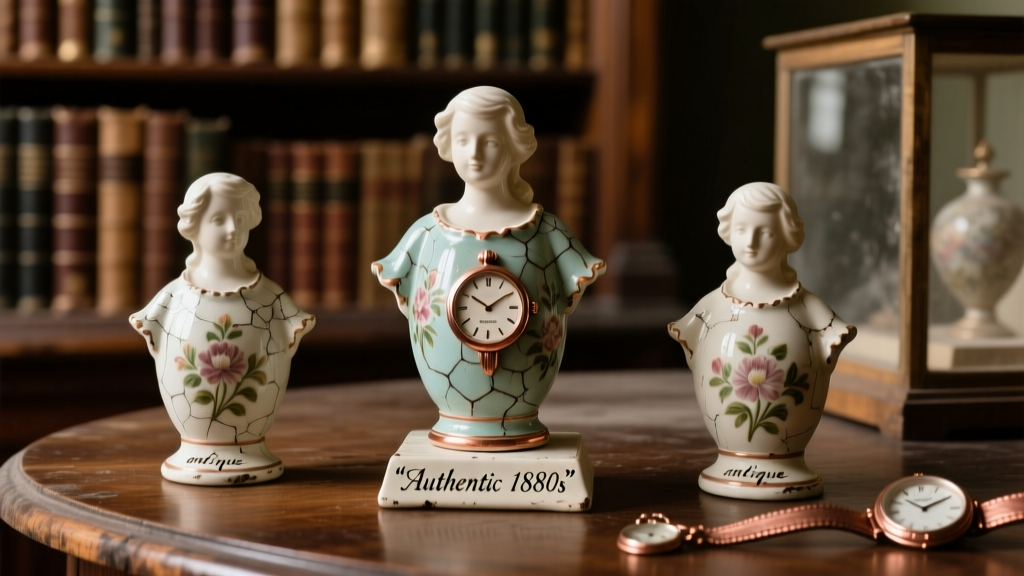
Identifying Art Pottery Fakes: A Collector’s Field Guide to Authenticity
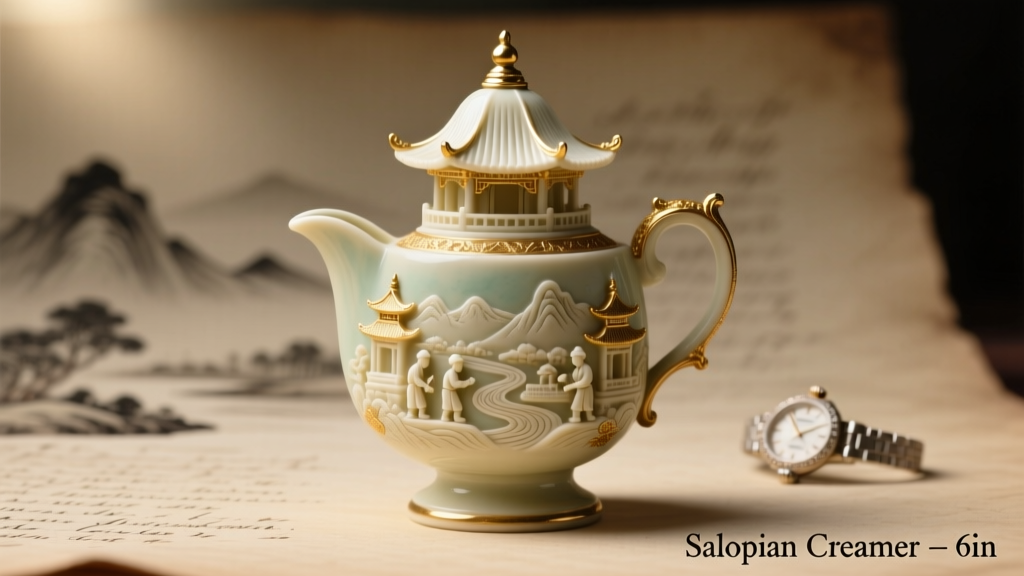
Salopian Creamer: Asian Figures, Pagodas, and Landscape in Helmet Form — A 6-Inch Victorian Porcelain Masterpiece