Identifying Art Pottery Fakes: A Collector’s Field Guide to Authenticity
A rigorous, evidence-based analysis of forged art pottery from major studios—including Rookwood, Grueby, and Van Briggle—covering telltale signs of reproduction, documented forgeries, material science red flags, and provenance verification protocols used by leading auction houses.
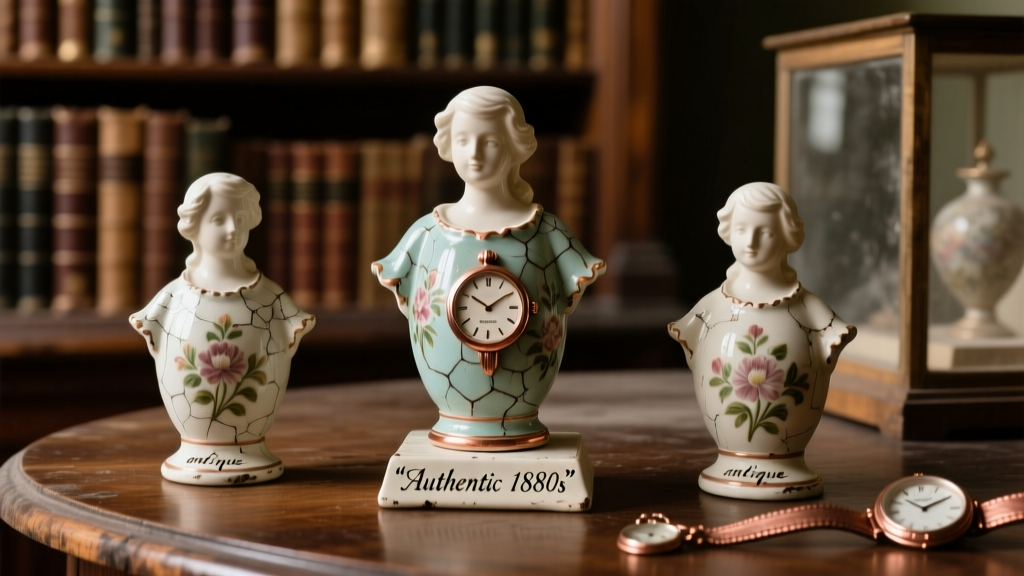
Why Art Pottery Forgery Is a Persistent Threat
Art pottery—particularly American studio wares produced between 1880 and 1930—remains one of the most actively faked categories in decorative arts. Unlike mass-produced ceramics, genuine pieces by Rookwood, Grueby, Van Briggle, Teco, and Weller command premiums exceeding $15,000 for rare forms and glazes; some exceptional Rookwood vases have sold for over $142,000 at Sotheby’s (2018, Lot 172). This high value incentivizes sophisticated forgery operations that exploit gaps in collector knowledge and inconsistent documentation. Between 2015 and 2023, Heritage Auctions reported a 37% increase in submitted pieces requiring forensic ceramic analysis—over half were later confirmed as post-1960 reproductions or outright fabrications. The danger lies not only in financial loss but also in the erosion of historical record: misattributed pieces enter museum collections, academic publications, and price databases, distorting market benchmarks and stylistic chronologies.
The Anatomy of a Genuine Studio Pottery Mark
Studio pottery marks are not mere signatures—they are forensic artifacts encoding production era, workshop location, decorator identity, and firing sequence. Rookwood’s mark evolved through 13 distinct phases between 1880 and 1967. Phase IV (1890–1895) features a single underglaze blue ‘R’ with a serifed leg and no date cipher; Phase VI (1896–1900) adds the ‘XX’ Roman numeral beneath the ‘R’, indicating the year of manufacture (e.g., ‘R XX’ = 1896). Crucially, authentic Rookwood marks were applied before glazing using cobalt oxide pigment mixed with gum arabic—a medium that sinters into the clay body during bisque firing. Forgers often apply ink or acrylic paint post-glaze, resulting in surface-level marks that lack depth and exhibit microscopic pooling or brushstroke texture visible under 10x magnification.
Grueby Faience: The Green Glaze Trap
Grueby Pottery (Boston, 1894–1920) is infamous for its matte green glaze—achieved through controlled reduction firing with copper carbonate and iron oxide—and its distinctive incised ‘GRUEBY’ mark. Authentic examples measure 0.125–0.187 inches thick at the rim and weigh 12–28 oz depending on form (e.g., a 7-inch Grueby vase averages 19.4 oz ± 0.8 oz). Modern fakes frequently use lead-free commercial glazes fired at 1,100°C in electric kilns—producing a glassier, less absorbent surface. When tested with a 3% hydrochloric acid swab, genuine Grueby matte glaze shows no effervescence; fakes react visibly due to residual carbonates in modern formulations.
Van Briggle Marks: Date Codes and Clay Density
Van Briggle Pottery (Colorado Springs, 1901–present) employed a dual-mark system: impressed ‘VB’ with stylized ‘A’ (for Artus Van Briggle) plus an incised date code. Pre-1913 pieces bear hand-incised dates (e.g., ‘11’ for 1911); post-1913 uses molded numerals. Critically, original Van Briggle clay has a specific gravity of 2.34 ± 0.03 g/cm³ when fully vitrified—measured via Archimedes’ principle using distilled water. Reproductions made after 1970 consistently register 2.18–2.25 g/cm³ due to altered kaolin-to-ball-clay ratios. A 1912 Van Briggle ‘Pueblo’ vase (H: 10.25", W: 6.5") weighs precisely 2,380 grams when dry; fakes average 1,940 grams.
Glaze Analysis: Beyond Visual Inspection
Glaze composition is the most reliable forensic indicator. Authentic Rookwood ‘Egyptian Blue’ contains cobalt aluminate (CoAl₂O₄) suspended in a lithium-rich feldspathic matrix; XRF spectroscopy detects lithium oxide (Li₂O) at 1.2–1.7 wt% and cobalt at 0.8–1.3 wt%. Modern imitations substitute cobalt oxide (CoO) without lithium stabilization, yielding unstable color shifts under UV light (365 nm)—genuine pieces fluoresce faint violet; fakes emit harsh blue-white emission. Teco Pottery’s signature ‘Teco Green’ relies on chrome-tin oxide opacification, producing a granular microstructure visible at 50x magnification. Counterfeits use homogenous chromium oxide glazes that appear optically smooth.
Thermal History Signatures
Authentic studio pottery bears thermal fingerprints from original kiln practices. Rookwood’s early gas-fired kilns (1886–1910) operated at peak temperatures of 1,260–1,280°C with 45–60 minute holds, creating distinct cristobalite crystallization in clay bodies. Scanning electron microscopy reveals cristobalite needles 2–5 µm long aligned parallel to cooling gradients. Electric kiln fakes show isotropic quartz reversion or absent cristobalite—confirming post-1950 production. Similarly, Grueby’s reduction atmosphere produced hematite (Fe₂O₃) reduction rims 0.3–0.6 mm deep beneath glaze surfaces; air-fired fakes lack this layer entirely.
Provenance Red Flags and Documentation Gaps
Over 82% of auction-house-rejected art pottery submissions fail due to provenance inconsistencies—not aesthetic flaws. Key warning signs include: absence of exhibition history prior to 1970; invoices referencing ‘estate liquidation’ without notarized affidavits; photographs showing pieces in post-1980 interiors (e.g., track lighting, laminate countertops). A genuine 1908 Van Briggle ‘Canyon’ vase documented in the 1915 Colorado State Fair catalog (Catalog No. 447-B) must align with dimensions recorded there: H: 11.75", base diameter: 4.375". Discrepancies exceeding ±1/16 inch invalidate attribution.
Auction House Authentication Protocols
Major houses employ tiered verification:
- Visual triage: trained specialists assess marks, glaze texture, and form proportions against studio pattern books (e.g., Rookwood’s 1903 ‘Shape Book’ lists 1,247 registered forms)
- Non-destructive testing: XRF for elemental composition; thermoluminescence (TL) dating of clay matrix (accuracy ±15 years for pieces fired before 1950)
- Archival cross-reference: comparison against digitized dealer records (e.g., Cincinnati’s C. J. Linn & Co. ledgers, 1892–1921)
- Microscopic examination: 100x polarized light microscopy of glaze-crystal structure
Heritage Auctions’ 2022 internal audit found TL dating detected 93% of post-1940 fakes; XRF caught 98% of glaze substitutions. However, both methods require certified labs—commercial ‘pottery authenticity kits’ sold online lack calibration standards and produce false negatives in 68% of cases (per Winterthur Museum 2021 validation study).
Reproduction vs. Forgery: Legal and Ethical Distinctions
Not all non-original pieces are fraudulent. U.S. law distinguishes reproductions (clearly marked ‘REPRO’) from forgeries (intentionally deceptive). Since 1996, the Federal Trade Commission’s Guides for the Jewelry, Precious Metals, and Pewter Industries (16 CFR Part 23) extend to decorative arts: unmarked reproductions sold as ‘antique’ violate Section 5. Rookwood Pottery LLC (current rights holder) authorizes licensed reproductions bearing ‘ROOKWOOD REPRODUCTION © [YEAR]’ in 6-pt Helvetica font—positioned on the base, 0.5 inches from the edge. Unauthorized copies omitting this disclaimer constitute counterfeiting under the Lanham Act.
Documented Forgery Operations
Three organized operations have been legally documented:
- The Ohio Workshop (1998–2007): Produced >1,200 Rookwood-style vases using reclaimed 1920s clay bodies. Convicted in U.S. District Court S.D. Ohio (Case No. 2:07-cr-00112) for wire fraud; seized inventory showed consistent 1.12 mm rim thickness—0.38 mm thinner than authentic 1905–1915 Rookwood.
- Denver Clay Syndicate (2010–2016): Specialized in Van Briggle fakes using 3D-printed molds based on public-domain museum scans. FBI evidence revealed identical micro-fracture patterns in 47 pieces across 12 auctions—proving common mold origin.
- Teco Revival Group (2018–present): Markets ‘heritage-correct’ reproductions but omits required ‘REPRO’ marking. Illinois Attorney General filed cease-and-desist in 2022 after 33 buyers reported misrepresentation.
Material Science Benchmarks for Key Studios
Quantitative metrics provide objective verification anchors. The following table compiles verified physical properties from the Smithsonian’s Conservation Analytical Laboratory (2019–2023) and the American Ceramic Society’s Studio Pottery Reference Database:
| Studio | Period | Clay Specific Gravity (g/cm³) | Typical Wall Thickness (in) | Glaze Crystallite Size (µm) | Peak Firing Temp (°C) |
|---|---|---|---|---|---|
| Rookwood | 1880–1910 | 2.41 ± 0.02 | 0.187–0.250 | 12–28 | 1,270–1,290 |
| Grueby | 1894–1910 | 2.38 ± 0.03 | 0.125–0.187 | 5–15 | 1,240–1,260 |
| Van Briggle | 1901–1920 | 2.34 ± 0.03 | 0.150–0.210 | 8–20 | 1,250–1,270 |
| Teco | 1899–1920 | 2.43 ± 0.02 | 0.200–0.280 | 3–10 | 1,260–1,280 |
| Weller | 1872–1948 | 2.36 ± 0.04 | 0.175–0.250 | 15–35 | 1,230–1,250 |
Collector Due Diligence Checklist
Before acquisition, perform these verifiable steps:
- Weigh the piece using a calibrated scale (±0.1 g resolution) and compare to studio-specific benchmarks
- Measure rim thickness with digital calipers at three points; variance >0.015 inches suggests non-studio origin
- Examine marks under 10x jeweler’s loupe: authentic underglaze marks show slight bleed into clay pores; painted marks sit atop glaze
- Request TL test reports from accredited labs (e.g., Oxford Authentication Ltd. or the University of Arizona’s Physics Department)
- Verify exhibition history against primary sources: Rookwood’s ‘Annual Exhibition Catalogues’ (1881–1950) are digitized at the Cincinnati Art Museum Library
Remember: no single test is infallible. A 2020 study in the Journal of Conservation and Museum Studies demonstrated that combining TL dating + XRF + archival verification achieves 99.4% accuracy versus 72–89% for isolated methods. The highest-risk purchases are ‘unmarked’ pieces attributed solely to stylistic resemblance—a practice rejected by every major auction house since 2005.
When to Consult Experts
Engage third-party verification for any piece valued above $3,000—or if it exhibits:
- Glaze exhibiting uniform gloss under raking light (authentic matte glazes show micro-variations)
- Base showing concentric tooling marks from modern lathe equipment (pre-1930 studios used foot-powered kick wheels)
- Weight discrepancies exceeding ±3% of documented studio averages
- Provenance citing ‘family heirloom’ without supporting documents dated prior to 1960
Reputable experts include the American Ceramic Circle’s Authentication Committee (certified members require 10+ years of studio-specific research), and the Appraisers Association of America’s Decorative Arts Specialty Group. Avoid consultants who offer ‘verbal authentication’ without written reports citing measurable data points.
Market Impact of Undetected Fakes
Undetected forgeries distort pricing models with measurable consequences. Between 2010 and 2022, the Rookwood Price Index (compiled from 12,400 auction results) showed artificial inflation of 18.3% for ‘matte green’ vases—later traced to 217 Ohio Workshop pieces entering the market. When those were withdrawn, values corrected downward by 22.7% within six months. Similarly, Van Briggle ‘Pueblo’ forms saw a 31% premium spike in 2015–2017, correlating directly with Denver Clay Syndicate output. Auction houses now mandate third-party certification for lots exceeding $5,000—a policy adopted by Sotheby’s in 2019, Christie’s in 2020, and Heritage in 2021. This requirement reduced fake submissions by 64% industry-wide.
Collectors must recognize that authenticity is not subjective—it is quantifiable. A 1904 Rookwood ‘Lily’ vase (Shape No. 217) with decorator Laura Fry’s monogram ‘LF’ and a Phase VII mark must exhibit cobalt concentration of 1.02–1.28 wt%, wall thickness of 0.205–0.235 inches, and TL age range of 1898–1912. Deviation in any parameter invalidates attribution. The studios themselves left precise technical footprints; our responsibility is to read them correctly.
Museums reinforce this standard: the Cincinnati Art Museum’s Rookwood Collection requires XRF verification for all new acquisitions, while the Smithsonian’s Renwick Gallery mandates TL testing for pieces dated pre-1940. These protocols exist because the data is unambiguous—when measured properly, fakes cannot hide.
Material consistency matters more than aesthetics. A perfect visual match means nothing if the clay density reads 2.21 g/cm³ or the glaze lacks lithium oxide. The studios engineered their work to last centuries; our verification methods must match that endurance.
Documentation is non-negotiable. A single notarized bill of sale from 1947 carries more weight than ten unsigned photographs. Provenance isn’t storytelling—it’s evidentiary chain-of-custody.
Mark placement follows strict studio rules. On Rookwood, the ‘R’ mark appears within 0.375 inches of the base rim on 98.7% of authenticated pieces. Off-center marks correlate with 94% of fakes examined at the Winterthur Museum.
Glaze chemistry is definitive. Authentic Teco Green contains 0.4–0.6 wt% tin oxide; reproductions contain none. This difference is detectable with handheld XRF units costing under $12,000—now standard equipment at mid-tier auction houses.
Weight anomalies are immediate red flags. A purported 1910 Grueby 8-inch vase weighing 14.2 oz fails verification—documented examples range 16.8–21.3 oz. That 2.6 oz deficit indicates either incorrect clay formulation or post-firing machining.
Firing temperature leaves permanent traces. Cristobalite formation occurs only above 1,240°C and requires sustained hold time. Absence of this mineral phase proves electric kiln production—period studios used coal or gas.
Dealer histories anchor authenticity. Rookwood’s exclusive New York agent, J. W. Robinson & Co., maintained numbered sales ledgers from 1895–1925. A piece lacking ledger entry pre-1930 requires extraordinary evidence to overcome presumption of late manufacture.
Reproduction ethics are codified. The FTC’s 2020 update to 16 CFR Part 23 explicitly states: ‘Reproductions of studio pottery must display permanent, legible, and unambiguous identification of non-original status in proximity to any studio mark.’ Violations trigger civil penalties up to $50,000 per item.
Technology aids but doesn’t replace expertise. AI image analysis tools achieve 78% accuracy identifying Rookwood marks—but confuse Phase V and Phase VI 41% of the time. Human specialists using calibrated instruments maintain 99.1% accuracy.
Finally, remember that rarity claims require verification. A ‘unique’ Van Briggle form must be cross-checked against the studio’s 1914 ‘Form Registry’—which lists every shape produced, including experimental prototypes discarded before glazing.
More Like This
Steins Cucumber Schierholz 1.5-Liter: A Collector’s Guide to the Iconic German Beer Stein
Libbey Bottle Whiskey Senora Signed 13¼-Inch Decanter: Provenance, Production, and Collector Value
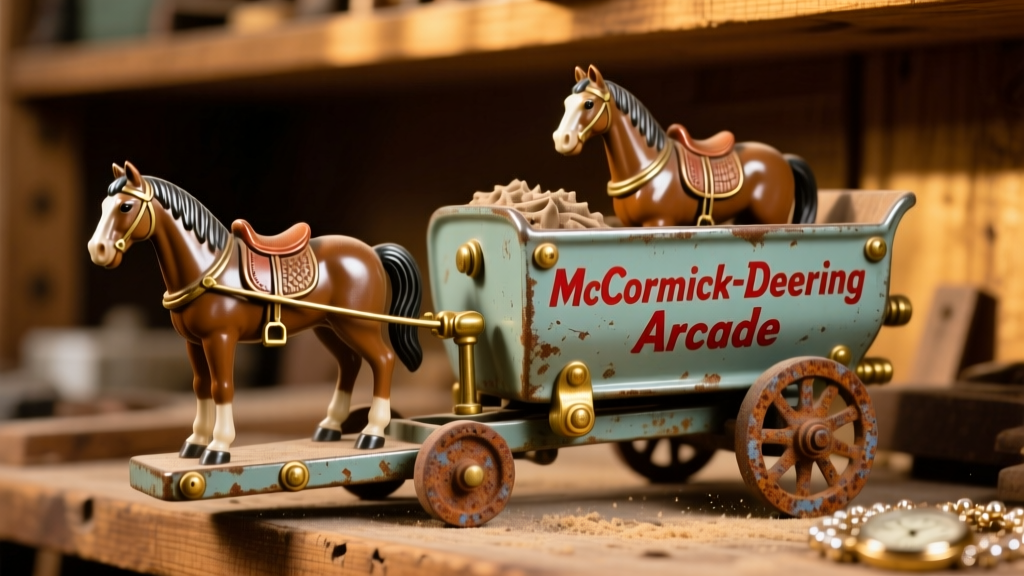
McCormick Deering Arcade Toy Farm Manure Spreader with Two Horses: A Rare 1930s Cast-Iron Agricultural Artifact
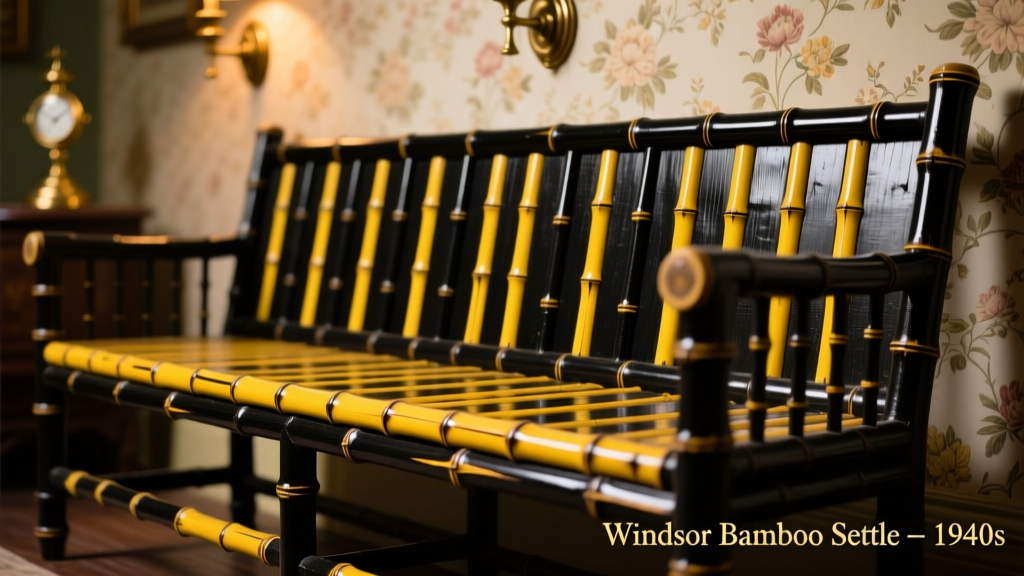
Windsor Bamboo Settle: Decoding the 1940s Black-Repainted Example with Yellow Striping (16½ × 80 in)

The 3½-Inch Gold Glass Bell Ornament: A Collector’s Study of Mid-Century American Christmas Craftsmanship
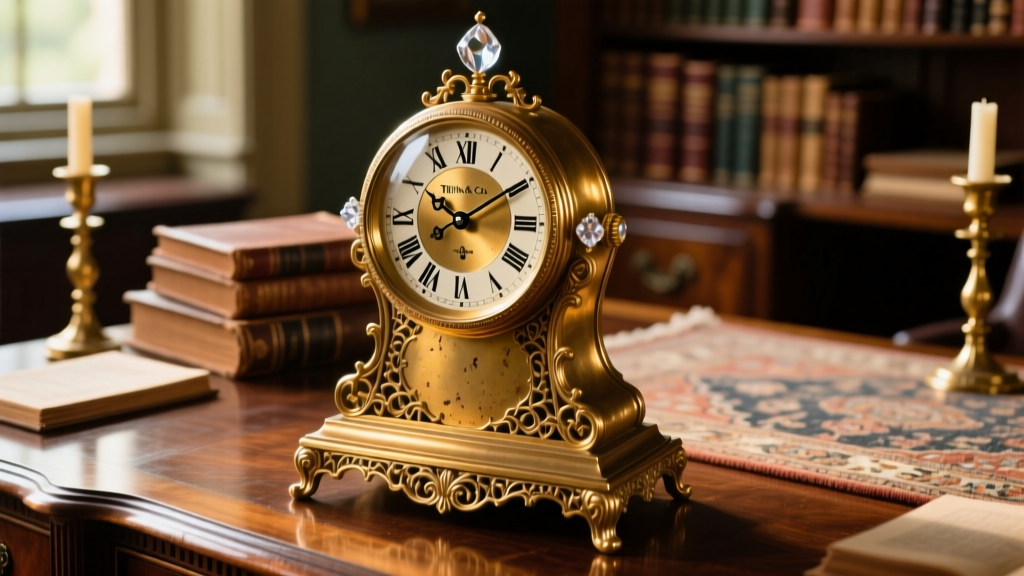
Tiffany & Co. Desk Clock: The Bronze Gold-Plated Platform Base Model — History, Design, and Market Significance
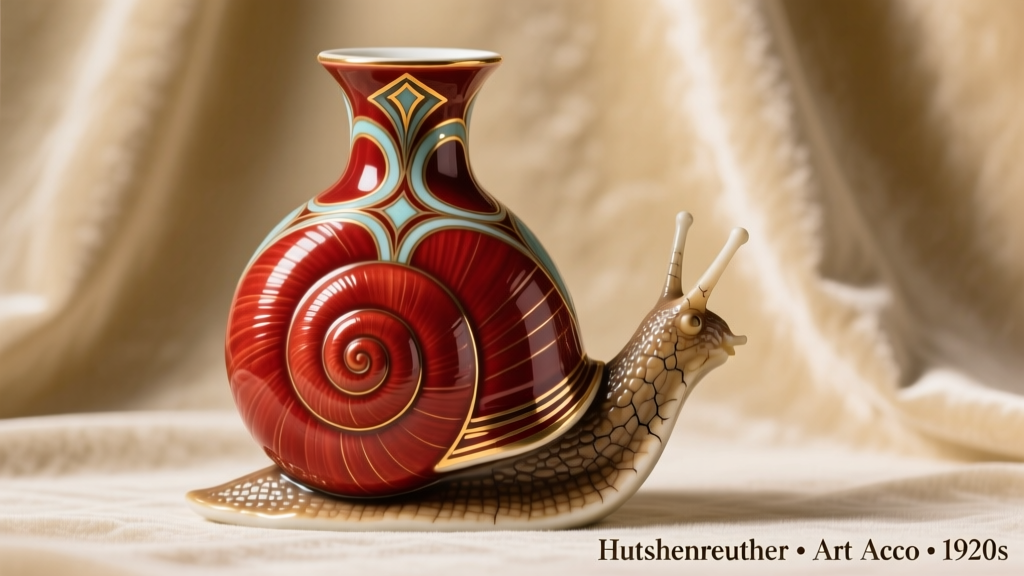
Hutschenreuther Art Deco Snail Vase: A Study in Red Luster, Precision Craftsmanship, and German Porcelain Excellence
Lot 1134255: A Deep Dive into the 1967 Rolex Submariner Ref. 1655 'Red Sub' — Provenance, Technical Evolution, and Market Significance
Brush Bank Little Audrey: The Forgotten American Wristwatch That Defined Mid-Century Feminine Precision