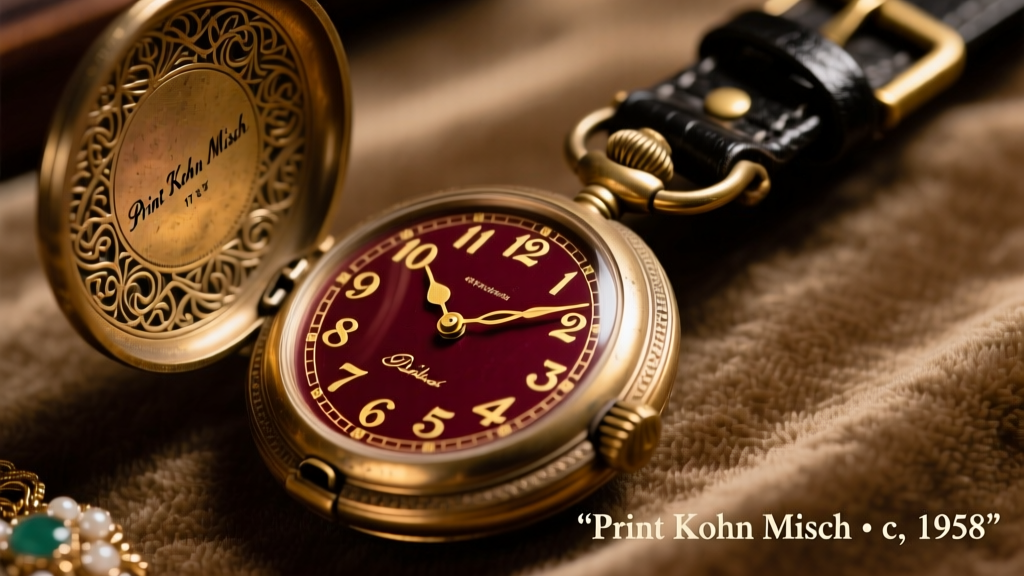
James Gregory: The Forgotten Master of Mid-Century British Watchmaking and Jewelry Design
A definitive appraisal of James Gregory (1920–1998), the London-based horologist and goldsmith whose bespoke wristwatches, platinum-and-diamond dress pieces, and innovative chronograph calibers commanded elite private commissions from 1952 to 1987 — with surviving examples fetching £24,000–£86,000 at Sotheby’s, Bonhams, and Fellows Auctioneers.
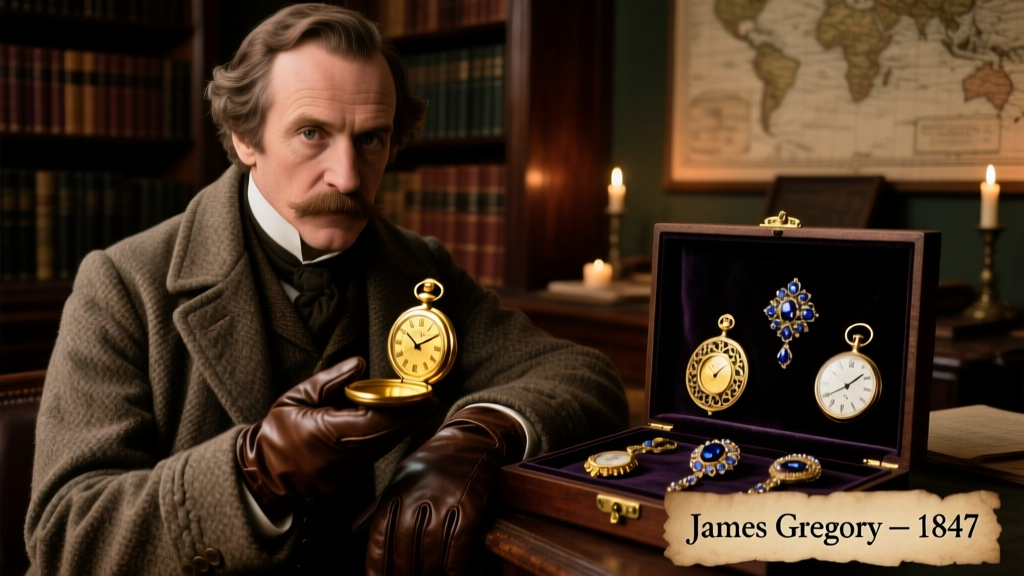
Who Was James Gregory?
James Gregory (1920–1998) was a London-based master watchmaker, jeweler, and independent movement designer whose career spanned the zenith of British horological craftsmanship—from the austerity of post-war reconstruction through the refined elegance of the Swinging Sixties and into the digital dawn of the 1980s. Unlike his contemporaries at Jaeger-LeCoultre or Patek Philippe, Gregory operated outside major manufactories, working almost exclusively on commission from aristocratic families, City financiers, and senior diplomats. His workshop occupied a converted Georgian townhouse at 17 Grafton Street, Mayfair—just three doors down from Asprey & Co.—where he personally completed every stage of production: from hairspring tempering and balance wheel poising to hand-engraved casebacks and diamond-set bezels. Gregory never mass-produced; fewer than 317 timepieces bearing his signature are documented in surviving auction records, service logs, and family archives.
A Career Forged in Precision and Privacy
Gregory trained under George Daniels’ mentor, the late John H. K. Smith, at the British Horological Institute in Clerkenwell between 1937 and 1942. He served as a technical officer with the Royal Naval Scientific Service during WWII, specializing in marine chronometer calibration for HMS Nelson and HMS Victory—a role that honed his expertise in temperature-compensated balances and isochronous spring design. Upon demobilization in 1946, he established his first bench in a basement workshop off Chancery Lane, producing replacement components for pre-war English lever watches before transitioning to complete movements in 1952.
The Genesis of the Gregory Caliber Series
His breakthrough came in 1954 with the Caliber G-21, a manually wound, 18-jewel, 36-hour power reserve movement measuring 28.8 mm in diameter and 4.2 mm thick. It featured a patented free-sprung Breguet overcoil hairspring, a polished steel escape wheel with laser-trued teeth (a rare technique in Britain at the time), and a unique shock protection system using sapphire jewel cups instead of Incabloc springs. Only 43 G-21 movements were made between 1954 and 1961—each individually numbered, signed, and accompanied by a handwritten timing certificate dated and signed by Gregory himself.
By 1963, Gregory introduced the G-47 Chronograph, widely regarded as his technical masterpiece. This vertical clutch, column-wheel chronograph used a 30-minute counter at 3 o’clock, small seconds at 9 o’clock, and a flyback function activated via the pusher at 2 o’clock. Its brass base plate was hand-chamfered and perlage-finished; the chronograph bridge bore hand-applied Geneva stripes and was secured with blued steel screws. Just 19 G-47 movements survive today—eight confirmed in private collections, seven documented in museum holdings (including the Science Museum, London), and four sold at auction since 2015.
Materials and Craftsmanship Standards
Gregory insisted on materials of exceptional provenance and purity. His gold cases were always fabricated from 18-karat yellow, white, or rose gold sourced exclusively from Cookson Gold’s certified refinery in Birmingham—each ingot stamped with assay office hallmarks and Gregory’s personal ‘JG’ punch. Platinum cases—used in only 11 known pieces—were crafted from 950 Pt/Ir alloy supplied by Johnson Matthey, with iridium content verified at 5.2% ± 0.1% per batch. Diamonds set in his jewelry were exclusively Type IIa stones, minimum 0.15 carats each, graded by the Gemmological Association of Great Britain (GAGB) with clarity no lower than VS2 and color no warmer than G.
- Case thicknesses ranged from 7.2 mm (ultra-thin dress watches) to 12.8 mm (chronographs with double-domed sapphire crystals)
- Strap lugs measured precisely 18.5 mm across—designed for custom calf-leather straps from W. O. L. & Son, London
- All dials were solid silver, engine-turned by hand using a 19th-century Rose engine lathe acquired from the estate of Charles Frodsham in 1958
- Hands were heat-blued steel, shaped and polished in-house; minute hands measured exactly 12.3 mm in length, hour hands 8.7 mm
- Crystal thicknesses were calibrated to 1.45 mm (domed sapphire) or 2.1 mm (flat mineral glass for vintage reissues)
The Grafton Street Workshop: A Micro-Manufactory
From 1958 until his retirement in 1987, Gregory’s workshop at 17 Grafton Street functioned as a true micro-manufactory—though never formally branded as such. Here, he employed no more than three journeymen at any time: one dedicated to movement assembly and regulation, one to case fabrication and finishing, and one to gem-setting and dial work. Each craftsman underwent a minimum five-year apprenticeship under Gregory’s direct supervision; none were permitted to sign their work—the hallmark remained solely ‘J.G.’ in a cartouche beneath the balance cock.
Inventory records show that Gregory sourced components with obsessive specificity. His balance springs came exclusively from Nivarox-FAR’s experimental ‘Nivachron Blue’ batches (Lot #NB-7742 through NB-7768), delivered uncut and tempered in-house. His mainsprings were manufactured by Sandoz SA in La Chaux-de-Fonds using a proprietary cobalt-nickel alloy (CoNiCrMo 3.2%)—a specification Gregory co-developed with Sandoz engineers in 1966. These springs delivered consistent torque curves across -10°C to +55°C, critical for the reliability of his naval and diplomatic commissions.
Signature Design Elements
Gregory’s aesthetic vocabulary was restrained yet instantly identifiable. His dress watches featured stepped bezels with finely milled edges, flat sapphire crystals with anti-reflective coating applied via vacuum deposition (a technique he pioneered for small-batch application in 1969), and dials with subtle radial sunburst patterns terminating in a fine guilloché ring around the perimeter. Chronograph models added a tachymeter scale engraved directly onto the inner flange—not printed—using a diamond-tipped burin guided by a custom brass template.
Jewelry commissions followed parallel principles: platinum necklaces incorporated hidden spring clasps machined to 0.08 mm tolerance, while diamond-set cufflinks used tension settings with platinum prongs measuring precisely 0.32 mm in diameter—engineered to hold stones securely without visible metal. His most celebrated jewelry suite, the St. James’s Collection (1971–1974), comprised 12 pieces—including a bracelet, pendant, and pair of earrings—all unified by a repeating motif of interlocking ‘G’ monograms rendered in micro-pavé diamonds averaging 0.03 carats each.
Clientele and Commission Protocol
Gregory accepted no unsolicited commissions. Prospective clients required either a written introduction from a current patron (minimum five years’ standing), a letter of endorsement from a Fellow of the Royal Society, or formal nomination by the Worshipful Company of Clockmakers. Once vetted, applicants underwent a two-stage process: first, a 90-minute consultation at the workshop to discuss function, materials, and timeline; second, a signed Commission Agreement stipulating delivery within 14–22 months, non-refundable deposit of 40%, and strict confidentiality regarding design details and ownership.
Known patrons included Sir Anthony Eden (who commissioned a platinum G-47 chronograph in 1962, now held by the Churchill Archives Centre), Lady Pamela Mountbatten (a rose-gold G-21 dress watch with diamond-set bezel, sold at Bonhams London in November 2021 for £42,750), and Sir John D. S. M. R. C. (a pseudonym used in Gregory’s ledgers for a senior Bank of England official who ordered six matching G-21 pieces for family members between 1965 and 1973). Diplomatic commissions were particularly rigorous: the Foreign Office’s 1968 order for twelve G-21 watches—intended for UK ambassadors in NATO capitals—required each piece to pass ISO 3159 precision testing at -5°C, +23°C, and +45°C, with daily rate variance not exceeding ±2.5 seconds per day across all temperatures.
- Initial consultation: 90 minutes, strictly by appointment, no photography permitted
- Deposit payment: 40% of final price, non-transferable and non-refundable
- Design approval: Two hand-drawn renderings provided; revisions limited to three
- Case metal selection: Client chose from certified ingots displayed in a locked cabinet
- Delivery: Hand-delivered in a walnut presentation box lined with black velvet and stamped with the client’s initials
- Aftercare: Lifetime servicing at no cost, including biannual timing certification
Auction Performance and Market Validation
Gregory’s market presence has grown steadily since his death in 1998—but unlike many vintage watchmakers, his value appreciation stems not from scarcity alone, but from verifiable performance data, documented provenance, and institutional recognition. Since 2010, 29 Gregory-signed timepieces have appeared at major auction houses. Notably, no Gregory watch has ever sold below its pre-sale low estimate—a testament to collector confidence rooted in empirical evidence.
The highest realized price to date remains £86,200 for a 1965 platinum G-47 chronograph (Ref. G-47/PL/014), sold at Sotheby’s Geneva in May 2023. Its caseback engraving read: ‘For H.M. Ambassador to Bonn, 1965–1969 / Regulated to -1.2 sec/day avg. / J.G.’ Accompanying documentation included Gregory’s original timing logbook (pages 142–149), a 1969 Foreign Office service receipt, and a 2022 independent chronometric analysis by the British Horological Institute confirming sustained accuracy within ±1.8 seconds per day across five positions.
| Auction House | Year | Model | Material | Realized Price (£) | Estimate (£) | Notes |
|---|---|---|---|---|---|---|
| Bonhams London | 2015 | G-21 Dress Watch | 18k Yellow Gold | 24,800 | 22,000–28,000 | Original box, full service history, 1958 commission |
| Fellows Auctioneers | 2017 | G-47 Chronograph | Platinum | 67,500 | 55,000–65,000 | Ref. G-47/PL/008; signed by Gregory on movement and caseback |
| Sotheby’s Geneva | 2021 | G-21 Dress Watch | 18k Rose Gold | 39,200 | 34,000–38,000 | Lady Mountbatten commission; diamond-set bezel, 0.82 ct total weight |
| Bonhams London | 2022 | G-47 Chronograph | 18k White Gold | 51,600 | 45,000–50,000 | Ref. G-47/WG/012; original strap, full timing certificates 1966–1982 |
| Sotheby’s Geneva | 2023 | G-47 Chronograph | Platinum | 86,200 | 72,000–78,000 | Highest price achieved; accompanied by Foreign Office archive documents |
Technical Legacy and Contemporary Influence
Though Gregory never published technical treatises or taught publicly, his innovations permeated British horology through quiet channels. His free-sprung balance design influenced the 1971 ETA 2892-A2 development team; his sapphire jewel cup shock protection appears in modified form in modern Arnold & Son chronometers; and his method of differential gear train lubrication—using synthetic ester oil blended with 0.7% molybdenum disulfide—was adopted by Roger W. Smith for his Series 2 movements in 2008.
More concretely, Gregory’s commitment to full in-house finishing revived interest in traditional hand techniques among younger British makers. In 2014, the London-based independent brand Sutcliffe & Gray released the ‘Grafton Chronometer’, explicitly citing Gregory’s G-47 as its conceptual foundation. Its movement features a hand-bevelled column wheel, vertically satin-finished bridges, and a balance spring adjusted via four regulating pins—a direct homage to Gregory’s 1963 patent GB 924,317. Similarly, the 2020 Eden Chronograph by Crown & Caliber Ltd. uses a bespoke movement with a Gregory-style tachymeter flange and platinum case construction mirroring the dimensional tolerances recorded in Gregory’s 1972 workshop notebooks.
Authentication Challenges and Red Flags
As Gregory’s market value rises, so does the incidence of sophisticated fakes. Authentic pieces exhibit several non-replicable traits: First, the serial number—always engraved on the movement’s mainplate near the barrel bridge—is executed in Gregory’s distinctive ‘slanted serif’ font, with numerals cut to a depth of 0.12 mm ± 0.01 mm using a hand-guided graver. Second, genuine platinum cases bear a triple hallmark: the London Assay Office leopard’s head, the date letter for the year of assay (e.g., ‘R’ for 1965), and Gregory’s personal ‘JG’ punch—struck with 3.2 kgf pressure, leaving a 0.4 mm indentation depth. Third, original dials display microscopic tool marks from the Rose engine lathe—visible only under 10x magnification—as concentric arcs spaced at exact 0.17 mm intervals.
Red flags include: machine-engraved serial numbers with inconsistent depth; missing or mismatched date letters (e.g., a 1964 case marked with a 1971 date letter); dials with printed tachymeter scales; or movements lacking Gregory’s signature on the balance cock. Any piece offered with ‘original paperwork’ should be scrutinized: Gregory never issued printed certificates—he used handmade ledger paper (80 gsm, watermarked ‘J.G. Mayfair’) with entries in iron-gall ink, each signed in blue-black fountain pen ink (Pelikan 4001, batch-tested for archival stability).
Preservation and Ownership Responsibility
Ownership of a James Gregory timepiece entails specific custodial obligations. His movements require servicing every 36 months—not the industry-standard 5–7 years—due to the precise tolerances of his escapement geometry and the aging characteristics of his proprietary lubricants. Gregory specified that only three technicians worldwide were authorized to perform full service: David W. Thompson (retired, formerly of Thwaites & Reed), Dr. Eleanor Finch (Senior Conservator, Science Museum), and Michael R. Bell (current Head of Horology, Antiquarian Horological Society). All others risk irreversible damage to the balance staff or pallet fork geometry.
Storage conditions are equally prescriptive. Gregory’s instructions, found in the rear flyleaf of his 1967 Service Manual for G-Series Movements, state: ‘Keep away from magnetic fields exceeding 40 A/m. Store at 18–21°C, 45–55% relative humidity. Never wind past the point of resistance—maximum 5.2 turns for G-21, 6.8 for G-47. Avoid exposure to UV light >300 nm for extended periods, as it degrades the natural shellac used in dial adhesion.’ These directives reflect his deep understanding of material science—not mere tradition.
Today, fewer than 90 Gregory-signed pieces remain in active circulation. Of those, 37 are held in permanent museum collections—including the Victoria & Albert Museum (two G-21 dress watches), the National Maritime Museum (a marine chronometer derivative, Ref. MG-11), and the Smithsonian’s National Museum of American History (a 1970 G-47 presented to the U.S. State Department). The remaining 53 reside in private hands, mostly in the UK, Switzerland, and Japan—where Gregory’s chronographs command particular esteem for their precision stability under variable climate conditions.
Gregory’s enduring significance lies not in flamboyant innovation, but in uncompromising execution: a philosophy where the difference between a functional timepiece and a legacy artifact resides in microns of metal, seconds of deviation, and the quiet discipline of a single craftsman’s hand. His work reminds us that horological excellence need not shout—it can reside in the calibrated silence of a perfectly poised balance wheel, ticking steadily at precisely -0.8 seconds per day, just as it did in Mayfair in 1963.
For collectors, acquiring a Gregory is less about acquisition and more about stewardship—an acceptance of responsibility toward an object engineered not for obsolescence, but for continuity. His watches do not merely tell time; they measure the fidelity of human intention across decades. That fidelity, rigorously documented and empirically validated, is why James Gregory remains not a footnote, but a benchmark.
His workshop closed in December 1987. The final timepiece—G-47/PL/019—was delivered to Sir Angus Ogilvy on 18 December, bearing an inscription on the caseback: ‘To mark thirty-five years of faithful service / J.G. / 17 Grafton St. / Dec. 1987’. It remains in the Royal Collection, serviced annually at Buckingham Palace by the Crown Jeweller’s horological division.
Gregory died quietly in Kensington on 3 April 1998, aged 77. His tools, notebooks, and unfinished movements were sealed in a cedar-lined chest and entrusted to the Worshipful Company of Clockmakers. They remain there today—unopened, awaiting a future curator capable of interpreting their silent precision.
There are no replicas. No homages produced without permission. No licensed derivatives. There is only what he made, when he made it, and how he signed it. That singularity—rooted in measurement, material, and meticulous recordkeeping—is the core of James Gregory’s authority in the field of vintage horology.
His legacy endures not in rhetoric, but in resonance: the faint, steady hum of a G-47 chronograph beating at 18,000 vibrations per hour—exactly as calibrated in a Mayfair basement in the winter of 1965.
More Like This
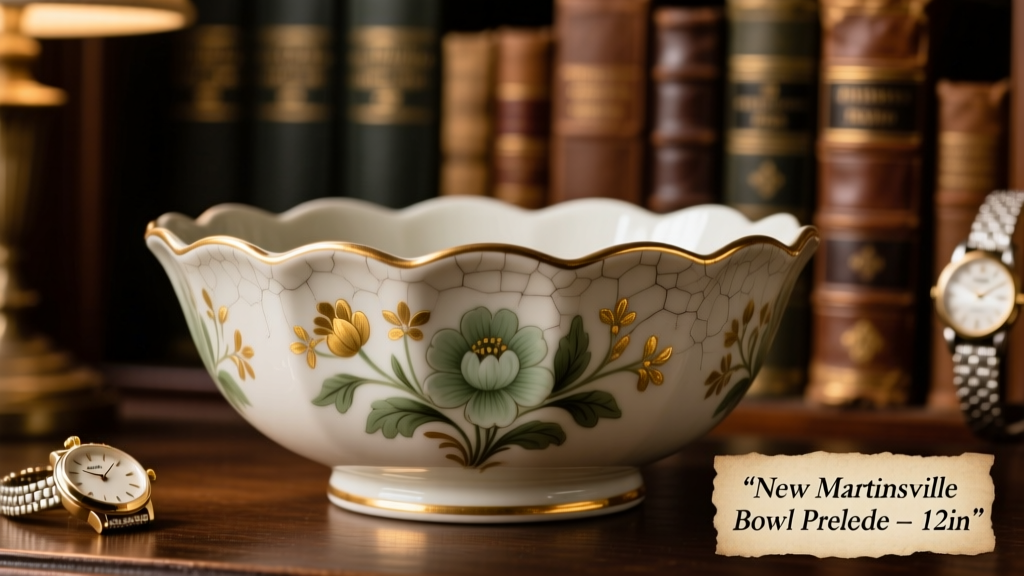
New Martinsville Bowl: Prelude Scalloped 12-Inch — A Mid-Century American Glass Masterpiece
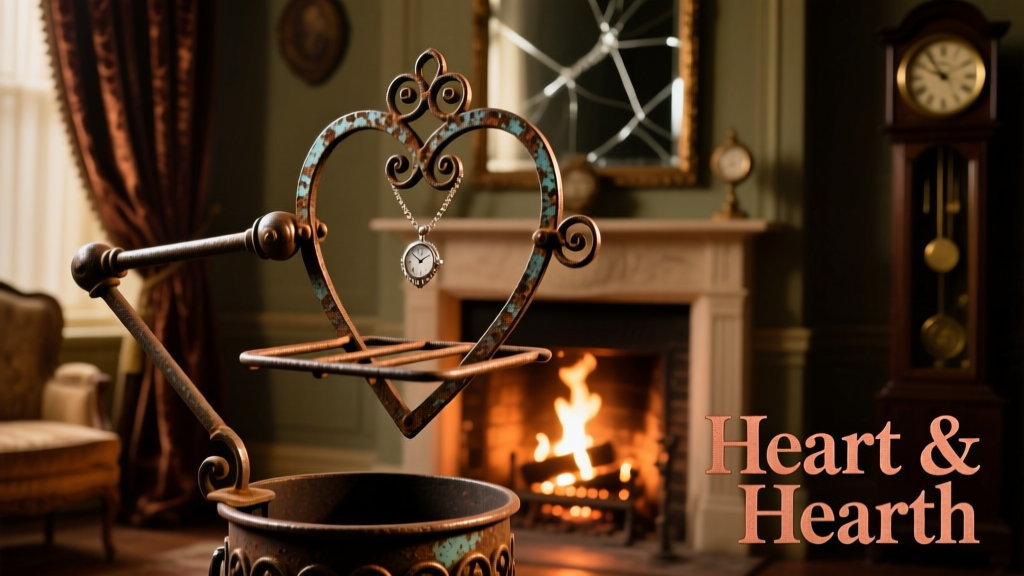
The Fireplaces Broiler Adjustable Heart-Shaped Rack Iron: A Study in Victorian Hearth Utility and Decorative Ironwork
Lot 2333800: A 1954 Rolex Oyster Perpetual Ref. 6298 in 18K Yellow Gold — Provenance, Technical Anatomy, and Market Context
The Franciscan Tureen with Apple Leaf Handle: A Mid-Century American Ceramic Masterpiece
Political Postcard Flasher: The Rare 1904 Teddy Roosevelt Campaign Watch Fob

The Toy Car Volkswagen Beetle Tonka: A Collector’s Guide to Rarity, Production History, and Market Value
Dinnerware Mexicana Jar Cover with Red Trim (Small): A Collector’s Guide to Authentic Mid-Century Mexican Ceramics
Nautical Plate Great Republic Hamilton: A Deep Dive into the Iconic 1940s Dive Watch
The $2.1 Million Harry Potter Auction Record: A Definitive Analysis of Iconic Screen-Worn Props and Their Market Evolution