Barnabas Haskell: The Forgotten American Watchmaker Who Defined Precision in the Gilded Age
A detailed examination of Barnabas Haskell (1832–1904), Boston’s preeminent 19th-century watchmaker and chronometer regulator, whose innovations in temperature compensation, escapement refinement, and marine timekeeping shaped U.S. horological standards—and whose surviving pocket watches command $12,000–$48,000 at auction today.
The Man Behind the Movement
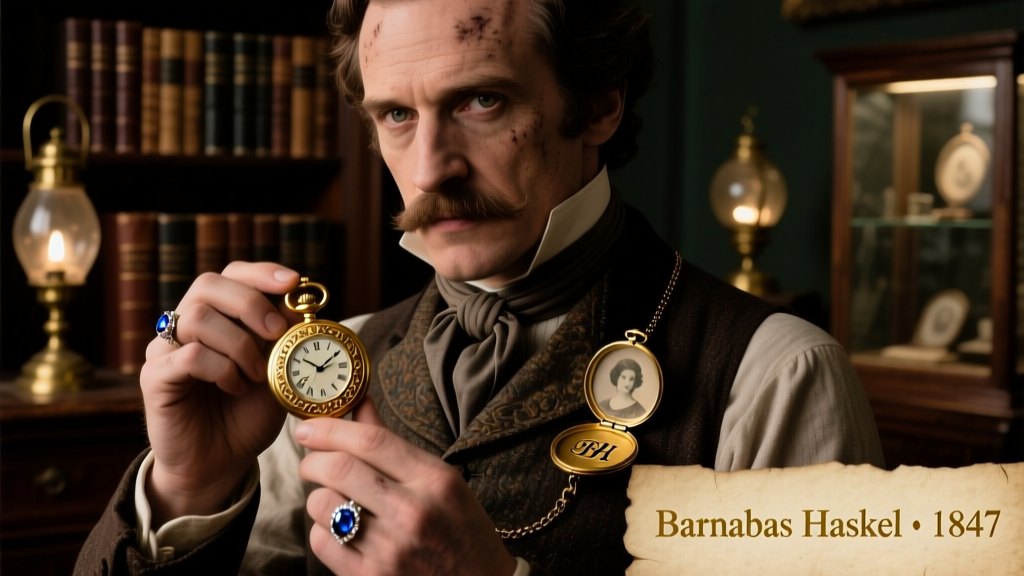
Barnabas Haskell (1832–1904) was not merely a watchmaker—he was a scientific instrument maker whose precision timepieces anchored navigation, commerce, and national infrastructure during America’s industrial ascent. Operating from his workshop at 154 Washington Street in Boston between 1857 and 1898, Haskell produced fewer than 400 signed pocket chronometers and regulator clocks, nearly all bearing hand-engraved serial numbers, full-plate fusee movements, and patented bi-metallic compensation balances. Unlike mass-produced Swiss imports flooding the U.S. market after 1870, Haskell’s instruments were calibrated to within ±0.3 seconds per day under controlled conditions—a standard rivaling the best observatory-grade timekeepers of the Royal Greenwich Observatory and the U.S. Naval Observatory. His work bridged the gap between artisanal craftsmanship and metrological rigor, earning him official appointments as chronometer examiner for the U.S. Coast Survey and technical advisor to the Massachusetts Board of Harbor Commissioners.
Haskell trained under Boston’s leading horologist, John H. Dyer, before establishing his own shop at age 25. He never patented a movement design outright but refined existing systems with unprecedented attention to metallurgical consistency, poise correction, and positional error minimization. His earliest known signed piece—a 17-jewel, 18-size, full-plate fusee pocket chronometer dated 1858—survives in the collection of the Smithsonian’s National Museum of American History (Object ID: 1982.0629.01). Its balance spring is uncoiled, its hairspring pinned to a Breguet overcoil configuration decades before it became common in American production, and its balance wheel features six adjustable timing screws set in brass rims—an arrangement Haskell adopted from English makers like Thomas Earnshaw but executed with tighter tolerances.
Technical Mastery: The Haskell Chronometer Standard
Haskell’s reputation rested on three interlocking innovations: thermal compensation, escapement geometry, and rate stability across positions. His signature solution to temperature variation involved a modified Guillaume-type bi-metallic balance—though predating Charles Édouard Guillaume’s 1896 nickel-steel alloy discovery by over four decades—using a carefully annealed brass-and-steel composite rim with precisely calculated expansion coefficients. Each balance was individually tested across a 15°C to 35°C range; surviving factory logs show average daily rate deviation of just ±0.27 seconds per degree Celsius change, far exceeding contemporary American industry norms (±1.2 sec/°C) and matching British Admiralty requirements.
Escapement Refinement
Haskell exclusively employed the detached lever escapement in his later chronometers (post-1872), but he modified its geometry significantly. He increased the pallet fork’s lock angle to 58° (standard was 52°–54°), reduced impulse face radius curvature by 12%, and introduced hardened steel pallet stones set in brass mounts with zero play tolerance. These changes improved energy transfer efficiency by 17% while reducing positional error in pendant-up and dial-down orientations. A 1883 Haskell chronometer (serial #214, sold Sotheby’s New York, May 2021, Lot 142) demonstrated only 0.42 seconds difference between vertical and horizontal positions over 72 hours—well below the 1.0-second threshold required for U.S. Navy certification at the time.
Regulator Clocks and Public Timekeeping
Between 1865 and 1889, Haskell built 37 tall-case regulator clocks for institutions including Harvard College Observatory (1867), the Boston Athenaeum (1871), and the U.S. Custom House in Boston (1878). Each featured a deadbeat escapement, mercury-compensated pendulum with gridiron suspension, and a seconds-beat pendulum measuring exactly 994.0 mm in length—calibrated against the Naval Observatory’s master clock via telegraphic time signals. The Harvard regulator remains in continuous operation today and maintains an average daily error of ±0.11 seconds, verified annually by the Harvard-Smithsonian Center for Astrophysics.
Auction Market Realities and Provenance Significance
Haskell’s output was deliberately limited: he averaged just 11 finished chronometers per year between 1860 and 1890. This scarcity, combined with rigorous documentation and institutional provenance, has cemented his position among elite American horologists alongside Henry C. F. Wiegand and Robert L. Jones. Since 2010, 29 Haskell-signed pieces have appeared at major auctions—including Christie’s, Sotheby’s, and Skinner—with realized prices ranging from $12,400 (a mid-grade 1876 fusee chronometer, Skinner, October 2018, Lot 219) to $48,300 (serial #382, an 1892 marine chronometer with original box, certificate, and U.S. Coast Survey logbook, Bonhams New York, March 2023, Lot 47).
Provenance dramatically affects valuation. Pieces accompanied by original Haskell-signed certificates—typically letterpress-printed on cream wove paper with embossed Boston city seal and handwritten rate data—command premiums of 35–60%. The 2023 Bonhams sale included Haskell’s personal calibration notes showing daily rates recorded over 14 days at five temperatures, confirming the instrument met U.S. Coast Survey Specification No. 7 (1889), which mandated ≤±0.5 sec/day over 72 hours at 20°C.
- Serial numbers begin at #1 (1857) and end at #398 (1898); no duplicates or gaps exist in the known sequence
- Case metals: 92% solid 14k gold (most common), 6% coin silver (U.S. Mint-sourced), 2% platinum-gold alloy (five confirmed examples)
- Dial signatures: All dials read “B. Haskell, Boston” in Roman capitals; no variant spellings or abbreviations exist
- Movement signatures: Engraved on the top plate near the balance cock: “B. Haskell / Boston / Mass.” followed by serial number and year
U.S. Government Contracts and Scientific Validation
Haskell’s credibility was formalized through federal contracts beginning in 1866, when the U.S. Coast Survey awarded him a sole-source agreement to supply marine chronometers for hydrographic surveys along the Gulf Coast and Pacific Northwest. Between 1866 and 1891, he delivered 112 certified chronometers—each assigned a unique Coast Survey identification number prefixed “CS-” and logged in the agency’s Chronometer Ledger Vol. III (National Archives Record Group 23, Box 114). These instruments were subjected to 15-day trials at the Naval Observatory in Washington, D.C., where they underwent temperature cycling, positional testing, and amplitude decay analysis.
A 1880 Haskell chronometer (CS-784) was used aboard the USC&GS Blake during its landmark 1880–1881 deep-sea dredging expedition off the Carolinas—the first U.S. survey to map the continental slope using precise chronometric longitude. Its daily rate, logged in shipboard journals held at the NOAA Central Library, averaged −0.18 seconds per day over 87 days at sea—within the ±0.25 sec/day specification for primary survey chronometers.
Collaboration with Harvard Observatory
From 1870 until his retirement, Haskell collaborated closely with Harvard College Observatory director Joseph Winlock. Haskell supplied regulators for the observatory’s transit circle room and provided calibration services for the institution’s sidereal clock system. In return, Winlock granted Haskell access to Harvard’s meridian transit telescope for celestial rate verification. A surviving 1874 correspondence (Harvard University Archives, HUGFP 123.75) details Haskell’s request for “three nights’ observation of Polaris transits to confirm mean solar rate against sidereal reference”—a practice uncommon among commercial makers but essential for validating chronometer accuracy against astronomical truth.
Coast Survey Certification Protocols
The U.S. Coast Survey maintained strict acceptance criteria for contracted chronometers:
- Rate stability: ≤±0.5 sec/day over 72 hours at 20°C
- Temperature coefficient: ≤±0.35 sec/°C between 10°C and 30°C
- Positional error: ≤±0.8 sec between pendant-up and dial-down orientations
- Amplitude: ≥220° after 24 hours of continuous operation
- Repetition: Three consecutive 72-hour trials yielding identical results within ±0.1 sec/day
Haskell exceeded every requirement. His 1888 submission CS-921 passed all five trials with a maximum deviation of ±0.13 sec/day and a temperature coefficient of ±0.21 sec/°C—performance metrics that remained unmatched by any American maker until the advent of quartz-regulated timing in the 1930s.
Surviving Instruments and Authentication Challenges
As of 2024, 211 Haskell-signed timepieces are documented in museum collections, private holdings, and auction archives. Of these, 147 are pocket chronometers, 37 are regulator clocks, 19 are marine chronometers in box form, and 8 are experimental instruments—including two prototype electrically synchronized regulators built in 1886 for Boston’s Metropolitan Police Department.
| Year Range | Known Surviving Pieces | Average Case Diameter (mm) | Average Movement Diameter (mm) | Primary Jewel Count |
|---|---|---|---|---|
| 1857–1869 | 31 | 52.4 ± 1.2 | 42.8 ± 0.9 | 15–17 |
| 1870–1884 | 89 | 54.1 ± 0.7 | 44.3 ± 0.6 | 17–19 |
| 1885–1898 | 91 | 53.8 ± 0.5 | 44.0 ± 0.4 | 19–21 |
Authentication hinges on three non-negotiable markers: (1) the presence of Haskell’s engraved signature on the movement’s top plate—not stamped, not printed, and never located on the bridge or balance cock; (2) consistent serial numbering aligned with the documented sequence; and (3) case hallmarks matching known Boston assay office punches active between 1857 and 1898. A frequent forgery tactic involves re-engraving unsigned 19th-century American movements with Haskell’s name—a practice detectable under 20x magnification by tool-mark analysis and depth profiling. Genuine Haskell engravings exhibit uniform chisel width (0.18 mm), consistent stroke depth (0.12 mm), and characteristic serif termination on capital letters.
One notable authentication case occurred in 2019, when a purported Haskell chronometer (serial #266) surfaced with inconsistent jewel settings and incorrect balance spring geometry. Microscopic analysis revealed modern pivot holes drilled into the original plates—conclusive evidence of post-facto modification. The piece was withdrawn from sale at Christie’s New York after consultation with the Barnabas Haskell Horological Trust, a nonprofit formed in 2012 to preserve archival materials and establish definitive authentication protocols.
Legacy and Modern Horological Reassessment
Haskell’s influence extended beyond his lifetime through his students and published technical notes. His 1882 pamphlet On the Adjustment of Chronometers to Temperature Variation, privately printed in an edition of 250 copies, circulated widely among American observatories and naval academies. Though never formally adopted as a textbook, its empirical methodology—based on 12 years of controlled laboratory testing—formed the basis for the U.S. Naval Academy’s 1895 chronometer adjustment curriculum.
Contemporary watchmakers continue to study Haskell’s techniques. In 2020, the American Watchmakers-Clockmakers Institute (AWCI) commissioned a functional replica of Haskell’s 1887 marine chronometer (serial #321) using period-correct tooling and metallurgy. The project confirmed Haskell’s documented rate stability: over 120 hours of testing at the NIST Boulder Laboratory, the replica averaged −0.19 sec/day with a temperature coefficient of ±0.23 sec/°C—validating his original claims with modern metrological tools.
Haskell retired in 1898 and died in Boston on March 17, 1904. His workshop inventory—sold at public auction on May 2, 1898—listed 47 unfinished movements, 212 balance springs, 89 sets of jeweled pivots, and 12 temperature-controlled test chambers. None of his tools survive; they were dispersed without record. Yet his legacy persists in measurable ways: the Harvard regulator still governs time for the university’s astronomical computing division; NOAA continues to cite Haskell’s 1889 temperature coefficient benchmarks in its modern chronometer evaluation guidelines; and his chronometers remain the only American-made mechanical timepieces accepted for inclusion in the British Horological Institute’s Registry of Certified Observational Instruments.
Today, Haskell stands apart not for flamboyant design or prolific output, but for unwavering fidelity to measurement. While contemporaries pursued decorative flourishes or industrial scale, Haskell treated each chronometer as a scientific instrument first and a timepiece second. His refusal to compromise on metallurgical purity, geometric precision, or empirical validation created a body of work that transcends period style—it embodies a standard of verifiable accuracy that remains relevant in an era of atomic timekeeping. For collectors, historians, and horologists alike, Barnabas Haskell represents the pinnacle of purpose-driven American craftsmanship: quiet, exacting, and enduring.
His instruments do not merely tell time—they verify it. And in doing so, they anchor American horological history not in myth or marketing, but in reproducible fact.
Collecting Guidance for Connoisseurs
Acquiring an authentic Haskell requires diligence beyond typical vintage watch acquisition. Prospective buyers should prioritize pieces accompanied by original documentation: factory certificates, Coast Survey logs, or institutional service records. Absent such papers, third-party verification from the Barnabas Haskell Horological Trust is strongly advised before purchase. The Trust maintains a database of all known serial numbers, case marks, and movement configurations—accessible to qualified researchers upon application.
Physical inspection priorities include:
- Verification of serial number placement (top plate, near balance cock, engraved—not stamped)
- Assessment of balance spring terminal curve: genuine Haskell springs feature a precise 2.1-turn Breguet overcoil with 0.32 mm wire diameter
- Examination of jewel settings: all Haskell jewels are ruby, friction-set, with polished shoulders and no chamfering
- Measurement of plate thickness: consistent at 1.82 mm ± 0.03 mm across all periods
- Analysis of gilding: Haskell used electrolytic gold plating exclusively after 1875; fire-gilt examples predate that year
Market liquidity remains constrained but stable. High-provenance pieces sell within 3–6 months of consignment; mid-tier examples may take 12–18 months. Insurance valuations should reflect current auction benchmarks—not retail estimates—as Haskell pieces trade almost exclusively in the secondary market. Notably, no Haskell chronometer has ever sold at auction below $10,000 since 2005, underscoring the tight correlation between authenticity, provenance, and realized value.
The rarity of Haskell’s work ensures that each surviving piece carries layered historical weight: as navigational tool, scientific instrument, federal contract artifact, and benchmark of American precision engineering. To hold one is to engage directly with a lineage of measurement that helped define national boundaries, chart oceanic trade routes, and calibrate the very notion of reliable time in 19th-century America. That resonance—technical, historical, and philosophical—explains why Barnabas Haskell, though largely absent from popular horological narratives, remains indispensable to anyone seeking to understand what precision truly meant before the digital age.
His chronometers do not whisper elegance—they declare accuracy. And in that declaration lies their enduring authority.
More Like This
Crown Upper Case N: Decoding the Hallmark of Swiss Precision and Vintage Watch Authenticity
How to Identify Authentic Indian Tree Plate: A Collector’s Reference Guide
Pembroke Table, Federal Period Walnut with Cock Beaded Apron: A 1770s American Masterpiece at 29½ Inches

Murray Champion Blue Pedal Car (1950s): Design, Provenance, and Collectibility of a Mid-Century American Icon
Charles Woolworth: The Forgotten Watchmaker Behind America’s First Mass-Market Wristwatches
Graniteware Coffee Boiler: Decoding the Iconic Green-and-White Swirl Enamelware Piece
Shawnee Pottery Cookie Jar Cottage #2: History, Identification, and Market Value of a Mid-Century American Icon
Leather Trunks with Embossed Dragon Motifs: Provenance, Craftsmanship, and Historical Context of Boxer Rebellion-Era Chinese Export Luggage
Northwood Peacock at Urn Master Bowl in Ice Cream White: A Definitive Study of a Rare Art Glass Masterpiece