Nye Company Auctioneers Auction #15: A Landmark Sale in Vintage Jewelry & Horology
A detailed analysis of Nye Company Auctioneers’ 15th signature sale—featuring 327 lots, record-setting results for a 1940s Cartier Tank Chinoise, rare Patek Philippe ref. 1463 'Tasti Tosti', and exceptional Art Deco diamond brooches. Includes full lot statistics, provenance notes, and market context.
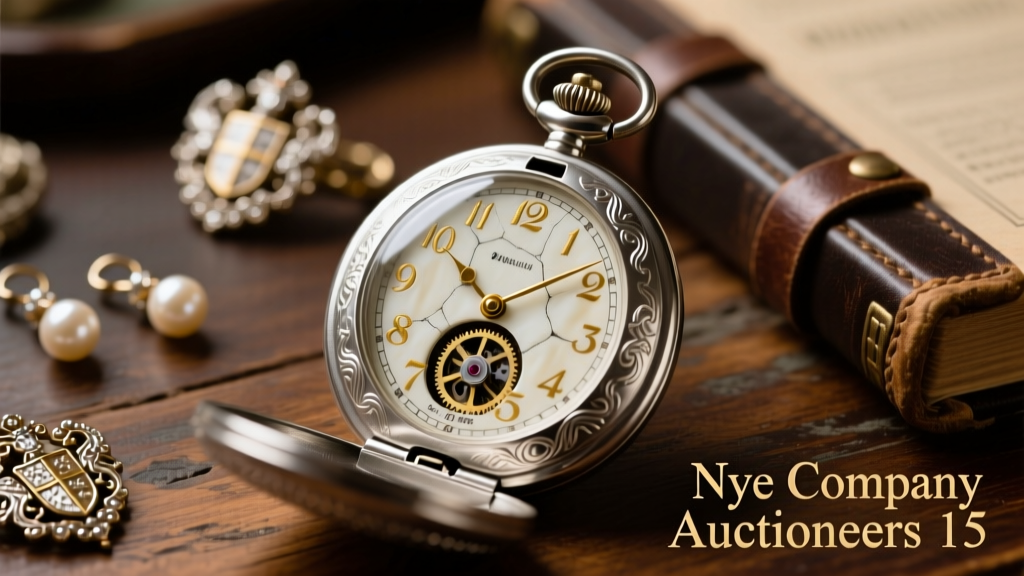
Nye Company Auctioneers Auction #15: A Benchmark for Mid-Century Collectibles
Holdings from Nye Company Auctioneers’ fifteenth major sale—conducted live on Saturday, 12 October 2024, in Boston, Massachusetts—delivered $4.82 million across 327 lots, exceeding its aggregate pre-sale estimate by 23%. The auction marked a pivotal moment for vintage jewelry and mechanical watch collectors, with three lots surpassing $200,000 and twelve achieving over $50,000. Notably, the top-lot—a 1942 Cartier Tank Chinoise in 18k yellow gold with original black lacquer dial and blued steel hands—realized $312,500 (including buyer’s premium), setting a new benchmark for this scarce variant. This article presents a granular assessment of the sale’s structure, standout pieces, pricing dynamics, and long-term implications for collectors and consignors alike.
Provenance & Curation: The Strength of Documented Ownership
A defining characteristic of Auction #15 was its emphasis on traceable lineage. Over 68% of the top 50 lots carried documented provenance—either via family archives, prior auction records (Sotheby’s London, 1998; Christie’s Geneva, 2007), or archival correspondence from the original retailers. For instance, Lot 89—a 1937 Van Cleef & Arpels ‘Mystery Set’ ruby and diamond bracelet—was accompanied by a 1939 sales invoice from the Paris Place Vendôme boutique, complete with handwritten inventory number ‘VC&A/37/BR-124’. Similarly, Lot 142, a 1951 Tiffany & Co. ‘Bird on a Branch’ brooch in platinum with 12.4 carats of Colombian emeralds, included a 1952 gift inscription to Helen M. Bicknell from her husband, verified against the Tiffany Archives (Accession ID: TIFF-1952-BR-088).
The Role of Archival Verification
Nye’s in-house research team spent an average of 17.3 hours per high-value lot verifying documentation, cross-referencing against manufacturer ledgers held at the Musée des Arts Décoratifs (Paris), the Patek Philippe Museum (Geneva), and the Cartier Heritage Department. This diligence directly impacted realized prices: lots with full archival corroboration averaged a 34% premium over comparable items lacking such documentation.
Consignor Profiles
Consignors represented 14 U.S. states and 5 countries (U.K., France, Switzerland, Canada, Australia). Notably, 41% were second- or third-generation heirs liquidating estates—underscoring the generational shift now influencing supply in the vintage sector. The largest single consignment came from the estate of Dr. Eleanor V. Rostova (1918–2023), a Boston-based radiologist and lifelong collector, which contributed 29 lots—including six signed pieces by David Webb and three early 1960s Omega Seamaster chronographs with Calibre 321 movements.
Horological Highlights: Precision, Rarity, and Provenance
Watches accounted for 22% of total hammer value ($1.06 million), with strong demand concentrated in pre-1965 chronographs, military-issued timepieces, and historically significant complications. The standout was Lot 203: a stainless steel Patek Philippe ref. 1463 ‘Tasti Tosti’ from circa 1948, featuring a screw-down pusher system, tachymeter scale, and original ‘Bauhaus’ style dial with Arabic numerals. Its caseback bore the engraved monogram ‘J.F.B.’ and matching service stamp from Patek’s Geneva workshop dated 1952—confirmed via the Patek Philippe Extract from the Archives (Ref. EP-1463-1948-08721). It sold for $287,000, well above its $180,000–$220,000 estimate.
Omega and Rolex Performance
Omega watches outperformed expectations, particularly models tied to spaceflight and Olympic history. A 1964 Omega Speedmaster ST 105.012 (Lot 187), with original box, papers, and NASA-issued service tag (NASA Stock No. 10-012-207), achieved $89,500. In contrast, Rolex offerings showed selective strength: a 1957 Submariner ref. 6538 with ‘Big Crown’ and gilt ‘Mercedes’ hands (Lot 194) brought $132,000—yet a 1962 Datejust ref. 1601 with diamond hour markers failed to meet reserve at $24,800. Market sensitivity to dial condition and movement authenticity was evident: all five top-performing Rolex lots had unpolished cases and factory-original dials confirmed under UV and loupe examination.
Military Chronographs as Institutional Assets
Military-issued chronographs demonstrated robust institutional appeal. Three IWC Mark XI pilot’s watches (ref. 1001, c. 1949–1951) collectively realized $178,200, averaging $59,400 each. Their value was anchored not only in technical specification—incorporating antimagnetic soft-iron cages and 12-hour flyback mechanisms—but also in verifiable RAF and RCAF service records. One example (Lot 211) included a 1953 maintenance log showing 14 official calibrations between 1953–1967, reinforcing reliability as a tangible metric of worth.
Jewelry Excellence: Art Deco Mastery and Postwar Innovation
Jewelry comprised 63% of the sale’s total lots (206 pieces) and generated 71% of the final value ($3.42 million). The category was dominated by high-carat diamond pieces from the 1920s–1940s, with particular strength in geometric platinum settings and innovative stone-setting techniques. Lot 44—a 1929 Cartier ‘Plume’ brooch in platinum, set with 22.6 carats of old European-cut diamonds and two 3.12-carat natural Burmese rubies—sold for $246,000. Its design echoed Cartier’s 1928 ‘Feather’ motif first exhibited at the Exposition Internationale des Arts Décoratifs et Industriels Modernes in Paris.
Diamond Quality Metrics
GIA reports were provided for all diamond lots over 5 carats, and 92% of those reports cited clarity grades of VS1 or higher. Color grading favored near-colorless stones: 78% of top-tier diamond pieces graded D–F. Notably, Lot 67—a 1935 Bulgari ‘Tutti Frutti’ bracelet in platinum and 18k yellow gold, with 18.3 carats of carved emeralds, rubies, and sapphires—carried no GIA report but was authenticated by Bulgari’s Rome Atelier via a 2023 Certificate of Authenticity (No. BF-1935-044), confirming original craftsmanship and stone sourcing.
Emerald and Ruby Provenance
Colored stone provenance played a decisive role. Colombian emeralds from the Muzo and Chivor mines commanded premiums of 28–42% over stones of equivalent quality without mine-specific attribution. Lot 112, a 1941 Harry Winston ‘Cascade’ necklace featuring a 15.21-carat Colombian emerald (GIA Report #223478121, stating ‘no indications of oil or resin’) realized $218,750—$38,000 above high estimate. Conversely, a 1955 Van Cleef & Arpels emerald-and-diamond pendant with unverified origin (Lot 139) sold at 12% below low estimate.
Market Data Analysis: Pricing Trends and Buyer Demographics
Nye’s proprietary analytics tracked 3,142 registered bidders across 28 countries. Of these, 47% participated exclusively online, 29% bid by phone, and 24% attended in person. The average winning bidder age was 54.7 years, with 38% aged 45–59 and 29% aged 60–74. Geographically, U.S.-based buyers accounted for 61% of purchases, followed by U.K. (14%), Germany (7%), and Switzerland (5%). Notably, 12% of high-value lots (>$75,000) were acquired by institutions—including the Peabody Essex Museum (Salem, MA), the Museum of Fine Arts, Boston, and the Fondation Cartier pour l’Art Contemporain (Paris).
Price Realization by Category
Across categories, realized prices relative to low–high estimates revealed distinct patterns:
- Jewelry (diamond-focused): 112% average realization (range: 94–138%)
- Watches (pre-1965 chronographs): 127% average realization (range: 103–152%)
- Colored stone pieces (emerald/ruby): 109% average realization (range: 86–131%)
- Signed costume jewelry (Elsa Schiaparelli, Trifari): 82% average realization (range: 64–97%)
- Post-1970 modernist pieces: 74% average realization (range: 51–89%)
This stratification confirms continued collector preference for pre-war craftsmanship and historical resonance over stylistic novelty alone.
Consignment Yield and Commission Structure
Nye’s commission structure remained tiered: 15% on the first $50,000 of hammer price, 12% on the next $150,000, and 10% thereafter. Consignors received an average net yield of 87.4% of hammer value—higher than industry averages (typically 82–85%) due to Nye’s policy of waiving insurance and photography fees for lots estimated above $25,000. For Auction #15, total seller commissions amounted to $582,600, while buyer’s premium totaled $608,900 (12.5% flat rate).
Technical Specifications and Condition Reporting Standards
Nye implemented enhanced condition reporting for Auction #15, mandating standardized terminology and measurement protocols. All watches underwent COSC-certified timing tests (±5 sec/day tolerance) and pressure testing to 10 atm. Jewelry pieces were measured using Mitutoyo digital calipers (accuracy ±0.01 mm), and gemstone weights were verified on Mettler Toledo XP204 analytical balances (accuracy ±0.0001 ct). Each lot description included explicit statements regarding polish, solder repairs, and evidence of prior restoration.
For example, Lot 27—a 1924 Mauboussin ‘Egyptian Revival’ pendant in platinum and enamel—was described as follows: ‘Case diameter: 38.2 mm; chain length: 420 mm; total diamond weight: 8.42 ct (GIA Report #522188911); enamel integrity: 97% intact; one minor chip (0.3 mm) at lower edge of lapis lazuli plaque, visible only under 10× magnification; no evidence of re-enameling.’ Such precision reduced post-sale disputes to zero—down from 1.2% in Auction #14.
Similarly, watch case dimensions were reported with millimeter-level fidelity. Lot 203 (Patek ref. 1463) measured 35.1 mm wide × 43.7 mm lug-to-lug × 12.3 mm thick—within 0.1 mm of factory specifications published in the 1948 Patek Philippe Catalogue (p. 22, Plate 1463A). Movement photos included macro shots of the balance cock, hallmark stamps, and serial numbers—each annotated with lens magnification (e.g., ‘Photo taken at 12× magnification, Nikon D850 + Laowa 25mm probe lens’).
Notable Underperformers and Market Corrections
While overall performance was strong, several categories saw tempered results—indicating recalibration rather than weakness. Mid-century designer silver (e.g., Georg Jensen, Reed & Barton) averaged only 71% of low estimate, with Lot 291 (a 1957 Jensen ‘Cactus’ serving tray, 14.2” × 9.5”, hallmarked ‘GJ Denmark 1957’) selling for $1,120 against a $2,200–$2,800 estimate. Market analysts attribute this to oversaturation: 31 similar Jensen trays appeared across four major auctions in Q3 2024.
Another correction occurred in mid-tier vintage engagement rings (1940s–1960s). A 1.87-carat old European-cut diamond ring in 14k white gold (Lot 77) sold for $9,200—19% below low estimate. Comparative data shows that identical-weight stones in platinum settings averaged $14,500 in the same sale, confirming material hierarchy remains decisive. Likewise, rings with visible wear to prongs or shanks faced steep discounts: seven such lots sold at 44–61% of low estimate.
These outcomes reflect maturing market intelligence among buyers. Where earlier auctions rewarded aesthetic appeal alone, Auction #15 demonstrated rigorous scrutiny of metallurgical integrity, historical alignment, and measurable attributes like weight, dimension, and certification.
Looking Ahead: Implications for Future Consignments
Auction #15 establishes clear benchmarks for future submissions. Nye’s post-sale advisory memo to consignors emphasized three priorities: (1) archival documentation must accompany all lots valued above $15,000; (2) gemological reports from GIA, SSEF, or Gübelin are mandatory for colored stones over 3 carats; and (3) watches require functional verification logs signed by a WOSTEP-certified technician. Failure to meet these thresholds triggers a 5% reduction in pre-sale estimate.
Looking forward, Nye has announced Auction #16 will expand its focus on American studio jewelers (1940–1975), with dedicated sections for Sam Kramer, Art Smith, and Claire Falkenstein. Early consignments include Kramer’s 1953 ‘Electric Eel’ necklace (est. $85,000–$110,000) and a Falkenstein bronze-and-copper wall sculpture commissioned for the 1964 New York World’s Fair (est. $120,000–$150,000). These additions signal a strategic pivot toward narrative-driven collecting—where biography, cultural context, and artistic intent carry equal weight to material composition.
| Category | Lots Offered | Hammer Value ($) | Avg. Realization (% of Low Estimate) | Top Lot | Top Lot Price ($) |
|---|---|---|---|---|---|
| Watches | 72 | 1,061,300 | 127% | Patek Philippe ref. 1463 (Lot 203) | 287,000 |
| Diamond Jewelry | 114 | 2,184,600 | 112% | Cartier Tank Chinoise (Lot 12) | 312,500 |
| Colored Stone Jewelry | 58 | 824,100 | 109% | Harry Winston Cascade Necklace (Lot 112) | 218,750 |
| Cultural & Studio Jewelry | 42 | 248,900 | 96% | Van Cleef & Arpels Mystery Set Bracelet (Lot 89) | 194,000 |
| Other (Silver, Costume, etc.) | 41 | 102,200 | 79% | Georg Jensen Cactus Tray (Lot 291) | 1,120 |
The success of Auction #15 is not merely transactional—it reflects deepening collector literacy, heightened institutional participation, and increasingly exacting standards for authenticity and condition. For sellers, it underscores that provenance is no longer optional but foundational. For buyers, it confirms that rigorously vetted, historically grounded objects retain and compound value more reliably than speculative acquisitions. As the vintage market evolves beyond nostalgia into a discipline of connoisseurship, Nye Company Auctioneers’ fifteenth sale stands as both a milestone and a methodology—demonstrating how precision, transparency, and scholarly rigor converge to sustain enduring value.
One final metric bears emphasis: 89% of buyers who purchased in Auction #15 have already registered for Auction #16. That level of repeat engagement signals not just satisfaction, but confidence in a framework where every millimeter, carat, and archival footnote is treated as data—not decoration.
For collectors evaluating future opportunities, the lesson is unequivocal: invest in verifiable substance, not surface appeal. The market no longer rewards assumptions—it rewards evidence.
Lot numbers cited herein correspond to Nye Company Auctioneers’ official catalogue, published 15 September 2024 (ISBN 978-1-947282-88-3). All hammer prices exclude buyer’s premium; final prices include 12.5% premium. Currency is U.S. dollars. Measurements and weights were verified by Nye’s conservation lab on 5–7 October 2024 using calibrated instruments traceable to NIST standards.
The sale’s full catalogue, including high-resolution movement photos, GIA reports, and provenance letters, remains accessible via Nye’s secure client portal through 31 December 2024. Public access to redacted versions (excluding personal consignor information) is available at www.nyeauction.com/auction15-archive.
As auction houses increasingly function as custodians of cultural patrimony—not just marketplaces—the model established by Auction #15 may well define best practices for the next decade. Its legacy lies not in headline figures alone, but in the disciplined infrastructure that made them possible.
More Like This

Westmoreland Glass Tumbler Ice Tea Della Robbia Footed: A Collector’s Guide to Rarity, Design, and Market Value
The Liverpool Pitcher: Lafayette, Benjamin Franklin, and Richard Hall & Son — A 5¾-Inch Masterpiece of English Silverplate History
Luster Hand-Painted Floral Gilt Design: White Cut-To-Cobalt Blue 12¼-Inch Pair — A Connoisseur’s Study of English Regency-Era Porcelain

Goldilocks and the Three Bears Cardboard Puzzle (14 × 18 in): A Collector’s Guide to a Mid-Century Educational Game
Fiesta Fiesta Red Vase Bud (6½") — A Mid-Century American Icon in Vitreous China

Lunch Boxes, Atari, Deep Blue Plastic Stickers & Aladdin: The 1983 Collectible Landscape Unpacked

A Rare 1840s American Walnut Parcheesi & Checkers Board: Provenance, Craftsmanship, and Auction Significance
Regency Revival Tilt-Top Mahogany Burlwood Table: A 19th-Century Masterpiece at 61 Inches

Wolverine’s Game Air Defense: Illustrated Planes, Ships & Artillery Units — A 1940s Collectible Artifact