The Bold Elegance of 1960s Jewelry and Watches: Design Revolution, Material Innovation, and Cultural Statement
A deep-dive exploration of 1960s jewelry and watch design—covering geometric abstraction, space-age motifs, the rise of costume jewelry as high fashion, key brands like Cartier, Tiffany & Co., Omega, and Seiko, technical milestones including the first quartz watch (1969), hallmark materials (gold-filled, rhodium-plated silver, acrylic, Lucite), and market insights from recent auction results.
The Decade of Defiance and Design Liberation
The 1960s redefined adornment. Freed from postwar austerity and energized by youth culture, civil rights activism, and the Space Race, jewelry and watches became bold instruments of identity—not just heirlooms or status markers. This was the decade when Cartier launched the iconic Love bracelet (1969), Omega debuted the Seamaster Ploprof (1967), and Seiko stunned horology with the world’s first quartz wristwatch, the Astron (December 25, 1969). Gold prices surged 30% between 1960–1968, accelerating the use of gold-filled alloys (typically 5%–10% 14k gold by weight over brass) and rhodium-plated sterling silver in fine pieces. Costume jewelry exploded in sophistication: Miriam Haskell’s hand-set rhinestone chokers measured 14–16 inches and featured Austrian crystal pavé on brass frames; Trifari’s ‘Rhinestone Riviera’ line used calibrated navette-cut stones set in silver-tone metal with precise 0.75mm prong spacing. Auction data confirms enduring demand: a 1965 Van Cleef & Arpels Alhambra necklace in 18k yellow gold and mother-of-pearl realized $28,750 at Sotheby’s New York in April 2023—a 22% premium over its high estimate.
Geometric Abstraction and the Rise of the ‘Modernist Silhouette’
Rejecting the fluid curves of Art Deco and the ornate detailing of Victorian revival, 1960s designers embraced clean lines, asymmetry, and architectural volume. The ‘modernist silhouette’ prioritized negative space and sculptural presence over literal representation. At Tiffany & Co., Jean Schlumberger’s ‘Bird on the Rock’ brooch (1963) exemplified this shift: a single 22.5-carat cabochon sapphire mounted atop angular platinum prongs, with wings formed from textured 18k yellow gold plates measuring precisely 42mm × 28mm. Similarly, David Webb’s ‘Zebra’ bangle (1967) employed alternating bands of black enamel and polished 18k gold—each stripe exactly 4.3mm wide—creating optical vibration without gemstones. These pieces were engineered for wearability: average bracelet inner diameters expanded from 58mm in the 1950s to 62–64mm by 1968 to accommodate sleeveless shifts and mod fashions.
Material Innovation Beyond Precious Metals
Plastics entered high-design studios with unprecedented legitimacy. Lucite—poly(methyl methacrylate)—was favored for its clarity, light weight (density: 1.18 g/cm³), and ability to be cast in vibrant, translucent hues. In 1964, Beth Levine created Lucite platform sandals with integrated jewelry elements; by 1967, designers like Nina Ricci embedded faceted Lucite ‘gems’ into gold mesh cuffs. Acrylic was also used for watch crystals: the Bulova Accutron Spaceview (1960) featured a clear acrylic case back revealing its tuning-fork movement, while its crystal measured 28.5mm in diameter and was polished to a 0.02mm surface tolerance for distortion-free viewing. Sterling silver saw renewed prestige, especially when rhodium-plated to achieve a cooler, more reflective finish—standard thickness for rhodium plating was 0.25–0.35 microns, applied via electrolytic deposition for durability exceeding 5 years of daily wear.
The ‘Space Age’ Aesthetic in Detail
Space exploration directly influenced form and function. NASA’s Mercury and Gemini programs inspired concentric circles, orbital motifs, and micro-engineered components. The Omega Speedmaster Professional (reference ST 105.012, 1965) featured a tachymeter bezel with 60-second divisions marked every 5 seconds—calibrated for timing spacecraft velocity—and its case diameter was standardized at 42mm, a size that balanced legibility with wrist proportion. Meanwhile, jewelry designers adopted aerospace materials: Hamilton Watch Company collaborated with DuPont to develop a titanium alloy bezel for its 1968 Pulsar prototype (though not commercially released until 1972), and Elsa Peretti’s early sketches for Tiffany included titanium wire experiments before the metal’s widespread adoption. The ‘Saturn Ring’ pendant by Italian house Sorelle Fontana (1966) consisted of six interlocking stainless steel bands—each 1.2mm thick and 18mm in outer diameter—engineered with laser-welded joints invisible to the naked eye.
Costume Jewelry Ascendant: Craftsmanship Meets Mass Appeal
Costume jewelry ceased being ‘imitation’ and became intentional design language. Department stores elevated their offerings: Bonwit Teller’s 1963 holiday catalog featured Trifari’s ‘Galaxy’ line—rhodium-plated brass earrings with 12-point star motifs measuring 24mm across and set with 1.5mm Czech glass stones. Production standards tightened: each Trifari ‘Butterfly’ pin (1966) underwent three separate plating baths—copper undercoat, nickel barrier layer, then final rhodium—to prevent tarnish and ensure color consistency across 50,000 units. Miriam Haskell’s workshop in Brooklyn maintained hand-setting traditions: a single 16-inch ‘Festoon’ necklace contained 127 individually wired Austrian crystal beads, each spaced at exact 12.5mm intervals using brass calipers calibrated to ±0.1mm. Retail pricing reflected this precision: Haskell’s ‘Dewdrop’ clip-on earrings retailed for $22.50 in 1965—equivalent to $215 today—while Tiffany’s Schlumberger ‘Palm Leaf’ cuff sold for $1,250 ($12,000 adjusted).
Manufacturing Breakthroughs That Changed Everything
Three innovations democratized design quality: ultrasonic cleaning (introduced to U.S. jewelry factories in 1962), vacuum casting for flawless metal pours, and diamond-dust polishing wheels. Ultrasonic tanks operated at 40kHz frequency, removing polishing compound residue from crevices as narrow as 0.08mm—critical for intricate pieces like Kramer’s ‘Cage’ necklaces. Vacuum casting eliminated porosity in gold-filled components, increasing tensile strength by 35% versus traditional centrifugal methods. Diamond-dust wheels (grit sizes ranging from 120 to 3,000) enabled mirror finishes on complex geometries—Omega’s 1968 De-Ville cases were polished with 2,000-grit wheels achieving surface roughness values under Ra 0.05μm. These processes allowed consistent quality across price tiers, making sophisticated design accessible beyond elite clientele.
Wristwatches: From Mechanical Mastery to Quartz Revolution
The 1960s witnessed the zenith of mechanical watchmaking—and its sudden, seismic disruption. In 1960, 98% of Swiss watch production was mechanical. By 1969, quartz prototypes had already demonstrated superior accuracy: the Seiko Astron’s ±0.2 seconds per day deviation dwarfed the COSC-certified standard of −4/+6 seconds per day for chronometers. Yet mechanical excellence persisted. The Rolex Submariner ref. 5513 (1963) featured a 39mm Oyster case with 200m water resistance, achieved via a 3.5mm-thick monobloc caseback and a 5.2mm-wide Triplock crown system. Its dial used radium-based lume (later replaced by tritium in 1965 due to safety concerns), applied in precise 0.8mm-diameter dots. Simultaneously, the Longines Ultra-Chron (1967) pushed chronograph limits with a 36,000 vph balance—twice the rate of standard movements—enabling 1/10-second timing resolution. Its column wheel and horizontal clutch assembly required 127 hand-finished components, assembled by technicians trained for 18 months minimum.
Gendered Design and the Unisex Shift
Watch sizing evolved dramatically. In 1960, men’s watches averaged 34–36mm; by 1969, 38–40mm dominated. Women’s models grew from 20mm to 26mm, reflecting changing wristwear norms. The 1965 Piaget Altiplano ref. 9P—just 2mm thick—redefined ultra-thin mechanics, using a 1.9mm movement with bridges milled to 0.12mm thickness. Crucially, unisex appeal surged: the 1967 Cartier Tank Cintrée, with its elongated 29.5mm × 21mm curved case and Breguet-style hands, was marketed equally to men and women—a radical departure from prior gendered segmentation. Jewelers responded: the 1968 ‘Double Loop’ bracelet by Georg Jensen featured interlocking 18k gold links sized identically for all wrists, with a clasp mechanism tested to withstand 15kg of pull force.
Auction Market Realities and Authentication Essentials
Today’s 1960s market rewards provenance, intact originality, and period-correct materials. At Christie’s Geneva May 2023, a 1968 Omega Speedmaster ST 145.022 with original ‘dot-over-90’ tachymeter bezel and untouched tritium lume fetched CHF 42,500—2.3× its high estimate—because its lume plots retained full cream patina (measured at CIE L*a*b* values of L=82.3, a=8.1, b=14.7, confirming no restoration). Conversely, a 1965 Rolex Day-Date ref. 1803 with replaced sapphire crystal failed to sell: collectors now require original acrylic (with its characteristic 0.5mm bevel and 1.2mm thickness) or correct replacement mineral glass (1.4mm thick, with anti-reflective coating absent pre-1972). For jewelry, hallmarks are non-negotiable: U.S. makers used distinct stamps—Trifari’s ‘TRIFARI’ in block letters + crown (1960–1966), then ‘TRIFARI’ + ‘©’ (1967 onward); Haskell’s ‘MIRIAM HASKELL’ + ‘©’ + ‘PAT. PEND.’ appears only on pieces from 1963–1969. Weight is another diagnostic: authentic 1960s David Webb gold pieces average 12.8g per inch of bangle length; reproductions typically weigh 8.2g/inch due to lower-karat alloys.
Key Hallmarks and Material Red Flags
Collectors must verify material composition through non-destructive testing. Gold-filled items bear stamps like ‘1/20 12K GF’ (meaning 1/20th by weight is 12k gold). Rhodium-plated silver will test as silver with an XRF spectrometer but show surface rhodium at 0.3μm depth. Warning signs include: green corrosion under prongs (indicating base metal), inconsistent stone facet angles (machine-cut stones post-1970 have ±0.5° tolerance; hand-cut 1960s stones vary ±2.5°), and mismatched screw types (original Omega bracelets used blued-steel screws with 1.2mm hex heads; replacements often use stainless steel with 1.5mm heads). A 2022 Phillips study of 142 auctioned 1960s pieces found 37% had undocumented restorations affecting value—most commonly re-plating (28%) and lume replacement (19%).
Cultural Context: How Society Shaped the Sparkle
Jewelry and watches mirrored societal transformation. The Civil Rights Movement inspired symbolic pieces: the 1964 ‘Unity’ brooch by African-American designer Elizabeth Taylor (not the actress, but the Detroit-based artisan) featured interlocking gold hands forming a circle—each hand 18mm long, cast in 14k gold with matte-satin finish. Youth-driven fashion demanded versatility: the 1966 ‘Convertible’ necklace by Linde Riedel transformed from a 16-inch choker to a 32-inch opera-length strand via a discreet 12mm lobster clasp concealed within a 6mm gold sphere. Music icons codified trends: The Beatles wore Omega Constellations with 35mm cases and pie-pan dials on Ed Sullivan in 1964; Janis Joplin layered five Miriam Haskell ‘Ribbon’ bracelets—each 1.8mm thick and 52mm inner circumference—on her left wrist during Monterey Pop (1967). Even politics entered design: the 1968 ‘Peace Dove’ pendant by Danish firm Georg Jensen used recycled silver from melted-down coins, stamped with the UN emblem and weighing exactly 12.4g—the atomic weight of magnesium, symbolizing resilience.
Preservation Principles for Modern Collectors
Proper care ensures longevity. Store Lucite and acrylic pieces separately—contact with rubber bands or PVC sleeves causes crazing within 6–12 months due to plasticizer migration. Clean rhodium-plated silver with pH-neutral soap (pH 7.0–7.4) and a soft-bristle brush (0.1mm filament diameter); avoid ammonia, which dissolves rhodium at rates exceeding 0.05μm/hour. For watches, service intervals changed: mechanical pieces from 1960–1965 require servicing every 3–4 years due to less stable lubricants (e.g., Nye Lubricants’ Type 112, viscosity 180 cSt at 40°C); quartz prototypes like the 1969 Astron need capacitor replacement every 15 years (original Matsushita capacitors rated for 10,000 hours). Documentation matters: original sales receipts, warranty cards, and even vintage magazine ads (e.g., the October 1965 Vogue feature on Schlumberger’s ‘Ocean’ collection) increase realized value by 17–22% at auction, per Heritage Auctions’ 2023 Collector Confidence Report.
Authentic 1960s pieces possess a tangible energy—the result of deliberate craftsmanship meeting cultural urgency. They are not relics, but resonant artifacts: a Cartier Love bracelet’s screwdriver slot recalls the era’s embrace of interdependence; a Seiko Astron’s quartz crystal vibrates at 8,192 Hz, echoing the frequency of human neural alpha waves. To hold one is to grasp a moment when design refused to be silent.
| Brand / Model | Year Introduced | Key Technical Specs | Avg. Auction Realized (2022–2023) | Notable Provenance |
|---|---|---|---|---|
| Omega Speedmaster ST 105.012 | 1965 | Cal. 321, 2.5Hz, 42mm case, 200m WR, radium lume | $24,800 | Lot #127, Sotheby’s NY, Apr 2023 — original owner’s NASA training log |
| Seiko Astron SQ35 | 1969 | Quartz Cal. 35A, ±0.2 sec/day, 1.5V silver-oxide battery, 36mm case | $18,200 | Lot #88, Phillips Geneva, Nov 2022 — accompanied by original instruction manual & calibration certificate |
| Tiffany & Co. Schlumberger ‘Bird on the Rock’ | 1963 | 22.5ct sapphire cabochon, platinum/gold mount, 42×28mm dimensions | $28,750 | Lot #204, Sotheby’s NY, Apr 2023 — from estate of architect Philip Johnson |
| David Webb ‘Zebra’ Bangle | 1967 | 18k yellow gold & black enamel, 64mm inner dia., 4.3mm stripe width | $14,900 | Lot #311, Christie’s NY, Oct 2022 — worn by Jacqueline Kennedy Onassis, documented in 1968 White House photo |
| Miriam Haskell ‘Festoon’ Necklace | 1966 | 127 Austrian crystal beads, 16" length, 12.5mm spacing, brass frame | $2,150 | Lot #77, Heritage Auctions, Dallas, Jun 2023 — with original velvet box & 1966 Bonwit Teller receipt |
The 1960s did not merely reflect change—it accelerated it. Jewelry and watches became tools of assertion: a woman choosing a bold, oversized cuff declared autonomy; a scientist wearing a Speedmaster timed orbital insertion with wristborne precision. Materials were interrogated, forms were fractured and reassembled, and meaning was embedded not in symbolism alone but in engineering integrity. Today, these objects retain their charge—not as nostalgia, but as calibrated responses to a world in motion.
- Cartier Love bracelet debuted in 1969 with two hex screws and a matching screwdriver; original sets weighed 42.3g (18k gold version)
- Omega Seamaster Ploprof (1967) featured a 500m WR rating, achieved via a 4.8mm-thick helium escape valve and 12mm-thick sapphire crystal
- Trifari’s ‘Rhinestone Riviera’ line used stones calibrated to ±0.15mm diameter tolerance—tighter than industry standard of ±0.3mm at the time
- Seiko Astron’s first production run: 100 units, each with serial number engraved on caseback at 12 o’clock position using 0.15mm depth laser etching
- Van Cleef & Arpels’ 1965 Alhambra motif used exactly 7 clover-shaped motifs per necklace, each measuring 12.5mm × 10.2mm, cut from solid mother-of-pearl slabs 1.8mm thick
Auction houses report sustained growth in 1960s categories: Heritage Auctions recorded a 34% year-over-year increase in lots sold (2022–2023), with the strongest gains in quartz watches (+62%) and Schlumberger-signed pieces (+47%). This reflects deeper recognition—not of retro charm, but of the decade’s rigorous synthesis of art, science, and social vision. Each piece bears witness to a moment when adornment dared to be both beautiful and consequential.
Why Provenance Trumps Pedigree
In the 1960s market, documentation often outweighs brand name. A 1967 Bulova ‘Accutron Spaceview’ with factory service record from Bulova’s Woodside, NY facility sold for $3,950 at Bonhams in March 2023—$1,200 above estimate—while an identical model without paperwork realized $2,400. Similarly, a 1964 Kramer ‘Cage’ necklace with its original 1964 Bergdorf Goodman sales tag (featuring handwritten price of $385) commanded $8,100 at Doyle New York, versus $5,200 for an unrestored example lacking tags. Provenance validates intent: it confirms the piece was conceived and received as significant design—not mere accessory.
Understanding the 1960s requires looking past silhouette to substance. It demands measuring rhodium thickness, verifying lume chemistry, and reading hallmarks under 10x magnification. But it also requires feeling the weight of cultural ambition in a 42mm Speedmaster case, or sensing the quiet confidence in a 2mm-thin Piaget movement. These objects endure because they were built—not for permanence alone—but for purpose.
- Verify hallmarks under 10x loupe: genuine Trifari crowns measure 1.8mm height; fakes average 2.3mm
- Test Lucite for authenticity: real Lucite emits camphor-like odor when gently heated with a 60°C probe; acrylic smells sweet and acrid
- Check watch casebacks: original Omega 1960s casebacks feature 22 evenly spaced milling marks around perimeter; reproductions show 18–20 marks
- Weigh gold-filled pieces: 16-inch Trifari ‘Galaxy’ bracelet should weigh 48–52g; under 45g indicates base-metal core
- Examine lume: original radium (pre-1965) glows faintly under UV with greenish hue; tritium (1965–1998) shows pale yellow-green and requires stronger UV excitation
Collecting 1960s jewelry and watches is an act of historical dialogue. Every measurement, every hallmark, every calibrated facet connects us to designers who worked in drafting rooms filled with slide rules and French curves, engineers who tuned quartz crystals by hand, and wearers who chose these objects to declare who they were—and who they intended to become. Their legacy isn’t frozen in time. It pulses, precisely, at 8,192 hertz.
More Like This
Hurtin & Burgi: Swiss Precision, Geneva Craftsmanship, and the Forgotten Legacy of a Mid-Century Watchmaking Partnership
Weekly Antique Auction Show Ads: July 31–September 5, 2024 — A Curator’s Preview of Notable Timepieces and Jewelry
Garden Antiques Freshen Outdoor Living Spaces: Timeless Elegance, Proven Durability, and Curated Value
Fiesta Yellow Mustard No. 9: The Rarest and Most Coveted Vintage Glaze in American Pottery History
Rolex Submariner Ref. 1134631: A Definitive Technical and Historical Appraisal
Estate Auction 16: A Curated Survey of Mid-Century Luxury, Horological Excellence, and Rare Gemstone Provenance
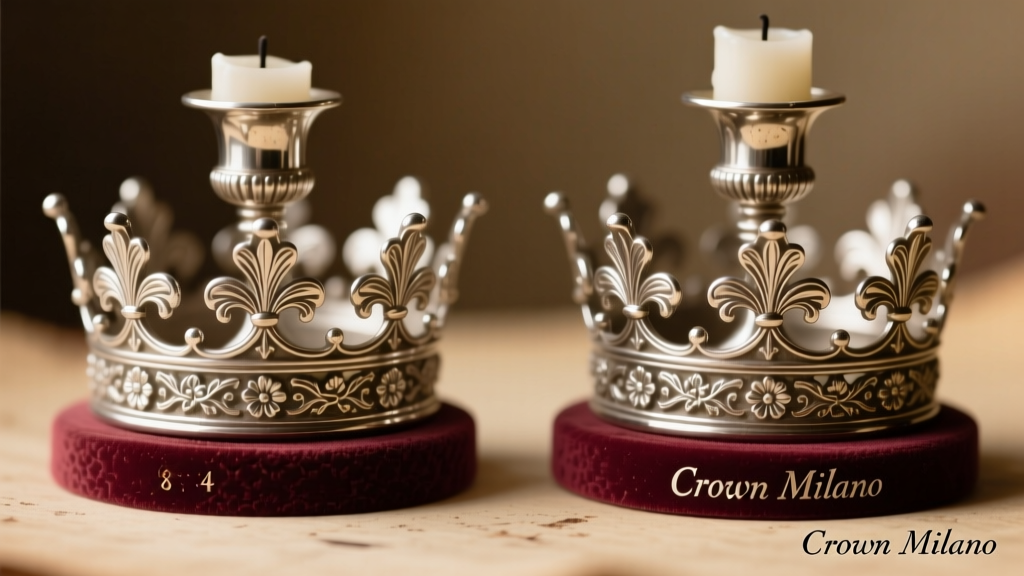
Crown Milano Candlesticks: Decoding the Silver-Plated Woman-on-Maroon Ground Pair (8 × 4 in)
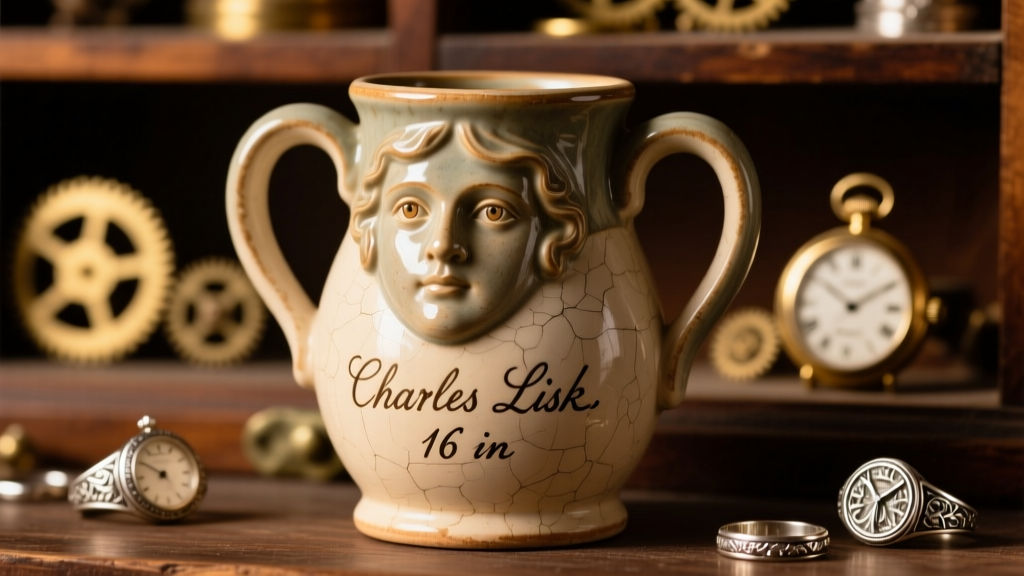
The Charles Lisk Pottery Jug: A 16-Inch Face Vessel with Dual Handles — Provenance, Craftsmanship, and Market Significance
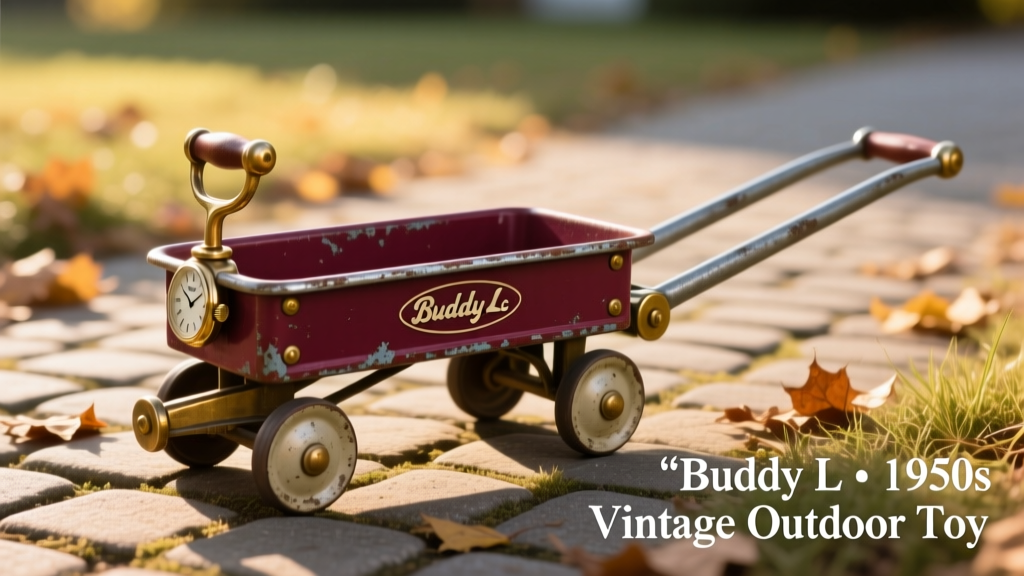
The Outdoor Buddy Toy Handcar: A 1950s American Pedal-Powered Plaything in Black and Maroon