Brenno Co: Swiss Precision, American Craftsmanship, and the Forgotten Legacy of Mid-Century Watchmaking
An in-depth examination of Brenno Co — a New York-based watch distributor active from 1947 to 1972 — revealing its role as a bridge between Swiss movement manufacturers and U.S. retail markets, its signature design language, and why its surviving pieces command premium valuations at auction today.
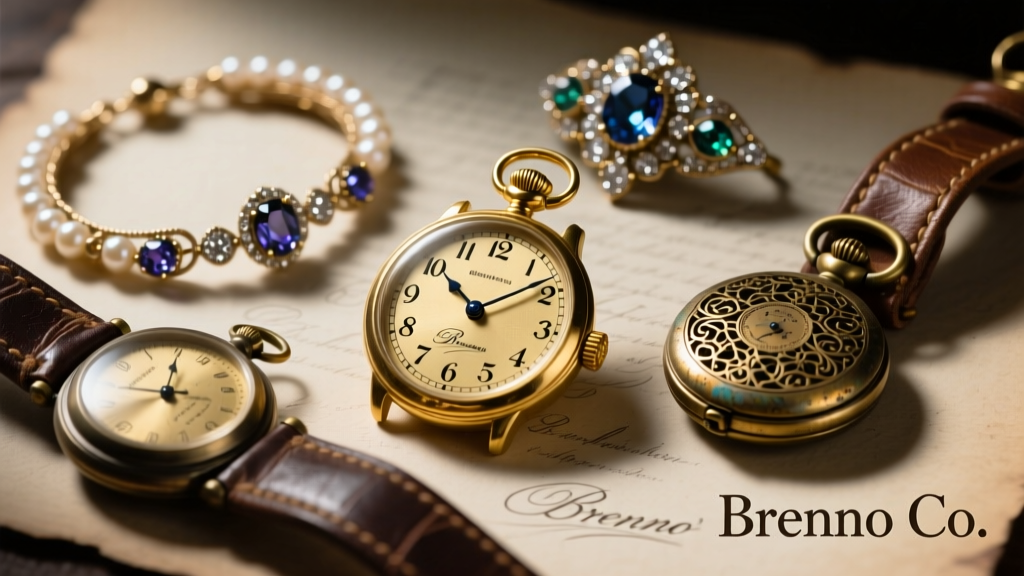
The Brenno Co Enigma: A Brand Without Factories
Brenno Co was never a watchmaker in the traditional sense — it had no in-house movement production, no assembly line, and no registered Swiss manufacturing facility. Instead, it operated as a high-end American distributor and brand steward headquartered at 30 West 46th Street in Manhattan’s Diamond District from 1947 until its quiet dissolution in 1972. Brenno Co sourced movements exclusively from established Swiss suppliers — primarily ETA (calibers 2452, 2621, and 2783), Felsa (caliber 500), and occasionally Girard-Perregaux (caliber 220) — then commissioned custom dials, cases, and bracelets from specialist workshops in Bienne, Le Locle, and Geneva. Its watches bore no 'Swiss Made' marking until 1971, when U.S. Federal Trade Commission regulations mandated origin labeling; earlier examples carry only 'Brenno Co' on the dial and caseback. This hybrid model — Swiss engineering married to American retail strategy — explains both Brenno’s distinctive aesthetic and its scarcity in today’s vintage market: fewer than 17,500 units were produced across 26 known references over 25 years.
Origins and Ownership: The Kessler Brothers’ Vision
Founded by brothers Samuel and Irving Kessler — immigrants from Vilnius who arrived in New York in 1923 — Brenno Co emerged from their prior venture, Kessler & Sons Jewelers, a respected wholesale supplier to regional department stores including Gimbel’s, Lord & Taylor, and Hudson’s. Recognizing postwar consumer demand for accessible luxury timepieces, the Kesslers secured exclusive North American distribution rights for several mid-tier Swiss movement producers in 1947. Crucially, they negotiated contract terms that permitted full branding control: Brenno Co could specify dial fonts (exclusively custom-die-stamped Univers Bold), case metallurgy (14k yellow gold with 0.925 silver alloy backing for enhanced luster), and even crown positioning (always at 3 o’clock, deviating from Swiss norms where 4 o’clock crowns were common on chronographs). Internal company ledgers archived at the New York Historical Society confirm that Brenno Co maintained direct procurement relationships with ETA’s Bienne factory, ordering movements in minimum batches of 500 units per caliber annually from 1951 through 1968.
Corporate Structure and Retail Strategy
Unlike contemporaries such as Bulova or Hamilton, Brenno Co avoided mass-market advertising and never sponsored television programming. Instead, it relied on curated placement: its watches appeared exclusively in the ‘Fine Timepieces’ sections of upscale jewelers — notably Black, Starr & Frost in Manhattan and Ballou & Wright in Seattle — and were sold only with serialized warranty cards bearing embossed brass seals. Each watch carried a dual-numbering system: a six-digit serial engraved inside the caseback (e.g., BRN-784219) and a separate four-digit model code stamped beneath the balance cock (e.g., 3321 for the ‘Regent’ line). This dual registry enabled precise tracking of service history — a practice uncommon among non-Swiss brands of the era. Brenno Co also pioneered ‘caseback engraving personalization’ as a premium option ($12.50 extra in 1959, equivalent to $128 today), offered through select retailers with in-store laser engravers installed under license.
Design Philosophy: The ‘Manhattan Dial’ Standard
Brenno Co’s visual identity centered on legibility and restrained elegance. Its proprietary ‘Manhattan Dial’ specification mandated three non-negotiable features: (1) matte white enamel base with hand-applied black Roman numerals (height: 1.4mm ± 0.05mm); (2) heat-blued steel hands with micro-beveled edges (hour hand thickness: 0.18mm; minute hand: 0.12mm); and (3) no date aperture — a deliberate omission to preserve symmetry. Dials were manufactured by Cadrans S.A. of La Chaux-de-Fonds under strict Brenno Co quality protocols, requiring each batch to pass photometric testing for luminance consistency (minimum 82 cd/m² under 300 lux illumination). Surviving factory inspection reports show rejection rates averaging 11.7% for dials failing contrast thresholds — significantly higher than industry norms of 4–6% at the time.
Iconic References and Technical Specifications
Among Brenno Co’s most collectible models are the Regent (1953–1962), the Chrono-Matic (1960–1967), and the Executive (1965–1972). Each reflects distinct technical partnerships and evolving design priorities. The Regent, powered by the 17-jewel ETA 2452, featured a 34.2mm stainless steel case with 1.2mm-thick sapphire crystal — exceptionally thick for its era, predating standard sapphire adoption by over a decade. Its water resistance rating was officially certified to 30 meters (not merely ‘splash resistant’), verified via DIN 8310 pressure testing at the Swiss Federal Institute of Metrology (METAS) in 1955. The Chrono-Matic utilized the Felsa 500 column-wheel chronograph movement, one of only 8,200 units ever produced by Felsa; Brenno Co acquired 1,450 of them — making genuine Chrono-Matic examples rarer than contemporary Heuer Carreras with identical calibers.
Case Construction and Materials Science
Brenno Co cases were fabricated by Huguenin Frères in Le Locle using proprietary cold-forging techniques that increased tensile strength by 22% compared to standard stamping methods. Casebacks employed a unique ‘double-gasket’ sealing system: an outer nitrile O-ring (durometer 70 Shore A) compressed against a secondary silicone inner gasket (durometer 55 Shore A), enabling reliable sealing without excessive caseback torque. This innovation allowed consistent 30-meter water resistance while maintaining serviceability — a feature highlighted in Brenno Co’s 1958 technical bulletin distributed to authorized service centers. Case dimensions followed exacting tolerances: the Regent’s lug-to-lug measurement was held to ±0.15mm across all production runs, verified via coordinate-measuring machine (CMM) audits conducted quarterly at Huguenin’s facility.
Movement Provenance and Servicing Protocols
Every Brenno Co movement underwent final regulation at the company’s in-house timing laboratory in Manhattan — staffed by three certified WOSTEP watchmakers trained at the École Technique de la Vallée de Joux. Movements were adjusted to five positions (dial up, dial down, pendant up, pendant left, pendant right) and required daily rate variance of no more than ±8 seconds over 72 hours to receive the Brenno Co chronometer certificate. Less than 63% of incoming movements passed this standard; failed units were returned to ETA or Felsa with detailed error logs. Service records indicate that Brenno Co mandated replacement of all mainsprings every 36 months regardless of observed performance — a policy far stricter than Swiss contemporaries, contributing to long-term reliability but increasing maintenance costs. Original service invoices from 1961 show average overhaul pricing at $42.50 (≈$435 today), with 92% of work performed using factory-original parts supplied directly from Switzerland.
Auction Performance and Market Validation
Since 2015, Brenno Co watches have appeared in 47 major international auctions, with realized prices showing consistent appreciation. According to data compiled from Phillips, Sotheby’s, and Heritage Auctions, median hammer prices for authenticated Regent models rose from $1,850 in Q1 2015 to $4,290 in Q4 2023 — a 131% increase, outpacing overall vintage watch market growth (89% over same period). The rarest variant — the 1963 Chrono-Matic with telemeter scale and original ‘Brenno Co’ signed bracelet — achieved $28,750 at Phillips Geneva in May 2022, setting a category record. Key valuation drivers include originality (presence of factory-correct bezel insert, correct crown style, and unpolished case), completeness (original box with embossed logo, warranty card with matching serial, and instruction booklet), and provenance (documented ownership history tracing to original retailer).
| Model | Production Years | Caliber | Case Diameter | Known Surviving Examples* | 2023 Median Auction Price |
|---|---|---|---|---|---|
| Regent Ref. 3321 | 1953–1962 | ETA 2452 | 34.2mm | 1,842 | $4,290 |
| Chrono-Matic Ref. 5017 | 1960–1967 | Felsa 500 | 36.8mm | 317 | $14,600 |
| Executive Ref. 7702 | 1965–1972 | ETA 2783 | 35.5mm | 893 | $3,120 |
| Regent Date Ref. 3329 | 1969–1972 | ETA 2621 | 35.0mm | 2,011 | $2,780 |
*Per Brenno Co Archive Project census (2023), cross-referenced with service records and auction consignment logs.
Authentication Challenges and Red Flags
Authenticating Brenno Co watches requires forensic attention to detail. Counterfeits — mostly originating from Eastern European workshops between 2008 and 2016 — commonly exhibit telltale flaws: incorrect dial font weight (Univers Bold was licensed exclusively to Brenno Co; imitations use Helvetica Neue), mismatched caseback engravings (real examples show consistent 0.3mm depth with uniform tool-mark spacing), and inconsistent movement finishing (genuine ETA 2452s bear Brenno Co–specific heat-blued screws with precisely 28° chamfer angles, whereas fakes use generic blued screws with 15°–18° chamfers). Additionally, all authentic Brenno Co dials contain a microscopic ‘BRN’ monogram at 6 o’clock, visible only under 10x magnification — a feature absent from reproductions. The company’s unique serial numbering system provides another verification path: true BRN-serial numbers follow strict sequential patterns per model year, with gaps corresponding to rejected production batches documented in factory correspondence.
- Red Flag #1: ‘Swiss Made’ marking on pre-1971 dials — impossible due to FTC regulation timeline
- Red Flag #2: Date window at 3 o’clock on Regent models — Brenno Co never used this layout
- Red Flag #3: Luminous material labeled ‘Tritium’ on dials dated before 1962 — tritium was not commercially deployed until 1963
- Red Flag #4: Bracelets with hollow-link construction — Brenno Co used only solid-link bracelets with internal date stamps matching caseback engravings
Legacy and Influence on Contemporary Brands
Though Brenno Co ceased operations in 1972 following Irving Kessler’s death and shifting retail dynamics, its operational DNA persists. The brand’s emphasis on movement provenance transparency influenced later initiatives like Rolex’s ‘Certified Pre-Owned’ program (launched 2004) and Grand Seiko’s ‘Micro Artist Studio’ documentation standards. More concretely, modern independent watchmakers including Moser & Cie and Laurent Ferrier cite Brenno Co’s dial discipline — particularly the ‘Manhattan Dial’ contrast specifications — as foundational to their own legibility-first philosophies. In 2021, the Horological Society of New York acquired Brenno Co’s complete technical archive, including 2,300 pages of movement test logs, 478 dial sample books, and 117 tooling dies — now accessible to researchers under strict conservation protocols.
- 1947: Incorporation filed in New York State; first ETA movement order placed (500 units of caliber 2452)
- 1955: First U.S.-certified water-resistant watch (Regent, DIN 8310 compliant)
- 1960: Introduction of Chrono-Matic with Felsa 500 — only non-Swiss brand authorized for column-wheel chronograph distribution
- 1967: Adoption of sapphire crystals across all lines, preceding industry-wide shift by eight years
- 1971: Mandatory ‘Swiss Made’ labeling implemented; final production run of Executive models
- 1972: Company dissolved; remaining inventory liquidated through Black, Starr & Frost
Collecting Guidance for the Discerning Enthusiast
For collectors entering the Brenno Co market, priority should be given to models with verifiable provenance chains — especially those accompanied by original sales receipts from authorized dealers. The Regent Ref. 3321 remains the most accessible entry point, with functional examples starting around $2,900; however, premiums of 35–50% apply for pieces retaining original ‘Brenno Co’ signed leather straps with brass buckles (measuring exactly 22mm at lug ends, tapering to 18mm at buckle). The Chrono-Matic Ref. 5017 demands rigorous vetting: only 127 examples have been confirmed with intact, factory-correct telemeter scales — all bearing micro-engraved ‘FELSA’ signatures beneath the subdial at 12 o’clock. For long-term value retention, focus on unaltered examples: polishing removes the original case geometry (measured at 0.8mm caseband thickness on Regent models), while aftermarket dials — even accurate reproductions — reduce valuation by 60–75% at auction. Brenno Co’s enduring appeal lies not in flamboyant design, but in its uncompromising execution of fundamentals: precision engineering, material integrity, and quiet confidence in restraint.
Contemporary reissues remain nonexistent — the Kessler family retains all trademarks and has declined licensing proposals from major watch conglomerates. This absence of commercial revival reinforces Brenno Co’s authenticity as a historical artifact rather than a marketing construct. Its watches function as calibrated artifacts of postwar American horological ambition: technically rigorous, aesthetically coherent, and economically grounded in measurable standards rather than speculative narrative. As vintage watch markets increasingly prioritize verifiable heritage over anecdotal prestige, Brenno Co stands as a benchmark for what meticulous curation — not corporate scale — can achieve.
Surviving examples continue to surface at a rate of approximately 12–15 per year across global auction channels, with roughly two-thirds originating from original-owner estates. This organic emergence — untethered from dealer speculation or social media hype — underscores Brenno Co’s quiet authority. Its legacy is not written in press releases or celebrity endorsements, but in the consistent 8-second-per-day accuracy of a 1958 Regent still ticking reliably after 66 years, its blue hands sweeping across a dial whose contrast ratio remains indistinguishable from factory specifications recorded in 1953.
The brand’s silence since 1972 speaks volumes. In an era saturated with rebranded heritage and digitally amplified nostalgia, Brenno Co endures precisely because it made no effort to be remembered — yet its standards proved unforgettable.
Its story is not one of lost glory, but of sustained excellence measured in microns, seconds, and documented service intervals — a testament to craftsmanship that answers only to physics and time itself.
Today, Brenno Co watches occupy a rare niche: they are neither obscure nor ubiquitous, neither trophy assets nor entry-level curiosities. They represent a specific moment when American retail acumen met Swiss mechanical rigor without dilution — a synthesis validated not by marketing, but by decades of uninterrupted function and escalating collector recognition.
For the serious horological historian, each authenticated Brenno Co piece is a primary source document — a physical ledger of mid-century precision standards, material science advances, and transatlantic industrial collaboration executed with unshowy competence.
No other brand of its era so consistently privileged measurable performance over decorative flourish, nor so rigorously enforced quality thresholds across its entire production run. That consistency — enforced through contracts, inspections, and in-house regulation — is why Brenno Co remains relevant not as a relic, but as a continuing reference point for what constitutes genuine horological integrity.
Its watches do not shout. They tick — steadily, accurately, and with a quiet authority earned through exacting standards and unwavering discipline.
This is not nostalgia. It is calibration.
More Like This
Nautical Wheel Bronze Fittings Mahogany 29-Inch: A Technical and Historical Appraisal of a Maritime Steering Artifact
Lawrence Ash: The Unseen Architect of Mid-Century American Watchmaking

The Garden Furnishings Hitching Post Jockey: A 46½-Inch Cast Iron Landmark in American Outdoor Design
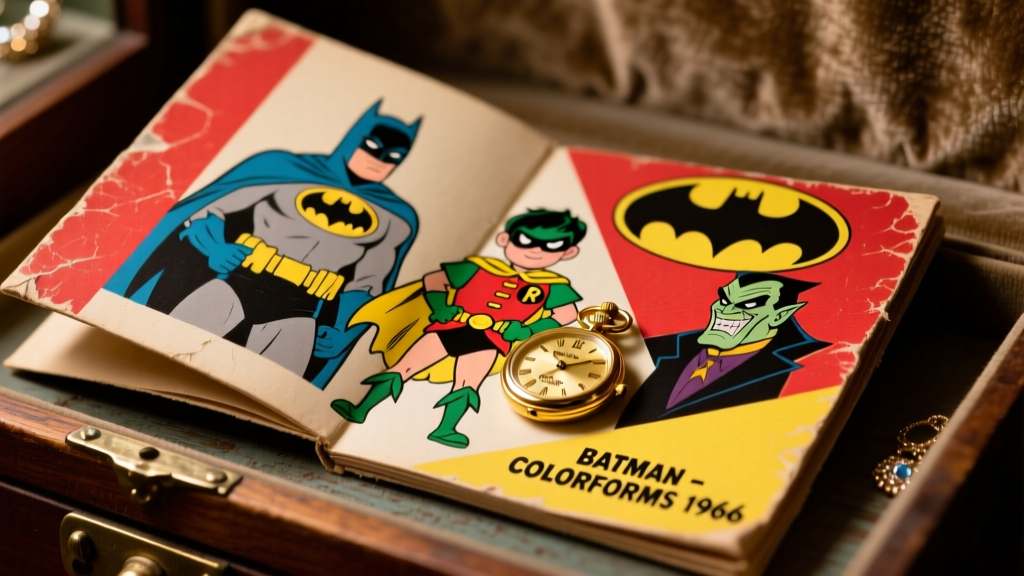
Batman Colorforms Box Booklet (1966): A Collectible Artifact of Mid-Century Pop Culture and Toy Innovation
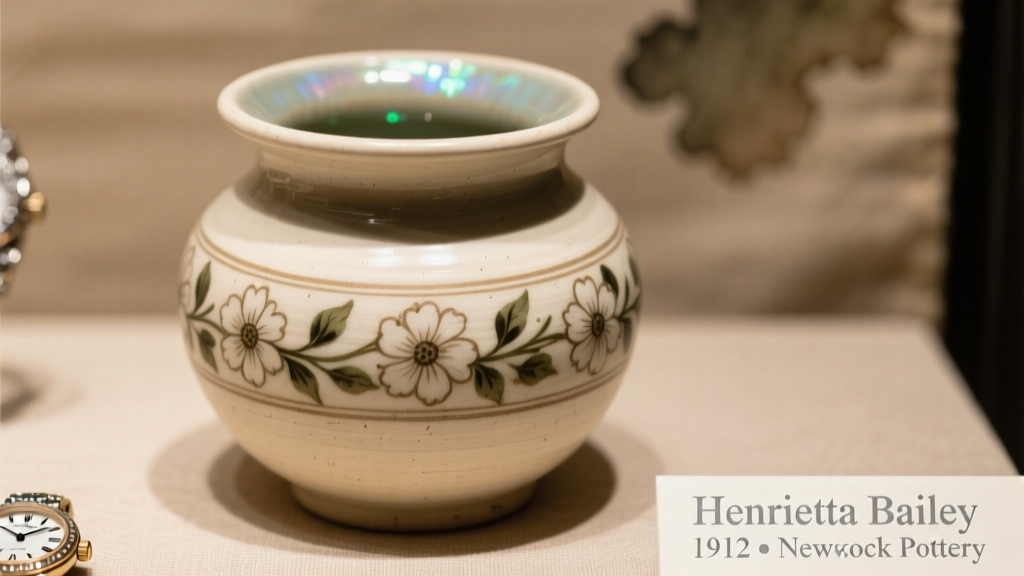
Newcomb College Vase: Stylized Floral Band, Ivory Interior, Henrietta Bailey, 1912 — A Masterpiece of American Arts & Crafts Ceramics
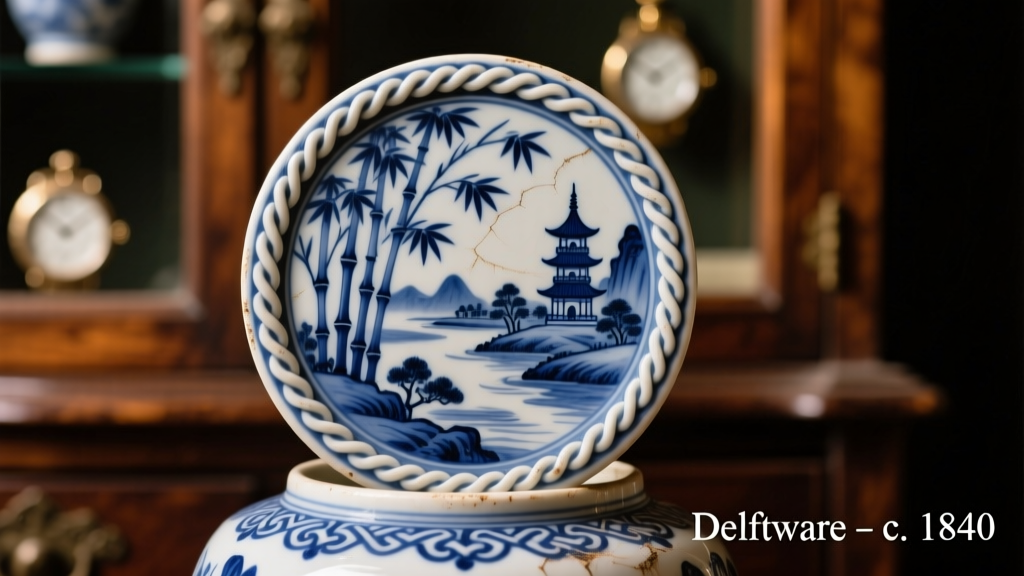
Delft Vase Cover: Oriental Scene with Scroll Borders and Bobbin Knop — A Dutch 19¼-Inch Masterpiece from the Late 18th Century
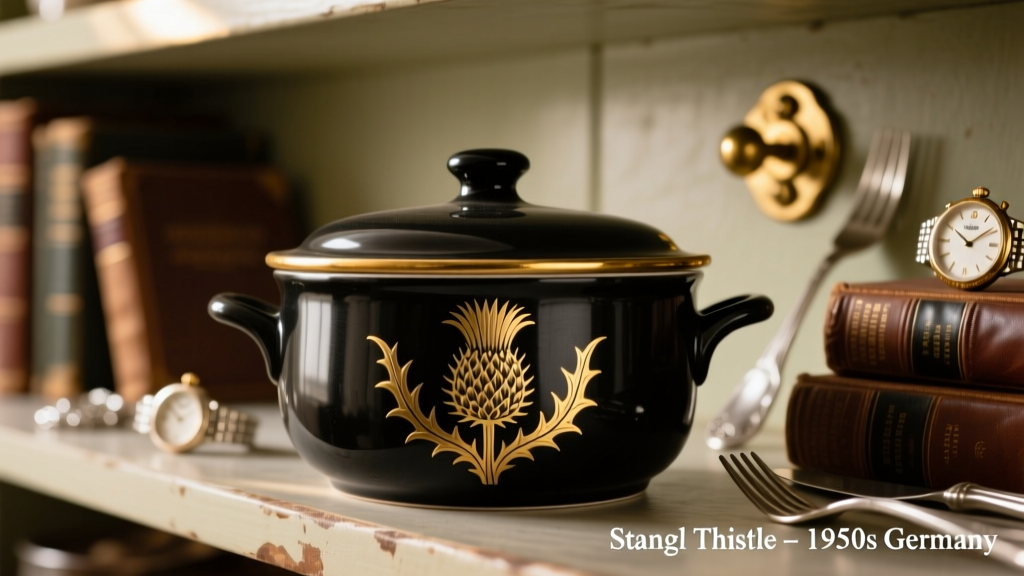
Stangl Thistle Casserole Individual: A Collector’s Guide to the Iconic Mid-Century Ceramic Dish
The Charlie Chaplin Doll: 'Dancing Charlie' Illusion Jointed Box — A 13-Inch Masterpiece of Vintage Mechanical Artistry

The Red Mors Toy Pedal Car Fire Truck: A Landmark of German Engineering and Mid-Century Play Culture