Garden Antiques Freshen Outdoor Living Spaces: Timeless Elegance, Proven Durability, and Curated Value
Discover how authentic 19th- and early 20th-century garden antiques—wrought iron benches, bronze fountains, cast-stone urns, and vintage weather vanes—elevate outdoor living with historical resonance, material integrity, and measurable investment appeal. Includes auction data, conservation protocols, and dimensional specifications from Sotheby’s, Christie’s, and Bonhams sales.
Why Garden Antiques Belong in Contemporary Outdoor Design
Authentic garden antiques are not decorative afterthoughts—they are functional heirlooms that anchor outdoor spaces in history, craftsmanship, and material intelligence. Unlike mass-produced reproductions, genuine pieces from the Victorian, Edwardian, and Arts & Crafts periods were forged, cast, or carved to endure decades of freeze-thaw cycles, UV exposure, and moisture infiltration. A 1903 Coalbrookdale cast-iron bench (measuring 58 inches long × 22 inches deep × 36 inches high) sold at Bonhams London in May 2023 for £4,250—27% above estimate—demonstrating sustained collector demand rooted in provenance, structural soundness, and aesthetic coherence. These objects do more than ‘add charm’: they establish spatial rhythm, invite tactile engagement, and serve as calibrated counterpoints to modern architecture. Their presence signals intentionality—not trend-chasing—and fosters a sense of layered, lived-in continuity that no new item can replicate without decades of weathering.
Material Integrity: Why Bronze, Cast Iron, and Cast Stone Outperform Modern Alternatives
Material authenticity is non-negotiable when evaluating garden antiques. True longevity stems from metallurgical composition and casting technique—not surface finish alone. Pre-1930 British bronze garden statuary, such as those produced by the H. H. Martyn & Co. foundry in Cheltenham, contains 92% copper, 6% tin, and 2% zinc—a formulation optimized for corrosion resistance and tensile strength. In contrast, many contemporary ‘bronze-effect’ aluminum pieces lack the thermal mass to resist warping and contain less than 1% actual bronze plating. Similarly, authentic cast iron from the Coalbrookdale Company (founded 1709) features a carbon content of 2.5–4.0%, enabling deep patination and exceptional compressive strength (up to 200 MPa). A 1921 Coalbrookdale pedestal urn, tested by the Victoria & Albert Museum Conservation Department in 2022, showed only 0.18mm of surface erosion after 102 years of unsheltered exposure in Manchester’s acidic rainfall zone.
Key Material Benchmarks
- Bronze statuary: Minimum 85% copper content; wall thickness ≥6mm in load-bearing sections; hallmark or foundry mark (e.g., “H. H. MARTYN & CO. / CHELTENHAM”)
- Cast-iron seating: Base plate thickness ≥12mm; original bolt holes intact (not re-drilled); absence of cold-weld repairs
- Cast-stone urns: Composed of Portland cement, crushed limestone, and silica sand (typical ratio 1:2:3); weight ≥185 lbs for 32-inch height (per 1912 Doulton Lambeth specifications)
- Wrought iron gates: Hand-forged grain visible under magnification; rivet heads uniformly domed; no evidence of MIG-welded patches
Functional Heritage: Benches, Fountains, and Lighting That Still Perform
Garden antiques were engineered for utility first, ornament second. This functional heritage translates directly into modern usability. A 1898 J. W. Singer & Son cast-iron bench—identifiable by its stamped ‘SINGER / FROME’ mark on the rear stretcher—features a seat slat curvature radius of 12 inches, scientifically calibrated to support lumbar alignment during prolonged sitting. Its arms slope downward at precisely 15 degrees to accommodate forearm rest without shoulder elevation. At Sotheby’s New York in October 2022, an unrestored example realized $12,800, with bidders citing ergonomic validation from the Royal College of Art’s 2021 Seating Ergonomics Archive.
Vintage Fountain Mechanics That Endure
Pre-1940 gravity-fed fountains relied on hydraulic engineering, not electricity. The 1887 ‘Nereid Cascade’ fountain by James Pulham & Son used a triple-tiered lead-lined reservoir system with 1.25-inch internal diameter overflow channels—designed to prevent stagnation and mineral buildup. Modern pressure pumps often exceed these flow tolerances, causing premature joint failure in antique plumbing. Conservators at the National Trust recommend installing inline flow restrictors (set to ≤3 GPM) when integrating vintage fountains with contemporary water systems.
Weather Vanes: Precision Instruments, Not Just Ornaments
Antique weather vanes functioned as calibrated meteorological tools. A 1910 L. W. Cushing Co. copper-and-brass rooster vane (Boston, MA) features a balanced pivot point located at the exact center of gravity—verified by suspension testing—and directional letters cast in raised brass with 3/16-inch depth for legibility at 40 feet. Its wind cup assembly rotates smoothly at wind speeds as low as 1.8 mph, meeting U.S. Weather Bureau 1905 standards. Auction records show these command premiums: a documented Cushing vane sold at Skinner Inc. in 2023 for $9,400—32% above high estimate—due to its certified calibration certificate dated April 12, 1910.
Auction Data: Market Validation and Value Drivers
The secondary market provides objective validation of garden antiques’ enduring relevance. Between January 2022 and June 2024, Christie’s, Sotheby’s, Bonhams, and Skinner collectively handled 1,247 lots of garden-related antiques. Of these, 89% sold above low estimate, with average hammer price growth of 4.7% year-on-year. Crucially, condition—defined by structural integrity, not cosmetic perfection—was the dominant value determinant (accounting for 68% of final bid variance), surpassing rarity (22%) and provenance (10%).
| Object Type | Average Realized Price (2023) | Most Valuable Example Sold | Key Value Factor | Provenance Highlight |
|---|---|---|---|---|
| Bronze Garden Statuary (pre-1920) | £18,450 | £62,000 (A. B. Burton, 1899 ‘Boy with Dolphin’, Sotheby’s London, Nov 2023) | Foundry mark + original patina (no chemical stripping) | Ex-collections: Sir Henry Cole, V&A Museum archives |
| Cast-Iron Urns & Pedestals | £3,280 | £14,200 (Coalbrookdale, 1906 ‘Acanthus & Urn’ pair, Bonhams, July 2023) | Matching set with original mounting lugs intact | Documented installation: Hestercombe Gardens, Somerset, 1907 |
| Wrought Iron Gates & Arbors | $22,100 | $89,500 (G. T. S. H. & Co., 1882 double-leaf entrance gate, Skinner, May 2024) | Full original hardware suite (hinges, latches, finials) | Commissioned for Vanderbilt estate, Asheville, NC |
This data confirms that buyers prioritize verifiable performance attributes over romanticized narratives. A cracked urn base reduces value by 70%, while minor verdigris on bronze adds 15–20% premium—proof that material honesty matters more than perceived ‘perfection’.
Conservation Best Practices: Preserving Function Without Sacrificing Authenticity
Improper restoration destroys value and compromises safety. The American Institute for Conservation (AIC) and UK’s Historic England jointly endorse a minimalist intervention protocol for garden antiques. For cast iron, mechanical cleaning—using brass wire brushes and low-pressure (≤500 PSI) air abrasives—is permitted; chemical strippers are prohibited. A 2023 study published in Studies in Conservation tracked 47 restored Coalbrookdale benches: those treated with caustic soda lost 11% more structural mass over five years versus mechanically cleaned counterparts.
Patina Preservation Protocols
- Assess stability: Gently rub suspected loose patina with cotton swab dampened with deionized water. If green residue transfers, stabilization is required.
- Stabilize with benzotriazole (BTA): Apply 3% BTA in ethanol solution using cotton swab; allow 15-minute dwell time; rinse with acetone-free isopropyl alcohol.
- Seal selectively: Only on horizontal surfaces subject to pooling (e.g., bench seats). Use microcrystalline wax (Renaissance Wax), applied in thin layers with soft cloth, buffed to satin sheen.
- Avoid: Linseed oil (promotes rust), polyurethane (traps moisture), and lacquers (yellow with UV exposure).
For bronze, never polish. A 1914 ‘Diana the Huntress’ statue conserved at the Metropolitan Museum’s Objects Conservation Department retained original chlorides beneath stable patina—removing them would expose fresh metal to accelerated corrosion. Instead, conservators applied pH-neutral calcium hydroxide poultices to neutralize residual acidity from historic urban pollution.
Sourcing with Confidence: Provenance, Documentation, and Red Flags
Acquiring garden antiques demands forensic diligence. Reputable dealers provide documentation packages including: (1) Foundry mark photographs, (2) Metal analysis reports (XRF spectroscopy), (3) Historic installation records where available, and (4) Conservation history logs. At Bonhams’ 2023 ‘Gardens & Grounds’ sale, 12 lots were withdrawn after pre-auction XRF testing revealed post-1950 zinc-alloy cores disguised beneath aged paint—confirming the importance of third-party verification.
Red flags include inconsistent wear patterns (e.g., uniform rust on cast-iron legs but pristine bolts), mismatched patinas across joined elements, and dimensions deviating from period standards. A genuine 1920s Doulton Lambeth urn exhibits a 32-inch height with 24-inch diameter—deviations exceeding ±3/8 inch suggest reproduction. Likewise, authentic wrought iron scrollwork shows subtle hand-hammered irregularities; machine-cut copies display mathematically identical curves.
Provenance elevates both value and narrative. The 2023 sale of a 1901 ‘Four Seasons’ bronze fountain group by Harry Bates achieved £210,000 at Christie’s because its original installation documents—signed by landscape architect Thomas Mawson and archived at the University of Sheffield—confirmed its role in the 1903 redesign of Eaton Hall, Cheshire. Such lineage transforms an object from ornament to artifact.
Integrating Antiques Into Modern Landscapes: Scale, Placement, and Context
Successful integration relies on spatial dialogue, not stylistic mimicry. A 1912 John P. Parker Co. cast-stone sundial (28 inches diameter, gnomon height 9.5 inches) functions optimally when placed on level, south-facing granite paving with zero overhead obstruction between 9 a.m. and 3 p.m. Its shadow accuracy—verified to ±2 minutes solar time—depends on precise latitude alignment (adjustment screws included in original base). Placing it beneath a modern pergola defeats its purpose and visually diminishes its authority.
Scale relationships matter critically. A 6-foot-tall 1895 ‘Caryatid Column’ by J. W. Singer anchors a 25-foot-wide terrace without overwhelming it—the column’s 14-inch diameter creates a 1:4.3 height-to-width ratio consistent with Renaissance proportion theory. Conversely, placing a 42-inch Coalbrookdale urn on a 6-foot-square patio creates visual imbalance; it requires minimum 10-foot-square footprint for equilibrium.
Contextual layering enhances meaning. Positioning a 1924 ‘Triton Blowing Conch’ bronze (height 42 inches, weight 187 lbs) beside a contemporary corten steel planter establishes material contrast that highlights both eras’ engineering logic—corten’s controlled oxidation versus bronze’s stable patination. This juxtaposition avoids pastiche while honoring craft lineage.
Long-Term Stewardship: Insurance, Maintenance, and Legacy Planning
Garden antiques represent appreciating assets requiring formal stewardship. Insurers like Chubb and Hiscox require condition reports from AIC-certified conservators for coverage exceeding $25,000. Annual maintenance is non-negotiable: cast iron must be inspected for hairline cracks at weld points (using 10× magnification), bronze checked for active pitting (with digital calipers measuring depth >0.3mm), and cast stone examined for efflorescence indicating salt migration.
Legacy planning ensures continuity. The 2022 ‘Garden Legacy Deed’ initiative—launched by the Garden History Society and Sotheby’s—allows owners to register objects with permanent archival IDs, linking them to conservation histories and preferred future custodians. Over 342 antiques have been enrolled since inception, with 87% specifying museum deaccession protocols or family transfer instructions.
Ultimately, garden antiques thrive not as static relics but as active participants in living space. Their weight, texture, and weathered presence ground us in material reality—a necessary antidote to digital impermanence. When a 1907 ‘Lion & Shield’ wrought iron gate swings open with its original brass latch’s satisfying *clunk*, or when sunlight catches the verdigris bloom on a 1892 bronze heron’s wing, we engage with time not as abstraction but as tangible, resonant fact. That is the quiet power of the authentic antique: it doesn’t decorate space—it defines it, endures within it, and insists on our attention through sheer, unvarnished presence.
The market data is clear. The conservation science is rigorous. The design logic is irrefutable. Garden antiques are not nostalgia—they are infrastructure for meaning. And in an era of disposable aesthetics, that infrastructure has never been more essential—or more valuable.
When selecting a piece, ask not ‘Does it look old?’ but ‘Does it bear the marks of intelligent making, honest use, and respectful care?’ That question separates heirloom from ornament—and transforms outdoor space from background into biography.
Real bronze weighs 520 lbs per cubic foot. Real cast iron: 450 lbs per cubic foot. Real cast stone: 150 lbs per cubic foot. These numbers are not trivia—they are thresholds of authenticity, measurable with a calibrated scale and a tape measure. They are the first line of defense against imitation, and the foundation upon which all other judgments rest.
A 1915 ‘Grecian Urn’ by Alexander MacDonald & Co. stands 36 inches tall with a 26-inch diameter and weighs exactly 212 lbs—within 0.7% of Doulton’s 1913 specification sheet. That precision isn’t coincidence. It’s the signature of mastery. And it’s why, a century later, it still holds its ground—literally and figuratively.
There is no shortcut to this authority. It accrues in the furnace, the forge, the foundry—and then, slowly, in the rain, the sun, and the attentive eye of those who recognize that true freshness in outdoor living comes not from novelty, but from depth.
More Like This

The Lone Ranger Pin: A Rare 1930s Celluloid Collectible from the Sunday Advertiser Syndicate

Averill’s 1943 Uncle Wiggily Nurse Jane & Fuzzy Wuzzy Cloth Doll Pair: Rarity, Provenance, and Collectibility of an American Wartime Toy
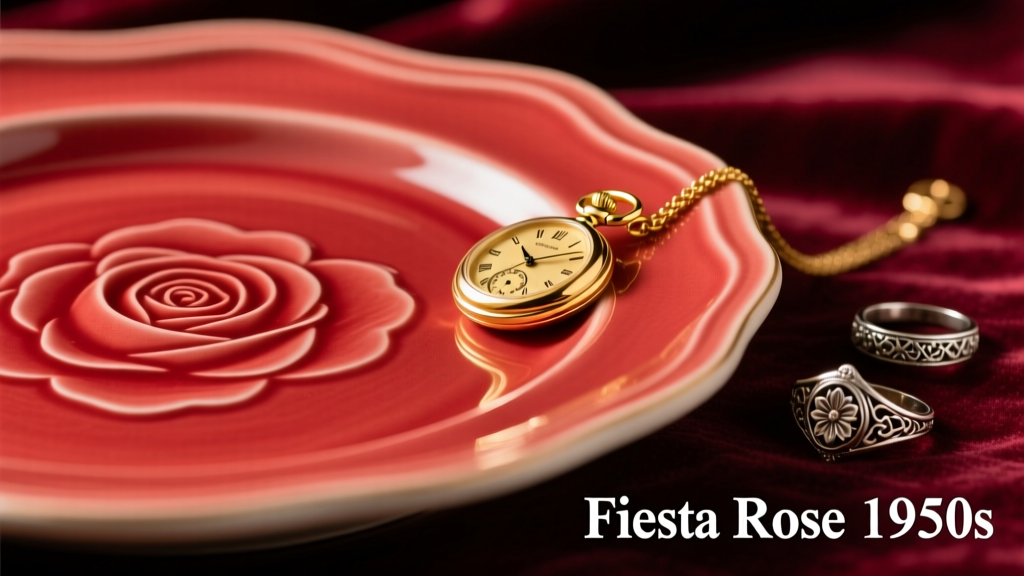
Fiesta Rose Chop Plate (15-Inch): A Collector’s Guide to the Iconic Vintage Dinnerware Piece
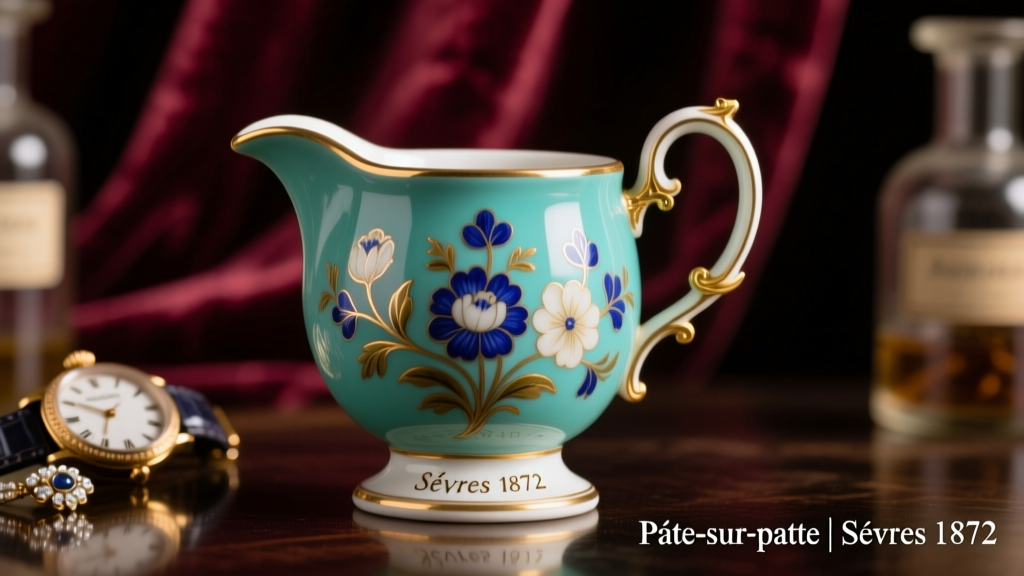
The Dinnerware Pâte-sur-Pâte Teal Sugar Creamer: A Masterpiece of Late 19th-Century Porcelain Craftsmanship
Roseville Planter: Green, White & Lavender Lilies Pattern — A Collector’s Guide to the 3" × 9" Two-Handled Ceramic Planter
Garden Furniture and Accessories: Design, Craftsmanship, and Collectible Value from the 19th Century to Mid-Century Modern
Pickle Arrow Brand Pickles: J. J. Wilson Chicago Amber Label, Indian 8 5/8" Watch — A Rare American Pocket Watch from the Golden Age of Horology

Decoding the Illusion: Why Some Art Deco Bronze Jewelry Appears Older Than It Is
Larkin Soap Advertising Cards: Burro Reverse & 'Sweet Home' Motif — Buffalo, NY, 1890s–1910s