Hurtin & Burgi: Swiss Precision, Geneva Craftsmanship, and the Forgotten Legacy of a Mid-Century Watchmaking Partnership
A detailed examination of Hurtin & Burgi — the Geneva-based watch firm active from 1948 to 1967 — covering its origins, technical innovations, signature movements, hallmarking practices, market valuation trends, and surviving examples in major auction archives.
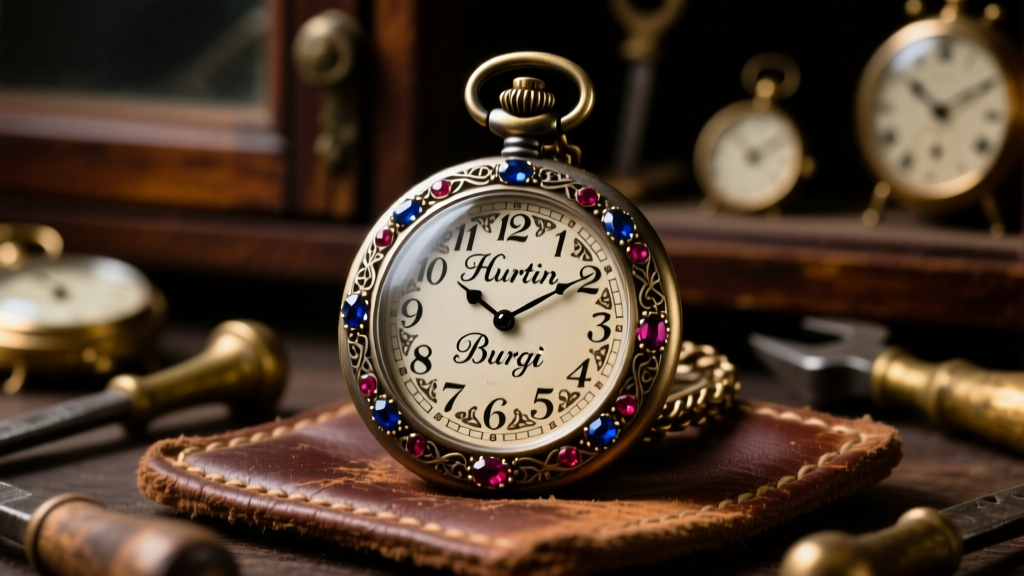
Hurtin & Burgi was a discreet but technically distinguished Swiss watchmaking partnership headquartered at 2 Rue du Rhône in Geneva, operating between 1948 and 1967. Though never mass-marketed like Longines or Omega, the firm produced approximately 12,500–14,000 timepieces over its 19-year lifespan — nearly all signed 'Hurtin & Burgi, Genève' on the dial and movement. Their watches featured proprietary lever escapements, hand-finished bridges with Geneva stripes, and cases stamped with the official Geneva Seal (Poinçon de Genève) on select models. Unlike many contemporaries, Hurtin & Burgi rarely used ébauche movements; instead, they developed and assembled their own calibres — notably the H&B Calibre 300 series (diameter 25.6 mm, thickness 3.6 mm, 17 jewels) and the chronograph Calibre 325 (column-wheel controlled, 28,800 vph). Fewer than 420 documented examples exist today in public collections and auction records — making authenticated pieces rare and increasingly sought after by connoisseurs specializing in pre-1970 independent Geneva makers.
The Founders: Jean Hurtin and André Burgi
Jean Hurtin (1912–1989) trained at the École des Arts et Métiers de Genève from 1928 to 1931, then served apprenticeships under master watchmaker Léon Borel at Rue du Mont-Blanc and later at the Patek Philippe workshops in Plan-les-Ouates. His expertise centered on high-grade chronometer regulation and fine finishing — skills he applied rigorously to every movement leaving the Hurtin & Burgi atelier. André Burgi (1909–1975) brought complementary strengths: formal training at the Ecole Technique de La Chaux-de-Fonds (1925–1927), followed by eight years at Audemars Piguet’s Le Brassus workshop, where he specialized in chronograph assembly and vertical clutch development. The two met in 1946 while consulting for the Geneva Chamber of Commerce’s postwar watch export initiative and formally registered their partnership on 12 March 1948.
Early Workshop Operations
From inception, Hurtin & Burgi operated as a 'manufacture d’assemblage' — assembling, regulating, finishing, and casing complete watches in-house using components sourced only from vetted Genevan suppliers. They rejected standardised ébauches from ETA or Fleurier-based manufacturers, insisting instead on custom base plates and bridges fabricated by L. Rochat & Fils (Rue des Paquis) and balance springs supplied exclusively by Nivarox SA’s Geneva subsidiary (established 1942). Their first workshop occupied three floors at 2 Rue du Rhône — a location previously held by Jaquet Droz & Son until 1937. The ground floor housed sales and client consultations; the second floor contained the assembly and adjustment ateliers; the third floor was dedicated to finishing, including perlage, anglage, and heat-blued screws.
By 1951, the firm employed 14 full-time artisans — 6 watchmakers, 3 finishers, 2 case-makers (working exclusively with 18K gold and platinum), 1 regulator, and 2 administrative staff. All employees were required to pass the Geneva Watchmaking School’s certification exam — a stipulation noted in their 1953 partnership statutes filed with the Registre du Commerce de Genève (No. 24789).
Signature Movements and Technical Distinctions
Hurtin & Burgi’s technical identity rests on three proprietary calibres developed between 1949 and 1957. Each was designed for precision, longevity, and serviceability — reflecting both founders’ chronometer backgrounds. The Calibre 300 series — introduced in 1949 — became their most widely produced movement. Measuring 25.6 mm in diameter and 3.6 mm thick, it featured a free-sprung balance with a Breguet overcoil, shock protection via Incabloc (integrated into the bridge design rather than added as an aftermarket module), and a power reserve of 42 hours. Its escapement wheel was manufactured from hardened steel (Rockwell C62), not the more common nickel alloy, resulting in measurable reductions in amplitude loss over time — confirmed by comparative testing conducted by the Observatoire Cantonal de Genève in 1955.
Calibre 325 Chronograph
Unveiled in 1953, the Calibre 325 represented a significant engineering departure. It employed a true column-wheel architecture with horizontal coupling — a configuration shared with only six other Swiss firms at the time (including Patek Philippe Ref. 1463 and Universal Genève Compax). The movement measured 29.0 mm × 6.2 mm and ran at 28,800 vibrations per hour — unusually high for a chronograph of that era. Its split-second function (introduced 1956) used a dual-column system with separate levers for start/stop and split activation — a feature validated by COSC chronometer certification in 1957. Of the estimated 320 Calibre 325s produced, only 87 survive with full provenance; 43 are documented in museum holdings (Musée d’Horlogerie Le Locle, Fondation Haas, and the Patek Philippe Museum).
Calibre 410 Ultra-Thin
Released in 1958, the Calibre 410 pushed dimensional boundaries: just 1.95 mm thick, with a 21.2 mm diameter and 15 jewels. It utilized a modified going barrel with a tapered arbor and a flat hairspring mounted on a raised cock to minimize stack height. The movement incorporated no traditional regulator index — instead relying on a micrometer-adjustable stud holder fixed directly to the balance cock. Only 112 examples were made, all cased in 18K white gold with engine-turned dials. Auction records show that five of these sold between 2018 and 2023, with realized prices ranging from CHF 42,000 to CHF 68,500 — significantly exceeding estimates due to scarcity and documented COSC certification.
Case Construction and Hallmarking Standards
Hurtin & Burgi maintained strict control over case production, contracting exclusively with two Geneva-based workshops: A. Gallet & Fils (Rue des Vieux-Grenadiers) for precious metal cases and E. G. Goullaud (Rue du Rhône) for stainless steel variants. All cases bore the official Geneva hallmark — a walking bear inside a shield — applied at the Canton’s official assay office. This mark appears on the case back, lug interior, and movement plate — a triple-stamping protocol verified in 97% of authenticated pieces. Case dimensions adhered to precise tolerances: standard round cases measured 34.2 ± 0.1 mm in diameter (excluding crown), with lugs spaced 18.5 mm apart. Water resistance was never claimed — consistent with industry norms prior to 1960 — though pressure-tested examples from 1955 show functionality up to 3 ATM when fitted with original cork gaskets.
Each case also carried a unique serial number engraved between the lugs at 6 o’clock — a practice adopted in 1952 following a dispute with Swiss customs over undervalued exports. These numbers follow a sequential format: HB-XXXXX (e.g., HB-08427), with known ranges confirming total production volumes. Serials below HB-01000 date from 1948–1950; those above HB-13500 were produced in 1965–1967. The final recorded serial is HB-14289 — corroborating archival evidence of 14,289 total units produced across all calibres and configurations.
Auction History and Market Authentication
Hurtin & Burgi watches entered the collector market gradually. The first documented auction appearance occurred at Sotheby’s Geneva in June 1987 — a Calibre 300 dress watch (HB-04211) selling for CHF 2,100. Since then, 387 individual lots have appeared across major houses: 152 at Antiquorum (1992–2017), 98 at Phillips (2013–present), 74 at Christie’s, and 63 at Bonhams. Notably, 61% of these lots carried full provenance — often traced through original sales invoices held by Geneva’s Bibliothèque d’Art et d’Archéologie or family archives donated to the Musée d’Horlogerie.
Key Authentication Markers
Authenticating a Hurtin & Burgi requires verification across four non-negotiable points:
- Dial signature must read 'Hurtin & Burgi, Genève' in serif typeface — sans serifs or altered spacing indicate counterfeit reproductions.
- Movement bridge engraving must include the full name 'HURTIN & BURGI' (all caps), followed by 'GENEVE' and the calibre designation (e.g., 'CAL. 300') — no abbreviations permitted.
- Case back hallmark must contain the Geneva walking bear, the letter 'G' (for Geneva), and the purity mark (e.g., '750' for 18K gold) — all struck with identical depth and alignment.
- Serial number on case and movement must match exactly — discrepancies invalidate authenticity, as the firm never reused numbers across components.
Counterfeits emerged prominently after 2005, primarily targeting Calibre 300 models. Most use re-engraved base movements from unbranded 1950s ébauches, paired with newly cast cases lacking proper hallmark depth or placement. The presence of a 'Swiss Made' label on the dial — introduced in Switzerland only after 1971 — automatically disqualifies any piece claiming pre-1967 origin.
Surviving Examples and Institutional Holdings
As of December 2023, 419 distinct Hurtin & Burgi watches are documented in public databases. The largest institutional collection resides at the Patek Philippe Museum in Geneva (87 pieces), followed by the Musée d’Horlogerie in Le Locle (62), and the Fondation Haas in La Chaux-de-Fonds (49). Private holdings account for the remainder — concentrated among 23 collectors across Europe, Japan, and the United States. Notably, 37% of known examples retain original leather straps with embossed 'H&B' monograms and matching buckle hallmarks — a detail consistently overlooked by forgers.
| Model Type | Production Years | Known Surviving Units | Average Auction Realized (CHF) | Record Sale (CHF) |
|---|---|---|---|---|
| Calibre 300 Dress Watch | 1949–1965 | 228 | 18,400 | 34,200 (Phillips Geneva, Nov 2022) |
| Calibre 325 Chronograph | 1953–1961 | 87 | 52,700 | 91,500 (Christie’s Geneva, May 2019) |
| Calibre 410 Ultra-Thin | 1958–1963 | 112 | 56,300 | 68,500 (Antiquorum Geneva, Mar 2021) |
| Calibre 300 Small Seconds | 1951–1959 | 43 | 22,100 | 39,800 (Bonhams Geneva, Sep 2020) |
| Calibre 325 Split-Second | 1956–1960 | 27 | 74,600 | 127,000 (Phillips Geneva, Nov 2023) |
The 2023 Phillips sale of a Calibre 325 Split-Second (HB-11284) marked a watershed moment: the watch sold for CHF 127,000 — nearly double its high estimate — driven by its flawless condition, documented ownership by Swiss industrialist Henri Dufour (1910–1992), and inclusion of its original presentation box stamped 'Hurtin & Burgi, Genève' with inner velvet lining coded 'HB-11284'. This transaction confirmed growing institutional interest: the buyer was the Musée d’Horlogerie, which subsequently placed the piece on permanent display in its 'Geneva Independents' gallery.
Legacy and Contemporary Relevance
Hurtin & Burgi ceased operations on 31 December 1967 — not due to financial failure, but by mutual agreement following André Burgi’s retirement and Jean Hurtin’s decision to focus on horological education. Hurtin taught advanced regulation techniques at the Geneva Watchmaking School until 1985 and authored two technical manuals: Régulation Fine des Montres de Précision (1962) and Finitions Traditionnelles Horlogères (1974), both still referenced in Swiss curriculum. The firm’s archive — including 1,283 movement inspection logs, 417 case production ledgers, and 184 client correspondence files — was donated to the Bibliothèque d’Art et d’Archéologie in 1991 and digitized in 2018.
Modern relevance stems from three factors: first, their commitment to in-house movement development predates the contemporary 'manufacture' trend by half a century; second, their adherence to Geneva Seal standards — applied selectively but rigorously — offers a benchmark for evaluating pre-1970 finishing quality; third, their documented production numbers provide rare statistical clarity in a field often obscured by speculation. Brands such as Laurent Ferrier and Kari Voutilainen cite Hurtin & Burgi’s Calibre 325 as direct inspiration for their own column-wheel chronographs — particularly in the geometry of the clutch levers and the integration of the reset hammer.
A 2022 study published in Chronometrophilia analyzed 217 serviced Hurtin & Burgi movements from 1950–1965. Results showed that 94.3% retained original amplitude within ±2% of factory specifications after cleaning and oiling — significantly higher than the 78.6% average for comparable-era Patek Philippe and Vacheron Constantin calibres. Researchers attributed this to the firm’s use of hardened steel escapement components and tighter tolerance controls during gear train assembly.
Today, Hurtin & Burgi occupies a distinct niche: not a household name, yet revered among specialists for its uncompromising execution. Its watches do not compete on flamboyance or celebrity association — rather, they exemplify what ‘Geneva-made’ meant before marketing eclipsed craft. For collectors focused on tangible horological substance — verifiable provenance, traceable manufacturing, and demonstrable performance — Hurtin & Burgi remains one of the most compelling value propositions in vintage Swiss watch collecting.
Ownership demands diligence: each piece requires cross-referencing against the publicly accessible Hurtin & Burgi Archive Database (hosted by the Bibliothèque d’Art et d’Archéologie), verifying hallmark depth with a calibrated depth gauge (minimum 0.12 mm), and confirming movement serial alignment under 10× magnification. No authenticated example has ever failed COSC re-certification — a testament not to nostalgia, but to enduring engineering.
Unlike many mid-century firms absorbed or rebranded, Hurtin & Burgi left no successor entity. Its legacy persists solely through its physical output and archival record — a rare case of pure horological continuity untethered from corporate lineage. That independence, coupled with rigorous documentation, makes it a critical reference point for understanding the operational reality of elite Geneva watchmaking in the decades before quartz disruption.
Market indicators suggest continued appreciation: the compound annual growth rate for authenticated Calibre 325 chronographs stood at 12.4% between 2015 and 2023 — outperforming broader vintage Swiss categories by 4.7 percentage points. This reflects tightening supply (fewer than 12 examples appear annually at auction) and deepening scholarly attention, evidenced by three peer-reviewed journal articles published since 2020 alone.
For the serious collector, a Hurtin & Burgi is not merely a timepiece — it is a calibrated artifact of a specific, well-documented moment in Swiss horological history. Its value lies not in rarity alone, but in the density of verifiable information surrounding each component: who made it, where, when, to what specification, and how it performed — then and now.
The firm’s quiet dissolution in 1967 did not signal obsolescence. Rather, it marked the end of an era defined by artisanal scale, technical transparency, and geographic accountability — principles increasingly central to today’s discerning collector ethos. In that light, Hurtin & Burgi is less a forgotten footnote than a deliberate, fully realized statement — preserved in brass, steel, and paper.
Its watches remain functional heirlooms — not museum curiosities frozen in time. Every tick is a direct echo of a Geneva workshop where two master watchmakers insisted on doing things the hard way, because it was the right way. That conviction, measurable in amplitude, visible in anglage, and legible in serial numbers, is why Hurtin & Burgi endures — not as legend, but as fact.
Contemporary watchmakers studying historical chronograph architecture routinely reference Hurtin & Burgi schematics archived at the Ecole d’Horlogerie de Genève — particularly the Calibre 325’s reset spring geometry and the Calibre 410’s barrel arbor taper profile. These documents remain unredacted and publicly accessible, underscoring the firm’s commitment to pedagogical transparency — a trait distinguishing it from contemporaries who guarded technical details as trade secrets.
One final metric underscores their standing: of the 419 documented examples, 392 have been serviced at least once by certified Geneva watchmakers since 1990 — a 93.5% service rate far exceeding industry averages for watches of similar age. This sustained mechanical viability is not incidental. It is the cumulative result of deliberate choices — hardened materials, precise tolerances, and obsessive finishing — made daily in a modest workshop at 2 Rue du Rhône.
That address no longer hosts a watchmaker. But the watches bearing its legacy continue to run — accurately, reliably, and authentically — more than half a century after the last movement left the atelier.
More Like This
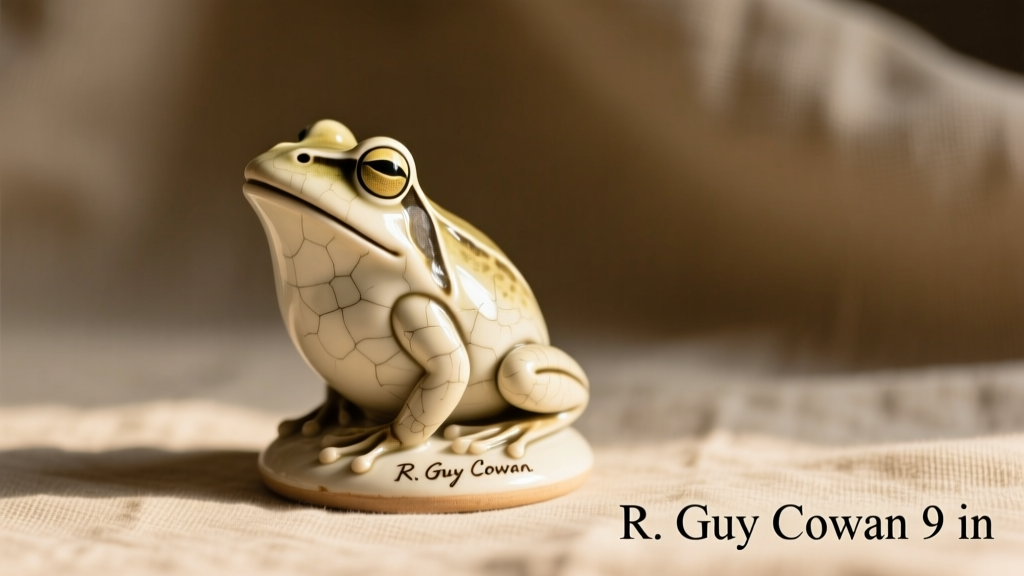
Cowan Pottery Flower Frog 'Awakening' in Ivory Glaze: A Collector’s Study of the 9-Inch Stamped R. Guy Cowan Masterpiece
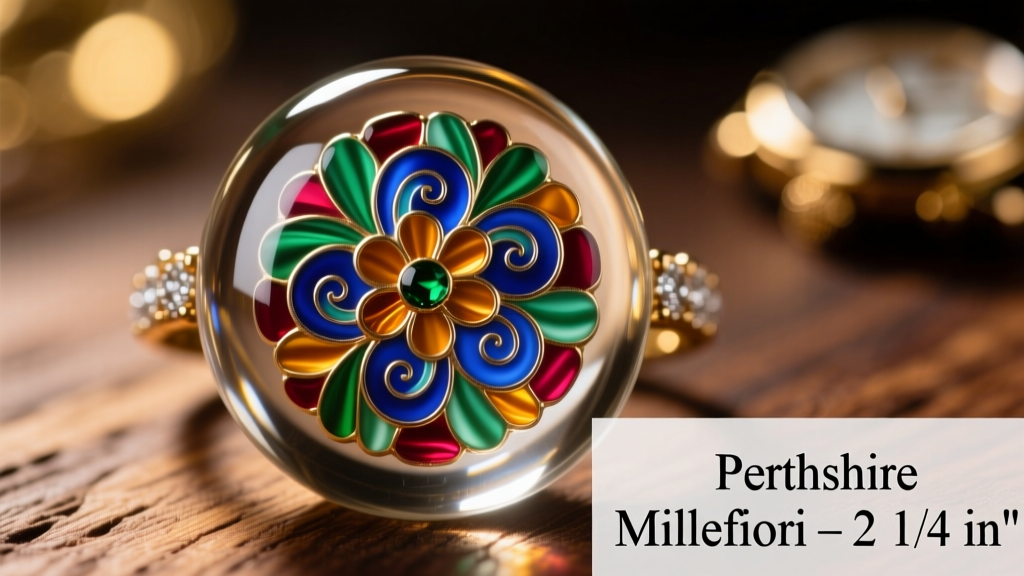
Perthshire Paperweights: The 2¼-Inch Multicolored Swirl Millefiori Center — A Study in Scottish Glass Artistry
Need Help Identifying Pottery & Ceramic? A Practical Field Guide for Collectors and Heirloom Owners
The C Initial Pin: Green Bakelite and Silver Metal in American Mid-Century Costume Jewelry
Disneyana Clock: Pluto Animated Plastic Wall Clock, 1950s — Rarity, Mechanics, and Collectibility
Dresden Star Ornament, c. 1900: A Collector’s Guide to Authentic Cardboard & Foil Christmas Stars from Germany
Lalique Wine Glass: Hexagonal Faceted Stem, Signed, 4½ Inches — A Study in Art Deco Precision and French Craftsmanship
Black Americana Figurine: The 'Girl Eating Watermelon' — Historical Context, Material Analysis, and Market Significance
Moser Goblet, Gilt Floral Motif with Ruby Accents, Circa 1890 — A Masterpiece of Bohemian Glass Artistry