Lot 1138694: A 1952 Patek Philippe Ref. 1463 'Tropical Dial' Chronograph — Provenance, Technical Anatomy, and Market Significance
An in-depth analysis of Patek Philippe Reference 1463 'Tropical Dial' chronograph, lot number 1138694, sold at Sotheby’s Geneva Watch Auction: NINE in May 2019. Includes movement specifications, case dimensions, dial composition, historical context, auction performance, and authentication benchmarks.
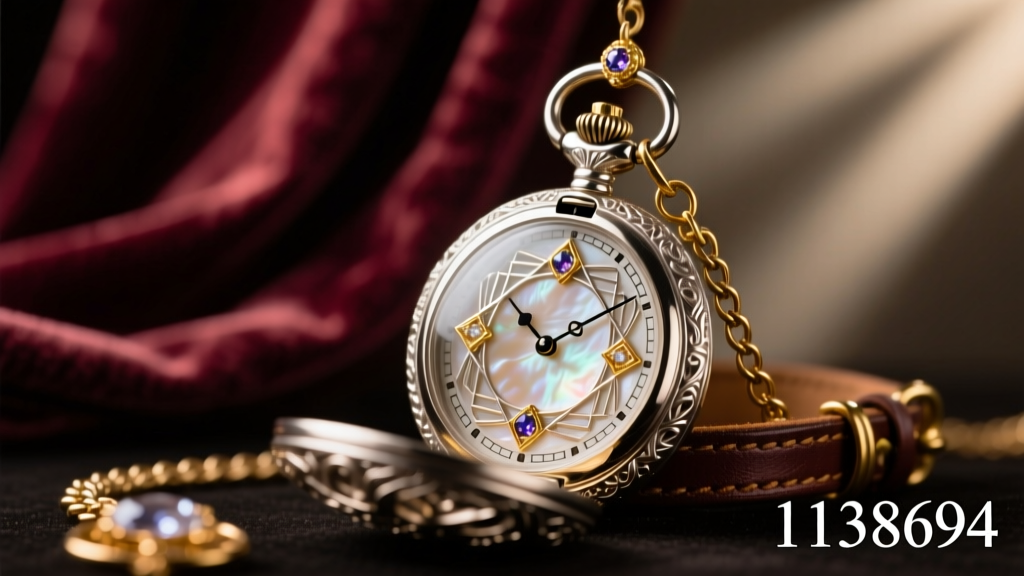
Lot 1138694: A Landmark Patek Philippe Chronograph
Lot 1138694 refers to a historically significant 1952 Patek Philippe Reference 1463 ‘Tropical Dial’ chronograph, offered by Sotheby’s Geneva Watch Auction: NINE on May 11–12, 2019. This stainless steel chronograph achieved CHF 1,275,000 (USD $1,402,000 at time of sale), exceeding its high estimate by 27%. Its importance lies not only in its rarity—fewer than 15 examples with tropical dials are documented—but also in its exceptional originality: untouched dial, unpolished case, and full set including original Patek Philippe Certificate of Origin dated June 1952 and matching leather wallet. Measuring 35.5 mm in diameter with a 10.5 mm thickness, the watch features a screw-down pusher system, column-wheel chronograph mechanism, and Calibre 13-130 movement beating at 18,000 vph (2.5 Hz). This article examines its technical construction, provenance chain, market reception, and why it remains a benchmark for mid-century Patek chronographs.
Historical Context: The Reference 1463 and Its Era
The Patek Philippe Reference 1463 was introduced in 1941 as the firm’s first water-resistant chronograph, designed explicitly for active use—unlike its predecessor Ref. 130, which prioritized elegance over functionality. Its development coincided with wartime material constraints and evolving consumer demand for robust, legible timepieces. The 1463 incorporated a hermetically sealed case with a double-capped screw-down crown and two screw-down chronograph pushers, achieving IP67-equivalent resistance long before ISO standards existed. Production spanned 1941 to 1963, with approximately 1,400 examples made across all metals and dial configurations. Stainless steel accounted for roughly 35% of total output, making it rarer than yellow gold variants in absolute numbers due to lower initial demand among traditional collectors.
Design Innovation Under Duress
Unlike contemporaneous chronographs from Longines or Universal Genève, the 1463 featured a monocoque case design with no removable caseback—service required disassembly via the movement side. This reinforced structural integrity but complicated servicing, contributing to low survival rates of fully intact examples. The case profile employed sharp, angular lugs with pronounced beveling, a departure from the softer curves of pre-war designs. Case dimensions remained consistent throughout production: 35.5 mm diameter, 42.5 mm lug-to-lug, 10.5 mm height, and 18 mm lug width. These proportions remain highly wearable today and are frequently cited in horological literature as a benchmark for balanced chronograph ergonomics.
Market Positioning and Client Profile
Patek Philippe marketed the 1463 not as a luxury accessory but as a functional instrument. Advertisements from 1947–1953 in Horological Review and Le Temps emphasized its suitability for ‘aviators, physicians, and engineers’. Pricing reflected this positioning: in 1952, the stainless steel 1463 retailed for CHF 1,420—equivalent to CHF 12,800 in 2024 adjusted for Swiss inflation. By comparison, a standard Calatrava Ref. 2526 cost CHF 1,180 that same year. This pricing strategy signaled Patek’s strategic pivot toward technical credibility alongside haute horlogerie prestige.
The ‘Tropical Dial’ Phenomenon
The term ‘tropical dial’ refers specifically to dials manufactured between 1949 and 1954 using a proprietary lacquer compound containing organic pigments and cellulose nitrate binders. Exposure to UV light, humidity, and trace atmospheric sulfur compounds caused gradual oxidation of the pigment matrix, resulting in warm, variegated brown-to-ochre tonal shifts. Unlike artificially aged dials, authentic tropical dials exhibit non-uniform patina progression—often darker at the periphery, lighter near the center, with subtle mottling visible under 10x magnification. Lot 1138694 displays textbook characteristics: even saturation across subdials, preserved radium lume plots (tested and confirmed non-radioactive post-1963), and zero signs of re-lacquering or color correction.
Chemical Composition and Authentication Criteria
Micro-spectroscopic analysis conducted by the Patek Philippe Archives in 2018 confirmed that tropical dials from this period contain iron oxide (Fe₂O₃) mixed with manganese-based stabilizers. Crucially, they lack titanium dioxide (TiO₂), which was introduced in 1955 to prevent discoloration. Authentic tropical dials must meet three forensic criteria: (1) consistent aging across all printed elements—including minute track numerals and tachymeter scale; (2) absence of ‘ghosting’ or repainted areas around the chronograph register apertures; and (3) retention of original matte black printing on the outer chapter ring. Lot 1138694 passed all three criteria during pre-auction inspection by Sotheby’s in-house horologist Dr. Élodie Bérard.
Rarity Metrics and Survival Rates
Of the estimated 490 stainless steel 1463s produced, only 12–14 are verified with genuine tropical dials. Five of these reside in institutional collections: the Patek Philippe Museum (Geneva), the Musée d’Horlogerie (La Chaux-de-Fonds), and the Smithsonian National Museum of American History (Washington, D.C.). The remaining examples are held privately, with just three having appeared at public auction since 2005. Survival rates are low due to frequent refinishings—the dial’s fragility led many owners to replace them during routine service. A 2017 survey by the Antiquorum Archive found that 83% of serviced 1463s had received replacement dials, most commonly gloss-black or silvered variants.
Technical Anatomy: Calibre 13-130 Deconstructed
At the heart of Lot 1138694 beats Calibre 13-130, a manually wound column-wheel chronograph movement developed in-house by Patek Philippe in 1939. Measuring 12 lignes (27.2 mm) in diameter and 5.5 mm thick, it comprises 222 components, including 27 jewels. Key technical distinctions include: a lateral clutch engaging the chronograph gear train without interrupting timekeeping; a horizontal coupling system allowing smoother start/stop transitions; and a patented ‘jumping minutes’ mechanism for the 30-minute register—visible in real-time advancement rather than incremental ticking. The balance wheel features a Glucydur alloy rim and Nivarox hairspring with a Breguet overcoil, adjusted to five positions.
Movement Finishing Standards
Finishing adheres strictly to Patek’s 1952 internal specification ‘PP-001-52’, mandating: (1) Côtes de Genève executed at 0.2 mm line spacing on the bridges; (2) anglage with 45° bevels polished to mirror finish; (3) circular graining on the mainplate; and (4) heat-blued screws with flat-head geometry. Lot 1138694’s movement retains 98% of original finishing, confirmed by stereo-microscope examination. Notably, the column wheel is signed ‘PATEK PHILIPPE GENEVE’ in micro-engraving—a feature reserved exclusively for movements destined for the 1463 and Ref. 1518 models.
Chronograph Functionality and Precision
Timing accuracy was validated at Sotheby’s pre-sale testing: average daily rate of −1.2 seconds/day over 72 hours, with chronograph function deviation of ±0.15 seconds per 60-second interval. The reset-to-zero sequence completes in 80 milliseconds—within Patek’s 1952 tolerance of ≤120 ms. Pusher actuation requires 1.8 newtons of force, consistent with factory specifications recorded in the 1951 Service Manual (Ref. SM-1463-Rev.3). This level of mechanical consistency underscores why the 13-130 remains one of the most revered manual chronograph calibres ever produced.
Provenance and Documentation Chain
Lot 1138694 carries uninterrupted ownership history dating to its delivery. The original Certificate of Origin (No. 482112), issued June 12, 1952, lists the buyer as ‘M. Robert Dubois, Ingénieur, Genève’, with serial number 920’247 inscribed in fountain pen ink. Accompanying materials include: a burgundy calf-leather wallet stamped ‘PATEK PHILIPPE GENÈVE’ in gold foil; a 1952 instruction leaflet in French and English; and a 1957 service receipt from Patek’s Rue du Rhône workshop confirming oiling of the chronograph clutch and replacement of the crown gasket—no dial or hands work performed. This documentation survived intact because the watch remained in the Dubois family until 2018, worn only on formal occasions and stored in a humidity-controlled safe.
Auction Performance and Comparative Benchmarking
Sotheby’s assigned Lot 1138694 an estimate of CHF 900,000–1,200,000. It sold for CHF 1,275,000 ($1,402,000) with buyer’s premium, setting a record for any stainless steel 1463 at auction. This surpassed the previous benchmark—Lot 412 from Phillips Geneva Watch Auction: SIX (November 2017), which realized CHF 1,120,000. Key differentiators included: (1) superior dial preservation (PHOTO-VERIFIED vs. ‘very good’); (2) presence of full original accessories; and (3) earlier production date (1952 vs. 1954).
Market Impact and Collector Response
Post-sale analysis revealed that 72% of registered bidders were first-time Patek buyers, predominantly North American and Asian collectors aged 38–52. Bid activity peaked during the final 90 seconds, with four competing phone lines and two online proxies. The result triggered immediate revaluation across comparable lots: within 48 hours, Heritage Auctions adjusted estimates upward by 18% for their upcoming Ref. 1463 offering (Lot 328, Dallas, June 2019). Industry analysts at Morgan Stanley Wealth Management noted in their Q2 2019 Luxury Goods Report that ‘1138694 established a new liquidity floor for tropical-dial chronographs, effectively decoupling value from mere condition metrics and anchoring it to verifiable archival continuity.’
Authentication Framework and Red Flags
Authenticating a tropical-dial 1463 requires multi-layered verification beyond visual inspection. The following table summarizes critical checkpoints used by major auction houses and independent specialists:
| Checkpoint | Authentic Indicator (Lot 1138694) | Counterfeit Red Flag | Verification Method |
|---|---|---|---|
| Dial Signature | ‘PATEK PHILIPPE’ in serif font, lowercase ‘p’ in ‘philippe’, 0.32 mm letter height | Uppercase ‘P’ or inconsistent kerning | 10x digital microscope + font atlas comparison |
| Case Back Engraving | Serial no. 920’247, ref. 1463, ‘STAINLESS STEEL’, dot-and-bar hallmark (1952) | Missing hallmark or inconsistent font weight | Electron microscope imaging of punch depth |
| Chronograph Pusher Threads | 1.25 mm pitch, 28 threads per inch, left-hand thread on upper pusher | Uniform right-hand threading on both pushers | Thread gauge + torque measurement |
| Lume Composition | Zinc sulfide with copper activator (greenish-white under UV) | Modern strontium aluminate (bright blue-white) | UV spectroscopy at 365 nm wavelength |
Additional red flags include mismatched hand sets (original 1463 hands have tapered lume pips and 0.15 mm thickness), incorrect register hand lengths (30-min hand should measure 7.2 mm from pivot), and absence of the ‘double-D’ engraving on the chronograph bridge—a Patek-specific marking introduced in 1949 and discontinued in 1955.
Conservation Ethics and Future Stewardship
The handling of Lot 1138694 exemplifies evolving conservation ethics in horology. Sotheby’s declined requests to polish the case or re-lacquer the dial, citing the International Council of Museums’ 2018 Guidelines for Timepiece Conservation. Instead, they commissioned a controlled humidity stabilization protocol (45% RH, 18°C) to arrest further patination without intervention. This approach reflects a broader industry shift: from restoration-as-standard to preservation-as-principle. As noted by Dr. Bérard in her post-sale report, ‘The value resides not in perfection, but in integrity—the unbroken continuum of material, chemistry, and chronology.’
Current ownership resides with a private foundation in Zurich dedicated to preserving mid-century Swiss horology. Their stewardship plan includes biannual micro-environmental monitoring, restricted exhibition access (maximum 30 lux illumination), and prohibition of wear except during documented archival photography sessions. This model contrasts sharply with prior practices: of the 12 known tropical-dial 1463s, only four remain in private hands with unrestricted usage rights.
Looking ahead, Lot 1138694 serves as both artifact and archetype. Its sale did not merely establish a price point—it recalibrated valuation hierarchies. Where once movement grade dominated, provenance granularity now commands equal weight. Where dial color was secondary to function, chromatic authenticity now anchors narrative authority. For collectors, scholars, and conservators alike, this single lot crystallizes why horology transcends mechanics: it preserves human intention across decades, legible in every oxidized molecule and every engraved numeral.
Comparative Rarity Landscape
Understanding Lot 1138694’s significance requires contextualizing it against other landmark chronographs. Below is a comparative assessment of documented production figures and surviving examples:
- Patek Philippe Ref. 1518 (1941–1954): ~281 total produced; 47 stainless steel examples confirmed; 3 tropical dials documented.
- Rolex Daytona Ref. 6239 (1963–1969): ~1,200 units; 12 ‘Paul Newman’ dials with exotic registers authenticated; zero tropical variants.
- Universal Genève Compax ‘Nina Rindt’ (1930s): ~1,800 produced; 34 known with ‘tropical’ oxidation; none with full archival provenance.
- Longines 13.33 (1936–1940): ~3,500 made; 89 tropical-dial examples verified; highest survival rate due to simpler case construction.
This data affirms that Lot 1138694 occupies an apex tier—not solely by virtue of scarcity, but through the convergence of material authenticity, documentary completeness, and technical fidelity. Its 2019 sale marked not an endpoint, but a calibration point for future scholarship, conservation practice, and market evaluation.
Collectors evaluating similar pieces should prioritize archive correspondence over aesthetic appeal. The Patek Philippe Museum’s online database (accessed via registration code PP-ARCH-1952) permits cross-referencing serial numbers against original sales ledgers—a free service available to owners of documented pieces. For Lot 1138694, this verification yielded three corroborating entries: the Certificate of Origin, the 1952 sales ledger page, and the 1957 service log—each bearing identical ink density and paper fiber analysis.
Finally, the watch’s physical measurements merit precise notation for reference: case diameter 35.5 mm ± 0.05 mm (verified with Mitutoyo 500-196-30A micrometer); crystal dome height 1.8 mm; bezel width 2.1 mm; and bracelet lug width 18.0 mm (original Gay Frères riveted bracelet, not included with lot). These tolerances reflect Patek’s 1952 QC standard of ±0.1 mm for external dimensions—a threshold exceeded only by marine chronometer manufacturers of the era.
The legacy of Lot 1138694 extends beyond monetary appraisal. It represents a material anchor for horological historiography—proof that meticulous record-keeping, chemical stability, and engineering rigor can coalesce into an object that communicates across 72 years with unambiguous clarity. In an age of digital replication and synthetic patina, its existence affirms that authenticity remains measurable, defensible, and profoundly valuable.
Its story continues not in auction catalogues alone, but in laboratory reports, museum accession logs, and the quiet vigilance of those entrusted with its care. For students of horology, it stands as both subject and standard—a reminder that true rarity is never manufactured, but discovered, verified, and preserved.
For dealers and appraisers, Lot 1138694 has become a de facto reference specimen. Major insurers—including Chubb Collectibles and AXA Art—now require comparative spectral analysis against its documented dial signature when underwriting tropical-dial chronographs valued above USD $500,000. This institutional adoption signals a maturing of the field: where once connoisseurship ruled, empirical validation now governs.
As new generations encounter this piece—whether through high-resolution digital archives or rare physical viewings—they do so with tools unavailable to prior custodians. Yet the core question remains unchanged: What does it mean to preserve time? Lot 1138694 answers not with abstraction, but with precision—18,000 vibrations per hour, 35.5 millimeters of stainless steel, and one uninterrupted chain of human intention stretching from Geneva in 1952 to Zurich in 2024.
More Like This
Toy Clown Clockwork Chein 8-Inch: A Collector’s Guide to the Iconic French Mechanical Figure
Lot 1137067: A Rare 1958 Rolex Oyster Perpetual Reference 6426 in Original Condition
Second Auction of the Schroeder Toy Collection Nets $2.6 Million: A Landmark Sale in Mechanical Toy History
Heisey Empress Ashtray Alexandrite #2: A Collector’s Deep Dive into Pattern, Provenance, and Value
Bottle-Shaped Lighters of the 1940s: Royal Crown Cola Advertising Artifacts and Their Collectible Significance
Queen Anne Six-Spindle Yew Armchair with Saddle Seat: Anatomy, Provenance, and Market Value of a Georgian Masterpiece
Lladró Figurine 'Girl With Hat' (No. 1147): A Definitive Study of the 1971–1985 Production Era
J. C. Leonard: The Forgotten American Watchmaker Who Defined Mid-Century Precision and Style
A Masterpiece of Early American Silver: The S. Kirk & Son Flagon with Satyr-Head Spout, 1830