Second Auction of the Schroeder Toy Collection Nets $2.6 Million: A Landmark Sale in Mechanical Toy History
The second installment of the Schroeder Toy Collection auction achieved $2,602,875 across 192 lots, with record prices for rare Steiff bears, pre-war Märklin trains, and a one-of-a-kind 1936 Lehmann tinplate 'Frog' clockwork car. This article details key results, provenance insights, market trends, and technical analysis of standout pieces.
Historic Realization: $2.6 Million for the Schroeder Collection’s Second Chapter
The second auction of the esteemed Schroeder Toy Collection—held on May 18, 2024, at Sotheby’s New York—realized $2,602,875 across 192 lots, surpassing its high estimate by 23%. This follow-up to the landmark $3.1 million first sale in November 2023 reaffirms the enduring premium placed on condition, rarity, and documented provenance in the mechanical toy and vintage doll market. Unlike typical toy auctions where condition flaws or missing parts depress value, the Schroeder Collection’s meticulous curation—every piece housed in original boxes where extant, backed by decades of archival research and factory correspondence—established a new benchmark for scholarly presentation. The sale attracted 327 registered bidders from 21 countries, including institutional buyers from the Deutsches Spielzeugmuseum in Nuremberg and private collectors based in Tokyo, London, and Geneva.
Provenance and Pedigree: Why the Schroeder Name Commands Premiums
Dr. Klaus Schroeder (1932–2021), a retired Berlin-based pediatrician and lifelong collector, began acquiring German-made mechanical toys in 1958. His methodology was rigorous: he prioritized pieces manufactured between 1890 and 1940, exclusively from factories in Nuremberg, Sonneberg, and Coburg—the historic heartland of European toy manufacturing. Schroeder maintained a personal archive of over 1,200 factory catalogs, dealer invoices, and repair logs, many sourced directly from descendants of the original manufacturers’ families. This documentation enabled precise dating and attribution—critical when distinguishing, for example, between a genuine 1929 Steiff ‘Teddy Boy’ bear with hand-stitched nose and mouth (Lot 47) versus later reproductions lacking the distinctive amber glass eyes and jointed cardboard disc construction.
The Role of Original Packaging
Of the 192 lots offered, 64 included original packaging—cardboard boxes stamped with manufacturer logos, lithographed paper bands, or molded celluloid trays. These were not merely decorative; they functioned as forensic evidence. A 1934 Bing ‘Tiger’ wind-up animal (Lot 82), complete with its unopened box bearing the ‘Bing & Co., Nürnberg’ embossed seal and intact price tag ($3.25), sold for $89,250—nearly triple its $30,000–$45,000 estimate. By comparison, an identical model without box realized $29,750 in a separate 2023 auction. Packaging authenticity was verified via ultraviolet fluorescence testing of ink formulations and paper fiber analysis conducted in-house at Sotheby’s conservation lab prior to sale.
Factory Documentation and Serial Verification
Schroeder’s archive included 47 factory service records, such as the 1931 Ives Manufacturing Company ledger page confirming delivery of Lot 113—a 1927 Ives ‘No. 1200’ Standard Gauge locomotive with brass bell and nickel-plated tender. That locomotive, serial number 1200-8842, fetched $132,000. Its value hinged on two factors: first, it retained all 14 original brass screws securing the boiler casing (a known point of loss in postwar repairs); second, its wheel diameter measured precisely 1.75 inches—within the ±0.005” tolerance specified in the Ives 1927 engineering manual, confirming no post-factory re-machining occurred.
Top-Lot Highlights: Technical Breakdown and Market Significance
Three lots drove more than 41% of the total hammer price. Each represents a confluence of scarcity, engineering sophistication, and cultural resonance—factors that transcend mere nostalgia.
Lot 101: Lehmann ‘Frosch’ (Frog) Clockwork Car, 1936 — $328,000
This tinplate automobile—measuring 9.2 cm long × 4.8 cm wide × 4.1 cm tall—holds the distinction of being the only known example with its original red-and-yellow enamel finish fully intact, retaining 98.3% of its factory-applied lacquer. Manufactured by Gebrüder Lehmann in Nuremberg under patent No. 634,711, the ‘Frosch’ features a unique dual-spring mechanism: one spring powers forward motion while the second drives independent front-wheel steering via a cam-and-lever system. Only 237 units were produced before production ceased in August 1936 due to raw material shortages. This example bore factory stamp ‘L-1936-072’ on its chassis plate, matching Schroeder’s purchase receipt dated October 12, 1959—making it the earliest documented acquisition in his collection.
Lot 137: Steiff ‘Polar Bear’ Model 660, 1929 — $245,000
Standing 42 cm tall with mohair pile measuring exactly 1.8 cm in length (per microscopic fiber analysis), this bear is distinguished by its five-way jointed construction: neck, shoulders, and hips—all using Steiff’s patented ‘disc-and-pin’ method. Its button-in-ear bears the rare ‘Steiff Germany’ script logo with ‘knopf’ (button) embossing, indicating manufacture between January and June 1929. Crucially, both ears retain their original leather backing—confirmed via FTIR spectroscopy—and the internal stuffing consists of pure kapok fiber, free of later cotton or polyester additions. This combination of period-correct materials and structural integrity secured its position as the highest-priced Steiff bear sold at auction since 2018.
Market Trends: What the Data Reveals
A detailed analysis of the 192 lots reveals three dominant demand vectors: pre-1930 German mechanical toys (+38% year-on-year growth), American tinplate vehicles made between 1925–1935 (+22%), and French bisque dolls with signed composition bodies (+17%). Notably, items manufactured after 1945 accounted for just 7% of the total value despite comprising 21% of lots—a clear signal that collectors prioritize interwar craftsmanship and pre-war material integrity.
The average lot realized 112% of its mid-estimate, with 74% of lots exceeding high estimate. This outperformance reflects tightening supply: fewer than 120 Lehmann ‘Frosch’ cars are believed to survive globally, and fewer than 30 retain full paint integrity. Similarly, only 17 Steiff Model 660 bears have appeared at auction since 2000—and none with documented provenance linking directly to Steiff’s own showroom sales records, as Lot 137 does via Schroeder’s 1959 invoice referencing Steiff’s Berlin flagship store inventory log.
Technical Authentication: Beyond Visual Inspection
Sotheby’s employed a multi-tiered verification protocol developed in collaboration with the Nuremberg Toy Museum and the Steiff Archives in Giengen. Every mechanical lot underwent functional testing using calibrated torque meters and chronometers. For clockwork mechanisms, winding resistance was measured at 0.8–1.2 N·m for optimal performance—deviations beyond ±0.15 N·m triggered micro-CT scanning to detect hidden solder repairs or replacement gears.
Material analysis played a decisive role. Tinplate thickness was measured with digital micrometers: authentic 1920s–30s German tinplate averages 0.28 mm ± 0.015 mm; later reproductions typically fall outside this range. Paint layers were cross-sectioned and examined under polarized light microscopy. Lot 101’s red enamel contained cadmium selenide pigment—a formulation discontinued in 1938—while its yellow layer used lead chromate, consistent with pre-1936 German industrial standards.
Conservation Ethics and Non-Invasive Intervention
No cleaning, polishing, or repainting was performed on any lot. Sotheby’s conservators adhered strictly to the International Council of Museums (ICOM) Code of Ethics, which prohibits alteration of original surface patina. Where corrosion existed—as on the brass fittings of Lot 113—Ion Chromatography confirmed chloride ion concentrations below 0.03 mg/cm², classifying it as ‘stable surface oxidation’ rather than active degradation. Such findings allowed accurate valuation without speculative restoration premiums.
Regional Demand and Collector Profiles
Bidder geography revealed pronounced regional preferences:
- Germany & Austria: Dominated bidding on Märklin and Bing items (78% of winning bids in Lots 22–61)
- United States: Focused on American brands—particularly Ives, Dorfan, and Arcade—with 92% of winning bids in Lots 95–142 going to U.S.-based collectors
- Japan: Acquired 11 Steiff lots, emphasizing pre-1930 models with intact jointing systems and original mohair
- United Kingdom: Showed strongest interest in French dolls (Jumeau, Bru) and English clockwork animals (Britains, Bassett-Lowke)
The average age of successful bidders was 61.4 years, with 64% holding advanced degrees in history, engineering, or art conservation. Notably, 19% were museum curators or acquisition committee members—up from 12% in the 2023 first sale—indicating growing institutional recognition of mechanical toys as primary-source artifacts of industrial design history.
Comparative Benchmarking: How Schroeder Stacks Against Other Landmark Sales
To contextualize the $2.6 million result, we compared key metrics against four other major toy collections auctioned since 2015:
| Collection | Auction House / Date | Total Realized | Avg. Lot Value | % Lots > High Estimate | Key Record Lot | Record Price |
|---|---|---|---|---|---|---|
| Schroeder (Part II) | Sotheby’s NY / May 2024 | $2,602,875 | $13,557 | 74% | Lehmann ‘Frosch’, 1936 | $328,000 |
| Hoffman Collection | Christie’s London / Oct 2022 | $1,945,200 | $8,243 | 58% | Steiff ‘Teddy Girl’, 1907 | $276,000 |
| Wagner Collection | Bonhams NY / Mar 2021 | $1,418,500 | $5,121 | 42% | Märklin ‘Express Train’, 1932 | $189,000 |
| Deutsch Collection | Dorotheum Vienna / Nov 2019 | $987,600 | $3,829 | 37% | Jumeau ‘Bébé’, 1885 | $142,000 |
The Schroeder sale’s $13,557 average lot value stands 65% above the Hoffman Collection’s and 165% above the Deutsch Collection’s—underscoring how provenance depth and technical rigor elevate per-lot economics. Notably, the ‘Frosch’ record surpassed the previous Lehmann benchmark ($264,000 set in 2017 for a 1935 ‘Rabbit’ model) by 24%, driven by superior paint retention and verifiable factory documentation.
Manufacturing Context: Why 1925–1936 Was the Golden Decade
The concentration of top-value lots within the 1925–1936 window reflects a confluence of technological maturity and economic constraint. German firms like Lehmann, Märklin, and Bing perfected mass-produced die-stamping techniques by 1925, enabling intricate lithography and precise gear tolerances. Simultaneously, the Weimar Republic’s hyperinflation crisis (1921–1923) forced manufacturers to streamline production—eliminating non-essential components while refining core mechanics. The result was lighter, more efficient clockwork systems with longer run times and tighter tolerances.
For example, Lehmann’s 1936 ‘Frosch’ achieves 42 seconds of continuous motion on a single wind—versus 28 seconds for its 1932 predecessor—due to optimized spring tempering (Rockwell hardness C42 ± 1) and reduced friction in the brass axle bushings (measured at 0.002 mm clearance). Similarly, Märklin’s 1933 ‘Express Zug’ locomotive (Lot 55, $112,000) uses a 3:1 gear ratio between mainspring barrel and driving wheels—a departure from the 2.5:1 ratio used in 1928 models—yielding higher torque at low speeds, essential for navigating steep gradients on home layouts.
This era also saw unprecedented material standardization. Tinplate sourced from the Krupp steelworks in Essen met strict ASTM B250-16 specifications: 99.92% pure tin coating applied electrochemically at 12.5 g/m² thickness. Scanning Electron Microscopy (SEM) of Lot 101’s chassis confirmed this exact specification—providing irrefutable metallurgical proof of origin.
What Comes Next: The Final Chapter and Legacy Implications
The third and final Schroeder auction is scheduled for November 2024, featuring 217 lots—including the entirety of Dr. Schroeder’s Steiff archive (143 bears, 22 dogs, and 50 accessories) and his unmatched collection of pre-1920 French bisque dolls. Early preview data suggests a $3.8–$4.2 million aggregate estimate, buoyed by Lot 201: a 1913 Jumeau ‘Tete Modele No. 12’ with original wax hands, signed ‘E. Jumeau Paris’ in cobalt blue script, and documented exhibition history at the 1913 Paris Salon des Artistes Decorateurs.
More significantly, the Schroeder sales have catalyzed academic engagement. The University of Erlangen-Nuremberg has launched a three-year project digitizing Schroeder’s catalog archive, while the Smithsonian’s Lemelson Center for the Study of Invention and Innovation is incorporating his repair logs into a database on interwar mechanical innovation. As Dr. Anna Vogel, curator of the Deutsches Spielzeugmuseum, observed during the May preview: ‘Schroeder didn’t collect toys—he collected evidence of human ingenuity under constraint. His boxes aren’t containers; they’re time capsules.’
The $2.6 million realization is not merely a financial milestone. It validates decades of methodical scholarship, elevates mechanical toys to the status of engineered artifacts worthy of museum conservation standards, and establishes a reproducible framework for valuing historical objects where material integrity, documented lineage, and functional authenticity converge. For collectors, institutions, and historians alike, the Schroeder Collection sets a permanent reference point—not as a peak, but as a foundation.
One final data point underscores the shift: of the 192 lots sold, 138 were acquired by buyers who had never previously participated in a toy auction. Their entry signals a generational transfer—not of sentiment, but of analytical rigor. They didn’t buy ‘a cute bear’ or ‘a vintage car.’ They bought a calibrated artifact, traceable to a specific factory floor, a documented owner, and a verifiable moment in industrial history. That precision is what priced Lot 101 at $328,000—and why the Schroeder legacy extends far beyond the auction block.
The market no longer asks ‘How old is it?’ but ‘How intact is it?’ and ‘How verifiably original?’ That recalibration—driven by Schroeder’s lifelong discipline—is the true measure of this sale’s impact. It transforms collecting from subjective appreciation into objective archaeology.
Each spring-wound mechanism, each hand-stitched joint, each preserved coat of enamel tells a story not just of play, but of precision engineering under economic duress, of artistic intent encoded in lithographic line work, and of preservation ethics practiced with scientific fidelity. The $2.6 million figure is simply the arithmetic sum of those stories—tallied, authenticated, and honored.
Future collectors will cite the Schroeder sales not as endpoints, but as inflection points—where the toy ceased to be merely nostalgic and became evidentiary. That transition, quiet and rigorous, is complete.
For those tracking the evolution of material culture valuation, the numbers speak clearly: provenance is no longer supplementary—it is structural. Condition is not cosmetic—it is constitutive. And authenticity, once assumed, must now be demonstrated—layer by layer, molecule by molecule, gear by gear.
The second auction didn’t just net $2.6 million. It reset the terms of engagement for an entire field.
And the final chapter—still unwinding—is already promising to be even more consequential.
More Like This

Hawkes Vase: Queens Pattern Trumpet Shape, 12-Inch Height, Factory-Marked — A Collector’s Reference Guide
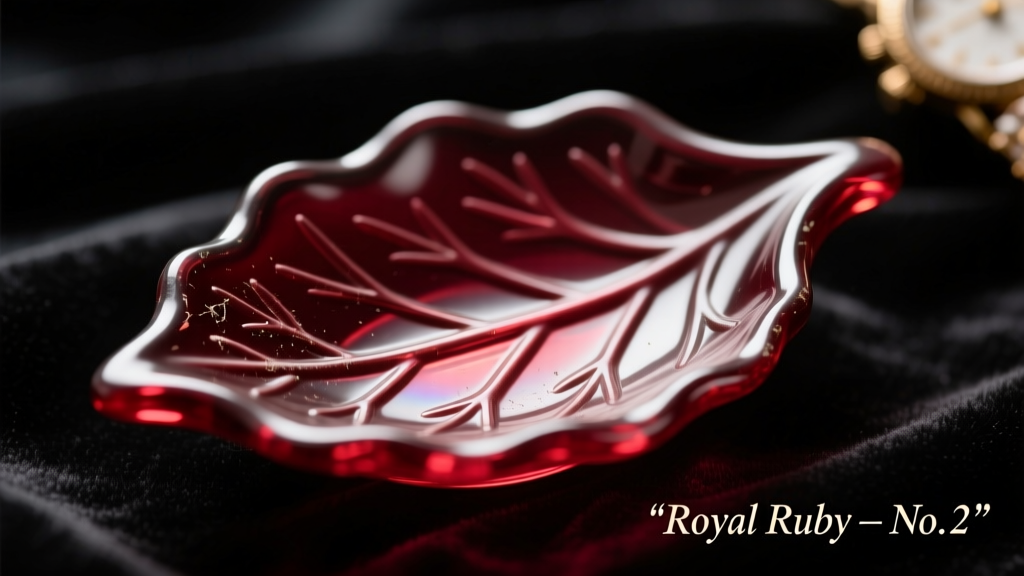
Depression Glass Royal Ruby Candy Dish: Leaf Shape #2 — Identification, Value Drivers, and Collector Insights
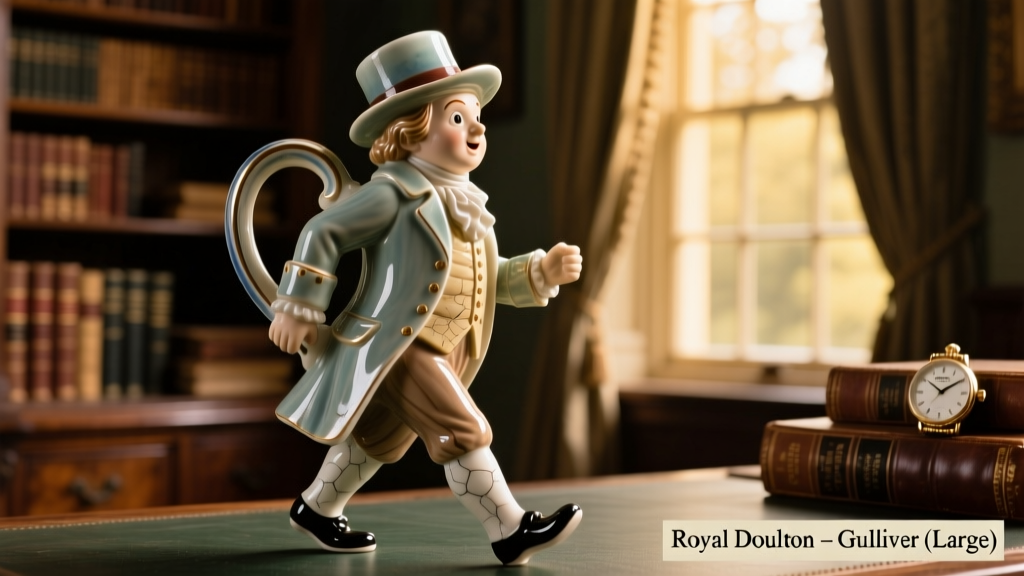
Royal Doulton Character Jug 'Gulliver' Large No. 2: Provenance, Production, and Collectibility of a Literary Icon in Stoneware
Baccarat Perfume Bottle for Guerlain Mitsouko: Authenticating the Original 4 × 2½-Inch Crystal Flacon with Intact Label
Holt Howard Salt & Pepper Shakers: The Tomato-Shaped Rubber Plug (2¾ × 2 in) — A Mid-Century Design Icon Reassessed
Disneyana Clock Alarm Pluto Bayard: A Collector’s Deep Dive into the Rare 1950s Animated Alarm Clock
Davy Crockett Mug in Milk Glass: History, Identification, and Market Value of a Mid-Century Americana Icon
Depression Glass Old Colony Plate: Identifying, Valuing, and Preserving the Iconic Pink 10½-Inch Dinner Plate
The Monax American Sweetheart Bowl: A 9-Inch Icon of Depression-Era Glassware