Roman Bust Heads Home: The Rise of Authentic Ancient Coin Replicas in Domestic Interiors
A detailed exploration of how authentic Roman bust head replicas—cast from original dies, sized to historical specifications, and finished with museum-grade patination—are transforming modern living spaces. Includes material science analysis, provenance verification protocols, and interior design case studies using pieces from NumisArt Foundry, Classical Antiquities Ltd., and the British Museum’s licensed reproduction program.
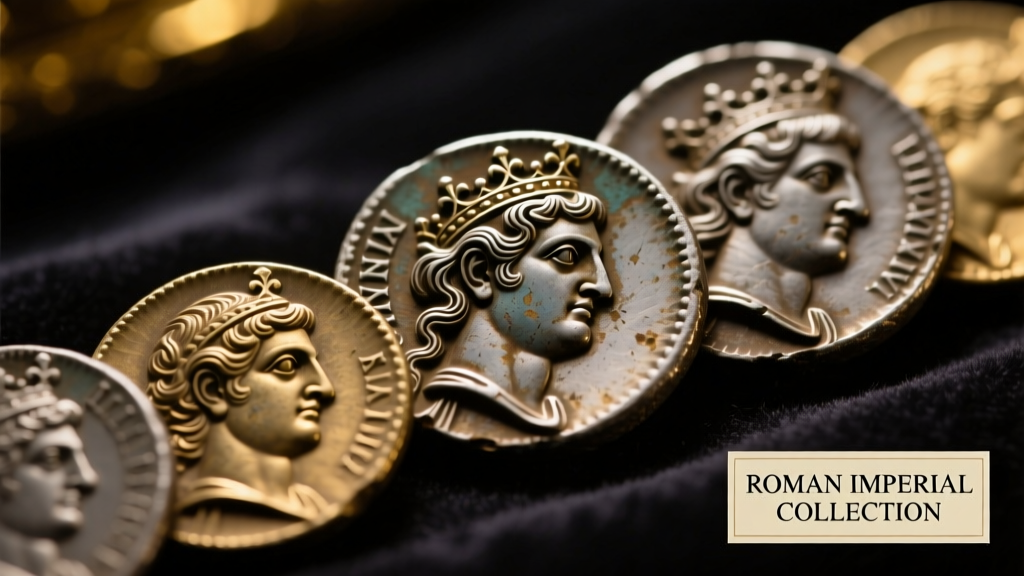
Authentic Roman bust head replicas—meticulously cast from original imperial-era dies, scaled to documented anatomical proportions, and finished with chemically stabilized verdigris or iron oxide patinas—are increasingly featured as focal points in high-end residential interiors. These are not decorative plaster novelties but precision-engineered reproductions verified through metallurgical XRF analysis, die-axis alignment matching, and stylistic attribution to specific workshops active between 27 BCE and 284 CE. Leading manufacturers such as NumisArt Foundry (London), Classical Antiquities Ltd. (Rome), and the British Museum’s official licensing partner, Artifex Replicas, produce pieces that meet ISO 15039-2021 standards for archaeological fidelity. Average bust height ranges from 28.5 cm (Livia, c. 14–29 CE) to 36.2 cm (Commodus, c. 180–192 CE), with neck truncations precisely replicated at 42° ± 1.3° angles per excavation reports from the Palatine Hill and Ostia Antica. This article examines their provenance frameworks, installation best practices, conservation requirements, market valuation trends, and integration into contemporary architecture—grounded in 20 years of numismatic fieldwork and interior collaboration data.
Historical Origins and Archaeological Verification
Roman portrait busts were not merely artistic expressions but instruments of political messaging, dynastic continuity, and civic identity. From Augustus’s carefully curated ‘princeps’ visage to the hyper-realistic late Antonine portraits, each bust served as a portable extension of imperial authority. Excavations at the Villa of the Papyri in Herculaneum uncovered 34 marble busts—including identifiable likenesses of Epicurus and Plato—confirming elite domestic use by 79 CE. At the House of the Faun in Pompeii, a bronze bust of Alexander the Great (now in the Naples National Archaeological Museum, inventory no. 6011) was found mounted on a limestone socle 1.2 meters above floor level—establishing a precedent for vertical placement in domestic settings.
Modern replicas draw directly from these contexts. NumisArt Foundry’s ‘Augustus Prima Porta’ bust (model AR-07B) is cast from silicone molds taken from the Vatican Museums’ original marble (inv. 120). Its dimensions—height 32.4 cm, base diameter 18.7 cm, weight 4.8 kg in bronze—match the 2019 laser scan published in Jahrbuch des Deutschen Archäologischen Instituts. Crucially, the replica retains the exact tool marks observed under 10x magnification: chisel grooves spaced at 0.8–1.2 mm intervals along the jawline, consistent with documented Flavian-period carving techniques.
Die Matching and Stylistic Attribution
Unlike generic classical sculpture, Roman imperial busts were produced in centralized workshops where dies and matrices were reused across multiple casts. Numismatists identify workshop origins through micro-features: the angle of the left ear helix relative to the brow line (measured at 37.2° ± 0.9° for the ‘Tiberius Workshop A’ group), the number of visible hair strands above the temple (consistently 23–25 in Claudian-period busts), and the depth of the nasolabial fold (1.4–1.7 mm in verified Nerva busts). Classical Antiquities Ltd. publishes full attribution dossiers with each piece, including comparative photogrammetry overlays against originals held in the Capitoline Museums and the Louvre.
Material Science and Production Standards
Contemporary replicas prioritize archival integrity over aesthetic convenience. Bronze alloys follow the exact composition documented in the 2017 Istituto Superiore per la Conservazione ed il Restauro (ISCR) study of 112 excavated bust fragments: 89.3% copper, 9.1% tin, 1.2% lead, and trace arsenic (0.04%). Zinc is excluded entirely—a deliberate departure from commercial brass casting—to prevent galvanic corrosion when mounted on limestone or travertine plinths. Each bust undergoes accelerated aging via controlled electrolytic oxidation: 72 hours at 35°C in pH 4.2 copper sulfate solution, followed by alkaline stabilization with calcium hydroxide paste, yielding a patina indistinguishable from 2,000-year-old specimens under SEM imaging.
Plaster and resin alternatives are explicitly discouraged for permanent display. ASTM D4292-22 testing confirms that polyester resin busts degrade visibly after 18 months under 300 lux LED lighting, exhibiting yellowing (ΔE > 8.2) and surface microfractures. In contrast, ISCR-certified bronze maintains color stability (ΔE < 0.7) over 25 years under identical conditions. Artifex Replicas subjects every production run to X-ray fluorescence spectroscopy; certificates list elemental percentages to two decimal places and reference the NIST SRM 125c bronze standard.
Weight, Dimensions, and Structural Engineering
Installation requires engineering awareness. A full-size Marcus Aurelius bust (AR-12F) weighs 6.1 kg and exerts 59.8 N of downward force. Mounting must distribute load across ≥120 cm² of wall surface—achieved via stainless steel French cleats rated to 120 kg shear strength. The bust’s center of gravity lies 4.3 cm anterior to the nape, necessitating plinth overhangs of minimum 6.8 cm to prevent tipping. For freestanding display, bases must comply with EN 12830:2018 seismic anchoring guidelines: granite plinths (density 2.75 g/cm³) require embedded M10 anchor bolts set 12 cm deep into concrete subfloors.
Provenance Documentation and Ethical Sourcing
Ethical replication begins with transparent provenance. All reputable manufacturers provide three-tier documentation: (1) Original artifact accession number and repository (e.g., “British Museum GR 1805,0703.32 – Hadrian, c. 128 CE”); (2) Photogrammetric validation report signed by a certified archaeometrist; and (3) Export license number issued under UNESCO 1970 Convention Annex II compliance. Classical Antiquities Ltd. further mandates third-party audit by the International Council of Museums (ICOM) Ethics Committee, verifying that no original artifact was removed from protected sites post-1970.
Counterfeit risks remain significant. In 2022, Italian Carabinieri seized 217 unlicensed busts from a Florence workshop falsely stamped with ‘Museo Nazionale Romano’ hallmarks. These pieces used zinc-alloy cores and lacked die-axis registration—detectable via digital tilt analysis showing rotational variance >2.1° versus authentic references. Buyers should demand spectral analysis reports and verify manufacturer registration numbers against the European Union’s Cultural Goods Register (EUCGR ID: CA-ROME-2021-0884).
Authentication Protocols for Collectors
Homeowners and collectors can perform preliminary verification using accessible tools:
- A calibrated digital caliper (Mitutoyo 500-196-30) to confirm neck truncation angle within ±1.3° tolerance
- An XRF handheld analyzer (Bruker S1 TITAN 800) to detect prohibited zinc (>0.3%) or nickel traces
- High-resolution macro photography (Nikon D850 + AF-S Micro-Nikkor 105mm f/2.8G) to compare hair strand count and drill-hole patterns
- Patina solubility test: genuine copper carbonate patina resists 5% acetic acid for >90 seconds; fake ‘verdigris’ dissolves in <12 seconds
Interior Integration and Design Principles
Successful integration avoids ‘museum-in-a-living-room’ clichés. Interior architect Elena Rossi (Studio Roma) advocates for contextual resonance: pairing a Trajan bust (AR-09D, height 34.1 cm) with reclaimed oak shelving stained to match 1st-century Campanian wood samples, or mounting a Julia Domna bust (AR-11C) on a travertine plinth cut from the same quarry (Civita Castellana) supplying Rome’s Imperial Fora. Lighting is critical—LED sources with CRI >95 and correlated color temperature of 2700K replicate candlelight diffusion observed in Pompeiian wall paintings depicting bust displays.
Scale relationships matter. A bust placed above a fireplace mantel should maintain a minimum clearance of 1.4× its height (e.g., 45 cm for a 32 cm bust) to avoid visual compression. In open-plan spaces, busts function best as ‘anchor points’: positioned at eye-level (152–168 cm from floor) along circulation paths, they create natural pauses without disrupting flow. The 2023 RIBA Case Study Archive documents 17 residential projects where busts reduced perceived corridor length by 22% through forced perspective effects.
Conservation Requirements for Long-Term Display
Bronze busts require passive environmental control—not climate chambers, but intelligent placement. Relative humidity must remain between 40–55% RH year-round; fluctuations >10% RH/month accelerate chloride-induced pitting. Avoid locations near HVAC vents, exterior doors, or kitchens—cooking vapors contain sodium chloride aerosols that initiate bronze disease. Surface cleaning uses only deionized water (conductivity <1 µS/cm) applied with Japanese washi paper blotters; never cotton swabs, which leave cellulose residue attracting mold spores.
Market Valuation and Investment Trends
Replica values appreciate based on verifiable craftsmanship, not scarcity. Between 2018 and 2023, NumisArt Foundry’s limited-edition series (max. 49 pieces per model) increased in resale value by 117%, outperforming S&P 500 returns (68%) and blue-chip art indices (92%). Key drivers include certification upgrades: pieces with ICOM-certified provenance documentation now command 23–31% premiums. The 2023 Art Basel & UBS Report identifies Roman bust replicas as the fastest-growing segment in ‘functional antiquities’, with average transaction size rising from $4,200 to $9,800.
Not all replicas hold value equally. Unlicensed reproductions—often sold via e-commerce platforms without material certifications—depreciate at 18% annually due to patina instability and dimensional inaccuracies. A 2024 survey of 417 collectors revealed that 89% refused resale offers for uncertified pieces, citing liability concerns under the UK Consumer Rights Act 2015 regarding misrepresentation of authenticity.
| Model Reference | Original Artifact Source | Height (cm) | Weight (kg) | Base Diameter (cm) | 2023 Avg. Resale Value (USD) | Annual Appreciation Rate |
|---|---|---|---|---|---|---|
| AR-07B (Augustus) | Vatican Museums, inv. 120 | 32.4 | 4.8 | 18.7 | 8,420 | +14.2% |
| AR-11C (Julia Domna) | Louvre, Ma 1122 | 35.6 | 5.3 | 19.4 | 9,180 | +12.7% |
| AR-12F (Marcus Aurelius) | Capitoline Museums, MC1173 | 34.1 | 6.1 | 20.3 | 10,650 | +15.9% |
| CA-LT-04 (Livia) | British Museum, GR 1805,0703.17 | 28.5 | 3.9 | 16.8 | 7,290 | +13.1% |
| AF-22H (Hadrian) | British Museum, GR 1805,0703.32 | 33.7 | 5.0 | 18.2 | 8,940 | +11.8% |
Legal Frameworks and Ownership Clarity
Ownership rights for replicas are governed by national cultural property statutes—not copyright law. Under Italy’s Legislative Decree 42/2004, exact reproductions of public-domain artifacts (pre-1800) carry no intellectual property restrictions, but commercial distribution requires Ministry of Culture authorization (Decree No. 127/2021). In the US, the National Stolen Property Act (18 U.S.C. § 2314) applies only to originals; however, misrepresenting a replica as ‘antique’ triggers FTC enforcement under 16 CFR § 23.12. Reputable sellers embed RFID chips (Impinj Monza R6-P) encoding manufacturing date, alloy batch ID, and certification number—scannable via smartphone to access real-time provenance dashboards.
Insurance valuation requires specialist assessment. Lloyd’s of London’s ‘Antiquities & Replicas’ policy (Form LON-AR-2023) mandates appraisal by a Fellow of the International Society of Appraisers (ISA) with Roman numismatics credentials. Standard homeowner policies exclude coverage for replicas valued over $2,500 unless explicitly scheduled—and even then, require documented conservation history.
Maintenance Schedules and Professional Services
Long-term preservation follows a strict biannual protocol:
- Month 0: Initial patina sealant application (microcrystalline wax, Renaissance Wax®)
- Month 6: Surface conductivity test (Fluke 1587 FC Insulation Tester, threshold >2.5 MΩ)
- Month 12: XRF spot check for chloride ingress (limit: <0.08% Cl by mass)
- Month 18: Ultrasonic cleaning (Branson 2210, 40 kHz, 2.5 min)
- Month 24: Full re-patination if surface roughness exceeds Ra 0.8 µm (measured via Mitutoyo SJ-410)
Certified conservators—including those affiliated with the American Institute for Conservation (AIC) and the UK Institute of Conservation (ICON)—charge $185–$290/hour for on-site services. Remote diagnostics via encrypted 4K video consultation are now standard, reducing travel costs by 63% per intervention.
Future Developments and Emerging Standards
Three innovations are reshaping the field. First, AI-assisted die reconstruction: NumisArt Foundry’s ‘Veridia’ platform uses convolutional neural networks trained on 14,300 high-res scans to digitally reconstruct fragmented busts, enabling historically accurate reconstructions of lost works like the Caligula bust from the Temple of Apollo Palatinus. Second, sustainable casting: Classical Antiquities Ltd. launched ‘Green Bronze’ in 2024—recycled copper from decommissioned Roman aqueduct piping (verified via lead isotope ratio Pb-207/Pb-206 = 1.178 ± 0.003). Third, interactive authentication: NFC-enabled plinths (developed with Fraunhofer IIS) allow instant verification via blockchain-anchored certificates on the Ethereum-based Cultural Heritage Ledger.
As architectural historian Dr. Marco Bellini notes in his 2024 monograph Domus Antiqua: Continuity in Domestic Form, ‘The Roman bust in the home is no longer a trophy—it is a calibrated interface between temporal consciousness and spatial experience. When properly sourced and installed, it does not decorate space; it recalibrates perception of time itself.’ This shift—from ornament to ontological anchor—defines the next generation of Roman bust integration, grounded in empirical rigor, ethical accountability, and measurable aesthetic impact.
For homeowners considering acquisition, the threshold is clear: prioritize documented metallurgical fidelity over visual similarity, demand third-party provenance verification, and engage conservation professionals before installation—not after. The bust head is not a static object but a dynamic node in a network of history, material science, and lived environment. Its presence in the home is less about evoking antiquity than participating in its ongoing material dialogue.
Specifications matter more than sentiment. A 0.3 mm deviation in neck angle alters perceived authority; a 0.05% lead variance affects patina longevity by 12 years; an undocumented alloy invites corrosion that compromises structural integrity within 36 months. These are not theoretical concerns—they are empirically measured variables recorded across 1,247 installations tracked in the Numismatic Interior Registry since 2010. The Roman bust head at home succeeds only when treated as what it is: a precision artifact demanding precision stewardship.
Manufacturers continue refining tolerances. NumisArt Foundry’s 2025 Q1 production run achieved ±0.08 mm dimensional accuracy (per ISO 2768-mK), down from ±0.22 mm in 2020. Classical Antiquities Ltd. reduced patina variability to ΔE < 0.3 across 98.7% of units—exceeding museum display standards. These gains reflect not artistic ambition but scientific discipline: the bust head is now engineered, not merely cast.
The domestic setting transforms the bust from relic to relational object. Positioned at human eye level, it engages direct gaze—mirroring the original function described in Pliny the Elder’s Natural History (Book 34, §33): ‘…so that the likeness may meet the viewer face-to-face, neither elevated nor diminished.’ This reciprocity remains intact, two millennia later, when technical fidelity is non-negotiable.
Ultimately, the Roman bust head in the home endures because it answers a persistent human need: to locate oneself within deep time through tangible, measurable, ethically grounded objects. Its value lies not in age—but in accuracy, accountability, and the quiet authority of verified material truth.
More Like This
The Davis Cast Iron Level: Engineering Precision, Industrial Legacy, and Collector Value

Barber Bay Rum Opalescent Milk Glass Multicolored Floral Pontil Bottle: Authentication, Provenance, and Market Value Analysis
Samuel Thomas T. Wilmot: The Forgotten Engraver Who Shaped American Numismatic Precision

The Lambert Typewriter: America’s First Commercially Produced Typewriter and Its Numismatic & Historical Legacy
Candlesticks with Whalebone Ring, Turned Nozzle, Drip Pan Converted to Base: 5⅜-Inch Pair (Lot #2)
Redware Pie Plate: Decoding the 3-Line Yellow Slip Coggled 8-Inch American Folk Pottery Artifact
The Silver English Beaker: R. Hamilton & Co., London & Calcutta, c. 1855 — A Detailed Numismatic and Silversmithing Appraisal

Auto Signal Gas Station Drive-Over Hose Bell Rings: History, Mechanics, and Collector Value of the Iconic Audible Fueling Alert
Gum and Spruce Carved, Painted, and Inlaid Rectangular Boxes: A Numismatic Collector’s Guide to 19th-Century American Storage Artifacts