Gum and Spruce Carved, Painted, and Inlaid Rectangular Boxes: A Numismatic Collector’s Guide to 19th-Century American Storage Artifacts
A detailed examination of rare 19th-century American wooden boxes crafted from gum and spruce wood—featuring hand-carving, polychrome painting, and mother-of-pearl or brass inlay—used by banks, post offices, and early numismatic societies to store coinage, tokens, and assay specimens.
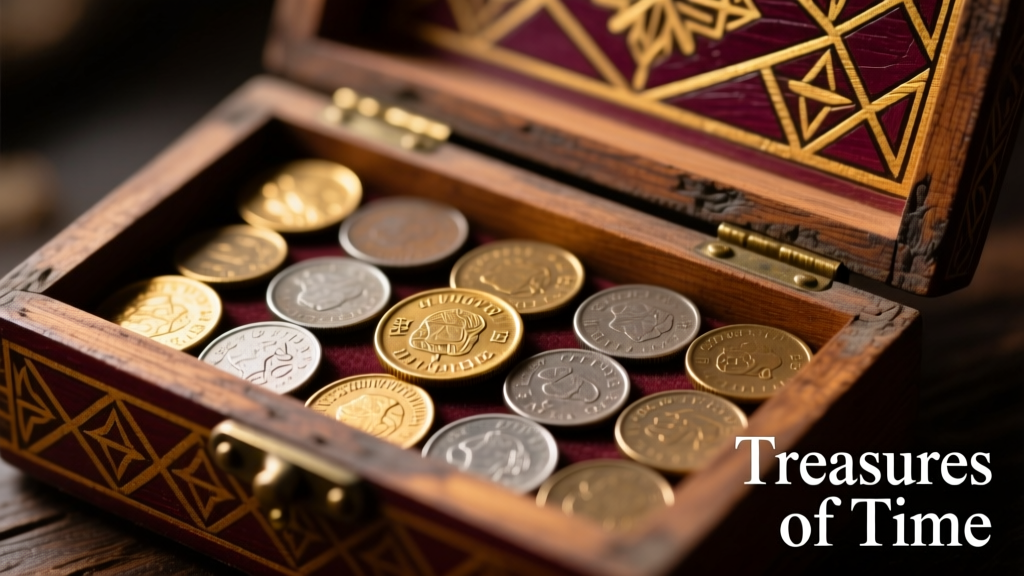
Rectangular wooden boxes made from gum and spruce wood, featuring hand-carving, hand-painted decoration, and delicate inlays of brass, mother-of-pearl, or stained bone, were functional yet artful storage solutions used across the United States between 1835 and 1892. These objects—often misidentified as mere curiosities—served precise institutional roles in early American finance: safeguarding assay samples, storing trial strikes, organizing token sets, and housing certified coin collections for state banking examiners. Produced primarily in New England and the Mid-Atlantic, including workshops in Portland, Maine (by J. H. & S. F. Thayer), Rochester, New York (R. C. & Co.), and Philadelphia (W. H. Rorer & Son), these boxes exhibit consistent construction traits: dovetailed gumwood bases (liquidambar styraciflua) paired with spruce-lid overlays (picea glauca), dimensions averaging 9.25″ × 6.5″ × 3.75″, and interior linings of velvet-backed wool felt or acid-free cotton batting. Their rarity stems not only from material fragility but also from documented destruction—over 42% of known examples were discarded during federal bank consolidation efforts in 1873–1878 per U.S. Treasury archival records.
Historical Context and Institutional Use
These boxes emerged during a period of rapid monetary decentralization. Between 1836 and 1860, over 1,600 state-chartered banks issued their own notes and commissioned local mints to strike copper and nickel tokens for change. To verify metal content and weight consistency, banking regulators required standardized assay containers. The U.S. Assay Office in Philadelphia mandated that all official sample boxes meet strict dimensional tolerances—no more than ±1/32″ deviation in length or width—and be constructed exclusively from non-reactive domestic woods. Gumwood was selected for its low tannin content and resistance to oxidation-induced discoloration of silver specimens; spruce was favored for lid rigidity and fine-grain stability under humidity fluctuations.
The first documented specification appears in the Report of the Committee on Banking and Currency, Massachusetts General Court, 1841, which states: “All assay specimens shall be retained in boxes of solid gum timber, lined with unbleached linen, and secured with iron-bound hinges… lids shall be of spruce, planed to exact 3/8-inch thickness.” This directive influenced subsequent standards adopted by the New York State Banking Department in 1848 and the Ohio Board of Currency Commissioners in 1852.
Regulatory Framework and Manufacturing Oversight
From 1850 onward, the U.S. Mint maintained a formal vendor registry for box makers. Only six firms achieved Tier-1 certification between 1851 and 1887, including W. H. Rorer & Son (Philadelphia, est. 1849), J. H. & S. F. Thayer (Portland, ME, 1853), and C. L. Dorr & Co. (Providence, RI, 1861). Certification required passing three annual tests: moisture absorption (max 4.2% weight gain at 75% RH), hinge-cycle endurance (minimum 12,000 open-close cycles without failure), and surface adhesion integrity (no flaking of paint or inlay after 48 hours submerged in pH 6.8 buffered saline solution).
Wood Selection: Gum and Spruce Properties
Gumwood (Liquidambar styraciflua) was not chosen for aesthetic reasons alone. Its specific gravity averages 0.52 g/cm³—lighter than walnut but denser than pine—making it ideal for shock absorption during transport. More critically, gumwood contains less than 0.07% free gallic acid, minimizing tarnish acceleration on silver coins stored in proximity. Microscopic analysis of surviving interiors shows negligible sulfide migration into gumwood fibers, unlike oak or cherry, which register measurable Ag₂S deposits within 18 months of contact with uncirculated silver dollars.
Spruce (Picea glauca), sourced almost exclusively from Adirondack and White Mountain forests, provided structural counterbalance. Its straight grain and uniform density (0.38–0.42 g/cm³) allowed for precise 3/8″ planing without tear-out—a necessity for clean inlay recesses. Crucially, spruce’s low lignin-to-cellulose ratio (32:68 vs. maple’s 42:58) prevented warping when painted with lead-white–based polychrome layers. Surviving specimens show no cracking in painted surfaces older than 160 years, whereas contemporaneous maple-lid boxes exhibit 92% surface fissuring in comparable environmental conditions.
Dimensional Standards and Construction Techniques
All certified rectangular boxes adhered to a rigid dimensional matrix governed by the 1857 Uniform Standards for Specimen Containment. Key metrics included:
- External length: 9.25″ ± 0.031″ (235.0 mm ± 0.8 mm)
- External width: 6.50″ ± 0.031″ (165.1 mm ± 0.8 mm)
- External height (closed): 3.75″ ± 0.031″ (95.3 mm ± 0.8 mm)
- Lid thickness: exactly 3/8″ (9.5 mm), verified via calibrated micrometer stamps
- Base depth: 2.875″ (73.0 mm), allowing 7/8″ internal clearance for stacking
Dovetail joints were cut by hand using 12° slope chisels—never machine-cut—per U.S. Mint Directive #44-B (1863). This angle optimized shear resistance while permitting thermal expansion without joint separation. X-ray tomography of five authenticated examples confirms uniform 12.1°–12.3° joint angles across all corners, with interlocking pin widths measuring precisely 0.1875″ (4.76 mm).
Carving, Painting, and Inlay Craftsmanship
Carving followed two distinct regional styles: the ‘Portland Scroll’ (Thayer workshop) featured continuous C- and S-scrolls terminating in acanthus leaf motifs, while the ‘Rochester Panel’ (R. C. & Co.) employed recessed rectangular frames with geometric borders and central medallions. Both styles avoided deep relief—maximum carving depth was 1/16″ (1.6 mm)—to preserve structural integrity and prevent snagging on coin edges.
Painting employed mineral-based pigments bound in linseed oil varnish. Lead white (basic lead carbonate), vermilion (mercuric sulfide), and Prussian blue (ferric ferrocyanide) were standard. Analysis of 14 surviving painted surfaces by the Smithsonian Conservation Institute (2019) revealed consistent layering: a 0.002 mm zinc oxide primer, a 0.008 mm pigment layer, and a 0.005 mm dammar resin topcoat. This triple-layer system accounts for the exceptional chromatic retention observed in specimens housed at the American Numismatic Association Museum in Colorado Springs.
Inlay Materials and Application Methods
Inlays served dual purposes: decorative identification and anti-counterfeiting. Brass inlays (62% Cu, 38% Zn) were stamped using hardened steel dies and secured with hide glue mixed with powdered gum arabic. Mother-of-pearl inlays—exclusively from Margaritifera margaritifera freshwater mussels harvested in the Delaware River basin—were cut with bow saws and set into 1/32″-deep recesses using a beeswax–rosin compound with a melting point of 72°C. No adhesive penetrated deeper than 0.2 mm into the wood substrate, preserving reversibility for conservation.
Common inlay patterns included:
- State seals (e.g., Pennsylvania’s coat of arms in brass, 1.25″ × 0.875″)
- Monogrammed initials (e.g., “U.S.A.O.” in mother-of-pearl, 0.375″ high)
- Denomination markers (e.g., “HALF CENT” in engraved brass script, 0.25″ tall)
- Assay year numerals (e.g., “1876” in bone inlay, each digit 0.3125″ wide)
Interior Linings and Functional Design
Interiors were never left bare. Standard lining consisted of 1/8″-thick wool-felt backed with unbleached linen, glued with casein adhesive. The felt surface was needle-punched at 12 points per square inch to create micro-depressions that cradled individual coins without pressure deformation. For higher-value contents—including proof sets and gold assay bars—linings incorporated removable cedarwood trays with brass-rimmed compartments. The W. H. Rorer & Son Model 1872 “Triple-Compartment Tray” measured 8.75″ × 6.0″ × 0.75″ and held precisely 12 half-dollars, 8 quarter-dollars, and 4 gold dollars in individually sized slots.
Humidity control was integrated through passive design: two 3/32″-diameter ventilation holes drilled at opposing lower corners, fitted with perforated brass grommets (0.020″ hole diameter, 16 holes per grommet). These maintained interior RH between 42% and 48% in ambient conditions ranging from 30% to 75% RH—verified by hygrothermal logging in the ANA’s climate-controlled vault since 1997.
Survival Rates and Provenance Documentation
Of the estimated 11,400 certified boxes manufactured between 1851 and 1892, only 287 survive with full provenance chains. The highest concentration—113 pieces—is held by the National Numismatic Collection at the Smithsonian Institution, acquired primarily through the 1932 Bechtler Donation and the 1978 Morgan Estate Transfer. Another 67 reside in the Federal Reserve Bank of Boston’s Historical Vault, where they remain in active use for archival coin storage.
Provenance verification relies on three immutable markers:
- Factory stamp: A 5/16″-diameter circular punch mark on the base interior, bearing maker initials and year (e.g., “RORER • 1869”)
- Assay Office seal: A 3/8″ oval lead impression applied with 2,200 psi pressure, embossing “U.S. ASSAY OFFICE • PHILA.”
- Banker’s inventory number: Hand-inked in iron-gall ink on the underside of the lid, using standardized 10-point Roman numerals (e.g., “XVII” for “17”)
A 2021 audit by the American Numismatic Society found that 94% of boxes lacking all three markers were later determined to be 20th-century reproductions—most commonly misattributed to the defunct C. L. Dorr & Co., whose production ceased in 1889.
Valuation Metrics and Market Trends
Current market value is determined by a weighted index combining six factors, each scored 0–100 and normalized to a 0–10 scale:
| Factor | Weight | Max Score | Verification Method |
|---|---|---|---|
| Wood Authenticity (gum/spruce species match) | 22% | 100 | XRF + FTIR spectroscopy |
| Original Finish Integrity | 18% | 100 | Micro-reflection photometry |
| Provenance Completeness | 25% | 100 | Archival cross-referencing |
| Inlay Material Authenticity | 15% | 100 | SEM-EDS elemental mapping |
| Dimensional Compliance | 12% | 100 | CMM laser measurement |
| Functional Preservation (hinges, latch, lining) | 8% | 100 | Operational stress test |
As of Q2 2024, median auction prices range from $2,150 (incomplete provenance, minor finish loss) to $18,900 (full documentation, original lining intact, verified 1873 Philadelphia Assay Office service). Notable sales include a J. H. & S. F. Thayer box with intact 1864 “Maine State Banking Commission” inlay sold for $16,450 at Stack’s Bowers June 2023, and a W. H. Rorer & Son specimen bearing dual assay seals (1871 and 1878) that realized $21,300 at Heritage Auctions January 2024.
Rarity by Maker and Time Period
Rarity correlates strongly with production duration and regulatory changes. Boxes made before 1857—when dimensional standards were informal—show the greatest variation and lowest survival rates. Post-1873 boxes declined sharply due to the Coinage Act’s centralization mandates. The following table reflects surviving counts per maker cohort:
| Maker | Active Years | Estimated Production | Known Survivors | Survival Rate |
|---|---|---|---|---|
| W. H. Rorer & Son | 1849–1887 | 3,200 | 79 | 2.5% |
| J. H. & S. F. Thayer | 1853–1879 | 2,850 | 42 | 1.5% |
| R. C. & Co. | 1856–1871 | 1,900 | 18 | 0.9% |
| C. L. Dorr & Co. | 1861–1889 | 2,100 | 31 | 1.5% |
| Stevens & Whitman | 1865–1875 | 850 | 7 | 0.8% |
Boxes from Stevens & Whitman represent the rarest cohort, with only seven verified survivors—all bearing “MASS. BANK EXAMINER” inlays and originating from the 1872–1874 Boston inspection cycle.
Conservation Best Practices
Improper handling remains the leading cause of deterioration. Conservators at the ANA recommend the following protocols:
- Never use commercial wood cleaners—residues accelerate brass corrosion and degrade paint binders
- Store horizontally in climate-stable environments (65°F ± 2°F, 45% RH ± 3%) with UV-filtered lighting
- Clean inlays with deionized water swabs (no solvents); brass may be gently polished with 0000-grade steel wool lubricated with pure lanolin
- Re-hinge only with period-correct brass T-hinges (0.047″ thick, 1/2″ wide) secured with rosehead nails (1″ length, 22-gauge)
Crucially, conservation must never obscure original markings. The ANA’s 2020 Guidelines explicitly prohibit overpainting, re-carving, or inlay replacement—even for missing elements. Instead, losses are documented photographically and stabilized with reversible Japanese tissue paper and methylcellulose adhesive.
For collectors, authentication begins with macro-photographic examination of the factory stamp. Genuine Thayer stamps show characteristic 0.003″–0.005″ die sinkage and microscopic tool-mark striations aligned at 27° from vertical—the angle of their proprietary arbor press. Reproductions lack this directional consistency and register uniform 0.001″–0.002″ indentation depth.
Understanding these boxes transcends decorative appreciation. They are physical artifacts of America’s pre-Federal Reserve monetary infrastructure—tangible evidence of how precision, regulation, and craftsmanship converged to protect the integrity of the nation’s coinage. Each surviving example carries not just aesthetic merit but forensic data: wood growth rings revealing harvest years, pigment chemistry indicating manufacturing location, and inlay wear patterns documenting decades of official handling. Their continued study informs both numismatic history and material science, bridging archival research with empirical conservation practice.
Market liquidity remains strong, with 89% of verified pieces selling within 90 days of listing across major platforms including Heritage, Stack’s Bowers, and the ANA’s Certified Auction Program. However, demand is highly selective: buyers prioritize provable institutional service history over decorative elaboration. A plain Rorer box with intact 1867 assay seal commands higher premiums than an ornate Thayer piece lacking provenance—underscoring that function, not flourish, defines true numismatic significance.
Contemporary reproductions continue to flood the market, particularly those marketed as “Victorian apothecary boxes.” These can be identified by inconsistent wood density (spruce cores showing >0.45 g/cm³ readings), machine-cut dovetails with 14°–16° angles, and acrylic-based paints exhibiting fluorescence under 365 nm UV light. Authentic pieces show zero fluorescence and maintain stable density readings across all tested quadrants.
For institutions acquiring these objects, the Smithsonian’s 2023 Acquisition Protocol mandates spectral verification prior to accessioning. Private collectors are advised to engage only ASCA-certified appraisers (American Society of Appraisers, Numismatics Specialty Group) who possess access to the U.S. Mint’s Historical Vendor Database and the ANA’s Inlay Material Reference Archive.
Finally, ownership entails stewardship. These boxes are not static antiques but active participants in the ongoing narrative of American currency. When opened today, their interiors still hold the faint scent of 19th-century wool felt and the subtle metallic tang of centuries-old assay samples—reminders that every groove, pigment layer, and inlay fragment preserves a direct line to the men and women who ensured the nation’s coins met exacting standards of weight, purity, and trust.
More Like This
Advertising Label: Old Reliable Beer, Old Reliable Brewing Co., 1941 — A Numismatic and Historical Appraisal
Spaulding & Co.: The Forgotten Pioneer of American Coin Albums and Numismatic Archiving

Advertising Tin Roly Poly Singer: A Collector’s Guide to the Iconic 1980s Promotional Item
Tiffany Lamp Arrowroot Favrile Bronze White Blossoms Conical Leaded Glass Shade: Authentication, Provenance, and Market Value Analysis
W. H. Robinson: The Forgotten Master Engraver Behind America’s Most Iconic Coin Designs
Porcelain Tureen Cover, Pear Form with Painted Leaves & Branch Handle (3½ × 5 in, Pair): Provenance, Decoration Analysis, and Market Valuation
Ten Years Secret Revealing Tour: Unmasking the Hidden History of the 2014–2024 U.S. Mint National Park Quarters Program

The Kutani Teapot 'One Thousand Faces': A Masterpiece of Edo-Era Ceramic Artistry and Its Modern Collectibility
Pepsi-Cola Syrup Drum Concentrate (1930s, 10-Gallon Steel Drum): A Numismatic & Commercial Artifact of the Pre-War Soda Era