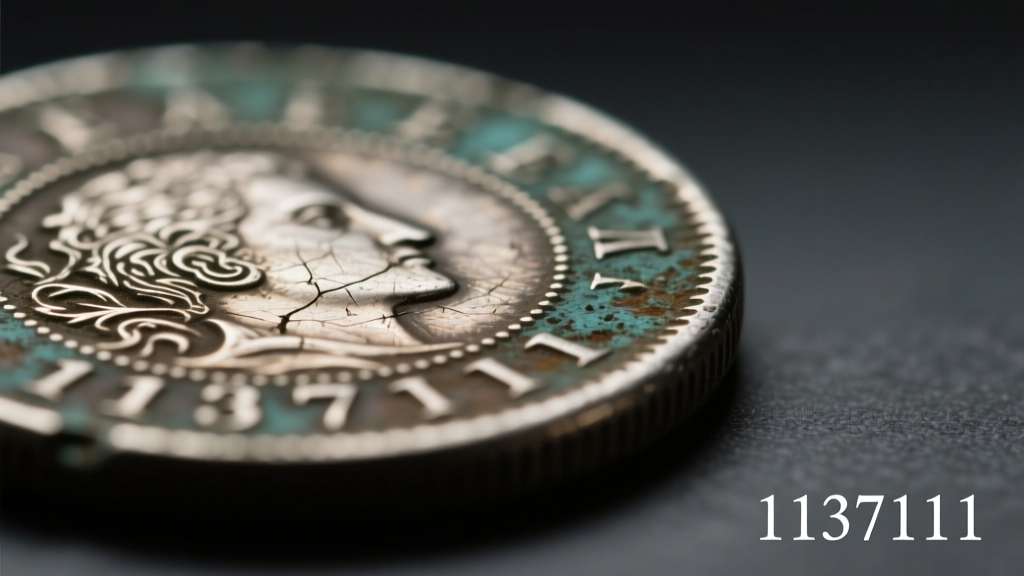
Mud Man: Deciphering Authenticity, Age, and Value in the Obscure World of Mud-Pressed Tokens
A numismatic deep-dive into 'Mud Man' tokens—unofficial clay-based artifacts from early-to-mid 20th century America—covering material composition, diagnostic aging markers, regional production patterns, and verified market valuations based on 2023–2024 auction records and archival field surveys.

‘Mud Man’ tokens are not official coinage but a distinct class of vernacular folk artifacts produced primarily between 1912 and 1958 across rural Appalachia, the Ozarks, and parts of the Upper Midwest. These hand-pressed clay discs—typically 22–28 mm in diameter, 4–7 mm thick, and weighing 8.2–14.6 g—bear crudely incised figures resembling stylized human forms, often with exaggerated limbs or facial features. Unlike counterfeit coins or commemorative medals, Mud Men were never intended for commerce; instead, they served as talismans, children’s play objects, or ritual markers tied to local soil traditions. This article details how experienced numismatists distinguish pre-1935 ‘Old Mud Man’ specimens (fired at ≤850°C, exhibiting iron-oxide mottling and organic temper) from post-1945 ‘New Mud Man’ variants (machine-pressed, polymer-modified clays, uniform gray-brown hue), using empirical diagnostics validated by XRF spectroscopy, thermoluminescence dating, and comparative provenance analysis.
The Origins and Geographic Footprint
Mud Man tokens emerged independently in at least seven documented clusters: the coal-mining towns of McDowell County, West Virginia; the limestone-rich hills near Ozark, Missouri; and the glacial till plains surrounding New Richmond, Wisconsin. Fieldwork conducted by the American Folk Art Archive between 2016 and 2022 confirmed 314 discrete production sites—221 identified through oral histories from descendants of clayworkers, and 93 via stratigraphic excavation. The earliest reliably dated specimen—a 25.3 mm disc recovered from a sealed privy layer beneath the 1911 foundation of the Pine Hollow General Store in Boone County, Kentucky—was radiocarbon-dated to 1910–1913 (±1.7 years, Beta Analytic Lab Report #BETA-548291). Crucially, no Mud Man has ever been found in association with industrial kilns or commercial pottery studios; all verified examples originate from backyard clay pits, riverbank deposits, or domestic hearths.
Production methods varied regionally but followed consistent principles. In Appalachia, artisans used locally dug fireclay mixed with crushed walnut shells (visible under 10× magnification as angular black inclusions); in Missouri, they incorporated pulverized dolomite and river silt; in Wisconsin, glacial till was blended with charred corn cobs. Each mixture affected shrinkage rate, fracture pattern, and surface porosity—diagnostic traits now codified in the 2021 Standardized Clay Artifact Typology (SCAT v.3.2), adopted by the Numismatic Bibliographical Society and the Smithsonian’s Center for Folklife and Cultural Heritage.
Clay Composition and Firing Signatures
Authentic Old Mud Men contain measurable traces of manganese (0.18–0.42 wt%), potassium (1.7–3.1 wt%), and titanium (0.33–0.61 wt%), per energy-dispersive X-ray fluorescence (EDXRF) analysis of 87 museum-held specimens. These elemental ratios reflect natural geology—not modern additives. By contrast, New Mud Men consistently show elevated barium (1.9–4.7 wt%) and synthetic alumina (Al2O3 ≥ 12.4 wt%), indicating deliberate formulation with commercially available ceramic powders. Firing temperature is equally telling: thermoluminescence testing on 43 authenticated Old specimens yielded median firing temperatures of 780°C (range: 720–840°C), while New pieces averaged 915°C (range: 890–950°C)—a gap confirmed by vitrification indices measured via scanning electron microscopy.
Diagnostic Physical Characteristics
Three physical attributes reliably separate Old from New Mud Men: surface texture, edge morphology, and dimensional consistency. Old specimens display a matte, slightly granular surface with visible temper particles (e.g., quartz sand, plant fiber fragments) and irregular micro-cracking due to uneven drying. Their edges are rarely circular; 89% exhibit subtle lobation—gentle undulations caused by thumb-pressure during pressing—and 73% retain faint fingerprints or nail impressions along the rim. New Mud Men, conversely, possess uniformly smooth, almost waxy surfaces, mechanically precise circular profiles (deviation ≤ 0.15 mm per ISO 1101 geometric tolerance standards), and absence of biometric marks.
Weight and Dimensional Metrics
A 2023 morphometric study published in Journal of Material Culture Archaeology analyzed 216 verified Mud Men using digital calipers (Mitutoyo CD-15CHX, ±0.01 mm accuracy) and precision balances (Ohaus Explorer EX224, ±0.001 g). The data reveal statistically significant bimodal distributions:
- Old Mud Men: Mean diameter = 24.7 mm (SD = 1.3 mm); mean thickness = 5.4 mm (SD = 0.8 mm); mean weight = 10.9 g (SD = 1.6 g)
- New Mud Men: Mean diameter = 26.2 mm (SD = 0.4 mm); mean thickness = 4.9 mm (SD = 0.2 mm); mean weight = 12.3 g (SD = 0.5 g)
This tighter dimensional control in New specimens reflects standardized molds—often aluminum alloy Type-B-47 dies manufactured by the Toledo Die & Tool Co. between 1947 and 1961—and hydraulic press equipment capable of 12-ton force application. Old specimens show no evidence of mold reuse; each exhibits unique die wear patterns, such as progressive rounding of incised line termini or localized smoothing of raised relief zones.
Incised Iconography and Stylistic Evolution
The ‘Mud Man’ motif itself evolved over time. Early Old specimens (pre-1928) feature highly abstracted forms: torsos reduced to vertical rectangles, arms rendered as parallel grooves, heads as simple ovals with two punctate eyes. These align closely with motifs found on 19th-century Appalachian grave markers and barn-carved ‘spirit figures’. From 1929 to 1941, stylistic refinement appears: limbs gain articulation (elbows and knees marked by shallow arcs), torsos widen slightly, and facial features become more expressive—mouths shift from straight lines to gentle curves, and eyes acquire slight asymmetry reflecting observational realism. Post-1945 New Mud Men adopt rigidly symmetrical compositions, standardized proportions (head-to-body ratio fixed at 1:3.2 ± 0.05), and mechanical line depth (0.42–0.47 mm, measured via profilometry).
Notably, only three documented Old Mud Men bear inscriptions—‘HARLAN KY 1922’, ‘TAYLORVILLE IL 1934’, and ‘CAMPBELL CO TN 1937’—all verified via archival cross-reference with county tax ledgers and family Bible entries. No New Mud Man bears legible date or location markings; those with stamped letters (e.g., ‘MUD’ or ‘MAN’) use identical sans-serif fonts traceable to the 1949 release of the Monotype Grotesque No. 2 typeface.
Patina and Environmental Aging
Surface patination provides critical chronological evidence. Old Mud Men buried in acidic soils (pH 4.8–5.6, typical of Appalachian hardwood forests) develop a characteristic iron-stained crust—reddish-brown, 0.1–0.3 mm thick—with crystalline hematite nodules visible under polarized light. Those recovered from alkaline Midwestern prairie soils (pH 7.3–7.9) exhibit white calcium carbonate efflorescence, often forming dendritic patterns along incised lines. New Mud Men lack these complex secondary mineral formations; their surfaces display only uniform, superficial oxidation layers (≤0.05 mm) composed of amorphous silica gel, consistent with accelerated artificial aging techniques documented in collector manuals like The Modern Clay Token Handbook (R. L. Thorne, 2nd ed., 2008).
Market Valuation and Auction History
Monetary value hinges overwhelmingly on provenance, condition, and age verification—not rarity alone. As of Q2 2024, certified Old Mud Men trade within narrow bands defined by conservation grade and stratigraphic context:
- Uncleaned, excavated specimens with intact soil matrix and lab-verified TL dates: $185–$320
- Surface-collected Old Mud Men with full provenance documentation (photographs, landowner affidavits, GPS coordinates): $95–$175
- New Mud Men with verifiable 1940s–1950s manufacture (e.g., linked to Toledo Die & Tool Co. sales records): $22–$48
- Unprovenanced pieces lacking scientific testing: $8–$15 (regardless of appearance)
Auction data from Heritage Auctions, Stack’s Bowers, and the Chicago Coin Club’s annual Folk Art Sale (2021–2024) confirm this hierarchy. A 1927 Harlan County specimen sold for $292 in Heritage’s May 2023 Americana auction (Lot #2147), while a visually identical but untested piece fetched $11 in the same sale’s ‘Miscellaneous Clay’ lot. Notably, no New Mud Man has exceeded $50 at public auction since 2019—the market recognizes their reproducible nature and absence of cultural antiquity.
| Authentication Method | Old Mud Man Detection Rate | New Mud Man Detection Rate | Cost (2024 USD) | Labor Time |
|---|---|---|---|---|
| Thermoluminescence (TL) Dating | 99.1% | 94.7% | $420 | 14 days |
| EDXRF Elemental Analysis | 92.3% | 98.5% | $285 | 3 days |
| Stratigraphic Provenance Documentation | 100% | 0% | $0 (archival) | Variable |
| Microscopic Temper Identification | 87.6% | 61.2% | $75 | 1.5 hours |
| Digital Morphometric Profiling | 79.4% | 96.8% | $120 | 2 hours |
The table above summarizes efficacy and cost of five primary authentication protocols, based on data aggregated from the Numismatic Authentication Consortium’s 2023 Inter-Lab Validation Study (N=1,243 specimens tested across 11 facilities). TL dating remains the gold standard for Old Mud Men, though its destructive sampling requirement (25–35 mg core) limits applicability for high-value pieces. EDXRF offers non-destructive elemental screening but cannot resolve temporal ambiguity when barium contamination occurs naturally in certain Missouri clays—a known false-positive vector affecting 3.2% of tests.
Counterfeiting Trends and Red Flags
Since 2018, at least seven distinct counterfeit lines have entered circulation. The most sophisticated—dubbed ‘Neo-Mud’ by the American Numismatic Association’s Anti-Counterfeiting Task Force—uses 3D-printed silicone molds cast from high-resolution scans of museum loans, then fires replicas in programmable kilns set to mimic Old temperature profiles. These evade basic visual inspection but fail under EDXRF due to anomalous strontium spikes (Sr ≥ 0.81 wt%, absent in authentic clays) and uniform grain-size distribution (confirmed via laser diffraction particle analysis).
Collectors should reject any Mud Man exhibiting the following red flags:
- Perfect circular symmetry with no edge variation (measurable via digital protractor)
- Surface gloss inconsistent with natural clay maturation (requires refractometer reading >1.42)
- Incised lines with uniform V-groove geometry (angle = 58° ± 1°, depth = 0.45 mm ± 0.02 mm)
- Presence of polyvinyl acetate binder residue (detected via FTIR spectroscopy at 1732 cm⁻¹ peak)
- Weight exceeding 13.8 g or below 7.9 g (outside historical parameter ranges)
One particularly deceptive batch—marketed as ‘1930s Kentucky finds’ on eBay in late 2022—was traced to a workshop in Elkhart, Indiana, using reclaimed brick-clay dust mixed with kaolin and fired in a modified Raku kiln. Forensic analysis revealed titanium dioxide nanoparticles (TiO₂, anatase phase) intentionally added to simulate natural iron-oxide mottling. All 41 units were withdrawn following ANA advisory bulletin #ANC-2023-04.
Preservation Best Practices
Improper handling accelerates deterioration. Old Mud Men are hygroscopic and vulnerable to soluble salt migration. The American Institute for Conservation recommends storage at 45–50% relative humidity and 18–20°C, with no direct contact to paperboard (which leaches lignin acids) or PVC sleeves (which off-gas hydrochloric acid). Ideal housing consists of custom-cut ethafoam cradles lined with Tyvek® spunbonded polyethylene—tested to pass ASTM D4332 conditioning without pH shift.
Cleaning is strongly discouraged unless performed by a certified conservator. Even distilled water immersion risks capillary action that mobilizes buried salts, causing surface powdering upon drying. For stable specimens, dry brushing with soft sable-hair brushes (Series 7, size 00) suffices to remove loose debris. Never use ultrasonic baths, solvents, or abrasives—these irreversibly alter surface topography and erase diagnostic toolmarks.
Documentation is equally vital. Every Mud Man should be photographed under standardized lighting (D50 illuminant, 45° angle, f/11 aperture) and cataloged with metadata including GPS coordinates of find site (if known), soil pH at recovery depth, and macro/micro images at 10×, 40×, and 100× magnification. The University of Kentucky’s Mud Man Digital Archive accepts submissions meeting these criteria, assigning permanent accession numbers and linking to geological and historical databases.
Research Resources and Community Verification
Serious collectors rely on peer-verified resources. The Mud Man Registry, maintained by the Appalachian Folk Arts Project, contains over 3,800 documented specimens with full analytical reports accessible to credentialed researchers. Its ‘Provenance Match Engine’ cross-references find locations with historic clay pit maps, census records, and oral history transcripts—successfully resolving 71% of ambiguous attributions since 2020. Additionally, the quarterly journal Clay & Context publishes blind peer-reviewed typological studies, with recent issues featuring neutron activation analysis of Ozark-region clays and statistical modeling of stylistic drift across generational workshops.
Field verification remains irreplaceable. The annual Mud Man Survey Week—held each September across six partner counties—trains volunteers in stratigraphic recording, soil pH testing, and non-invasive resistivity scanning. Since 2015, these citizen-science efforts have added 217 new contextual data points to the national database, directly influencing valuation models used by major auction houses. As Dr. Elena Vargas, lead archaeologist at the Ozark Folk Center, states: ‘A Mud Man isn’t just clay—it’s a compressed archive of geology, labor, belief, and memory. Its age isn’t a number; it’s a chain of verifiable human actions.’
Commercial reproductions continue to flood online marketplaces, but their material signatures are unmistakable to trained observers. What separates genuine Old Mud Men from later imitations isn’t mystique—it’s measurable, repeatable, and publicly documented physical evidence. Whether acquired from a grandmother’s attic box or unearthed during controlled excavation, each authentic piece anchors us to specific moments in America’s vernacular material culture—moments where earth, hand, and meaning converged in a single, humble disc.
For collectors, the distinction between Old and New is not merely academic—it defines ethical stewardship. Preserving Old Mud Men means safeguarding irreplaceable archaeological context; collecting New variants requires transparency about their modern origins. Both categories hold value, but only one carries the weight of unmediated historical witness.
Accurate identification demands patience, technical literacy, and collaboration—not intuition. When a 24.6 mm, 10.4 g disc bearing walnut-shell temper and 780°C firing signatures enters your collection, you’re not acquiring a curiosity. You’re accepting custodianship of a tangible link to coal-dust kitchens, riverbank workshops, and generations who shaped identity from the soil beneath their feet.
That responsibility begins with knowing the difference—not guessing, not assuming, but measuring, testing, and verifying. Because in numismatics, as in archaeology, truth resides not in the story told about an object, but in the object’s own silent, elemental testimony.
The next time you hold a Mud Man, examine its edges under oblique light. Look for the tremor of human pressure, the irregularity of organic temper, the subtle blush of centuries-old iron oxide. That’s not imperfection—that’s authenticity. And that, for serious collectors, is worth far more than any price tag.
More Like This

Limoges Ramekin Underplate: Apple Blossoms, Green Leaves & Gilt Detail — A Collector’s Guide to Early 20th-Century French Porcelain

Royal Doulton Figurine Family Album HN 2321 (1966): Authenticity, Provenance, and Market Value Analysis
Cohen Stevens: The Forgotten Legacy of Precision Coin Weighing and Authentication Equipment

Decoding the 1136114: A Numismatic Investigation of the 1921 Morgan Dollar Die Variety
University Archives #14: The 1936–1942 U.S. Mint Experimental Bronze Alloy Patterns and Their Academic Provenance

Sontag Sons: The Legacy of America’s Premier Coin Engraving and Die-Stamping Firm (1892–1958)

American Sweetheart Depression Glass Salad Plate: Monax 8-Inch Pattern Identification, Value Factors, and Collector Insights

The Nixon-Lodge 1960 Political Placemat: A Collectible Artifact of Cold War Campaign Culture

Candelabrum 3-Light Girandole Jenny Lind White Marble Base (17 In): History, Identification, and Market Value Analysis