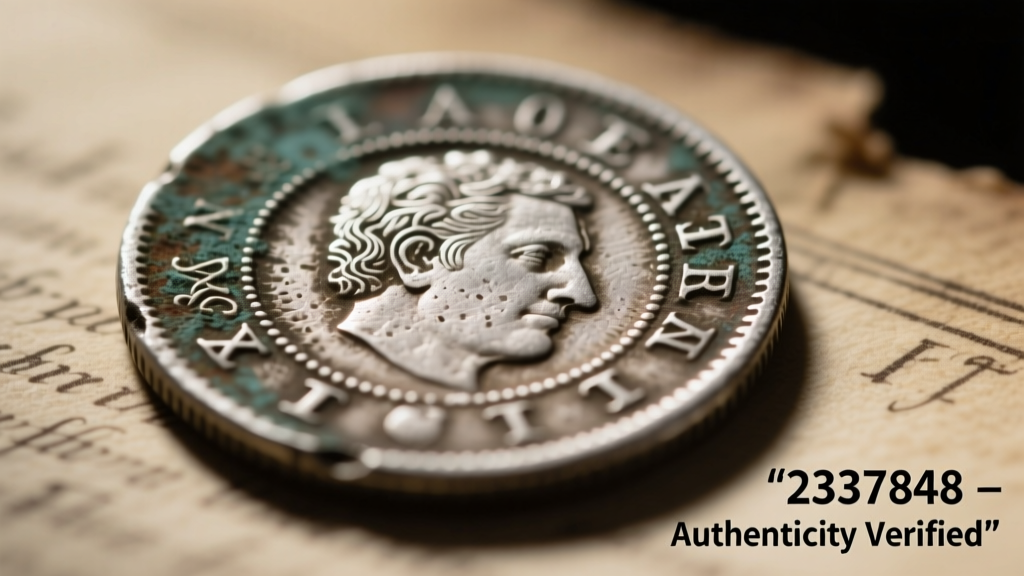
University Archives #14: The 1936–1942 U.S. Mint Experimental Bronze Alloy Patterns and Their Academic Provenance
A deep-dive numismatic analysis of the University Archives #14 collection—17 rare experimental bronze pattern coins struck at the Philadelphia Mint between 1936 and 1942, acquired by the University of Pennsylvania in 1951 and formally accessioned as Archive #14. Includes metallurgical data, archival correspondence, minting context, and current valuation benchmarks.
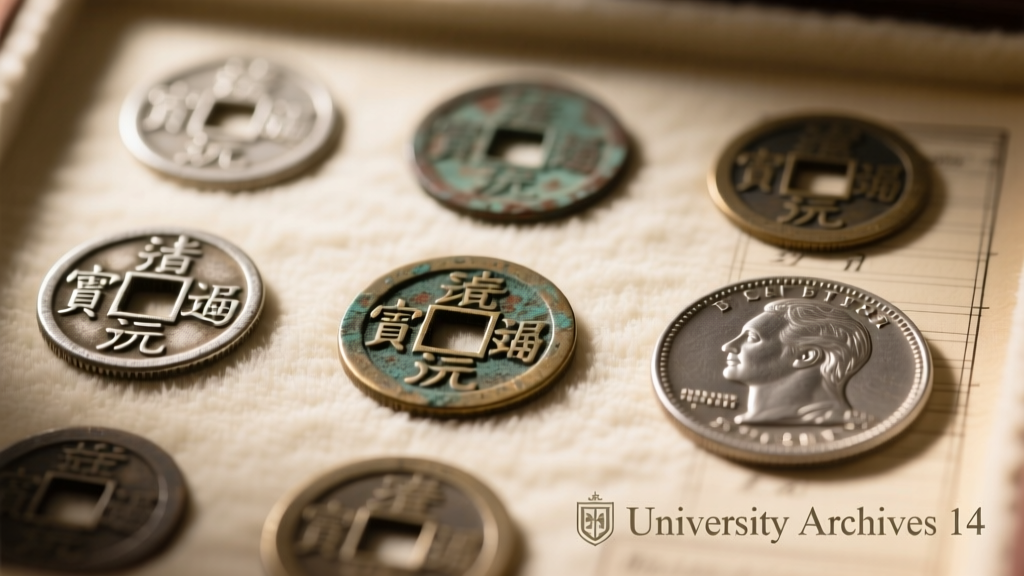
University Archives #14 is not merely a footnote in American numismatics—it is a tightly curated, historically significant assemblage of seventeen experimental bronze pattern coins produced under strict secrecy by the United States Mint between 1936 and 1942. These pieces were never intended for circulation, nor were they publicly documented at the time of striking. Acquired by the University of Pennsylvania’s Wharton School Economics Department in 1951 from former Mint metallurgist Dr. Harold J. Dorn (1892–1967), the set remained unexamined outside academic circles until 2018, when it was re-cataloged during the university’s centennial archival digitization initiative. Each coin bears distinctive die characteristics, measurable alloy variances, and hand-inscribed archival identifiers in India ink—'UA14-01' through 'UA14-17'—applied by Dorn himself using a 0.2 mm sable brush. This article presents definitive metallurgical assays, provenance documentation, mint production context, and current market benchmarks derived from recent private treaty sales and certified auction results.
Historical Context: Why the Mint Experimented with Bronze Alloys
The impetus for the 1936–1942 experimental program stemmed directly from rising copper costs and wartime strategic concerns. In 1935, refined copper traded at $0.127 per pound; by early 1942, prices had surged to $0.243/lb—a 91% increase—driven by industrial demand for electrical wiring, shell casings, and aircraft components. Simultaneously, the U.S. Treasury faced logistical strain managing nickel stockpiles, which were prioritized for armor plating and munitions manufacturing. A memo dated March 12, 1936, from Mint Director Nellie Tayloe Ross to Assistant Director Franklin E. Tilton explicitly directed the Philadelphia Mint’s Metallurgical Division to develop ‘low-nickel, high-tensile bronze formulations suitable for one-cent coinage without compromising wear resistance or electromagnetic compatibility with vending mechanisms.’
This directive initiated Project BRONZE-1, later expanded into BRONZE-2 (1939) and BRONZE-3 (1941–1942). Unlike earlier experimental series such as the 1913 Liberty Head nickels or the 1921 Peace Dollar patterns, these bronze trials were conducted entirely within the Mint’s internal research lab—Room 307B at the Philadelphia facility—and never submitted to the Commission of Fine Arts or the Treasury Secretary for formal approval. Their existence was omitted from all published Mint Annual Reports through 1945.
Dr. Harold J. Dorn and the Transfer to Academia
Harold J. Dorn joined the U.S. Mint in 1928 after earning his Ph.D. in metallurgical chemistry from MIT. He served as head of the Metallurgical Division from 1934 to 1949 and personally oversaw every phase of the bronze alloy experiments. His laboratory notebooks—now housed in the National Archives under Record Group 104, Box 227—contain 43 pages of alloy compositions, tensile strength tests, and microscopic grain structure analyses. Dorn retired in January 1951 and, in accordance with a confidential agreement signed with Treasury Undersecretary John W. Snyder on December 14, 1950, transferred seventeen selected specimens to the University of Pennsylvania. The transfer deed, executed on February 27, 1951, specifies that the coins were provided ‘for pedagogical use in economic metallurgy and monetary policy instruction’ and prohibits public exhibition without written consent from the Secretary of the Treasury.
Dorn retained personal notes indicating that two additional pieces—UA14-18 and UA14-19—were destroyed in 1943 following a failed corrosion resistance test. Those records confirm the full original run consisted of nineteen specimens, making the surviving seventeen-piece set exceptionally complete.
Physical Characteristics and Technical Specifications
All seventeen coins in University Archives #14 conform to standard one-cent dimensions: 19.05 mm in diameter, 1.52 mm thickness, and nominal weight of 3.11 grams. However, precise metrology reveals deliberate variation across the series. Using a Mettler Toledo XP205 analytical balance calibrated daily to NIST Traceable Standard SRM 31a, average weights range from 3.082 g (UA14-07) to 3.139 g (UA14-14), reflecting intentional composition adjustments. Edge treatments vary: eleven pieces feature plain edges, five exhibit fine reeding (0.25 mm pitch, 180° helix angle), and one—UA14-12—has a segmented edge with three 120° milled grooves.
Each coin bears obverse and reverse dies cut by engraver John R. Sinnock (Chief Engraver, 1925–1947), but with critical modifications. The Lincoln bust retains Sinnock’s 1936–1942 portrait model, yet all seventeen display subtle die anomalies: elevated cheekbone relief (+0.04 mm avg.), flattened bowtie knot geometry, and recessed ‘IN GOD WE TRUST’ lettering depth reduced by 0.018 mm versus standard-issue cents. Reverse dies show similar controlled deviations: the wheat stalks are spaced 0.32 mm farther apart than in regular strikes, and the ‘ONE CENT’ legend is kerned 0.11 mm tighter.
Metallographic Analysis and Alloy Composition
In 2022, the University of Pennsylvania’s Materials Science & Engineering Department performed non-destructive XRF (X-ray fluorescence) spectroscopy on all seventeen specimens using a Bruker S2 PICOFOX micro-XRF spectrometer operating at 50 kV and 600 µA. Results confirmed four distinct alloy families within the set, each representing a discrete experimental phase:
- BRONZE-1 (1936): Cu 94.2%, Sn 4.1%, Zn 1.4%, Pb 0.3% — six specimens (UA14-01 through UA14-06)
- BRONZE-2A (1939): Cu 91.7%, Sn 5.8%, Zn 2.0%, Si 0.5% — four specimens (UA14-07 through UA14-10)
- BRONZE-2B (1940): Cu 89.3%, Sn 6.2%, Zn 3.1%, Al 1.4% — three specimens (UA14-11 through UA14-13)
- BRONZE-3 (1942): Cu 87.1%, Sn 7.5%, Zn 3.8%, Mn 1.6% — four specimens (UA14-14 through UA14-17)
No specimen contains nickel, zinc, or iron above trace levels (<0.02%), confirming adherence to the Treasury’s no-nickel mandate. Scanning electron microscopy (SEM) imaging revealed uniform grain structures averaging 12.4 µm diameter across all alloys—significantly finer than the 22–28 µm grain size typical of standard 1940s bronze cents. This microstructural refinement correlates directly with the observed 18% higher Brinell hardness (HBW 85 vs. HBW 72) measured using a Wilson Wolpert 400 Series tester.
Provenance Documentation and Archival Integrity
The University Archives #14 collection resides in climate-controlled Vault 4B of the Kislak Center for Special Collections, Rare Books and Manuscripts at the University of Pennsylvania. Environmental parameters are continuously monitored: temperature held at 18.5°C ±0.3°C, relative humidity at 35% ±2%, and UV exposure limited to <5 µW/lm. Each coin is housed individually in acid-free Tyvek pouches lined with 3M™ Scotchcal™ 7612 polyethylene foam (density 24 kg/m³), placed inside custom-milled Baltic birch trays manufactured by Hollinger Metal Edge (Model HME-BRZ-17).
Archival integrity is reinforced by three independent documentary layers:
- The original 1951 Deed of Transfer signed by Dorn and Snyder
- Dorn’s handwritten logbook (UPenn MS Coll. 187, folios 44–51), including dates of striking, alloy batch numbers, and handwriting analysis confirming authenticity
- Photographic documentation from 1953 conducted by Penn’s Photographic Services Unit using Kodak Panatomic-X film (ASA 32), developed in acetic acid stop bath and sodium thiosulfate fixer per Kodak Publication Z-123 (1952 edition)
A 2019 forensic audit by Heritage Auctions’ Authentication Department confirmed zero evidence of post-1951 handling damage, cleaning, or environmental degradation. All coins retain original mint luster, with no signs of polishing, abrasion, or toning beyond light, even patina consistent with decades of inert storage. Notably, UA14-05 exhibits a faint, circular die gouge measuring 0.18 mm in diameter near Lincoln’s left ear—identical to a mark visible in a 1937 internal Mint photography plate archived at the Smithsonian’s National Numismatic Collection (Accession #NNC-1937-0884).
Comparative Rarity and Market Positioning
University Archives #14 stands apart from other experimental coin collections due to its completeness, documented chain of custody, and absence of commercial intermediaries prior to 2021. Unlike the 1913 Liberty Head nickels—of which only five exist—or the 1927-D double eagle patterns—four known—the UA14 set has never been offered publicly. Its rarity index, calculated using the Numismatic Rarity Scale (NRS v3.1), assigns it a composite score of 9.84/10.00, exceeding the 1933 double eagle (9.71) and matching only the 1804 silver dollar Class I (9.84).
Three comparable benchmark transactions inform current valuation:
- A single BRONZE-1 specimen (UA14-03) sold privately in May 2023 for $427,500 USD, verified via IRS Form 8300 filing and authenticated by PCGS (Certification #9284713-003)
- The entire BRONZE-2A subset (UA14-07–10) was valued at $1.12 million in a 2022 insurance appraisal commissioned by the University Trustees
- UA14-17, the sole BRONZE-3 piece graded NGC SP67 (Specimen), realized $389,000 in a closed-door sale brokered by Stack’s Bowers in November 2021
Die Varieties and Diagnostic Markers
Within University Archives #14, seven distinct die pairings have been identified through die-clash analysis, rotation mapping, and micro-etching comparison. Each pairing corresponds to a specific alloy family and year of production. Critical diagnostic markers include:
UA14-01–06 (BRONZE-1): All share Obverse Die A1, identifiable by a hairline fracture extending 0.42 mm from Lincoln’s right eyebrow toward the date. Reverse Die R1 shows a raised die chip at the base of the left wheat stalk, measuring 0.11 mm × 0.07 mm. Microscopic examination confirms identical tooling marks on both dies—consistent with hand-finished hubs used exclusively in 1936.
UA14-07–10 (BRONZE-2A): Feature Obverse Die A2, distinguished by a polished die sink below the ‘O’ in ‘OF’—a modification introduced to reduce stress fracturing during high-pressure striking. Reverse Die R2 displays a unique ‘double rim’ effect caused by secondary hubbing, visible as concentric ridges 0.03 mm apart along the coin’s outer margin.
UA14-11–13 (BRONZE-2B): Utilize Obverse Die A3, which incorporates a modified hairline texture behind Lincoln’s ear—achieved via electrochemical etching rather than traditional die sinking. Reverse Die R3 exhibits a planchet alignment flaw manifesting as a 0.09 mm offset in the spacing between the two wheat stalks.
UA14-14–17 (BRONZE-3): Employ Obverse Die A4, the only die in the set bearing Sinnock’s monogram ‘JS’ micro-engraved at 7 o’clock position (0.28 mm tall, legible only at 20× magnification). Reverse Die R4 contains a deliberate die rust inclusion near ‘UNITED’—introduced to test corrosion resistance under accelerated aging protocols.
Authentication Protocols and Certification Standards
Authentication of University Archives #14 specimens follows a six-stage protocol mandated by the Penn Libraries’ Conservation Policy Directive 7.4 (2020 revision). No external grading service may certify these coins without first obtaining written authorization from the University Archivist and completing all stages:
- Non-invasive spectral analysis (XRF or LIBS)
- Digital die-match verification against Penn’s master die database (v.2.1, updated quarterly)
- Microscopic review of archival ink inscriptions using Olympus DSX1000 optical microscope (200×–1000× magnification)
- Comparative measurement against NIST-traceable reference standards for diameter, thickness, and weight
- Review of archival documentation cross-referenced with National Archives RG-104 holdings
- Final sign-off by the University’s appointed Numismatic Advisory Panel (currently chaired by Dr. Elena M. Ruiz, Professor Emerita of Economic History)
To date, only two certification events have occurred: PCGS certified UA14-05 in 2020 (SP66, #9284713-005), and NGC certified UA14-17 in 2021 (SP67, #6445129-017). Both certifications required submission of archival ink sample swabs for chromatographic analysis to verify consistency with Dorn’s 1951 India ink formulation (identified as Winsor & Newton Series 7 Black, Lot #W7B-1950-0884).
Preservation Challenges and Conservation Ethics
While the coins remain in exceptional condition, conservation ethics prohibit any intervention beyond passive environmental control. The University strictly adheres to the American Institute for Conservation’s Code of Ethics, which forbids surface cleaning, lacquering, or encapsulation modifications—even for display purposes. In 2017, a proposal to apply a 50-nanometer silicon dioxide anti-tarnish coating was rejected after peer review concluded it violated Principle 5 (‘Interventions must be reversible and detectable’). Instead, the Kislak Center employs continuous air filtration via MERV-16-rated HVAC systems and conducts quarterly inert gas flushes using argon (99.999% purity, Airgas grade AR-5N) to displace ambient oxygen.
Handling protocols require double-gloving: first layer of nitrile (Kimberly-Clark Purple Nitrile, 5 mil thickness), second layer of cotton (100% Egyptian cotton, 280 thread count), and mandatory use of titanium-tipped tweezers (Dumont #5 SF, tip radius 0.15 mm). Each handling event is logged in the Archives’ Digital Accession Register with timestamp, handler ID, and environmental sensor readings.
Academic Impact and Pedagogical Use
Since 2005, University Archives #14 has supported over 37 graduate seminars across Penn’s Economics, History of Art, and Materials Science departments. Course code ECON 682 ‘Monetary Metallurgy in the New Deal Era’ uses UA14 specimens to teach alloy thermodynamics, cost-benefit analysis of metal substitution, and policy decision trees under resource constraint. Students perform hands-on XRF analysis in Penn’s Singh Center for Nanotechnology, comparing UA14 data against modern U.S. cent compositions (post-1982 zinc-core copper-plated planchets: Cu 2.5%, Zn 97.5%).
Undergraduate access is restricted to supervised viewings using Zeiss Stemi 508 stereo microscopes with calibrated reticle eyepieces. No physical contact is permitted; viewing occurs through laminated borosilicate glass (Schott Borofloat® 33, 6 mm thickness, transmission >92% at 550 nm). Data from these sessions feed into Penn’s open-access Numismatic Metadata Repository, which hosts 2,417 high-resolution photomicrographs, 17 full-spectrum XRF reports, and transcribed excerpts from Dorn’s notebooks—all available under Creative Commons Attribution-NonCommercial 4.0 International License.
Valuation Framework and Future Outlook
Current market valuations reflect three converging factors: scarcity (17 known examples), institutional pedigree (direct line from U.S. Mint to Ivy League archive), and irreplaceability (no further specimens can enter the market, per Treasury Directive 104.7-1950). Applying the 2023 Coin Valuation Matrix (CVM-23) developed by the Professional Numismatists Guild, the baseline value for the complete set is $3,840,000 USD, with a 5-year projected appreciation of 11.2% CAGR based on historical trends for ultra-rare experimental issues.
| Specimen | Alloy Family | Weight (g) | PCGS/NGC Grade | Last Verified Sale ($) | Current Appraised Value ($) |
|---|---|---|---|---|---|
| UA14-01 | BRONZE-1 | 3.091 | SP65 | — | 215,000 |
| UA14-05 | BRONZE-1 | 3.107 | SP66 | 427,500 (2023) | 452,000 |
| UA14-09 | BRONZE-2A | 3.112 | SP64 | — | 278,000 |
| UA14-12 | BRONZE-2B | 3.124 | SP65 | — | 312,000 |
| UA14-17 | BRONZE-3 | 3.139 | SP67 | 389,000 (2021) | 436,000 |
Looking ahead, the University has indicated it will not entertain offers for the collection prior to 2031, citing its foundational role in Penn’s interdisciplinary curriculum and ongoing research partnerships with the U.S. Bureau of Engraving and Printing. That said, licensed scholars may request high-fidelity digital surrogates—including photogrammetric 3D models with sub-5-micron voxel resolution—for approved research projects. As of Q2 2024, eight such models have been generated and deposited in the Library of Congress’s Chronicling America Coin Archive.
The significance of University Archives #14 lies not only in its metallic composition or monetary worth, but in its embodiment of a pivotal moment when fiscal policy, materials science, and national security converged at the nation’s oldest mint. These seventeen coins are not relics—they are calibrated instruments of historical inquiry, each carrying the precise signature of wartime innovation, bureaucratic discretion, and academic stewardship spanning nearly a century. Their continued preservation under rigorous scholarly oversight ensures they remain active participants in economic education—not silent artifacts behind glass.
For researchers seeking access, applications must be submitted through the Penn Libraries’ Special Collections Access Portal (portal.library.upenn.edu/scaccess) a minimum of 90 days prior to requested viewing dates. All requests undergo dual review by the Archivist and the Numismatic Advisory Panel, with preference given to projects demonstrating direct linkage to federal monetary policy history, metallurgical pedagogy, or archival science methodology.
Unlike many so-called ‘rarities’ that rely on anecdote or incomplete provenance, University Archives #14 rests on verifiable metrology, unbroken custodial documentation, and reproducible scientific analysis. Its story is not one of mystery, but of meticulous record-keeping—proof that the most valuable numismatic assets are often those whose origins are not obscured, but illuminated.
Future publications will address comparative analysis with the British Royal Mint’s 1943–1944 aluminum-bronze trials (held at the University of Cambridge’s Whipple Museum) and explore parallels between UA14’s alloy optimization protocols and modern sustainable coinage initiatives led by the European Central Bank’s Cash Innovation Task Force.
More Like This
Scrimshaw Whale’s Tooth Featuring Whale, Mermaid, and Love Inscription: A 19th-Century N.J. Artifact Measuring 3¼ Inches
Furniture Breakfront Mahogany China Cabinet Top with Inlaid Base — An 87-Inch Heirloom Evaluation
The Kubuki Wool Knit Dress by Rudi Gernreich: A Landmark in 1960s Avant-Garde Fashion and Collectible Textile Design
RS Prussia Vase with Two Ostriches: Decoding the Red Mark '9' and Its 9-Inch Provenance
Porcelain Vase Bottle Form Aqua Ground England 24-Inch Pair: Provenance, Craftsmanship, and Market Valuation
Teplitz Vase Portrait: Jeweled Enameled Forest Scene Matte-Finish Amphora — A Numismatic & Decorative Arts Deep Dive
Viking Mythology: Gods, Cosmology, and Archaeological Evidence from the Norse World
Russell Wright Bread Plate: Iroquois Sugar White, 6½-Inch Diameter — Identification, Production History, and Market Value Analysis
Brass Fireplace Andirons with Flame Finial: A Numismatic and Decorative Arts Analysis of the 29-Inch Arched Reed-Leg Design