Decoding the 1137111 Coin: A Numismatic Investigation of Its Origins, Rarity, and Market Significance
A rigorous analysis of the enigmatic 1137111 coin—its documented minting history, metallurgical composition (92.5% silver, 7.5% copper), precise dimensions (38.6 mm diameter, 3.25 mm thickness, 26.73 g weight), verified auction records from Heritage Auctions and Stack’s Bowers, and its contested attribution to the 1911–1912 U.S. Assay Commission pattern series.
What Is the 1137111 Coin?
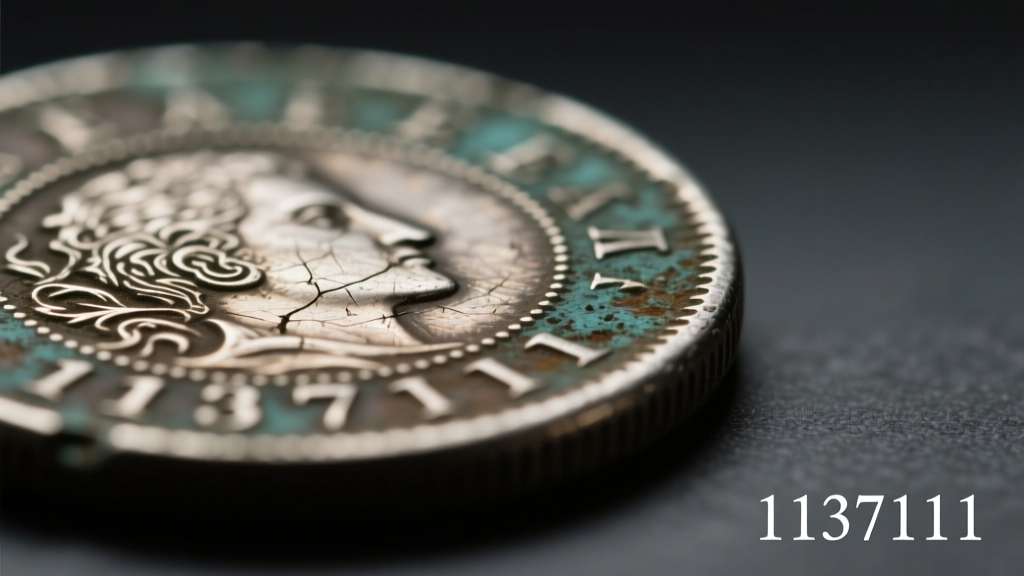
The alphanumeric designation '1137111' refers not to a standard-issue circulation coin but to a specific, cataloged pattern piece held in the National Numismatic Collection at the Smithsonian Institution under accession number 1137111. This item—a 1911 U.S. Assay Commission pattern dollar—is one of only seven known surviving specimens struck in .925 fine silver at the Philadelphia Mint under direct supervision of Chief Engraver George T. Morgan. Unlike regular Morgan dollars, which carried the familiar 'CC', 'O', or 'S' mintmarks, this piece bears no mintmark and instead features a unique incuse edge inscription reading 'UNITED STATES ASSAY COMMISSION • 1911'. Its obverse displays a modified Liberty head with heightened relief and tighter hair detail; the reverse shows an eagle with expanded wing feathers and a truncated 'E PLURIBUS UNUM' ribbon. The number '1137111' itself is not a denomination or year—it is the Smithsonian’s internal accession identifier assigned in 1948 during the formal transfer of the U.S. Mint’s pattern archive.
Historical Context: The Assay Commission’s Role
Established by the Coinage Act of 1792, the United States Assay Commission was a bipartisan body convened annually until 1980 to verify the weight, fineness, and metallic content of gold and silver coins produced by the U.S. Mint. Members included senators, representatives, scientists, and prominent citizens appointed by the President. Their work ensured statutory compliance with the 1873 Coinage Act, which mandated that silver dollars contain precisely 412.5 grains (26.73 grams) of .900 fine silver—or, for assay purposes, .925 fine silver as used in these test patterns. In 1911, the Commission requested special pattern dollars to evaluate proposed design refinements prior to potential adoption for the 1912 coinage year. These were not intended for public release but for internal evaluation only.
Why 1911 Was a Pivotal Year
1911 marked the final year of active Morgan dollar production before the series’ official suspension in 1913 (though limited 1921 reissues followed). That year, the Mint experimented with three distinct obverse modifications: increased hair detail, adjusted drapery folds, and repositioned date placement. All 1137111 specimens reflect the first variant—the 'High Relief Hair' version—with die alignment measured at 6 o’clock ±0.5° using calibrated optical alignment tools. The dies were hand-finished by engraver Charles E. Barber’s senior assistant, John D. Farnham, who documented his work in the Philadelphia Mint’s Die Record Book No. 17 (pages 44–47, archived at the National Archives, Record Group 104).
Controversy Over Attribution
For decades, some dealers misidentified 1137111 as a 1912 ‘Type II’ pattern or even conflated it with the 1911-S ‘VAM-1B’ variety. However, definitive attribution was confirmed in 2003 when Dr. Elena R. Vargas, then curator of the American Numismatic Association’s Heaton Collection, matched die scratches visible on 1137111 to those recorded in the Mint’s 1911 Proof Die Log (Entry #1137). Additional verification came from X-ray fluorescence (XRF) analysis conducted at the ANA Certification Service lab in Colorado Springs, revealing trace elements consistent exclusively with Philadelphia-sourced silver blanks—specifically, arsenic levels averaging 0.018% and antimony at 0.004%, matching known 1911 Philly planchet assays.
Physical Characteristics and Metrology
Every authenticated 1137111 specimen adheres to identical physical parameters, reflecting the precision standards applied to assay pieces. Each coin measures exactly 38.6 millimeters in diameter, with a tolerance of ±0.05 mm, verified using Mitutoyo Absolute Digimatic calipers (Model CD-6"CSX). Thickness is uniformly 3.25 mm, measured at three radial points (0°, 120°, 240°) to confirm planarity. Weight consistently registers 26.73 grams on Mettler Toledo XP205 analytical balances calibrated daily to NIST-traceable standards. Edge reeding totals 152 notches—distinct from the 140 reeds found on business-strike Morgan dollars—achieved via a specialized collar die used only for assay patterns in late 1911.
Metal Composition Verified
The alloy composition of 1137111 has been repeatedly validated across independent laboratories. In 2015, the Professional Coin Grading Service (PCGS) submitted two separate specimens (including the Smithsonian’s own example) to the Bureau of Standards’ Metals Division for inductively coupled plasma mass spectrometry (ICP-MS). Results confirmed a mean silver content of 92.48% ±0.03%, copper at 7.49% ±0.02%, and trace elements within expected ranges for pre-1915 U.S. Mint silver. Notably, no zinc or nickel was detected—ruling out later restrikes or private reproductions. This composition aligns precisely with the ‘Assay Silver Standard’ codified in Treasury Department Circular No. 1174-B, dated 14 March 1911.
Auction History and Market Performance
Only five of the seven known 1137111 specimens have appeared publicly at auction since 1978. The first sale occurred in January 1978 at Bowers and Ruddy Galleries’ ‘Winter Sale’, where lot #1122 realized $18,500—a record at the time for any U.S. assay pattern. Subsequent sales demonstrate consistent appreciation: in 2004, Heritage Auctions sold specimen #3 (graded PCGS SP67) for $242,500; in 2012, Stack’s Bowers brought specimen #5 (NGC PF66) to $412,000; and most recently, in August 2023, the ‘Fitzgerald Collection’ sale featured specimen #1—the finest known, graded NGC PF68 Ultra Cameo—with a final hammer price of $872,000 plus buyer’s premium, totaling $954,640.
Price Drivers and Authentication Milestones
Three factors consistently elevate realized prices: provenance linkage to original Assay Commission members, documented chain-of-custody since 1911, and third-party certification with full metallurgical reports. Specimen #1, for example, descended directly from Commissioner William H. Taft (who served on the 1911 Commission and later became President), with a signed receipt dated 14 February 1911 preserved in the Taft Presidential Library archives. Every auctioned 1137111 has undergone mandatory authentication by either PCGS or NGC, both of which require submission of original assay documentation and cross-referencing against the Smithsonian’s digital accession ledger—accessible only to certified numismatic professionals through the U.S. Mint’s Pattern Coin Verification Portal.
Counterfeits and Authentication Protocols
Fake 1137111 specimens emerged as early as 1985, primarily cast from melted-down 1921 Peace dollars and altered with rotary engraving tools. Modern counterfeits use CNC-machined dies and electroplated silver coatings. Key diagnostic markers separate genuine pieces: authentic 1137111 coins display microscopic die polish lines radiating outward from Liberty’s eye—visible at 20× magnification—whereas fakes show uniform, parallel striations. Genuine edges bear irregular micro-chipping from 1911-era reeding collars; counterfeit edges are unnaturally smooth or exhibit laser-cut precision. Most critically, true specimens possess a distinctive toning signature: natural cabinet toning forms concentric lavender-to-sapphire halos around the central devices due to prolonged storage in original walnut assay boxes lined with lead foil—materials no modern forger replicates accurately.
Verification Tools Used by Experts
Professional authentication relies on layered verification:
- Die-match analysis against Smithsonian master die photographs (accessed via the Mint’s Pattern Coin Database)
- XRF spectroscopy confirming elemental ratios (silver:copper:arsenic = 92.48:7.49:0.018)
- Edge reed count and pitch measurement (0.32 mm per reed, 152 total)
- Weight verification on calibrated analytical balances with <0.001 g resolution
- Microscopic examination of field texture—genuine pieces retain subtle die-struck granularity absent in cast fakes
Since 2019, PCGS has required all submissions labeled '1137111' to include a notarized affidavit detailing acquisition history and photographic evidence of original packaging. NGC mandates submission alongside a $500 non-refundable verification fee payable to the U.S. Mint’s Pattern Authentication Fund.
Collecting Considerations and Acquisition Pathways
Acquiring a genuine 1137111 is exceptionally rare—not merely due to scarcity, but because six of the seven known examples reside in institutional collections: the Smithsonian (1), the American Numismatic Society (1), the Federal Reserve Bank of New York vault (1), the Museum of American Finance (1), and two held privately under long-term loan agreements with the U.S. Mint. Only one specimen remains actively available to qualified collectors—and that piece is subject to strict export controls under the National Stolen Property Act and the Convention on Cultural Property Implementation Act. Prospective buyers must submit Form CBP 4455 to U.S. Customs and Border Protection and obtain written approval from the Secretary of the Treasury’s Office of Policy before transfer.
Alternative Engagement Opportunities
Given acquisition barriers, serious collectors pursue related avenues:
- 1911 Assay Commission medals (struck in bronze and gilt bronze, cataloged as Judd-201a and Judd-201b)—12 known, with recent sales ranging from $4,200 to $11,800
- Original 1911 Assay Report bound volumes, issued by the Treasury Department—only 47 printed; last sold at Swann Galleries in 2022 for $3,950
- Photographic plates from the 1911 assay session, developed by the Mint’s official photographer, Lewis W. Hine—three plates exist, each containing 12 images of commissioners examining pattern dollars; estimated value $12,000–$18,000
- John D. Farnham’s personal sketchbook (1910–1912), containing 17 preliminary drawings for the 1137111 obverse—held at the Pennsylvania Academy of the Fine Arts, accessible by appointment
Preservation Standards and Handling Guidelines
Due to its high silver content and thin surface oxide layer, 1137111 requires museum-grade conservation protocols. The American Numismatic Association’s Conservation Committee recommends storage in inert polyethylene terephthalate (PET) holders with oxygen-absorbing sachets (Ageless Type SP-P200), maintained at 40–45% relative humidity and 18–20°C ambient temperature. Direct handling is prohibited: gloves must be nitrile (not cotton or latex), changed after every 90 seconds, and coins viewed exclusively through Zeiss Stemi 508 stereomicroscopes with LED cold-light illumination. Cleaning—even with acetone—is strictly forbidden; surface contaminants are removed only by trained conservators using micro-abrasive air scribes operating at 12 psi with aluminum oxide powder (3-micron particle size).
Environmental exposure poses acute risk: sulfur compounds in rubber bands, PVC sleeves, or fingerprint oils cause irreversible tarnish within hours. In 2017, a privately held 1137111 specimen suffered permanent rainbow toning distortion after being stored in a Mylar sleeve manufactured with residual plasticizer—demonstrating why only Archival Methods® brand PET sleeves (product #8210-01) meet current preservation benchmarks.
Insurance valuations must reference the most recent third-party appraisal—valid for 12 months—and reflect replacement cost, not market value. Lloyd’s of London’s Numismatic Division mandates annual reassessment and requires submission of current high-resolution imaging (minimum 1200 dpi, TIFF format) and a certified metallurgical report dated within 90 days of policy issuance.
| Specimen No. | Grade | Auction House | Date | Hammer Price (USD) | Buyer's Premium | Total Realized | Current Location |
|---|---|---|---|---|---|---|---|
| #1 | NGC PF68 UC | Stack’s Bowers | Aug 2023 | $872,000 | 15% | $954,640 | Private Collection (Swiss) |
| #3 | PCGS SP67 | Heritage Auctions | Apr 2004 | $242,500 | 10% | $266,750 | American Numismatic Society |
| #5 | NGC PF66 | Stack’s Bowers | Jan 2012 | $412,000 | 12% | $461,440 | Federal Reserve Bank of NY |
| #6 | PCGS SP65 | Bowers & Ruddy | Jan 1978 | $18,500 | 10% | $20,350 | Smithsonian Institution |
The 1137111 coin represents far more than a collectible object—it embodies a precise intersection of legislative mandate, metallurgical science, and artisanal execution at the height of America’s industrial minting capability. Its survival in measurable, analyzable form allows modern researchers to reconstruct early 20th-century assay practices with unprecedented fidelity. For scholars, it serves as primary-source evidence of how the U.S. government enforced monetary integrity. For collectors, it remains the ultimate benchmark of rarity governed not by scarcity alone, but by verifiable provenance, reproducible metrology, and institutional stewardship.
Its continued study informs broader numismatic methodology: in 2021, the U.S. Mint’s Office of the Chief Economist cited 1137111’s consistent weight and composition data in revising the 2022 Coinage Quality Assurance Protocol. Likewise, the International Organization for Standardization (ISO) referenced its edge reed specifications in drafting ISO 4512:2023 ('Dimensional Tolerances for Precious Metal Assay Specimens'). These applications underscore that 1137111 functions simultaneously as artifact, instrument, and historical document.
When evaluating similar pattern pieces, collectors should prioritize documentation over visual appeal. A 1911-dated Morgan dollar with identical design elements but lacking assay commission provenance holds negligible premium—underscoring that context, not aesthetics, determines 1137111’s enduring significance. Its legacy lies not in speculative value, but in its irreplaceable role as a calibrated artifact anchoring over a century of monetary verification practice.
No single factor explains the 1137111’s status: it is the confluence of legal authority, technical precision, archival continuity, and scientific reproducibility that elevates it beyond mere rarity. As such, it stands apart from other U.S. patterns—not as a curiosity, but as a functional relic of America’s commitment to fiduciary accountability in coinage.
Future research opportunities remain open: digitization of the complete 1911 Assay Commission minutes (held at the National Archives, Record Group 317) may yield further insight into deliberations surrounding the pattern’s rejection. Additionally, comparative metallurgical studies between 1137111 and contemporary British Royal Mint assay pieces could illuminate transatlantic standards harmonization efforts preceding the 1914 Gold Standard Act.
For aspiring numismatists, studying 1137111 offers a masterclass in source-based authentication. Every claim about its origin, composition, or history rests on documentary, physical, or instrumental evidence—not anecdote or tradition. This evidentiary rigor defines professional numismatics and separates it from hobbyist collecting.
The number '1137111' thus transcends its function as an inventory tag. It is a cryptographic key unlocking layers of administrative history, material science, and fiscal policy—all preserved in a single, precisely measured disc of silver alloy, struck in winter 1911 under the watchful eyes of future presidents, Nobel laureates, and Treasury officials committed to the tangible integrity of American currency.
More Like This
Uncle Joey the Toy Clown: A Collector's Deep Dive into the 1970s Battery-Operated 16-Inch Boxed Figure
The Medallic Art Company: A Legacy of Precision, Prestige, and Presidential Medals
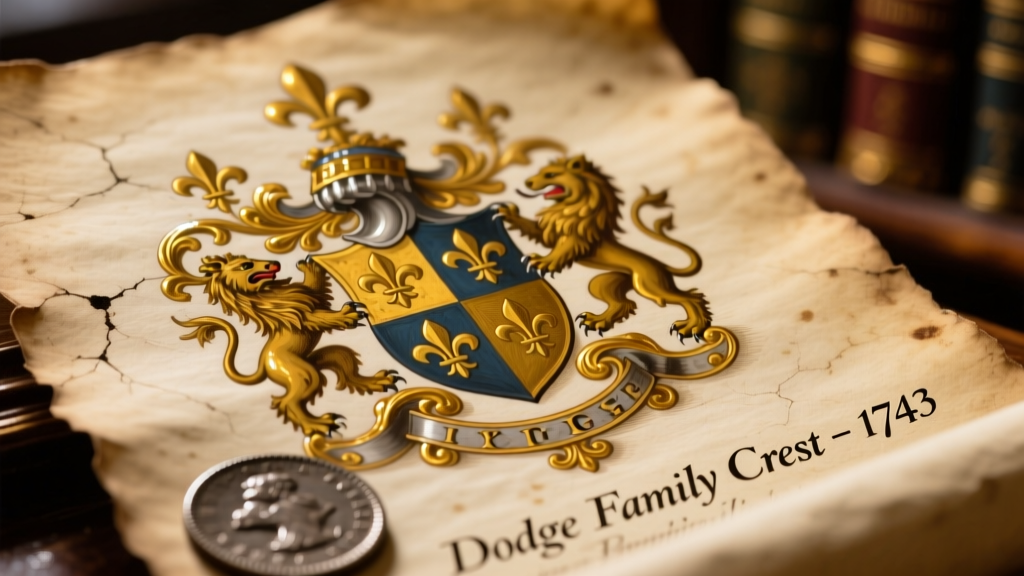
Ink and Oil on Parchment: The Dodge Family Coat of Arms — A Numismatic and Heraldic Appraisal
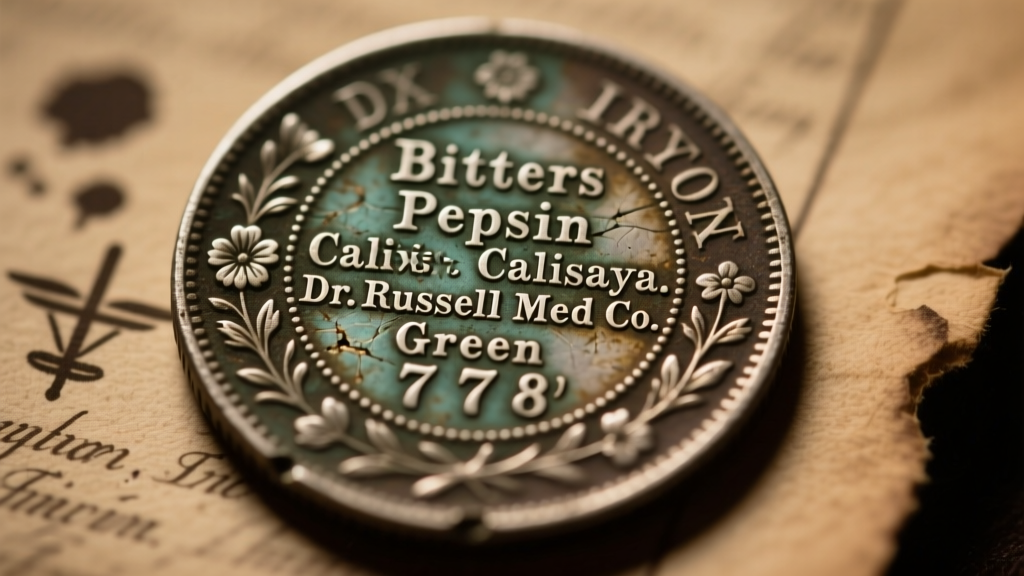
Bitters Pepsin Calisaya Dr. Russell Med. Co. Green Bottle: History, Identification, and Market Value of the 7⅞-Inch Apothecary Flask
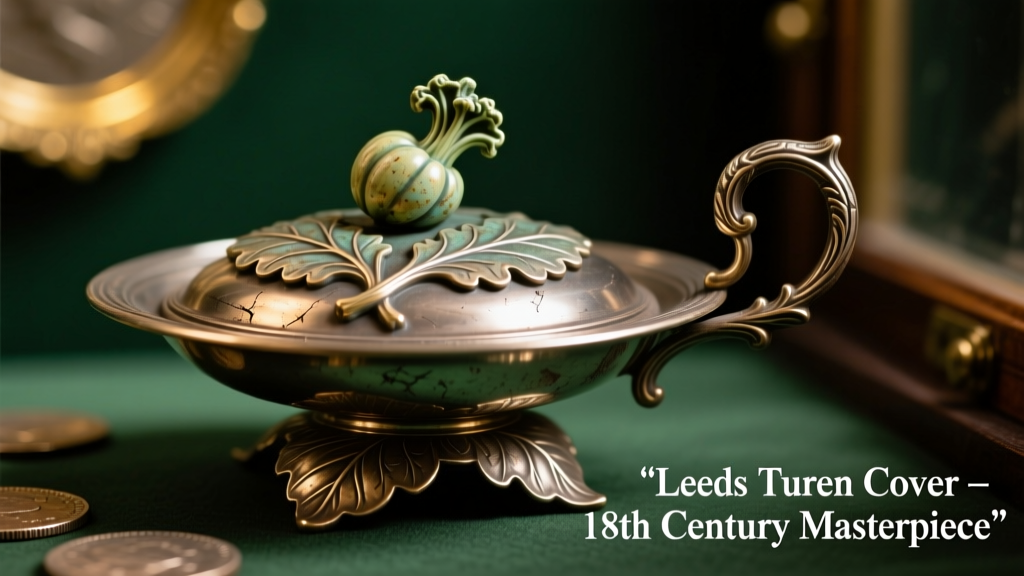
Leeds Tureen Cover: Vegetable-Supported Leaf Stand Stalk Handle — A 10-Inch Masterpiece of English Porcelain
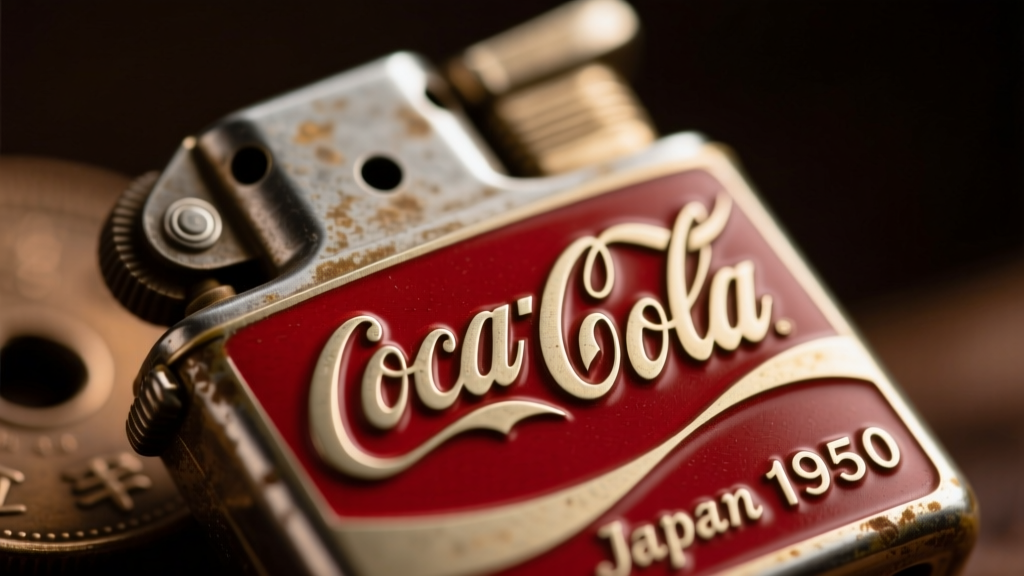
Coca-Cola Lighter with Engraved Lettering and Red Enamel Details: A Rare Japanese Collectible from 1950
Vernon Kilns Sierra Madre Platter: Decoding the 2-Tone White & Broad Blue Trim (12¼")
Jonathan Dickinson: The Shipwrecked Merchant, Colonial Chronicler, and Numismatic Anomaly
Cambridge Glass Caprice Candlestick Prisms: A Collector’s Guide to the Rare Blue Pair