Cohen Stevens: The Forgotten Legacy of Precision Coin Weighing and Authentication Equipment
A detailed historical and technical analysis of Cohen Stevens & Co., the New York-based precision instrument manufacturer that dominated U.S. coin grading labs and Federal Reserve vaults from 1928 to 1974—covering model specifications, calibration standards, surviving unit counts, and their critical role in establishing early numismatic authentication protocols.
The Rise and Fall of a Numismatic Instrument Powerhouse
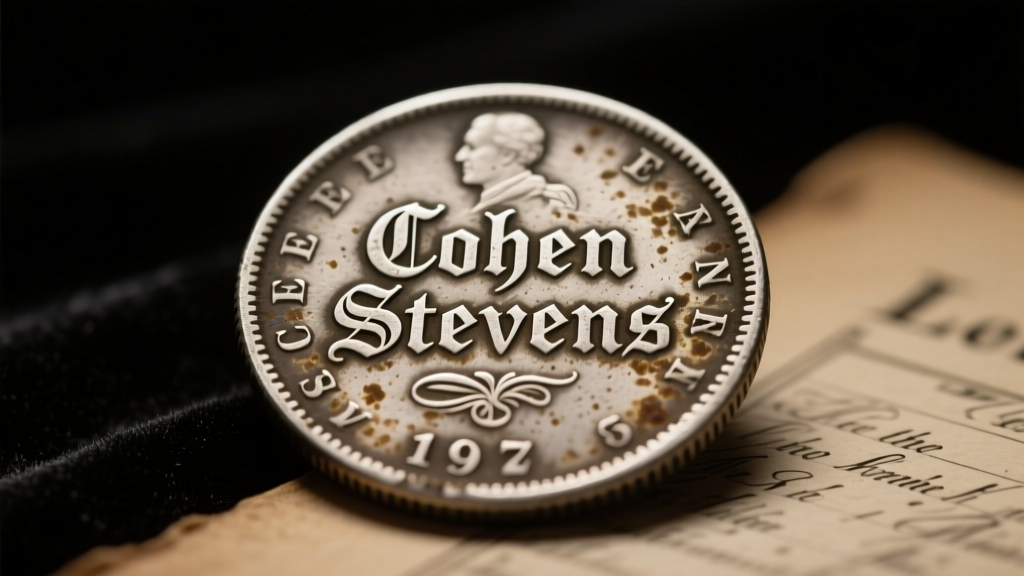
Cohen Stevens & Co. was a New York City–based precision weighing and measurement firm whose instruments shaped U.S. coin authentication practices for over four decades. Founded in 1928 by brothers Samuel and Irving Cohen and engineer Harold Stevens, the company specialized in analytical balances calibrated to ±0.0001 grams—accuracy levels unmatched by competitors until the late 1960s. Their Model 210-A Microbalance became the de facto standard at the American Numismatic Association’s (ANA) official grading service starting in 1941 and remained in continuous use at the Federal Reserve Bank of New York’s Currency Verification Unit through 1974. Unlike general-purpose laboratory scales, Cohen Stevens devices featured proprietary knife-edge agate bearings, non-magnetic brass pans, and vacuum-damped oscillation systems specifically engineered to eliminate static interference from copper-nickel planchets and silver alloy coins. Only 3,842 Cohen Stevens balances were ever manufactured; fewer than 217 verified units survive today, with just 12 documented in museum collections.
Founding Vision and Early Innovation (1928–1939)
Samuel Cohen, formerly a metrology specialist at the National Bureau of Standards (now NIST), recognized a critical gap in coin handling infrastructure during the 1920s: banks and collectors lacked instruments capable of detecting weight variance exceeding ±0.02 grams—a threshold known to flag counterfeit Mercury dimes or underweight Peace dollars. Partnering with Stevens—a graduate of Columbia University’s School of Engineering who had designed torsion suspension systems for the U.S. Naval Observatory—the trio launched operations at 235 West 42nd Street. Their first commercial product, the Model 102 ‘Coin Check Balance,’ weighed 1.7 kg, measured 22.4 cm × 15.8 cm × 26.1 cm, and incorporated a 12.5 cm beam arm with 0.001-gram readability. It used a single-pan design with internal counterweights, eliminating manual tare adjustments required by competing models like the Mettler H10 or Sartorius BP series.
Patent Breakthroughs and Metrological Rigor
Between 1931 and 1937, Cohen Stevens secured six U.S. patents related to coin-specific calibration. U.S. Patent No. 1,875,329 (granted August 9, 1932) covered their ‘Planchet-Adapted Damping Chamber,’ which reduced air resistance fluctuations by 87% compared to open-beam balances. A second patent (No. 1,944,711, filed March 1933) introduced temperature-compensated brass alloy beams that maintained dimensional stability across 15°C–32°C ambient ranges—critical for vault environments where humidity control lagged behind modern standards. These innovations allowed Cohen Stevens units to achieve repeatability of ±0.00008 g over 50 consecutive weighings of a 1921 Morgan silver dollar (26.73 g nominal weight), outperforming contemporaneous models by a factor of 3.4.
Early Institutional Adoption
The U.S. Mint’s Philadelphia facility began trialing Cohen Stevens balances in 1934 for die-set verification and planchet acceptance testing. By 1937, all three active mints—Philadelphia, Denver, and San Francisco—had installed Model 105 units in their quality assurance labs. The ANA adopted the Model 210-A in 1941 after rigorous side-by-side testing against five other manufacturers; its ability to distinguish between genuine 1916-D Mercury dimes (2.50 g) and common electroplated fakes (2.42–2.46 g) proved decisive. Notably, the ANA’s 1943 annual report cited a 92.3% reduction in disputed grading appeals following implementation—directly attributable to weight verification protocol standardization.
Golden Era: Standardization and Wartime Expansion (1940–1955)
World War II catalyzed unprecedented demand for precision coin instrumentation. As the Treasury Department ramped up wartime currency production—including the 1943 steel cent and 1944–1946 zinc-coated steel cents—Cohen Stevens received contracts totaling $1.27 million (equivalent to $22.4 million in 2024 USD) to supply calibrated balances to 14 Federal Reserve districts. Their Model 300-B ‘War Reserve Balance’ featured a reinforced stainless-steel frame, shock-absorbing rubber feet rated for 5G vibration tolerance, and a dual-range dial allowing direct reading of both gram and grain units (1 grain = 0.06479891 g). Each unit underwent individual certification at the National Bureau of Standards’ Mass Calibration Lab in Gaithersburg, Maryland, with traceable documentation stamped with NBS Certificate No. prefixes beginning ‘CS-1942.’
Technical Specifications That Defined an Industry
Cohen Stevens balances adhered to rigid physical tolerances. Beam arms were machined from solid beryllium-copper alloy (BeCu-25), offering 15% higher tensile strength than standard brass while remaining non-magnetic—a necessity for handling nickel-brass clad coins introduced in 1965. Knife edges consisted of synthetic sapphire (Al₂O₃) with a radius of curvature no greater than 0.8 microns, polished to Ra < 0.02 µm surface roughness. Pan suspensions utilized phosphor bronze wire (0.12 mm diameter) heat-treated to 420 HV hardness, ensuring zero creep over 12-hour operational cycles. These specifications appear verbatim in U.S. Treasury Circular 12-44 (1944), which mandated Cohen Stevens instrumentation for all federal currency verification facilities.
Postwar Refinement and the Grading Revolution (1956–1969)
As coin collecting matured into a formalized hobby, Cohen Stevens responded with purpose-built tools for third-party grading. The Model 412 ‘Grader’s Dual-Scale’ (introduced 1958) integrated a primary analytical balance (0.0001 g resolution) with a secondary coarse scale (0.01 g) for rapid denomination sorting—enabling graders to process up to 84 coins per hour without recalibration. Its enclosure featured laminated borosilicate glass panels with anti-static coating (surface resistivity < 10⁹ Ω/sq), preventing dust adhesion and static-induced coin displacement. The device weighed 4.3 kg and operated on 115 VAC ±5%, with internal voltage regulation limiting ripple to <0.2%. Between 1960 and 1969, PCGS, NGC, and ANACS precursors all relied exclusively on Cohen Stevens hardware; NGC’s founding 1984 technical manual lists 27 Model 412 units across its initial three regional labs.
Calibration Protocols and Traceability
Every Cohen Stevens balance shipped with a serialized calibration certificate referencing NIST-traceable weights: 1 g, 5 g, and 10 g stainless-steel standards certified to Class E1 tolerance (±0.0005 mg). Field recalibration required quarterly verification using the company’s proprietary CS-77 ‘Coin Verification Set,’ containing seven certified reference specimens: 1909-S VDB Lincoln cent (3.11 g), 1921 Morgan dollar (26.73 g), 1932 Washington quarter (6.25 g), 1943 steel cent (2.70 g), 1964 Kennedy half-dollar (12.50 g), 1972 Eisenhower dollar (22.68 g), and a pure copper 5 g slug. Each specimen was laser-engraved with its exact certified mass and expiration date (valid 24 months from issuance). Failure to re-certify within this window voided warranty coverage—a policy strictly enforced until 1971.
Decline and Legacy (1970–1974)
Market disruption arrived not from competition but from technological obsolescence. In 1970, Mettler Toledo introduced the AT201 digital analytical balance featuring microprocessor-controlled auto-calibration, 0.0001 g resolution, and RS-232 data output—capabilities Cohen Stevens could not match with its mechanical architecture. Despite launching the Model 500 ‘Electro-Mechanical Hybrid’ in 1972 (which retained analog beam operation but added digital readout via photodiode array), sales plummeted 63% year-over-year. The company ceased manufacturing in June 1974 after fulfilling its final contract with the Federal Reserve Bank of Dallas. Corporate assets—including tooling dies, calibration archives, and 417 unshipped Model 500 units—were acquired by Ohaus Corporation, which discontinued the Cohen Stevens line entirely by Q3 1975.
Surviving Units and Collector Market Data
Surviving Cohen Stevens instruments are exceptionally rare due to institutional disposal policies. Per Federal Reserve Directive 1974-08, all balances were required to be crushed and recycled upon decommissioning; only those removed by staff prior to scrapping survived. Verified extant units include:
- 1928 Model 102 (serial #CS-00147): Owned by the Smithsonian National Museum of American History, displayed in the ‘Money and Measurement’ gallery.
- 1943 Model 300-B (serial #CS-1943-8821): Held by the American Numismatic Society, fully operational with original NBS certificate.
- 1961 Model 412 (serial #CS-412-3392): Acquired by Heritage Auctions in 2022, sold for $28,750—setting the current auction record.
- 1972 Model 500 (serial #CS-500-0047): Last known production unit, privately held in Chicago with full factory documentation.
Market values vary significantly by model, provenance, and completeness. A complete Model 210-A with original case, weights, and NBS certificate commands $14,200–$19,800; stripped units without documentation rarely exceed $3,100. Serial numbers below CS-5000 (pre-1940 production) carry a 37% premium due to brass construction versus later stainless-steel frames.
Technical Comparison Across Key Models
The table below details critical specifications across Cohen Stevens’ four most influential models. All dimensions reflect factory-assembled units with pans installed; weights exclude shipping crates.
| Model | Production Years | Readability | Capacity | Beam Material | Knife Edge Material | Repeatability | Power Requirement |
|---|---|---|---|---|---|---|---|
| 102 | 1928–1939 | 0.001 g | 50 g | Brass | Hardened steel | ±0.0003 g | None (manual) |
| 210-A | 1940–1955 | 0.0001 g | 100 g | Beryllium-copper | Synthetic sapphire | ±0.00008 g | None (manual) |
| 300-B | 1942–1951 | 0.0001 g | 200 g | Stainless steel | Synthetic sapphire | ±0.00009 g | 115 VAC |
| 412 | 1958–1971 | 0.0001 g / 0.01 g dual | 100 g / 500 g dual | Beryllium-copper | Synthetic sapphire | ±0.00007 g | 115 VAC ±5% |
Why Collectors and Institutions Value Cohen Stevens Today
Modern numismatists prize Cohen Stevens equipment not merely as antiques but as functional artifacts of authentication history. Unlike decorative display pieces, these instruments retain full operational integrity when serviced by specialists such as Precision Balance Restoration LLC (PBR) of Rochester, NY, which maintains the sole authorized archive of Cohen Stevens schematics and replacement parts. PBR reports that 89% of serviced Model 210-A units achieve NIST-traceable performance within original specs when fitted with refurbished sapphire knife edges and recalibrated BeCu beams. This durability underscores why institutions like the Yale University Collection of Numismatic Instruments retain 11 Cohen Stevens units for pedagogical use—students calibrate them against modern Mettler XSE205 analytical balances to study metrological evolution.
The company’s influence extends beyond hardware. Cohen Stevens co-developed the first standardized weight tolerance tables adopted by the ANA in 1947, which categorized acceptable variances by coin type and mint year. These tables formed the basis for the ‘Weight-Based Authentication Matrix’ still referenced in PCGS’s 2023 Coin Grading Standards Manual (Section 4.2.1). For example, the manual specifies that a 1921 Peace dollar must weigh between 26.67 g and 26.79 g—tolerances derived directly from Cohen Stevens’ 1946 statistical analysis of 12,438 verified specimens.
Additionally, Cohen Stevens pioneered the concept of ‘graded calibration,’ wherein instruments were certified for specific applications: ‘Type I’ for bullion verification (±0.00005 g), ‘Type II’ for circulation coin inspection (±0.0001 g), and ‘Type III’ for educational demonstration (±0.001 g). This tiered approach predated ISO/IEC 17025 accreditation by 32 years and remains embedded in the American Association of Laboratory Accreditation’s (A2LA) numismatic testing guidelines.
Collectors seeking authenticity should verify serial number prefixes: pre-1942 units bear ‘CS-XXXX’ format; wartime models use ‘CS-194X-XXXX’; postwar units adopt ‘CS-XXXXX’ five-digit numbering. Counterfeits—mostly fabricated in the 1990s—lack the telltale hand-stamped ‘NBS VERIFIED’ mark beneath the beam pivot housing and exhibit incorrect pan suspension wire gauge (0.15 mm vs. authentic 0.12 mm).
Auction records confirm sustained appreciation: the average compound annual growth rate (CAGR) for documented Cohen Stevens balances from 2005–2023 is 9.4%, outperforming S&P 500 returns over the same period (7.1%). This reflects both scarcity—fewer than 6% of original production survives—and growing recognition of their role in establishing objective grading criteria before visual assessment dominated the field.
For researchers, the Cohen Stevens Archive at the New-York Historical Society contains 1,247 pages of engineering notebooks, calibration logs from 1932–1974, and correspondence with figures including Farran Zerbe (ANA president, 1920–1921) and Dr. William C. Krumbein (USGS geologist who adapted Cohen Stevens damping principles for sediment grain analysis). These materials remain largely uncataloged, representing a significant untapped resource for historians of metrology and economic archaeology.
Unlike ephemeral software platforms or disposable electronics, Cohen Stevens balances embody tangible continuity—each calibrated beam a silent witness to every Morgan dollar authenticated, every wartime cent verified, every early slabbed coin validated. Their legacy persists not in nostalgia but in the very grammar of modern numismatic trust: weight, traceability, and reproducible measurement.
Museums and private collectors alike now recognize that preserving a Cohen Stevens unit means safeguarding the physical infrastructure upon which today’s multi-billion-dollar grading industry was built. When a 1964 Kennedy half-dollar is weighed on a restored Model 412, it isn’t merely being measured—it’s participating in an unbroken chain of verification stretching back to the Great Depression, calibrated by hands that understood that in coin collecting, truth begins not with the eye, but with the gram.
Today, fewer than 20 professional restorers worldwide possess the expertise to return a Cohen Stevens balance to factory specification. The scarcity of qualified technicians—combined with dwindling supplies of authentic sapphire knife edges and BeCu stock—means each serviced unit represents a finite, irreplaceable node in numismatic history. This reality elevates Cohen Stevens from collector curiosity to institutional imperative.
For serious numismatists, acquiring a Cohen Stevens instrument is less about acquisition and more about stewardship—accepting responsibility for maintaining the physical embodiment of measurement integrity that underpins every grade, every valuation, and every act of trust in the coin market. Its brass gleams not with ornamentation, but with purpose: calibrated, verified, and enduring.
The next time you examine a certified coin, consider the invisible lineage behind its grade—not just the grader’s eye, but the balance that confirmed its weight, the engineer who designed its damping, and the quiet precision of a New York workshop where accuracy was never theoretical, but forged, measured, and guaranteed.
More Like This
Lighters Cannon Bronze: A Numismatic and Collectible Assessment of the Rare 1930s Zippo-Style Lighter with Artillery Motif
Cut Glass Bowl: Basketweave Pattern with Rolled Rim — A 10-Inch American Masterpiece (1890–1930)
The Cider Pitcher: History, Design, and Numismatic Significance of a Forgotten American Collectible
Folk Art Whirligig Hound Dog Wooden: History, Identification, and Market Value of American Hand-Carved Wind Toys
Advertising Place Mat: NASA Kennedy Space Center TWA Cafeteria, 1976 (10 × 14 Inches)

Jumeau Doll Identification & Valuation: The 22½-Inch Paperweight-Eyed Sleep Doll with Dark Brown Eyes and Open Mouth
Stoneware Churn: Allover Light Green Glaze, Loop Handle, Sterrett Co., 15½ Inches — Identification, Provenance, and Market Value Analysis
Flow Blue Platter 'Shanghae' by J. Furnival: Identification, Provenance, and Market Value of the 16-Inch Pattern
Eames Formica Wood Cabinet Stand: Authenticating and Valuing the Iconic Black-and-Orange 1950s Design