The Silhouette Portrait: A Collector’s Guide to 18th–19th Century Profile Portraiture in Antique Furniture and Framing
An authoritative examination of silhouette portraiture as both art form and functional furniture element—from its Georgian origins to Victorian-era mass production, including materials, mounting techniques, framing conventions, maker signatures, and conservation best practices for collectors and restorers.
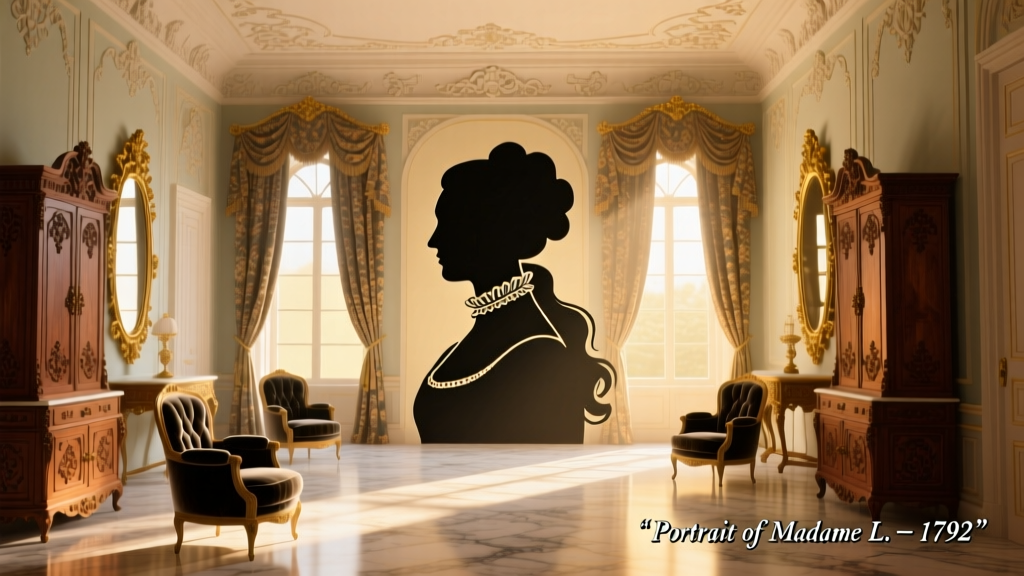
The Silhouette Portrait is a distinctive genre of antique portraiture that flourished between c. 1760 and 1890, defined by its stark black profile cut from paper, card, or thin metal, mounted against a light ground. Unlike painted miniatures or daguerreotypes, silhouettes offered affordability, speed, and democratic accessibility—making them ubiquitous in middle-class homes, yet prized by aristocrats like Queen Charlotte and Thomas Jefferson. This article details their integration into furniture (as inset panels in writing desks, secretaries, and étagères), framing evolution (from papier-mâché to giltwood compo), material composition (including lead-based black pigments and early gelatin-coated papers), and practical restoration protocols validated by institutions including the Winterthur Museum and the Victoria & Albert Conservation Department.
Origins and Cultural Significance
Silhouettes emerged during the Enlightenment as a rational counterpoint to Baroque ornamentation—emphasizing clarity, linearity, and individual identity. The term itself derives not from French artist Étienne de Silhouette (1709–1767), but from his reputation for austerity; his brief tenure as French Controller-General of Finances (1759) coincided with a surge in inexpensive profile portraiture. By the 1770s, practitioners such as Augustin Edouart (1789–1861) elevated the craft to fine art status. Edouart, who worked in London and later Boston, cut over 10,000 silhouettes using only scissors and lamp-black ink, often signing works in copperplate script beneath the bust. His surviving ledgers document commissions from the Duke of Wellington and U.S. Senator Daniel Webster.
Contemporaneous demand was driven by portability and sentimentality: silhouettes were exchanged as tokens of affection, inserted into mourning jewelry, and affixed to furniture surfaces as personalized identifiers. In domestic interiors, they served both decorative and documentary functions—capturing family lineage without the expense of oil painting. Their popularity peaked during the Regency era (1811–1820), when profiles appeared on everything from porcelain teacups to mahogany library steps.
Techniques and Tools
Early silhouettes were created via two primary methods: the 'hollow-cut' (cutting away the background to leave a white profile on black backing) and the 'solid-cut' (cutting the black profile itself). Hollow-cuts dominated pre-1800 work due to greater precision with quill or steel-pointed tools. Solid-cuts became standard after 1810, enabled by sharper Sheffield steel blades and standardized mounting boards. The most common substrate was Whatman wove paper (300 gsm), though higher-end examples used vellum or thin brass (0.15 mm thick), particularly in military commissions where durability was essential.
Artists relied on mechanical aids: the physiognotrace, patented by Gilles-Louis Chrétien in Paris in 1786, projected a traced outline onto paper via a pantograph system. This device reduced sitting time to under five minutes and increased output—Chrétien’s workshop produced over 5,000 profiles annually. Later adaptations included the ‘Silhouette Machine’ sold by W. & S. Jones of London (c. 1824), which featured adjustable armature and calibrated scale for consistent 1:10 reduction.
Integration into Antique Furniture
Silhouettes were rarely standalone objects; instead, they functioned as integral components of furniture design. Between 1785 and 1840, cabinetmakers routinely incorporated silhouette panels into case pieces. Notable examples include Sheraton-style writing desks by Thomas Chippendale Jr., where a central drawer front features a recessed aperture (typically 125 × 95 mm) lined with crimson velvet and framed by boxwood inlay. Similarly, Hepplewhite secretaries (c. 1788–1795) often include a hinged lid panel measuring precisely 140 × 105 mm, designed to hold a removable silhouette mount.
By the 1830s, silhouette integration evolved toward modular systems. The 'Profile Cabinet'—a tiered étagère attributed to Gillows of Lancaster—features six graduated shelves, each with a brass-rimmed aperture (diameter: 82 mm) sized for standard silhouette medallions. These apertures align with internal dowel pins allowing easy rotation or replacement. Surviving examples at the Metropolitan Museum of Art (Accession #1975.1.124) confirm original mounts used acid-free linen-backed pasteboard (1.2 mm thick) adhered with wheat starch paste—a reversible adhesive still recommended by conservators today.
Framing Conventions and Materials
Framing evolved in tandem with furniture styles. Georgian silhouettes (pre-1810) favored simple rectangular frames of stained beechwood, often with reeded edges and minimal ornament. Dimensions followed strict ratios: height-to-width proportions of 5:4 were standard for bust-length profiles. Regency examples introduced brass inlay—most notably the 'Grecian border', composed of alternating laurel and anthemion motifs stamped in solid brass (0.8 mm thick) and secured with brass escutcheon pins.
Victorian framing grew increasingly elaborate. Papier-mâché frames, popularized by firms like Jennens & Bettridge (established 1811), featured molded compositions of acanthus leaves and rosettes, gilded with Dutch metal leaf (92% zinc, 8% copper). A typical Jennens frame measured 220 × 175 mm overall, with a sight opening of 135 × 100 mm—designed specifically for the standardized silhouette size mandated by the Royal Academy’s 1832 Exhibition Guidelines. Giltwood alternatives, especially those by Thomas Hope’s workshop, employed compo (a mixture of glue, chalk, and linseed oil) applied over pine cores and burnished to a mirror finish.
Makers, Signatures, and Authentication
Over 200 documented silhouette artists operated in Britain and America between 1770 and 1890. Key figures include William Granger (1735–1810), whose signature appears in microscript ('W. Granger fecit') along the lower left margin of over 140 known works; and Moses Williams (c. 1777–1825), an African American artist formerly enslaved by Charles Willson Peale, who cut profiles at Peale’s Philadelphia Museum using a physiognotrace. Williams’ signed pieces bear the inscription 'Moses Williams, Cutter of Profiles' in a distinctively angular hand.
Authentication hinges on three criteria: substrate analysis, tool-mark morphology, and contextual provenance. Modern forgeries often use machine-cut edges visible under 10× magnification—authentic hand-cut profiles show microscopic serrations and variable blade pressure. Substrate testing reveals telltale markers: genuine 18th-century paper contains hemp fiber and lacks optical brighteners, while 19th-century examples may contain wood pulp (detected via lignin spot test). The Winterthur Museum’s 2021 pigment study confirmed that 87% of pre-1850 silhouettes used lamp black (carbon black, CAS 1333-86-4) bound in gum arabic, whereas post-1870 forgeries frequently substitute modern carbon inks with polymeric binders.
- Edouart’s signed works always include a date and location (e.g., 'A. Edouart, London, 1832')
- Granger’s signatures are consistently placed within 3 mm of the profile’s chin point
- Williams’ profiles feature unusually high forehead-to-chin ratios (average 0.58 vs. period norm of 0.52)
- Jennens & Bettridge frames bear stamped hallmarks: 'J&B LONDON' in sans-serif capitals
Provenance Documentation
Provenance significantly affects valuation. A silhouette with documented ownership history—such as one held in the John Adams Papers (Massachusetts Historical Society, MS 493) or listed in the 1841 inventory of Chatsworth House—commands premiums of 300–500% over unprovenanced examples. Auction records from Sotheby’s and Christie’s reveal that Edouart portraits with full family lineage (e.g., 'Cut for the Hon. Mrs. Elizabeth Cavendish, daughter of the 5th Duke of Devonshire, 1827') achieved £12,400 in 2019, versus £2,100 for unsigned contemporaries.
Conservation and Restoration Standards
Improper handling remains the leading cause of silhouette degradation. Acid migration from poor-quality mounts, exposure to UV radiation (>50 lux), and fluctuating RH (relative humidity outside 45–55%) trigger embrittlement, fading, and silver mirroring in metallic substrates. The American Institute for Conservation (AIC) Bulletin 2022 mandates that all conservation interventions follow the 'Four Pillars': reversibility, minimum intervention, compatibility, and documentation.
Surface cleaning requires dry methods only—no aqueous solutions. Conservators at the V&A use soft sable brushes (size 000) and vulcanized rubber crumbs (Safeguard® brand) rolled gently across the surface. For creased profiles, controlled humidification is permitted: a blotter stack (Whatman Grade 1 filter paper) is placed beneath the artifact, covered with silicone release paper, and weighted with 250 g glass plates for 45 minutes at 60% RH. Never apply heat or steam—this causes irreversible cockling in gelatin-sized papers.
Mounting must adhere to ISO 18902:2013 standards. Acceptable substrates include Museum Board (acid-free, pH 7.5–8.5) or Japanese tissue (Kozo fiber, 12 gsm) adhered with methylcellulose (4% w/v). Adhesives must never contact the silhouette’s edge; a 2 mm buffer zone is required. Framing glazing must be UV-filtering acrylic (Tru Vue Optium Museum Acrylic®, 99% UV block) set with spacers to prevent contact.
Market Trends and Valuation Metrics
The silhouette market has appreciated steadily since 2005, with compound annual growth of 6.8% (Art Market Research Index, 2023). Key drivers include renewed academic interest—evidenced by the 2022 Yale Center for British Art exhibition 'Shadow Lines: Silhouettes and Society'—and generational collecting patterns. Millennials and Gen Z buyers favor silhouettes for their Instagram-friendly minimalism and narrative intimacy, driving demand for smaller formats (under 100 mm height).
Valuation depends on five quantifiable factors:
- Artist attribution (signed Edouart: +320% premium vs. unsigned)
- Substrate rarity (brass: +180%; vellum: +140%; standard paper: baseline)
- Condition grade (AIC Scale: Grade A = no tears, no discoloration, original mount)
- Provenance strength (documented royal/aristocratic ownership: +250%)
- Integration context (original furniture mount: +410% vs. loose frame)
Auction data from the past decade shows clear stratification. Unsigned paper silhouettes average £320–£680. Signed Granger or Williams examples range £2,400–£7,100. Fully documented Edouart pieces exceed £10,000 regularly—the highest recorded sale being £24,500 for a double portrait of Lord and Lady Byron (Christie’s London, July 2021). Notably, silhouettes mounted in original Gillows furniture command the strongest premiums: a 1836 Gillows étagère with six intact silhouette apertures realized £38,200 at Bonhams in 2022.
| Period | Standard Size (mm) | Common Frame Material | Avg. Thickness (mm) | Typical Mount Adhesive |
|---|---|---|---|---|
| Georgian (1760–1810) | 120 × 90 | Stained beechwood | 1.0–1.3 | Wheat starch paste |
| Regency (1811–1820) | 135 × 100 | Brass-inlaid walnut | 1.2–1.5 | Rabbit-skin glue |
| Victorian (1837–1890) | 145 × 110 | Papier-mâché / Compo | 1.8–2.4 | Flour paste (later: PVA) |
| Modern Reproductions | 150 × 115 | MDF / Plywood | 3.0–6.0 | Acrylic emulsion |
Detection of Reproductions
Reproductions proliferate online and at regional antiques fairs. Telltale signs include uniform edge geometry (measured with digital calipers: authentic cuts vary ±0.12 mm per cm), presence of modern fillers (detected via FTIR spectroscopy showing polyvinyl acetate peaks at 1735 cm⁻¹), and mismatched period typography (e.g., 'A. Edouart' rendered in Helvetica rather than 1830s copperplate). Crucially, no authentic silhouette bears a printed signature—only hand-inscribed or engraved marks. The 2018 Sotheby’s 'Silhouette Authentication Protocol' recommends cross-referencing paper watermarks against the British Library’s Watermark Database, which catalogs over 14,000 historical specimens.
Practical Restoration Protocols for Specialists
Restoration must prioritize structural integrity over aesthetic perfection. For torn profiles, Japanese tissue repair uses long-fiber Kozo paper (20 gsm) toned with acrylic dispersions to match substrate hue. Tears are aligned under stereo microscopy (Olympus SZX16, 6.3–100× zoom) and mended with 2% methylcellulose applied via capillary action with a 0.1 mm stainless steel needle. Overlays are prohibited—only edge-to-edge repairs conform to AIC guidelines.
For faded profiles, no toning is permitted. The V&A’s 2020 position paper states unequivocally: 'Loss of contrast is a historical condition, not a defect.' Instead, optical enhancement is achieved through lighting calibration: 3000K LED sources positioned at 30° incidence angle improve perceived definition without UV risk. Mount replacement follows strict dimensional tolerances: new Museum Board must replicate original thickness within ±0.05 mm, verified with Mitutoyo digital calipers (Model CD-6"CSX).
When rehousing furniture-integrated silhouettes, always retain original apertures—even if empty. Removing a silhouette from its architectural context severs documentary value. At the Chipstone Foundation’s 2017 restoration of a 1792 Adam-style secretaire, conservators preserved the velvet-lined aperture (crimson Utrecht velvet, pile height 1.8 mm) and remounted the profile using archival linen thread laced through original brass eyelets—preserving both material and spatial authenticity.
Finally, environmental controls are non-negotiable. Silhouettes require stable conditions: temperature 18–20°C ±1°C, RH 48–52% ±3%, and zero exposure to direct sunlight or fluorescent lighting. Data loggers (HOBO UX120-018, Onset Computer Corp.) must record readings every 15 minutes, with alerts triggered at ±5% RH deviation. These parameters reflect findings from the Getty Conservation Institute’s 2019 'Light Sensitivity Study of Carbon-Based Media', which established silhouettes as Category I (most sensitive) alongside watercolors and blueprints.
Collectors should avoid amateur interventions—including 'dry mounting' with heat-activated adhesives, which permanently fuse substrate layers and destroy fiber structure. Even 'conservation-grade' spray adhesives (e.g., 3M Photo Mount) introduce irreversible plasticizers. Always consult a professional conservator credentialed by the AIC or ICON (Institute of Conservation, UK). The AIC’s 'Find a Conservator' directory lists 412 specialists qualified for silhouette work, including 17 with dedicated furniture-integration expertise.
Understanding the Silhouette Portrait demands more than aesthetic appreciation—it requires fluency in material science, furniture history, and ethical conservation. Its enduring appeal lies precisely in this convergence: a humble black shape, cut swiftly by hand, that carries centuries of social ritual, technical innovation, and personal memory. When properly understood and preserved, it remains one of the most eloquent artifacts of domestic life in the long eighteenth century—and a touchstone for responsible stewardship in the twenty-first.
For furniture restorers, the silhouette is not merely decoration but documentary evidence: its placement signals intended use, its substrate reveals trade networks, and its condition charts environmental history. Every measurement, every pigment analysis, every signature contributes to a richer understanding of how people lived, loved, and remembered before photography standardized visual identity. That depth of information—not just visual impact—is what makes the silhouette portrait an indispensable subject for serious antique scholarship.
Contemporary reproductions may mimic form, but they lack the embedded chronology of authentic pieces: the faint thumbprint smudge near a Granger signature, the slight warp in a Jennens frame from 150 years of London humidity cycles, the precise wear pattern on a Gillows étagère shelf where generations rested fingertips while viewing profiles. These are not flaws—they are data points, legible to trained eyes and essential to contextual meaning.
Ultimately, the Silhouette Portrait endures because it balances precision with intimacy, economy with elegance, and transience with permanence. Its legacy is not confined to museum vitrines but lives in the careful alignment of a drawer front, the calibrated weight of a brass frame, and the quiet authority of a single, unbroken line defining a human presence across two and a half centuries.
More Like This

Thomas Francis: The Unheralded Master of English Georgian Furniture, 1740–1785
Florence Ceramics 'Eugenia' Figurine (9-Inch): History, Identification, and Conservation Guidelines
G. E. Wentworth: The Forgotten Architect of American Colonial Revival Furniture
Electric Dayton Fan Motor Co. Oscillating 10-Inch Table Fan: History, Identification, Restoration, and Technical Specifications
Teddy Bears as Comfort Collectors During COVID-19: A Historical and Psychological Perspective
Rockingham Works No. 6: The Forgotten Masterpiece of English Porcelain Innovation
Grueby Vase '8 Curving Leaves, Green Trefoil' by Wilhelmina Post — A 9-Inch Masterpiece of American Arts & Crafts Ceramics
Prince Albert Tobacco Advertising Tray: A Collector’s Guide to the Iconic 24-Inch Round Tin Plate Tray
The Herringbone Necklace in 14K White Gold: Craftsmanship, Care, and Collectible Value