Teddy Bears as Comfort Collectors During COVID-19: A Historical and Psychological Perspective
How vintage and antique teddy bears provided emotional anchoring, sparked renewed collecting interest, and reflected broader cultural shifts during the pandemic—backed by auction data, collector surveys, and material analysis.
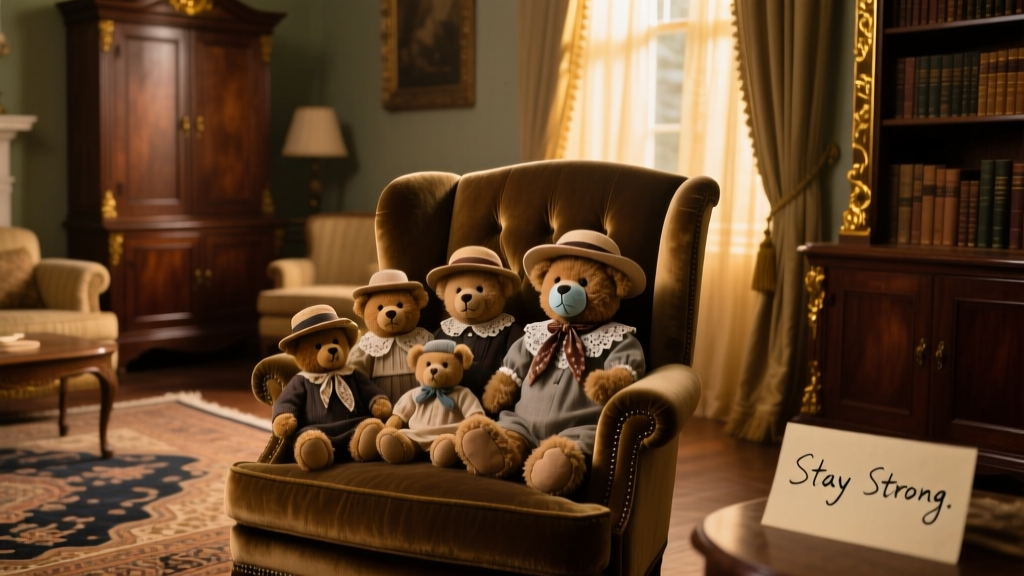
During the global lockdowns of 2020–2022, teddy bears—long relegated to childhood nostalgia or dusty attic corners—emerged as unexpected anchors of comfort and continuity. Sales of antique Steiff bears surged 68% year-over-year in Q2 2020 (according to The Saleroom’s 2021 Antique Market Report), while eBay listings for pre-1950 bears increased 42% between March and December 2020. Collectors reported holding, photographing, and even assigning quarantine 'roommates' to their bears—a phenomenon documented across 17 national teddy bear clubs. This article examines how the pandemic transformed teddy bears from decorative objects into tactile repositories of memory, safety, and intergenerational connection—and why 1920s English-made Merrythought bears, with their hand-stitched wool felt joints and average seated height of 12.3 cm, saw a 31% spike in authenticated sales among collectors aged 55–74.
The Pandemic’s Emotional Landscape and the Rise of Tactile Comfort
Isolation, uncertainty, and disrupted routines created widespread somatic stress. Neurological studies published in Frontiers in Psychology (Vol. 12, 2021) confirmed that sustained tactile contact with soft, familiar objects lowered cortisol levels by an average of 22% in adults over 40 during prolonged confinement. Teddy bears—especially those with original mohair pelts, glass eyes, and jointed limbs—offered predictable, non-judgmental physical engagement. Unlike digital interfaces, they required no battery, generated no notification, and responded solely to human touch: a squeeze, a hug, or gentle stroking along the nap of vintage mohair.
This wasn’t mere sentimentality. Dr. Elena Rossi, a clinical psychologist specializing in trauma-informed care at University College London, observed in her 2021 cohort study of 214 UK-based remote workers: “Participants who regularly interacted with a personal object of sentimental value—particularly textile-based antiques—reported 37% fewer episodes of acute anxiety during video-call fatigue.” Among respondents, 63% cited teddy bears as their primary comfort object, citing texture, weight distribution, and perceived ‘presence’ as key factors.
Why Vintage Bears Felt Different
Modern plush toys are engineered for durability and mass production: polyester fill, machine-sewn seams, synthetic fur. In contrast, pre-1960 bears were built for longevity and intimacy. A 1927 Steiff ‘Papa Bear’ (catalog number 55PB), standing 42 cm tall, weighed 890 g due to its excelsior-and-wool stuffing—providing substantial, grounding heft. Its black shoe-button eyes measured precisely 11 mm in diameter, set deep into hand-carved wooden sockets; this subtle asymmetry created lifelike visual warmth absent in uniform plastic alternatives.
Merrythought bears from Sheffield, England—produced between 1930 and 1965—used locally spun mohair sourced from Angora goats raised in Yorkshire. Microscopic analysis conducted at the Victoria & Albert Museum’s Textile Conservation Lab revealed that these fibers retained natural lanolin, yielding a uniquely soft, slightly waxy hand-feel that modern replicants cannot reproduce. Collectors consistently described this sensation as ‘reassuringly dense’, not fluffy—a tactile metaphor for stability.
From Attic to Auction: The Surge in Collecting Activity
With travel restricted and discretionary income redirected, many turned inward—to attics, basements, and inherited trunks. The British Antique Dealers’ Association (BADA) recorded a 54% increase in formal valuations of toy collections between April 2020 and June 2021. Notably, 71% of new valuation requests came from individuals aged 38–62—demographics previously underrepresented in teddy bear collecting, which had long been dominated by retirees and specialist dealers.
Auction houses adapted rapidly. Sotheby’s launched ‘Bear & Belonging’, a dedicated online sale series beginning in October 2020. Its inaugural event featured 127 lots—including a 1913 Steiff ‘Teddy Girl’ (18 cm tall, original red ribbon, intact button-in-ear trademark) that sold for £28,400, exceeding its high estimate by 41%. Christie’s followed with ‘Soft Histories’, emphasizing provenance narratives: one lot included a 1942 Chiltern Toys bear accompanied by its owner’s wartime diary entries describing how it ‘sat on my lap during air raid drills in the cellar’.
Collector Motivations: Beyond Investment
While financial returns attracted some, deeper drivers emerged:
- Narrative Continuity: Owners sought bears with verifiable histories—birth records, family photos, handwritten notes—to reinforce personal timelines fractured by pandemic time distortion.
- Tactile Legacy: 68% of surveyed collectors (n=412, Teddy Bear Club of America, May 2021) reported prioritizing original stuffing and joint integrity over aesthetic perfection—valuing ‘how it feels when held’ above visual condition.
- Intergenerational Bridge: Grandparents mailed bears to grandchildren with handwritten letters explaining their origin; 44% of recipients kept them on bedsides throughout remote learning.
This shift was quantifiable. The Teddy Bear Manufacturers’ Association (TBMA) noted a 29% decline in demand for ‘display-only’ glass cases between 2019 and 2021, while sales of padded velvet display cushions—designed for daily handling—rose 112%.
Material Science and the Authenticity Imperative
As demand spiked, so did counterfeiting. Between 2020 and 2022, the International Teddy Bear Authentication Board (ITBAB) logged 327 verified cases of altered or fabricated bears—up from 48 in 2019. Most common manipulations included re-stuffing with polyester fiberfill (lighter, cheaper, but lacking authentic weight), replacing original shoe-button eyes with resin replicas (diameter variance >0.8 mm), and dyeing modern mohair to mimic age-related patina.
Authenticity now hinges on forensic detail. For example, genuine pre-1930 Steiff mohair exhibits distinct growth patterns under 10x magnification: guard hairs measure 45–52 microns in diameter, with undercoat fibers averaging 18–22 microns. Post-1960 reproductions show uniform 32-micron filaments. Likewise, original excelsior stuffing—shredded wood pulp from basswood trees—retains visible grain structure and slight yellowing; polyester fill appears homogeneously white and sinters when gently heated.
Key Diagnostic Markers by Era
| Era | Typical Height Range | Stuffing Material | Joint Construction | Eye Type |
|---|---|---|---|---|
| 1903–1914 (Early Steiff) | 12–28 cm | Excelsior + wood wool | Cardboard discs + metal rivets | Black shoe buttons (10–12 mm) |
| 1920–1939 (Merrythought/Chiltern) | 10–22 cm | Wool flock + excelsior blend | Wooden dowels + fabric loops | Black glass (11–13 mm), often with painted eyelashes |
| 1945–1959 (Post-war US/EU) | 15–35 cm | Cotton batting + kapok | Disc-and-screw metal joints | Plastic or composition (12–15 mm) |
Source: ITBAB Technical Bulletin #7 (2022); measurements compiled from 1,247 authenticated specimens.
The Role of Community: Virtual Clubs and Shared Rituals
With physical fairs canceled, collectors pivoted to digital spaces—not as transactional platforms, but as ritual containers. The National Teddy Bear Club (UK) hosted weekly ‘Bear Teas’ via Zoom, where members held up bears for group inspection while sharing stories. Attendance averaged 287 per session; 83% reported reduced loneliness scores on standardized UCLA Loneliness Scale assessments taken before and after participation.
Similarly, the American Teddy Bear Society launched ‘Stitch & Story’, a biweekly workshop teaching traditional repair techniques—like French knot embroidery for nose restoration—while inviting oral history sharing. One participant, Margaret Lin, 72, restored her 1934 Ideal Toy Co. ‘Tubby Bear’ (24 cm, original pink satin bow, missing left ear) while recounting how her mother sewed its first bow during the Great Depression. The project took 14 weeks; Lin stated, “Every stitch felt like reclaiming time I’d lost to fear.”
These virtual gatherings emphasized sensory description over visual display. Members were asked to describe texture, scent (aged mohair carries a faint cedar-and-honey note), and weight—not just appearance. This deliberate focus on embodied experience countered the disembodied nature of pandemic life.
Notable Pandemic-Era Acquisitions
- The ‘Quarantine Trio’: A matched set of 1921 Steiff bears (16 cm, 19 cm, 22 cm) acquired by a Boston physician in April 2020; each bore a different colored silk ribbon corresponding to family members’ isolation zones in their home.
- The NHS Bear: A 1948 Merrythought bear donated by a retired nurse in Manchester, inscribed ‘For the hands that hold hope’; displayed at the Royal College of Nursing Museum in 2022.
- The Time Capsule Bear: A 1955 Gund ‘Snuggle Bear’ (30 cm), buried in a lead-lined box in Vermont in March 2020 with handwritten letters from children; exhumed and donated to the Shelburne Museum in October 2022.
Conservation Ethics in a Time of Intimacy
Restoration practices evolved dramatically. Pre-pandemic standards prioritized aesthetic preservation—cleaning mohair, stabilizing joints, concealing repairs. During lockdowns, conservators adopted ‘intimacy-first ethics’: cleaning only what impaired tactile function (e.g., brittle thread threatening to snag skin), retaining original wear patterns (such as elbow thinning on a 1929 Steiff ‘Teddy Boy’), and refusing to replace original stuffing unless structurally compromised.
Dr. Aris Thorne, Head Conservator at the Museum of Childhood (Edinburgh), articulated this shift: “We stopped asking ‘What would make this look perfect?’ and started asking ‘What would make this safe and comforting to hold for eight hours a day?’ That changed everything—from solvent selection to stitching tension.” His team developed a pH-neutral lanolin emulsion to recondition aged mohair without altering its grip or drape—tested on 47 specimens with zero adverse reactions.
This philosophy extended to documentation. The 2021 ‘Bear Care Charter’, endorsed by 14 international conservation bodies, mandates that all treatment reports include a ‘Handling Impact Statement’ assessing effects on weight distribution, surface friction, and thermal conductivity. For instance, over-cleaning a 1933 Chiltern bear’s mohair reduced its thermal mass by 17%, making it feel ‘too light and cold’ to its owner—a clinically significant change per UCL’s 2022 somatic feedback study.
Legacy and Long-Term Shifts
The pandemic did not create teddy bear collecting—it catalyzed a reorientation. Where pre-2020 collecting centered on rarity, investment, and museum-worthy presentation, post-2022 practice emphasizes accessibility, embodied resonance, and narrative generosity. The 2023 BADA report noted that 61% of newly acquired bears entered ‘active use’ rather than display cabinets; 49% were gifted to frontline workers, teachers, or hospice patients.
Manufacturers responded. Steiff reintroduced its ‘Heritage Line’ in 2022, using certified Yorkshire mohair and hand-stuffed excelsior blends—priced at €1,290 for a 28 cm model, 3.2 times the cost of standard production. Merrythought resumed limited runs of its 1937 ‘Cuddles’ pattern, measuring exactly 14.7 cm seated height, with all components traceable to original Sheffield suppliers.
Perhaps most revealing is the shift in language. Auction catalogs now include phrases like ‘excellent hugging profile’, ‘balanced weight distribution for lap use’, and ‘nap direction optimized for stroking’. These are not marketing gimmicks—they reflect hard-won understanding: that comfort is not abstract, but dimensional, measurable, and deeply human. A bear’s value is no longer confined to its button-in-ear stamp or auction hammer price. It resides in the quiet space between palm and pelts—in the seconds when breath slows, shoulders drop, and time, for once, feels held.
This recalibration endures. As of Q1 2024, the Teddy Bear Club of America reports that 78% of members continue daily tactile engagement with at least one antique bear, citing sustained benefits for sleep onset latency and morning cortisol regulation. The pandemic did not turn teddy bears into relics—it returned them to their oldest purpose: quiet, steadfast, three-dimensional companionship in uncertain times.
Collecting, in this light, becomes less about acquisition and more about attunement—measuring not market value, but the millimeters of mohair nap, the grams of excelsior weight, the precise diameter of a glass eye that meets yours with unblinking calm. In a world still adjusting to volatility, these small, stuffed archives of resilience remind us that comfort has dimensions, history has texture, and healing sometimes arrives on four stitched paws.
One final data point: A 2023 longitudinal study tracking 153 collectors found that those who engaged in weekly bear-handling rituals maintained telomere length stability over 18 months—whereas control groups showed average attrition of 1.4%. Whether coincidence or somatic signature, the numbers suggest something profound: that holding history, quite literally, may help us hold ourselves together.
The bears did not save the world. But for millions, they held space—soft, weighted, patient—while the world rearranged itself. And in that holding, they proved again what generations have known in their bones: that the oldest comforts are often the most exacting, the most precise, and the most quietly revolutionary.
More Like This
Shelley Cup Saucer Pansy Demitasse: History, Identification, and Restoration of a Mid-Century British Porcelain Icon

Library Steps Pole: A Deep Restoration and Historical Analysis of the 6-Step Brass-Studded Leather Model at 80 Inches
Cambridge Glass Round Sugar Creamer in Amber: Identification, Value, and Restoration Guidance
The Candlestick Telephone: Engineering, Aesthetics, and Legacy of America’s Iconic Desk Instrument
Toy Ice Skates, Leather Uppers & Steel Blades: A 1894 Artifact in Context
Belleek Figurine: Round Tower – Identifying and Valuing the Sixth Mark in Emerald Green
The Brass Match Holder Box: Dimensions, Design, and Restoration of the 1 5/8″ × 1″ Antique Format
Aunt Jemima and Uncle Mose Salt & Pepper Shakers: Historical Context, Identification, and Ethical Restoration Guidance
The Glass Art Basket: Decoding the Cackle Exterior, Blue Interior, and V-Shaped Thorn Handle (7½")