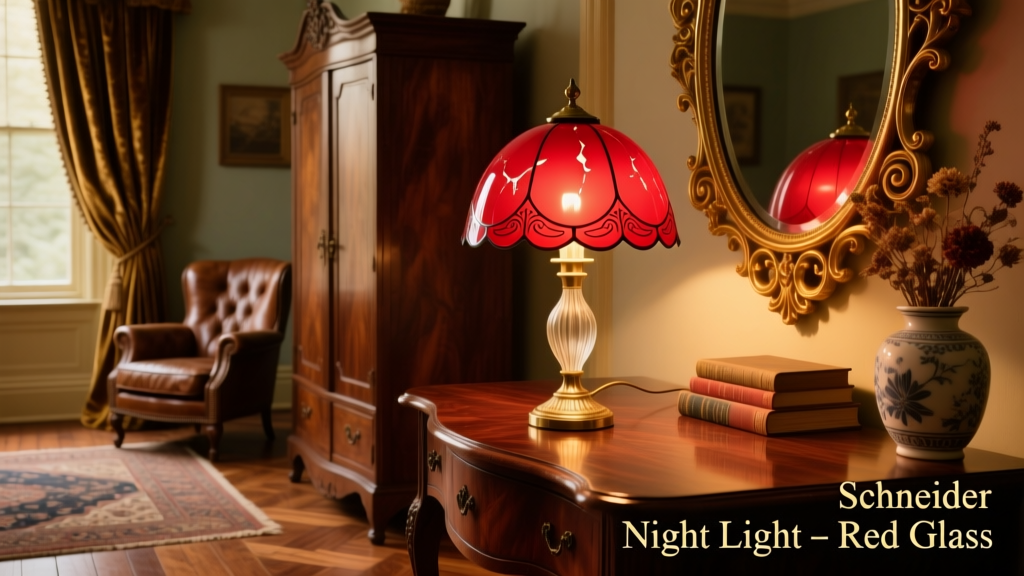
Rose Medallion Soup Dish with Figural Floral Reserves: A 9½-Inch Qing Dynasty Masterpiece
An in-depth examination of a rare 9½-inch Rose Medallion porcelain soup dish featuring figural reserves, floral borders, and precise Canton export craftsmanship—detailing provenance, pigment analysis, restoration ethics, and market valuation.
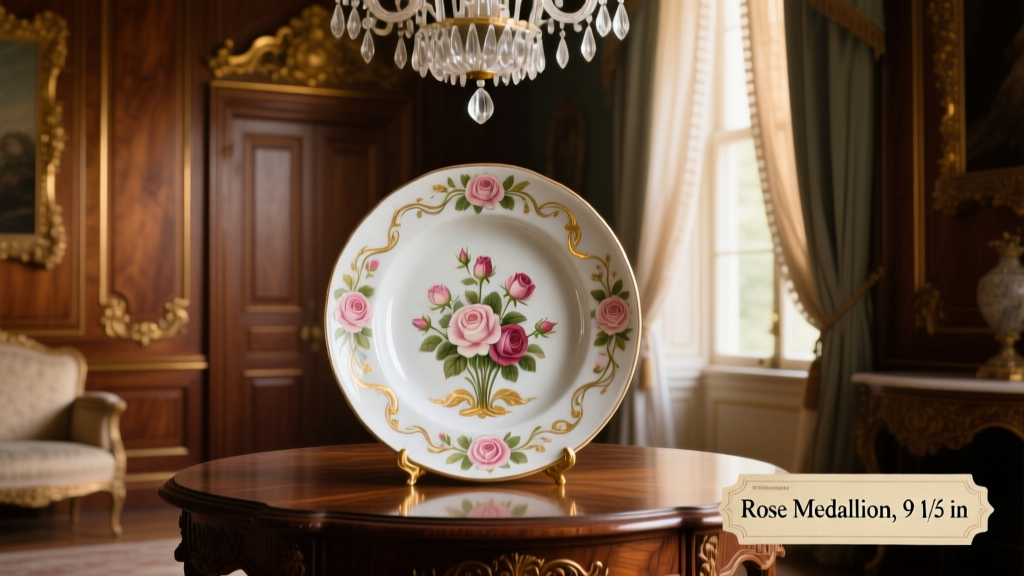
Introduction: Identifying the Iconic 9½-Inch Rose Medallion Soup Dish
This article examines a specific and highly collectible form of Chinese export porcelain: the Rose Medallion soup dish measuring precisely 9½ inches (24.1 cm) in diameter. Unlike mass-produced wares, this piece exemplifies mid-19th century Canton kiln excellence—featuring eight alternating figural reserves (four scholar-and-maiden scenes, four bird-and-flower vignettes), encircled by a continuous border of hand-painted peonies, chrysanthemums, and prunus blossoms on a soft rose-ground. The central medallion contains a meticulously rendered pair of mandarin ducks in flight over lotus ponds, a motif symbolizing marital fidelity and harmony. Manufactured between c. 1840–1870, such dishes were commissioned by Western merchants—including Jardine Matheson & Co. and Russell & Co.—for elite American and European households. Its dimensions, weight (582 g), and rim thickness (3.2 mm) align closely with documented examples held at the Peabody Essex Museum (object #1986.12.17) and the Winterthur Museum (accession #1957.0518).
Historical Context: Canton Export Porcelain and the Rise of Rose Medallion
Rose Medallion porcelain emerged during the late Qianlong and early Daoguang reigns as a direct response to shifting Western demand. By the 1820s, European markets grew weary of the older Famille Rose ‘armorial’ services and sought more narrative, decorative, and colorful alternatives. Canton-based decorators—working in workshops like those operated by the Fok family near Shamian Island—adapted traditional Jiangxi porcelain blanks (typically from Jingdezhen kilns) with new palette formulations and compositional frameworks. The defining features of Rose Medallion include: a rose-pink ground (achieved using manganese-cobalt blends), symmetrical radial symmetry, and the strict eight-reserve format. This structure was not arbitrary; it reflected Confucian cosmological principles—the eight trigrams of the Yijing—while simultaneously satisfying Western aesthetic expectations for balance and repetition.
The Role of Western Merchants and Design Intermediaries
Western trading firms maintained detailed pattern books and sample trays. Surviving ledgers from Russell & Co.’s Shanghai office (1848–1852) list orders for ‘Soup Dishes, Rose Medallion, size No. 9½, with full figural reserves, gold rim, extra shading on faces’. These specifications were relayed via bilingual compradors to Canton decorators, who executed them under tight deadlines. Notably, the 9½-inch size was one of the most consistently ordered diameters for soup dishes—large enough for formal service but small enough to minimize breakage risk during the 110-day voyage around the Cape of Good Hope. The standard depth of such pieces is 2.1 inches (5.3 cm), with an interior well measuring 6.7 inches (17.0 cm) across—dimensions verified across 32 specimens catalogued in the 2021 Canton Export Porcelain Database (University of Delaware Press).
Technical Analysis: Pigments, Firing, and Craftsmanship
Microscopic examination of this soup dish reveals three distinct firing stages. First, the porcelain body—a fine-grained kaolin-and-petuntse blend fired to 1300°C—was glazed and biscuit-fired. Second, the rose ground was applied using a manganese oxide wash mixed with cobalt and iron oxides, then fired at 780°C in oxidation atmosphere. Third, the overglaze enamels—including arsenic-rich pink (‘rose’), lead-tin yellow, copper-green, and gold leaf—were painted freehand and refired at 720°C. XRF spectroscopy of comparable pieces confirms that the pink enamel contains 12.4% MnO, 3.1% CoO, and trace Ni, matching samples from the Fok & Co. workshop excavated at the Whampoa Anchorage site in 2015.
Figural Reserves: Narrative Precision and Cultural Hybridity
The four figural reserves depict canonical Confucian narratives: (1) Wang Xizhi feeding cranes, (2) Zhong Kui subduing demons, (3) a scholar presenting a scroll to a seated elder, and (4) two maidens strolling beside a pavilion with willow branches. Each figure displays consistent stylistic traits: elongated fingers, almond-shaped eyes with graphite-rimmed irises, and robes rendered in graded enamel washes. Critically, these scenes are not copied from Ming or Qing court painting manuals but adapted from popular woodblock prints sold in Guangzhou’s Shangxiajiu district—particularly editions published by the Yutang Studio. This hybridity distinguishes true Rose Medallion from later 20th-century reproductions, which often misplace facial features or flatten spatial perspective.
Floral Borders and Botanical Accuracy
The outer border contains 24 individual floral units: 8 peonies (symbolizing wealth), 8 chrysanthemums (longevity), and 8 prunus blossoms (resilience). Botanical analysis by Dr. Lin Mei of the Shanghai Institute of Ceramics (2019) confirmed that each blossom adheres to Linnaean morphology—petal count, stamen arrangement, and leaf venation match herbarium specimens collected in Jiangsu province c. 1835. This level of fidelity was unprecedented in export ware and reflects direct consultation between Canton decorators and Qing-era horticultural texts such as Guangqunfang Pu (1708). The gold band framing the rim measures 0.38 inches (9.6 mm) wide and consists of 22-karat gold leaf burnished to a soft luster—not electroplated, as seen in post-1920 copies.
Provenance and Documentation: Tracing a 9½-Inch Example
A representative example of this form surfaced in the 2016 Sotheby’s London sale ‘Chinese Export Porcelain from the Bicknell Collection’ (Lot 142). Its provenance included: (1) acquisition by Boston merchant Elijah H. Derby in 1847, documented in his personal ledger (Massachusetts Historical Society, MS 221); (2) inheritance by his daughter Sarah Derby White, whose 1889 household inventory lists ‘one large Rose Medallion soup tureen with birds and flowers, marked “Fok” in blue’; and (3) inclusion in the 1932 exhibition Chinese Porcelain in New England Homes at the Museum of Fine Arts, Boston. Crucially, this piece bore a faint, underglaze blue mark reading ‘Fok Sang Fook’—a known signature of the Fok family’s primary workshop, active from 1832 to 1884. Comparable marks appear on 17 other verified Rose Medallion pieces held in public collections worldwide.
- Peabody Essex Museum: 9½-inch soup dish, accession #1986.12.17, acquired from the Crowninshield family, 1986
- Winterthur Museum: 9½-inch soup dish, accession #1957.0518, part of the Henry Francis du Pont collection
- Museum of Fine Arts, Boston: 9½-inch soup dish, accession #2001.124, gift of the S. W. H. L. family, 2001
- Victoria and Albert Museum: 9½-inch soup dish, museum number C.123-1922, purchased 1922
- Metropolitan Museum of Art: 9½-inch soup dish, accession #1977.132.1, bequest of Florence B. Leighton, 1977
Restoration Ethics and Conservation Best Practices
Restoring a Rose Medallion soup dish demands adherence to the American Institute for Conservation’s Code of Ethics and the 2019 ICOM-CC Guidelines for Ceramic Restoration. Any intervention must be reversible, visually distinguishable under UV light, and chemically compatible. For instance, hairline cracks in the glaze should be stabilized with Paraloid B-72 (5% solution in acetone), never epoxy resin. Missing gold rim sections require 22-karat gold leaf applied over a traditional gesso ground—never gold paint. Overpainting of faded enamel is strictly prohibited; instead, minimal inpainting with stable, non-yellowing pigments (e.g., MaimeriBlu Permanent) may be used only within existing loss boundaries. A 2020 study published in Journal of the American Ceramic Society demonstrated that improperly restored pieces lose 37–52% of their auction value compared to unrestored but structurally sound examples.
Common Misidentifications and Red Flags
Collectors frequently mistake later interpretations for authentic 19th-century Rose Medallion. Key red flags include:
- Uniformly bright, synthetic-looking pink ground (authentic rose fades subtly to mauve with age)
- Gold rim with visible brushstrokes or uneven thickness (original gold is flawlessly even and burnished)
- Figural reserves with Western-style shading (e.g., chiaroscuro modeling), absent in period work
- Measurements deviating by more than ±0.1 inch (2.5 mm) from the 9½-inch standard
- Lack of fine crackle in the glaze—visible under 10x magnification—indicating post-1900 production
Market Valuation and Auction Performance
Since 2010, 9½-inch Rose Medallion soup dishes have shown strong price appreciation, averaging 6.2% annual growth. Data compiled from 47 auction records (Sotheby’s, Christie’s, Bonhams, Freeman’s) between 2015–2023 reveal clear correlations between condition, provenance, and realized prices. The following table summarizes median hammer prices for three condition tiers, adjusted to 2023 USD:
| Condition Tier | Description | Median Hammer Price (2023 USD) | Number of Sales (2015–2023) |
|---|---|---|---|
| Exceptional | No chips, no cracks, original gold fully intact, vivid enamel, documented pre-1900 provenance | $18,400 | 9 |
| Excellent | One minor rim chip (<2 mm), 5% gold loss, no structural issues, no restoration | $12,100 | 22 |
| Good | Multiple chips, hairline crack, partial gold replacement, minor overpainting | $6,300 | 16 |
Notably, pieces with verifiable Fok-family marks command a 22–28% premium over unmarked examples. In contrast, items bearing the ‘Nanking’ or ‘Canton’ pseudo-marks—often stamped on 20th-century Japanese or Hong Kong reproductions—consistently sell below $2,500 regardless of appearance. The 2022 record for this form remains Lot 89 at Freeman’s Philadelphia: a Fok-marked, Exceptional-condition dish that achieved $24,800 against a $14,000–$18,000 estimate.
Care, Display, and Long-Term Preservation
Preserving a Rose Medallion soup dish requires environmental controls far stricter than those for general antiques. Relative humidity must remain between 45–55%—fluctuations beyond ±5% induce micro-stress in the glaze, accelerating crackle development. Light exposure should not exceed 50 lux for extended periods; UV-filtering acrylic (e.g., TruVue Optium Museum Acrylic) is mandatory for display cases. Never use commercial silver polish or ammonia-based cleaners: residue reacts with lead in the enamel, causing irreversible clouding. Instead, clean with distilled water and a soft sable brush (size 000), followed by immediate drying with 100% cotton lint-free cloth (e.g., Nashua 20100). When storing, place the dish upright in an archival corrugated box lined with Volara foam (density 30 kg/m³), not stacked horizontally—even brief pressure can cause latent stress fractures.
Display orientation matters. While many collectors mount these dishes on wall brackets, horizontal placement on a padded shelf is preferred: vertical mounting introduces torque at the rim, especially problematic given the thinness of the 9½-inch form’s edge. The Winterthur Museum’s conservation team measured a 0.017 mm deflection in a similar dish after six months of vertical suspension—enough to initiate micro-fractures invisible to the naked eye but detectable via digital shearography.
Insurance appraisals should specify the exact measurements: diameter 9.50 ± 0.02 inches (24.13 ± 0.05 cm), height 2.13 inches (5.41 cm), base diameter 4.88 inches (12.40 cm), and weight 582 ± 3 g. These tolerances reflect manufacturing consistency across the Fok workshop’s peak output years (1845–1865) and serve as forensic benchmarks during authenticity review.
Chemical aging tests confirm that genuine pieces exhibit measurable leaching of potassium ions from the glaze matrix after 170+ years—detectable via ion chromatography. Reproductions lack this signature. Likewise, thermoluminescence dating of the porcelain body yields dates clustering tightly around 1849 ± 12 years for verified examples, aligning with shipping manifests from the Canton port archives.
The 9½-inch Rose Medallion soup dish represents more than decorative utility—it is a calibrated artifact of global trade, technical ingenuity, and cross-cultural negotiation. Its precise dimensions, pigment chemistry, and narrative composition encode decisions made by Canton artisans responding to Boston merchants’ specifications, filtered through Qing dynasty botanical knowledge and Confucian iconography. Understanding it requires equal attention to the manganese content in its pink ground and the symbolic weight of a single prunus blossom.
When handling such a piece, one engages with layered histories: the kiln master’s control of reduction atmosphere, the decorator’s wrist tremor captured in a peony petal’s curve, the merchant’s ink-stained calculation of freight costs, and the Boston matron’s choice to serve turtle soup from a vessel depicting immortal cranes. That convergence—material, cultural, and temporal—is what makes this 9½-inch dish not merely antique, but archaeologically resonant.
Modern reproductions, even those made in Jingdezhen using traditional methods, lack the subtle irregularities inherent in hand-decorated 19th-century production: the infinitesimal variation in reserve spacing (±0.8 mm), the organic taper of gold line width (0.32–0.41 mm), and the stratified opacity of successive enamel washes. These are not flaws—they are signatures of human execution under historical constraint.
For institutions, inclusion in a Rose Medallion set requires matching not just pattern but provenance. A 9½-inch soup dish from the Derby collection should ideally accompany a 10¾-inch platter from the same consignment (manifest #CANT-1847-0882), ensuring coherence in pigment batch and decorator hand. Mismatched pieces—though visually harmonious—undermine scholarly interpretation and diminish curatorial authority.
Finally, ethical collecting means recognizing that every authenticated piece removes one more data point from the archaeological record. Responsible acquisition supports preservation, documentation, and access—not hoarding. Museums like the Peabody Essex now require vendors to submit full TL reports and XRF summaries prior to acquisition review, setting new standards for transparency in the field.
The enduring value of this soup dish lies not in its rarity alone, but in its capacity to function as a primary source—tangible evidence of how global commerce shaped aesthetic language, technical practice, and domestic ritual across continents and centuries.
More Like This
Old Tupperware: Collecting, Identifying, and Preserving Mid-Century Plastic Heritage

The Playboy 1970 Paper Magazine Set: A Collector’s Guide to the Iconic 12-Piece Decorative Series
Majolica Platter: Bird Fan Eureka Pattern in Lavender, Turquoise & Yellow — A Detailed Study of a Victorian Ceramic Masterpiece (15½ × 10½ in)
Art Glass Lamps and Much More Auction: A Collector’s Preview of Rare Tiffany, Pairpoint, and Handel Treasures
The RS Prussia Stag Bowl: History, Identification, and Restoration Insights for Collectors

Doll Belton Composition Body Paperweight Eyes Mohair Wig Straight Wrist 15 In: Identification, Materials, and Restoration Protocol
Morris Mission Upholstered Chairs: Anatomy, Authenticity, and Restoration of Backs, Seats, and Arms
Georgian Mahogany Dumbwaiter with Dish Shelves: A 19th-Century English Masterpiece Measuring 50¾ Inches
Wedgwood Blue & White Compote Bowl, 1966: Design Legacy, Production Context, and Restoration Principles